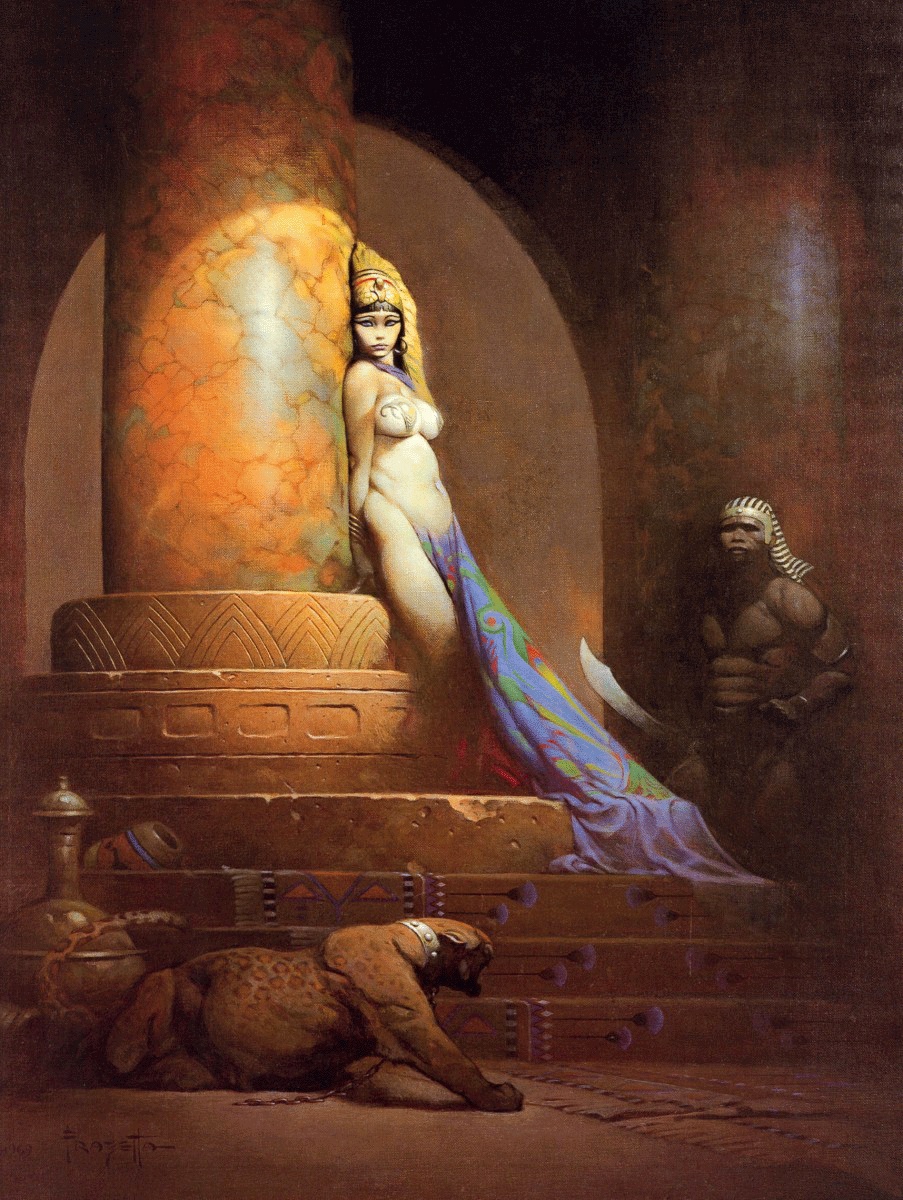
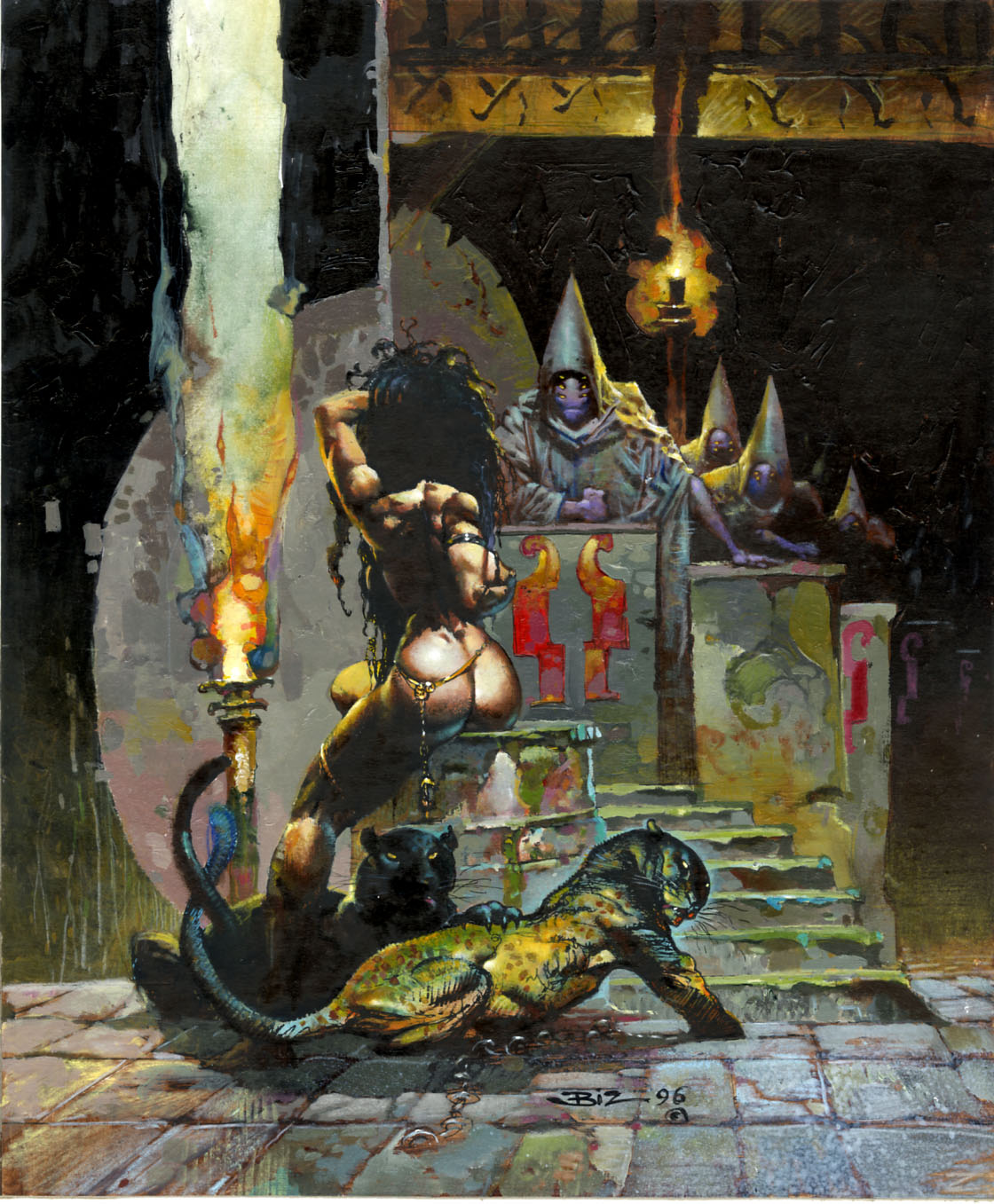
IMHO, all signs point to Frank Frazetta’s seductive Egyptian Queen (1969) as the “inspiration” for Simon Bisley’s comparatively coarse FAKK 2 illustration (1996):
"This day's experience, set in order, none of it left ragged or lying about, all of it gathered in like treasure and finished with, set aside." –Alice Munro, "What is Remembered"
IMHO, all signs point to Frank Frazetta’s seductive Egyptian Queen (1969) as the “inspiration” for Simon Bisley’s comparatively coarse FAKK 2 illustration (1996):

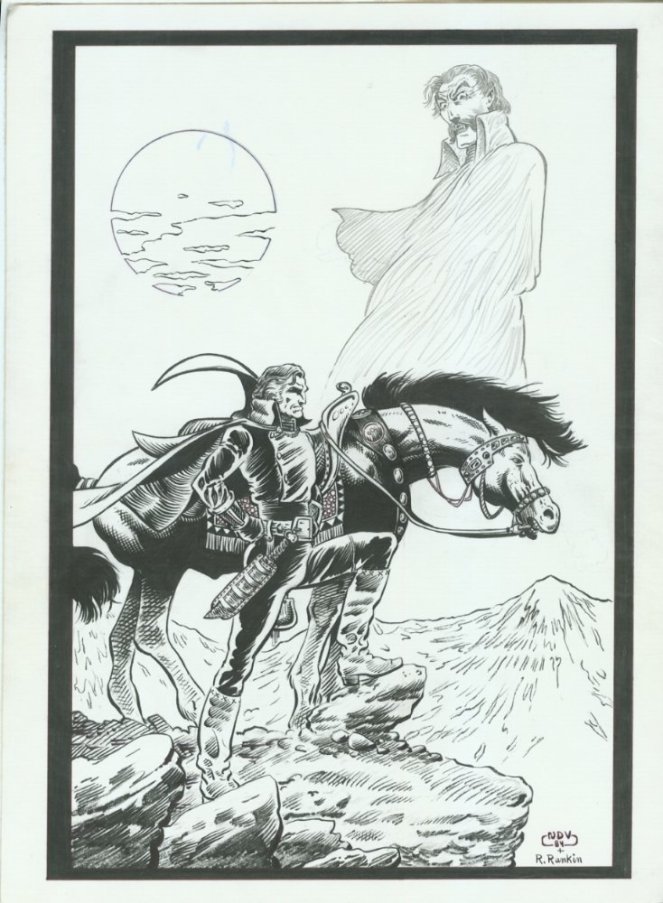
Look at the bridle on Vokes’s version of Frazetta’s horse. Now you tell me: what’s missing from the design that renders it useless as a device one might use to control a real horse? (I see several problems with it.)
Of course, Frazetta’s Kubla Khan on horseback is itself little more than a variation on the longstanding Western theme of the weary Indian warrior on an exhausted horse, a.k.a. End of the Trail, which dates back to the 1915 sculpture by James Earle Fraser.
UPDATE:
In the world of functional bit-bridles, the country bridle and the western split-ear are about as minimalist as it gets:



Notice that the crucial elements in both cases are 1) a strap that attaches to one side of the bit, runs up the cheek of the horse, over the head behind the ears, down the other cheek, and attaches to the other side of the bit, and 2) an ear or brow band to prevent the bridle from sliding either down the neck towards the rider or around the head in a circle, which would pull the bit out of the mouth and onto the cheek. Seeing what a minimalist bridle looks like makes it easy to see what’s wrong with Vokes’s version, which consists of a combination browband/throat latch and an entirely separate noseband, with no cheek pieces or headpiece at all.
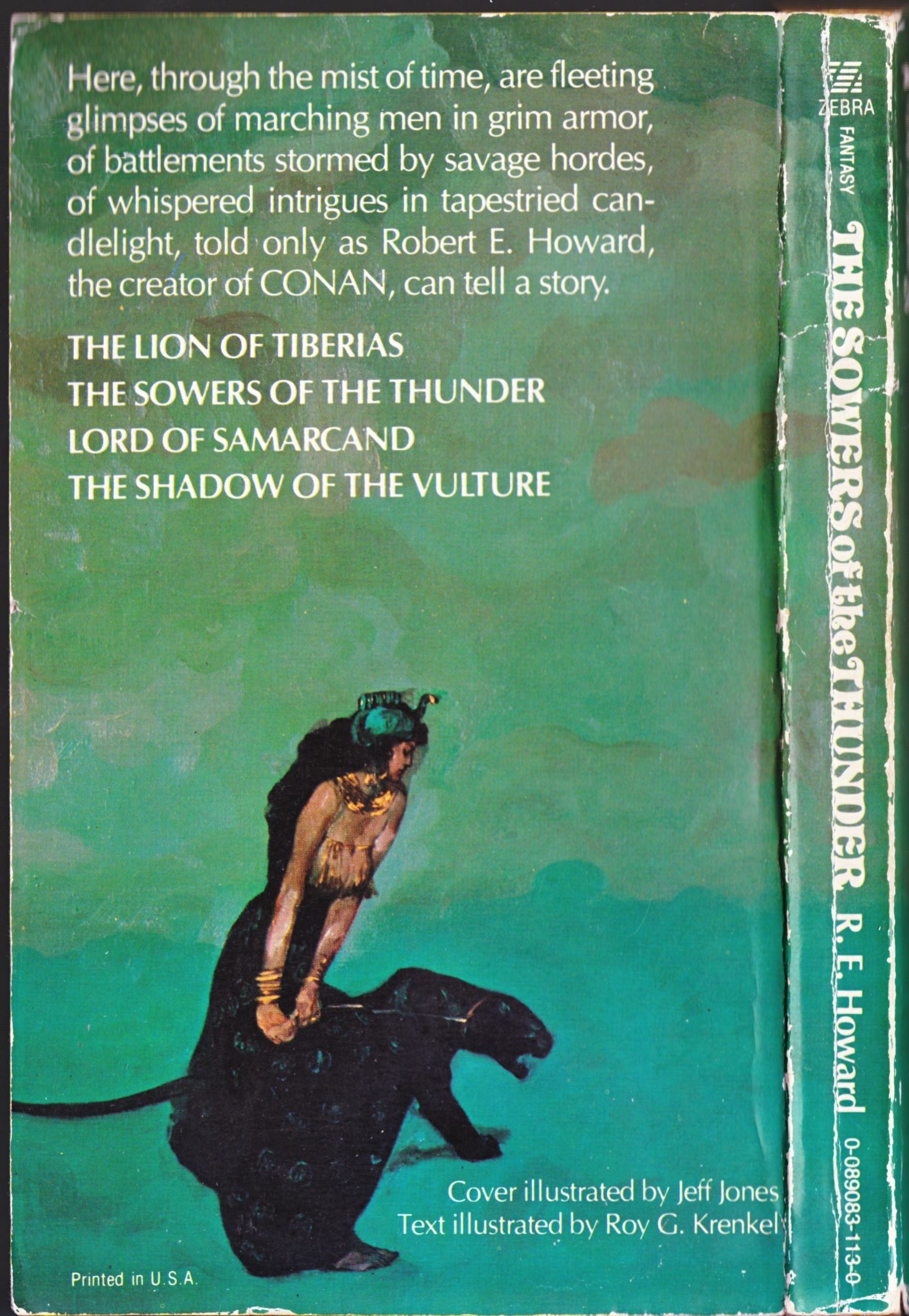
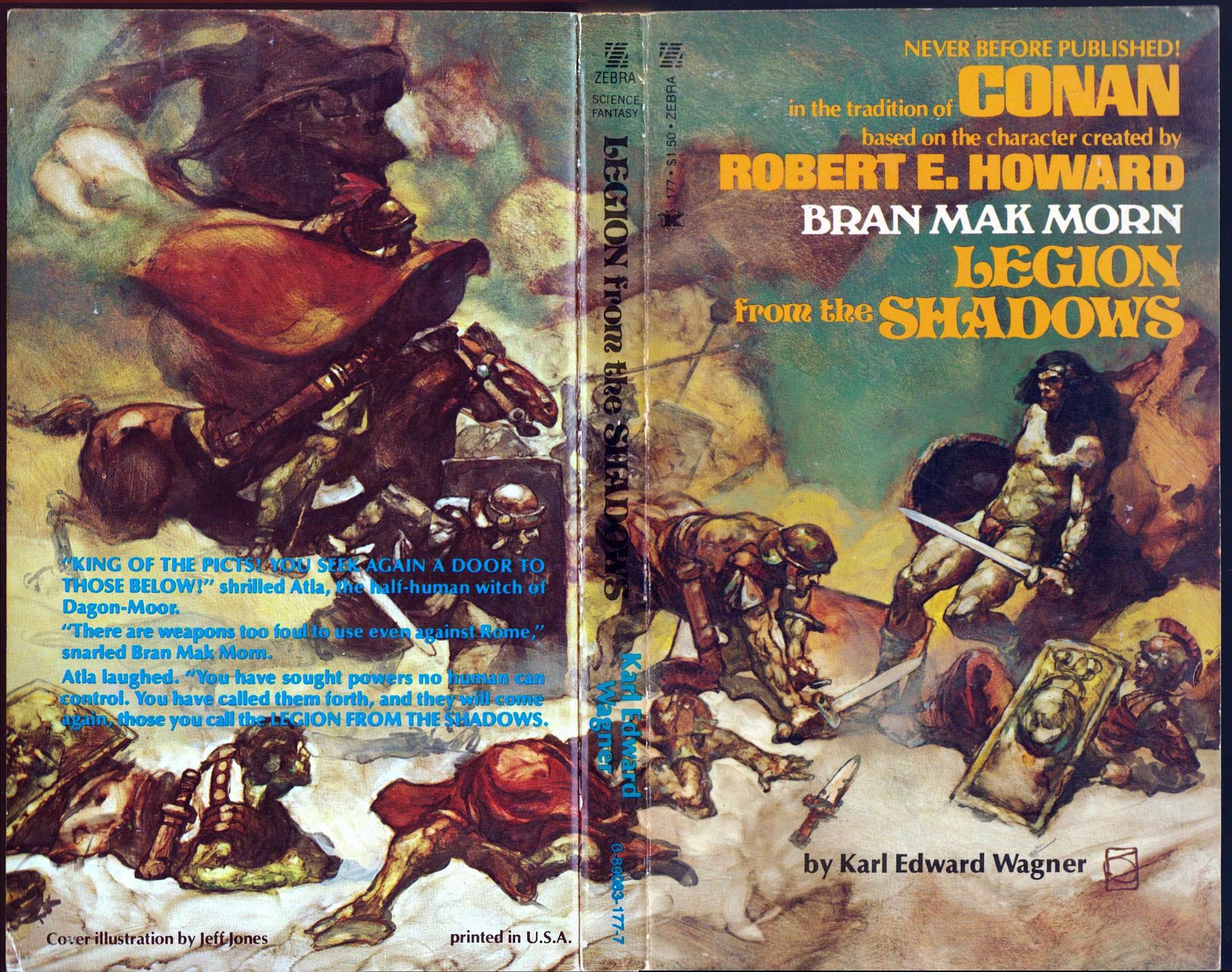
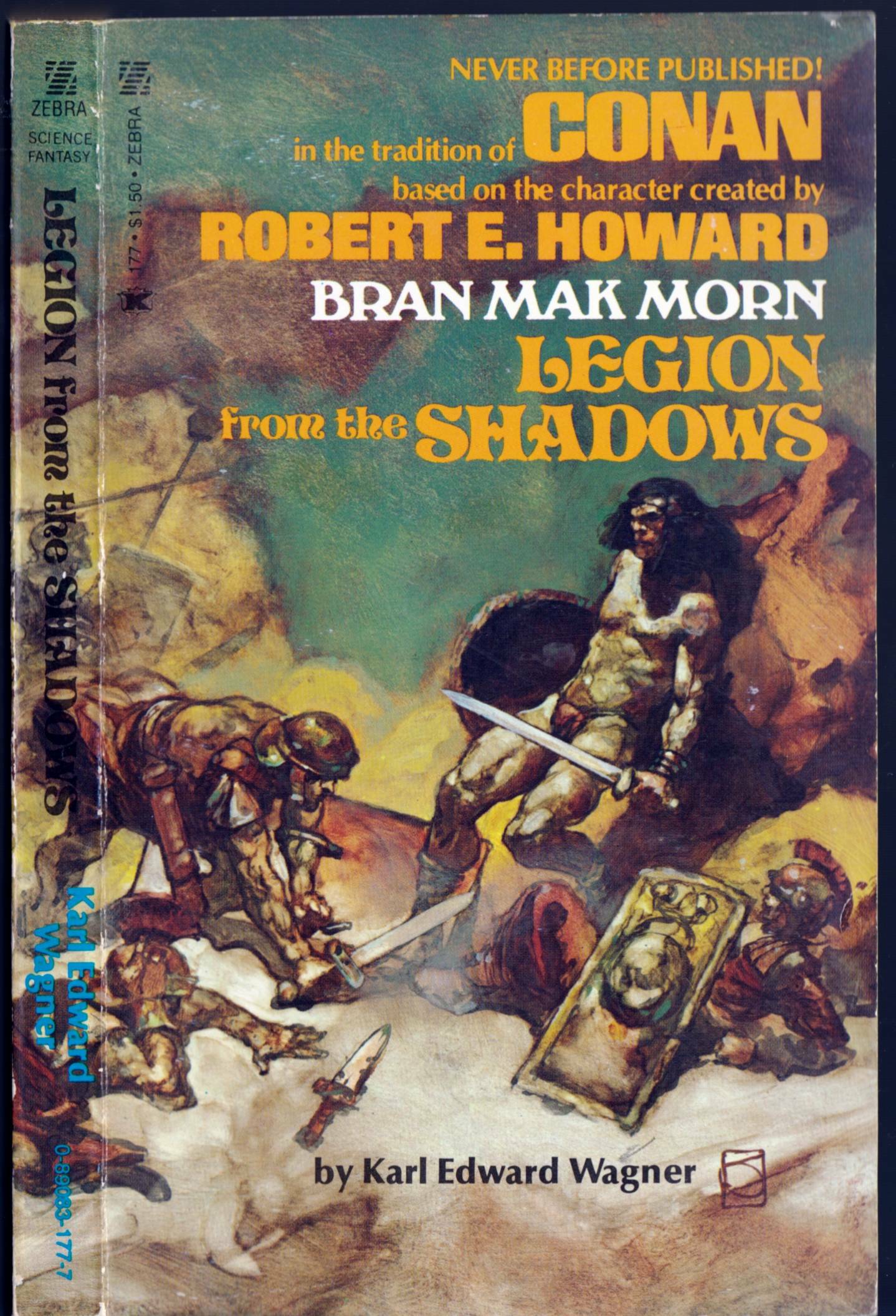
This post is a sequel to a previous effort that featured two Zebra-Kensington REH covers, with art by Jeffrey Jones (as usual, click the image below to view a larger version):
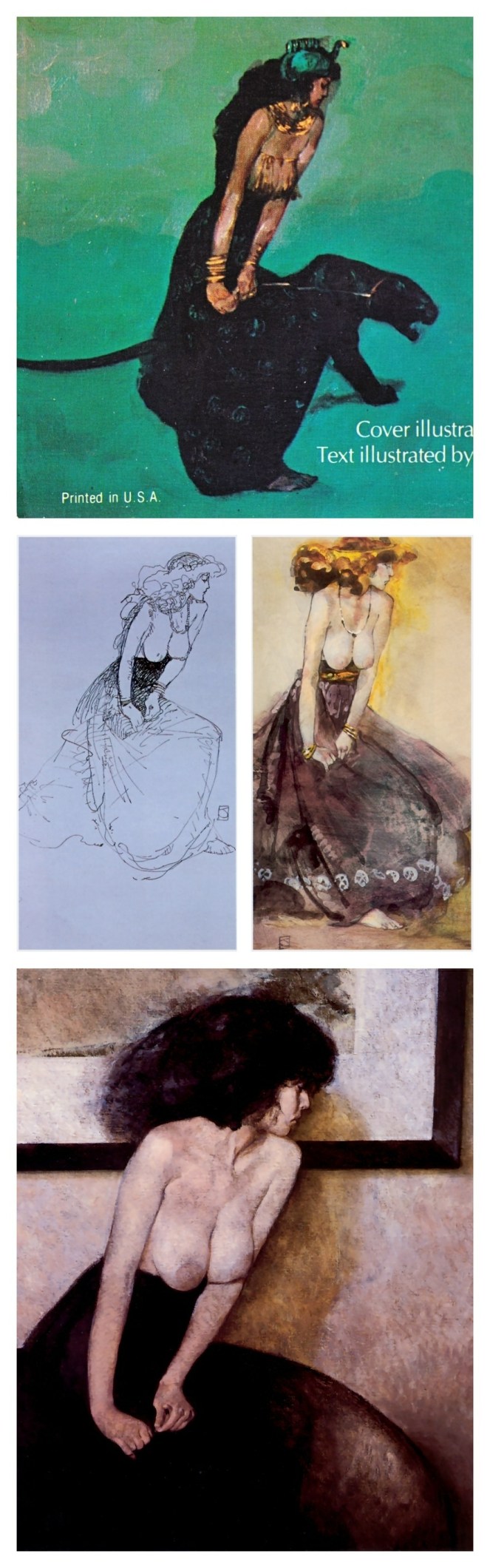
“After a few years in NYC a friend of mine, a great artist, much older than me, the late Roy G. Krenkel, told me that I was the Master of the Meaningless Gesture. Well, I do this in my art because I don’t want to tell anyone anything. Also in my words, like my poem. I want the people to bring themselves to the work, based on their own experience.”
— Jeffrey Jones, autobiography
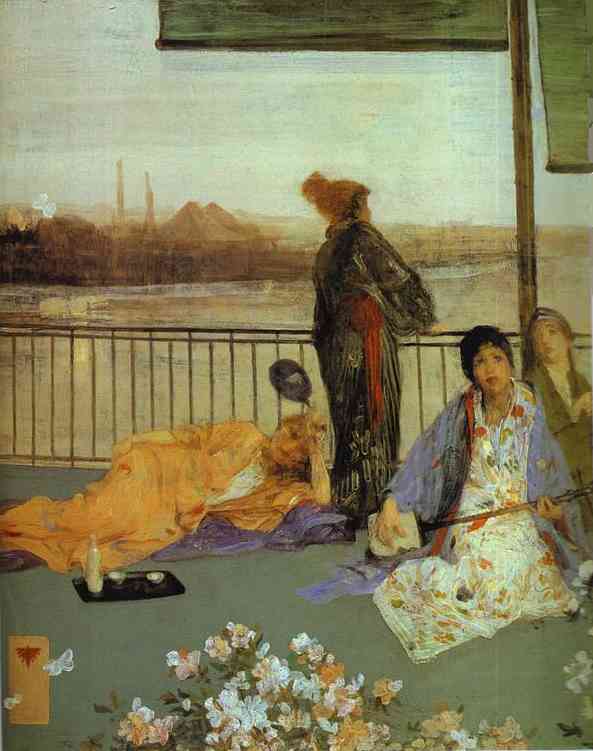
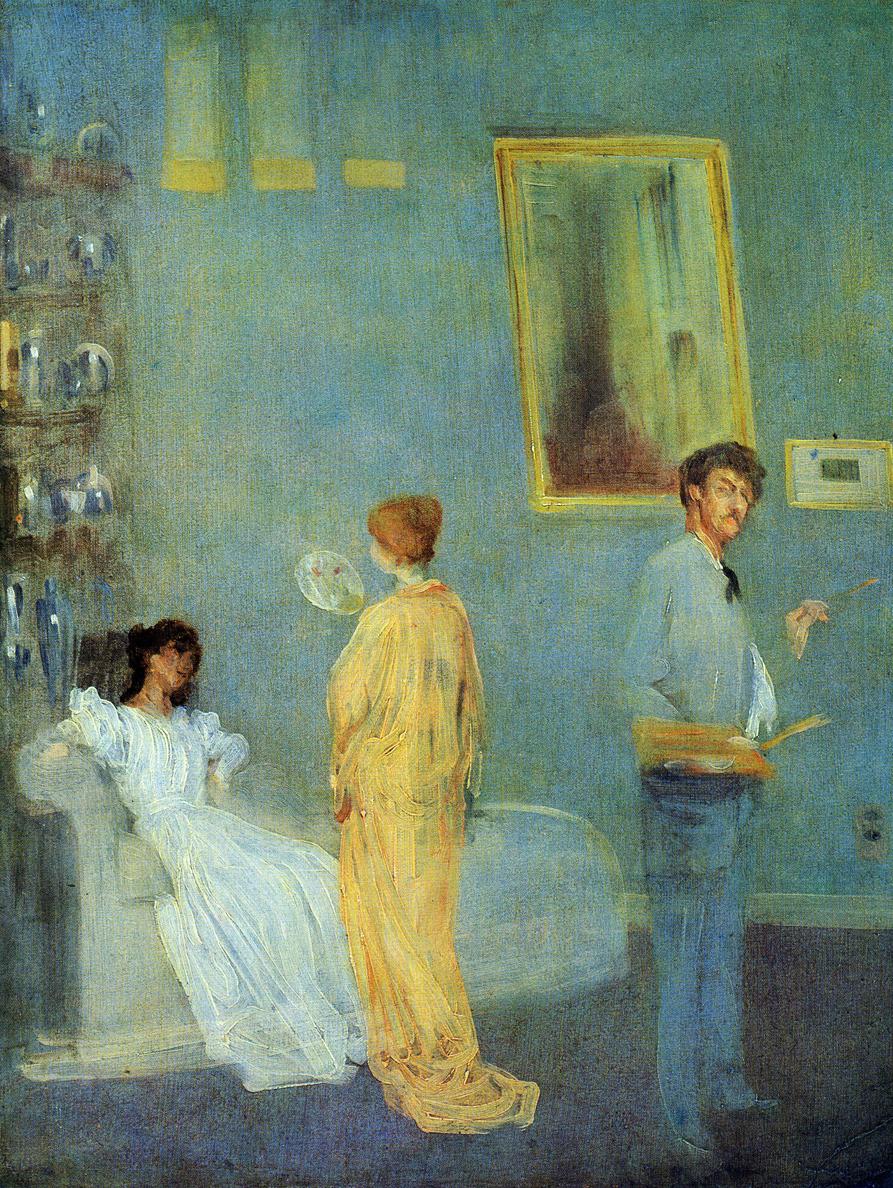
As I noted on this blog a long time ago, Jones’s paintings for Zebra Books/Kensington Publishing Corporation were one of the high points of the artist’s career as a cover artist. What I find interesting when I compare the two covers posted below, though, is the difference in Jones’s imagery and technique from one to the other. Whereas Legion from the Shadows features a rather abstractly composed fantasy battle scene delineated in thin washes of oil paint with relatively little opaque overpainting — some of the lightest lights in the painting have been created simply by wiping out the paint to expose the white ground — The Sowers of the Thunder explicitly hearkens back to the imagery and technique of James McNeill Whistler as evidenced in works such as Variations in Flesh Colour and Green: The Balcony and The Artist’s Studio, both of which I’ve included below for the sake of easy comparison. Whistler and Robert E. Howard — an odd couple if ever there was one!
[CLICK IMAGES TO ENLARGE]



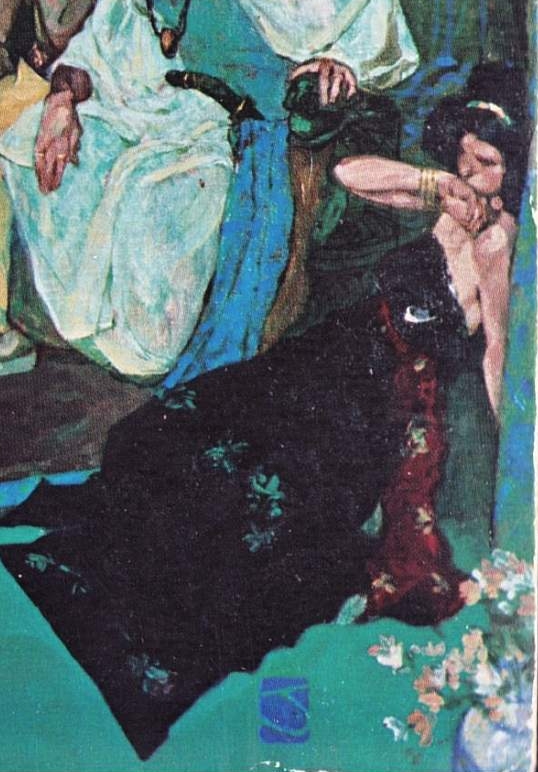
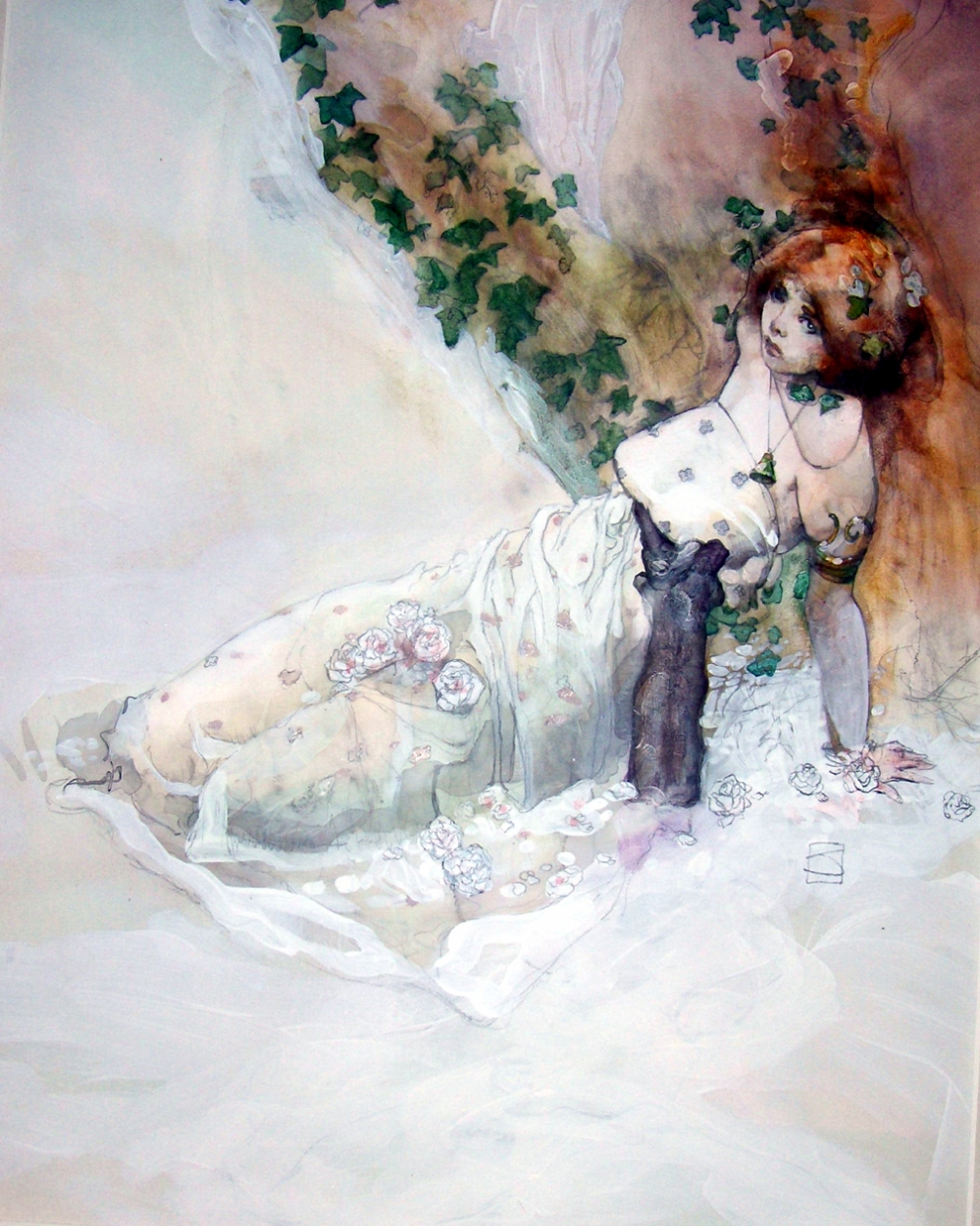
The final two images above provide a comparison between the figure in the right foreground of The Sowers of the Thunder and the original art for one of the plates in Jones’s As a Child portfolio (Colchester, CT: Black Lotus, 1980).
[CLICK IMAGES TO ENLARGE]
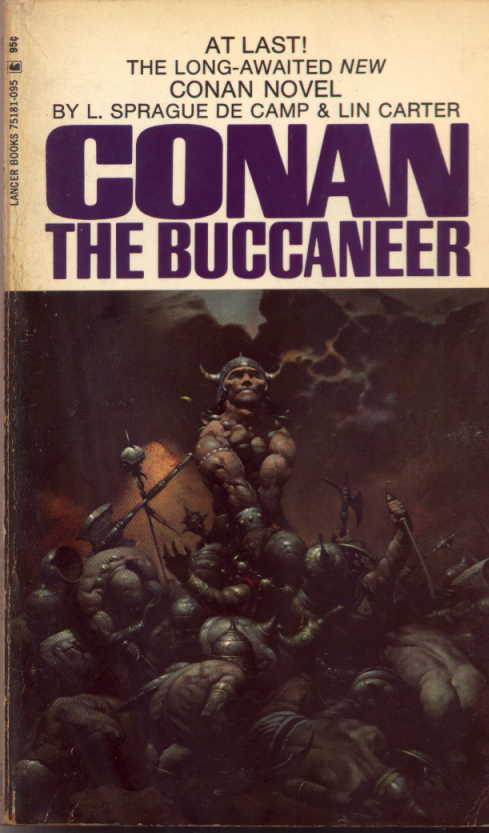
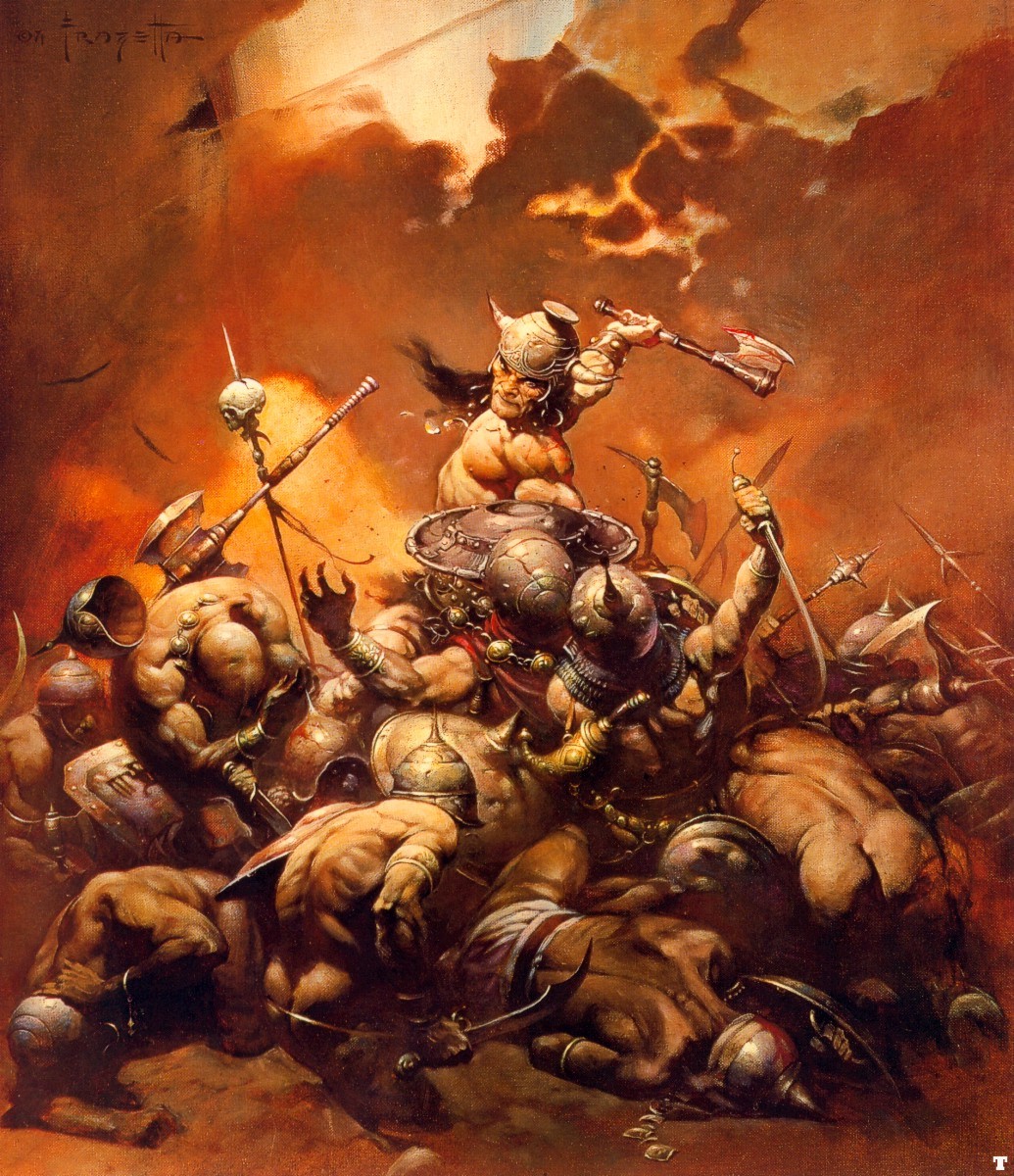
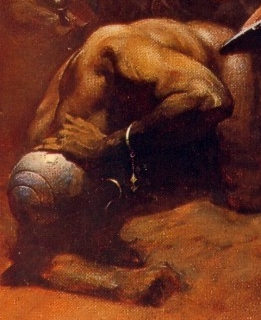
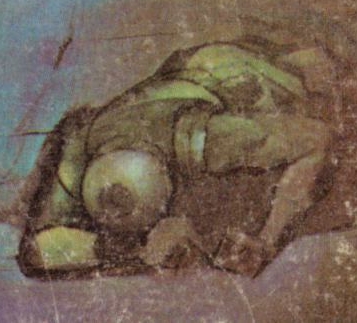
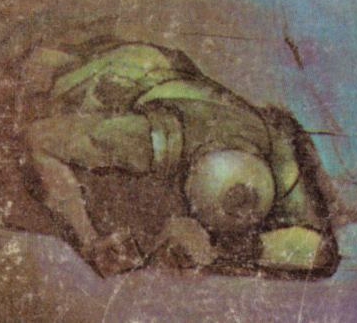
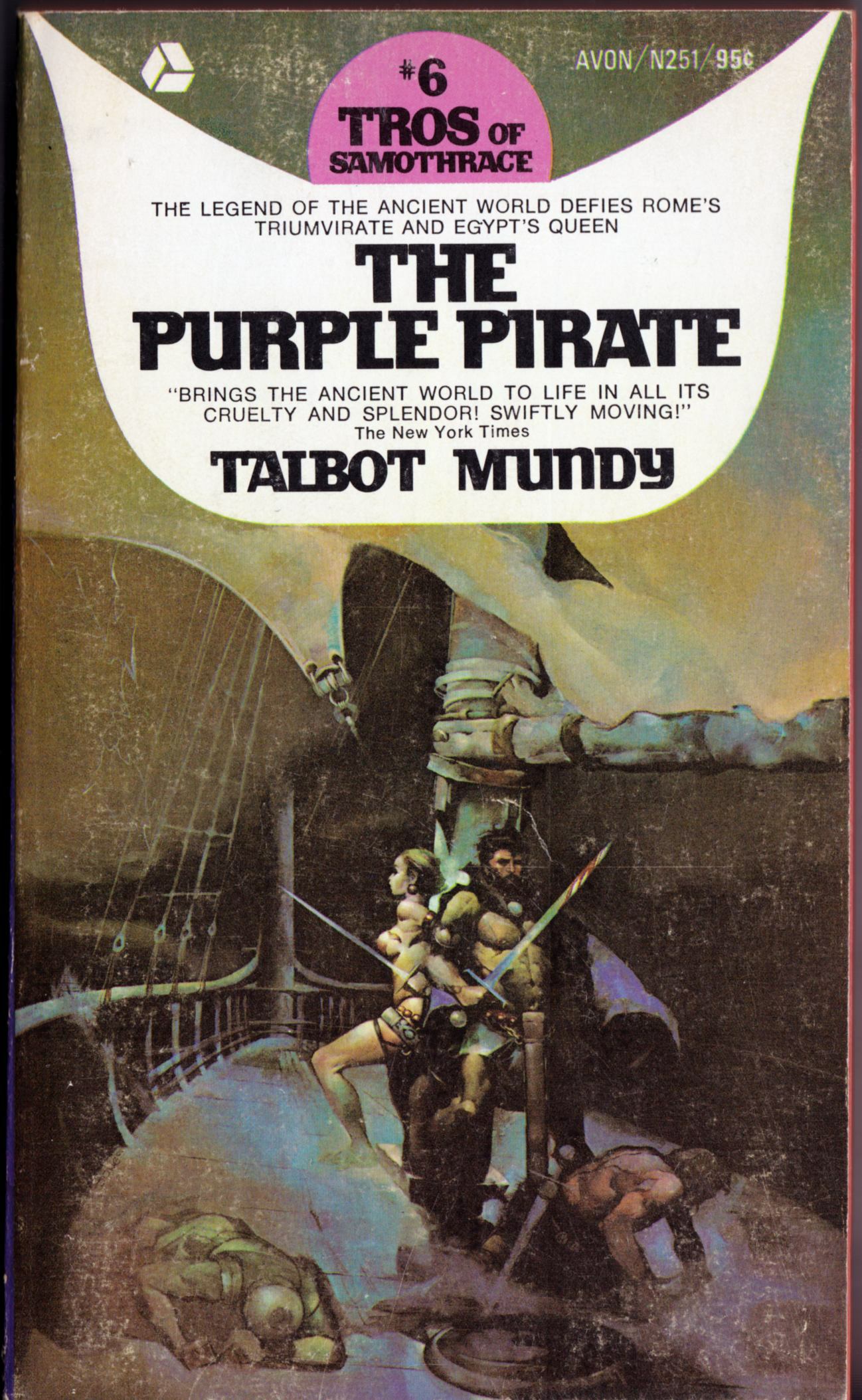
The helmeted, injured soldier in the lower left quadrant of Frank Frazetta’s Buccaneer/Destroyer painting and the helmeted, injured soldier/sailor in the lower left quadrant of Jeffrey Jones’s painting for Talbot Mundy’s The Purple Pirate are not exact copies of each other, as you can plainly see above, and yet, they do seem to share a certain family resemblance. So much so, that one might venture to guess that one of the painters has been “inspired by” the other in this detail… however, it’s not at all clear to me who was inspired by whom. Near as I can tell, the Jones cover was published first, in 1970; the Frazetta, second, in 1971. So make of that what you will…
Well… in all fairness, the two paintings posted below are different enough that I probably should have tossed this post into the “Connections” category. And you know what? I think I might have done so, if only Boas’s style here weren’t every bit as derivative as his concept…
[CLICK IMAGES TO ENLARGE]

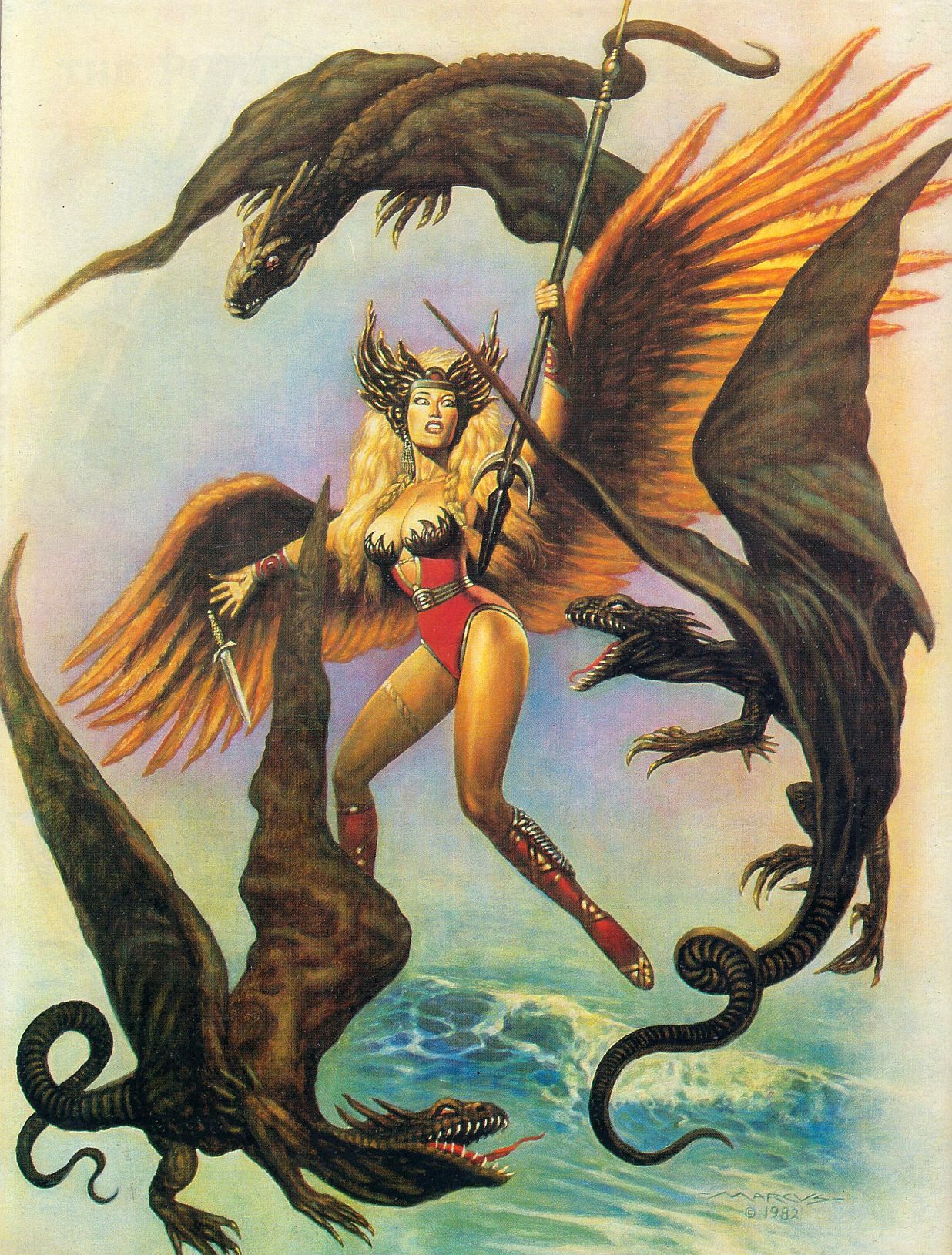
Marcus Boas’s debt to Frazetta in the above painting is clear enough, I think; however, in terms of painting technique, colour sense, and model types, Boas owes an even bigger debt to Boris Vallejo circa 1980. Because the fact is, Boas’s Heroic Fantasy painting is pure pastiche. It has nothing original about it other than the poorly designed creatures whose misshapen wings are attached to their bodies by wishful thinking rather than by anatomy and the inevitable awkwardness that seems to emerge whenever a mediocre illustrator attempts to make changes to a composition he has cribbed from an acknowledged master.
BONUS IMAGES:
Two covers by Boris Vallejo, scanned from the paperback library of yours truly:

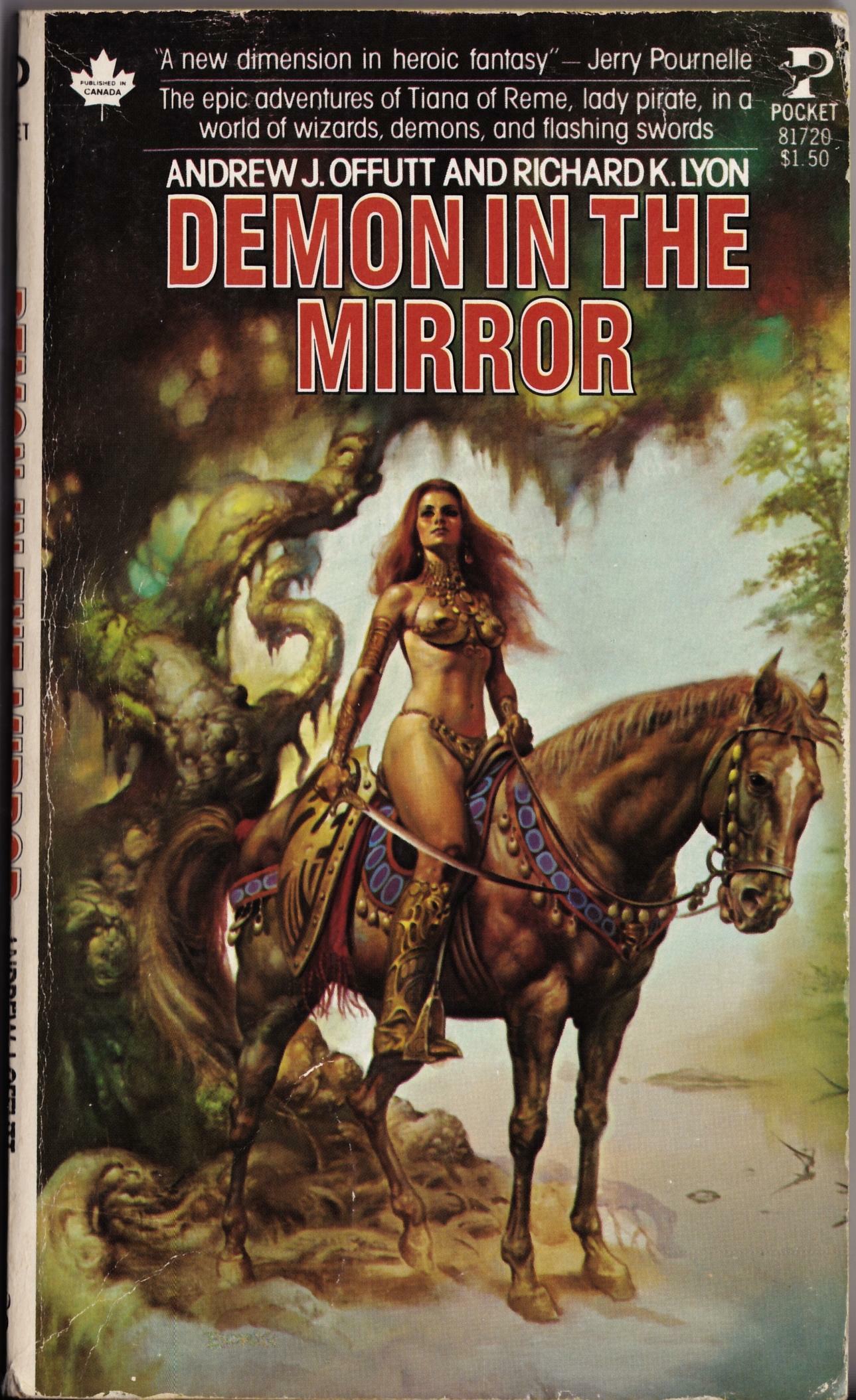
As I recall, Boris’s un-Frazetta-like cover for Demon in the Mirror made a big impression on me as a teenager, and truth be told, it remains one of a handful of Boris’s covers that I quite like. In recent years, Boris has unfortunately transformed his fantasy art into a platform to indulge what can only be described as a personal fetish for the bodybuilder physique, both male and female. Notice, however, that no bodybuilders were recruited to pose and flex for either of the above covers — thank god!

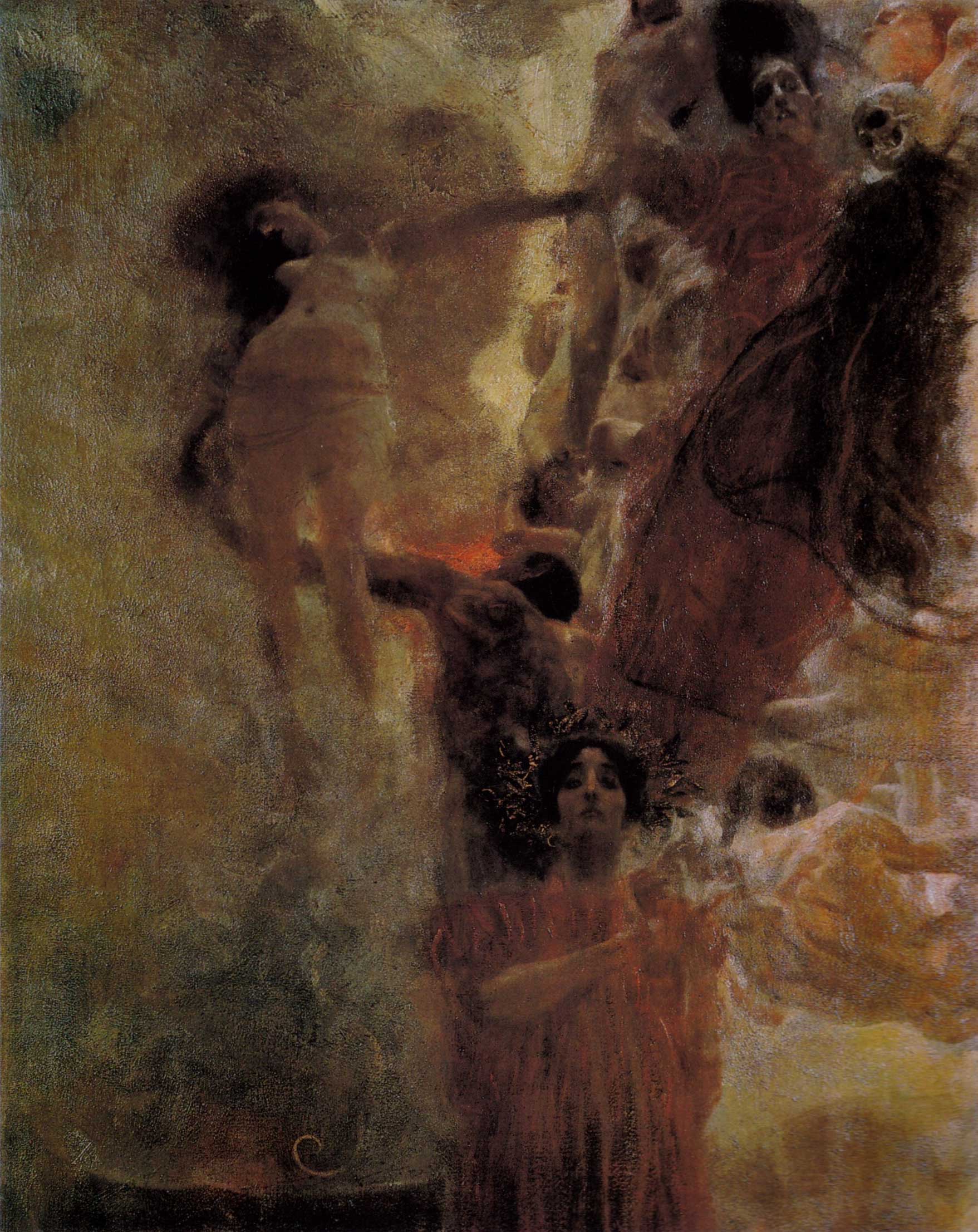

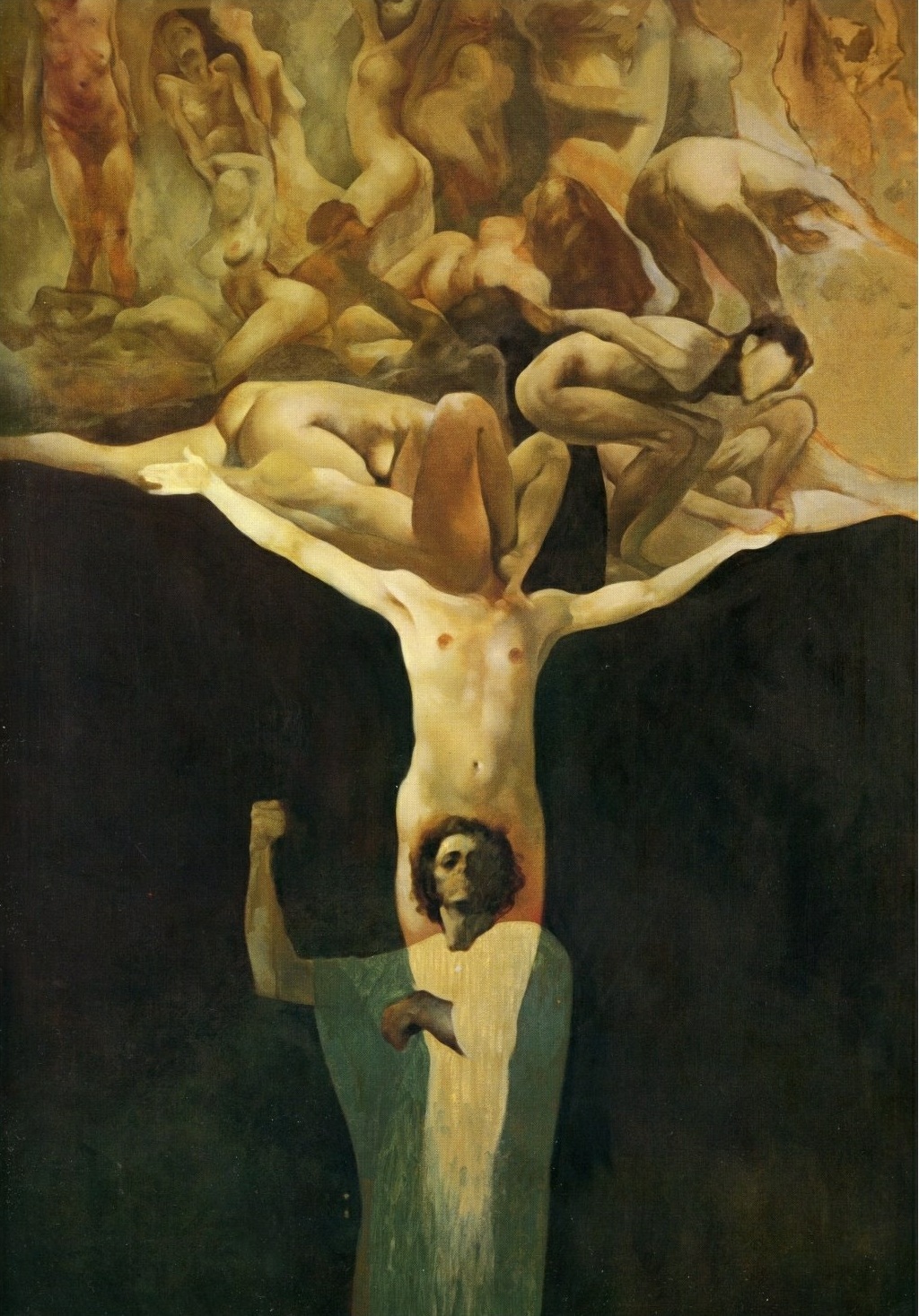


A handful of photographs and preparatory sketches are all that is left of Klimt’s controversial “Faculty Paintings.” All three — Philosophy (1900), Medicine (1901), and Jurisprudence (1903) — were destroyed in May 1945 when the retreating Nazis, who had illegally seized Klimt’s paintings from their legitimate owners, set fire to Schloss Immendorf, a castle in Lower Austria to which the paintings had been transported in 1943 for safe keeping.
P.S. The reason I’ve included the photo of Jurisprudence is simply to complete Klimt’s triptych for those who haven’t seen it. It’s not because I think it had a particular influence on the paintings by Jones included above.
P.P.S. Yes, I am aware that there are several other Klimt-inspired paintings by Jones. Maybe another time…
Sometimes “connection” ain’t nothing but swipe misspelled:


I noticed the Suehiro Maruo page just this morning on the Entrecomics site, where it was posted to illustrate a review of La extraña historia de la Isla Panorama (Glénat, 2009). The reviewer, however, made no mention of the Courbet swipe.
Of course, it may be that the artist intended the swipe to be noticed, that it’s a deliberate visual quotation that reinforces or plays off of specific ideas in the story. Unfortunately, at this moment, I have no way of knowing, since I have only seen that one page from the story, and what’s more, I don’t read Spanish (though it’s easy enough to run blog posts through the Google translator to get the gist of them).
Look closely and you just might see the tell-tale signs that Big John Buscema had Frazetta’s lion in mind, and perhaps even on his desk, when he drew the cover of Conan the Barbarian #96:
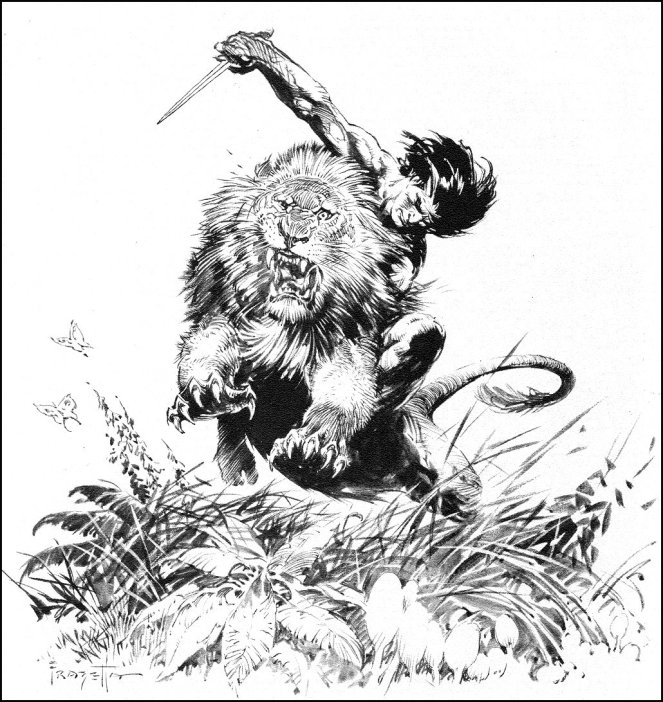
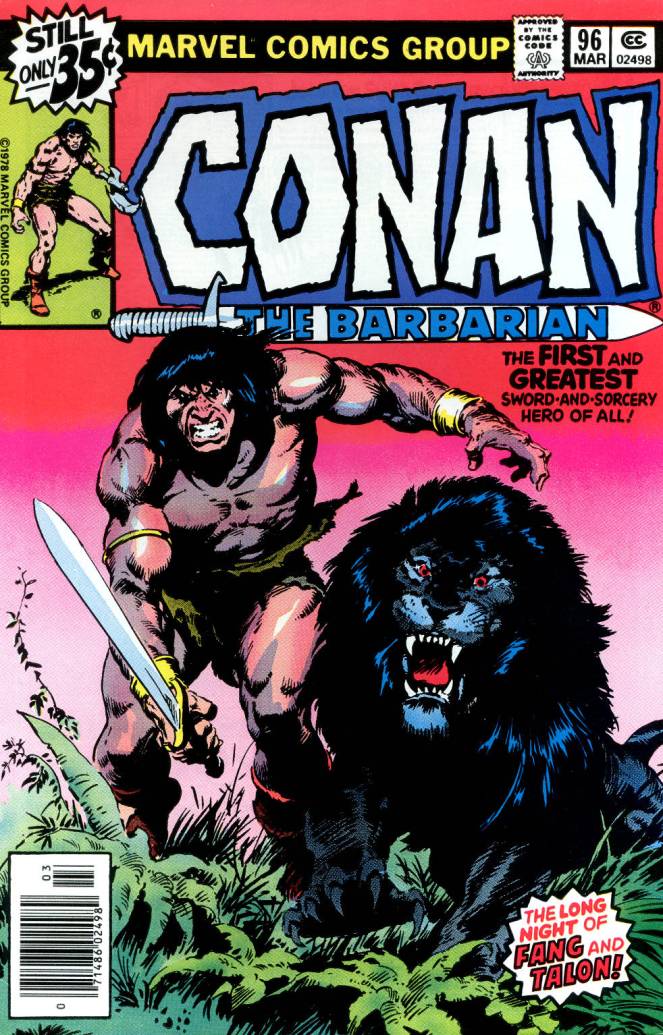
The face of Frazetta’s lion is so lively and expressive that it makes Buscema’s more symmetrical version seem flat and mask-like in comparison.
BONUS IMAGE:
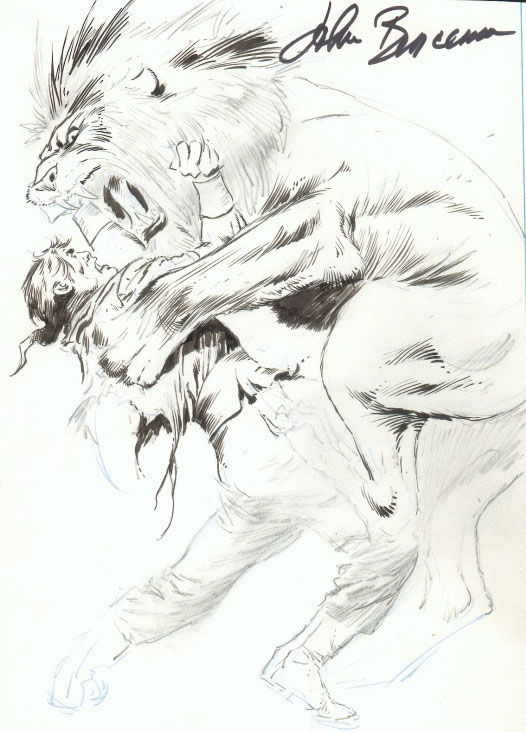
Now that’s more like it!
The Bud’s Art Books catalogue arrived today, and as I was flipping idly through the pages, I noticed something that seemed familiar in a tiny thumbnail image of a book cover (issue 1010F, page 67, item E). Here, take a look at the much larger images below, and see if you notice it, too.
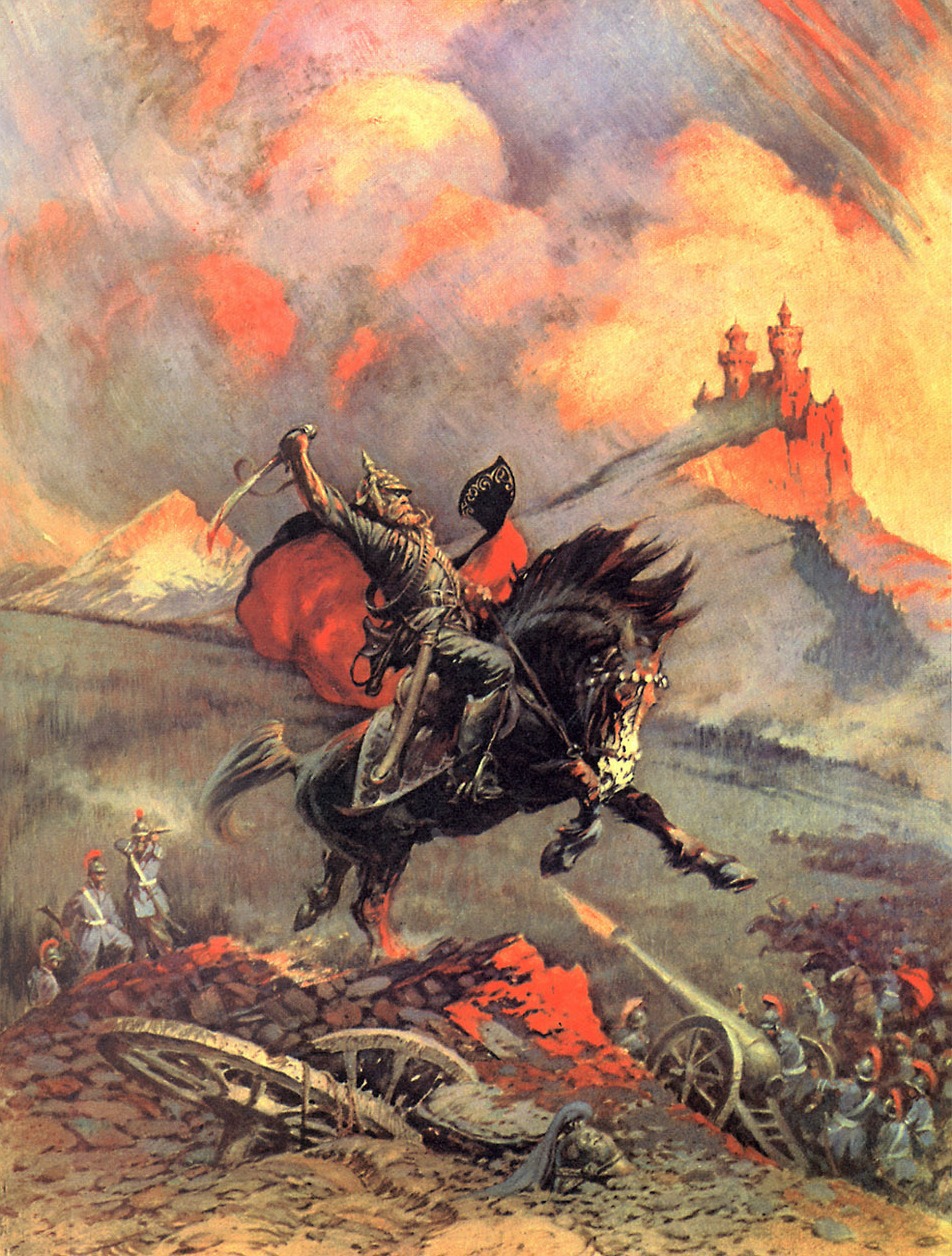
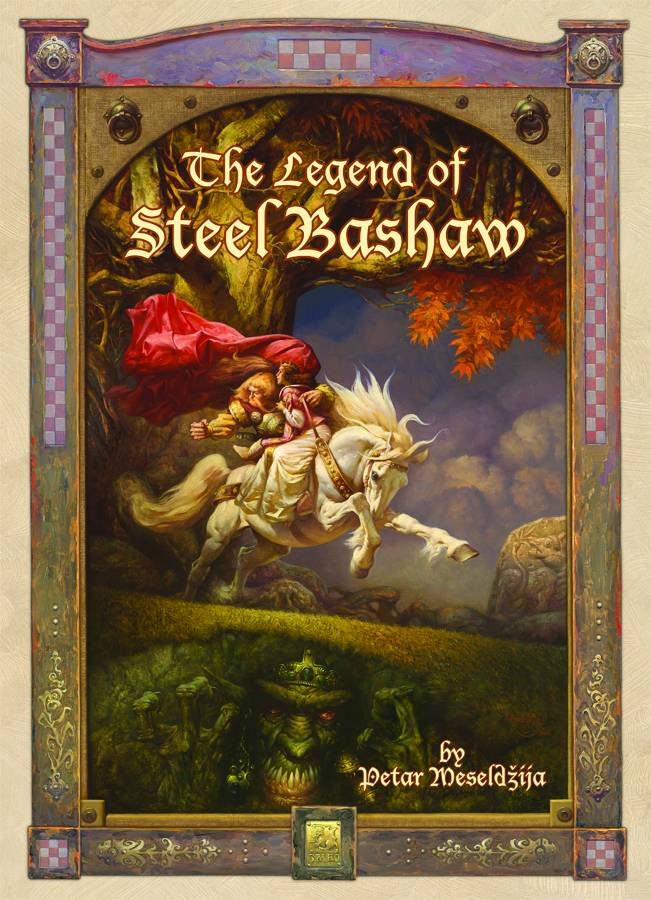
Is this mere happenstance? Maybe, maybe not. You decide.
 Ragged Claws Network
