"This day's experience, set in order, none of it left ragged or lying about, all of it gathered in like treasure and finished with, set aside." –Alice Munro, "What is Remembered"
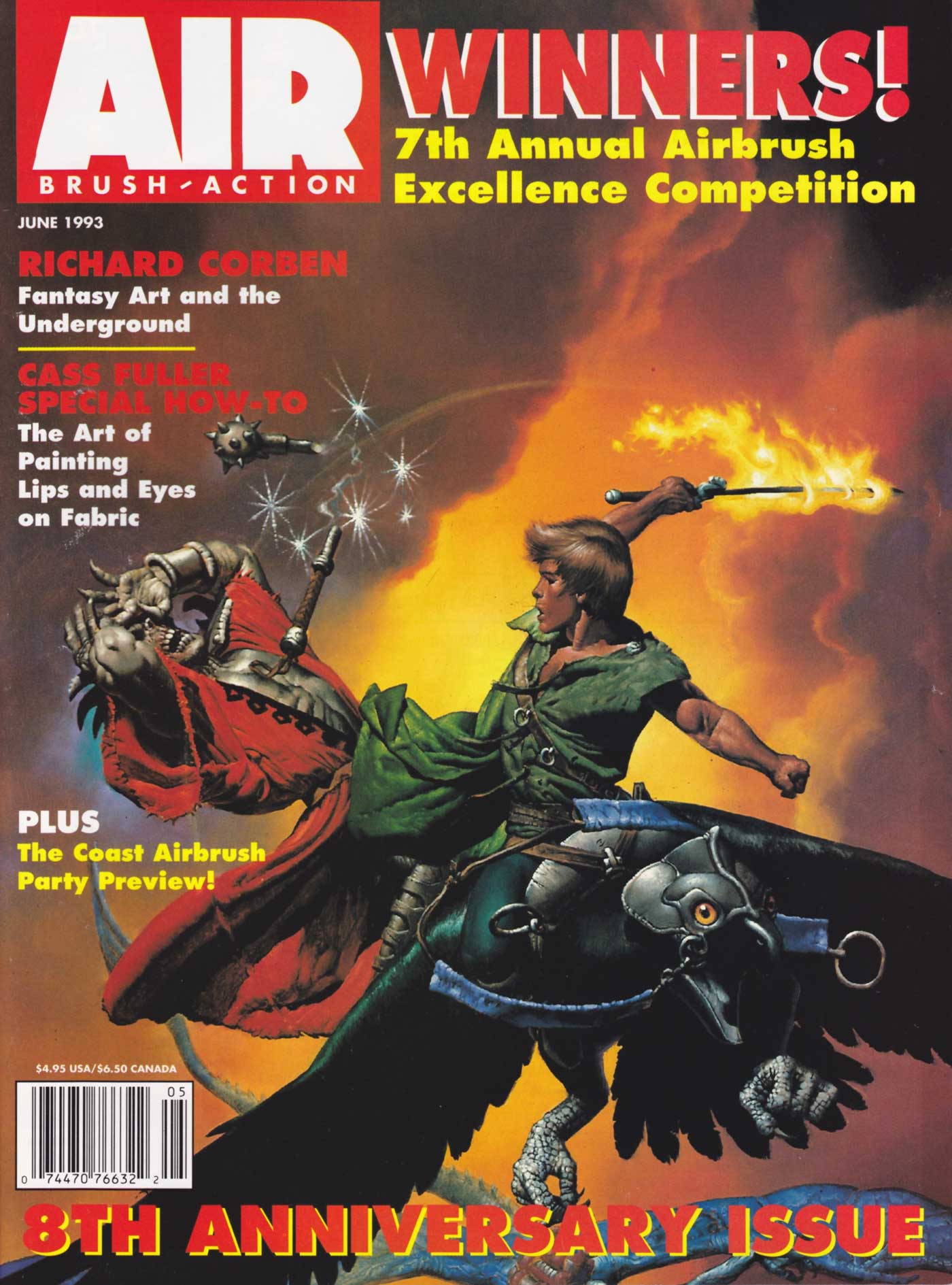
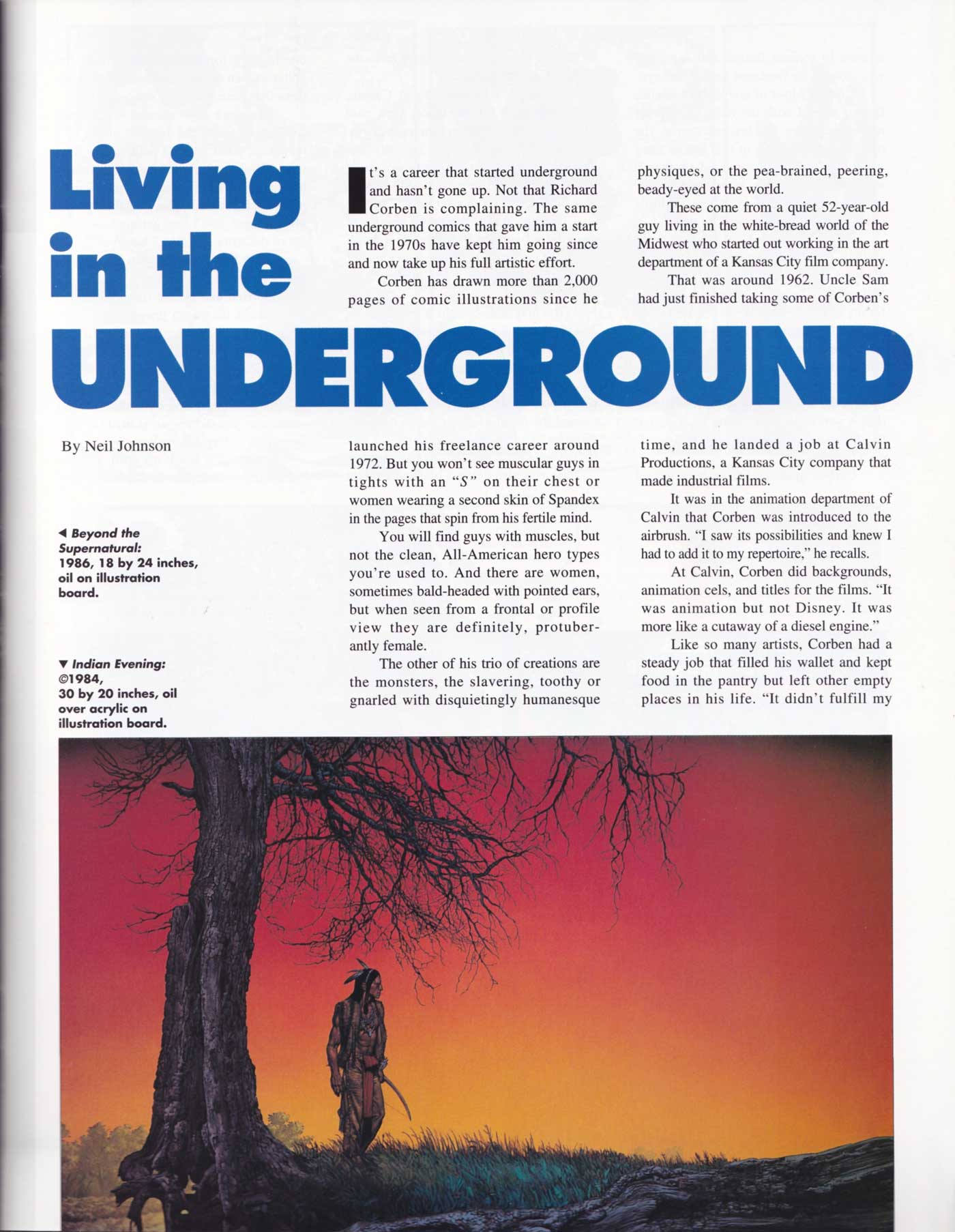
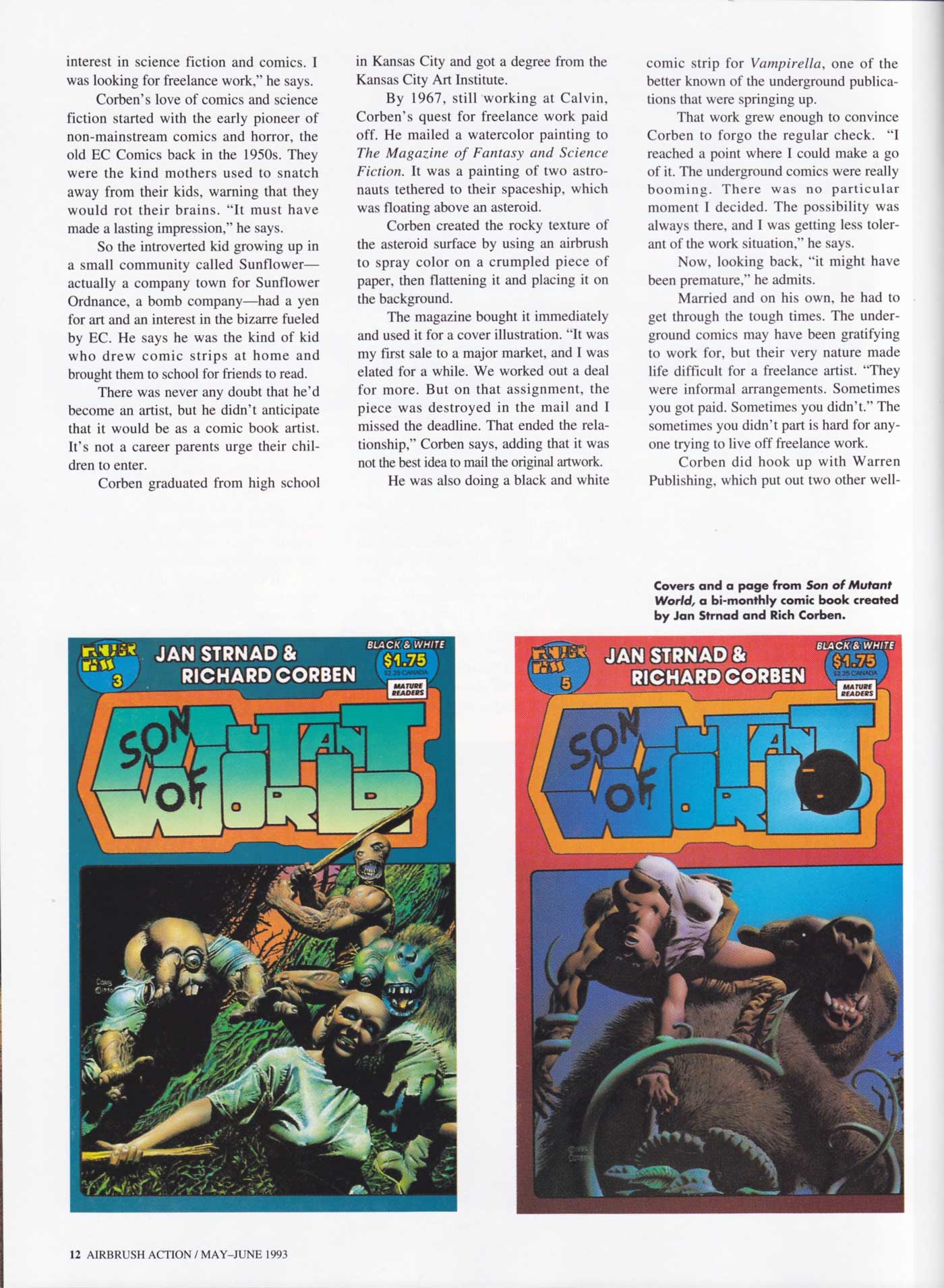
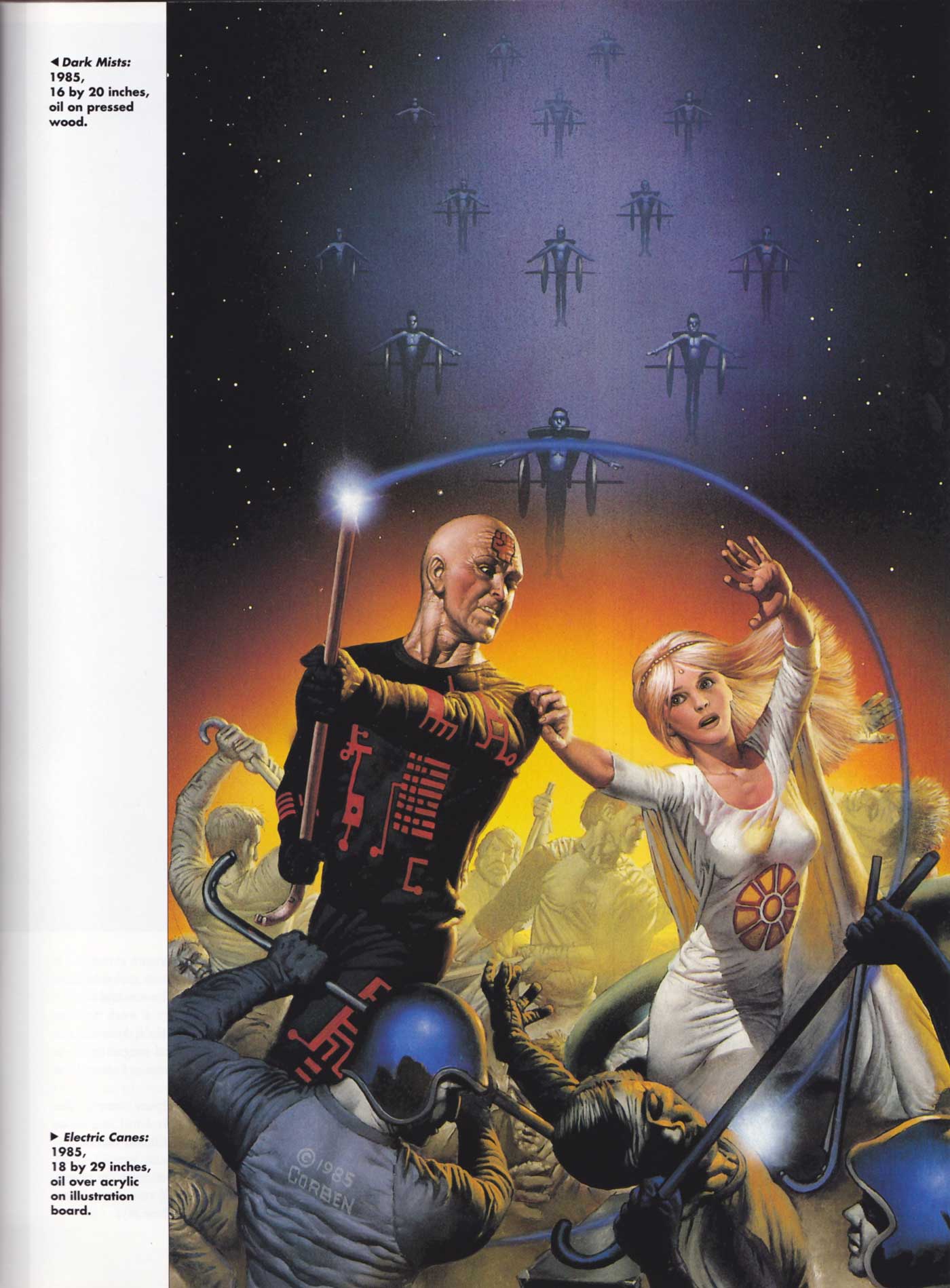
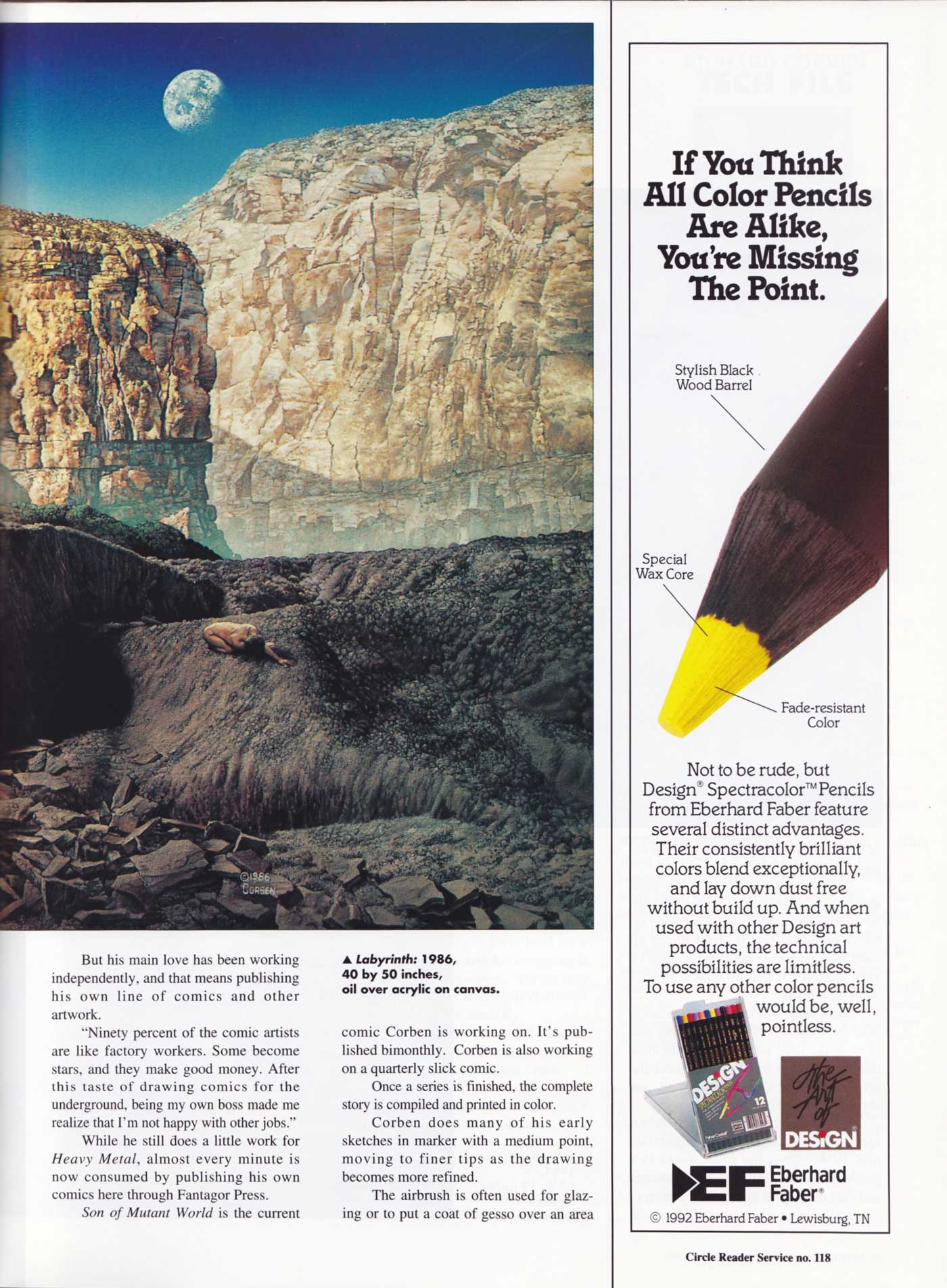
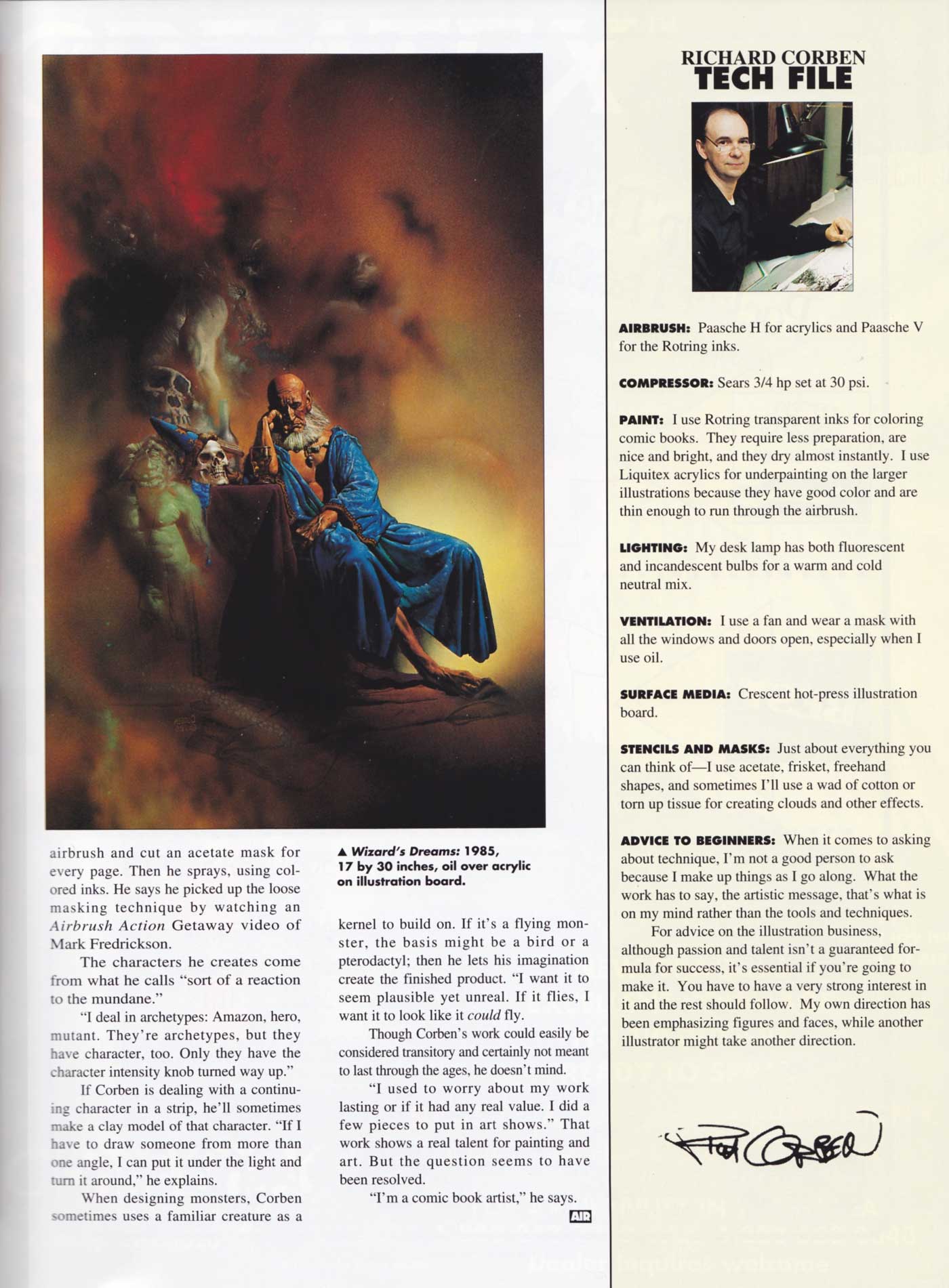
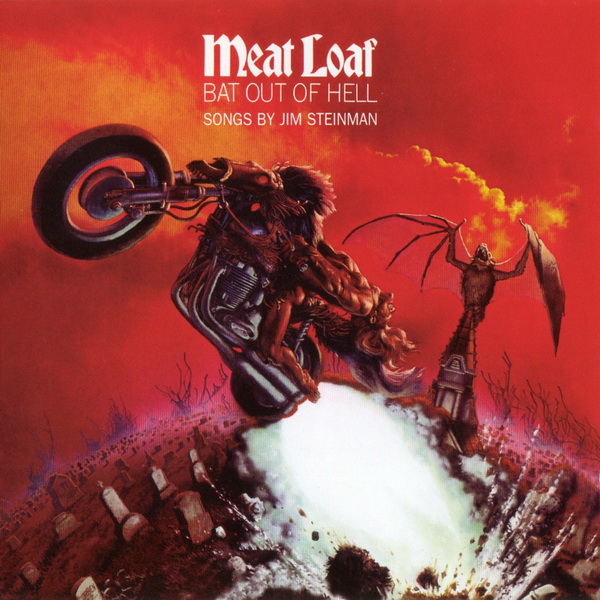
The following interview-based article on Richard Corben from the June 1993 issue of Airbrush Action was published at a time when Corben’s creative energy was almost entirely focused on his own Fantagor Press. The article includes a brief overview of Corben’s career to that point, technical information about how Corben used Paasche H and V airbrushes in conjunction with other media, and cool tidbits such as Corben’s recollection that the celebrated Bat out of Hell album cover took him only two days to produce.
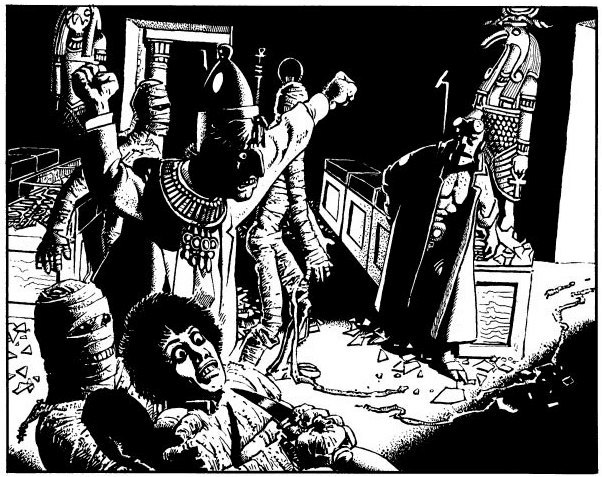
And as a bonus, at the end, I’ve included a pair of images that don’t appear in the interview.
Enjoy!
ABOVE: Colin Kapp, The Wizard of Anharitte (New York: Ace, 1980), with cover by Richard Corben.
Keywords:The Wizard of Anharitte, Bat Out of Hell.
Houghton Mifflin Harcourt Acquires the Philip K. Dick Library
Global education publisher plans to launch program with two-volume unpublished master work, The Exegesis of Philip K. Dick
NEW YORK, NY — April 28, 2010 — Houghton Mifflin Harcourt has acquired North American publishing rights to Philip K. Dick’s two-volume unpublished masterwork, The Exegesis of Philip K. Dick. Edited by Jonathan Lethem and Pamela Jackson, The Exegesis “serves as the foundation for ideas and themes that would appear throughout the work of this visionary author,” notes Bruce Nichols, Publisher of Adult Trade at Houghton Mifflin Harcourt. HMH has also acquired rights to 39 titles from the author’s backlist, which will be published in paperback under their Mariner imprint beginning fall, 2011.
During his lifetime, Philip K. Dick won both the prestigious Hugo Award and the John W. Campbell Award, which honor excellence in science fiction. Inducted into the Science Fiction Hall of Fame in 2005 and with publication in three volumes in the Library of America in 2007, Dick’s 45 novels and 120 short stories have been adapted into numerous films, including, most notably, “Minority Report” and “Blade Runner” (based on Do Androids Dream of Electric Sheep?). Other films based on his work are forthcoming.
“Philip K. Dick’s books remain as provocative and cutting-edge today as ever.” said Nichols. “Each generation wants to claim him as its own and we look forward not only to the landmark publication of The Exegesis in fall 2011, but to inspiring a new generation of readers with his significant backlist and its potential in all formats.”
Dick’s daughters, Laura Leslie and Isa Dick Hackett added: “We are excited by this opportunity to work with Bruce and his team at Houghton Mifflin Harcourt. We look forward to the re-launch and reinvigoration of our father’s backlist. The publication of The Exegesis of Philip K. Dick has been a goal of ours for years, and we’re thrilled to find a publisher who shares this goal, embracing Jonathan Lethem’s and Pamela Jackson’s edit.”
Jonathan Lethem, winner of the National Book Critics Circle award and recipient of the MacArthur Fellowship, is the critically praised author of eight novels, including Motherless Brooklyn and his latest, Chronic City. He has published and spoken widely on Dick and is the editor of the Library of America editions of Dick’s novels.
Pamela Jackson, is the author of a doctoral dissertation examining 2-3-74 and Dick’s Exegesis in the context of Dick’s life and fiction (The World Philip K. Dick Made), and has been working with the Philip K. Dick Estate since 2008 to develop a publishing and preservation plan for The Exegesis.
About Houghton Mifflin Harcourt
Boston-based Houghton Mifflin Harcourt Publishing Company is a global education leader and the world’s largest publisher of educational materials for pre-K-12 schools. The Company publishes a comprehensive set of best-in-class educational solutions, ranging from research-based textbook programs to instructional technology to standards-based assessments for students and educators. The Company also publishes an extensive line of reference works and award-winning literature for adults and young readers. With origins dating back to 1832, Houghton Mifflin Harcourt combines its tradition of excellence with a commitment to innovation. To learn more about Houghton Mifflin Harcourt, visit www.hmhpub.com
Contact:
Lori Glazer
Vice President, Executive Director of Publicity
Houghton Mifflin Harcourt
(212) 420-5840
In January 2011, Fantagraphics Books plans to release a hardcover edition, in English, of Stigmata, a 192-page, critically acclaimed collaboration between the great Italian illustrator and comics creator, Lorenzo Mattotti, and writer Claudio Piersanti, first published in 1998. As far as I am aware, only two comics by Mattotti, alone or in collaboration, are currently in print in English: 1) Dr. Jekyll & Mr. Hyde, with Jerry Kramsky (NBM, 2008), a harrowing adaptation of the famous novella, Strange Case of Dr Jekyll and Mr Hyde, by R. L. Stevenson, and 2) Mattotti’s recently re-printed contribution to Fantagraphics’ “Ignatz Series” of deluxe comics, Chimera #1 (2009). So let’s hope that this new reprint, unlike previous efforts, will open the floodgates for more of Mattotti’s amazing work to be brought into print in English — or back into print, as the case may be!
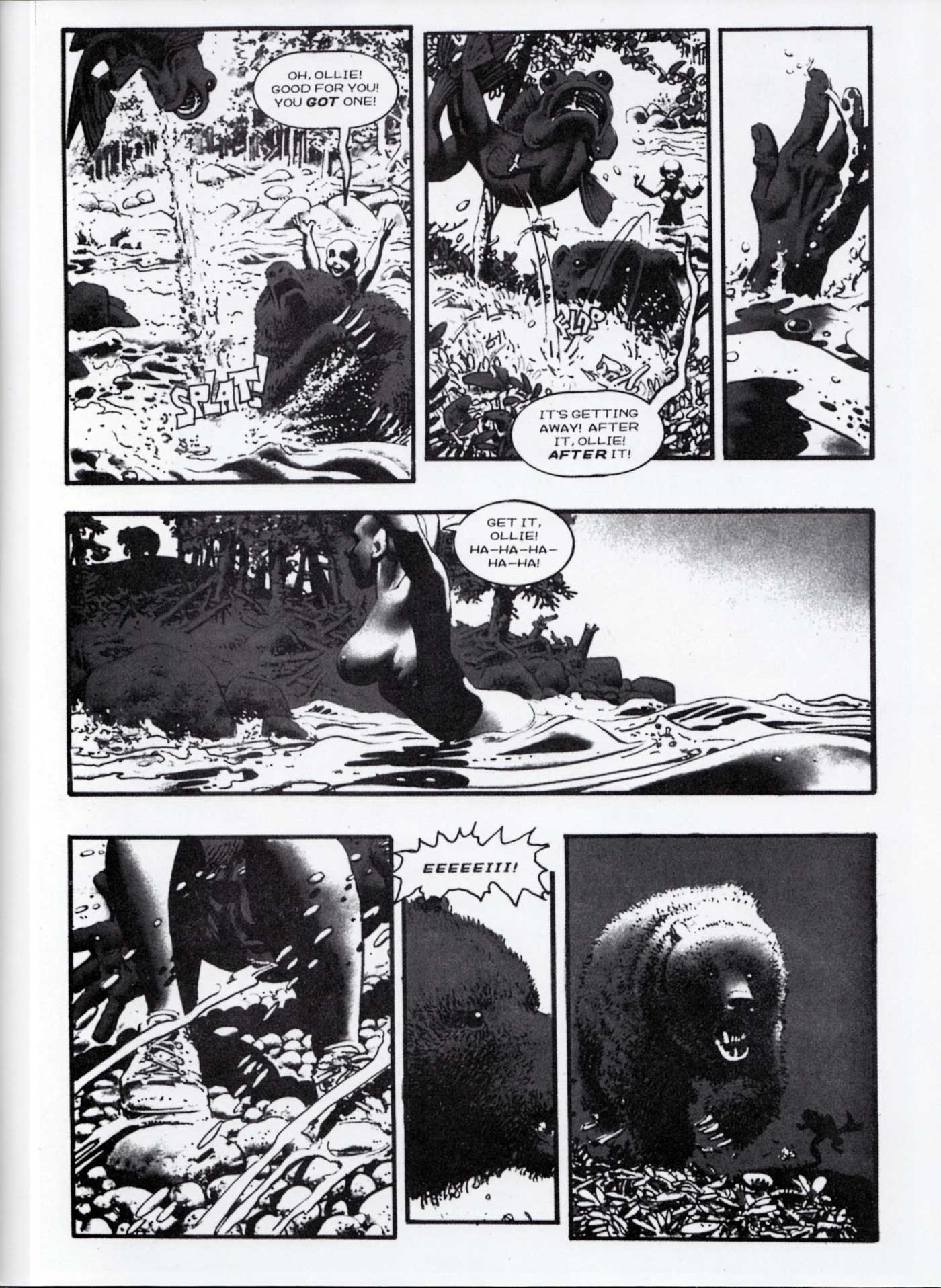
This morning, I received an email announcement that original black-and-white comic art pages by Richard Corben are now up for preview at the Corben Studios Web site and will go on sale on Saturday 29 May 2010, at noon CST. [N.B.: Due to technical difficulties with the secure cart service, the Corben art sale has been stopped today, 29 May 2010, and will be rescheduled. Please consult the Corben site for updated information!] Prices will be posted when the sale goes live, and pages will be allocated on a first-come, first-serve basis: “the first person to complete the shopping cart, gets the page.” The sale includes pages from Hellboy: The Crooked Man, Aliens: Alchemy, and Rip in Time. Here’s an example of a page you could own:
And one final thought: let’s all hope somebody somewhere has good quality digital scans of all of these pages, with proper backups, because reprints scanned from printed comics always show it, and I don’t mean in a good way!
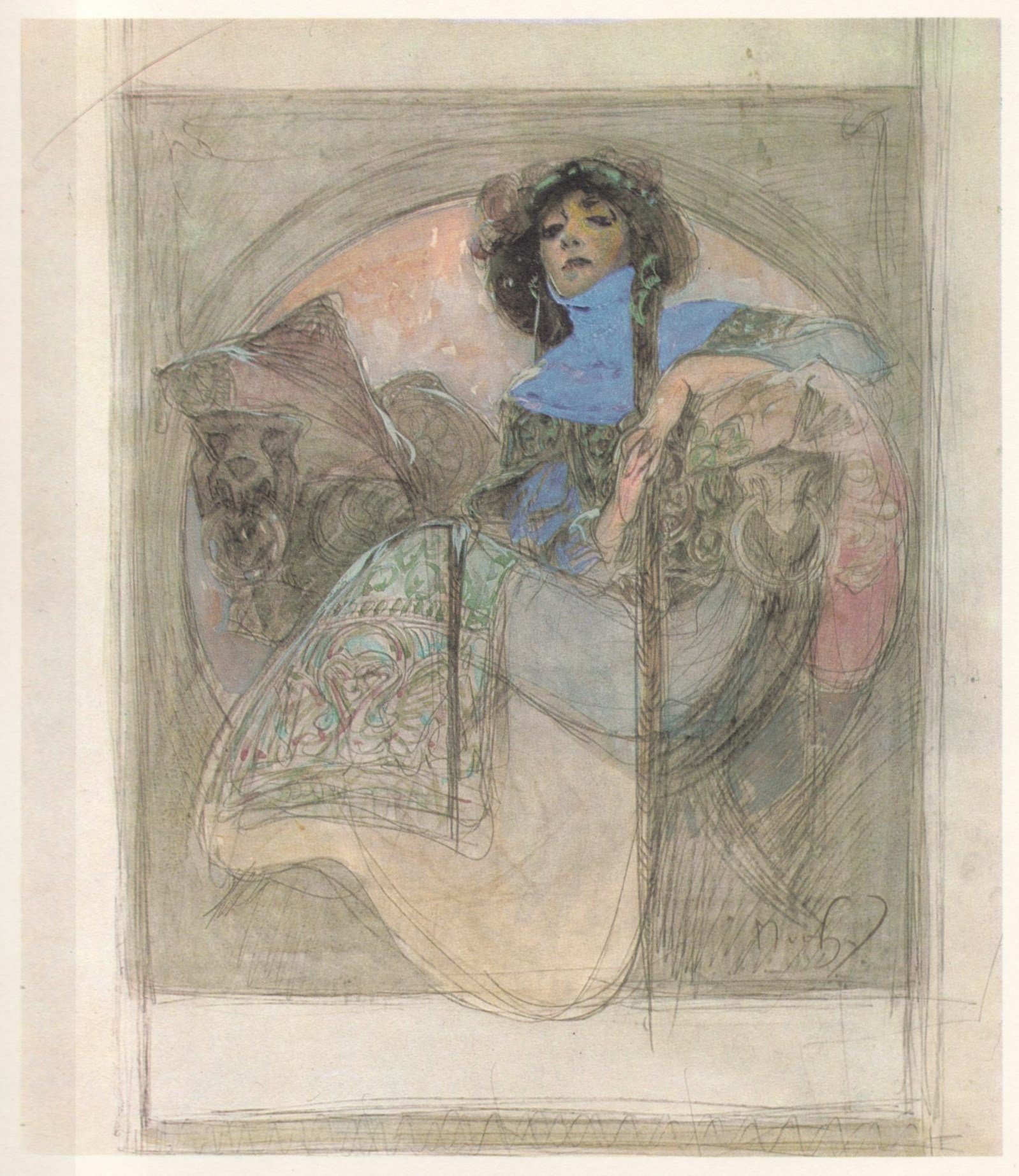
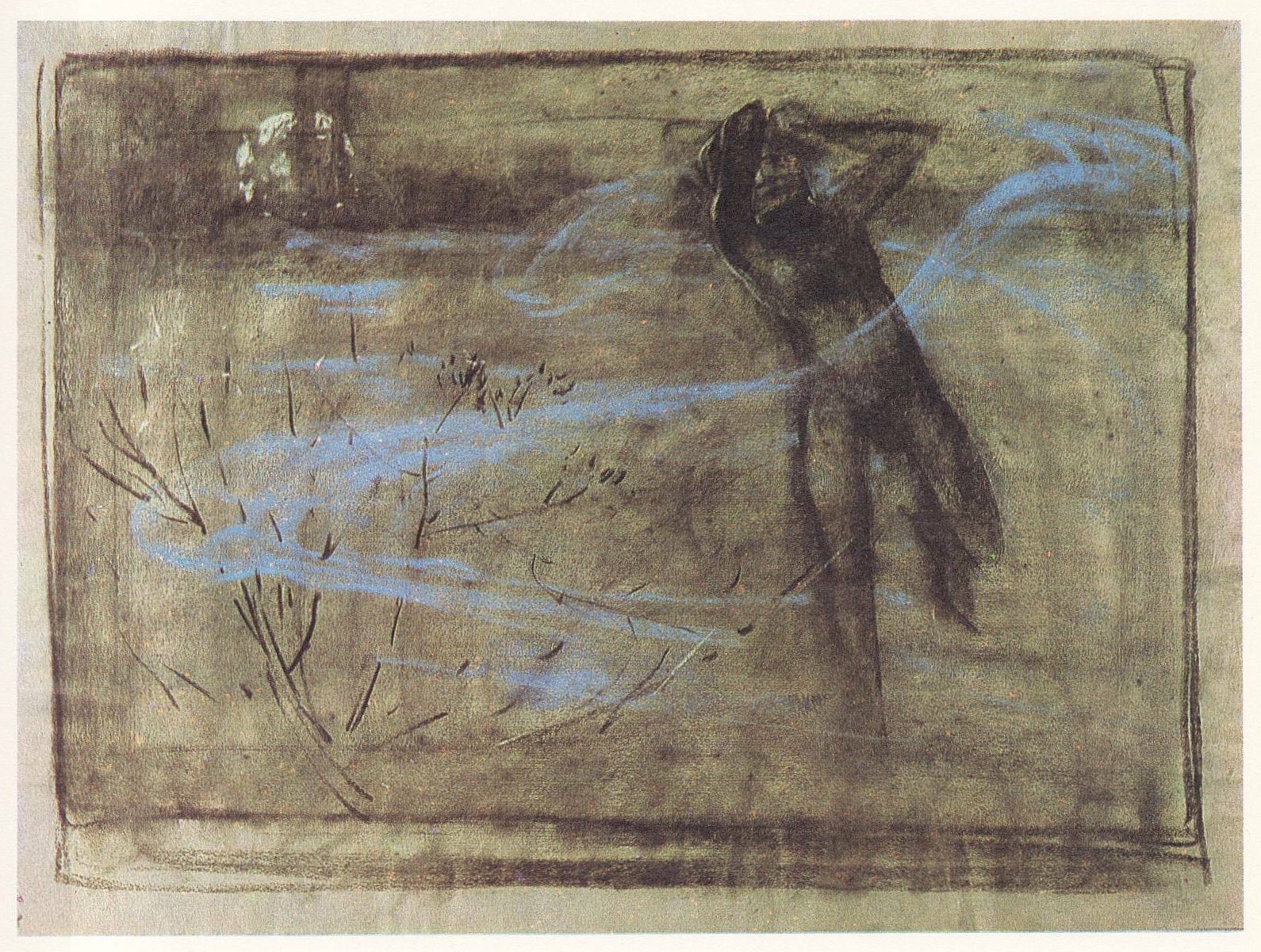
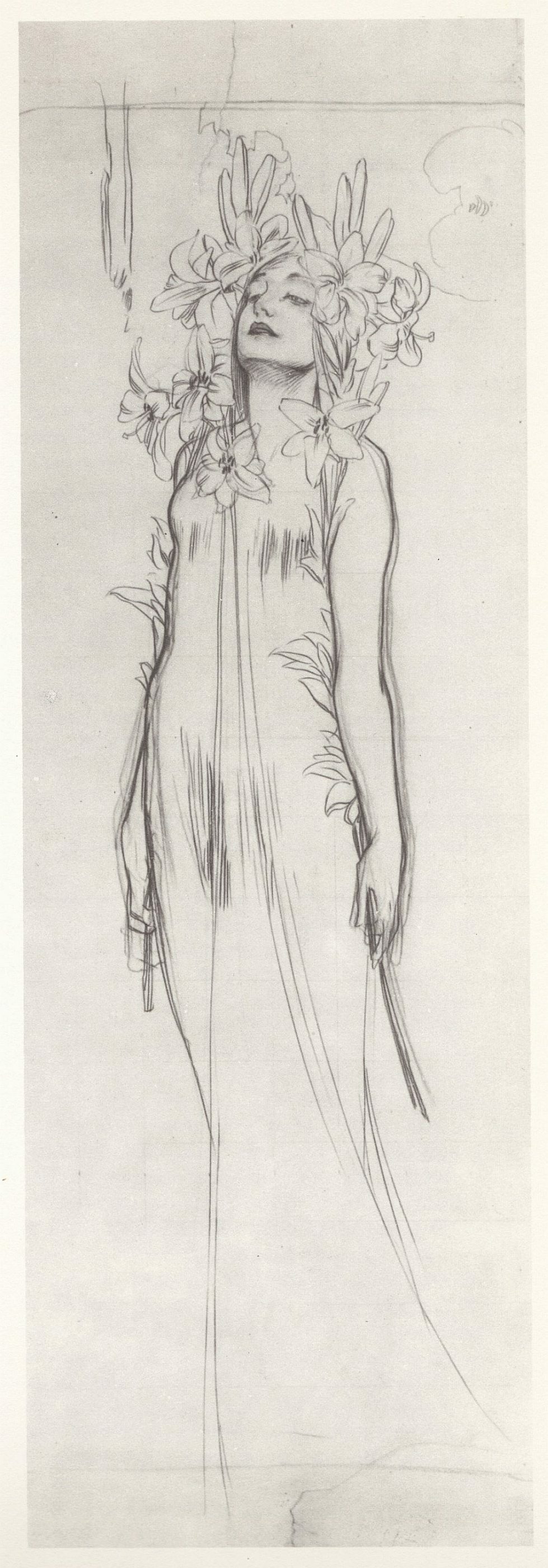
Yes, I know the given name of everybody’s favourite Art Nouveau image maker is usually spelled “Alphonse.” But in the out-of-print book I scanned these images from, his name is spelled “Alfons,” so that’s what I’ve used here.
ABOVE: Alfons Mucha, Woman with Flowers (n.d.), coloured inks, 42 x 29 cm.
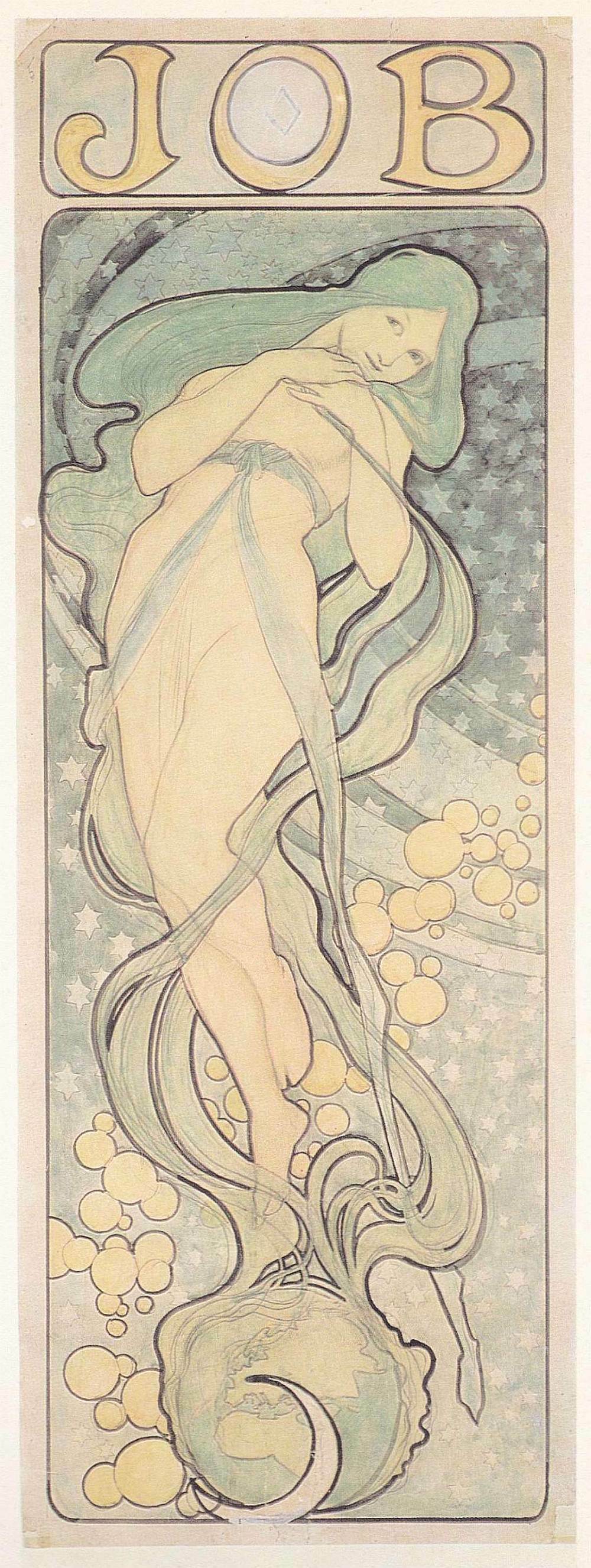
ABOVE: Alfons Mucha, Job, poster design (1896), Indian ink and watercolour, 120 x 44 cm.
ABOVE: Alfons Mucha, Exhibition of Architecture and Engineering, poster design (1897), charcoal and watercolour, 108.5 x 85 cm.
ABOVE: Alfons Mucha, Woman Sitting in an Armchair, sketch for a poster (n.d.), pencil and watercolour, 49.5 x 44 cm.
ABOVE: Alfons Mucha, Nude Wandering in the Evening Landscape (n.d.), charcoal and coloured chalks, 47 x 62 cm.
ABOVE: Alfons Mucha, Absinthe (n.d.), charcoal and coloured chalks, 48 x 62 cm.
ABOVE: Alfons Mucha, Woman with Lilies (c. 1902), charcoal, 123 x 45.4 cm.
BONUS LINKS:
Golden Age Comic Book Stories: Alphonse Mucha, 1860 ~ 1939 — this selection of images includes Mucha’s beautiful Moonlight image.
Golden Age Comic Book Stories: Alphonse Mucha, 1871 ~ 1938, posted by Mr. Door Tree — another large selection of images.
In the past month or so, my wife and I have become the proud owners of two pieces of original art from the second year of the amazing 45-year run, 1957 to 2002, of the comic strip, Miss Peach, by Mell Lazarus. Although I feel that Lazarus did his best work in his Sunday strips, where he was able more fully to indulge his tremendous gift for comic dialogue, I was thrilled to be able to purchase two fine dailies, dated 09-09-58 and 09-24-58, in two separate auctions, for a mere US$55.50 each, shipping from the USA to Canada included. Here are the strips, which, btw, are not only huge — the paper is 18.5 inches wide by 6.06 inches high — but also in excellent condition, especially considering that they’re more than 50 years old:
ABOVE: Mell Lazarus, Miss Peach daily, 09-09-58, 18.5 x 6.06 inches. Lester’s power of positive thinking lands him a real bump on the head.
ABOVE: Mell Lazarus, Miss Peach daily, 09-24-58, 18.5 x 6.06 inches. Ira displays his talent as a band leader at the “Kelly School Junior Hop.”
Now, I am fully aware that many academically trained artists hate Mell Lazarus’s style of cartooning in Miss Peach, dismissing it as “childish” or worse, but as for me, well, I’ve always had a soft spot for the big-headed, big-nosed, sharp-tongued kids of the Kelly School. Modelled to a large extent on Charles Schulz’s beloved Peanuts, Lazarus’s Miss Peach combined economical but expressive and amusing drawings with witty and incisive social observation and punch lines that could make you laugh and squirm at the same time. The effectiveness of Lazarus’s visual shorthand is especially evident in his characters’ facial expressions, which in my experience always deliver more relevant and touching emotion than Lazarus’s (and Schulz’s) critics would have you believe possible.
In the first decade and a half of his career, Lazarus, who was never short on ambition, steadily worked his way up in the newspaper comics world, going from fledgling freelancer/comic-strip artist — his first, moderately successful strips were “Wee Women” and “Li’l One” — to an assistant position with Al Capp and Elliot A. Caplin’s Toby Press, to art director/comics editor at Toby Press, to nationally syndicated cartoonist. Following the success of Miss Peach, Lazarus, restless as ever, went on to create a short-lived humour-adventure strip, Pauline McPeril, with artist Jack Rickard, in 1966 — it was cancelled after three years — and then bounced back with a second comic-strip hit with Momma, in 1970. And for the next 30 years, Lazarus wrote and drew two syndicated strips, Miss Peach and Momma, until health issues caused him to reduce his work load by dropping Miss Peach in 2002. Momma, however, is still going strong!
But Mell Lazarus hasn’t only had success with readers; he’s also enjoyed the respect and approbation of his peers, winning the Best in Humour Strip Award from the National Cartoonists Society (NCS) in 1973 and 1979, the Reuben from the NCS for Outstanding Cartoonist of the Year in 1982 for his work on Miss Peach, and the Silver T-Square from the NCS “for outstanding dedication or service to the NCS or the profession” in 2000. And as if that wasn’t enough, Lazarus’s fellow cartoonists also elected him President of the National Cartoonists Society for two terms, 1989 to 1991 and 1991 to 1993.
Finally, in addition to cartooning, Mell Lazarus has found time to write television scripts, plays, two novels — The Boss is Crazy, Too and The Neighborhood Watch — and, well, you get the picture. He’s always been a busy guy. But not too busy to answer his own front door:
Just noticed that CBR news has a preview of the forthcoming collaboration between Mike Mignola and Richard Corben, entitled Hellboy: Double Feature of Evil. Mignola and Corben have worked together on several different Hellboy stories in the past few years — every one of which is worth adding to your bookshelf — so I think one can safely say that, at last, Corben has found a new regular collaborator (à la Jan Strnad) who is genuinely excited to work with him and fully capable of delivering compelling scripts that play to Corben’s strengths as an artist!
“Richard and I were talking about shorter stories,” Mignola explained to CBR. “Richard apparently likes drawing Hellboy, and my opinion is, as long as he wants to draw Hellboy, I will keep throwing stories to him.
“One of the things I said to him was, ‘Would you mind if I came up with a couple of shorter stories for you to do?’ Both of these were stories that had been knocking about in my head for a long time, and so Double Feature Of Evil was just us coming up with a name for a one-shot that would have two stories.”
“With Double Feature of Evil,” adds Hellboy editor Scott Allie, “there was some internal factor in Mike making him think about these stories more often, but the external factor is that Richard did such an excellent job on Crooked Man that we wanted to give him some more straight horror stories. A lot of Hellboy stories aren’t really horror stories. They’re monster stories or action adventure stories. Double Feature is a pair of horror stories that Richard can pull off just about better than anybody.”
Hellboy: Double Feature of Evil is scheduled for publication later this year.
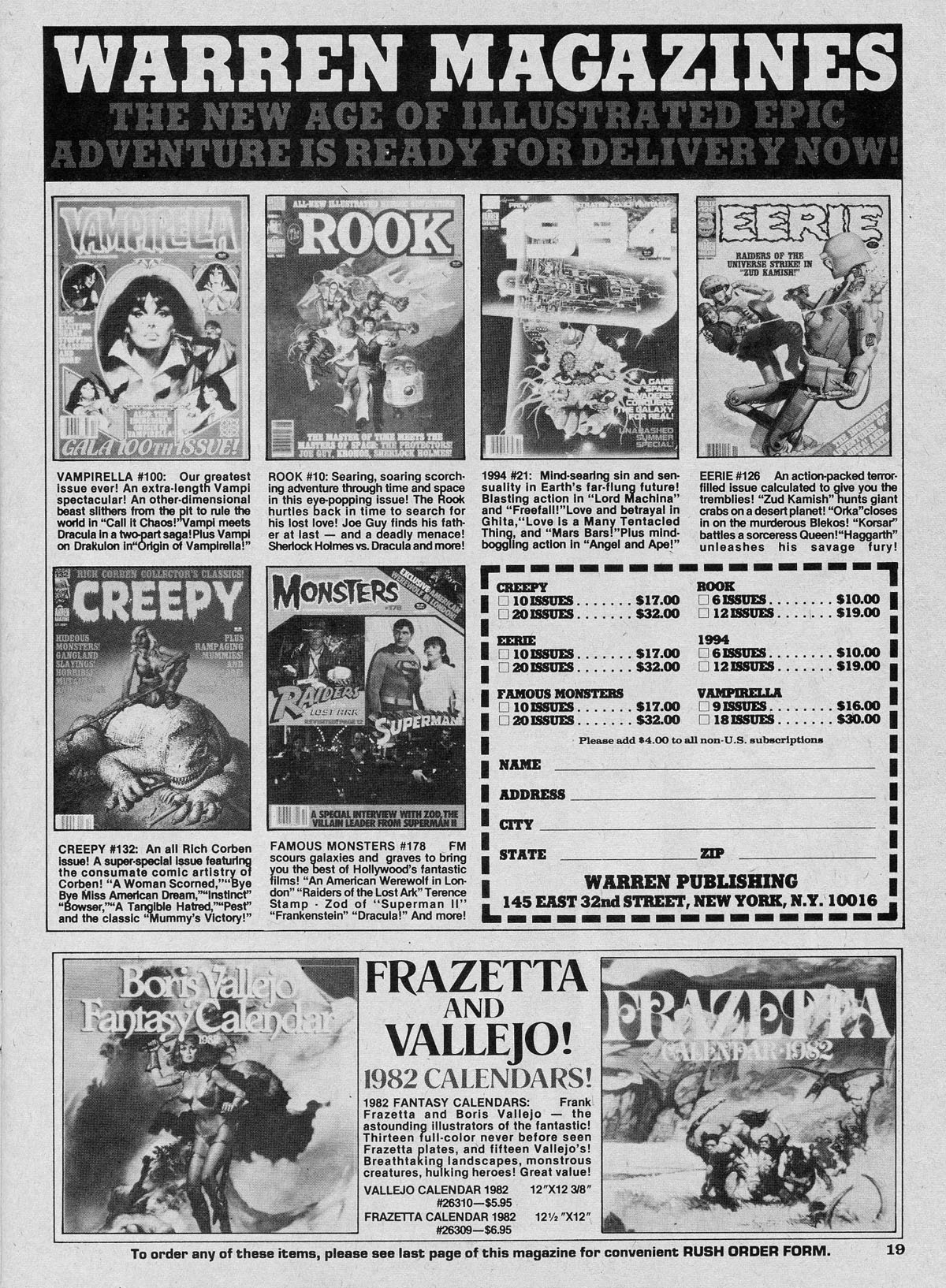
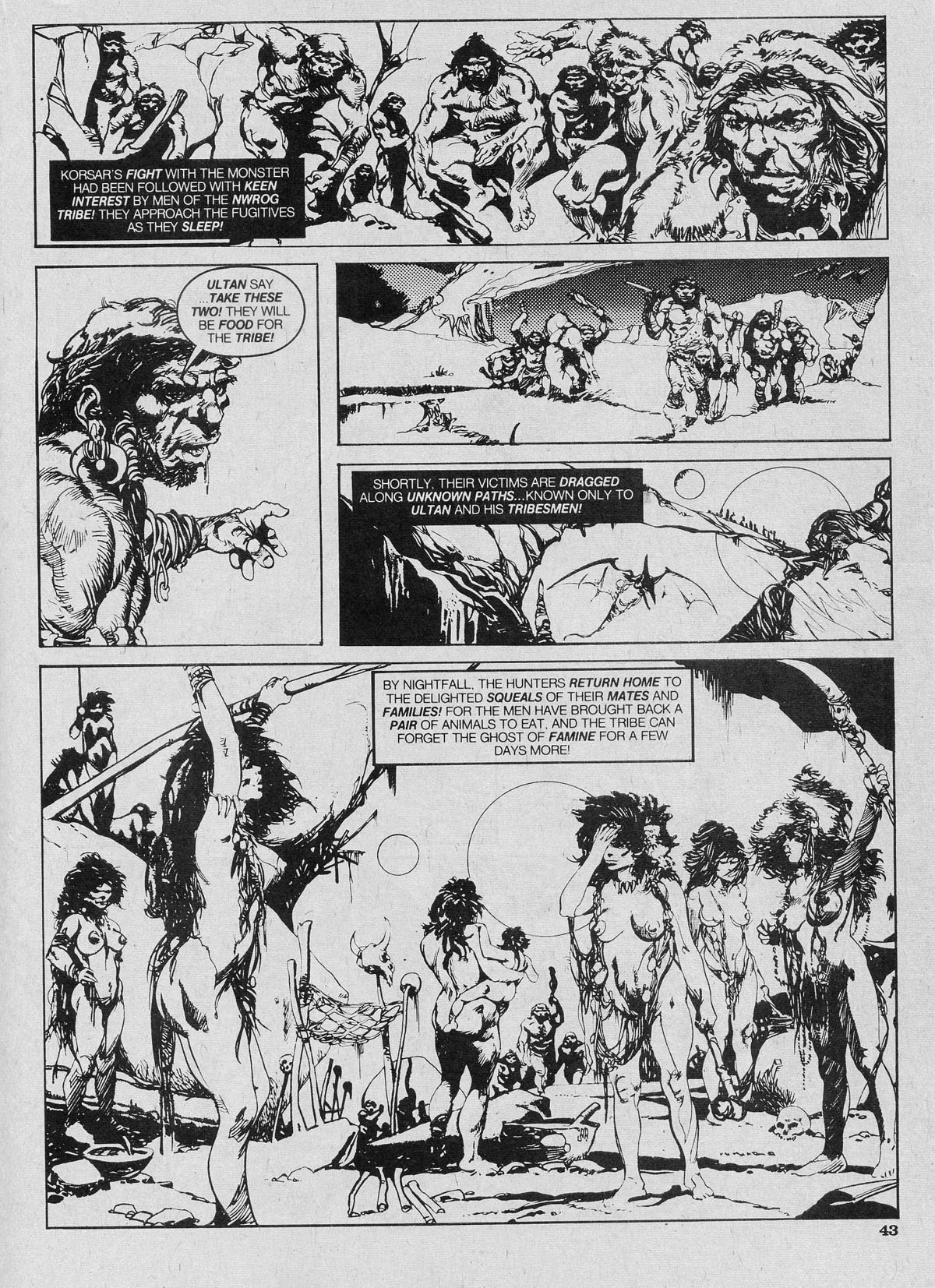
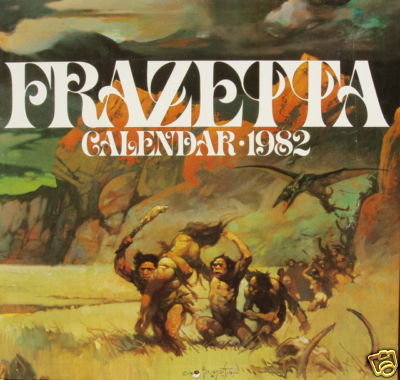
Here’s an old-fashioned swipe that’s rather funny — mainly due to the timing! In Eerie #126 (November 1981), on page 19, in the bottom right-hand corner, you’ll find an advertisement for the 1982 Frazetta Calendar. And, IN THE VERY SAME ISSUE, you’ll find a 12-page story called “Korsar,” with art by Esteban Maroto, which runs from page 35 to page 46. Now, take a look at page 9, panel 3 of the Maroto-illustrated story (Eerie page 43), paying special attention to the composition, the landscape, and the group of figures led by the fellow carrying the woman on his shoulder, on the left-hand side of the panel.
For your convenience, I’ve included both pages below, along with a slightly larger, colour version of the cover of the 1982 Frazetta Calendar:
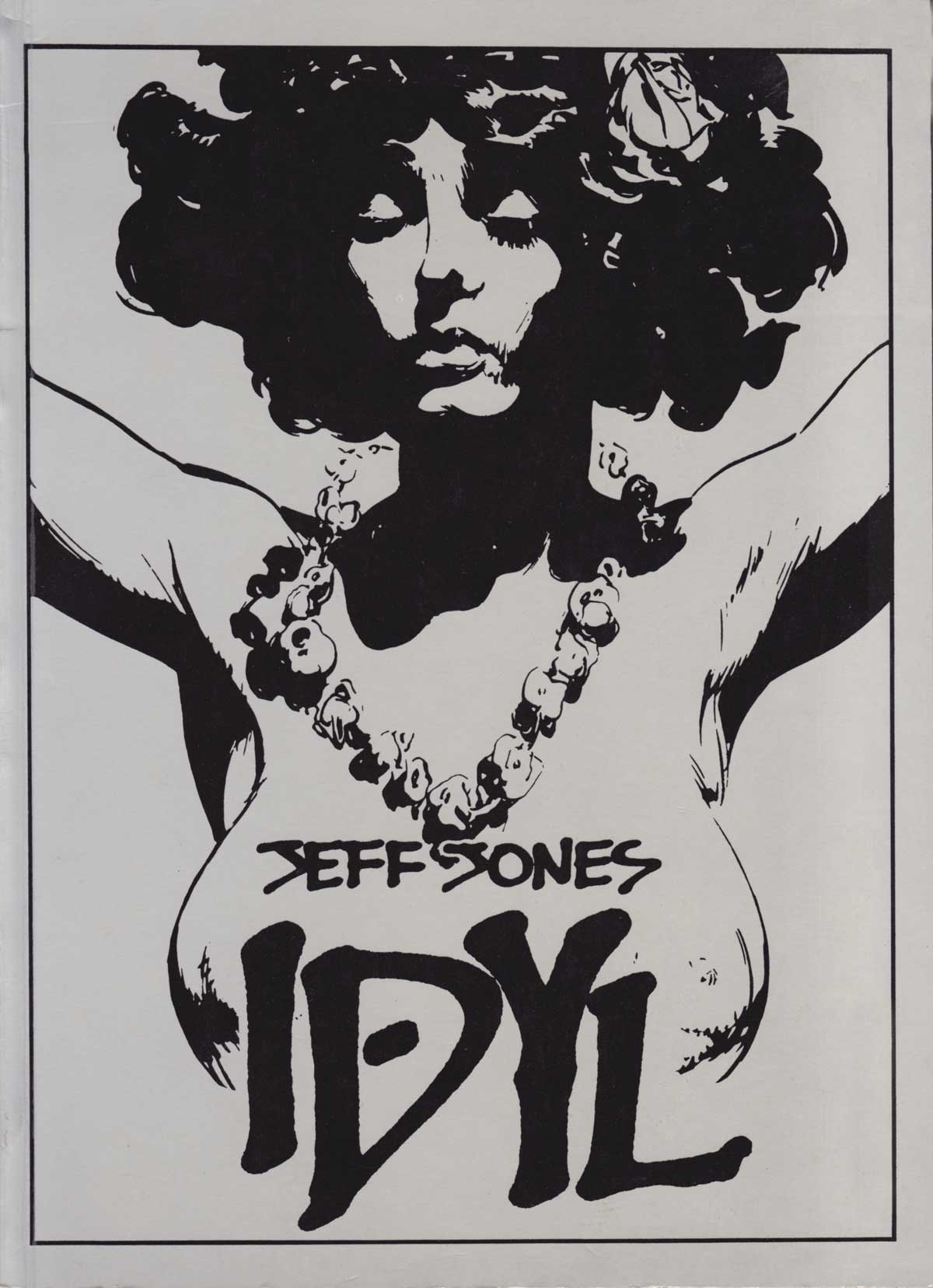
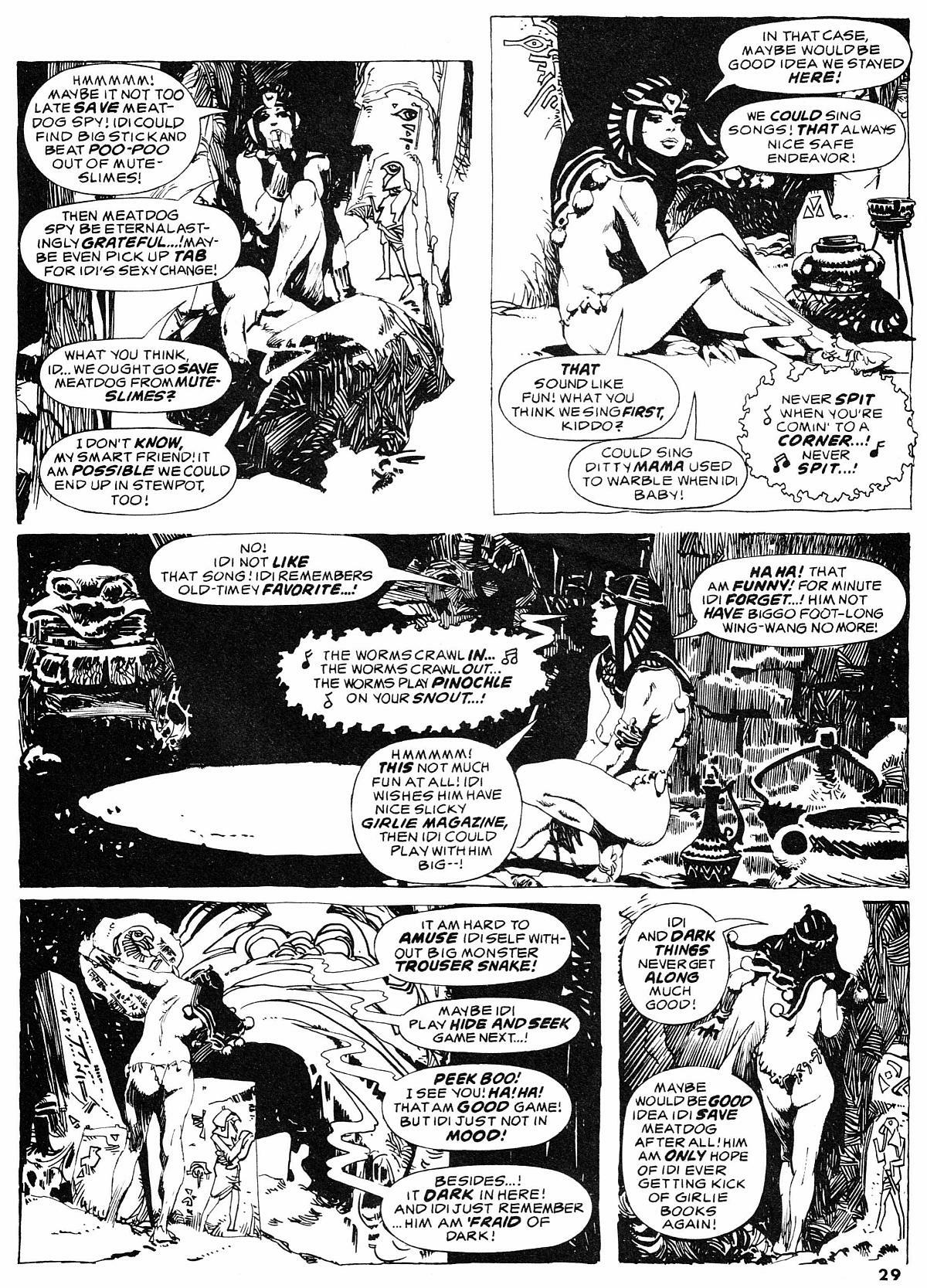
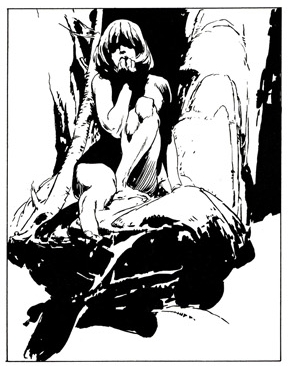
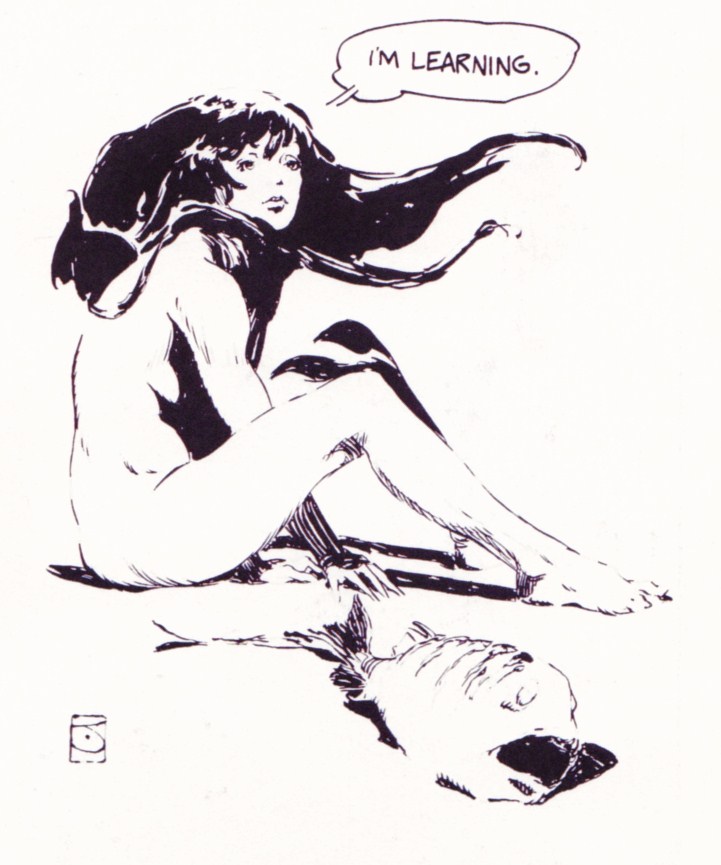
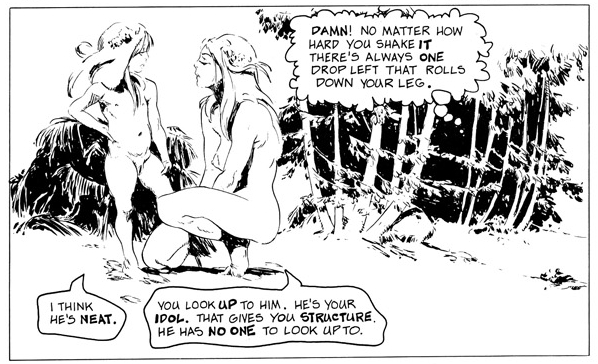
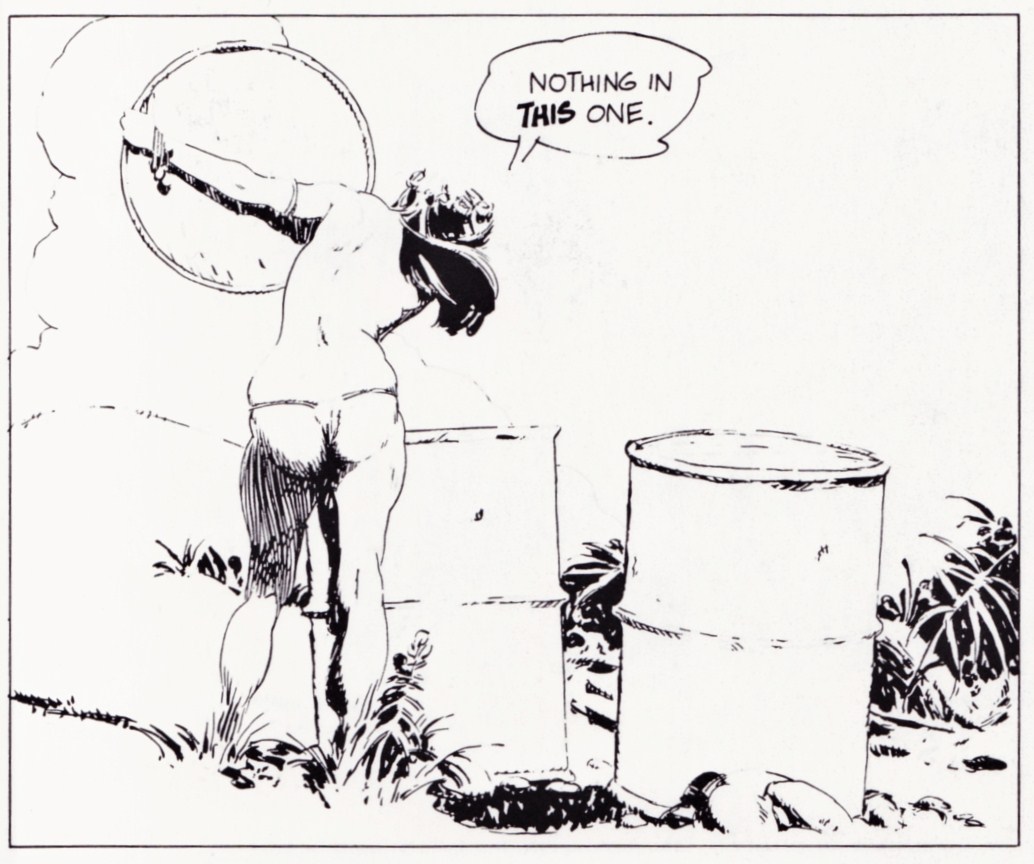
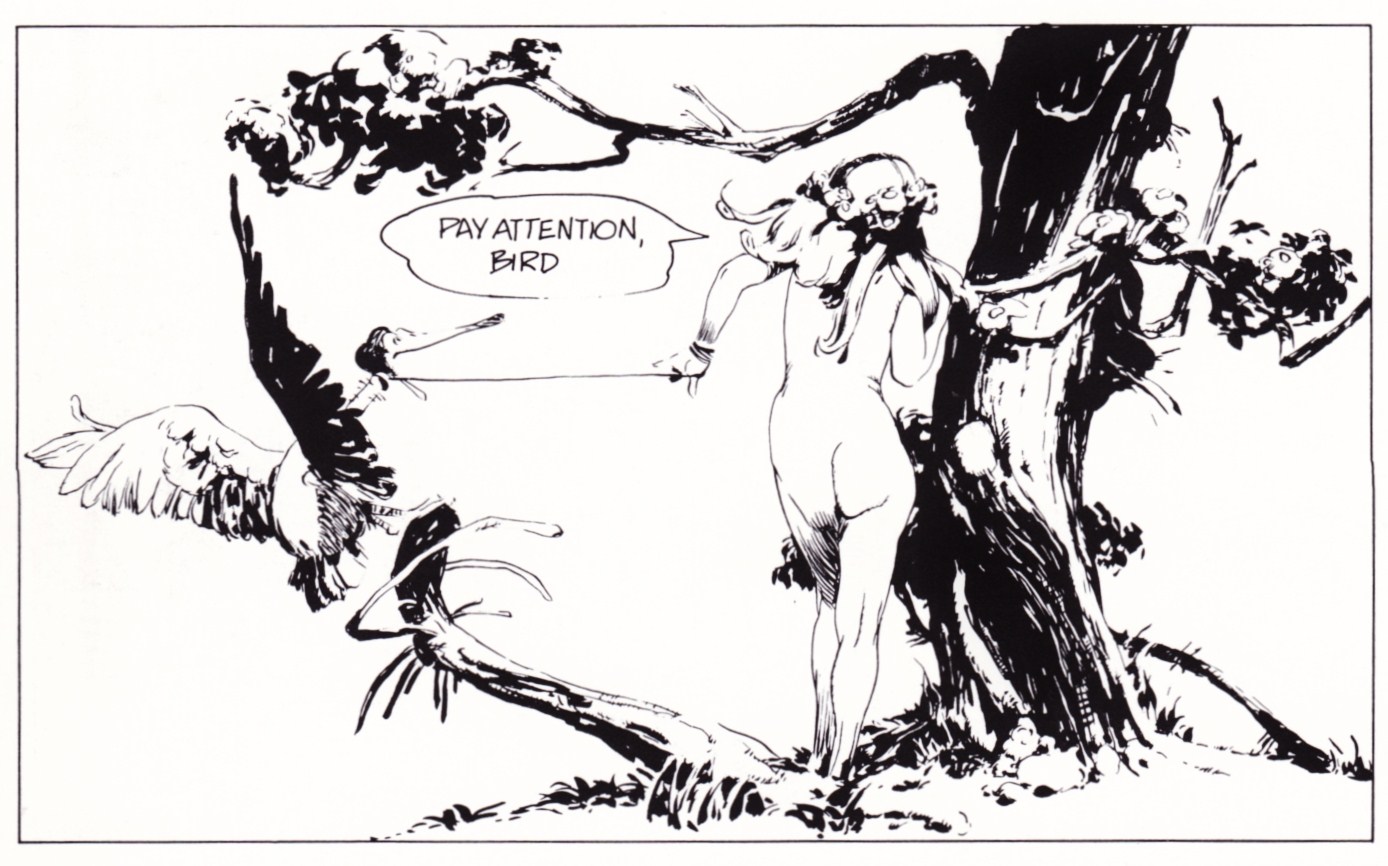
The first page here is by Esteban Maroto. It is from a story called “Idi and Me,” written by Bill DuBay, that first appeared in issue #4 of the Warren magazine, 1984, way back in 1978. And though the script is junk, it’s an attractive page. Only problem is, all of the female figures are very clearly swiped from Jeffrey Jones’s celebrated comic strip, Idyl, which ran in National Lampoon from 1972 to 1975. See below for the ocular proof:
For those who haven’t read 1984 #4, which would be almost everyone, the woman in the DuBay-penned “Idi and Me” is the brutal dictator, Idi Amin, whose chromosomes have been jumbled, just for laughs, by the American “Department of Dirty Tricks” (DDT), thereby turning “the former gorilla-faced leader of Uganda into this heavenly image of white Anglo-Saxon femininity,” Idi, who nonetheless retains a male psychology and sex drive and is thus seeking an operation to change back into a man. (And the final line/moral of the story? “I guess no matter what form you’re in… the world just isn’t ready for Idi Amin!”) All of which seems very odd, given Jeffrey Catherine Jones’s own difficult journey; however, the story did appear way back in 1978, as I noted above, which is about 20 years, more or less, before Jones decided to take definite steps become a woman. So what’s going on here? Seems most likely to me that it’s just a coincidence — though if it isn’t, if DuBay is taking a shot at Jones’s sexuality based on industry rumours, private confidences, or whatever, it’s an incredibly crude commentary! I mean, why would DuBay have done it, and why on earth would Maroto have participated? It doesn’t make sense to me, though, of course, even if the sex-change theme is a coincidence, it doesn’t mean that the story of Idi wasn’t intended, in part, as a parody of Jones’s Idyl. That would certainly explain the blatant swipes, except that Maroto has swiped from Jones (and others) before. So maybe the simple answer is that Jones’s work on Idyl was so skillful, so sensitive, so gorgeous, and — perhaps it seemed to Maroto — so obscure, that it was ripe for the swiping… or not… because the fact is, I’m not sure what to think…












 Ragged Claws Network