Bill Sienkiewicz · Book/Magazine Covers (All) · Comics · Illustration Art · John Buscema · Look Here · Original art vs. printed page

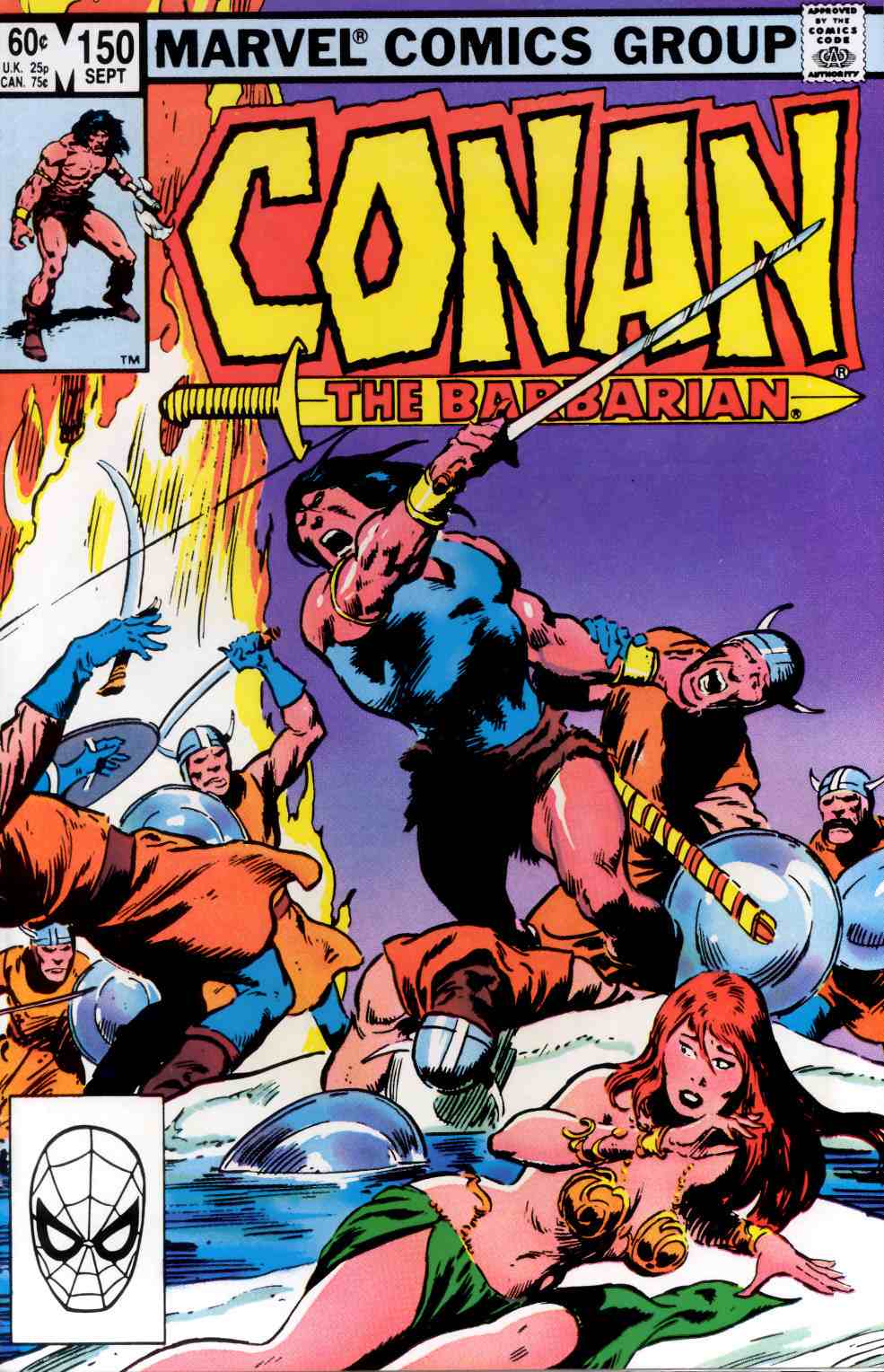
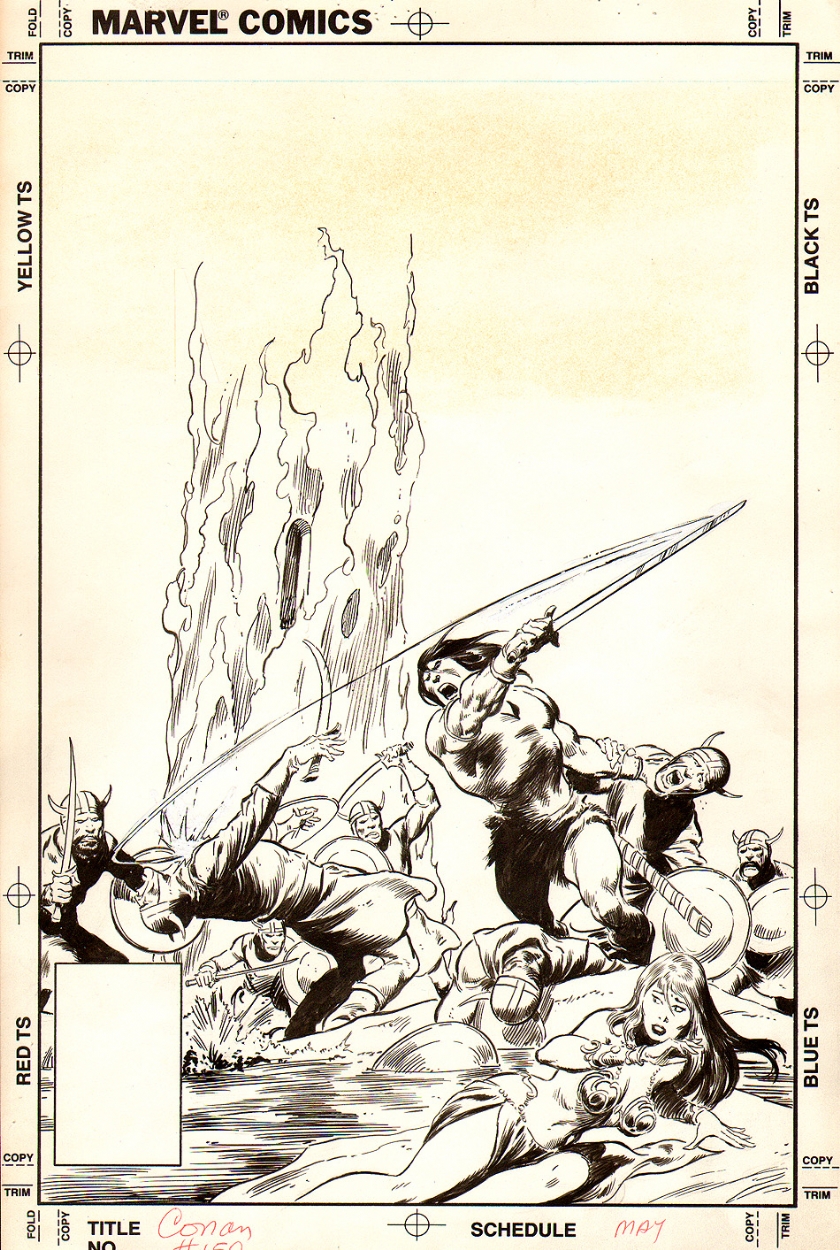
Look Here: Finished art vs. printed cover, by John Buscema

What’s interesting to me about the above comparison is how much of John Buscema’s original composition for the cover of Conan the Barbarian #150 was cropped out of the printed version, presumably either by editor Larry Hama or by editor-in-chief Jim Shooter. Maybe if Buscema hadn’t shown Conan chopping a guy through the throat with his sword, the editors would have published it uncut. Maybe.

The only issues of Conan that I have ever searched through dusty back-issue boxes to find and add to my collection were issues in which Barry Smith inked Barry Smith, John Buscema inked John Buscema or Gil Kane inked Gil Kane. The unpublished cover of Conan the Barbarian #150 looks like pure John Buscema to me.

Bonus Video:

Here’s a youtube video that includes footage of John Buscema pencilling and then inking a pin-up of Captain America along with footage of Bill Sienkiewicz creating a quick portrait Electra with marker, brush and ink, and white-out:

Comics · Here, Read · Howard Chaykin · Link Roundup · Look Here · Look There · Samuel R. Delany

Look There, and Here: A whole lotta Chaykin goin’ on…

Since August 2008, Joe Bloke over at the “Grantbridge Street” blog has posted a dozen stories with art by Howard Chaykin:


UPDATE (28 November 2014):

Earlier today, I noticed that all of the stories with art by Chaykin that were posted at “Grantbridge Steet” have been deleted, but I see now that all but three of the old stories — the first three in my list below — have since been re-posted on Joe Bloke’s BIFF! blog, along with three new ones. Therefore, in order to preserve the utility of this post, I have taken the time this afternoon to update the links below to reflect the new locations of the old stories and have added links to the three new stories.


  • “The Mark of Kane” (part 1 of 2) by Roy Thomas and Howard Chaykin, from Marvel Premiere #33
  • “The Mark of Kane: Fangs of the Gorilla God” (part 2 of 2) by Roy Thomas and Howard Chaykin, from Marvel Premiere #34
  • “Red Sonja: Day of the Red Judgment” by Roy Thomas, Christy Marx, and Howard Chaykin, from Marvel Comics Super Special #9
  • Return to the Stars” by Wyatt Gwyon and Howard Chaykin, from DC’s Time Warp #2
  • Judgement Day” by Archie Goodwin and Howard Chaykin, from Detective Comics #441
  • The Grubbers” by Roger McKenzie and Howard Chaykin, from Weird War Tales #62
  • The Death’s Gemini Commission” by Howard Chaykin, from The Scorpion #1
  • Mind War” by Roger McKenzie and Howard Chaykin, from Weird War Tales #61
  • Gideon Faust, Warlock at Large” by Howard Chaykin, from Star*Reach Classics #5
  • Cody Starbuck” by Howard Chaykin, from Star*Reach #1
  • Horrors!” by Howard Chaykin, from Solo #4
  • Gideon Faust, Warlock at Large: Lotus” by Len Wein and Howard Chaykin, from Heavy Metal, vol. 2, #12
  • Starbuck” (1976) by Howard Chaykin, from Star*Reach #4
  • The Demon from Beyond!” by Gardner Fox and Howard Chaykin, from Chamber of Chills #4
  • The Fire Bug” by Paul Kupperberg and Howard Chaykin, from Weird War Tales #76
  • Rattle of Bones” by Roy Thomas and Howard Chaykin, from Savage Sword of Conan #18

BONUS STORY:

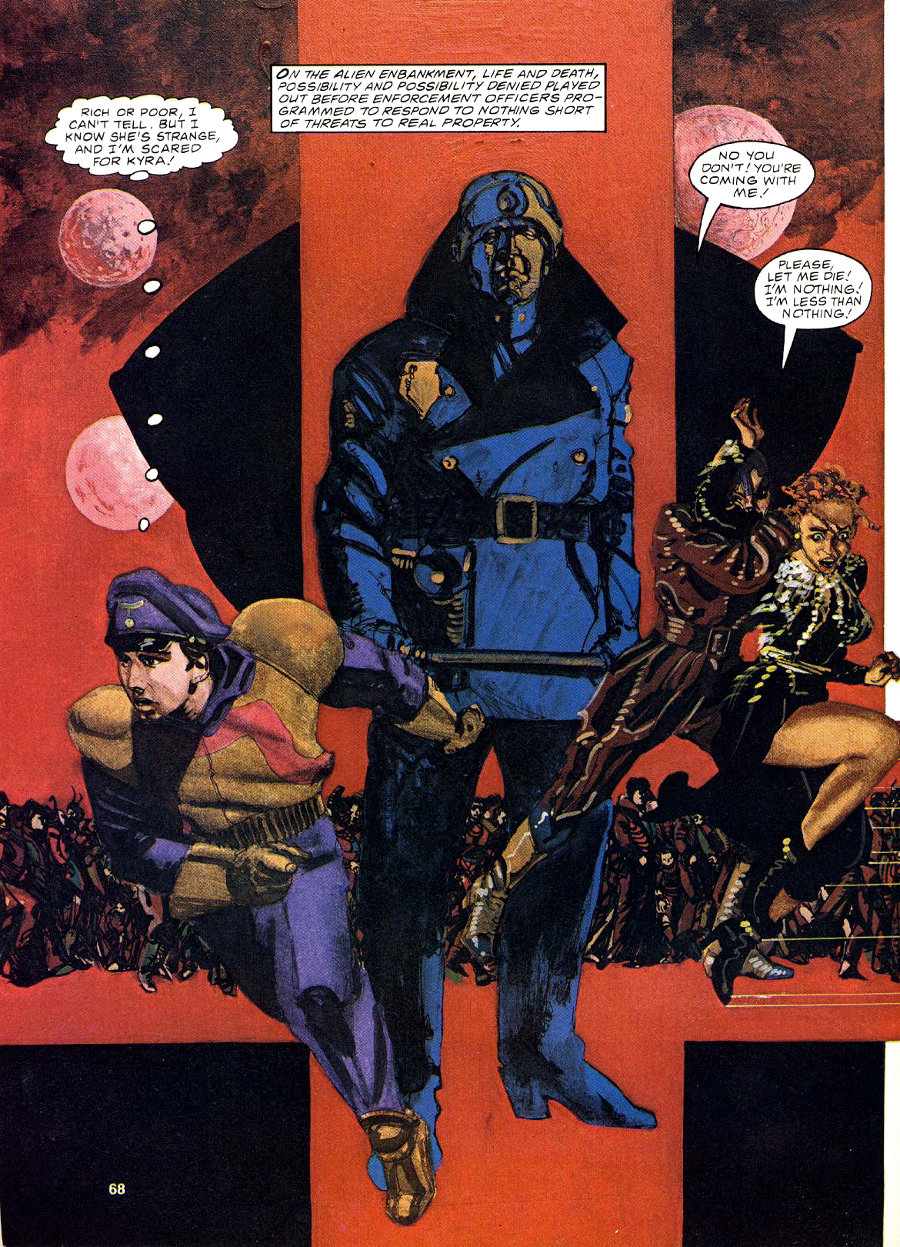
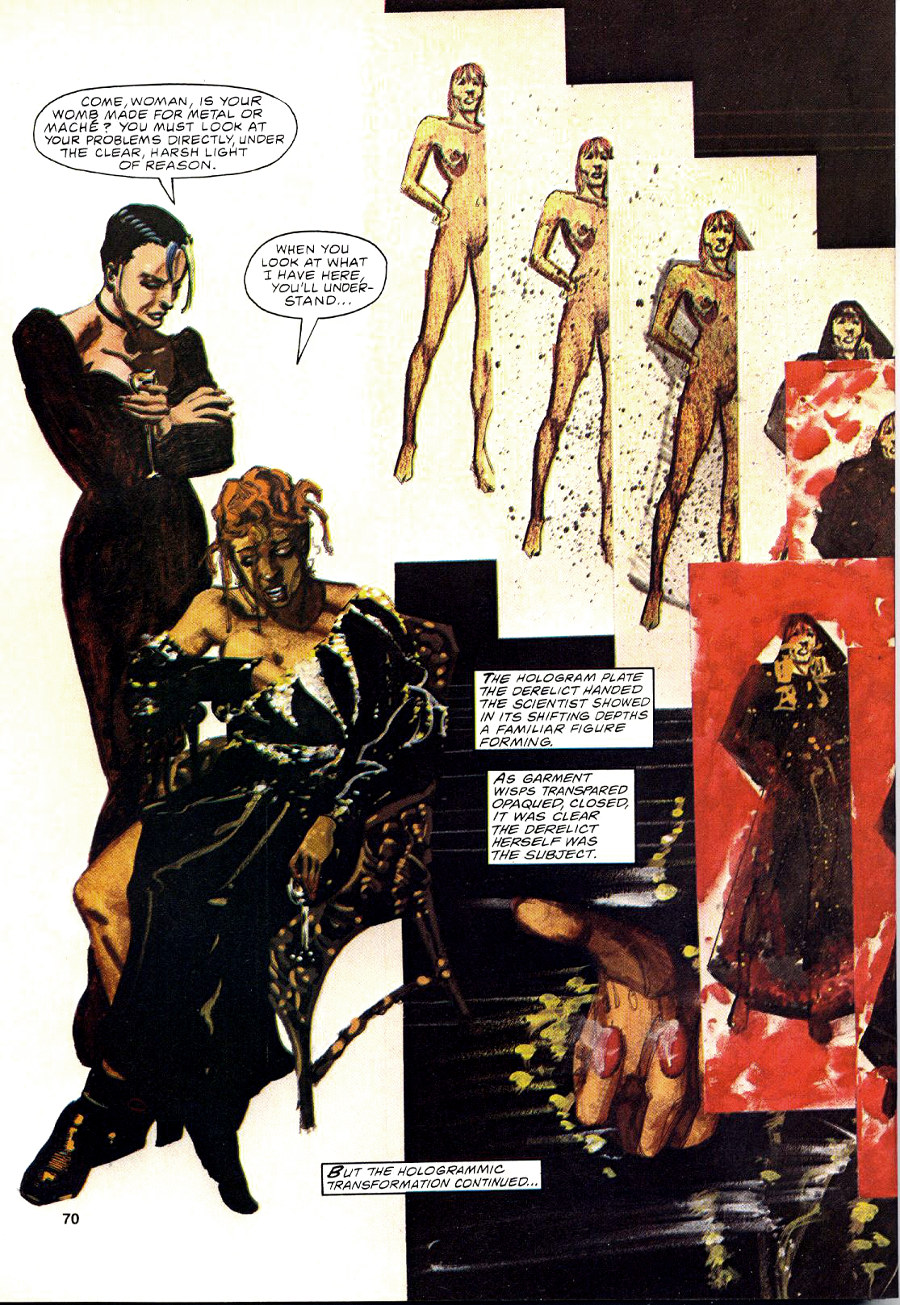
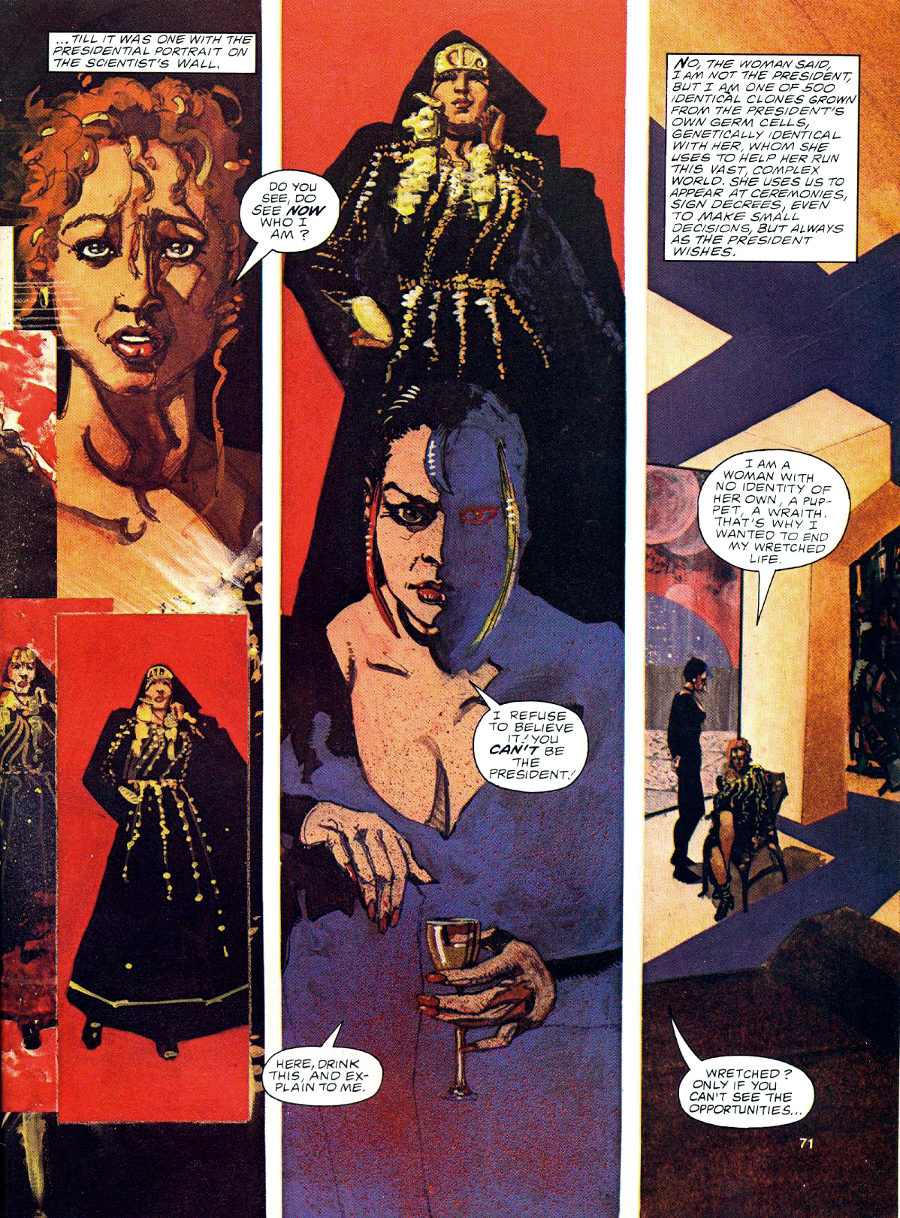
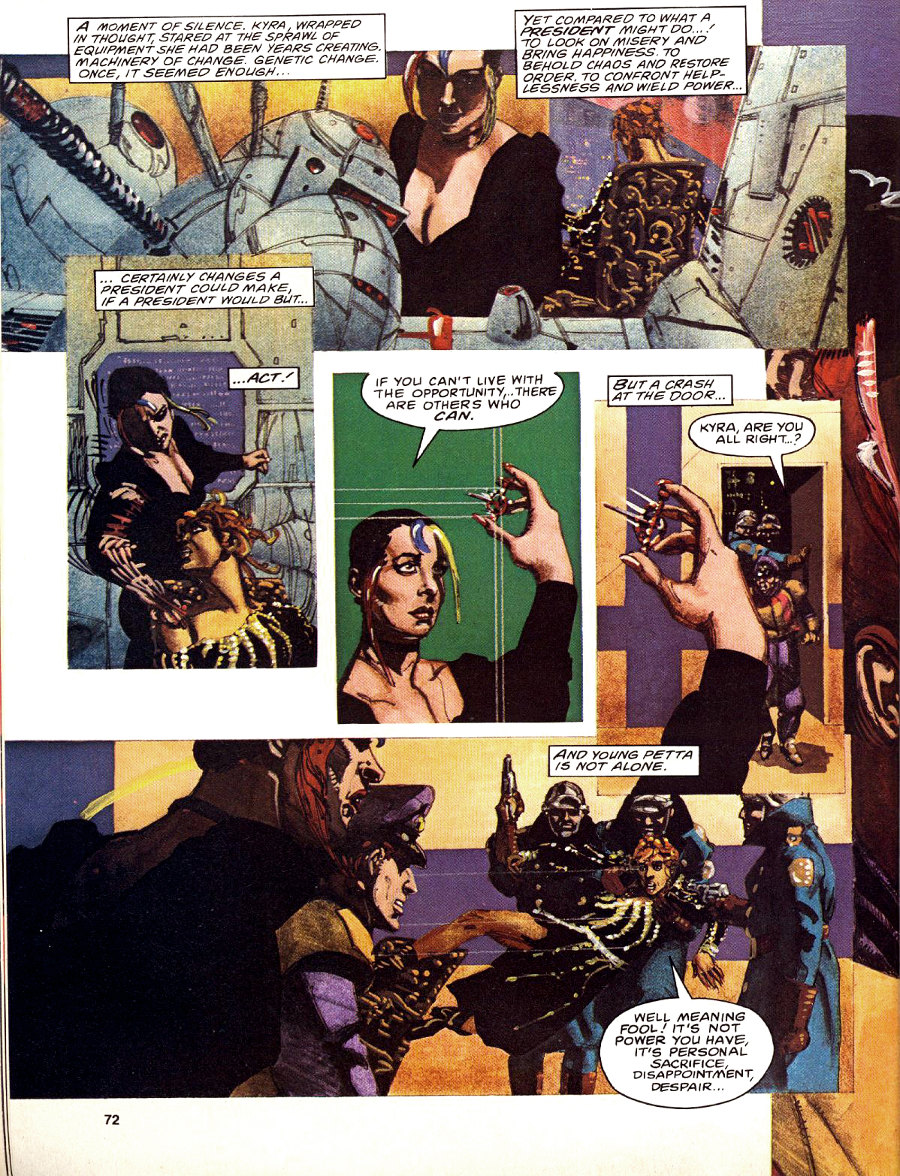
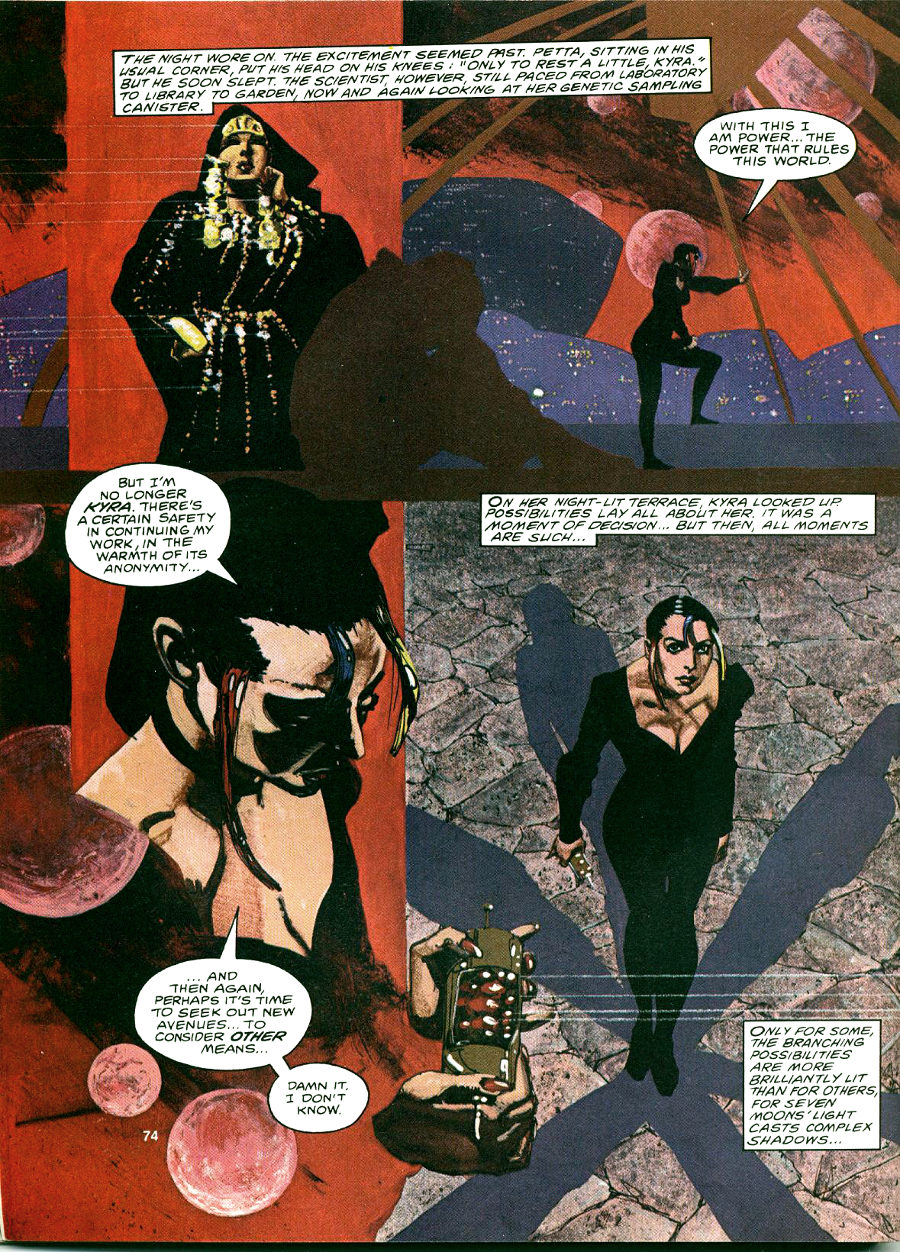
“Seven Moons’ Light Casts Complex Shadows” by Samuel R. Delany and Howard Chaykin, from Epic Illustrated #2 (June 1980):

I remember thinking when I first read “Seven Moons’ Light Casts Complex Shadows” back in 1980, when I was still in high school: “Samuel Delany is my favourite writer, and Howard Chaykin is one of my favourite artists, so why is their work together merely okay, I mean, why is it not great?” Though I didn’t know it at the time, the answer, in the case of Chaykin and Delany’s 1978 “visual novel,” Empire, was, essentially, editorial interference from the project’s “producer” Byron Preiss (see “Appendix” below); with “Seven Moons’ Light,” however, I just don’t know…

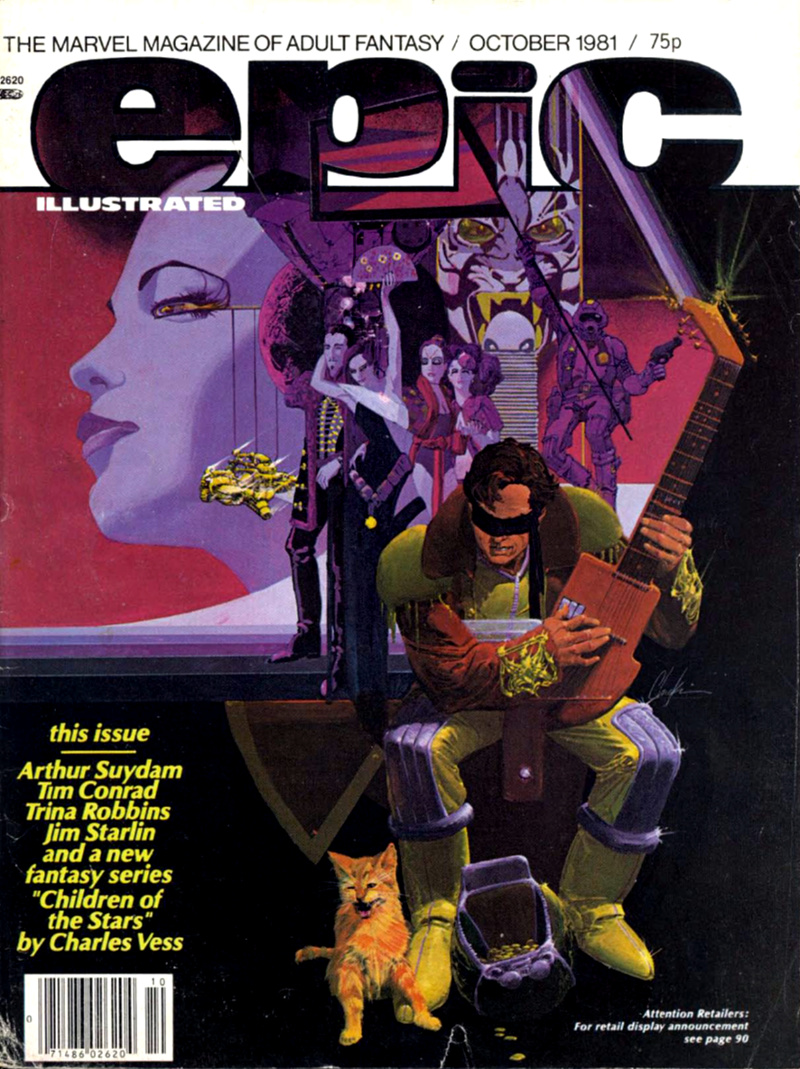
Six issues later, in October 1981, a painting by Howard Chaykin was featured on the cover of Epic Illustrated #8. Now that was killer!


RELATED LINKS HERE AT RCN:


APPENDIX:

“To develop a visual novel, we wanted a design system, a framework in which the entire story could be told. I developed a horizontal/vertical axis spread design which could be consistently varied over every two pages of the book.” — Byron Preiss, from his “Foreword” to Empire: A Visual Novel

Was Preiss’s “design system,” which not only placed arbitrary formal constraints on the layout of the pages but also incorporated an unusual format for the captions and dialogue, really the ideal framework for a long-form comic, or was it a procrustean bed? As much as I admire Chaykin’s work in Empire, I would argue that the storytelling — especially the visual storytelling — was often hamstrung by Preiss’s system, which, among other things, made it more difficult than it needed to be for Chaykin and Delany to control the focus, rhythm, and pace of the action.

“When I did Empire with Howard Chaykin, which was 1980 or 1982, Byron Preiss was the packager, and that was a strangely ill-fated project. After we did it, I was very happy with what we did, and Byron was very unhappy with the ending, and just took it upon himself to completely rewrite it, and cut up the art, so that there’s no way to put it back in its original shape. It just doesn’t exist any more, and he’s dead now of course. So nobody will ever see the way it was originally supposed to end. I’ve written about it in at least one interview. I think it’s [in] my book Silent Interviews.” — Samuel R. Delany, in answer to a question from a fan
Artist Self-Portraits · Fine Art · Look Here · Vincent van Gogh
Look Here: Two self-portraits by Vincent van Gogh
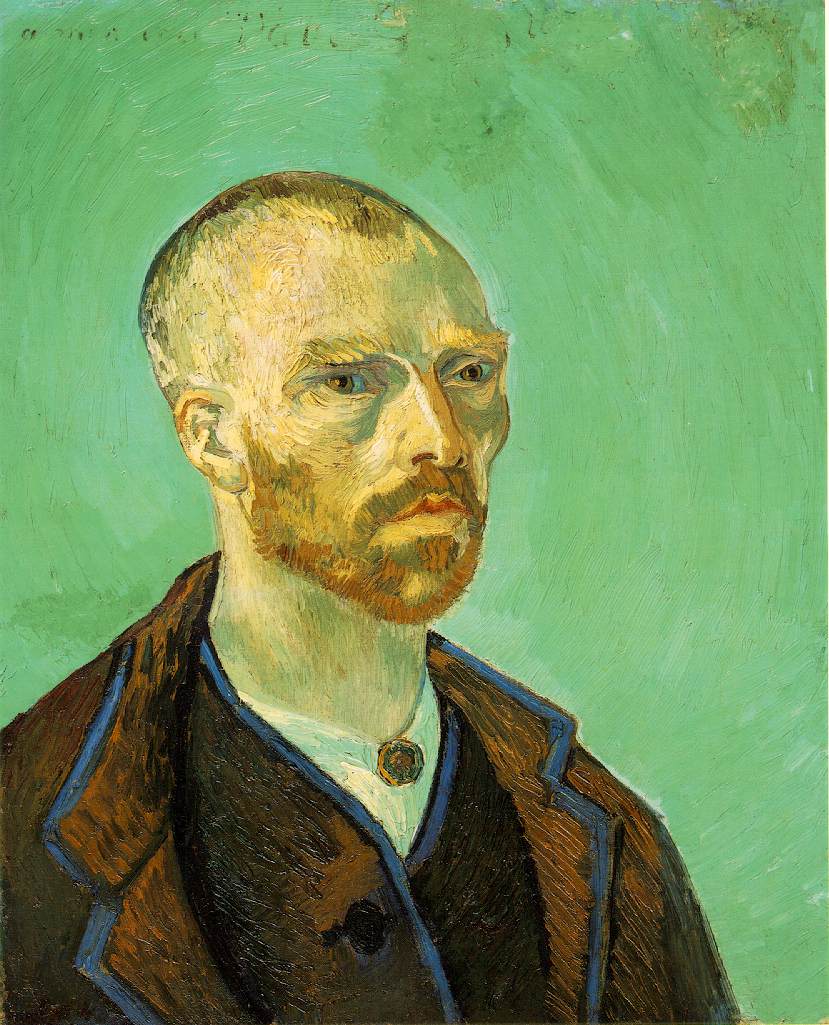
Vincent van Gogh painted over thirty self-portraits during his lifetime; these two, from 1887 and 1888 respectively, have long been my favourites:

“I purposely bought a mirror good enough to enable me to work from my image in default of a model, because if I can manage to paint the colouring of my own head, which is not to be done without some difficulty, I shall likewise be able to paint the heads of other good souls, men and women.” — Vincent van Gogh, letter to Theo van Gogh, Arles, c. 16 September 1888

Connections · Look Here

Connections: Gustave Courbet vs. Suehiro Maruo

Sometimes “connection” ain’t nothing but swipe misspelled:

I noticed the Suehiro Maruo page just this morning on the Entrecomics site, where it was posted to illustrate a review of La extraña historia de la Isla Panorama (Glénat, 2009). The reviewer, however, made no mention of the Courbet swipe.

Of course, it may be that the artist intended the swipe to be noticed, that it’s a deliberate visual quotation that reinforces or plays off of specific ideas in the story. Unfortunately, at this moment, I have no way of knowing, since I have only seen that one page from the story, and what’s more, I don’t read Spanish (though it’s easy enough to run blog posts through the Google translator to get the gist of them).

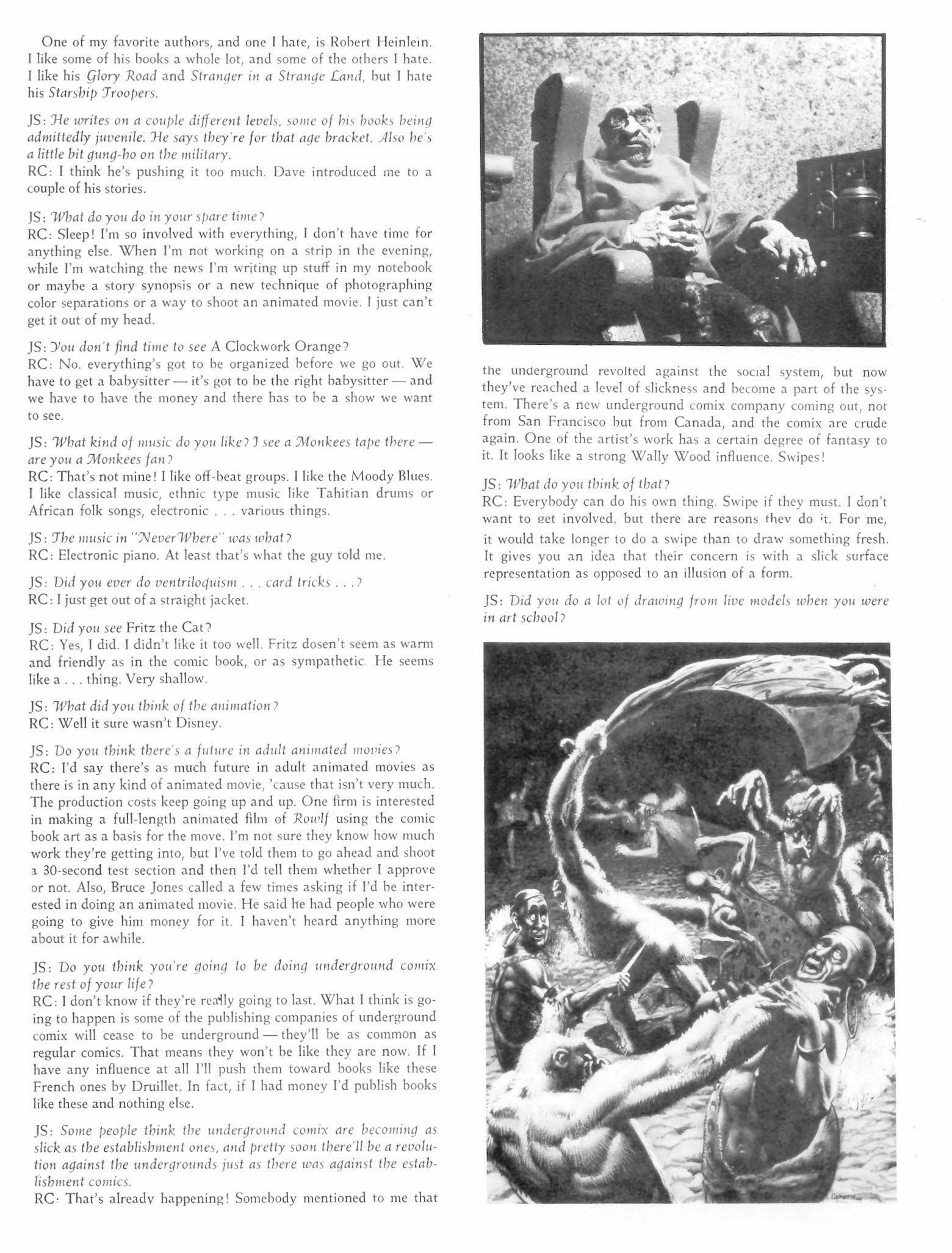
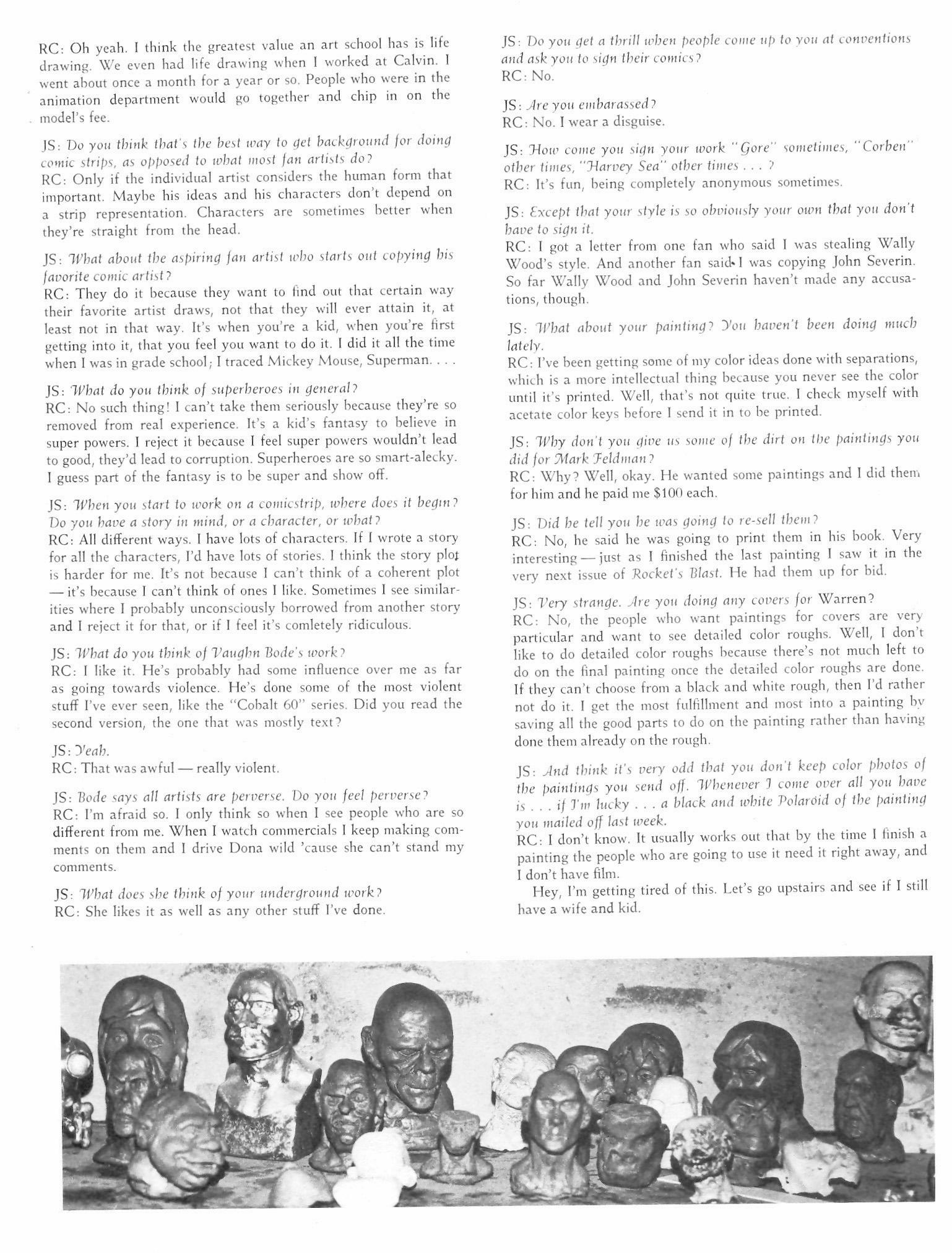
Here, Read · Interviews · Look Here · Richard Corben

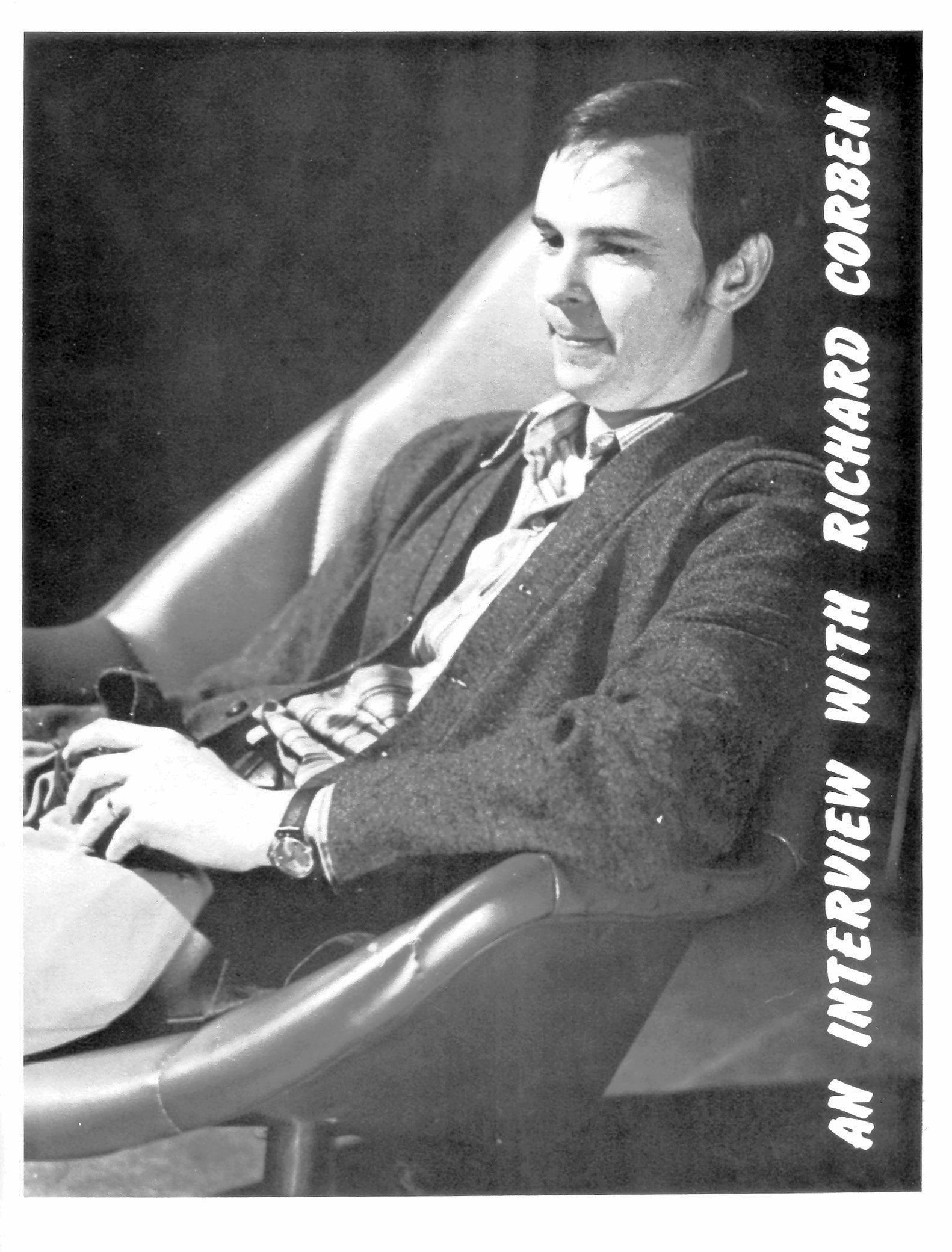
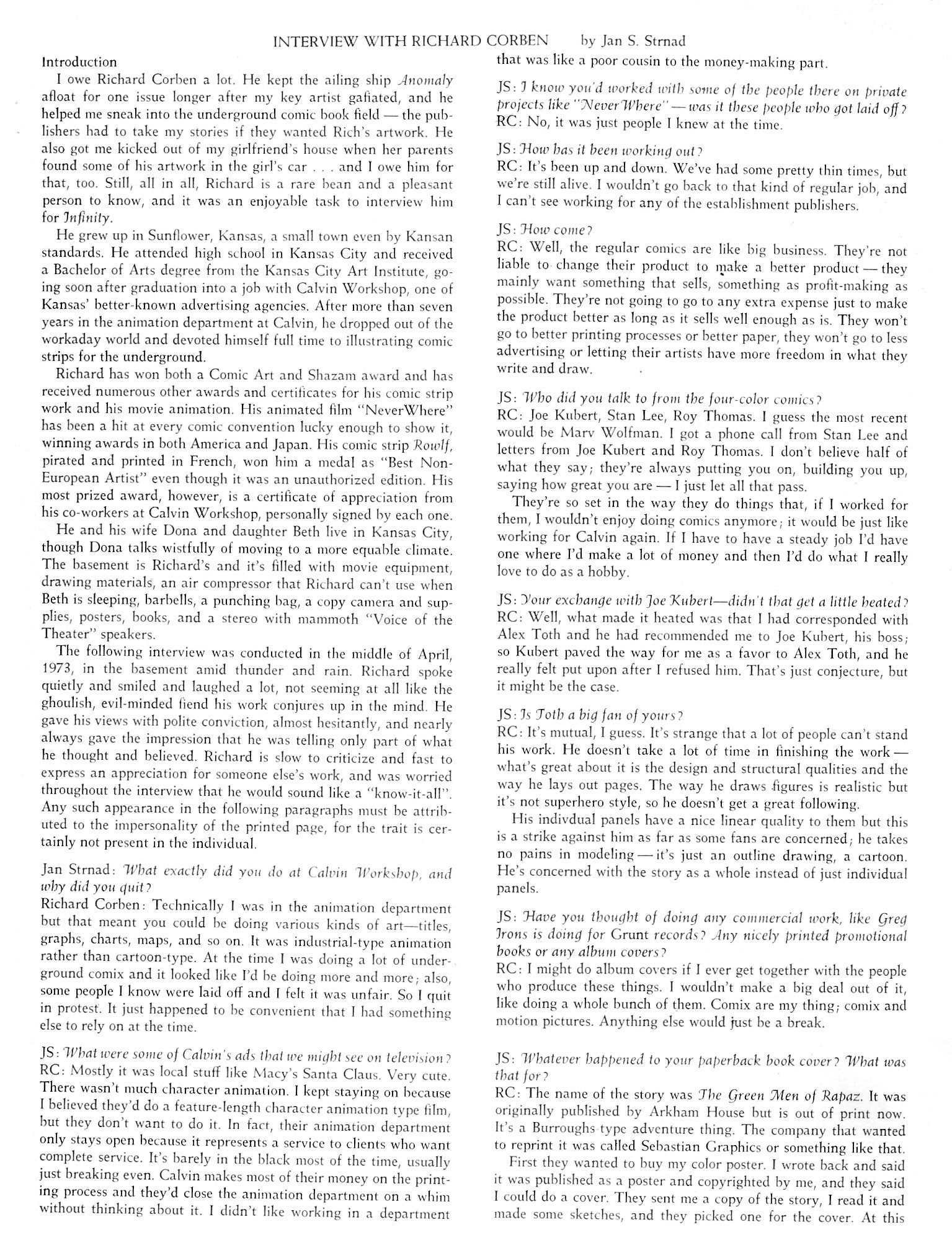
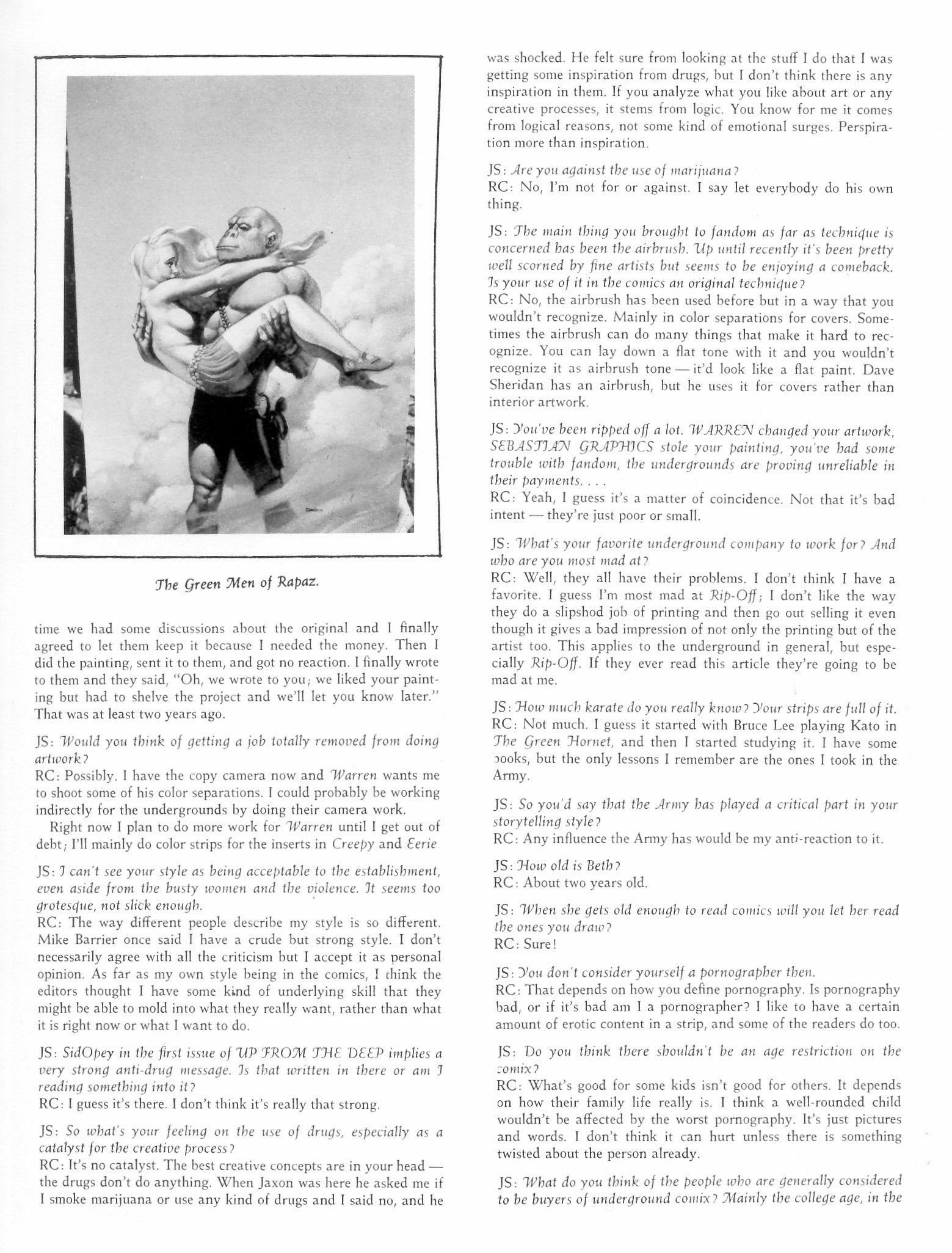
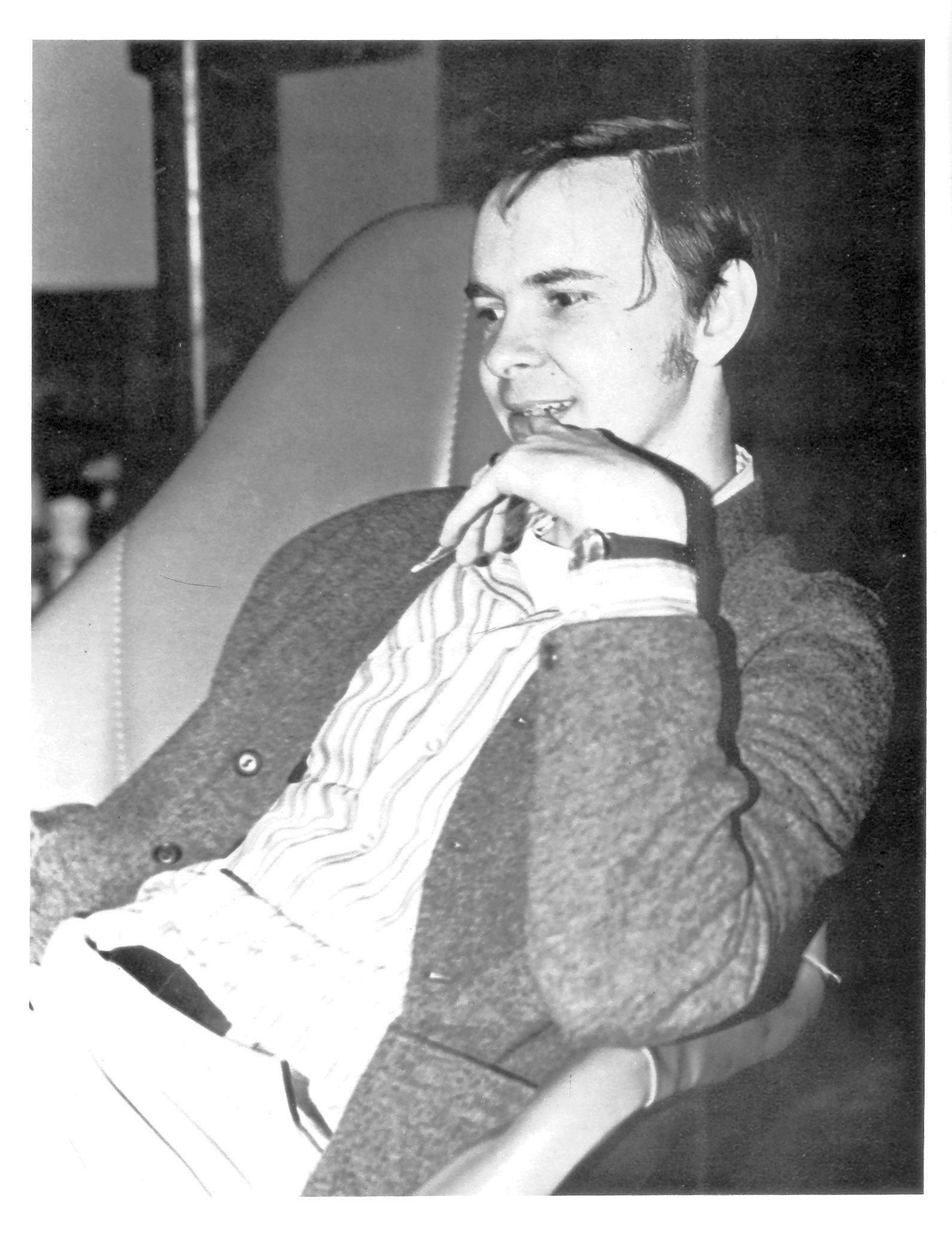
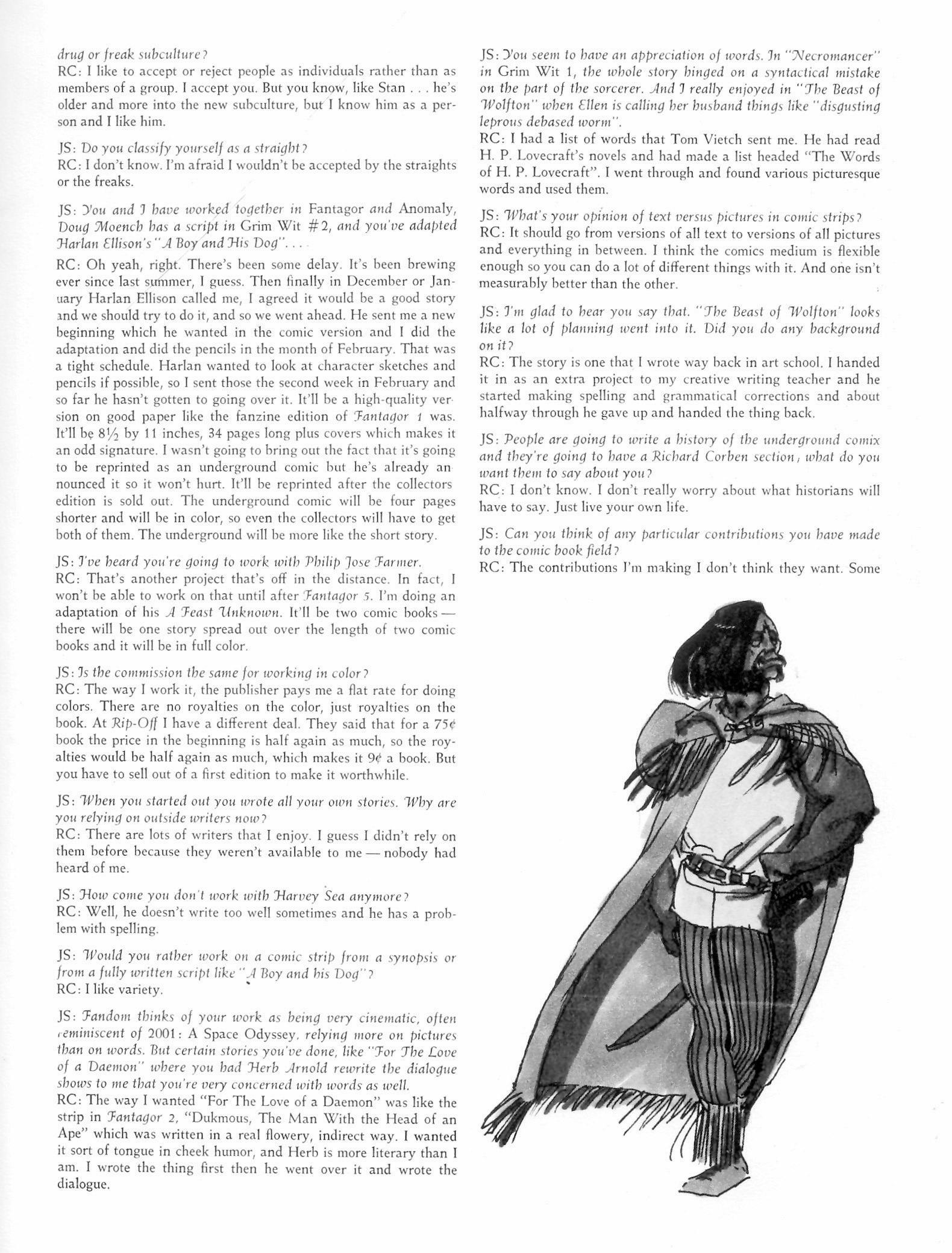
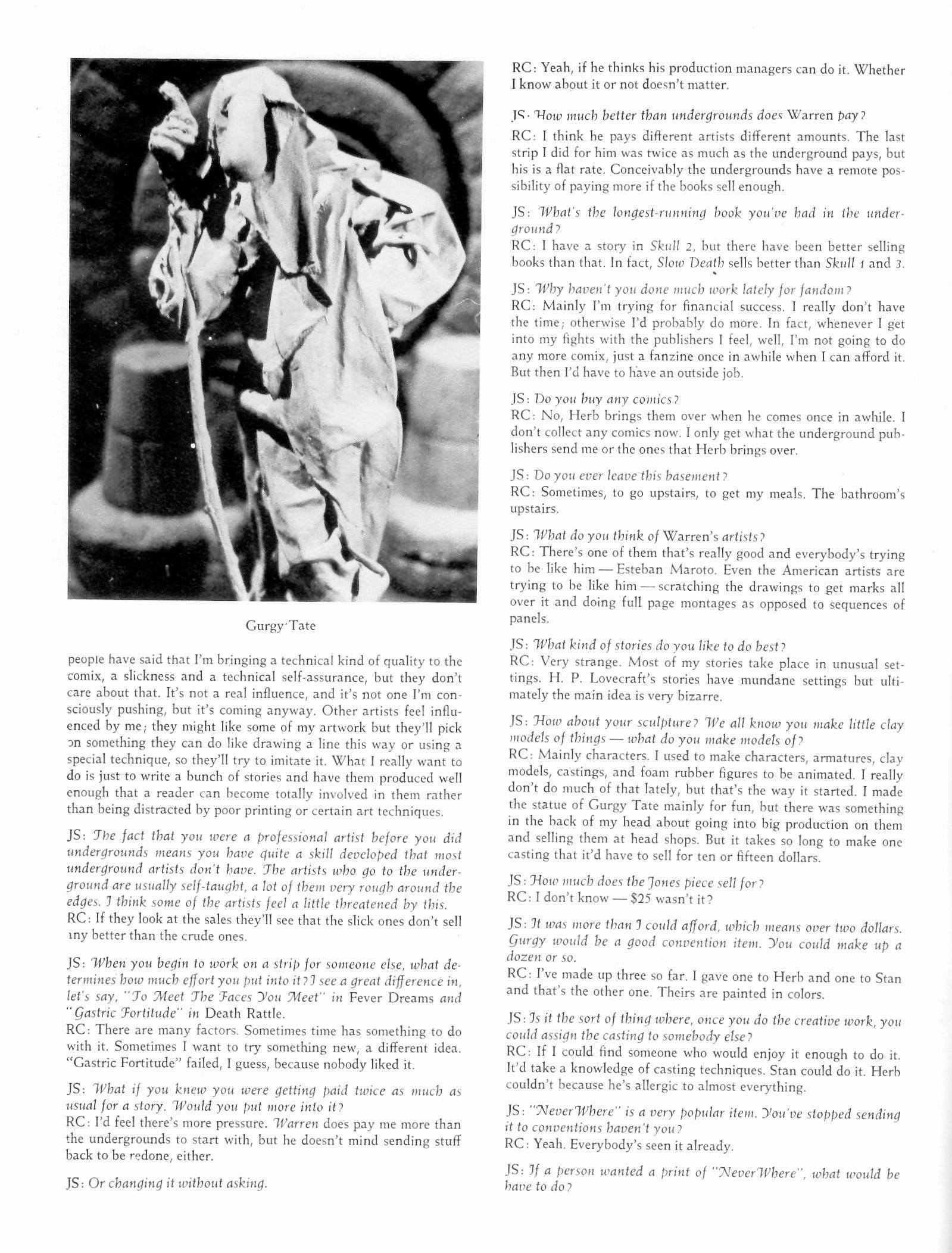
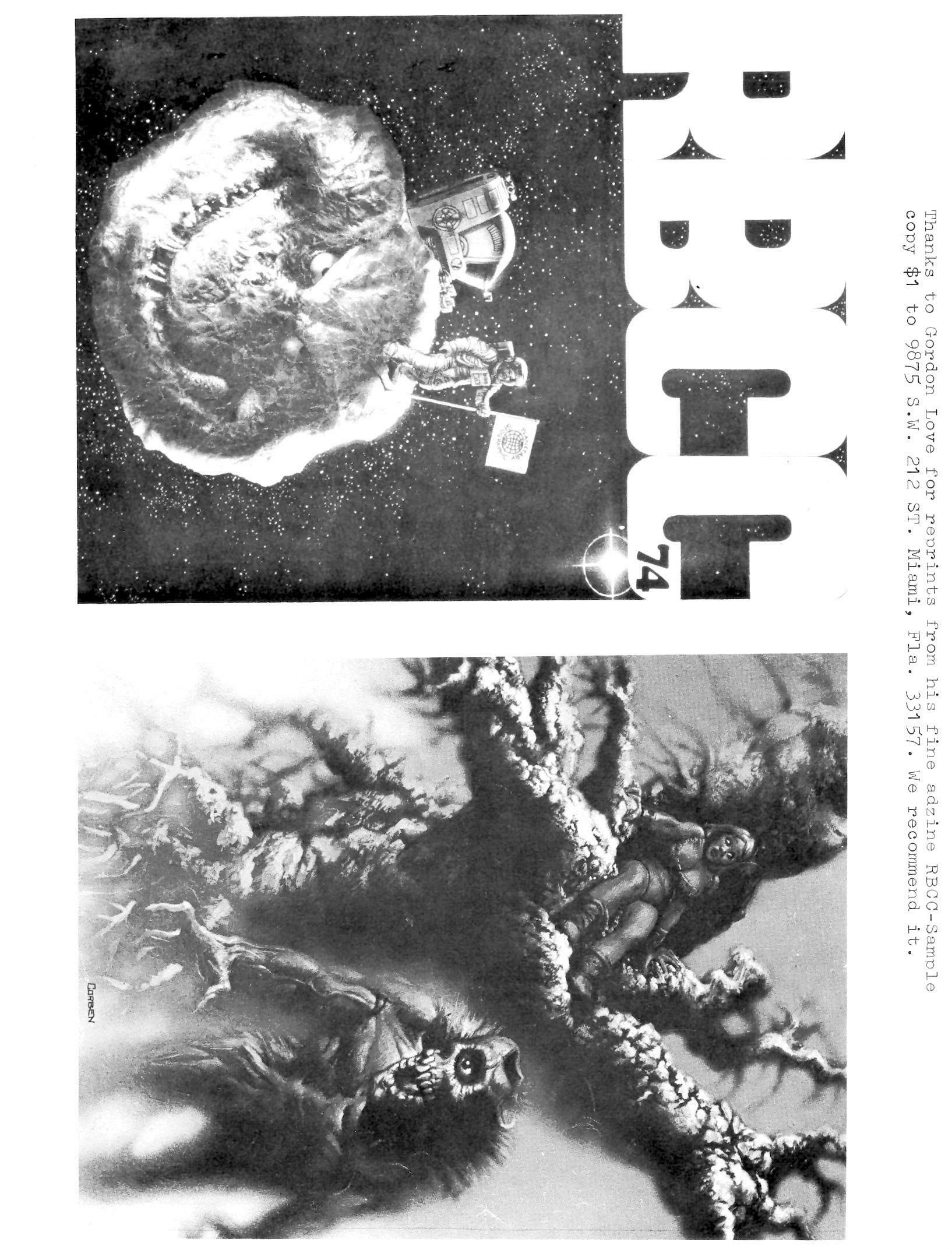
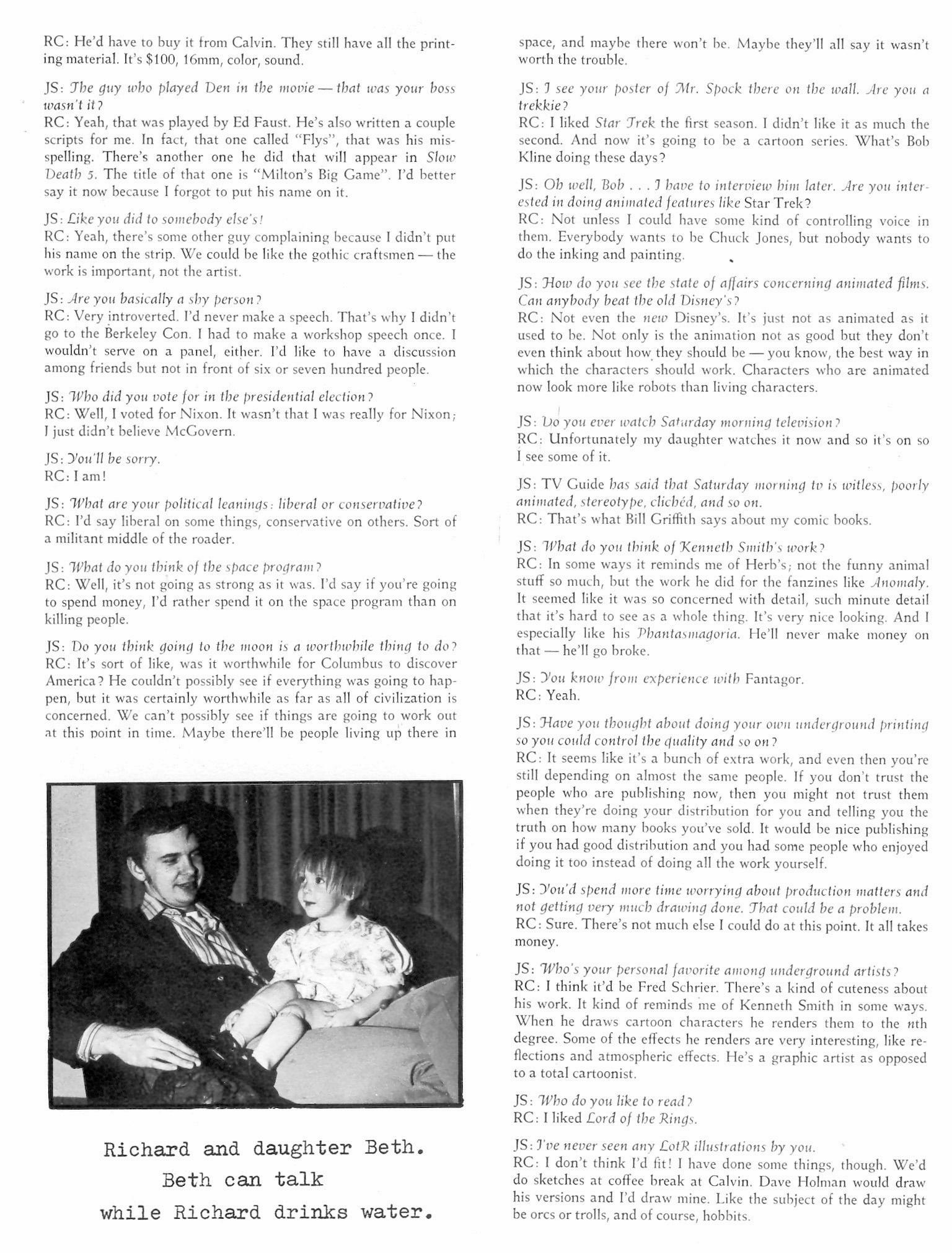
Look Here, Read: Another interview with Corben from 1973

[CLICK EACH IMAGE TO ENLARGE, or RIGHT CLICK > SAVE LINK AS… TO READ OFFLINE]

Corben has always had a knack for small-scale figurative sculpture, but in the thirty-seven years since the above interview, he has stayed true to his original impulse to use sculpture mainly as a means to an end, namely, the precise delineation of form in his comics, and has never seriously pursued sculpture as an independent art.

Comics · Here, Read · Hilda Terry · Look Here

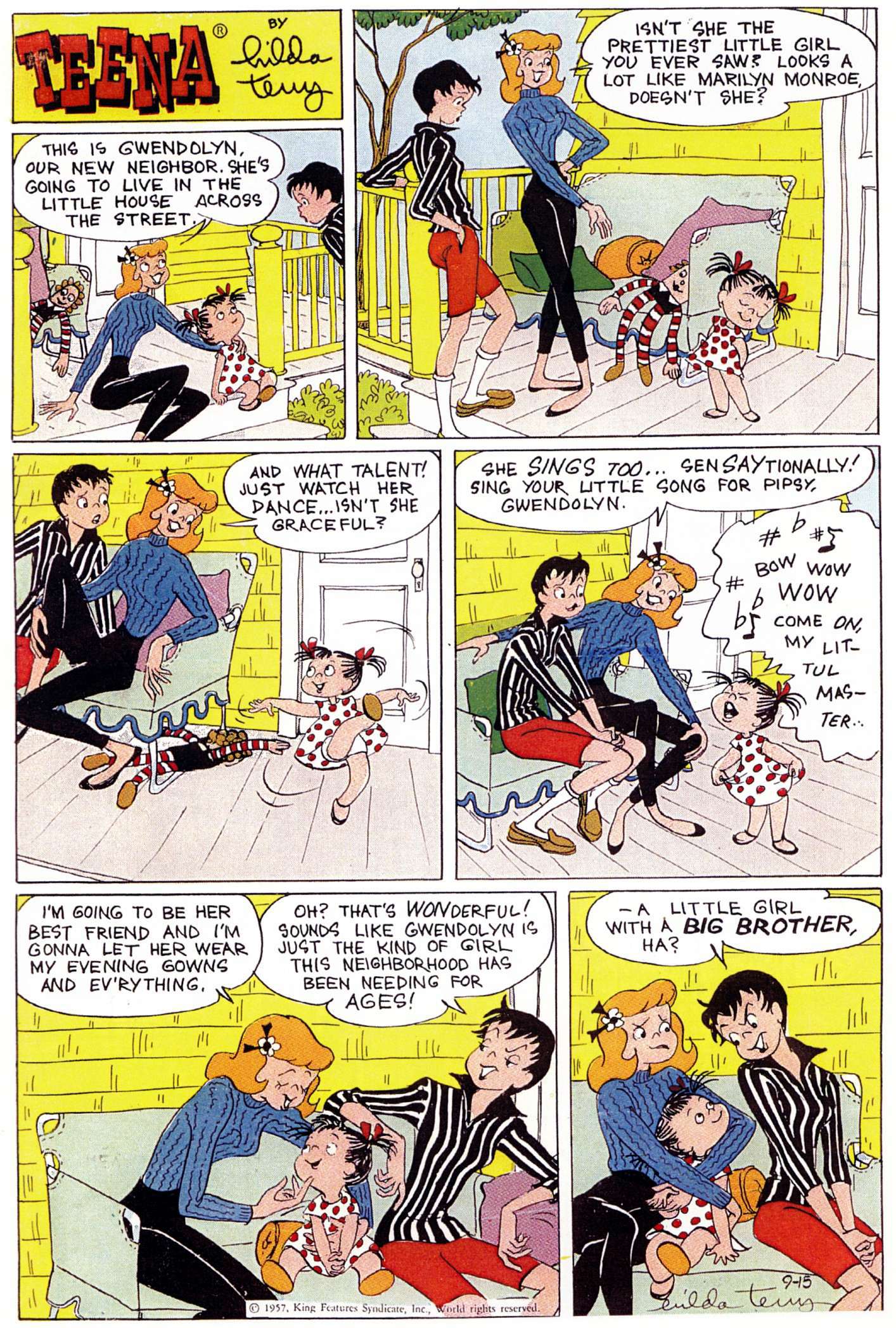
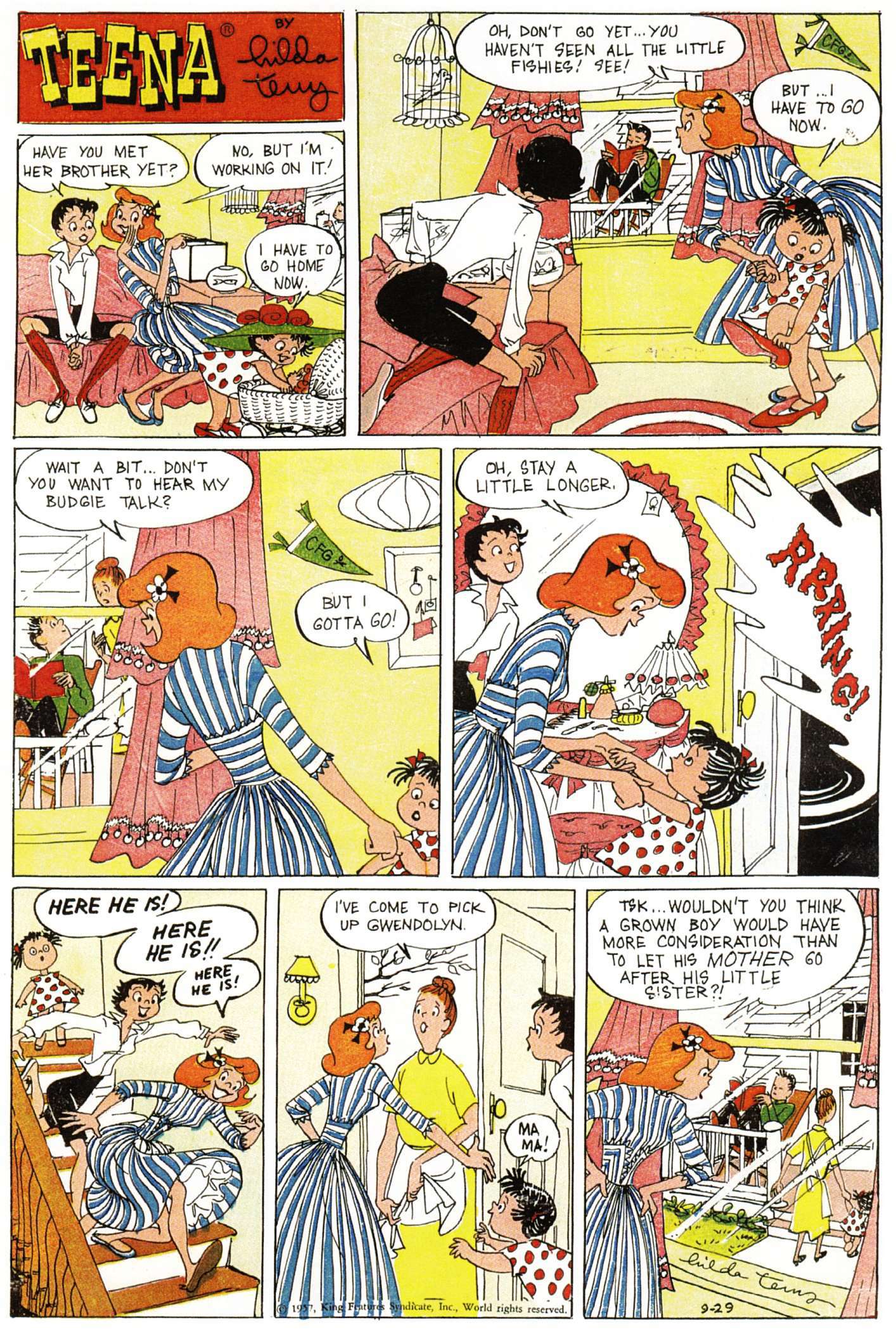
Look Here, Read: Four more “Teena” Sunday strips by Hilda Terry

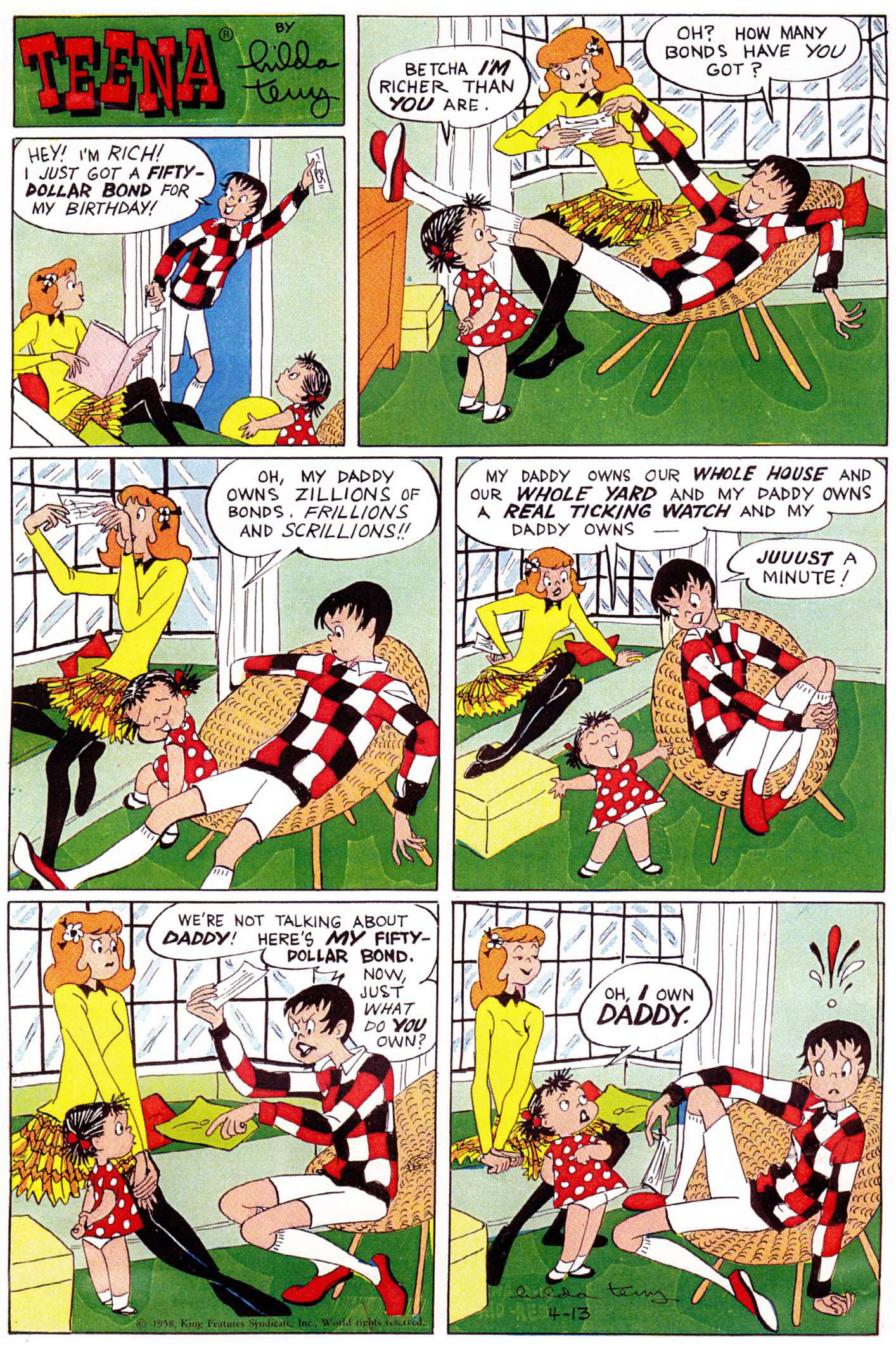
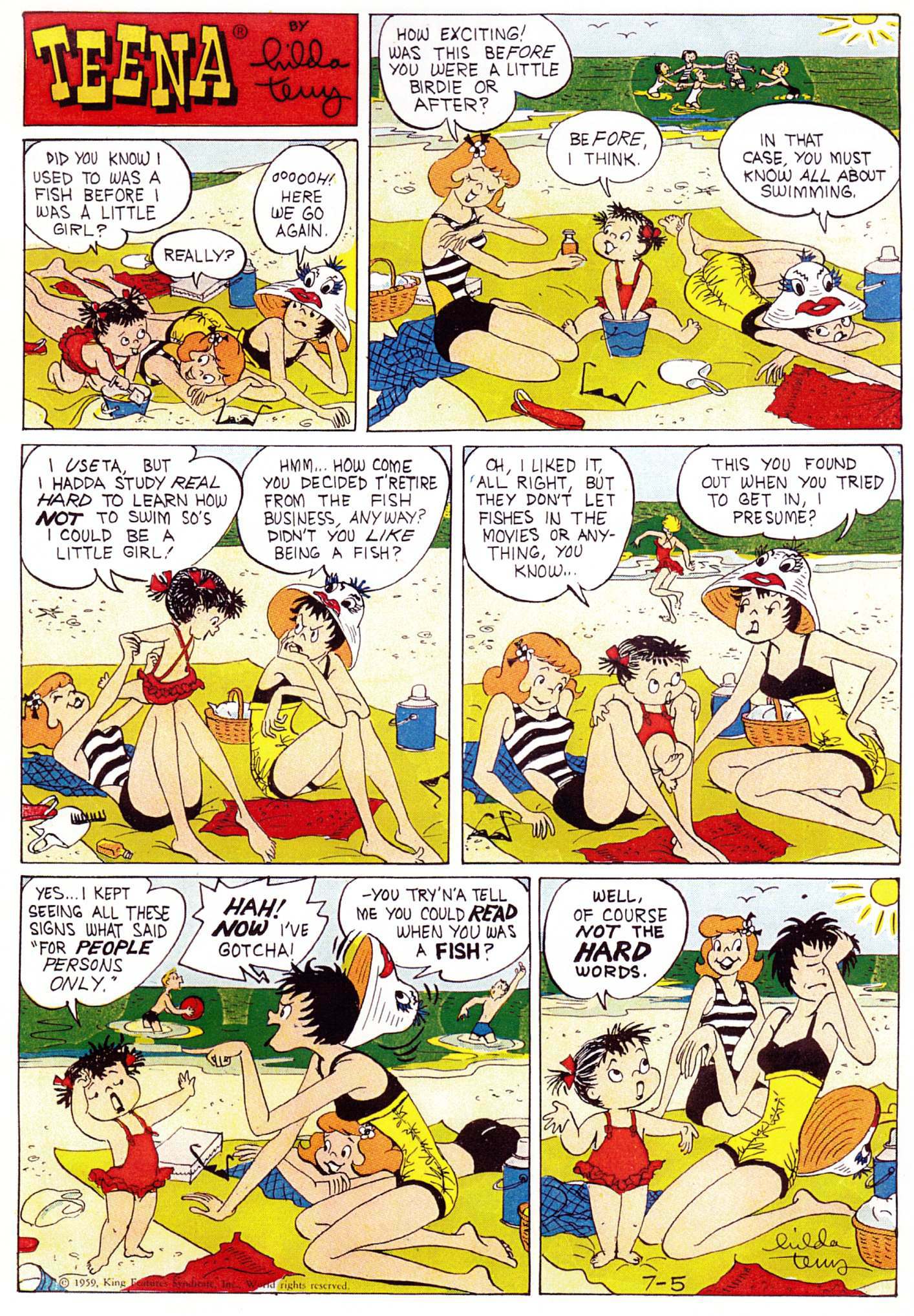
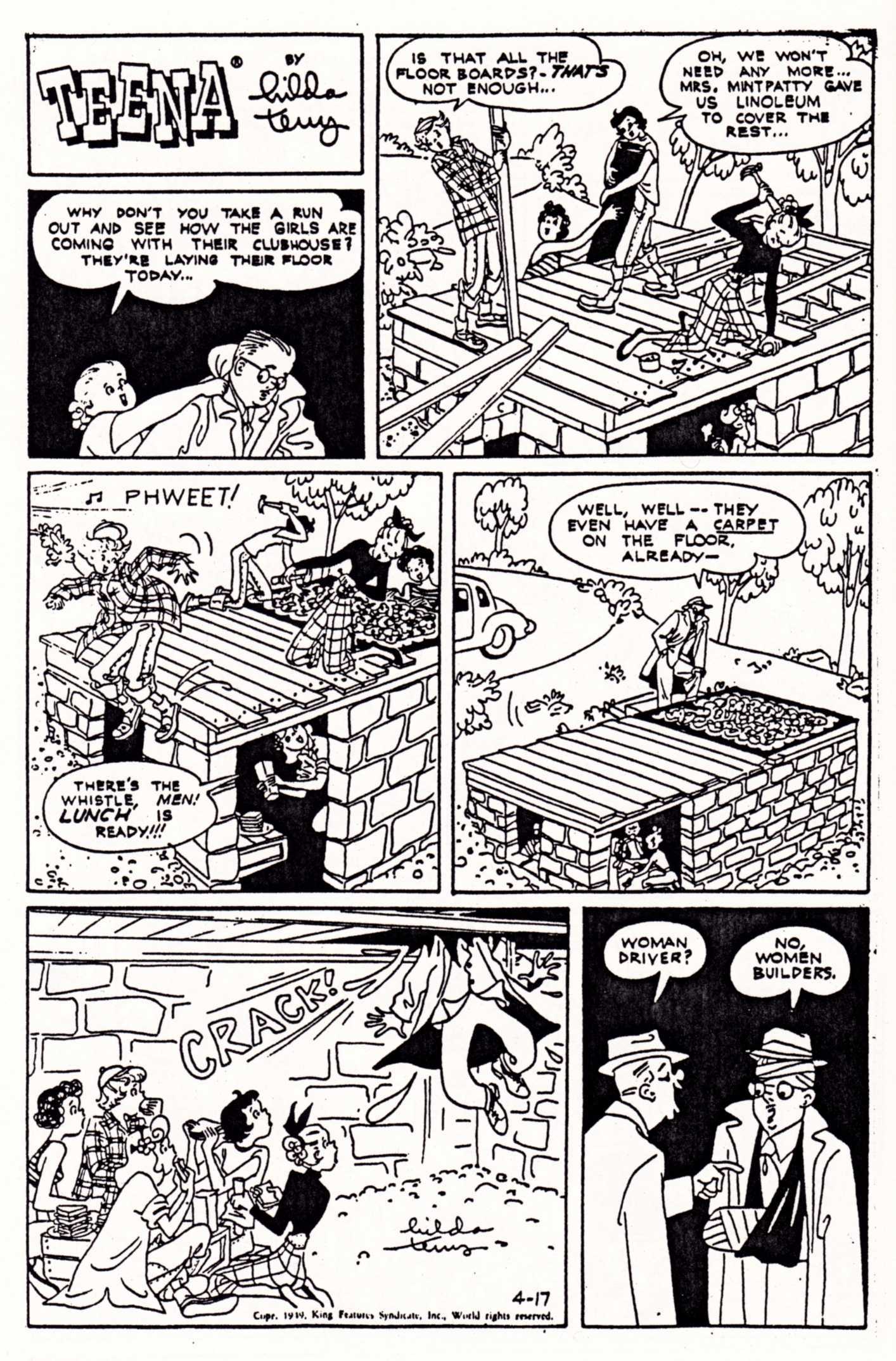
This time around, having just posted four “Teena” Sundays from early in the strip’s run, I thought I’d post four “Teena” Sunday strips, in colour, from 7+ years later (two from 1957, and one each from 1958 and 1959), when Hilda Terry’s warm, energetic, appealing style was not only fully formed but fully her own:

Do you see now what I meant when I said that Terry’s young people are always in motion?

Comics · Here, Read · Hilda Terry · Look Here

Look Here, Read: Four “Teena” Sunday strips by Hilda Terry

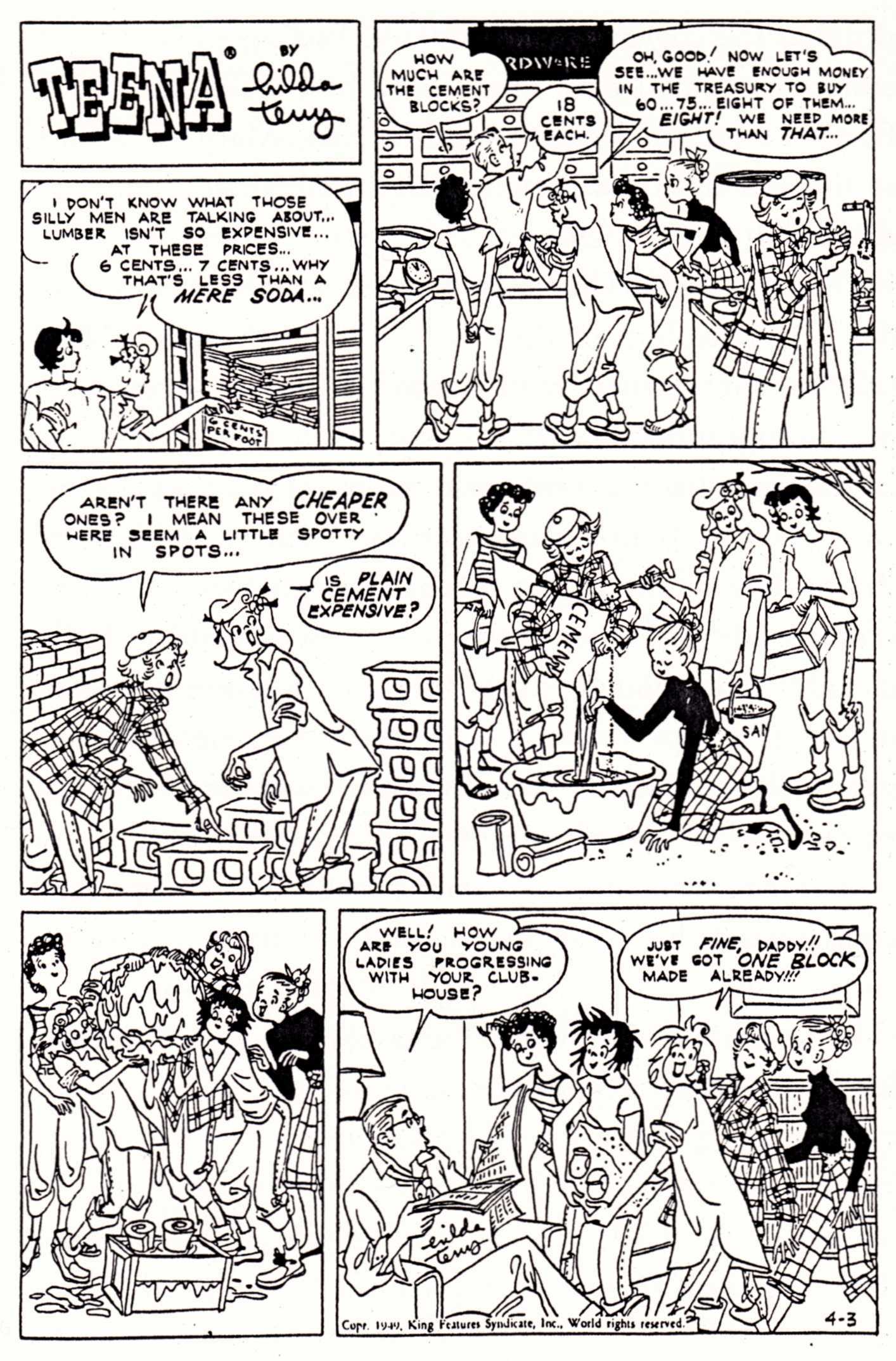
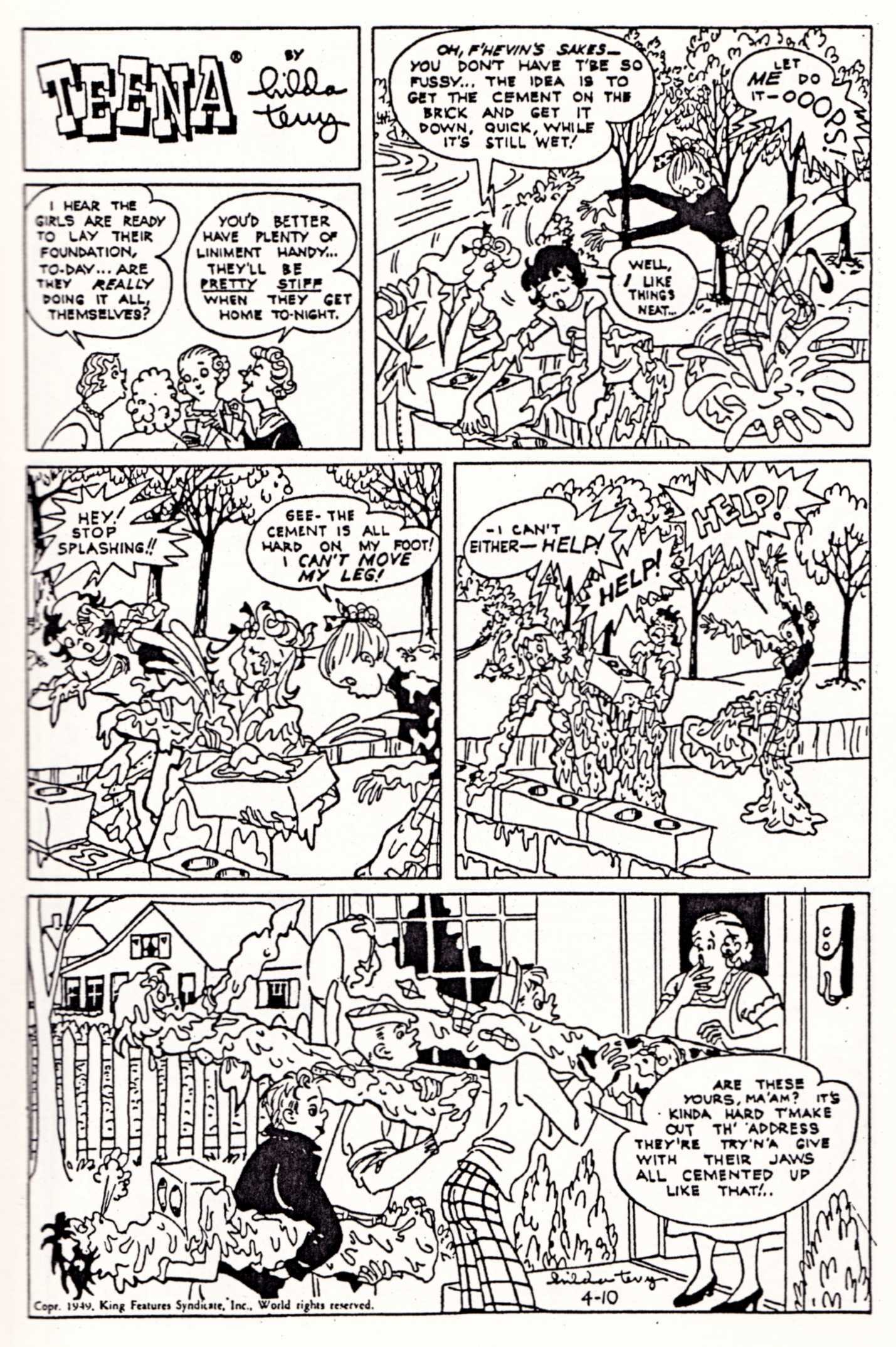
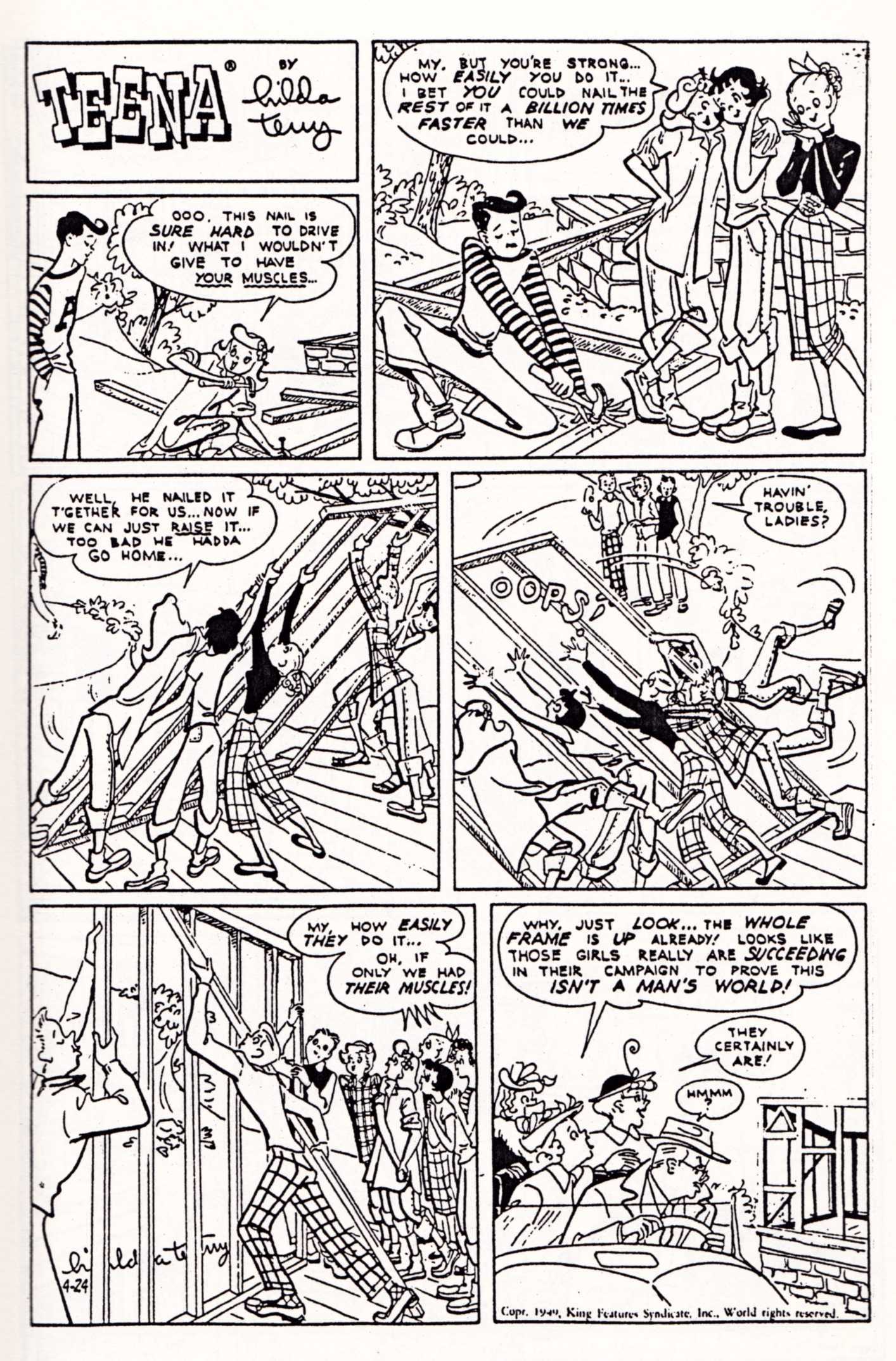
Although it ran in newspapers for twenty years, 1944 to 1964, “Teena” is one of the forgotten comic strips of the 20th century, but thanks to Hilda Terry’s light touch and her understanding of how teenagers exist in the world — her lanky young characters, even when seated, are constantly changing positions, twisting, stretching their legs, putting their feet up, gesturing, and so on — it still has a freshness that some other, more celebrated strips, do not. Yes, Terry’s visual style in these early “Teena” Sundays is strongly reminiscent of the work of Gluyas Williams, but it wasn’t long before she developed a much looser style that was all her own. What follows is a sequence of strips that ran on four consecutive weekends in April 1949; the strips were scanned, by me, from Terry’s self-published autobiography, Strange Bod Fellows, so the repro quality is not the best:

It’s amazing to me that such charming, attractive, readable work is not available in affordable reprint editions. Yes, the gender divisions light-heartedly depicted in these particular examples are a little out of date; nonetheless, it seems to me that “Teena” would have tremendous appeal to fans of Little Lulu, Archie Comics, Harvey Comics, Nipper, Blondie, etc. — all of which have experienced a recent resurgence of interest and are in the process being systematically reprinted for new generations of readers.

For those unfamiliar with Hilda Terry’s career, here it is in a nutshell:

Hilda Terry was born on 15 June 1914. In addition to drawing “Teena” for twenty years, Terry sold numerous single-panel cartoons to The Saturday Evening Post, The New Yorker, and other coveted markets. In 1950, she became the first woman allowed to join the National Cartoonists Society, which up until that point had only allowed male cartoonists to join, and she became a vocal advocate for other women to follow in her footsteps. She was a pioneer of early computer animation. She received the Animation Award from the National Cartoonists Society in 1979. She taught at the Art Students League well past usual the age of retirement. She was elected to the Friends of Lulu Women Cartoonists Hall of Fame in 2001. She died 13 October 2006, at the age of 92.

“If you do a comic strip, you don’t want it to be forgotten.” — Hilda Terry, MoCCA 2006, as reported by The Beat.


SEE ALSO:

Ragged Claws Network > Look Here, Read: Four more “Teena” Sunday strips by Hilda Terry

Bill Sienkiewicz · Illustration Art · Jeffrey "Jeff" Catherine Jones · Look Here

Look Here: “The Bill Sienkiewicz Portfolio”

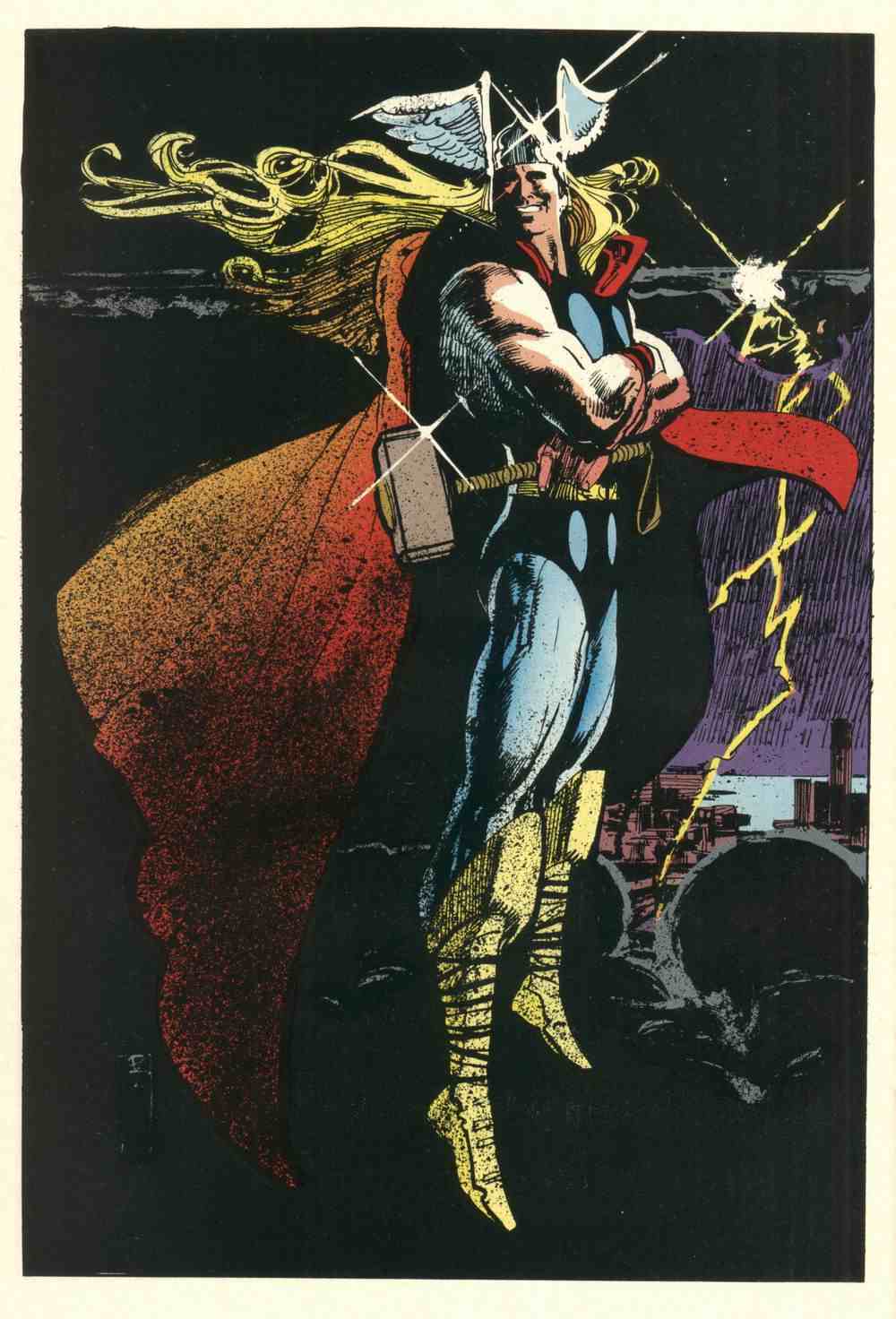
From Marvel Fanfare #8 (May 1983), “The Bill Sienkiewicz Portfolio,” coloured by Christie Scheele:

Notice Sienkiewicz’s Jeffrey Jones-inspired signature. Not really any evidence of Jones’s influence in the drawing, however. Ralph Steadman, maybe. Bob Peak, definitely — especially in the Thor image, but in some of the others as well. Neal Adams, definitely — all over the place. Jones, not so much.

To my eye, at least.

For one thing, Sienkiewicz’s figures are just not specific enough. They’re not carefully observed. There are no details that make you think, yes, that’s how a body really looks, and yes, that’s how it moves! Jones’s best drawings are filled with such details.

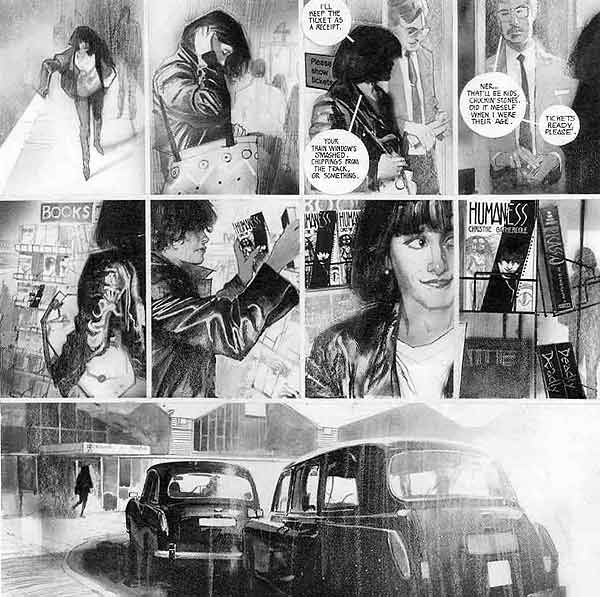
Seven years later, Sienkiewicz was hard at work on the artwork for Big Numbers, where he combined a loose mixed-media illustrative technique with extensive photo reference. Here’s a random sample from issue #1, as featured on Bill Sienkiewicz’s official Web site (where the style is explicitly identified as “photo-realistic”):

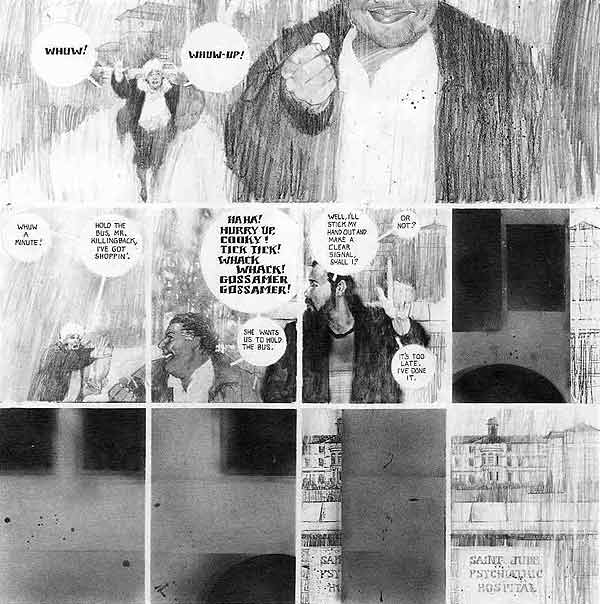
And here’s another:

It was a relatively original synthesis of the influences that Sienkiewicz had formerly worn on his sleeve, but still — to my eye — Sienkiewicz’s Big Numbers style owed more to work such as Richard Diebenkorn’s mixed-media figure drawings (see, for instance, Diebenkorn’s Seated Woman No. 44 [1966] posted below) — along with a certain highly influential school of heavily photo-referenced but painterly illustration art that emerged in the 1960s and steamrolled into the 1970s and beyond (Bernie Fuchs comes to mind here, and Robert Heindel, and the various Spanish illustrators whose photo-based work in ink, pencil, charcoal, oil, etc., came to dominate the Warren comics magazines, especially Vampirella) — than it ever did to Jones’s Idyl or I’m Age strips.

Nor did Sienkiewicz’s work have to resemble Jones’s, for Sienkiewicz to claim Jones as an influence.

Because the simple fact is, one can be influenced by a fellow artist’s example of artistic independence, integrity, and experimentation without latching on to specific aspects of his or her style…

BONUS IMAGE:

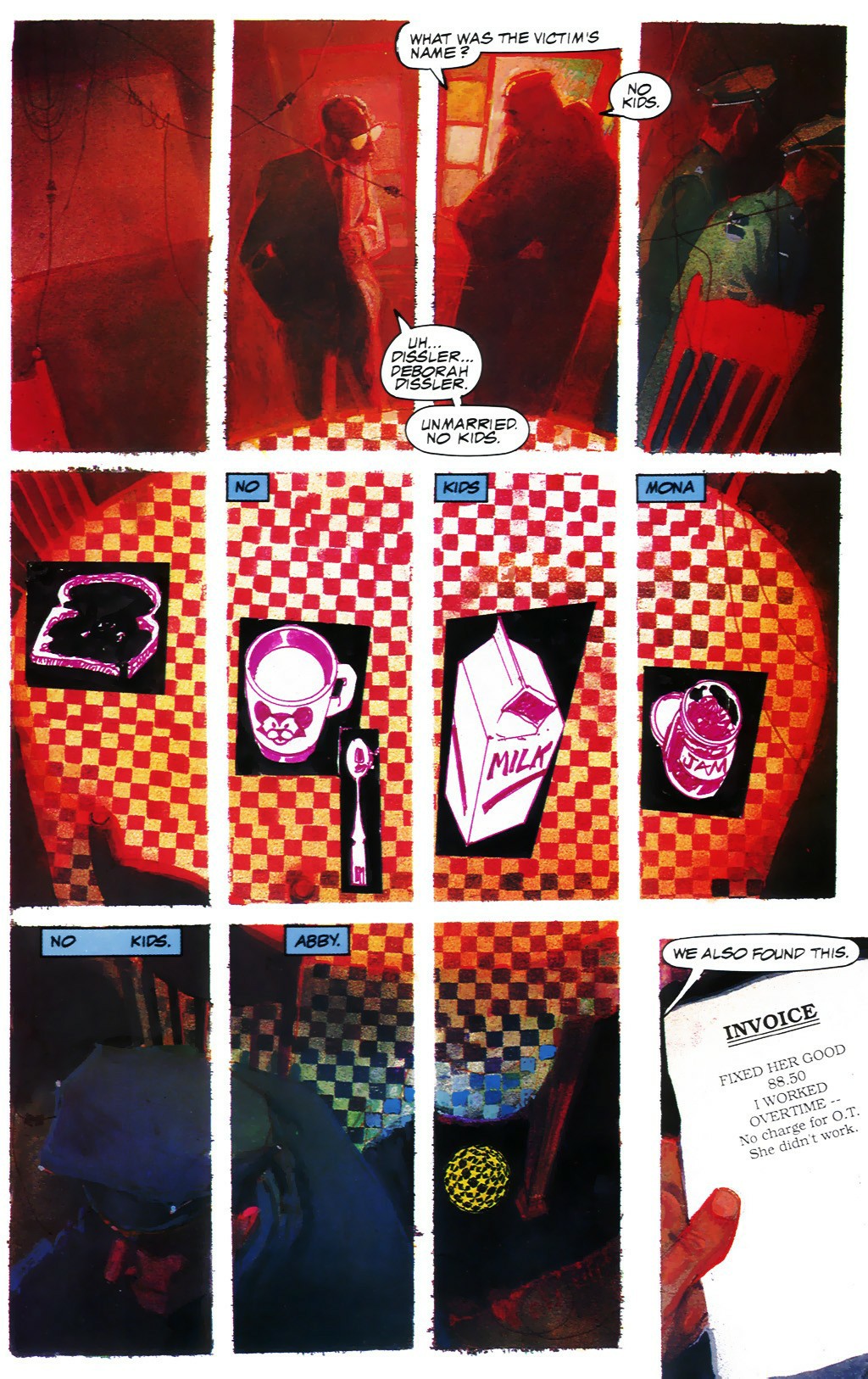
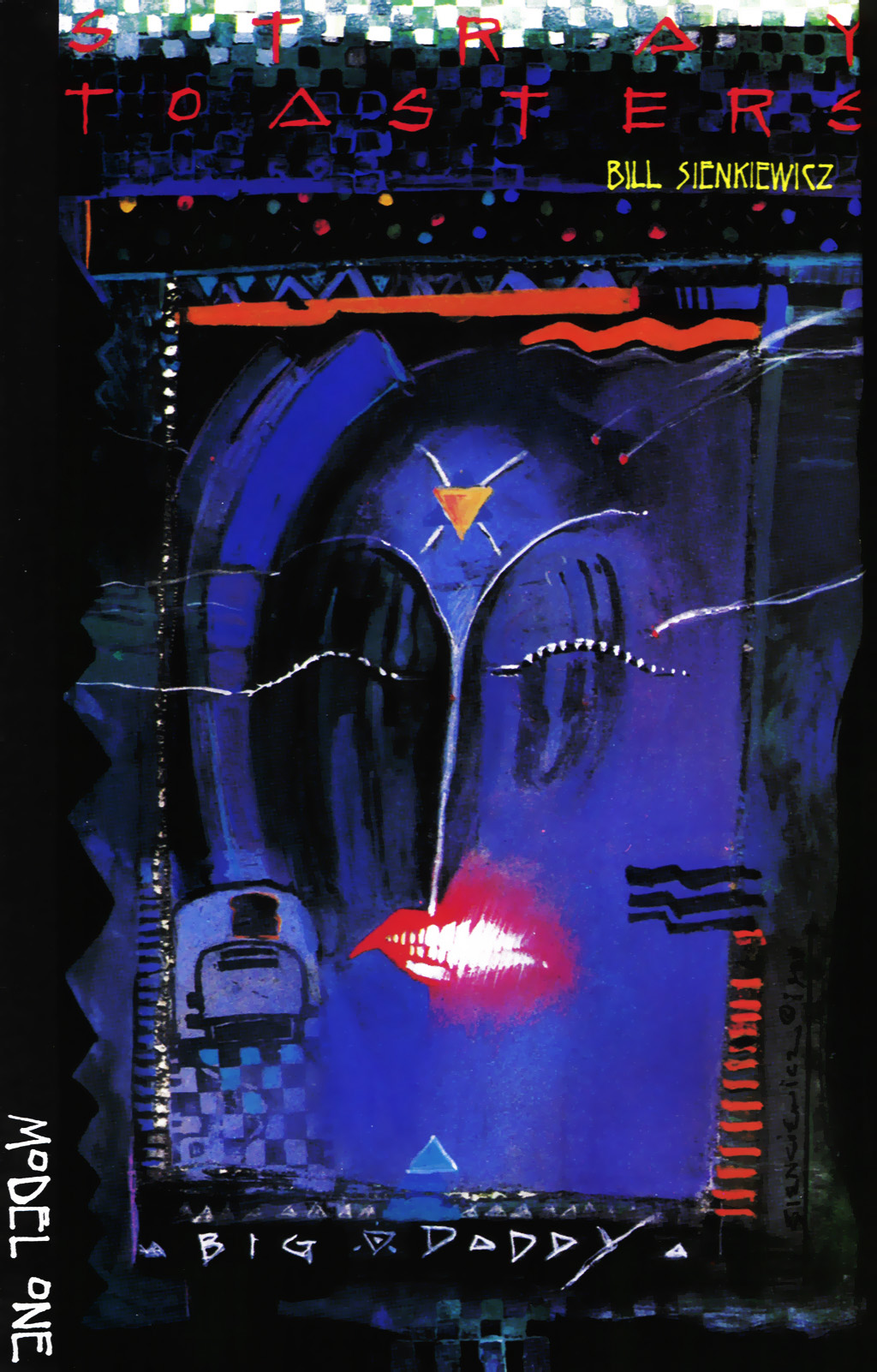
From 1988, a page from Stray Toasters, to compare with the illustration by Robert Heindel that I linked to earlier:

Book/Magazine Covers (All) · Connections · Frank Frazetta · Illustration Art · Look Here

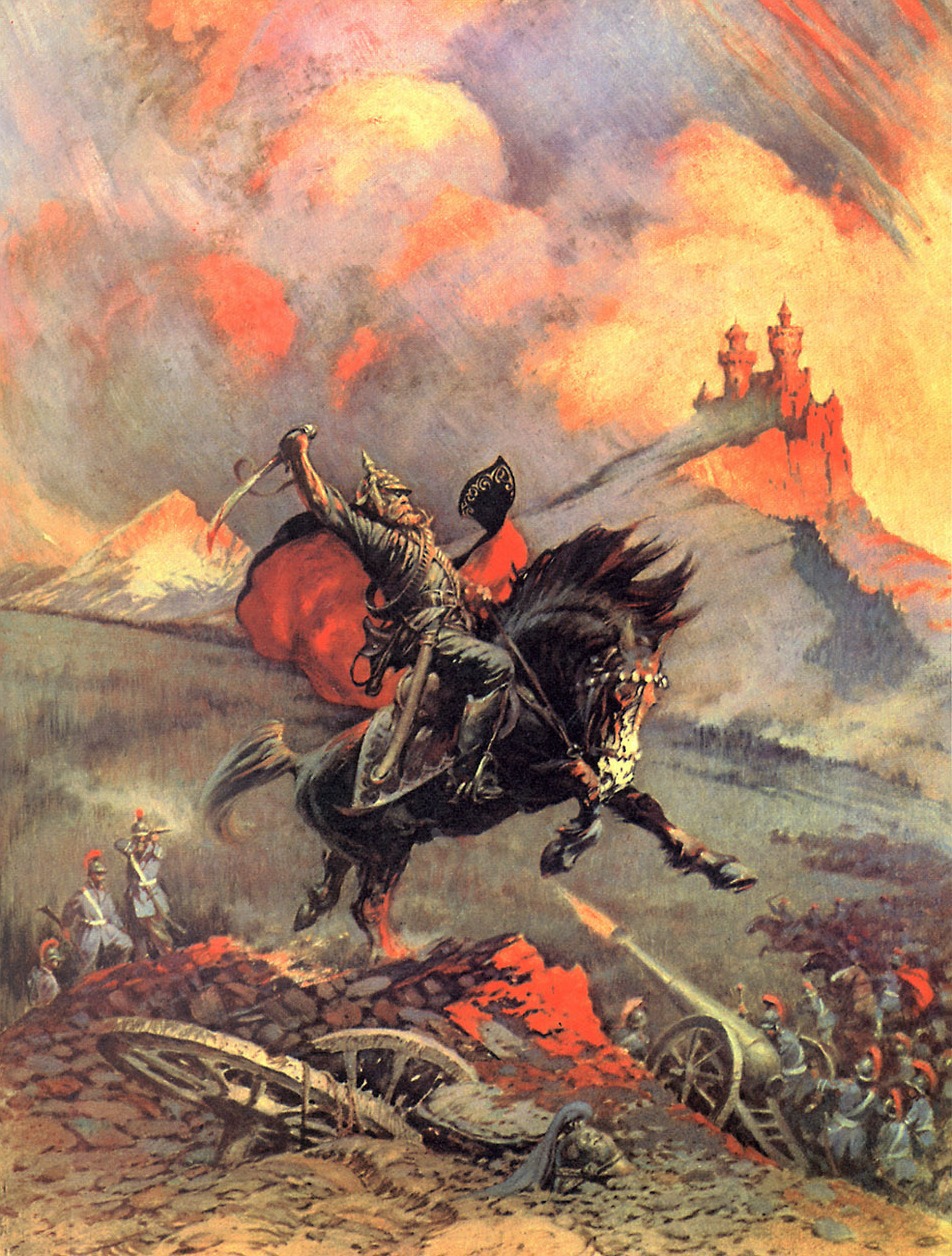
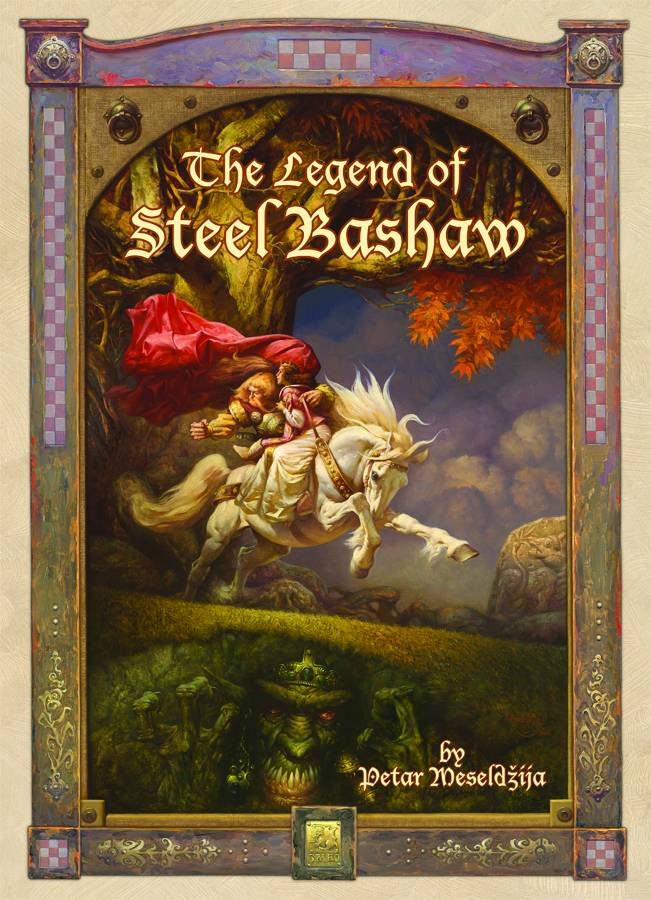
Connections: Frazetta and Meseldžija

The Bud’s Art Books catalogue arrived today, and as I was flipping idly through the pages, I noticed something that seemed familiar in a tiny thumbnail image of a book cover (issue 1010F, page 67, item E). Here, take a look at the much larger images below, and see if you notice it, too.

Is this mere happenstance? Maybe, maybe not. You decide.

Barron Storey · Bill Sienkiewicz · Book/Magazine Covers (All) · Illustration Art · Look Here · Richard Powers

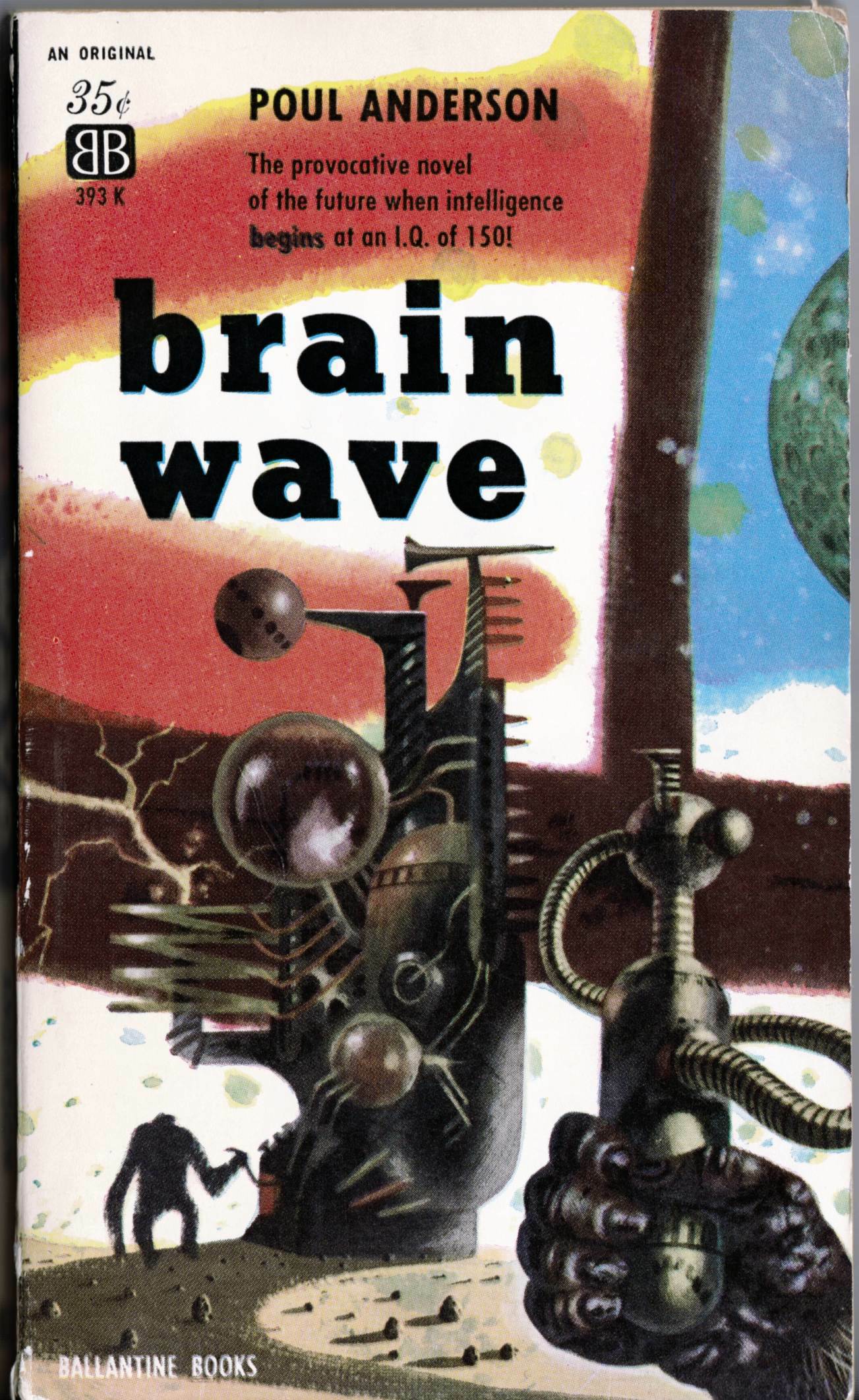
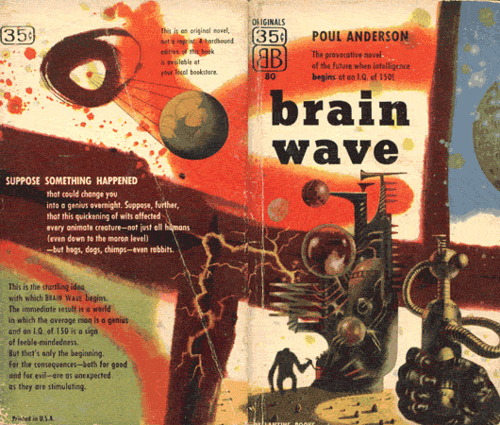
Look Here: Two SF covers, with art by Richard Powers

[CLICK IMAGES TO ENLARGE]

When I saw that second cover with the raggedly applied paint, the swooping linear accents, and the colourful little shapes fluttering along the edges of the forms, I immediately was reminded of certain works by Bill Sienkiewicz and by his teacher/mentor, Barron Storey. Like this well-known cover, for instance:

But would either Sienkiewicz or Storey recognize Powers as an influence? I have no idea…

BONUS LINK:

The Powers Compendium — the images are tiny, but there sure are a lot of them! I see that the Compendium site also includes that same little scan of the wraparound Brain Wave cover.

Keywords: Brain Wave, The Planet of the Blind, Stray Toasters.