Drawing · Heads Up! · Look Here · Original art vs. printed page · Richard Corben

Richard Corben: Grand Master

I’m a bit late to the party, but knocking about on the Web this morning I happily discovered that on October 2nd, 2009, the Directors of Spectrum, an annual showcase of “The Best in Contemporary Fantastic Art,” announced that Richard Corben would receive the Spectrum‘s 2009 Grand Master Award. Previous recipients of the award include Frank Frazetta, Don Ivan Punchatz, Leo and Diane Dillon, James E. Bama, John Berkey, Alan Lee, Jean Giraud, Kinuko Y. Craft, Michael William Kaluta, Michael Whelan, H.R. Giger, Jeffrey Jones, Syd Mead, and John Jude Palencar. A biography and full appreciation of Corben appears in Spectrum 16, on sale now. Congratulations, Richard!


BONUS LINK:

Book Review: Spectrum 16: The Best in Contemporary Fantastic Art

Book/Magazine Covers (All) · Illustration Art · Look Here · Philip K. Dick · Richard Corben

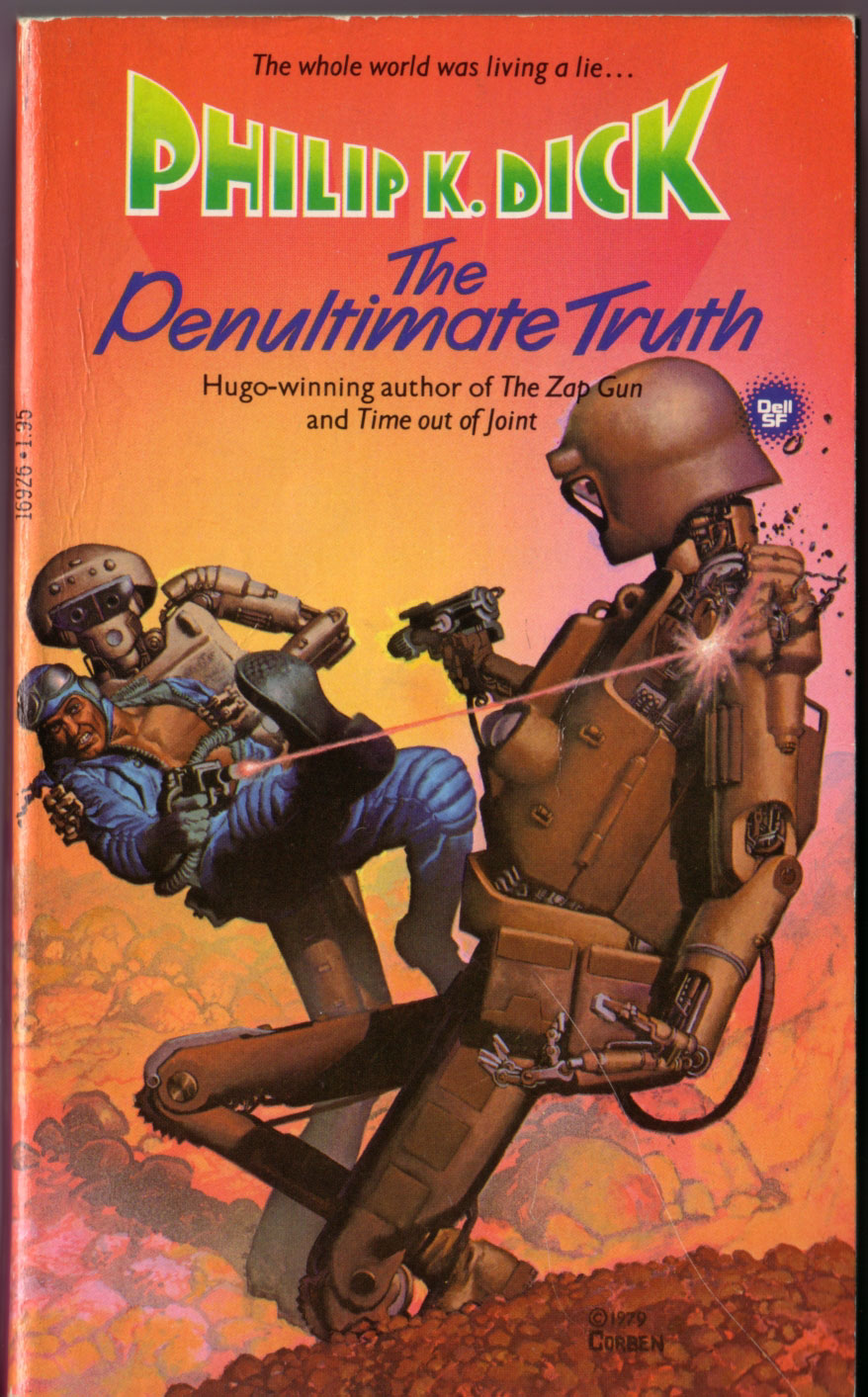
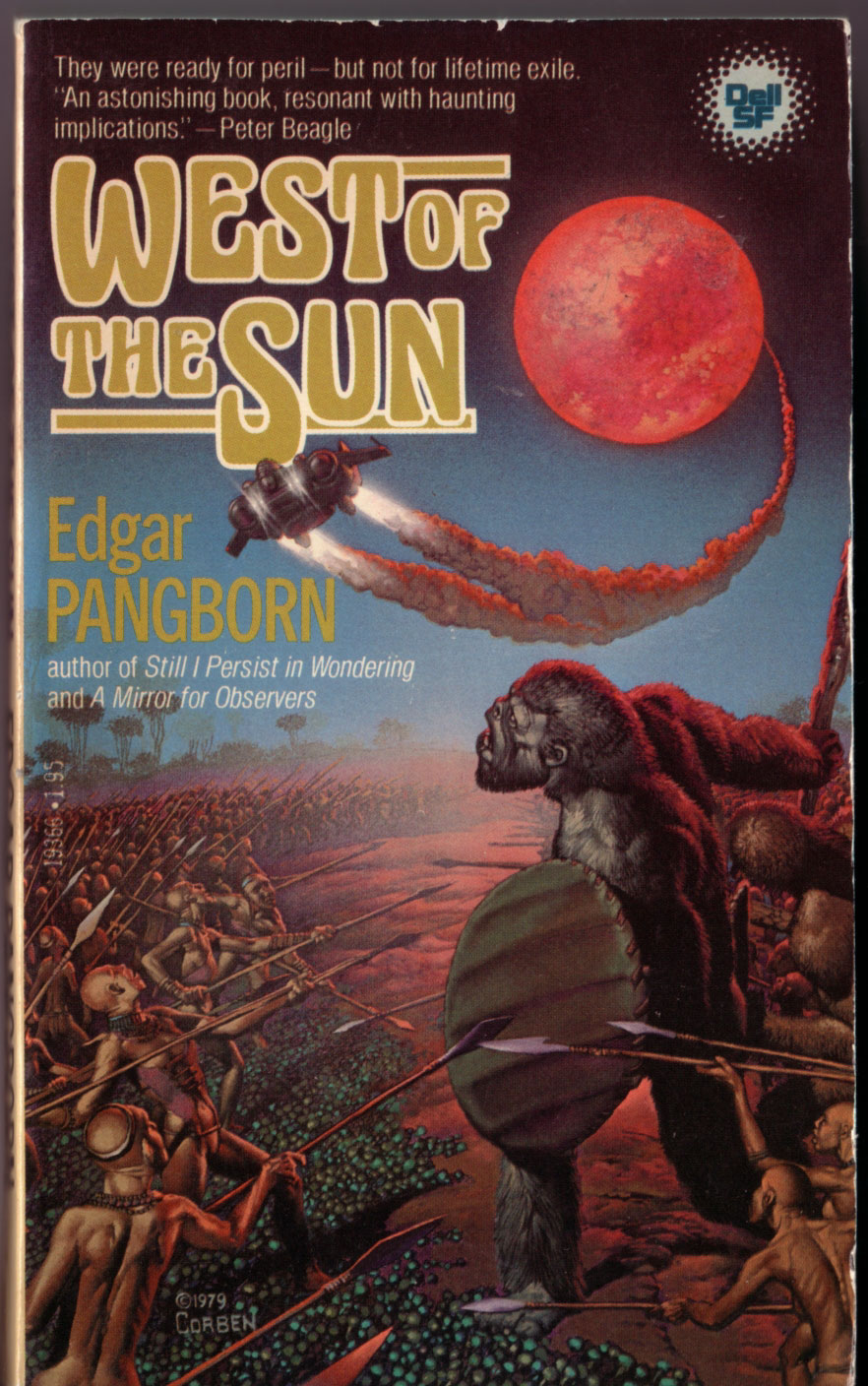
Look Here: Three paperback covers by Richard Corben

From the library of yours truly:

Keywords: The Penultimate Truth, Deus Irae, West of the Sun.

Illustration Art · Jeffrey "Jeff" Catherine Jones · Look Here · Prints (Jones)

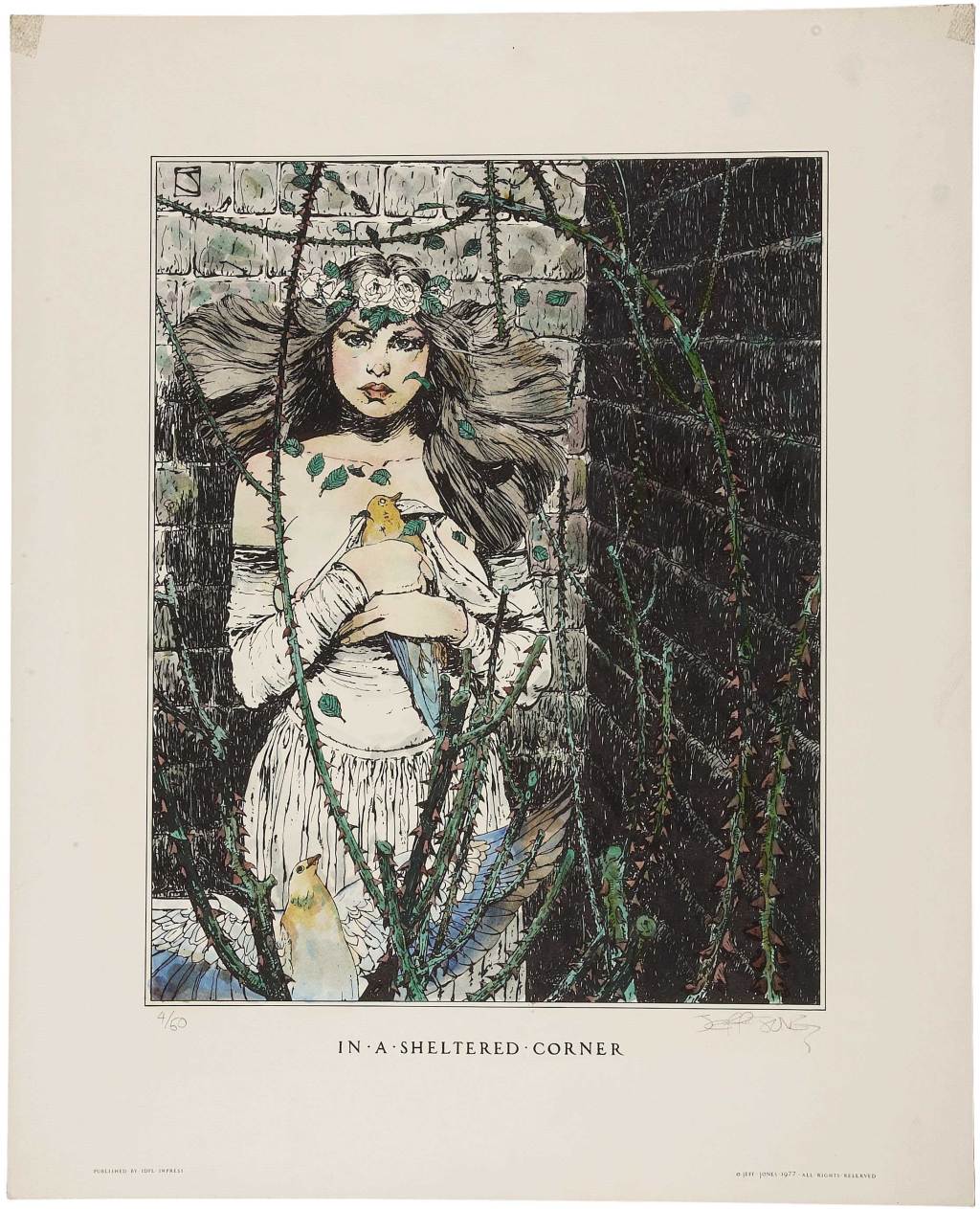
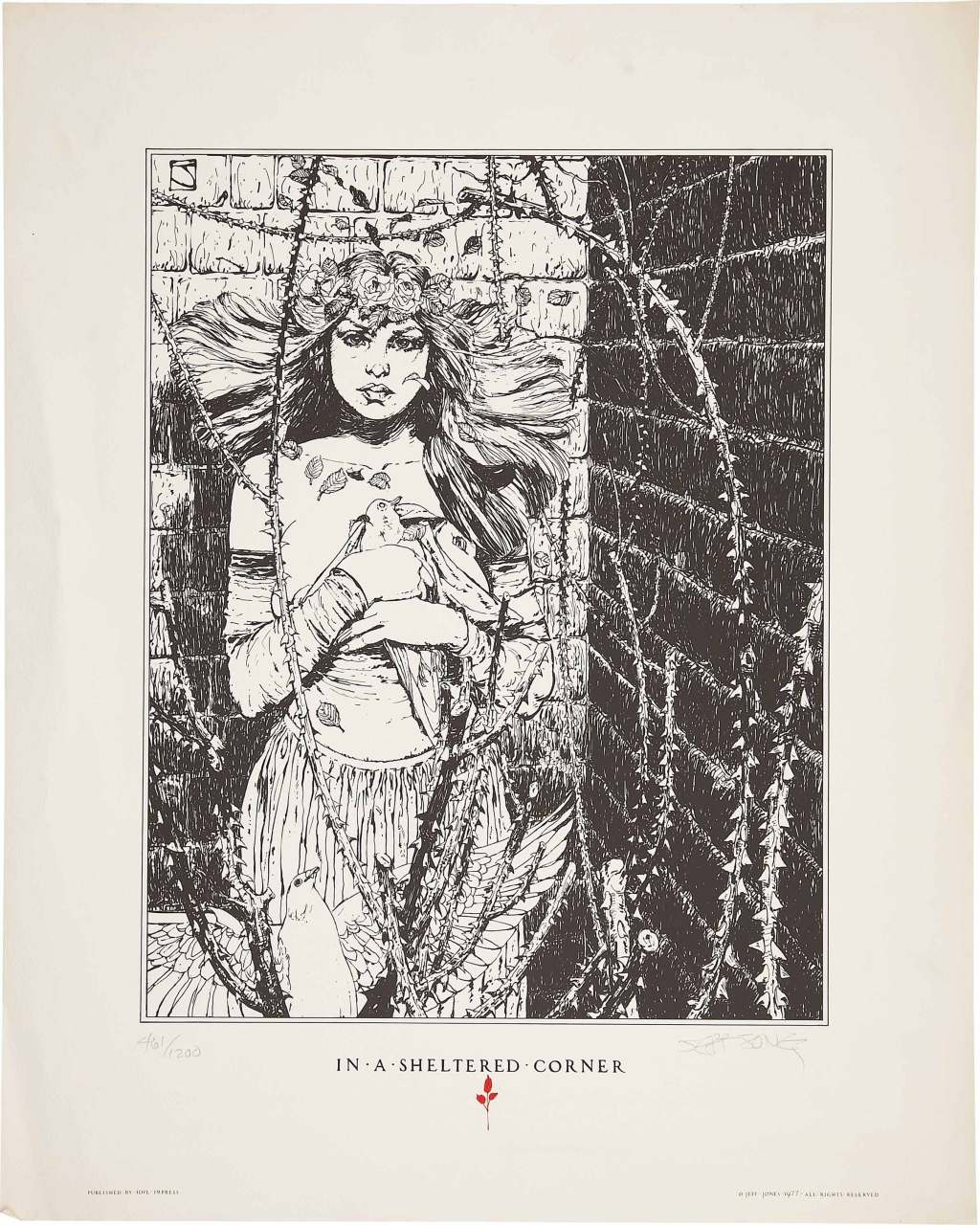
Look Here: “In a Sheltered Corner” by Jeffrey Jones

Here’s one of a signed-and-numbered edition of fifty prints, published by Idyl Impress in 1977, that were hand-coloured with watercolour by Jeffrey Jones. It is followed by the uncoloured version, which was published the same year by Idyl Impress in a signed-and-numbered edition of 1200:

ABOVE: Jeffrey Jones, In a Sheltered Corner (Idyl Impress, 1977), hand-coloured, limited-edition lithograph, 17 x 21 inches.
ABOVE: Jeffrey Jones, In a Sheltered Corner (Idyl Impress, 1977), limited-edition print, 17 x 21 inches.
Art Instruction · Link Roundup · Oh the places I've been...

Free Art Instruction: A Few Good Links


ADVICE AND INSPIRATION:

Phil McAndrew! > Super Obvious Secrets That I Wish They’d Teach In Art School by Phil McAndrew — what are the ten habits of highly effective illustrators and cartoonists? Phil knows, and if you take a moment to read his advice, you will too.

@random > From Idea Sketch to Final Painting: Kent Williams, Mother and Daughter (2009), oil on linen, 42 x 50 in. — not art instruction per se, but much can be gleaned from step-by-step process photos, and the finished work is a knockout!


ANATOMY INSTRUCTION AND INFORMATION:

comic tools > April 11, 2009: Ball, hoop, cone, vase | April 18, 2009: Basic Bones | April 26, 2009: Torso Muscles | May 3, 2009: Upper Arms (and Kirby Dots) | May 10, 2009: The Forearm | May 17, 2009: Leg Muscles | May 24, 2009: Neck Muscles.

Ragged Claws Network > Anatomical Reference Sheets — seven plates from an old anatomy book for art students.

Ragged Claws Network > Download Here: “Constructive Anatomy” by George B. Bridgman

ReyBustos.com > Rey’s Anatomy by Rey Bustos – a display of images that use Flash technology to interactively cross fade from photos of real and sculpted human figures to drawings of those same figures with the skin removed to display the underlying musculature.


ART INSTRUCTION BOOKS (FREE DOWNLOADS):

Some of these links are repeated in other categories.

AlexHays . Portolio > Save Loomis! — download PDFs of Fun with a Pencil, Figure Drawing for All It’s Worth, Drawing the Head & Hands, Successful Drawing, Creative Illustration, and Eye of the Painter, all for free. The books are also available via Illustration Age and the Internet Archive.

ComiCrazys > ComiCrazys Archive for the Famous Artists Cartoon Course Category — 18 free lessons and counting; available in both PDF and JPEG formats.

Lulu > The Practice and Science of Drawing by Harold Speed — download a free PDF of the classic book courtesy of Lulu.com.

Ragged Claws Network > Download Here: “Constructive Anatomy” by George B. Bridgman


CARTOONING TUTORIALS AND TOOL TALK:

Animation Resources > Preston Blair’s Advanced Animation — a classic! The whole book is online, but you have to download it page by page.

The Art of Jake Parker > Agent 44: Fixing It Old School — learn how cartoonists make art corrections in the real world.

arglebargle! > Ken Hultgren on Cartooning

ComiCrazys > ComiCrazys Archive for the Famous Artists Cartoon Course Category — 18 free lessons and counting; available in both PDF and JPEG formats.

comic tools > Comic Tools: Tutorials — learn about basic anatomy, balloon shapes, Kirby energy dots, perfect white-out consistency, ruling pens, cutting techniques, art corrections, scanning, and lots more.

Karmatoons Inc. > Drawing for Classical Animation — learn how to construct characters out of basic three-dimensional shapes, how to animate your characters according to time-tested principles, and how to create naturalistic movement through the use of live-action reference.

Richmond Illustration Inc! > Tom Richmond’s MAD Blog Cartooning/Caricature Tutorials — noses, hands, crowd scenes, cross hatching, and more.

The Tools Artists Use — find out what tools your fellow artists keep in their toolboxes that you might add to yours.


FIGURE DRAWING TUTORIAL VIDEOS:

ProkoTV > includes two playlists — “How to Draw Facial Features” (eight videos, two each on eyes, nose, lips, and ears) and “How to Draw the Head from Any Angle” (four videos). Also includes videos on shading, how to draw hair, how to draw Jack Skellington, and how to draw Santa Claus.


FIGURE PHOTO REFERENCE:

Character Designs > Photosets by Hong Ly — free figure reference for artists, licensed under a Creative Commons license, the very reasonable terms of which can be found on the Character Designs site; the 39 photosets include both nude and costumed models.

Figure & Gesture Drawing > Figure Drawing Practice — a customizable, timed slide-show of nude and clothed models designed to help you to practice gesture drawing; please note, however, that the images are copyrighted and as such cannot be used to create derivative works. They’re offered for private practice only.

Reference! Reference! — clips of animals and people in motion. The site is intended as a “free database for animation,” but any artist with an interest in drawing from life will find the clips a useful resource resource for home study.


ANIMAL PHOTO REFERENCE:

Figure & Gesture Drawing > Animal Drawing Practice — a customizable, timed slide-show of animals designed to help you to practice gesture drawing; please note, however, that the images are copyrighted and as such cannot be used to create derivative works. They’re offered for private practice only.


PAINTING AND DRAWING TUTORIALS:

Art Instruction Blog > A Direct Approach to Acrylic Painting by Greg Biolchini — watch as Biolchini maps out a painting, in detail, with charcoal on canvas and then elaborates and finishes the image with layers of transparent and opaque acrylic paint. Don’t worry about whether or not you like Biolchini’s style; it’s the order of operations that’s important.

John Singer Sargent’s Painting Process (PDF) — compiled from various sources by Craig “Goodbrush” Mullins. Here’s a snippet that will surprise many who’ve been taught to do the exact opposite: “If you see a thing [such as a shadow] transparent, paint it transparent; don’t get the effect by a thin strain showing the canvas through. That’s a mere trick. The more delicate the transition, the more you must study it for the exact tone.”

The Pictorial Arts > Russell Flint’s Technique — if you think of watercolour as inflexible and unforgiving, you need to read this account of Russell Flint at work. Here, in a nutshell, is the secret: “it is an essential characteristic of Flint’s method that, though the successive washes are put on with all the freshness, sparkle and purity of which he is capable, they must be absolutely dry, stage by stage, before the drawing is proceeded with.” Choose overly absorbent paper, use mostly staining colours, overwork the washes, don’t let them dry thoroughly between applications, and lifting/corrections will be impossible.

ScottBurdick.com > Scott Burdick: Demonstrations – nine in oil, one in watercolour. Even if the subject matter is not to your taste, you can learn something here about the traditional alla prima method of working out a painting in oil from the initial block in to the final flourishes.

Sovek: The Art of Charles Sovek > Lessons from the Easel – The Basics by Charles Sovek

UNBORED > Gary Panter’s drawing tips by Josh – ten simple ideas to free your mind and your hand.


OTHER “HOW TO” INFORMATION:

BenGrosser.com > Build Your Own Easel! – Free Easel Plans by Benjamin Grosser.

lines and colors > Pochade Boxes by Charley Parker — includes a lot of interesting and useful information as well as links to both commercial and do-it-yourself options.

WetCanvas > Making a Canvas Board! by Larry Seiler


BONUS LINKS: FREE DIGITAL TOOLS:

Blender — a free open source 3D content creation suite, available for all major operating systems under the GNU General Public License.

GIMP — the GNU Image Manipulation Program. GIMP is a freely distributed piece of software for such tasks as photo retouching, image composition, and image authoring. It works on many operating systems, in many languages.

IrfanView — a very fast, small, compact and innovative FREEWARE (for non-commercial use) graphic viewer for Windows 9x, ME, NT, 2000, XP, 2003, 2008, Vista, Windows 7, Windows 8.

Microsoft Image Composite Editor (ICE) — Given a set of overlapping photographs of a scene shot from a single camera location, ICE creates a high-resolution panorama that seamlessly combines the original images. The panorama can be saved in a wide variety of image formats, from common formats like JPEG and TIFF to the multiresolution tiled format used by Silverlight’s Deep Zoom and by the HD View and HD View SL panorama viewers.

Photoscape — a free and easy photo-editing program that enables you to fix and enhance digital images.
Frank Frazetta

Money Changes Everything


THE HEADLINES:

Frazetta Painting Sells for $1 Million to Private Collector

Feud over Frazetta family fortune leads to criminal charges (with video)


BONUS LINKS:

Rest in Peace: Eleanor “Ellie” Frazetta

Pa. police: Artist’s son swipes $20M in paintings

BBC: US artist Frazetta’s son ‘in museum theft’

“Money Changes Everything”: The Lyrics


UPDATE (16 December 2009):

Frazetta Heist update: Notary drops bombshell


UPDATE (24 April 2010):

Vanguard Productions (22-23 April 2010): BIG FRAZETTA NEWS!!! — the official announcement that all of the litigation surrounding Frazetta’s family and his art have been resolved.

Pocono Record (23 April 2010): Frazetta family patches up differences; theft charges likely to be dropped

Pocono Record (24 April 2010): Frazettas make peace: Feud among family of renowned fantasy artist is settled, allowing one son to avoid criminal trial

Barron Storey · Heads Up! · Illustration Art

Heads Up: Barron Storey’s “The Marat/Sade Journals”

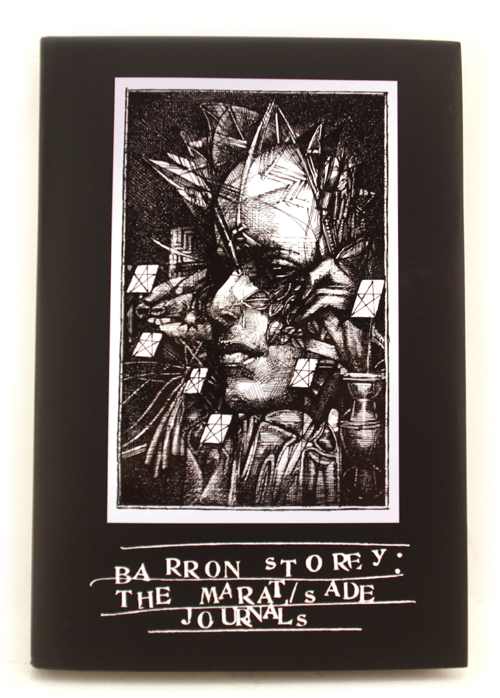
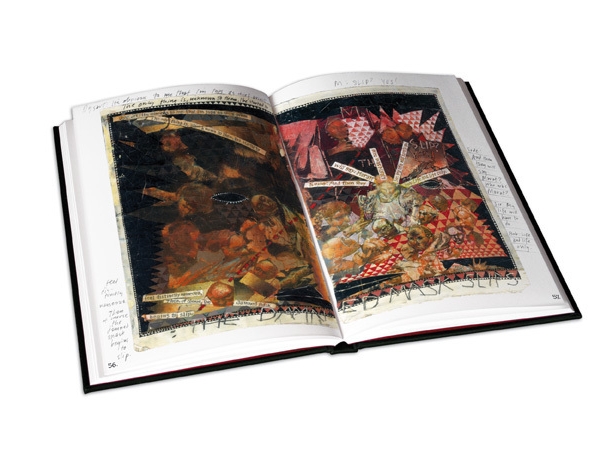
Here’s a book I never expected to see reprinted. It’s Barron Storey’s The Marat/Sade Journals, a visual diary that uses the play Marat/Sade by Peter Weiss as the jumping off point for a raw, painterly exploration of the deep despair of “an ageing artist” forced to deal with the end of a romantic relationship. The book was first published in 1993 by Tundra Publishing and limited to 1,000 copies, and the price of a good, used copy has since climbed into the hundreds of dollars in the collector’s market. The new edition by Graphic Novel Art, re-edited by the artist — 80% of the art has been re-scanned from the originals — with an introduction by David Mack, a new drawing by Dave McKean, and an afterword by Storey himself, is printed on silk-varnished 140gr paper and includes a sewn binding (rather than the glued binding of the first edition) to make the book feel more like one of Storey’s actual journals.

DETAILS:

Barron Storey: The Marat/Sade Journals
132 pages
6.4″ x 9.4″ x 0.8″
Full colour

PURCHASE LINKS:

Buy Barron Storey: The Marat/Sade Journals from the publisher on ebay

Buy Barron Storey: The Marat/Sade Journals from Gallery Nucleus

Buy Barron Storey: Life after Black (the sequel to The Marat/Sade Journals) from the publisher on ebay

[N.B.: I receive no money at all from the sale of this book, which I ordered for my personal library just yesterday; my recommendation is free.]

BONUS LINKS:

Barron Storey: The Journals — follow the progress of Storey’s latest journal pages on blogspot.

Paint it Black: Carl Wyckaert on Barron Storey’s Life After Black — an interview with Barron Storey’s publisher, the owner of Graphic Novel Art, based in Belgium.

Review of Barron Storey: Life after Black

Jeffrey "Jeff" Catherine Jones

Official Jeffrey Jones Web Site, Revived?


UPDATE (11 December 2011):

I just noticed that the “Official Jeffrey Jones Web Site” has again disappeared from the Web. Which means that the links in my original post (see below) no longer work. Sorry.

See Rest in Peace: Jeffrey Catherine Jones (1944 – 2011) for information and links related to the death of the artist on 19 May 2011.


ORIGINAL POST (09 December 2009):

Jeffrey Jones, Fantasy, Science Fiction, Illustrator, Artist — this new site with its own domain name (www.jeffreyjones-art.com) has all the content from the old official Jeffrey Jones Web site (www.ulster.net/~jonesart/), slightly reorganized, with some new additions (see, for example, the expanded “autobiography” section) and a new design template.

The new site even includes a quotation from yours truly about Jones’s landscape paintings. Cool (although if the Webmaster of the Jones site is reading this, please delete the word “is” that appears immediately before the word “consists”; it’s a typo that I have today corrected in the original post).

Thanks to Greg for the heads up!

Book/Magazine Covers (All) · Book/Magazine Covers (Jones) · Connections · Illustration Art · Jeffrey "Jeff" Catherine Jones · Look Here

Look Here: “A Game of Thrones” by Jeffrey Jones

Todd Adams of Glimmer Graphics has a beautiful new limited edition print by Jeffrey Jones available for purchase on his company’s Web site. “I have published over 50 fine art prints through the years,” writes Todd, “and this is the finest print quality I have seen to date.” Here’s a link to the order page. And here’s a copy of the image Todd sent out to promote the print:

Jones created the above painting for Meisha Merlin Publishing’s deluxe limited edition of the first book in George R. R. Martin’s “A Song of Fire & Ice” epic. The new Glimmer Graphics print is comprised of 375 signed and numbered copies, as well as 25 artist proof copies, all on 500 g/m² acid-free, ultra-smooth paper. Sheet size is 22 x 16 inches, with an image size of 19 x 12.5 inches.


BONUS CONTENT (added 13 December 2011):

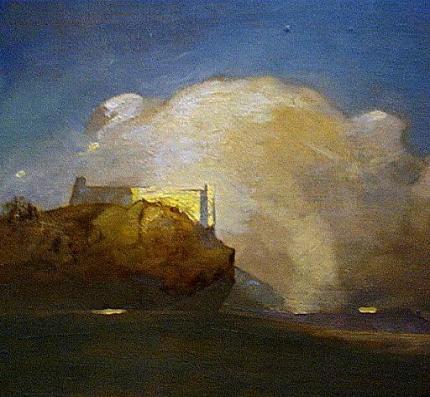
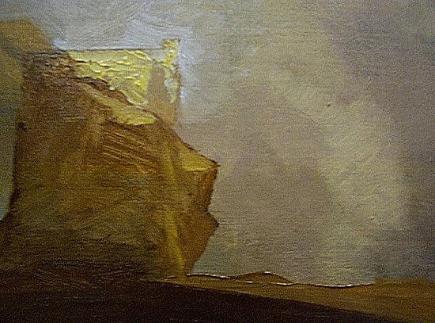
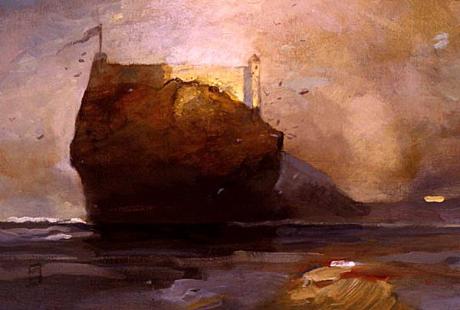
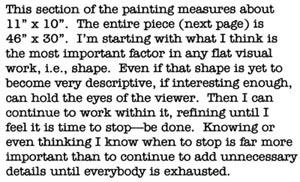
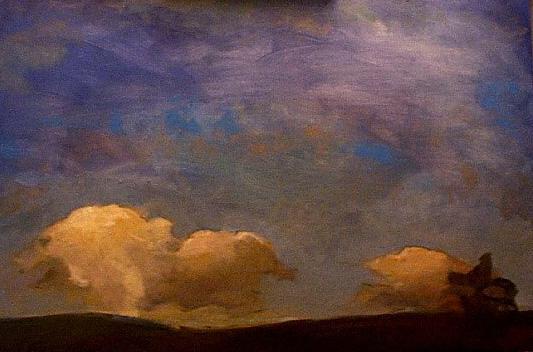
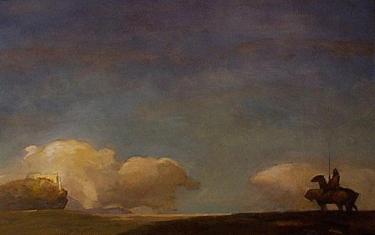
What follows are all of the images from a “work in progress” page that appeared on Jeffrey Jones’s official website, which since Jones’s death has disappeared from the Web; the images are presented in the same order that Jones presented them on the original page:

On a separate page entitled “Painting Methods,” Jones wrote:

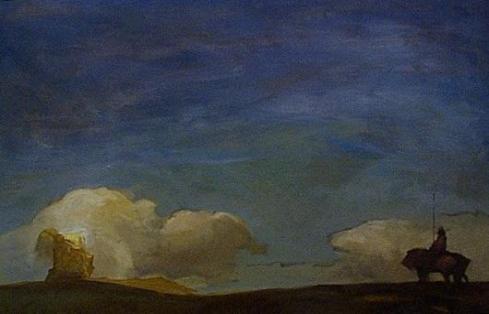
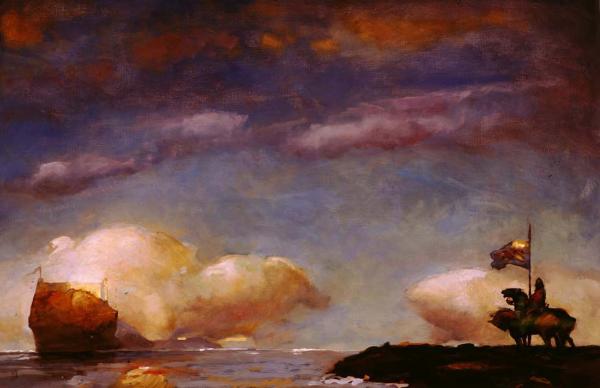
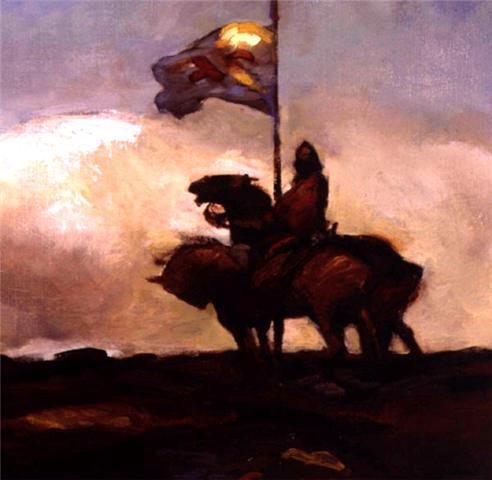
I stretch my own canvases and prefer linen, unprimed. Two coats of gesso with sanding on each dry coat. Bristle brushes, filberts give me the texture and quality of surface I like. I use no mediums, just turpentine. My palette consists of three yellows, yellow ochre pale, raw sienna and chrome yellow. The reds I use are venetian, burnt umber, burnt sienna and cadmium. I like oxide of chromium for green, all other greens are mixed. Ultramarine is the only blue I use. When painting I consider complements and mix them together on the palette, using a bit of a complement in each mixture. For example, I might make a purple using ultramarine and venetian red and add a bit of ochre to temper it. If I use a yellow I add a little purple to temper that color. I never use black but mix it using several dark colors together. I like to paint wet in wet to keep the painting “soupy”.

I usually start a painting with a house painting brush, covering up the white of the canvas and laying in dark and light shapes. Then come some middle tones. I think in tone at first and color later. I do a lot of scraping and wiping in the beginning-at this point it’s all rather abstract.

I don’t know how many ways there are of working but what I’ve found, and it took some time, is perhaps peculiar to me. The most exciting thing is a blank white canvas or piece of paper–anything can happen. This is why I’ve long ago gotten away from scripts and manuscripts. I’m not really an illustrator. It’s probably my education in German Abstract Expressionism where whatever happens on a piece of art happens all the time. There is no real beginning and no end, there is just a time to abandon. I honestly never know what the “finish” will look like. I’ve said this before so bear with me here. The work and I have a “conversation”. There are times it listens to me and times I must listen to it. As long as it’s a “we” process there are no dull bits. There are impasses where I have to put it aside for a while but that’s not boredom. Boredom can just be another word for anger. For almost 30 years I have written my own comics, and the writing is done along with the drawing, not beforehand. It’s the same with painting. The narrative, which is often ambiguous, evolves with time. If it does indeed ever get dull then it is finished.

I always use titanium white because of it’s opaqueness and covering ability. It doesn’t matter which white you use, mixing white with any primary color will give you a pasty pastel. You have to mix the colors before adding white. Also lack of pastiness depends on which colors are next to each other.

…Howard Pyle advised his students, “Put light colors next to light colors and dark colors next to darks, then where you want the viewer to descend, put dark next to light.” This is a good rule of thumb.

Please note that the above description of Jones’s material preferences and process in oil has been cut and pasted, without alteration, from the original “Painting Methods” page on Jones’s official website.


BONUS CONNECTION (added 24 February 2014):

Comics · Heads Up! · Richard Corben

Coming Soon: “Odds and Ends” by Richard Corben

As advertised on the Corben Studios Web site, Odds and Ends is to be a 32-page, black-and-white collection of unfinished, cancelled, and abandoned projects as well as works in progress, including the second chapter of From the Pit, book and CD covers, and more. No specific release date has been announced, but if this little project does eventually come to fruition, it will be the first publication from Corben’s own Fantagor Press that we’ve seen in a long time.