"This day's experience, set in order, none of it left ragged or lying about, all of it gathered in like treasure and finished with, set aside." –Alice Munro, "What is Remembered"
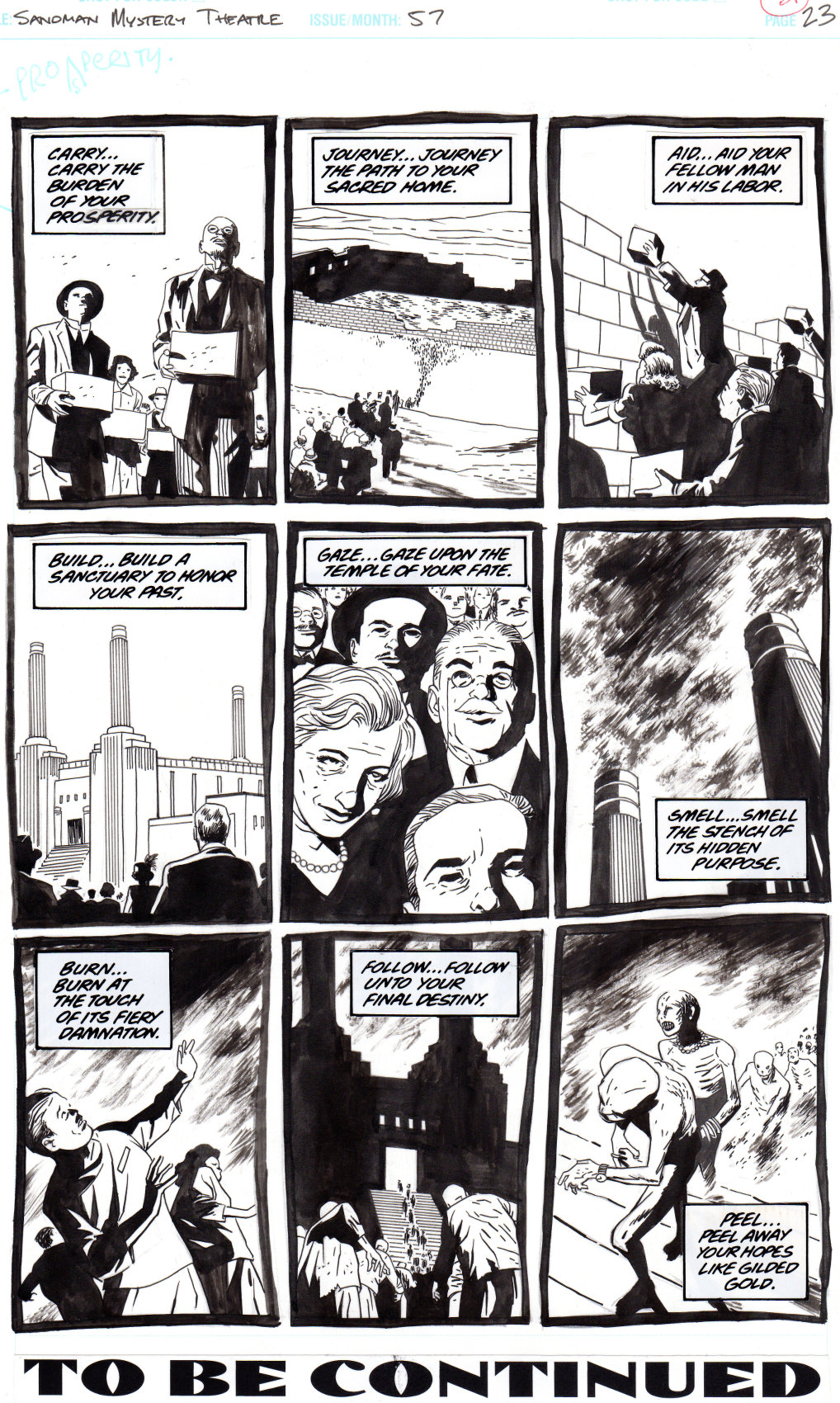
As I have mentioned in the past, I have often bought pages of original comic art based not on the name(s) of the artist(s) or on the title of the book or on the characters in the scene but on my positive reaction to and assessment of the page itself, in isolation from its proper context. What follows is one of those pages:
[CLICK IMAGES TO ENLARGE]
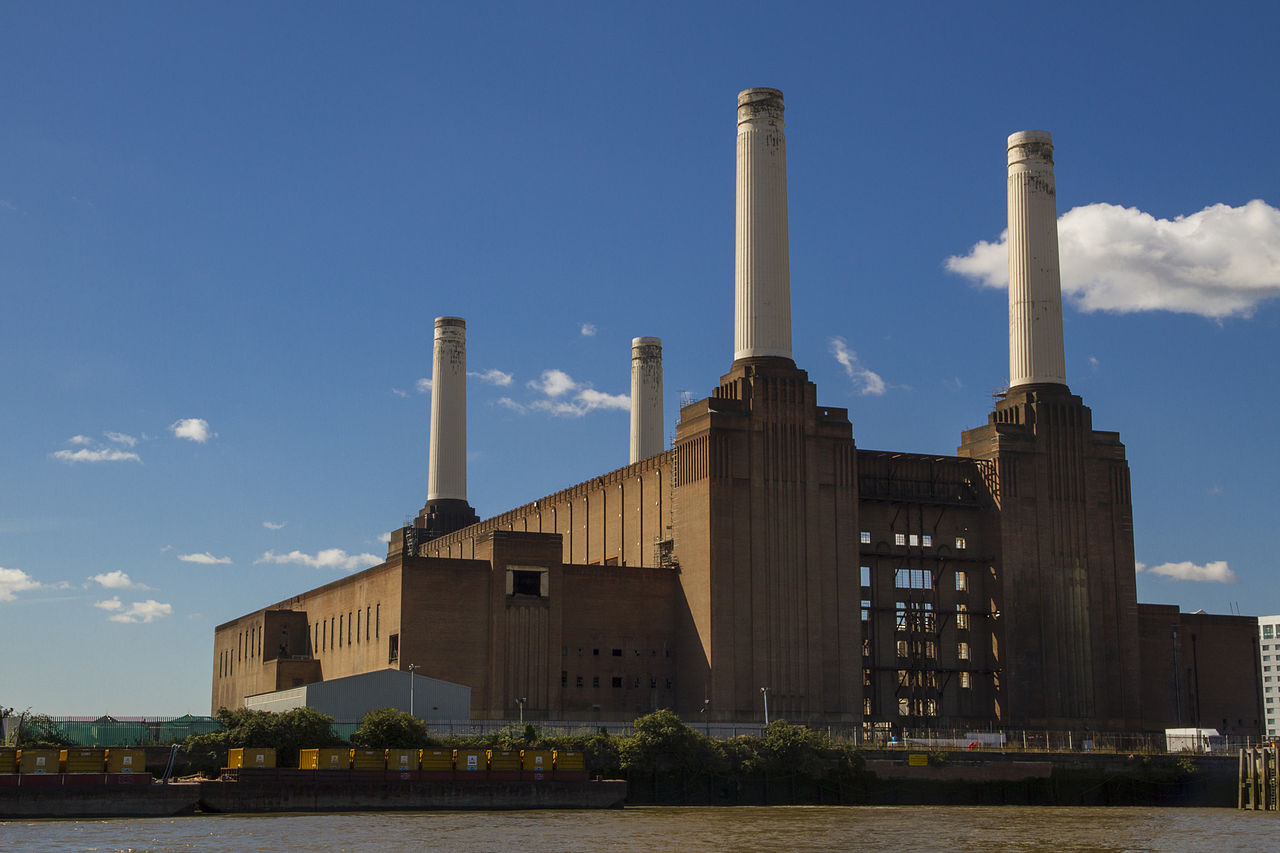
The script here is by Steven T. Seagle, from a story idea by Matt Wagner, the penciller is Michael Lark, the inker is Richard Case, and the letterer is John Costanza. The page was published in Sandman Mystery Theatre #57 (December 1997). The magnificent edifice that the people construct and then are consumed by is a doppelganger of the Battersea Power Station, which was constructed in two stages beginning in 1929 and decommissioned in two stages in the mid 1970s and early 1980s:
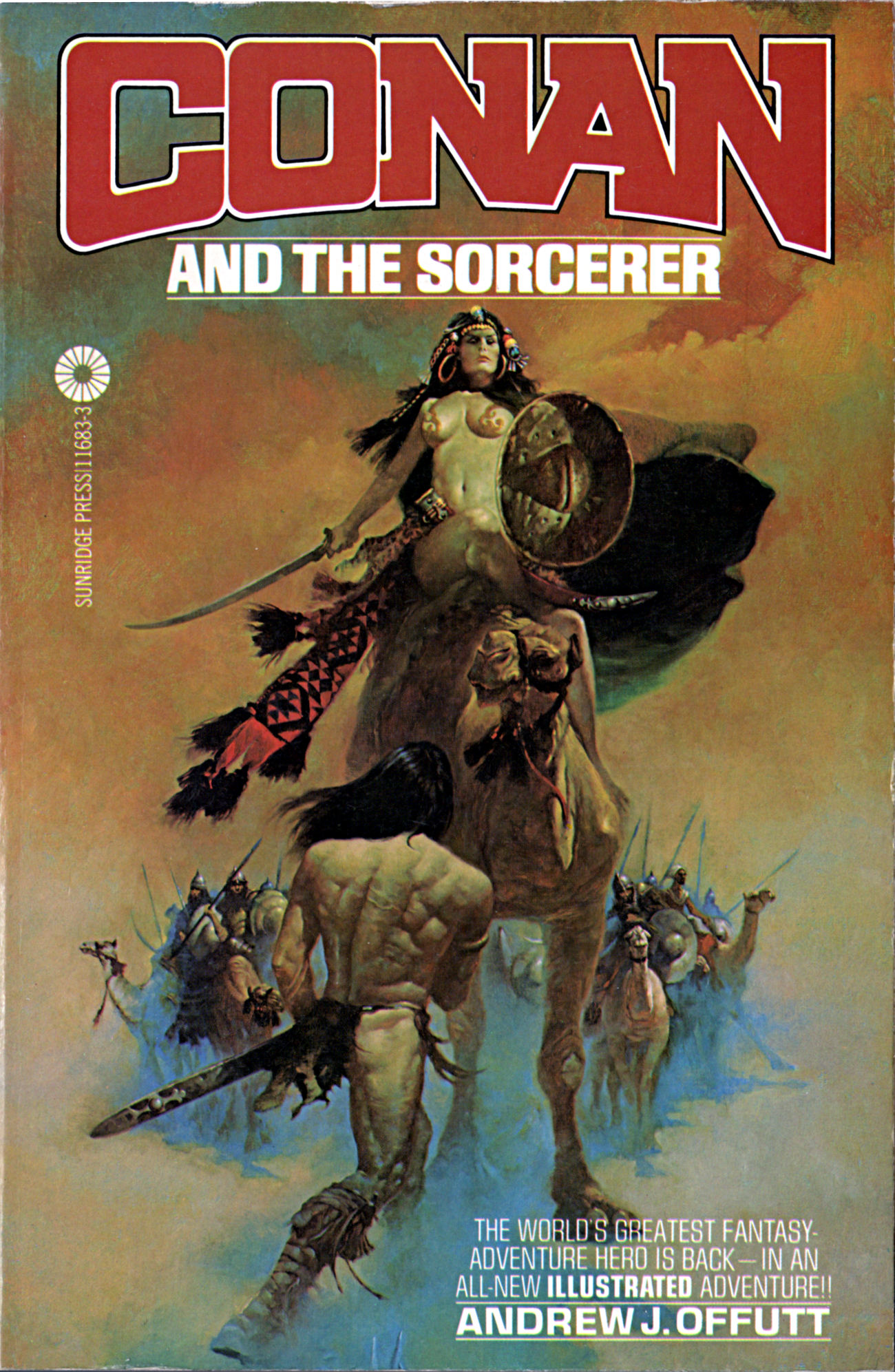
More cover scans this morning; fans of heroic fantasy will be pleased with the selection, I think:
[CLICK IMAGES TO ENLARGE]
ABOVE: Andrew J. Offutt, Conan and the Sorcerer (Sunridge Press, 1978), with cover art by Sanjulian.
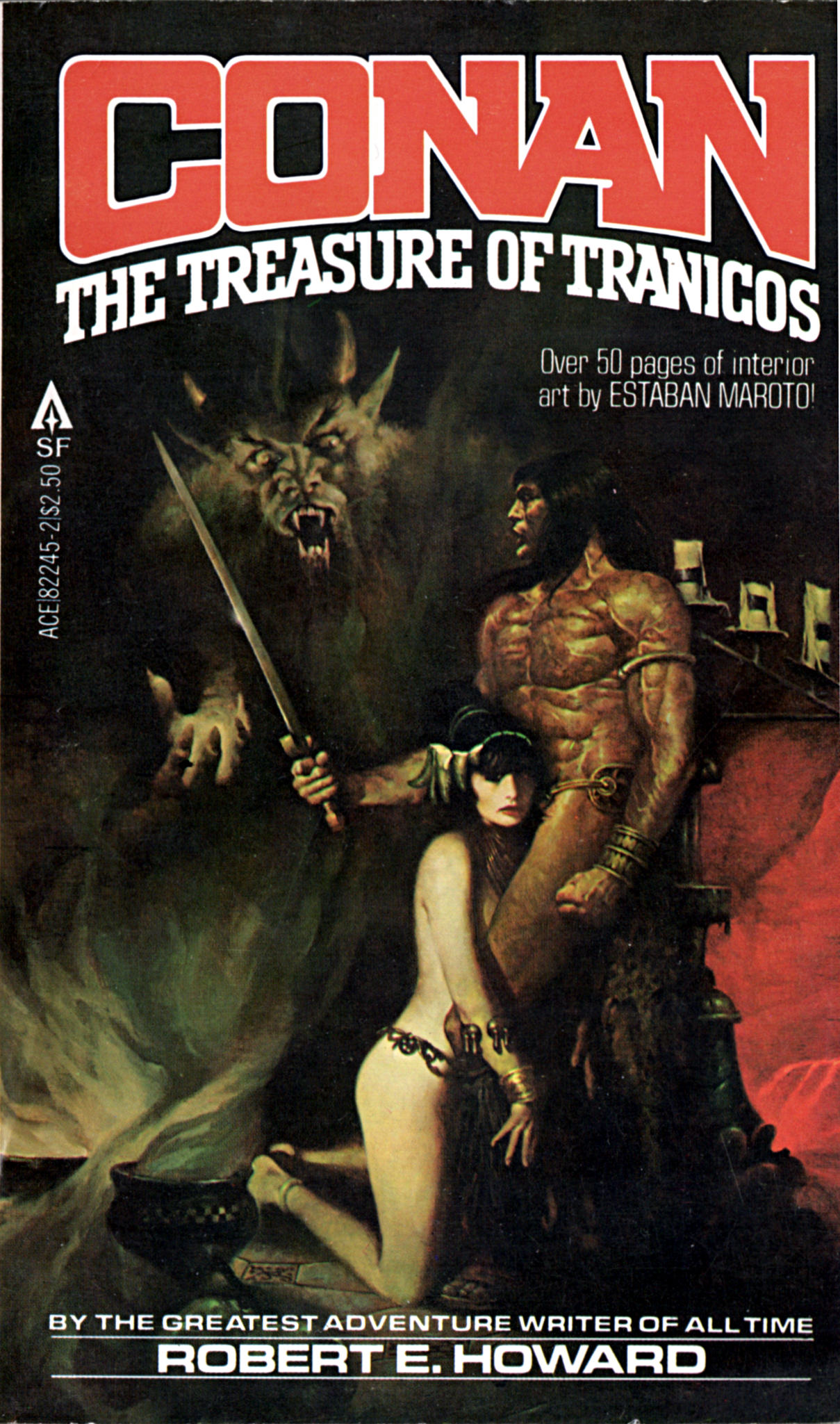
ABOVE: Robert E. Howard, revised by L. Sprague de Camp, Conan: The Treasure of Tranicos (NY: Ace, 1980), with cover art by Sanjulian.
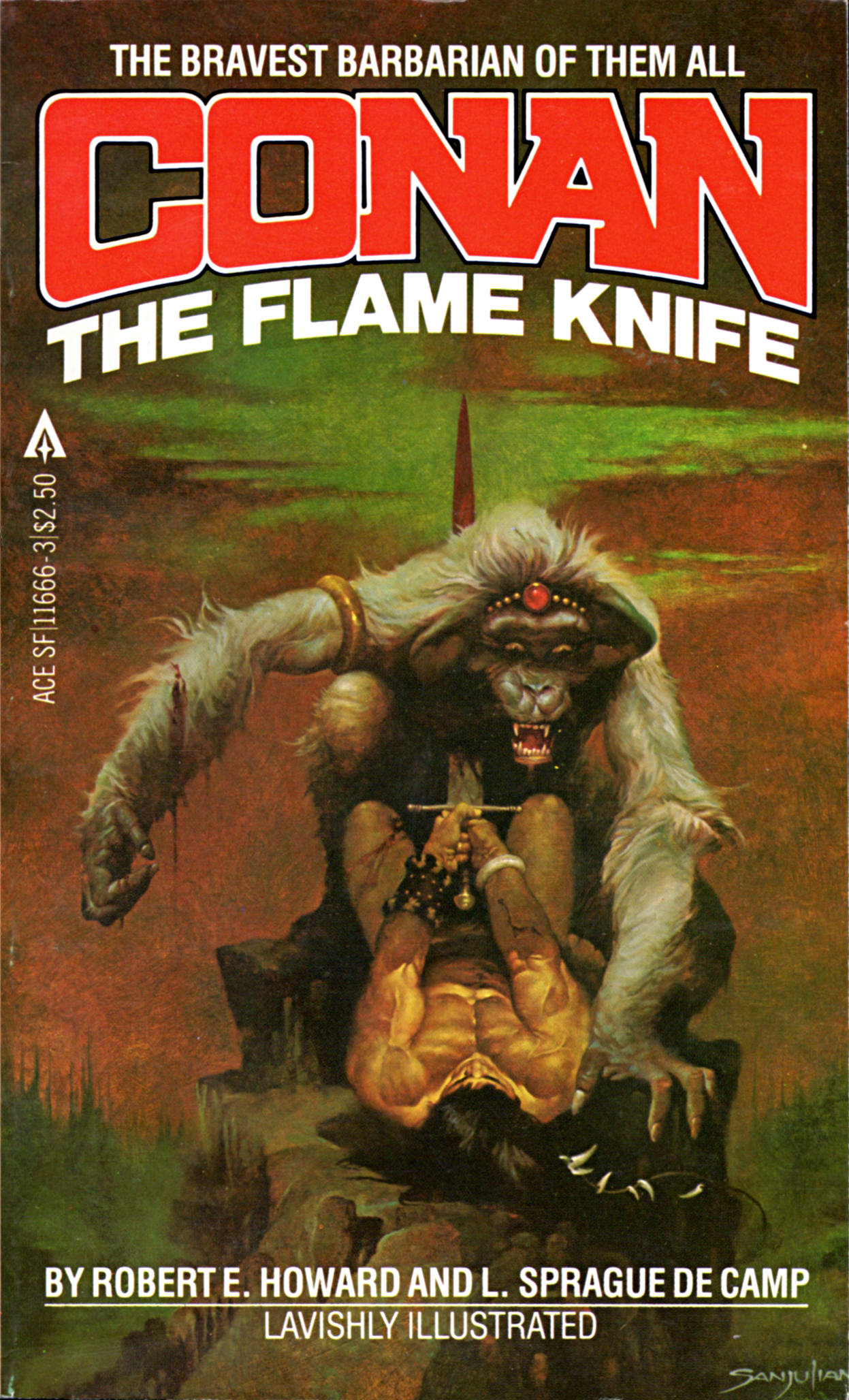
ABOVE: Robert E. Howard and L. Sprague de Camp, Conan: The Flame Knife (NY: Ace, 1981), with cover art by Sanjulian.
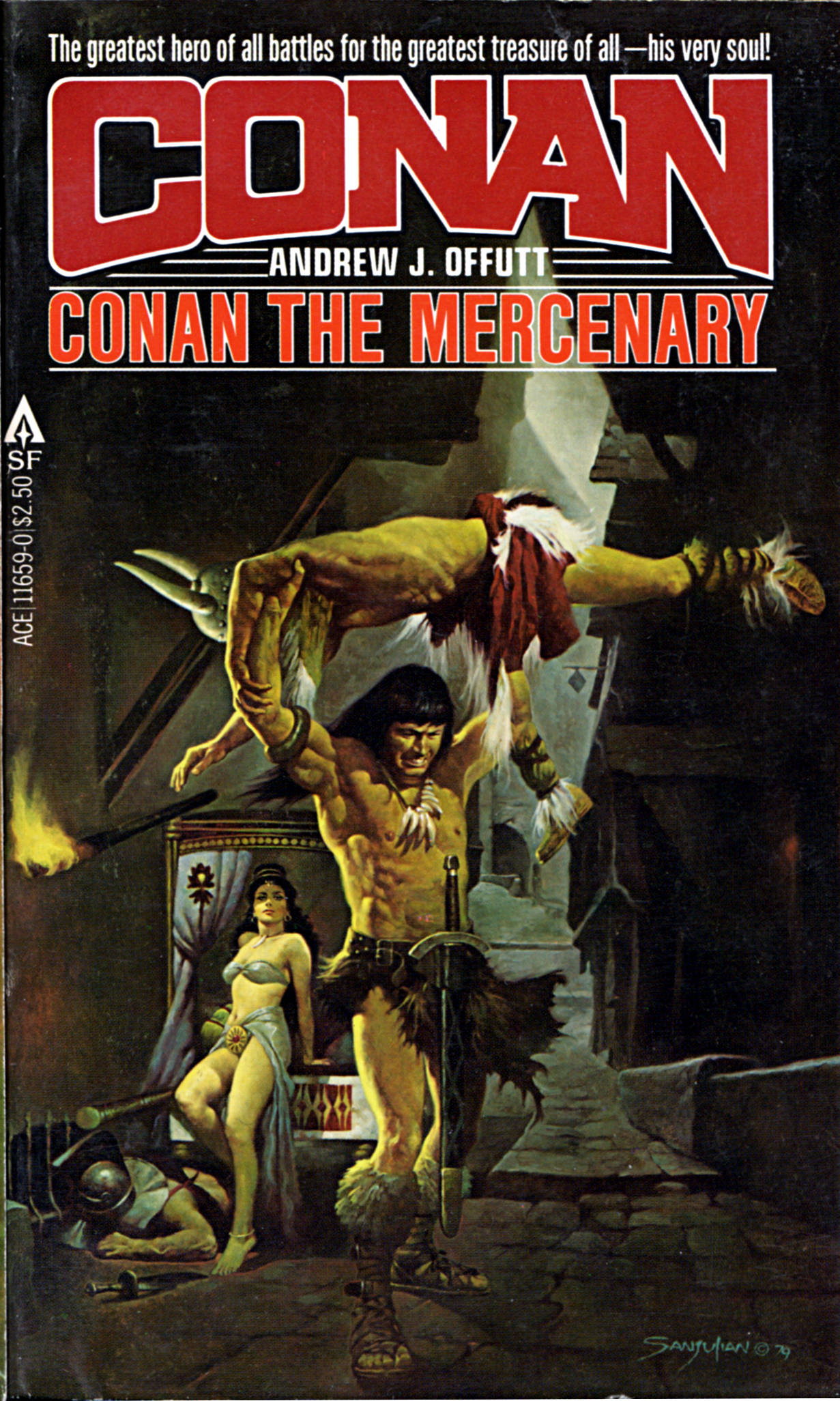
ABOVE: Andrew J. Offutt, Conan the Mercenary (NY: Ace, 1981), with cover art by Sanjulian.
Keywords:Conan: The Flame Knife by Robert E. Howard and L. Sprague de Camp; Conan: The Treasure of Tranicos by Robert E. Howard, revised by L. Sprague de Camp; Conan the Mercenary by Andrew J. Offutt, Conan and the Sorcerer by Andrew J. Offutt; Sanjulian.
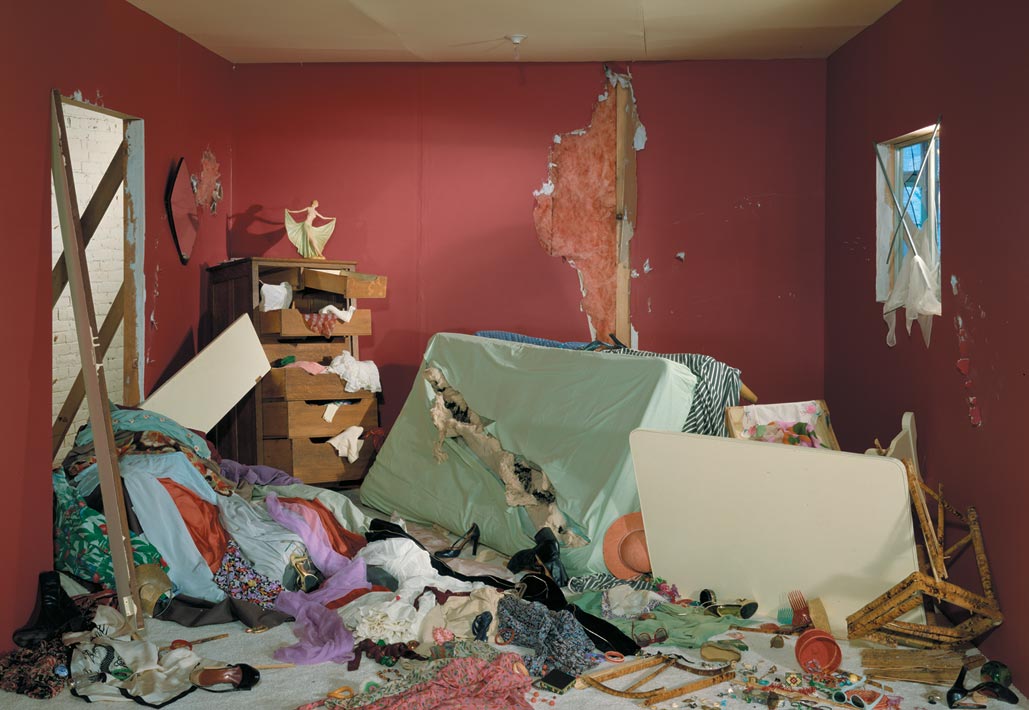
I’m sure there are many skeptical viewers out there who roll their eyes whenever I post speculative “connections” like my last one (or this one from 2011), so today I’ve decided to post a connection that the artist himself has said was deliberate. Take a look, and perhaps ask yourself if you would have noticed Jeff Wall’s formal references to Delacroix’s Death of Sardanapalus (1827) if the connection hadn’t been pointed out to you:
[CLICK IMAGES TO ENLARGE]
ABOVE: Eugène Delacroix, Death of Sardanapalus (1827), oil on canvas, 496 x 392 cm. Via RCN.
ABOVE: Jeff Wall, The Destroyed Room (1978), transparency in lightbox, 234 x 159.1 cm. Collection of National Gallery of Canada. Via MoMA.
Here’s how Wall interprets his own work:
[…] When I made The Destroyed Room, I worked in reference to the design of commercial window displays of clothing and furniture. I think of these as tableaux morts as opposed to tableau vivants. At the time, they had become very violent, mainly because of an influence from the punk phenomenon which was quickly filtering into the whole cultural economy. At the same time, the picture’s subject matter had something to do with aggression, violence, and revenge in domestic life. I was very interested in Delacroix’s Death of Sardanapalus, partly because I was lecturing on Romanticism. I think the Sardanapalus is a very important picture, historically and psychologically, because it shows the eroticized ideal of military glory which characterized the Napoleonic period being turned inward, back toward domestic life at the end of that epoch, at the beginning of the modern, bourgeois, neurotic private life. This painting interested me as a kind of crystal. My subject was made with this crystal, by passing my ideas and feelings through the historical prism of another work. I felt that this made the subject richer, more suggestive, more aggressive. It was important to filter The Destroyed Room through this other picture because I think I was trying to establish a space for myself by suggesting which historical directions and problems were important to me.
I know that in some ways this is a very artificial way of going about things, very manneristic even, but it was a way to begin, and I had to begin.
[SOURCE: “Typology, Luminescence, Freedom: Selections from a Conversation with Jeff Wall,” in Jeff Wall. Selected Essays and Interviews (New York, NY: The Museum of Modern Art, 2007), pp. 186-87.]
And:
In The Destroyed Room, I was interested in a “remaking” of an existing image, a sort of mannerist attitude toward it. The Delacroix painting seemed very modern to me. I see a lot of so-called “old” art that way. Why shouldn’t we be able to relate to it as contemporary? […]
I was particularly interested in violence at that time, for whatever reason. I was teaching at the university, concentrating on the earlier part of the nineteenth century, and got intrigued by the way that monumental paintings — Delacroix’s preeminent among them — wove together themes of war and military glory, on the one hand, and the conflicts of private life on the other. The intertwining of these two spheres is almost emblematic of that whole period.
[SOURCE: “A Democratic, a Bourgeois Traditon of Art: A Conversation with Jeff Wall by Anne-Marie Bonnet and Rainer Metzger,” in Jeff Wall. Selected Essays and Interviews (New York, NY: The Museum of Modern Art, 2007), p. 246.]
In other words, and in short, not every connection between two works of art is what comic-book guys would dismiss as a swipe.
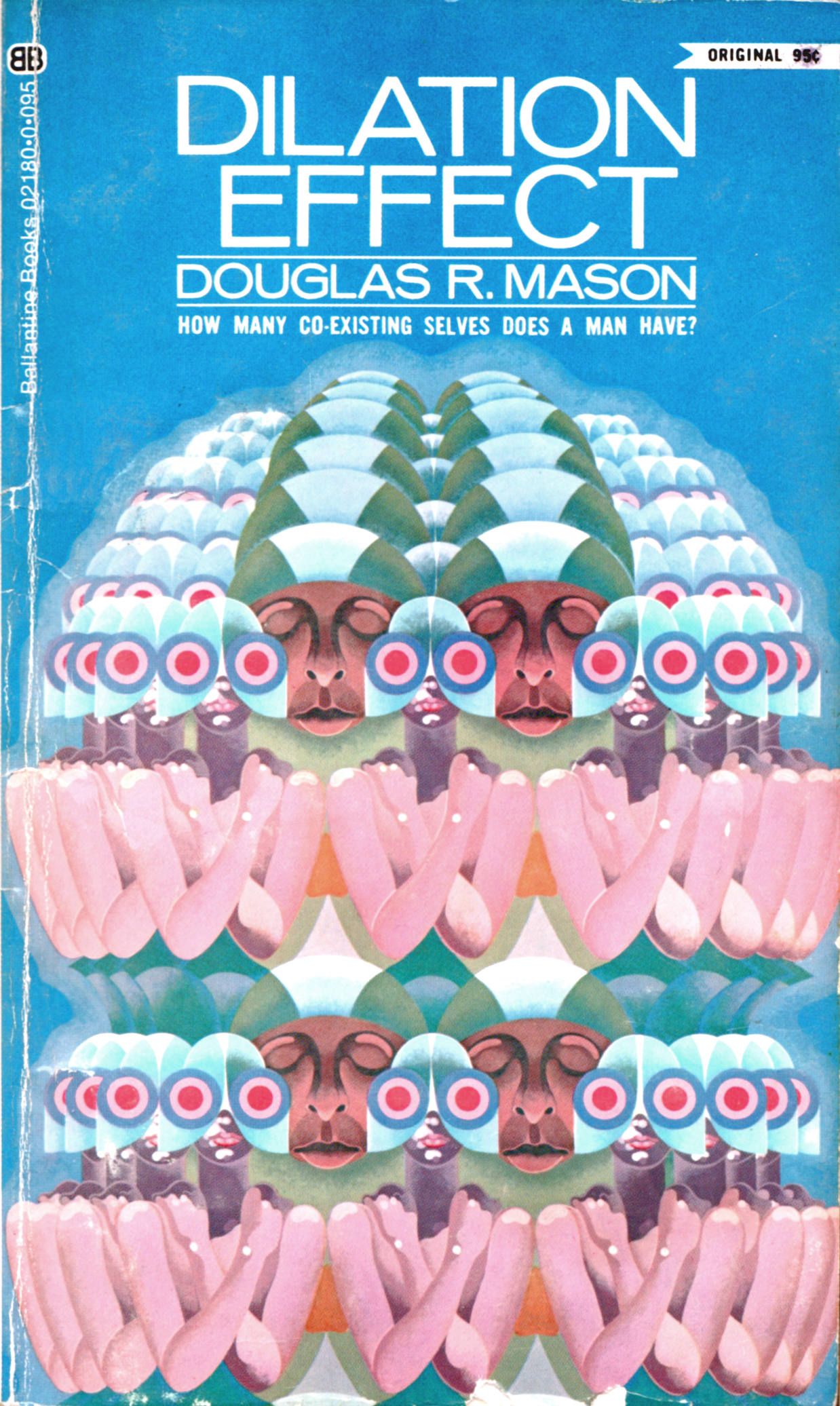
I collect ’em (if they’re cheap enough), I scan ’em (when I can force myself to do the work), I process ’em (though I have no idea what I’m doing), and I post ’em (with a modicum of commentary, when the mood strikes; with blather like this, when I can’t think of anything interesting to say, which these days is nine times out of ten):
[CLICK IMAGES TO ENLARGE]
ABOVE: Douglas R. Mason, Dilation Effect (NY: Ballantine, 1971), with cover art by Wilson McLean.
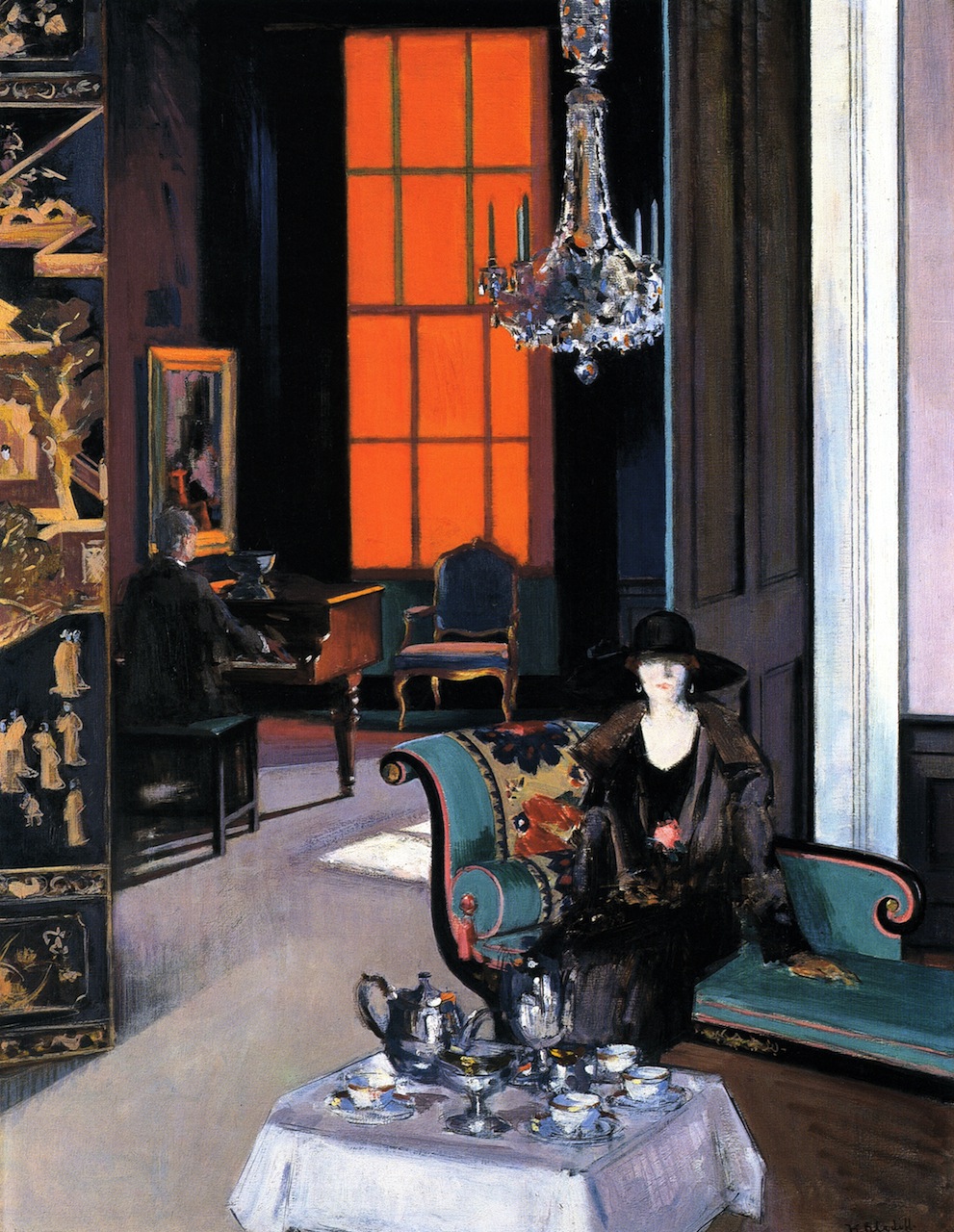
I must admit, I really do feel ridiculously pleased with myself whenever I notice a possible connection like this…
[CLICK IMAGES TO ENLARGE]
ABOVE: Francis Campbell Bolleau Cadell, Interior: The Orange Blind (c.1927), oil on canvas, 86.5 x 112 cm. Via TRANSISTORADIO.
ABOVE: Francis Bacon, Study for a Portrait, March 1991 (1991), oil and pastel on canvas, 147.5 x 198 cm. Collection of National Galleries of Scotland, UK. Via TRANSISTORADIO.
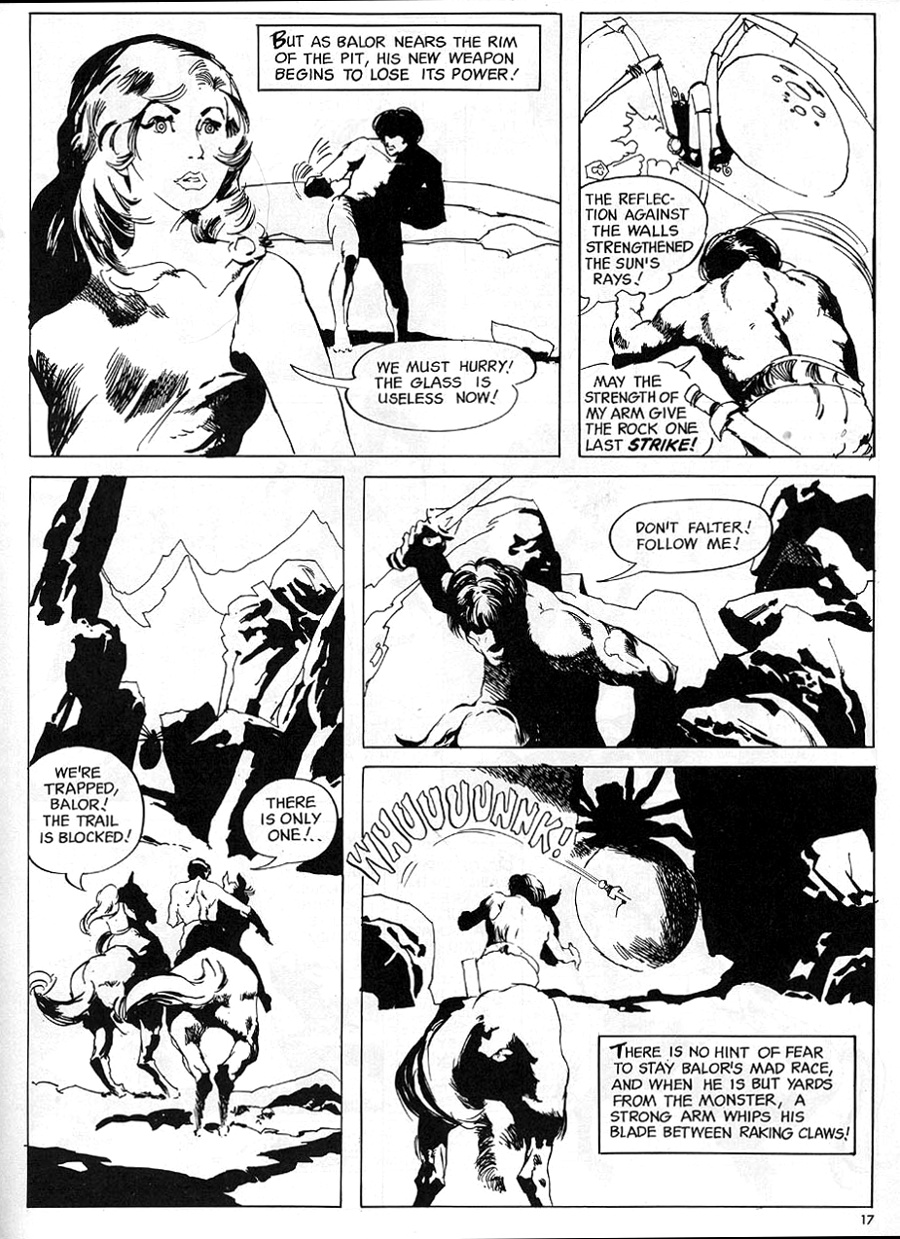
From The Charlton Bullseye vol. 1, no. 1 (1975), here’s “The Guardian Spiders,” with art by Jeffrey Jones and script by the great unknown:
[CLICK IMAGES TO ENLARGE]
According to the authors of Jeffrey Jones: The Definitive Reference, Jones drew “The Guardian Spiders” for King Comics in 1967. Unfortunately for the artist, however, King failed to publish the story before they closed shop for good in December of 1967 and sold various titles and inventory to Gold Key and Charlton. And thus it was that “The Guardian Spiders” languished unloved in the files at Charlton for seven years or so until the editors at The Charlton Bullseye arranged for its first publication in their zine.
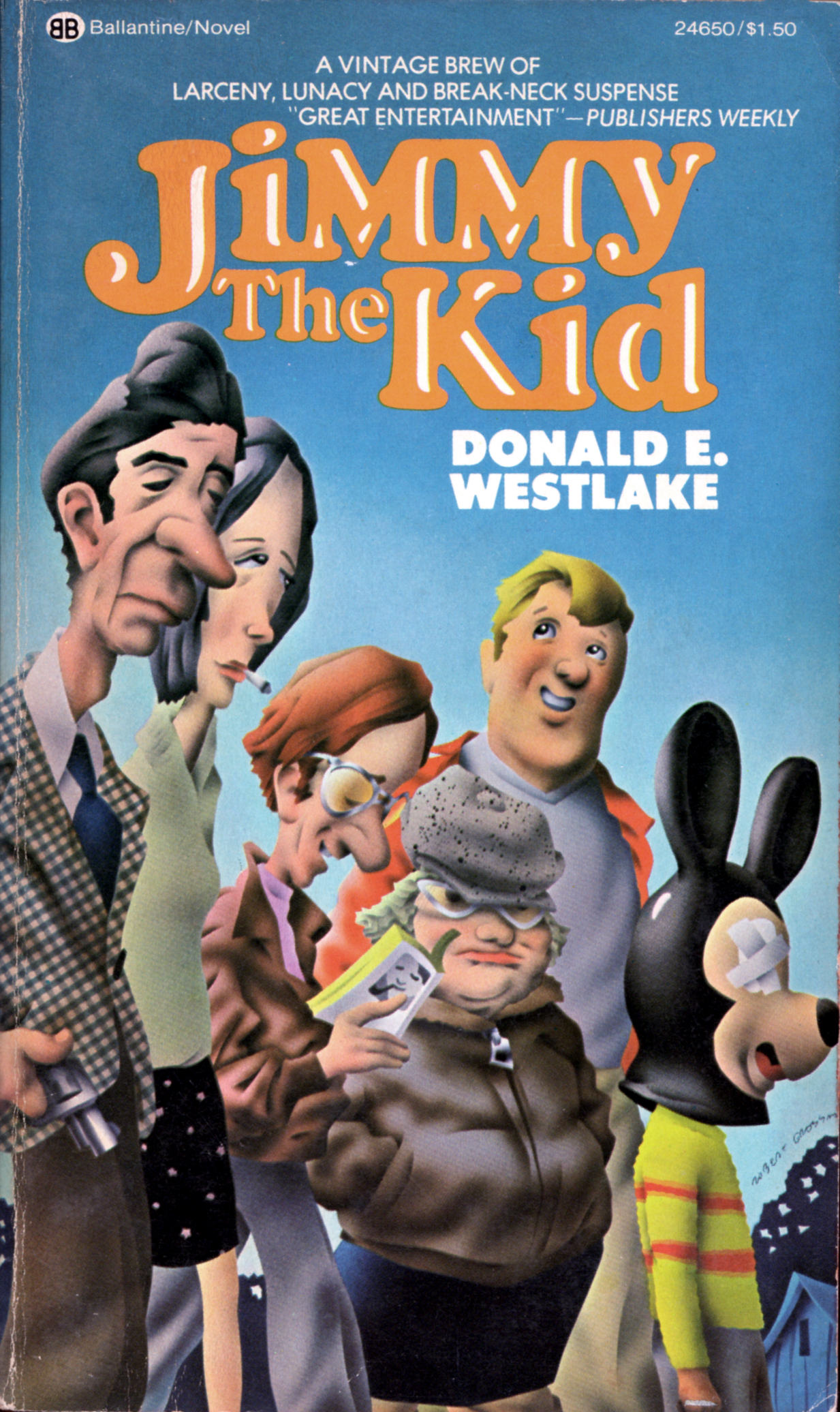
ABOVE: Donald E. Westlake, Jimmy the Kid (NY: Ballantine, 1976), with cover art by Robert Grossman.
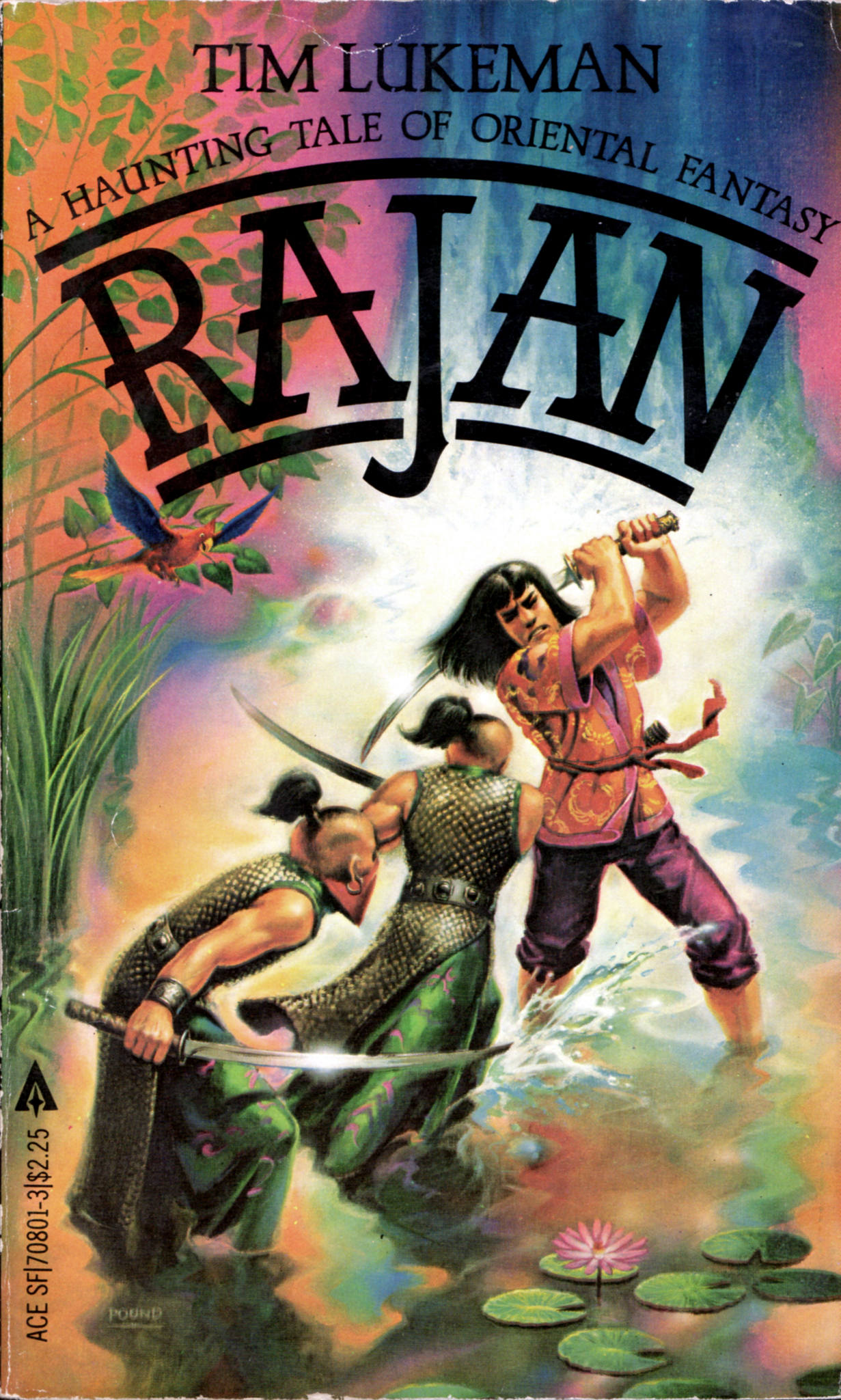
ABOVE: Tim Lukeman, Rajan (NY: Doubleday, 1982), with cover art by John Pound.
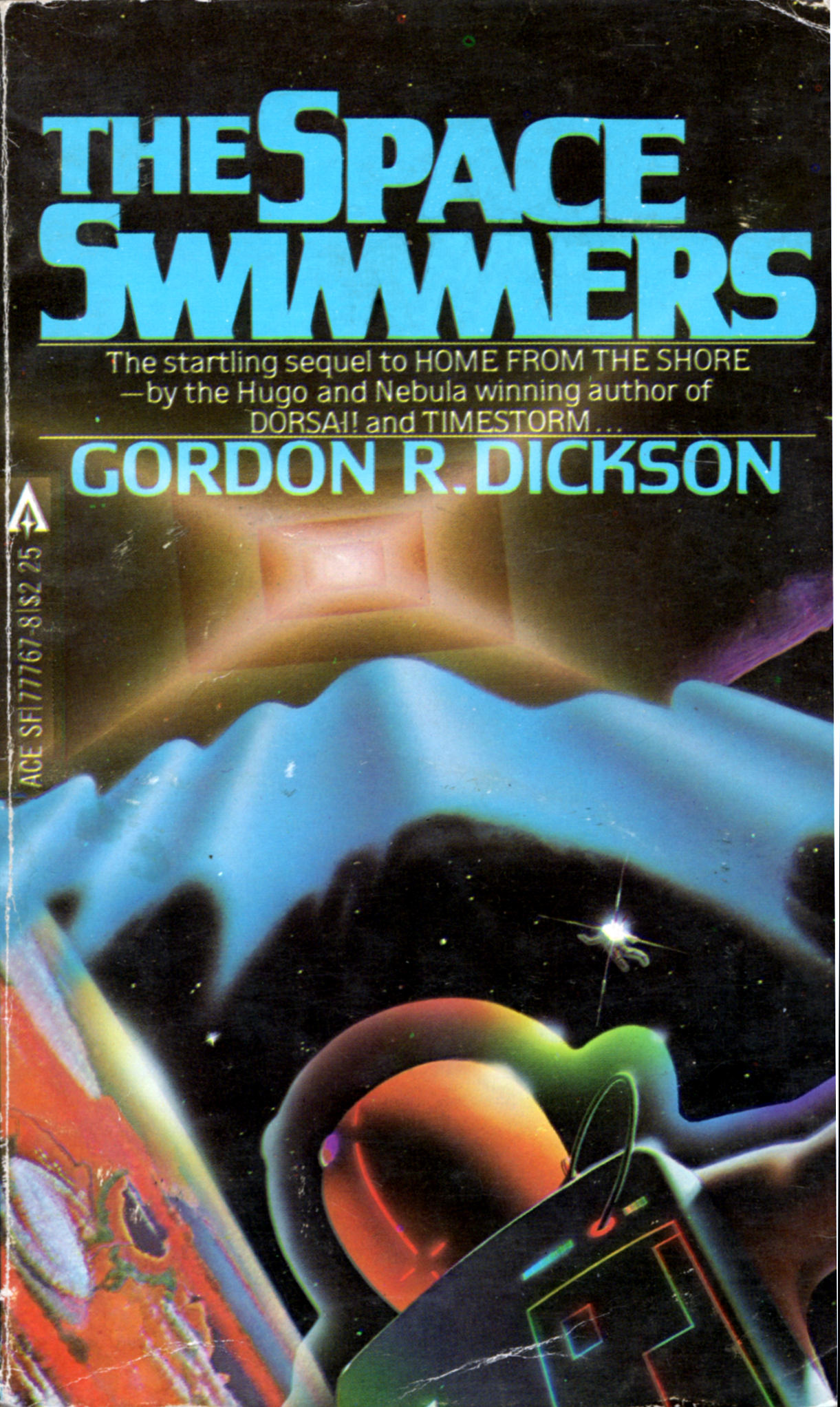
ABOVE: Gordon R. Dickson, The Space Swimmers (NY: Ace, 1979), with cover art by Tom Pritchett.
You like? I like.
Keywords:Jimmy the Kid by Donald E. Westlake, The Space Swimmers by Gordon R. Dickson, Rajan by Tim Lukeman, John Pound, Robert Grossman, Tom Pritchett.
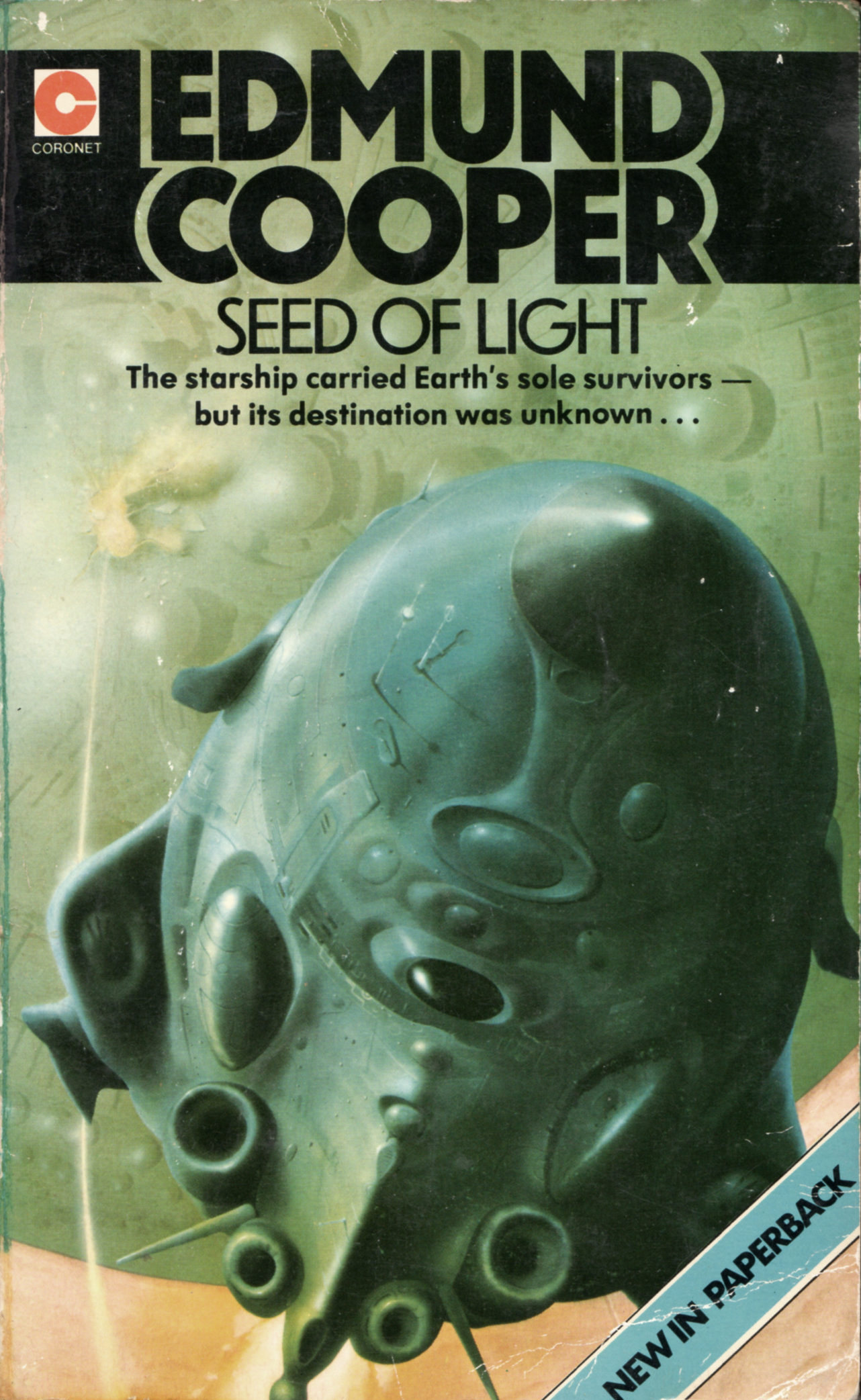
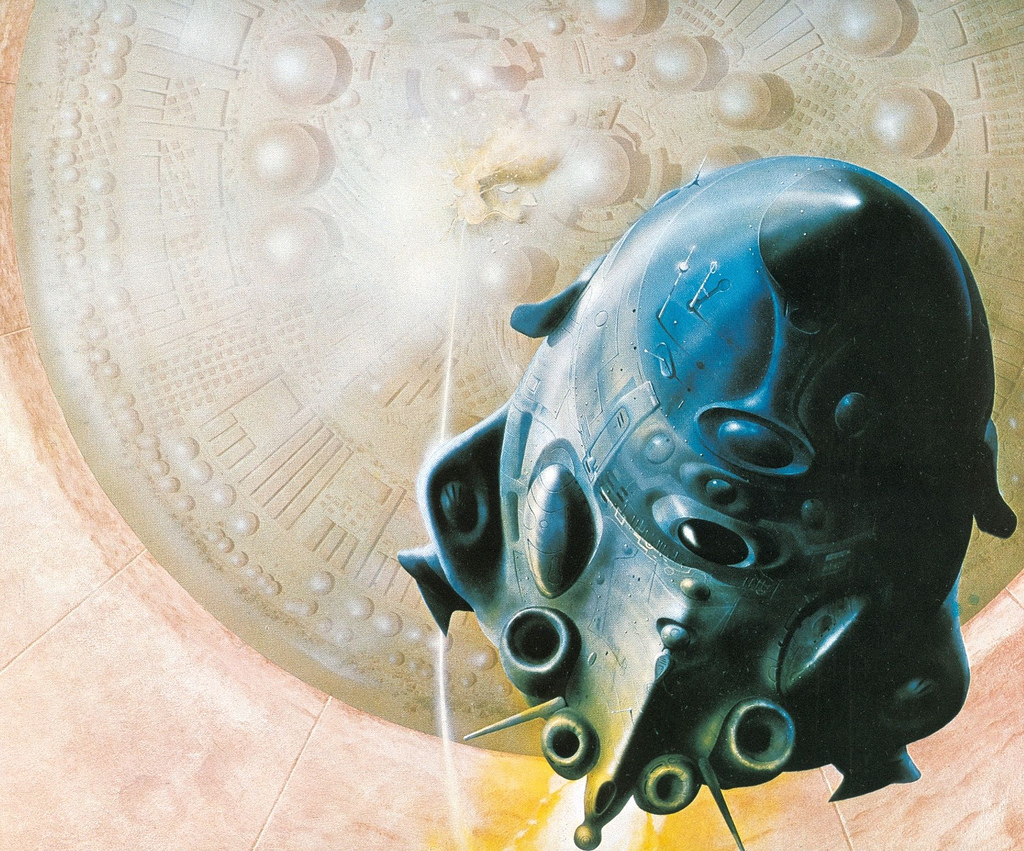
I scanned the front cover of Seed of Light from my personal copy; the JPEG of the artist’s airbrushed artwork sans text is from Paul Hartzog’s Flickr photostream.
[CLICK IMAGES TO ENLARGE]
ABOVE: Edmund Cooper, Seed of Light (Kent: Coronet Books, 1977), with cover art by Jim Burns.
Not sure which of the two images above displays the correct colour, but at this moment, I think I prefer the one with the overall greenish cast and softer focus, i.e. the printed cover.
Finally, yes, the cover of my copy of Seed of Light has a wraparound image. But the fact is, earlier today, when I scanned the front, I simply was not in the mood to scan the spine and the back and piece it all together.
Keywords:Seed of Light by Edmund Cooper, Jim Burns.





 Ragged Claws Network


