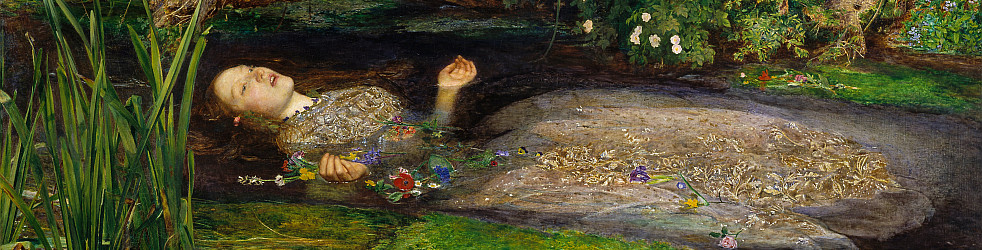

Look Here, Read: “The Death Touch of Chick Rigney,” with art by Louis Zansky
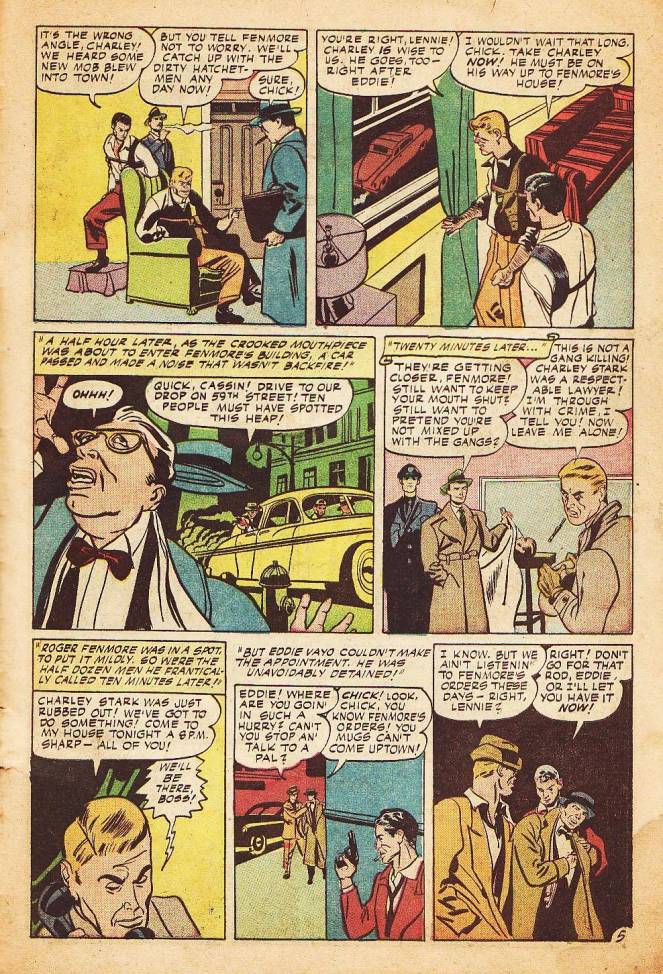
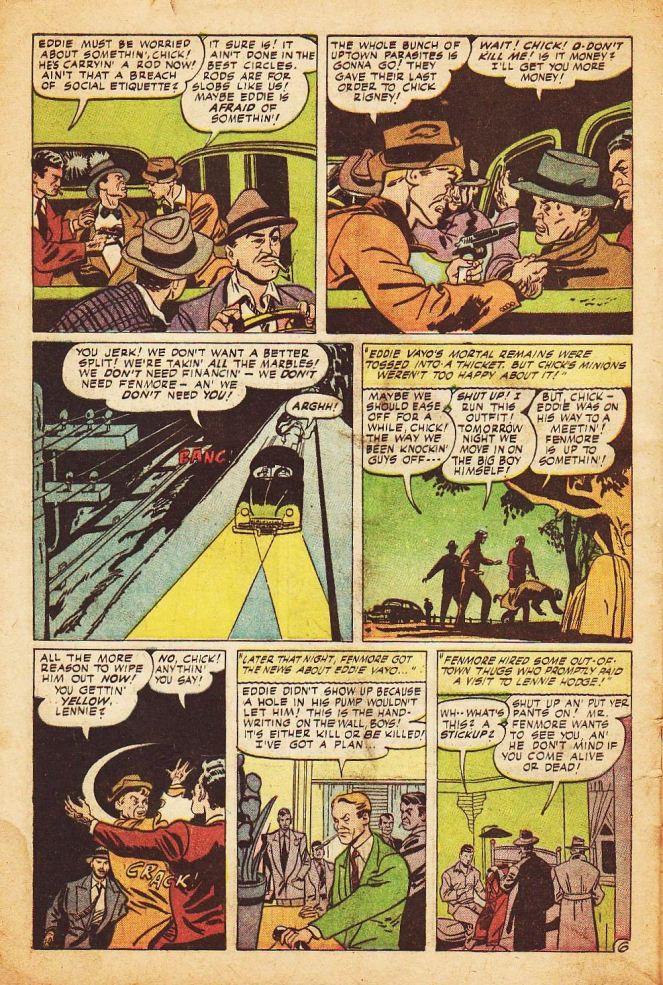
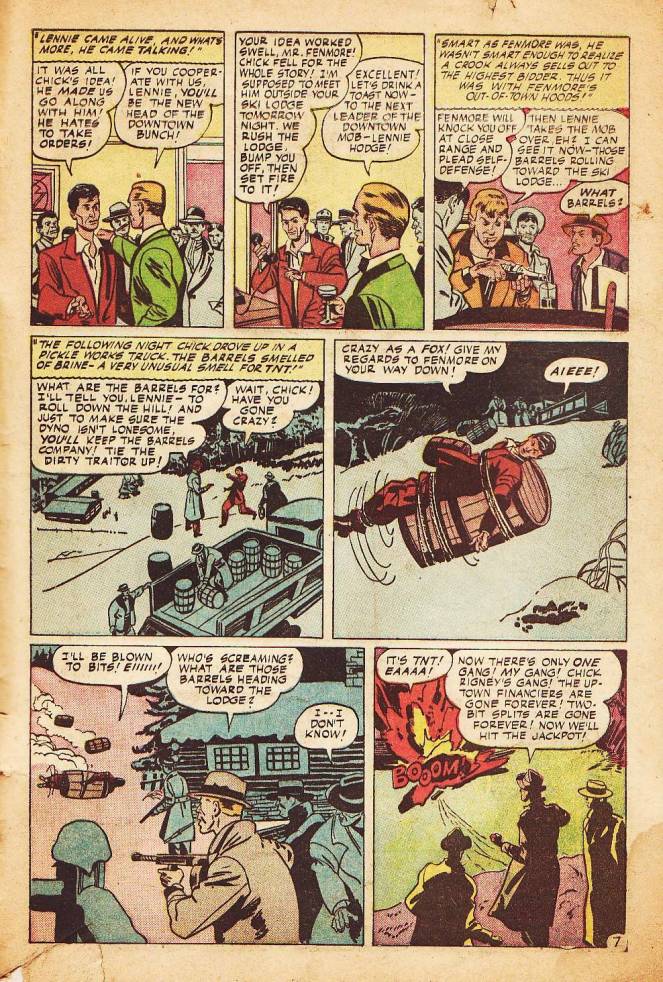
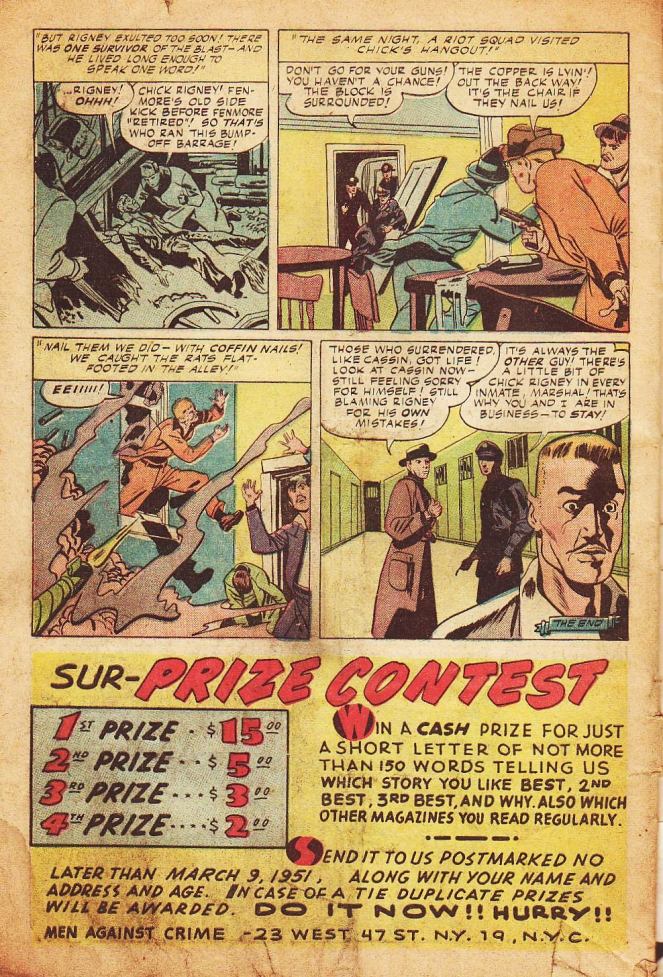
From Men Against Crime #4 (April 1951), here’s “The Death Touch of Chick Rigney,” with art by Louis Zansky:
[CLICK IMAGES TO ENLARGE]
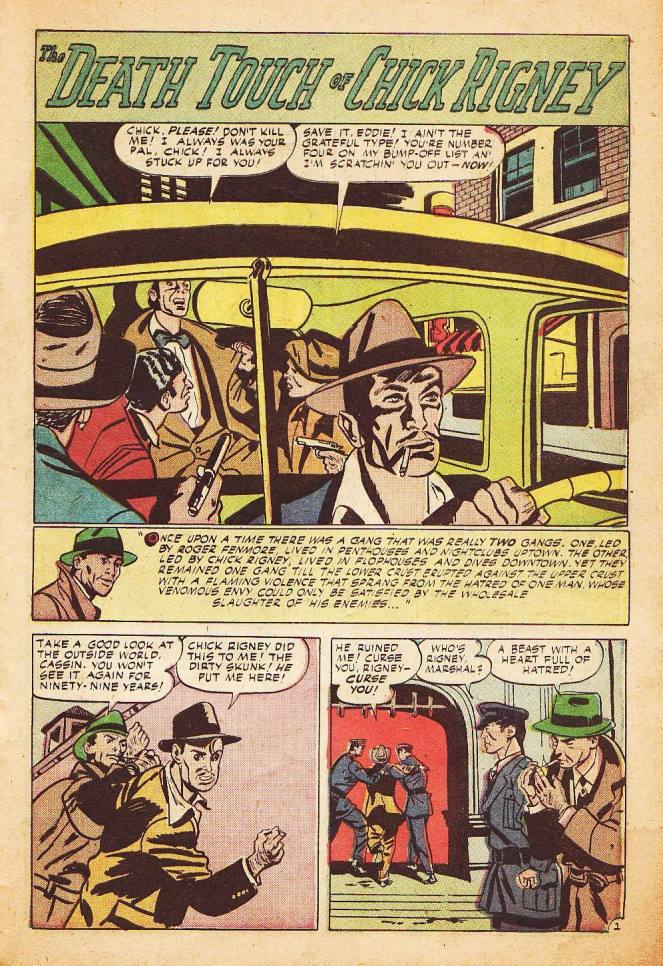

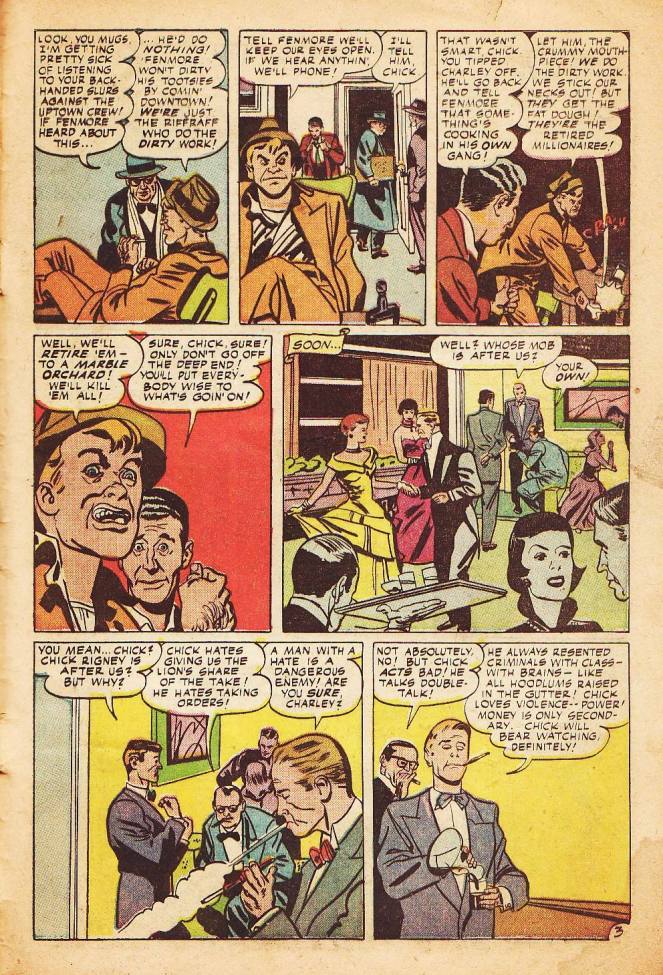
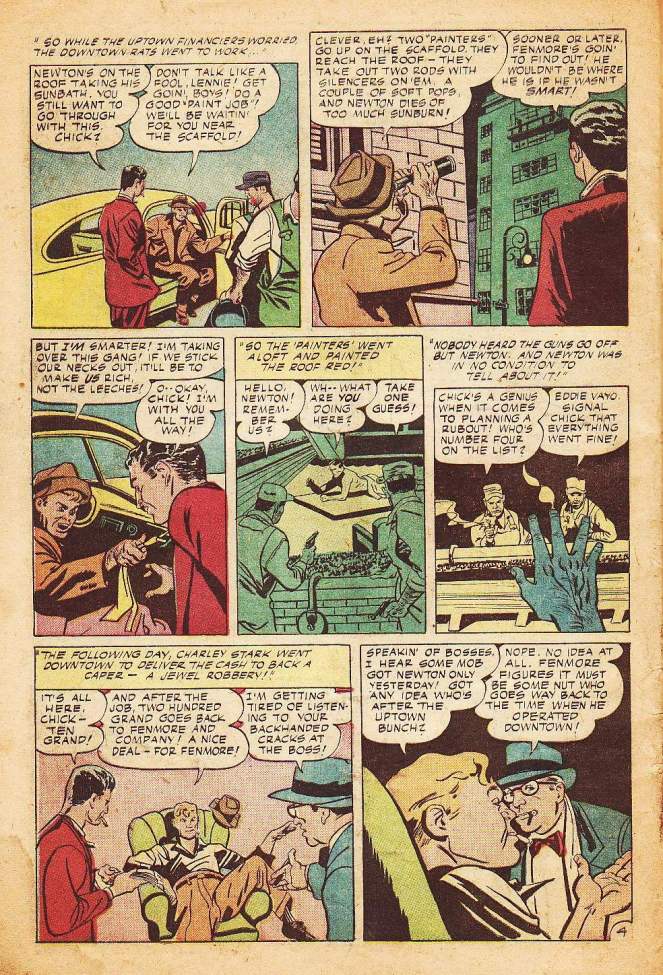
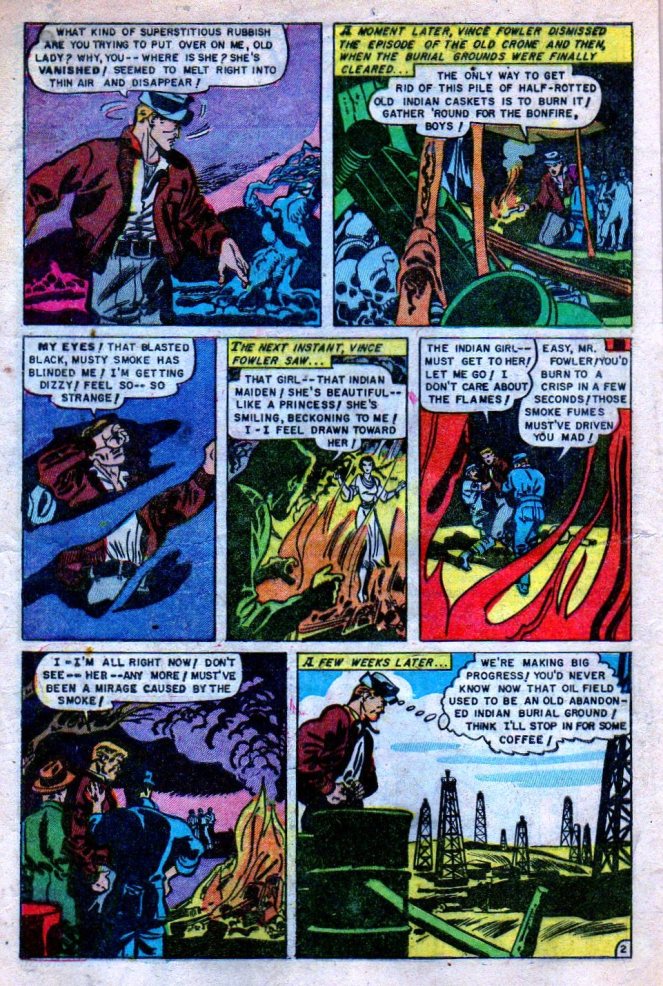
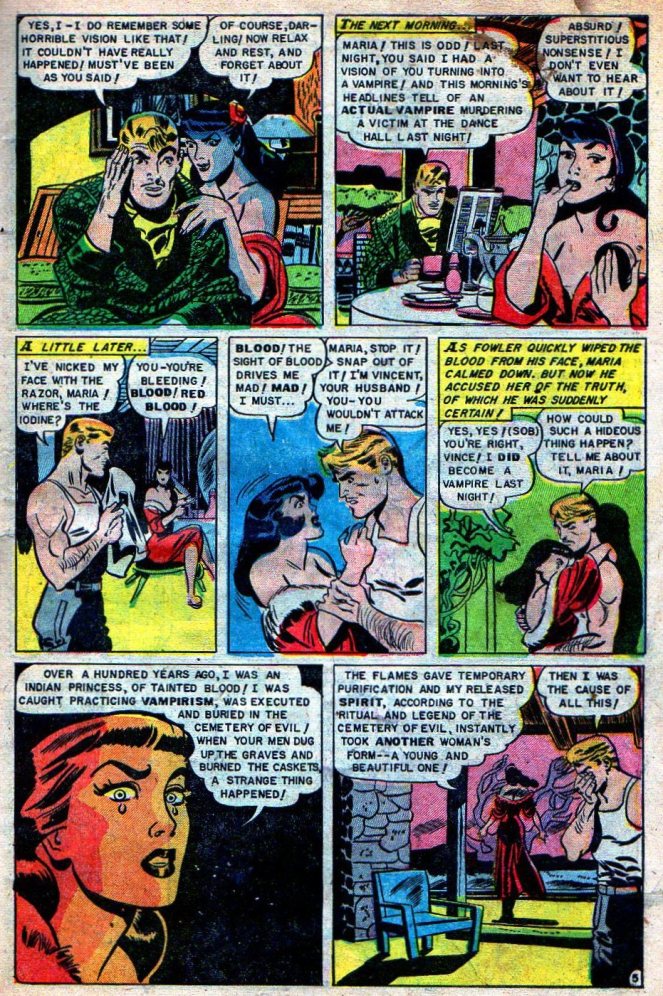
Look Here, Read: “Bride’s Dowry of Doom,” with art by Louis Zansky
From Web of Mystery #11 (July 1952), here’s “Bride’s Dowry of Doom,” with art by Louis Zansky:
[CLICK IMAGES TO ENLARGE]





Out of Context: “By some miracle, Harold did not die.”

I hope you will be patient…
This blog was hacked today, and since I was away from my computer from the early morning until supper time, I have no idea when it happened, exactly, or why. So I’m not taking it personally. Rather, I am now in the process of reconstructing the blog from my backup. If you use WordPress and have any hints on how I might beef up the security here, please feel free to post your advice.
Although my backup is of recent vintage, it is not right up to date, so I definitely have few posts that I need to reconstruct. But if you check back in a day or so, I will probably have everything restored. That’s the plan, anyway.
— RC
UPDATE:
It’s 10:49 pm, and I think I’ve got everything back to normal. Again, if any WordPress users out there know of a good plugin to enhance the security of WordPress, please do tell. I’ve already changed all of my passwords, uninstalled a few plugins, and added an htaccess file to stop anyone but a user on my home computer from accessing the wp-admin directory. Suggestions?
Geoffrey Hill on “difficult” art…
INTERVIEWER
What comes up often in reviews of your work is the idea of an overly intellectual bent; in recent reviews of The Triumph of Love, often the word difficult comes up. People mention that it’s worth going through or it isn’t worth going through.
HILL
Like a Victorian wedding night, yes. Let’s take difficulty first. We are difficult. Human beings are difficult. We’re difficult to ourselves, we’re difficult to each other. And we are mysteries to ourselves, we are mysteries to each other. One encounters in any ordinary day far more real difficulty than one confronts in the most “intellectual” piece of work. Why is it believed that poetry, prose, painting, music should be less than we are? Why does music, why does poetry have to address us in simplified terms, when if such simplification were applied to a description of our own inner selves we would find it demeaning? I think art has a right — not an obligation — to be difficult if it wishes. And, since people generally go on from this to talk about elitism versus democracy, I would add that genuinely difficult art is truly democratic. And that tyranny requires simplification. This thought does not originate with me, it’s been far better expressed by others. I think immediately of the German classicist and Kierkegaardian scholar Theodor Haecker, who went into what was called “inner exile” in the Nazi period, and kept a very fine notebook throughout that period, which miraculously survived, though his house was destroyed by Allied bombing. Haecker argues, with specific reference to the Nazis, that one of the things the tyrant most cunningly engineers is the gross oversimplification of language, because propaganda requires that the minds of the collective respond primitively to slogans of incitement. And any complexity of language, any ambiguity, any ambivalence implies intelligence. Maybe an intelligence under threat, maybe an intelligence that is afraid of consequences, but nonetheless an intelligence working in qualifications and revelations . . . resisting, therefore, tyrannical simplification.
So much for difficulty. Now let’s take the other aspect — overintellectuality. I have said, almost to the point of boring myself and others, that I am as a poet simple, sensuous, and passionate. I’m quoting words of Milton, which were rediscovered and developed by Coleridge. Now, of course, in naming Milton and Coleridge, we were naming two interested parties, poets, thinkers, polemicists who are equally strong on sense and intellect. I would say confidently of Milton, slightly less confidently of Coleridge, that they recreate the sensuous intellect. The idea that the intellect is somehow alien to sensuousness, or vice versa, is one that I have never been able to connect with. I can accept that it is a prevalent belief, but it seems to me, nonetheless, a false notion. Ezra Pound defines logopaeia as “the dance of the intellect among words.” But elsewhere he changes intellect to intelligence. Logopaeia is the dance of the intelligence among words. I prefer intelligence to intellect here. I think we’re dealing with a phantom, or as Blake would say, a specter. The intellect — as the word is used generally — is a kind of specter, a false imagination, and it binds the majority with exactly the kind of mind-forged manacles that Blake so eloquently described. The intelligence is, I think, much more true, a true relation, a true accounting of what this elusive quality is. I think intelligence has a kind of range of sense and allows us to contemplate the coexistence of the conceptual aspect of thought and the emotional aspect of thought as ideally wedded, troth-plight, and the circumstances in which this troth-plight can be effected are to be found in the medium of language itself. I could speak about the thing more autobiographically; it’s the emphasis where one is most likely to be questioned, n’est-ce pas?
SOURCE: Hill, Geoffrey. Interview by Carl Phillips. “Geoffrey Hill, The Art of Poetry No. 80.” The Paris Review. Web. 10 January 2012.
Interlude: Homer and Jethro – “Tico Tico”
“Tico Tico” is the tenth track on the 1962 instrumental album, Playing It Straight, by comedy legends Henry “Homer” Haynes and Kenneth “Jethro” Burns:
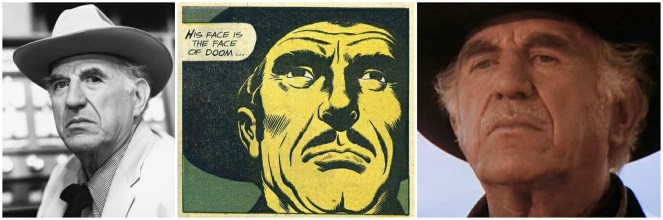
Separated at Birth? Ed Bagley and “Doc Doom”
[CLICK IMAGES TO ENLARGE]
Look There, Read: An Interview with Alex Toth
Yesterday, the Michael Sporn Animation “Splog” featured scans of a multi-page interview with Alex Toth that was conducted by Bill Spicer for his own Graphic Story Magazine and published in 1969, when Toth was about 40 years old. The interview includes this famous exchange:
[TOTH:] Whither the comic book; where’s it going, except to hell?
[SPICER:] Someday graphic novels will take up where comic books are leaving off, but what about the artist who has to sit down and draw them? If some one came to you with a 200-page pictorial novel to illustrate, and if the money was okay, do you think you’d be interested?
[TOTH:] I’d probably blow my brains out. It could be done, and there are plenty of guys around who could and would do it. But I’d rather have twenty 10-page stories than one 200-page story. I found this to be the case when I was freelancing; I could be tired as hell, having just come off a job, when a new script would arrive in the mail and I’d be perked up by it. Despite being tired, and wanting a few days off before starting the next assignment, a new script would get me enthused. Change itself is refreshing; a new subject to tackle is stimulating. It juices you up to get into it right away. To sustain yourself for 100 or 200 pages would be rough. Even those 34-pagers used to drive me up the wall. It would have to be a damn good script to keep me going.
This graphic novel concept frightens me. Although, I have to wonder where comics are going. Where the medium is really going. If comic books are going down the drain, and if newspaper strips are being killed off by ads crowding ever deeper into the pages — and by the lack of any real contributing function of their editors — then I think the strip may be finished. If they would reach out into new subject areas, maybe graphic novels will happen as dollar or two-dollar soft covers in black & white or color. The medium deserves a better shake than it’s gotten from its practitioners who’re making it go on the way it’s been going down. I don’t know who’s really doing the experimentation and planning for new off-shoots of the strip. I’d like to get into it, though, when it happens.
Out of Context: “HIEAOU-GAH–“

 Ragged Claws Network