


Bonus Link:
"This day's experience, set in order, none of it left ragged or lying about, all of it gathered in like treasure and finished with, set aside." –Alice Munro, "What is Remembered"
Here’s a fun single-page comic, written by Robert Barrett, drawn by Richard Corben, featuring dopplegangers of Conan, Tarzan, and Prince Valiant:

According to The Most Complete Comicography of Richard Corben, “Duel of the Titans” was first published in the fourth issue of the venerable E.C. fanzine, Squa Tront, in 1970, and was reprinted eleven years later, in 1981, on page 25 of the only book on Richard Corben’s career and art, the long out-of-print (not to mention long out-of-date) Flights into Fantasy.
[CLICK IMAGES TO ENLARGE]
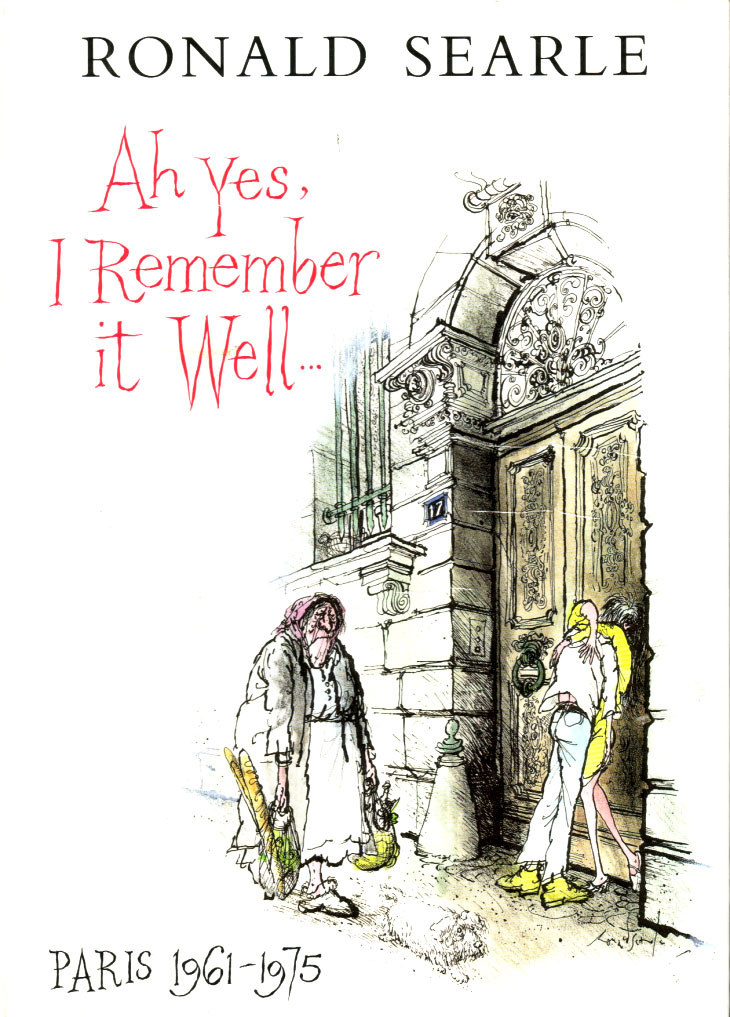
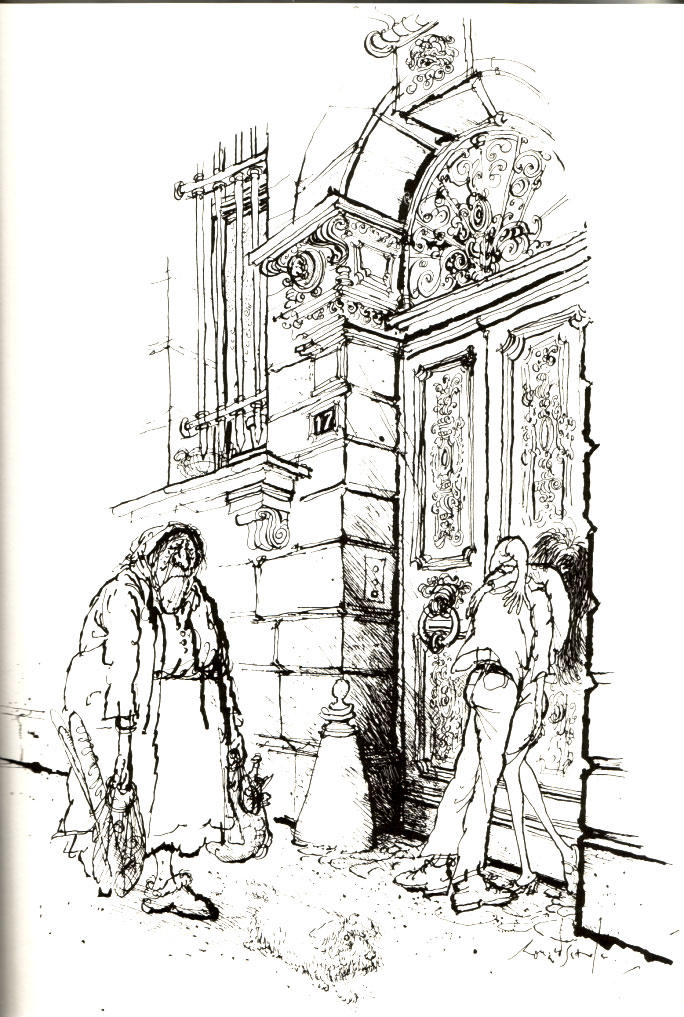
An “interesting doorway”? Interesting to whom? And for what reason, really? LOL!
BONUS LINK:
Three highlights, to be exact, the first by James Montgomery Flagg, the other two by Charles Dana Gibson:
[CLICK IMAGES TO ENLARGE]

In Drawing with Pen and Ink, Arthur Guptill writes that Flagg “draws his lines very rapidly, as may be ascertained by a glance at his illustrations, yet in spite of this rapidity these lines are skilfully placed. Many of his blacks are added with a brush[…]. If one of these spots seems over-black or solid to Mr. Flagg, he scratches through the ink to the surface of the paper, thus making white lines[…]. He also employs cross-hatch freely where he feels the need of it” (p. 426).
And here’s Guptill on Charles Dana Gibson:
Mr. Gibson, it will be seen, has at his command almost every sort of line and dot which the pen is capable of making. And he uses them all. Though his work as a whole is extremely free and direct, being done with a dash and daring for which, among other things, he is famous, it is by no means carelessly done in the sense that the student sometimes seems to think such work to be. Mr. Gibson is undoubtedly primarily interested in the message that his drawing is supposed to convey. In its making he almost instinctively chooses for every detail of the whole the sort of stroke which will lend itself best to the expression of his purpose, whether it be a delicate, hair-like line or a stroke a quarter of an inch wide. [p. 426]


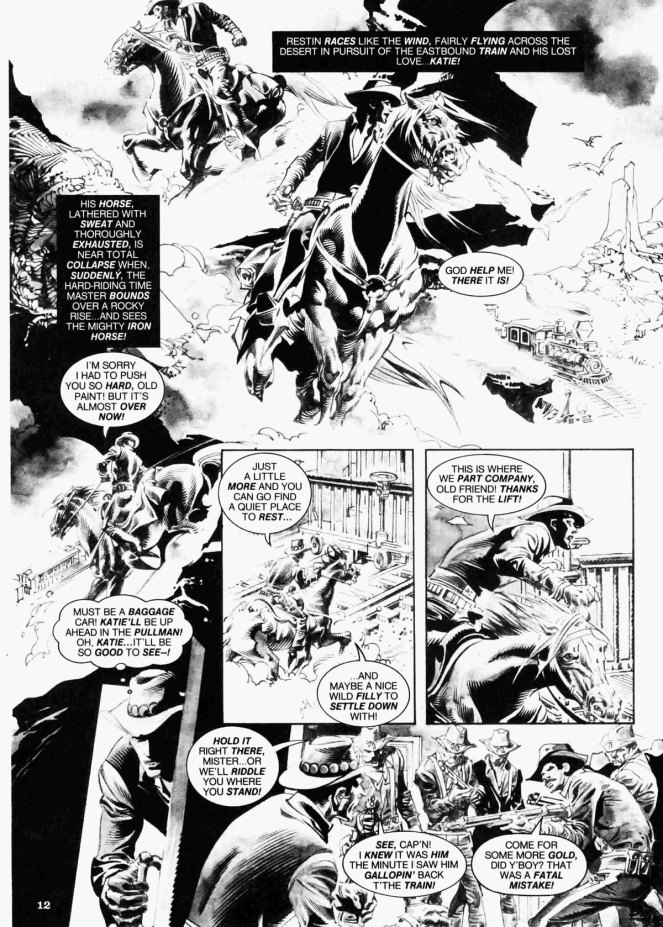
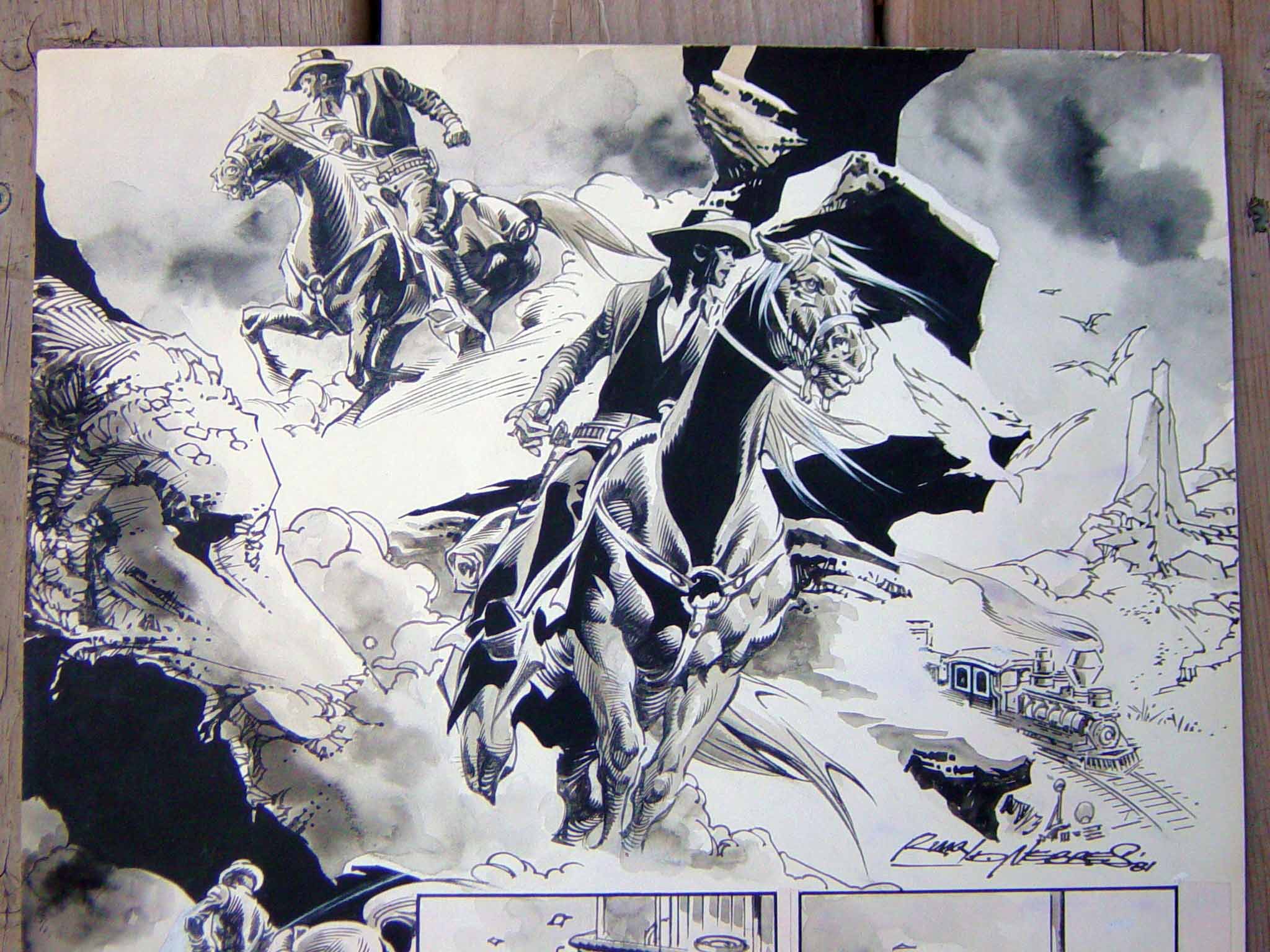
My wife and I purchased the following magnificent page by Filipino artist Rudy Nebres earlier this year:


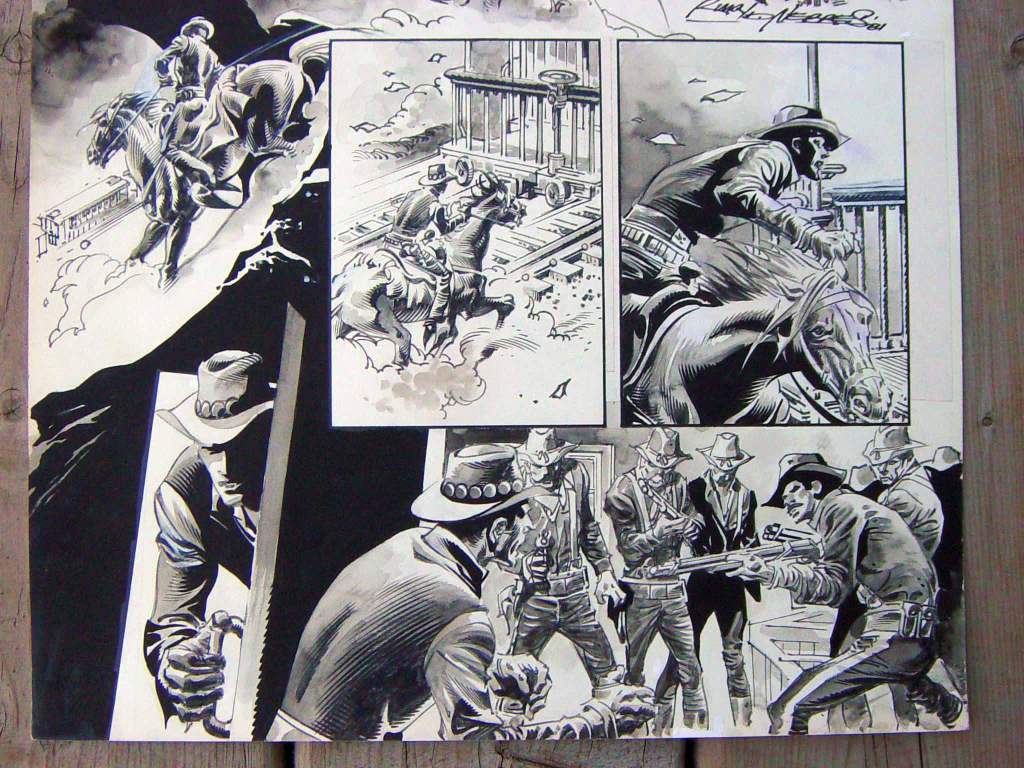
From the early 1970s to the present day, Rudy Nebres has worked, sometimes as a penciller, sometimes as an inker, and sometimes as both (see above), on comics of all kinds, including “adult”-themed comics, for a wide variety of publishers. He’s a skilled artist who has had a long and productive career, and that’s great for him! Not so great for the average, non-art-obsessed reader, however, is the fact that only a handful of the comics Nebres worked on are worth reading for any reason other than to marvel at the man’s amazing craftsmanship. It’s a pity Nebres never found the perfect project to harness his prodigious talent — if only he could have drawn nothing but Western comics! — but the same can be said for most comics artists of his generation and before who scrambled to make a living doing nothing but “work for hire.”
I don’t know which Warren comics magazine the page we now own is from; the dealer didn’t have the information. The only information he had on his site was “Rook Story p.8 Warren Art,” so it is possible this is a page from a Rook story that appeared in Eerie or one that appeared in the Rook’s solo magazine, entitled, what else, The Rook. From Wikipedia:
He [Restin Dane, the time-traveller known as “The Rook”] appeared in Eerie #82-85, 87-95, 98-105. He got his own Rook Magazine which ran 14 issues from 1979 to 1982 (after which he returned to Eerie and concluded the storyline in #132 and continued in 134 and 136). Warren Presents #2 reprints the stories from Eerie #82-85. Eerie isues #116 and 120 had stories staring his great-grandfather.
After perusing Richard Arndt’s index of Warren Magazines, I would venture to guess that the page appeared in The Rook #11 (or possibly #12). But that’s only a guess, so if you by chance recognize the page, and remember which Warren magazine and which issue the story was in, please post a comment, or send me a private message using the link at the top of the page, and let me know. I’d really appreciate the information.
p.s. If you’re wondering why there are no captions or word balloons on the page, it’s because all that is on a separate clear overlay, which thankfully came with the artwork.
UPDATE 03 OCTOBER 2008:
Acting on the basic research outlined above, I mosied on over to ebay and purchased the two issues of The Rook most likely to contain the story with our page in it. Well, the books arrived today, and I was right. Our Rudy Nebres page was printed in The Rook #11 (October 1981), page 12. The story, written by Will Richardson, is titled, simply, “The Rook.” Mystery solved!
Bonus Links:


Bonus Links:
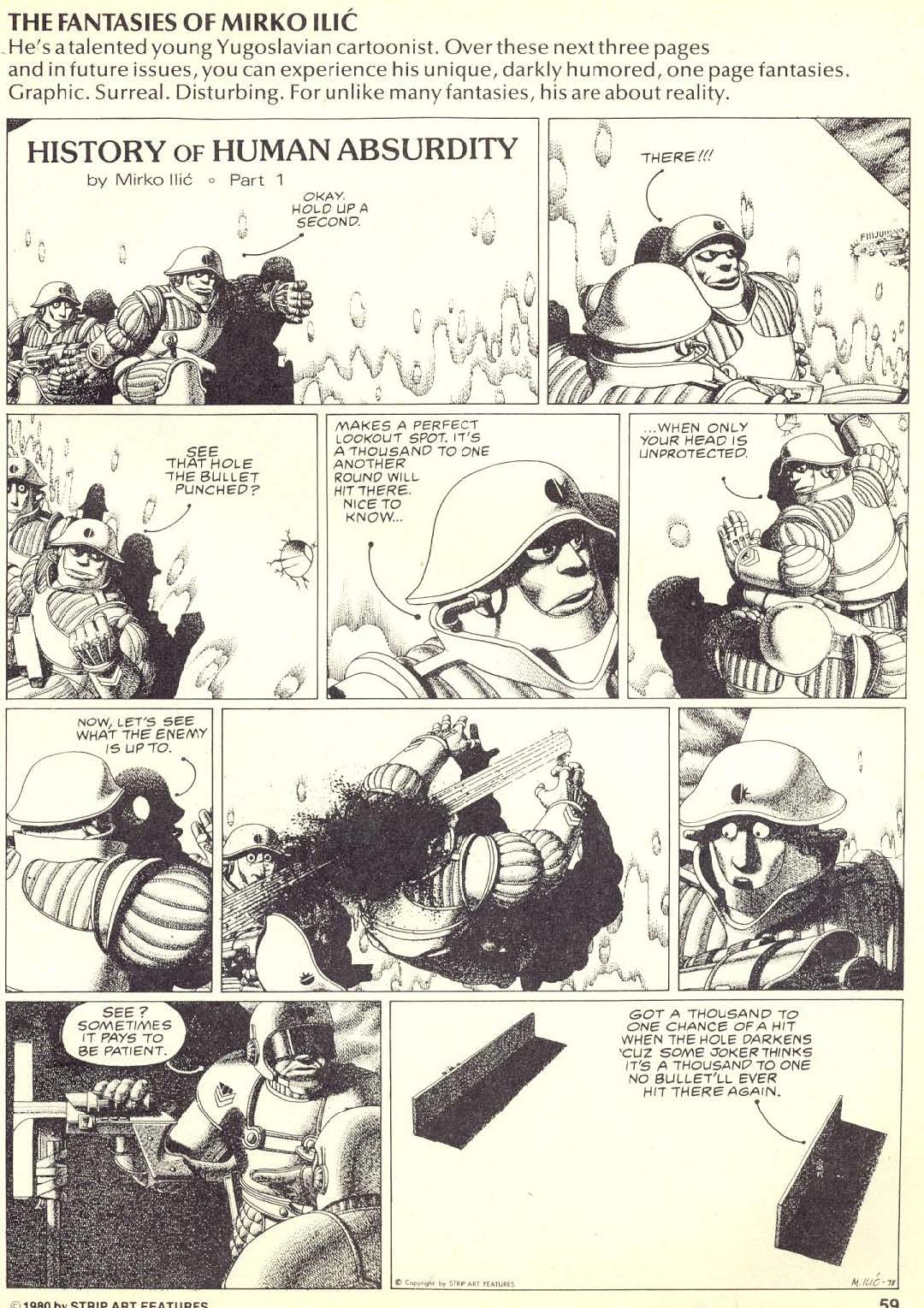
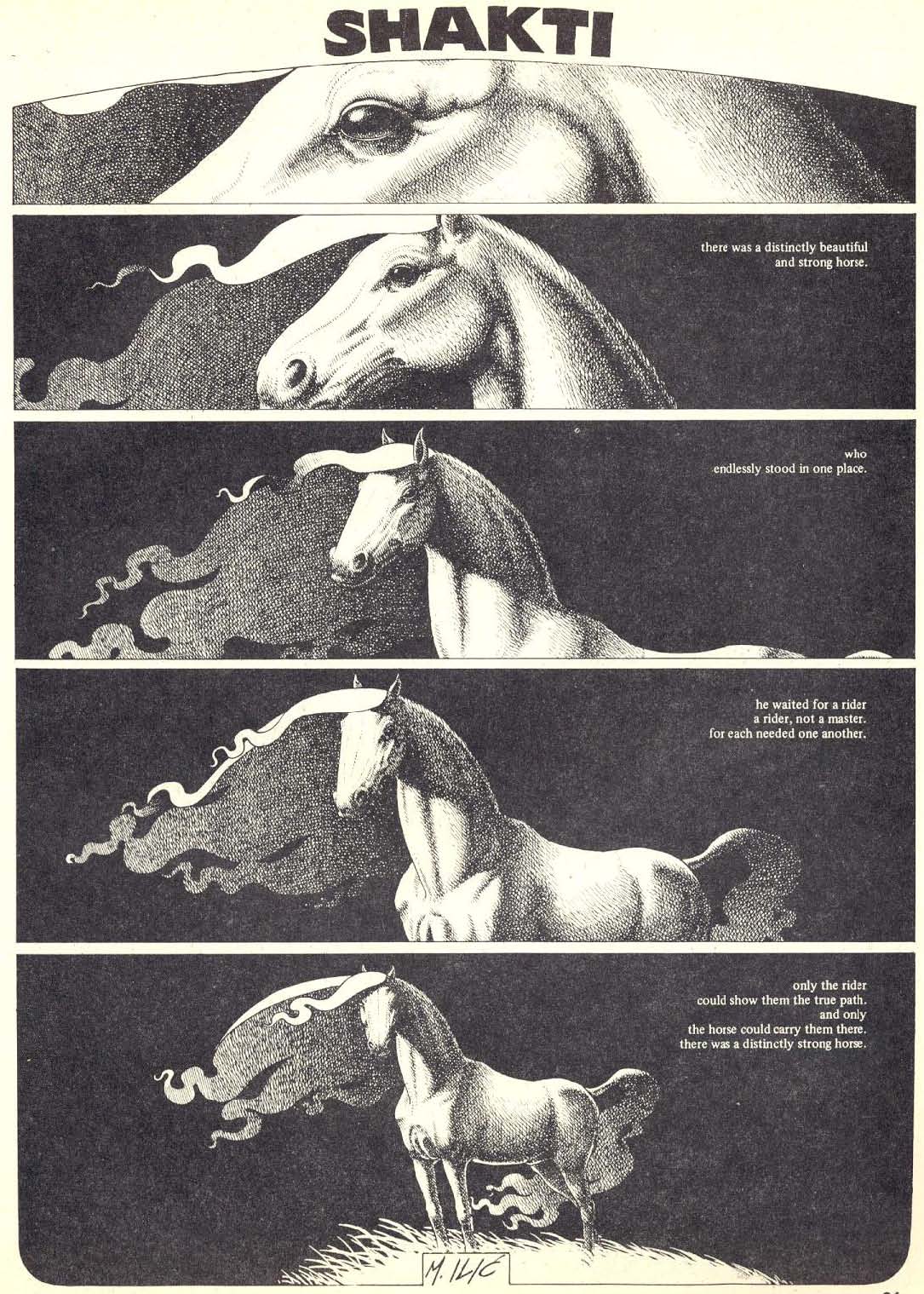
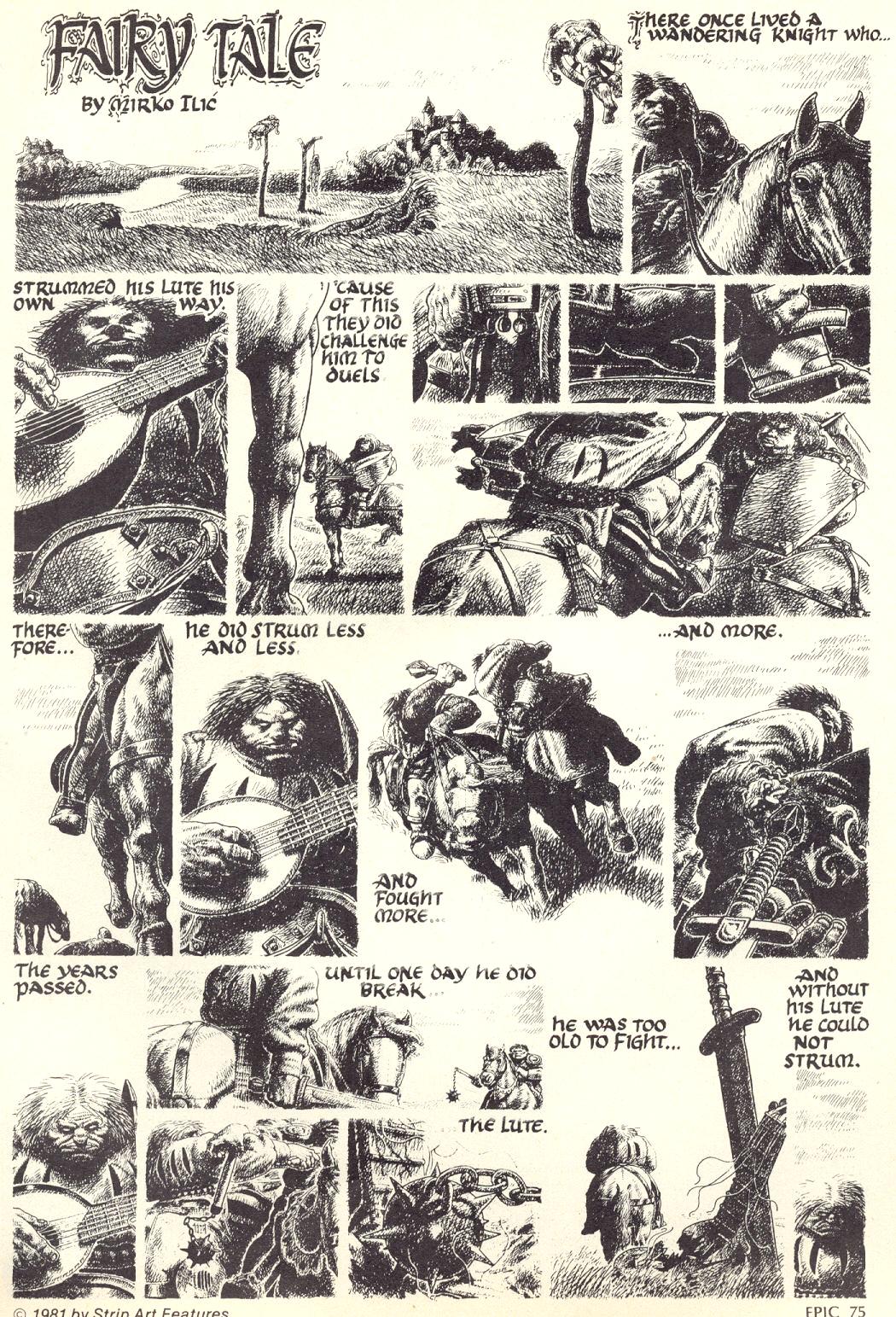
Mirko Ilić Corp. official site
Mirko Ilić Exhibition on Flickr – includes a photo of the framed original artwork for “The Victor”; also, this is cool.
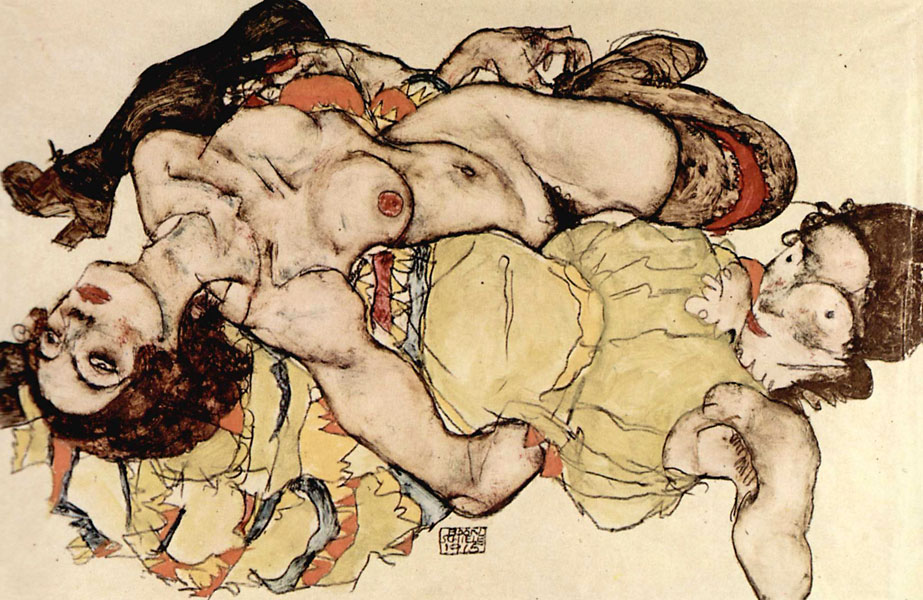
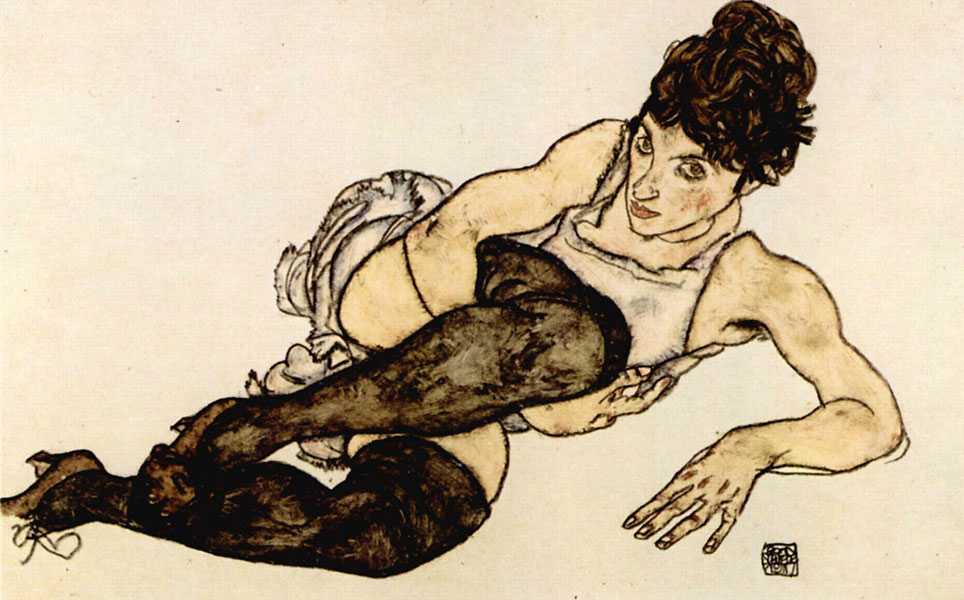
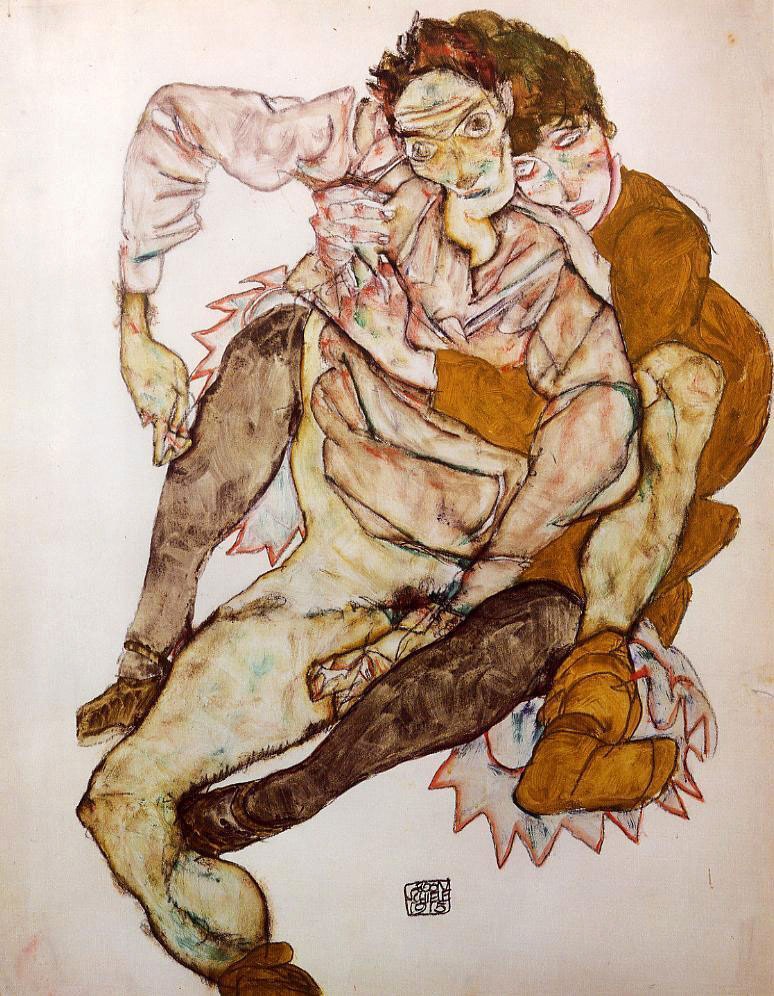
Austrian painter Egon Schiele was born in Tulln on the Danube on the 12th of June 1890 and died of pandemic influenza in Vienna on the 31st of October 1918. He was 28 years old.
In August, we purchased a teeny-tiny drawing by “Hector Mumbly,” which is the children’s book nom de plume of artist Dave Cooper. Here’s a scan:
[CLICK IMAGES TO ENLARGE]

The artwork, which is from the Hector Mumbly book entitled Bagel’s Lucky Hat, is 124 mm high x 127 mm wide, red and black ink over printed blueline. The featured character, Bagel, is a mere 25 mm from the tip of his nose to the tip of his tail.
The drawing was accompanied by an illustrated thank-you note on standard-size typing paper. Here’s a scan:

BONUS LINK:
davegraphics’ photostream – there’s lots of really good (and, sometimes, disturbing) work on display here, including some enlightening step-by-step documentations of paintings in progress.
The art show is long-time gone but the excellent poster remains:

ABOVE: “the ultra-limited-edition silkscreen show print… for the Ghost World: Special Edition exhibit opening this Friday, August 29, at Fantagraphics Bookstore & Gallery.”
BELOW: the Ghost World paperback cover, the Ghost World poster, and the new Ghost World: Special Edition cover.


To tell you the truth, I think the Ghost World: Special Edition cover is not very good at all. It’s clearly meant to echo the movie poster, but I think there’s a glaring disconnect now between the typography and the drawing. In the movie poster, the design of Enid’s black and green skirt and the other elements of black clothing, including Enid’s retro black-plastic-framed glasses, connected very nicely with the sinuous black letters of the title, Ghost World. Now, there’s no connection at all, except for the anemic colouring. Also, the figures in the drawing are too stiff. Their shoulders and hips are both square to the viewer and parallel to each other. Look at the figures in the poster. Both have one shoulder higher than the other; and while Rebecca has her hips nearly parallel with the ground, with both legs bearing her weight almost equally, Enid has her hips at an angle, with one leg clearly bearing more weight than the other, as is naturally the case, most of the time, when a person is standing still. In short, insensitive design plus insensitive drawing equals a mediocre cover.
BONUS LINK:
“Ghost World: ‘You’ve grown into a very beautiful young woman.’” by Ken Parille
 Ragged Claws Network