Comics · Here, Read · Look Here

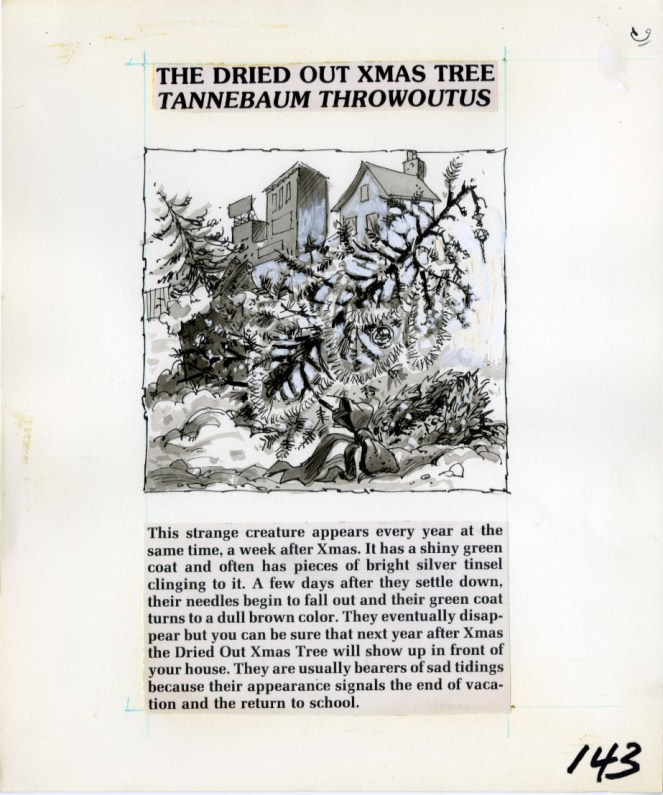
Look Here, Read: “The Dried Out Xmas Tree TANNEBAUM THROWOUTUS”

The above page of original art was produced by Jack Rickard for a piece called “Modern Wildlife Species” that appeared in the paperback collection, Mad Looks at the Future (1978). If you like it, it’s available right now, cheap, on ebay from a very reliable seller (not me).

Here in the Queen City, the end of Christmas vacation is today; school starts tomorrow.

Here, Read · Look Here · Ronald Searle

Look Here, Read (and Send to Friends and Family): “The Molesworth Self-Adjusting Thank-You Letter”

If you haven’t yet sent thank-you letters for the gifts you received at Christmas, Nigel Molesworth has a time-saving solution for your consideration:

[CLICK IMAGES TO ENLARGE]

[Source: Geoffrey Willans and Ronald Searle, How to Be Topp: A guide to Sukcess for tiny pupils, including all there is to kno about SPACE (London: Max Parrish, 1954). The scan is from my personal copy.]

Drawing · Illustration Art · Look Here · Obituaries · Ronald Searle

Rest in Peace: Ronald Searle (3 March 1920 – 30 December 2011)

[CLICK IMAGES TO ENLARGE]


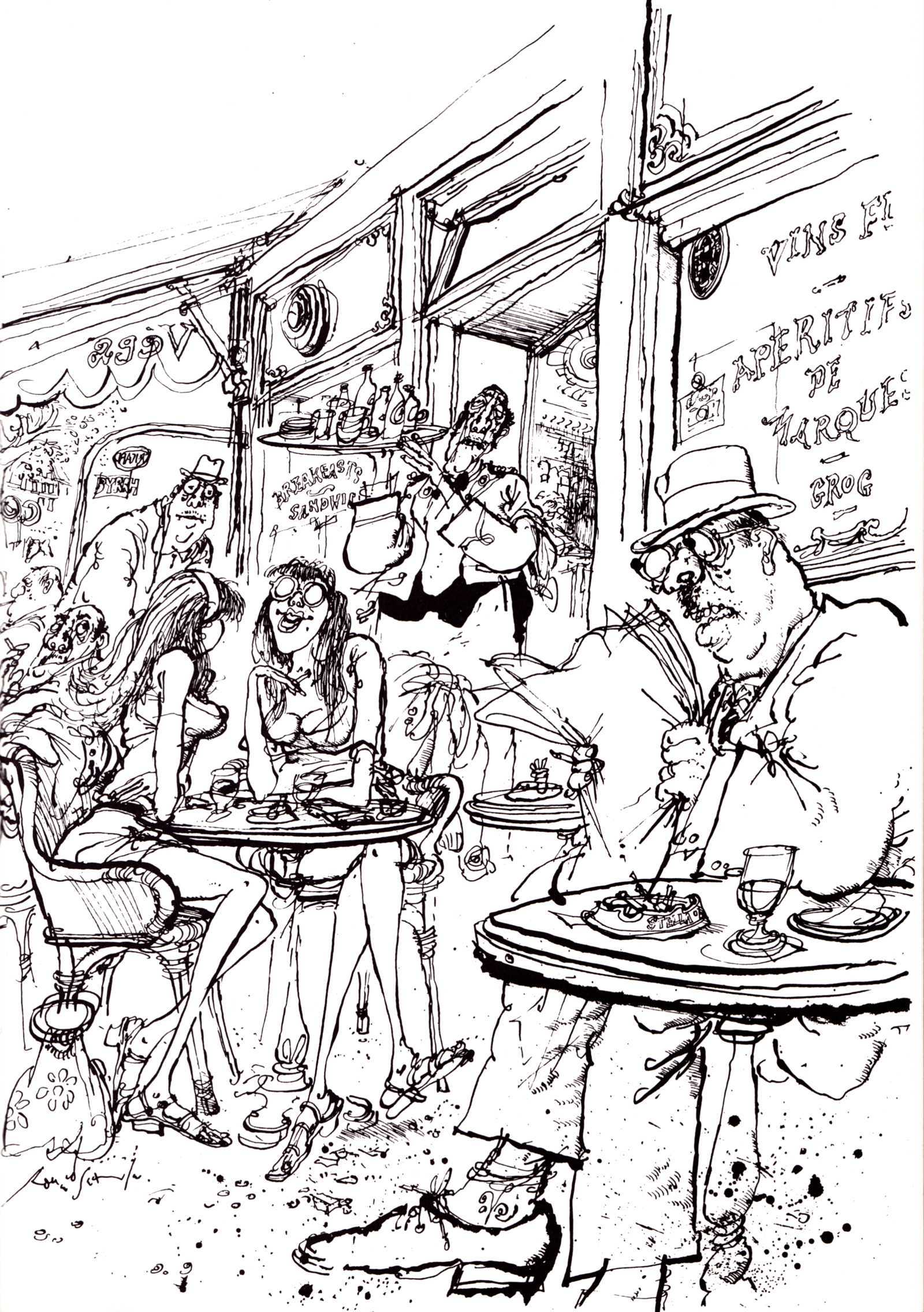
Today, art lovers world wide are lamenting the sad news that the much-admired, much-imitated, much-decorated British cartoonist and illustrator Ronald Searle has died. A family statement said:

Ronald William Fordham Searle, born 3 March 1920, passed away peacefully in his sleep with his children, Kate and John, and his grandson, Daniel, beside him on 30 December 2011 in Draguignan, France, after a short illness.

He requested a private cremation with no fuss and no flowers.


In an article published on the guardian.co.uk site on Tuesday 9 March 2010, cartoonist Steve Bell summarized Searle’s accomplishment as follows:

What marks Searle’s work out is genuine wit, intelligence and unabashed ambition. He is our greatest living cartoonist, with a lifelong dedication to his craft unequalled by any of his contemporaries. His work is truly international, yet absolutely grounded in the English comic tradition. It is the highest form of conceptual art, but devoid of any of the pretence that usually accompanies such a notion. Which is to say it is extremely funny, but not all the time. It cuts to the essence of life.


“At the Cambridge School of Art it was drummed into us that we should not move, eat, drink or sleep without a sketchbook in the hand. Consequently, the habit of looking and drawing became as natural as breathing.”
— Ronald Searle


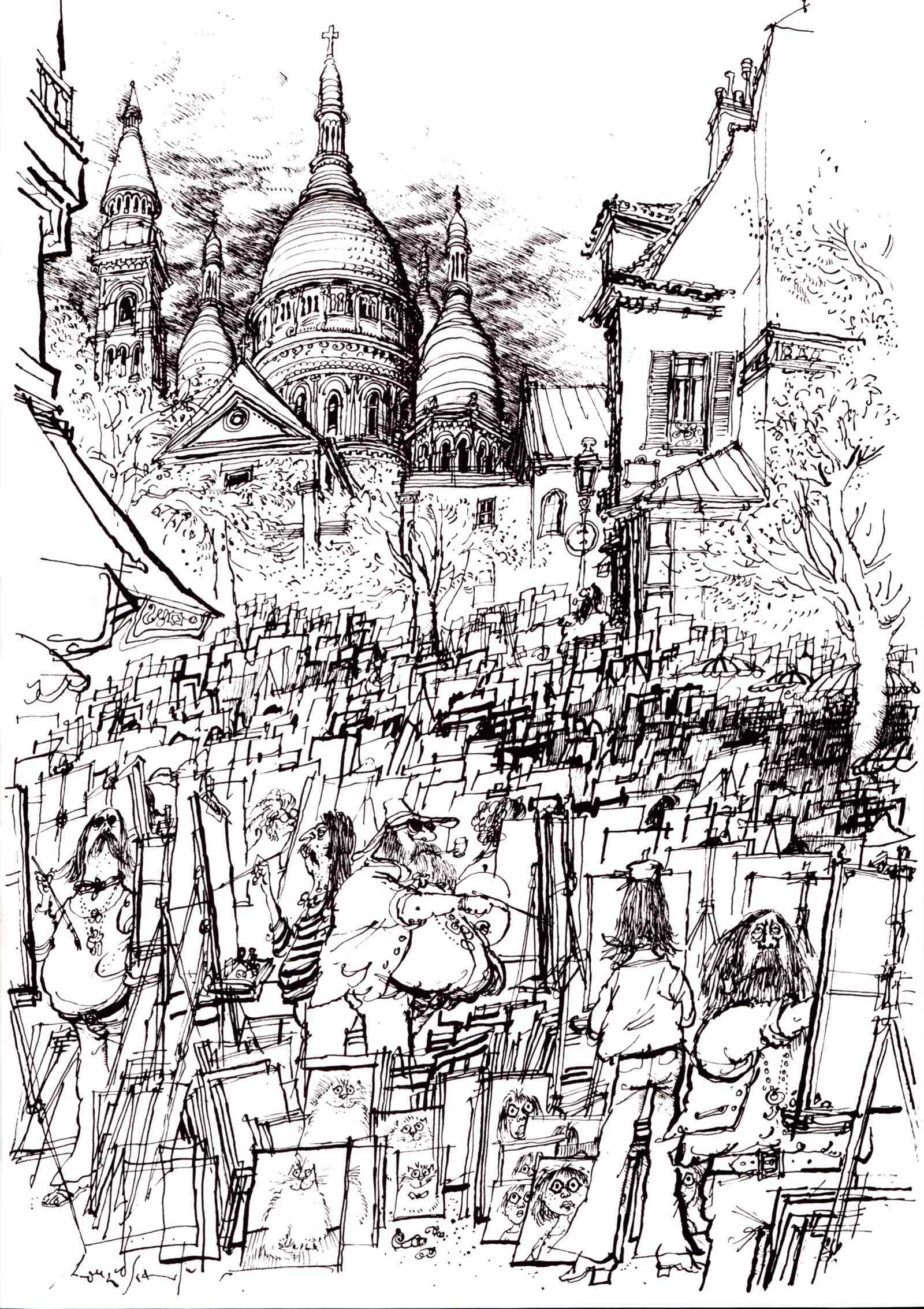
Searle’s caption for the above drawing is typically blunt:
“More clowns, more wide-eyed children, and more phoneys to the square metre than any other public place in Europe (Saint Tropez compris). La Place du Tertre, Montmartre — artistic rubbish dump of Paris — and two born every minute to keep it thriving.”


Ronald Searle’s most recent book, Les Très Riches Heures de Mrs Mole, is a collection of the drawings Searle created for his wife each time she underwent chemotherapy for her breast cancer, “to cheer every dreaded chemotherapy session and evoke the blissful future ahead.” Mrs. Searle died in July 2011.
Art Collection · Drawing · Gene Colan · Illustration Art · Look Here · Original art vs. printed page

Look Here: A page of original art by Gene Colan and Tom Palmer

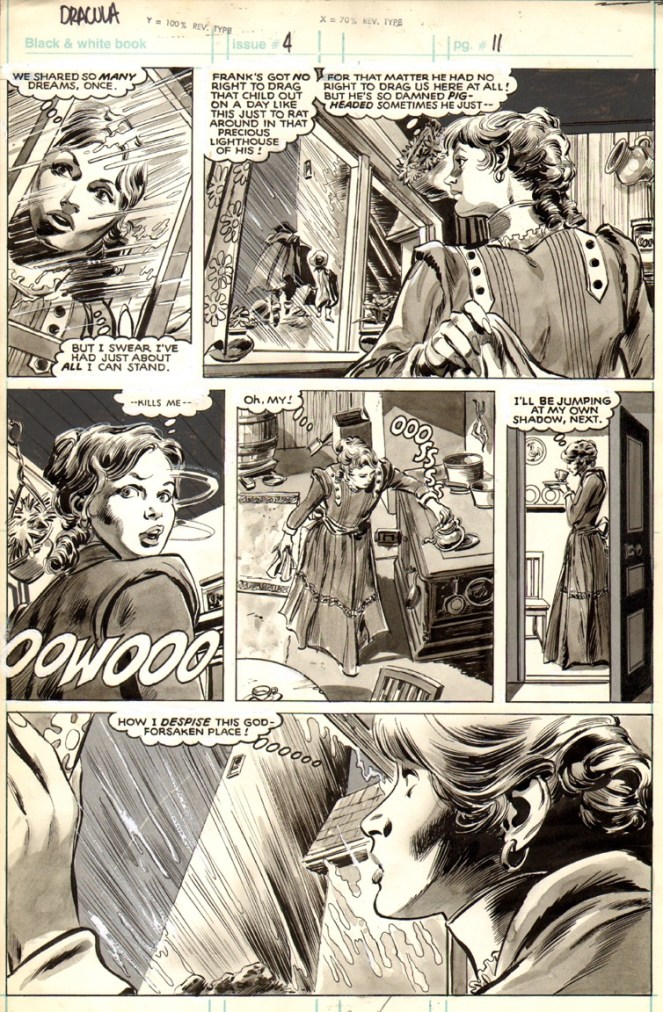
My two favourite Christmas gifts for 2011 were 1) an eight-panel, single-page comic strip on 11 x 17 inch Strathmore bristol, pencilled, inked, and coloured by our 17-year-old son, just for the occasion, and 2) a page of original art from “Angelica,” a story that was published in The Tomb of Dracula #4 (April 1980), with art pencilled by Gene Colan and inked by Tom Palmer. Our son would prefer that I not post his piece, but if you pay a visit to our house in a month or so, I am fairly confident that you’ll be able to view it, framed, on the wall in our living room — if I let you in the door, that is. As for the Colan page, here it is, first as it was printed in black and white in The Tomb of Dracula, and second, as it appears “in living colour,” as it were:

Oddly enough, that beautiful page — which I first saw when I bought The Tomb of Dracula #4 new, off the newsstand, when I was in high school — has a very strong personal resonance for me. You see, once upon a time my father quit his job in the big city to chase a dream, dragging his family to a “godforsaken place” that my mother “despised” from the moment she set eyes upon it. The mute object of my mother’s contempt was a shabby, drafty, uninsulated log house with no plumbing or adequate heating located on a discontinuous, serpentine tract of marginal farmland that some anonymous homesteader had laboriously carved out of the bush in east-central Saskatchewan. I won’t burden you with the depressing details of my father’s fourteen-year experiment in pigheaded determination and wishful thinking. Suffice to say that by the time the man finally admitted defeat, he and my mother had already spent more than a year shuttling back and forth between the farm and various low-skilled jobs the meagre pay from which might have slowed but certainly did not stop their burden of farm debt from growing more burdensome every month — which led them, at long last, to conclude that the only way forward was to file for bankruptcy and retreat, with my brothers and sister in tow, back to the city… well, not quite back to the city, but that’s a whole other story…

Comics · Here, Read · Look Here

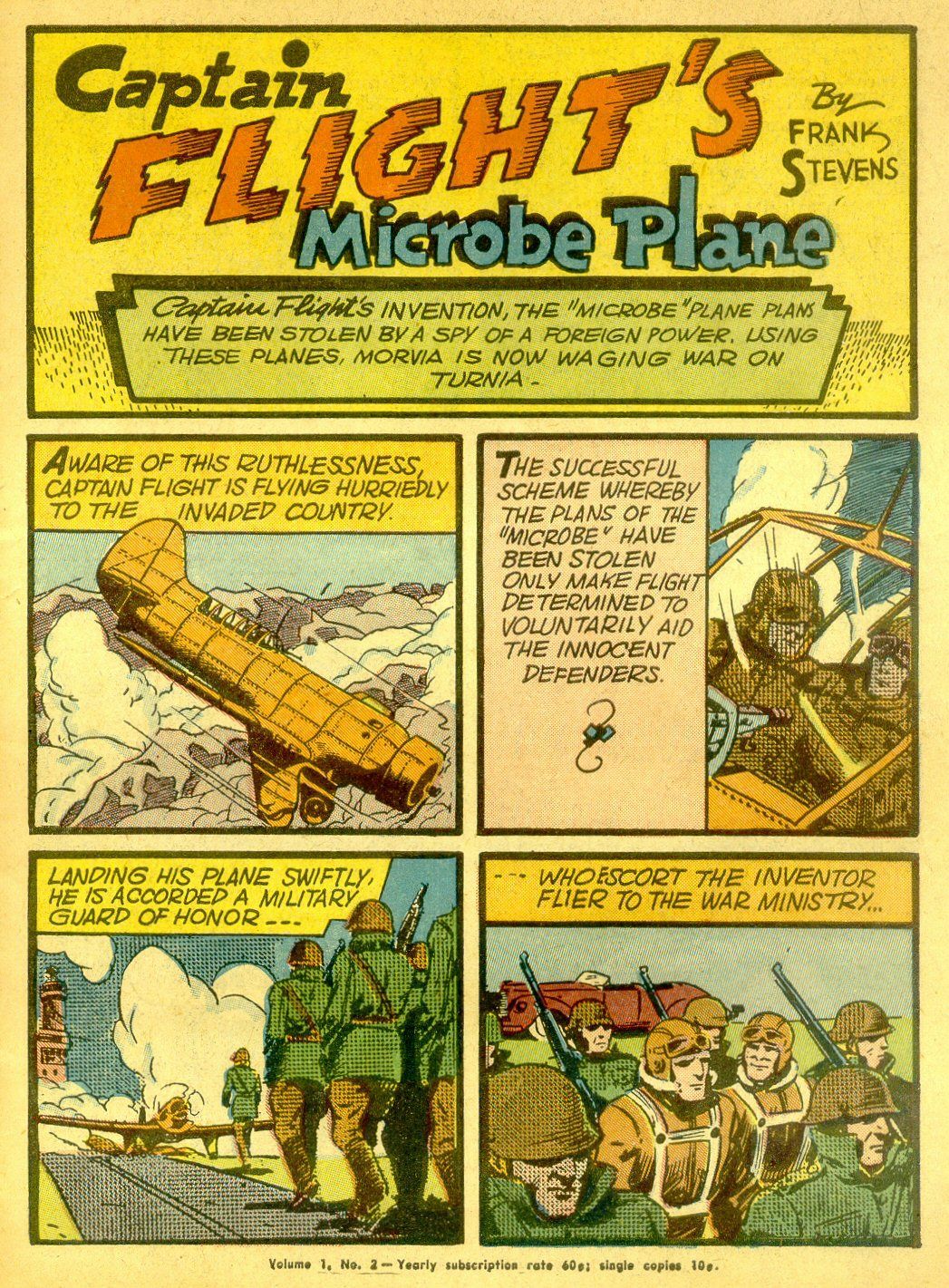
Look Here, Read: “Captain Flight’s Microbe Plane” by Frank Stevens

From Captain Flight Comics #2 (May 1944), here’s “Captain Flight’s Microbe Plane” by Frank Stevens; since this technologically prescient (!) story is a whopping 20 pages long, I have decided only to display the first image on any page here that includes other posts, but if you click the link to the individual post, you’ll be able to read the whole thing:

[CLICK IMAGES TO ENLARGE]


Continue reading “Look Here, Read: “Captain Flight’s Microbe Plane” by Frank Stevens”