"This day's experience, set in order, none of it left ragged or lying about, all of it gathered in like treasure and finished with, set aside." –Alice Munro, "What is Remembered"
More scans of paperbacks in my increasingly eclectic collection:
[CLICK IMAGES TO ENLARGE]
American illustrator and graphic designer Richard Amsel (December 1947 – November 17, 1985) was perhaps best known for the poster art he produced for Hollywood movies such as The Champ, Chinatown, Julia, The Last Picture Show, The Last Tycoon, The Life and Times of Judge Roy Bean, McCabe & Mrs. Miller, The Muppet Movie, Murder on the Orient Express, Nashville, Papillon, The Shootist, The Sting, Flash Gordon, The Dark Crystal, Raiders of the Lost Ark, and Mad Max Beyond Thunderdome. He also produced over forty covers in 13 years for TV Guide and worked for many other high-profile clients. He was the envy of his peers. He died at the age of 37.
Amsel fans might be interested to know that the cover of Dangerous Summer was published in 1969, the same year that Amsel’s submission to a nationwide talent search for an illustrator to produce the poster art for the Barbra Streisand musical Hello, Dolly! was selected by 20th Century Fox for the film’s campaign. At the time he won the talent search, the 22-year-old Amsel was still a student at the Philadelphia College of Art.
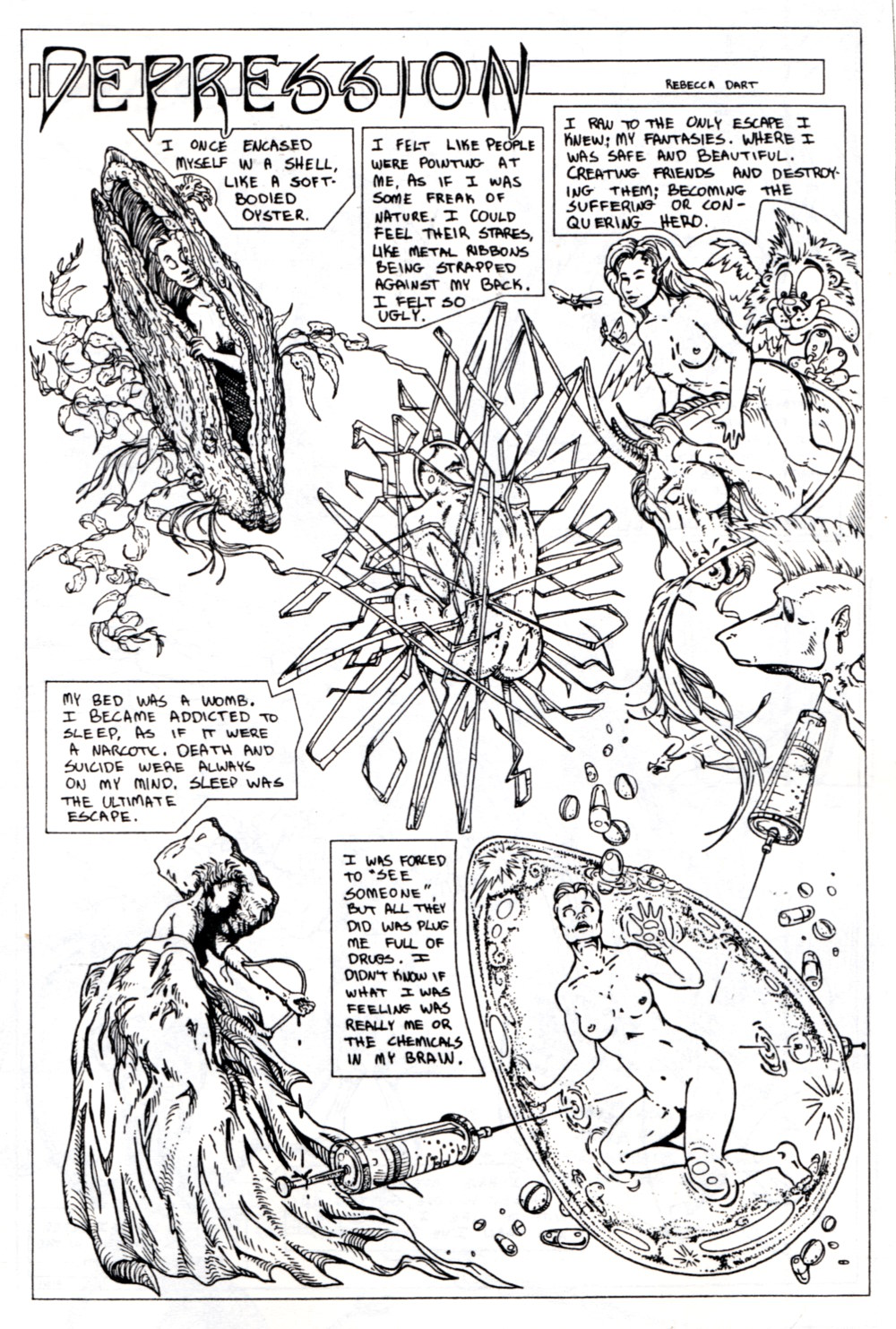
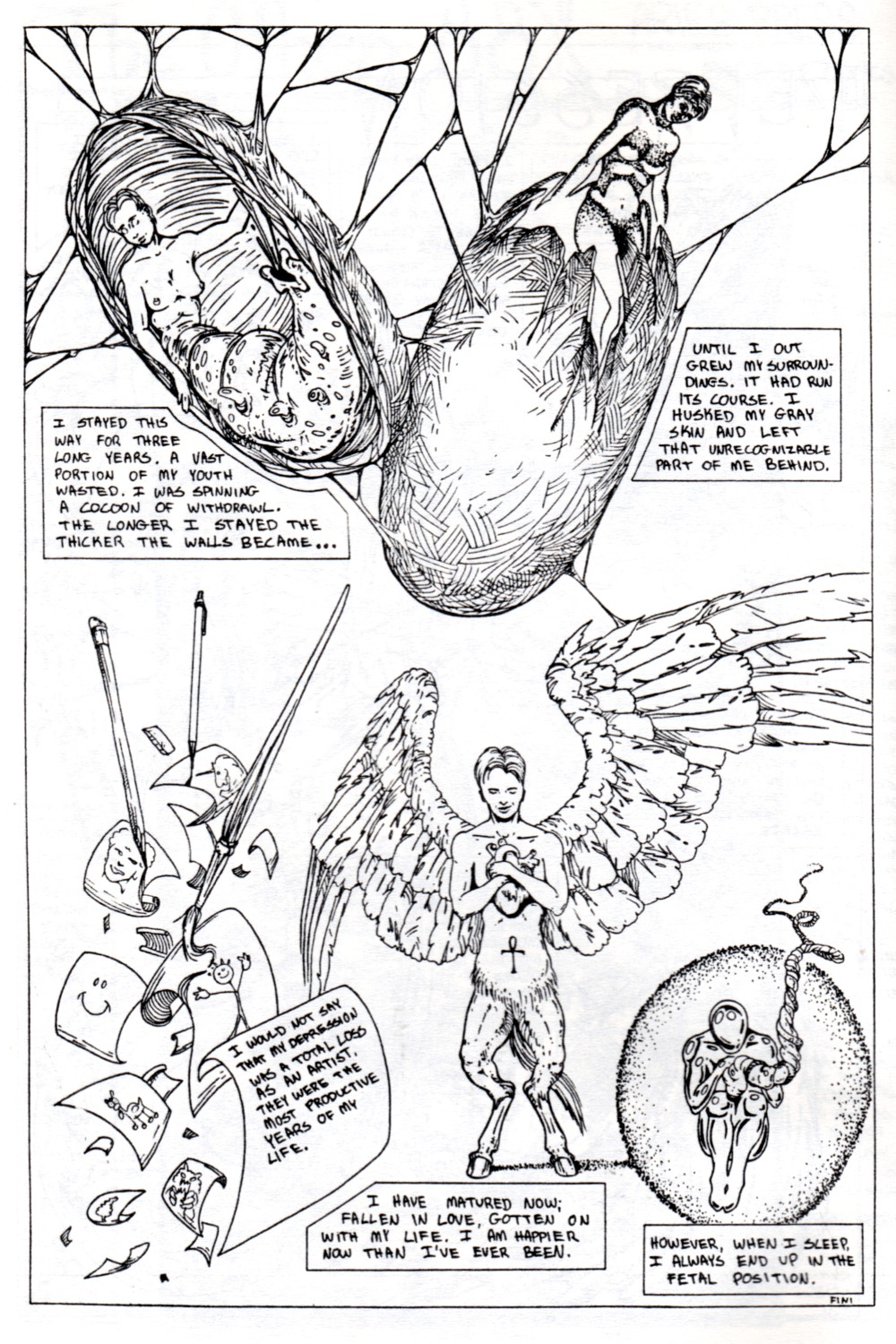
From the mini-comic The Other 88% #1, published way back in November 1993, here’s “Depression,” a heartfelt two-page story by Rebecca “Battle Kittens” Dart, who had just turned twenty in April of that year:
[CLICK IMAGES TO ENLARGE]
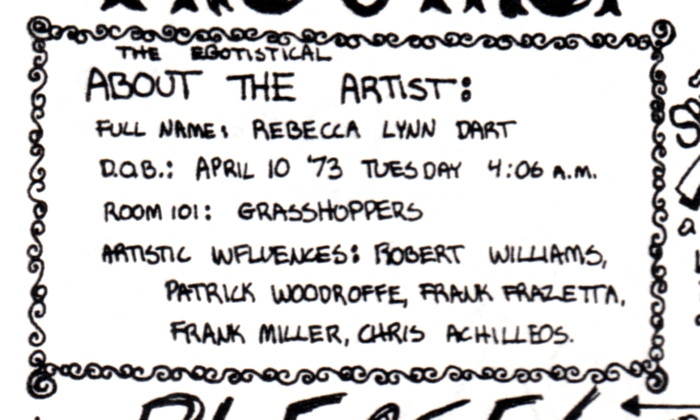
BONUS SCANS: COVER and ABOUT THE ARTIST
REBECCA DART ON THE WEB:
Battle Kittens: The Art of R. Dart – “a handsome 56 page comic-sized collection offset printed on high quality paper. There are 8 pages in full glorious color! This is the best from Rebecca’s sketchbooks and artblog from the last 3 years. This is the good stuff!”
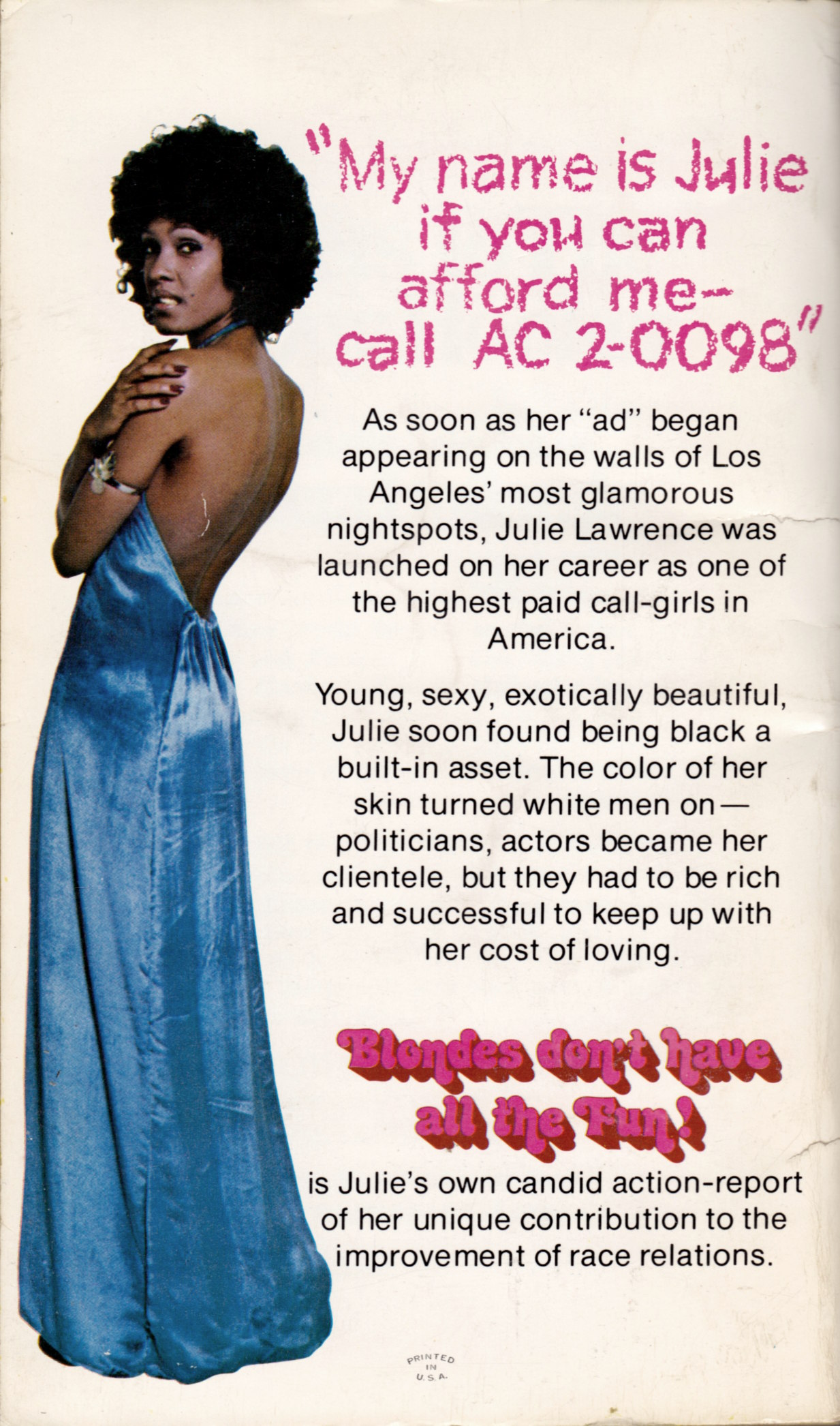
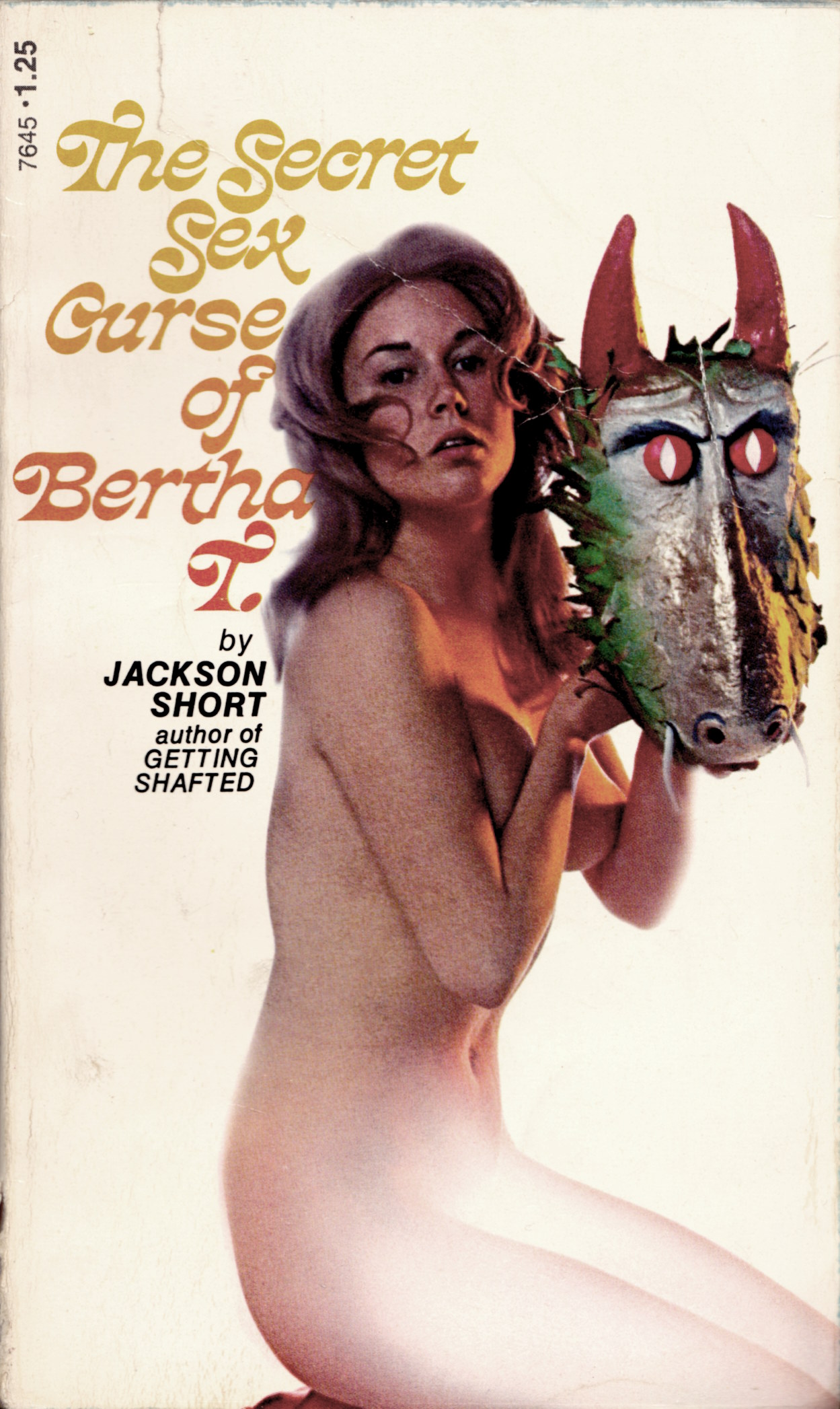
As I’ve mentioned once or twice on this blog in the past, I don’t often buy paperbacks with photo covers, but when I came across a copy of The Secret Sex Curse of Bertha T. — dig that groovy lettering, dig that papier-mâché demon mask, dig the sleek Ms. Bertha Turtle, her upper body bathed in a golden glow, her lower body not merely exposed but over-exposed! — after I came across that book, I say, at a local Salvation Army Thrift Store, I started to watch for a couple of others that I could scan with it to produce a post here at RCN. And, well, it’s not much, but here’s what I’ve got:
[CLICK IMAGES TO ENLARGE]
Does it make any sense to you that the woman on the front of Blondes Don’t Have All the Fun is wearing sheer pantyhose? Because it makes no sense to me… though I am certainly familiar with the theory that being not quite naked is sexier than being totally naked… I just don’t see that it makes much difference here, except that waistband is an unattractive distraction…
Keywords:Juliet of the Spirits, Blondes Don’t Have All the Fun, The Secret Sex Curse of Bertha T.
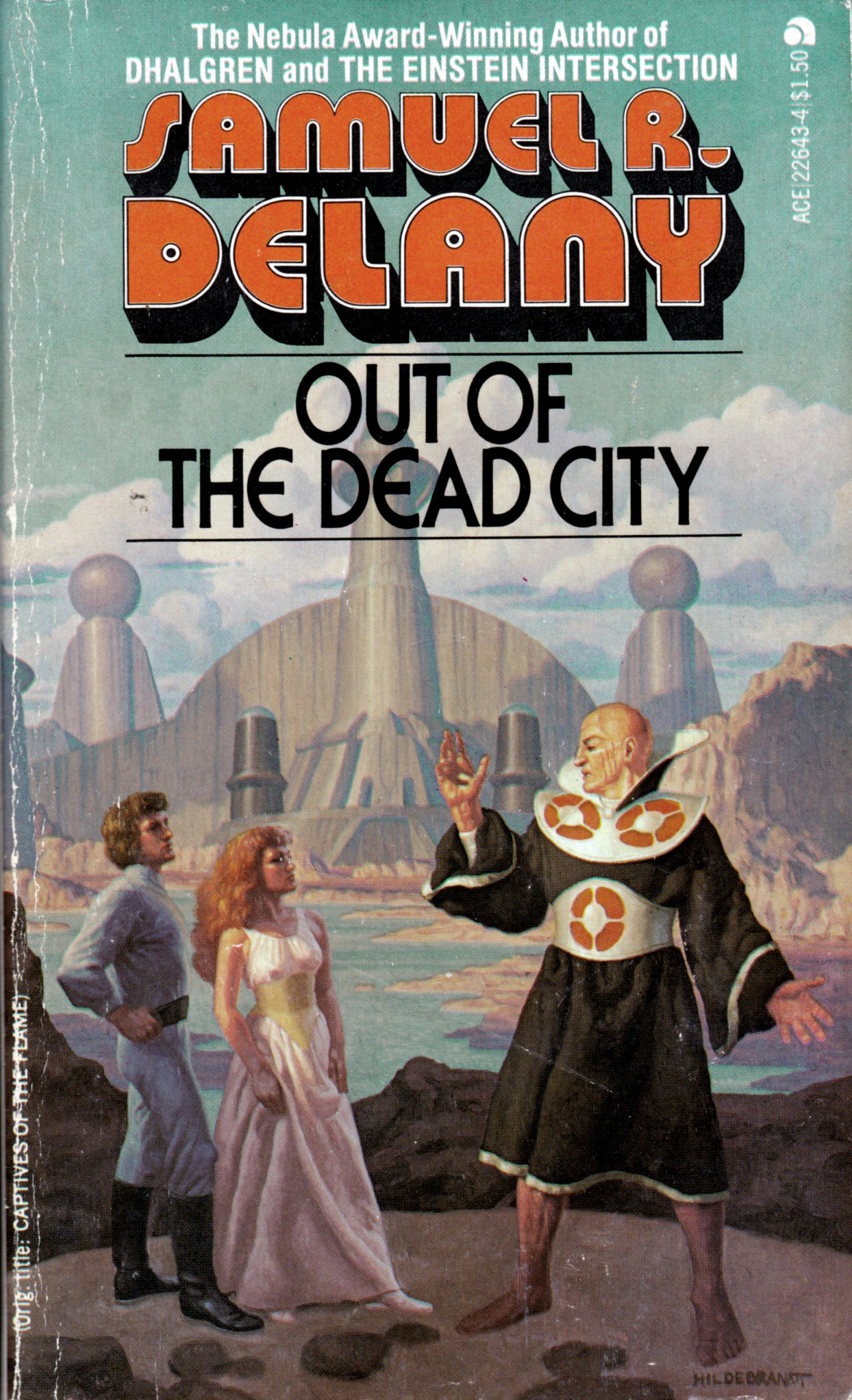
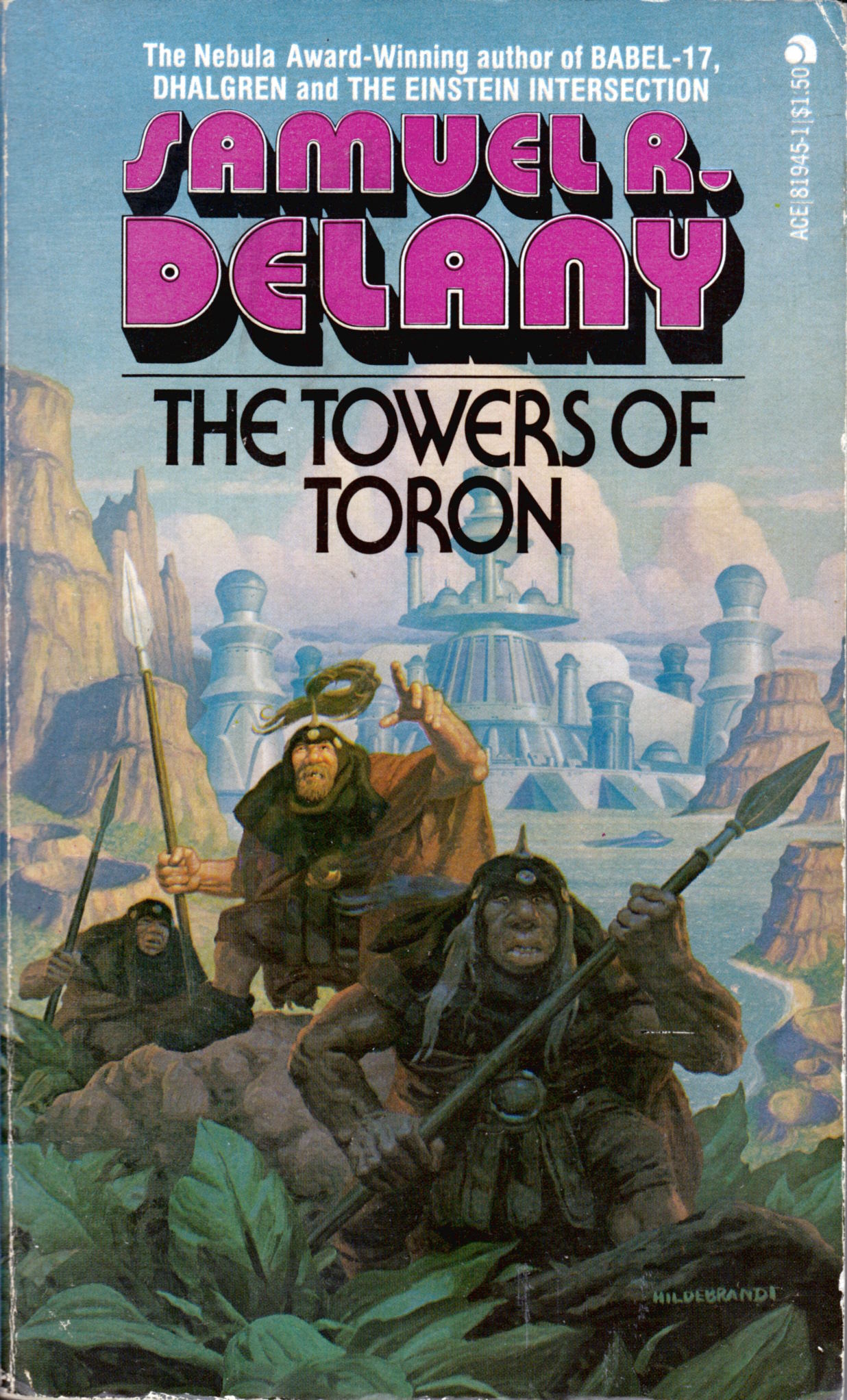
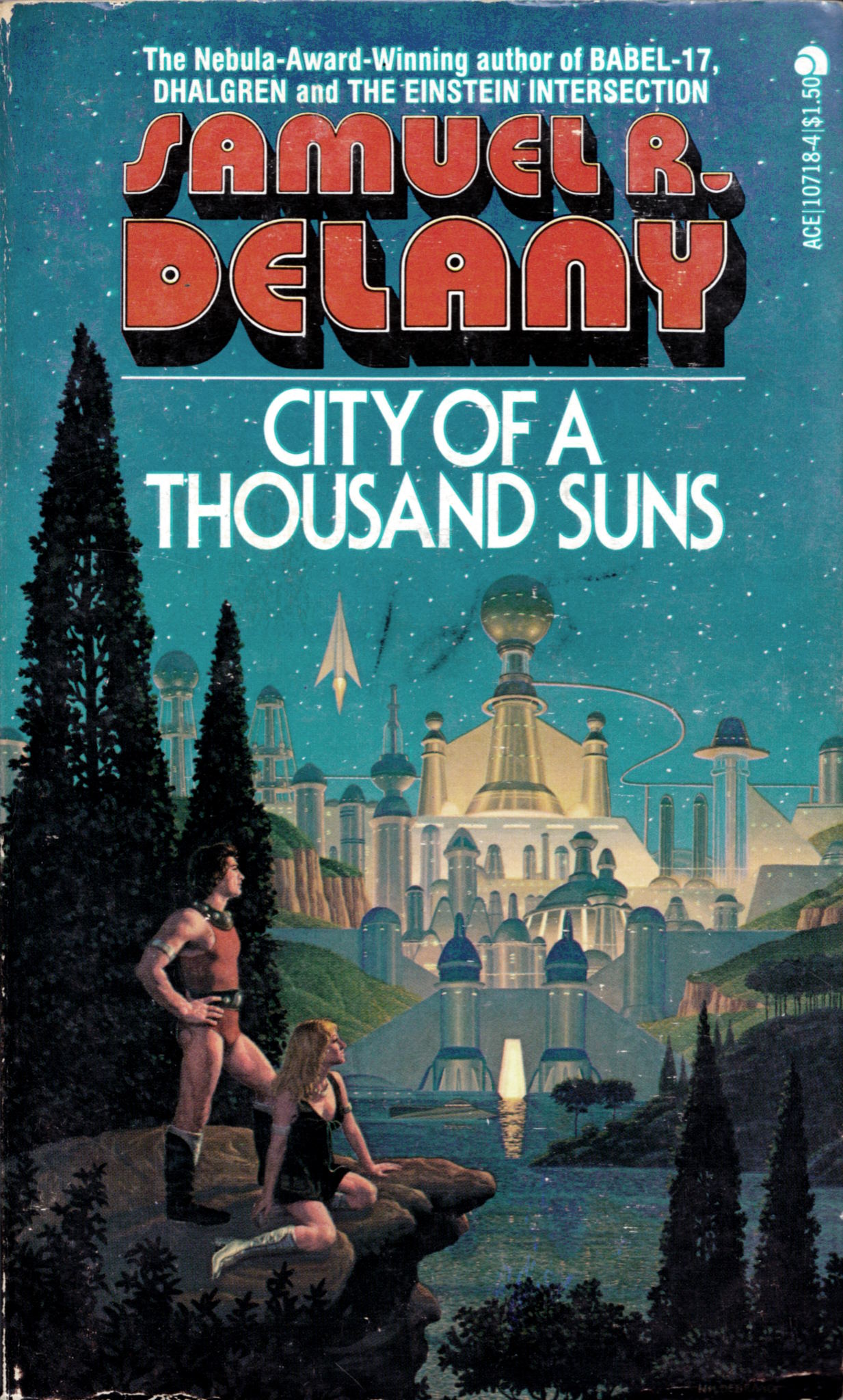
First up, here are the covers that the folks at Ace Books designed for their 1970s reprint of Samuel R. Delany’s “Fall of the Towers” trilogy, which was first published in the early 1960s; the pretty, staid cover art is by the Brothers Hildebrandt, who at the time were generally fairly adept at colour mixing for various lighting conditions but not especially good at designing futuristic or alien cities that didn’t look like conglomerations chess pieces (or monsters that didn’t look like slightly modified versions of plastic toys; see, for instance, the cover of Epic Illustrated #5):
[CLICK IMAGES TO ENLARGE]
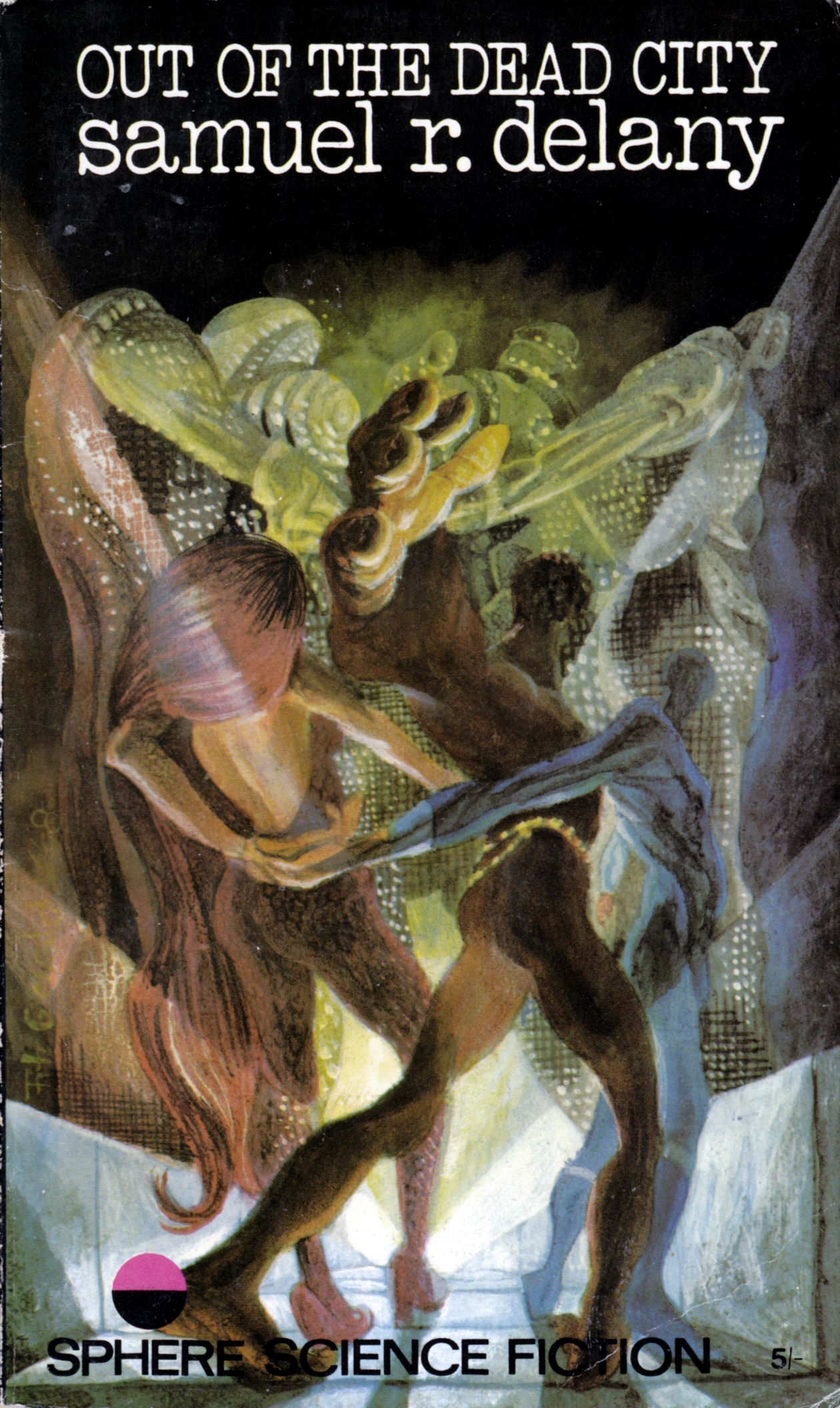
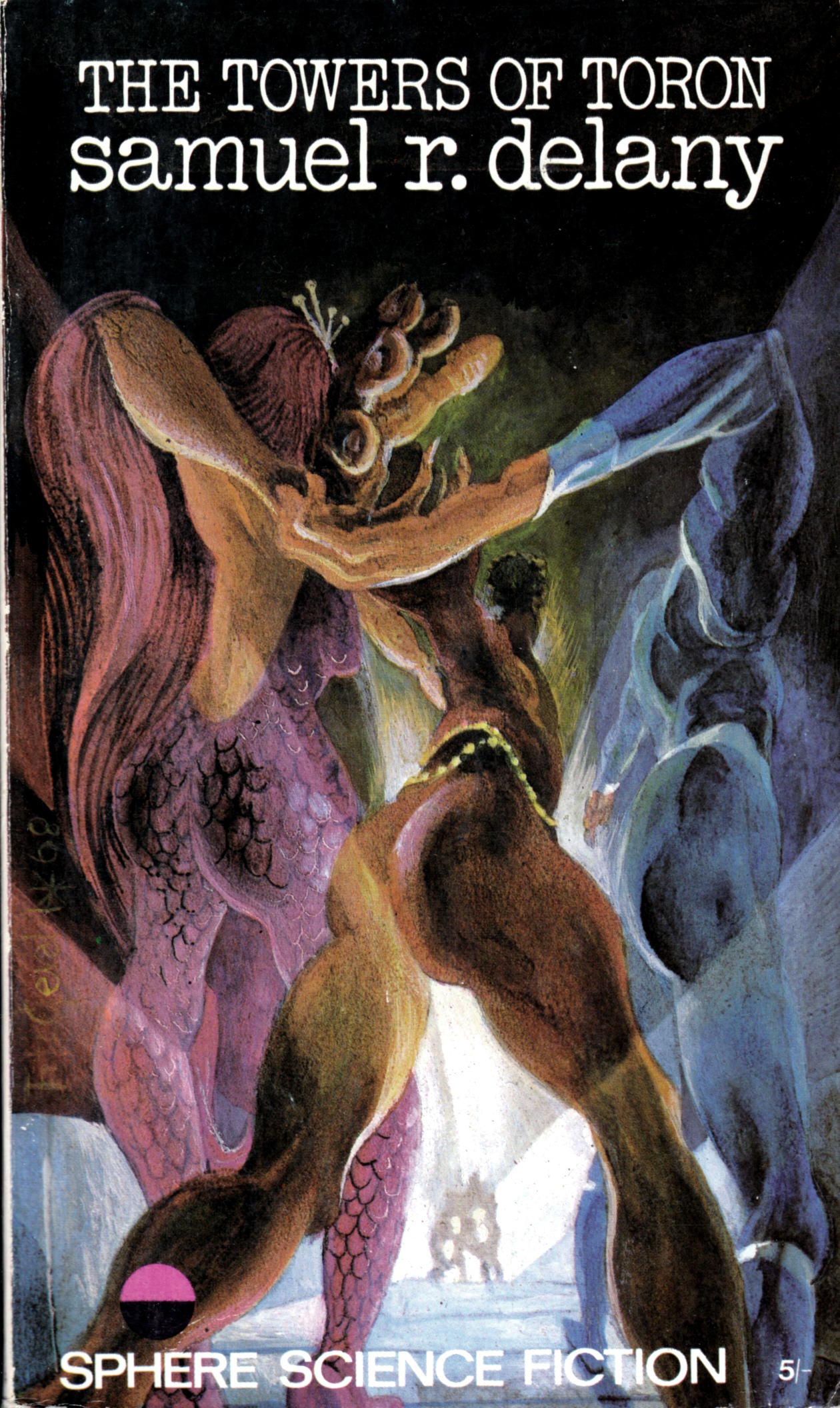
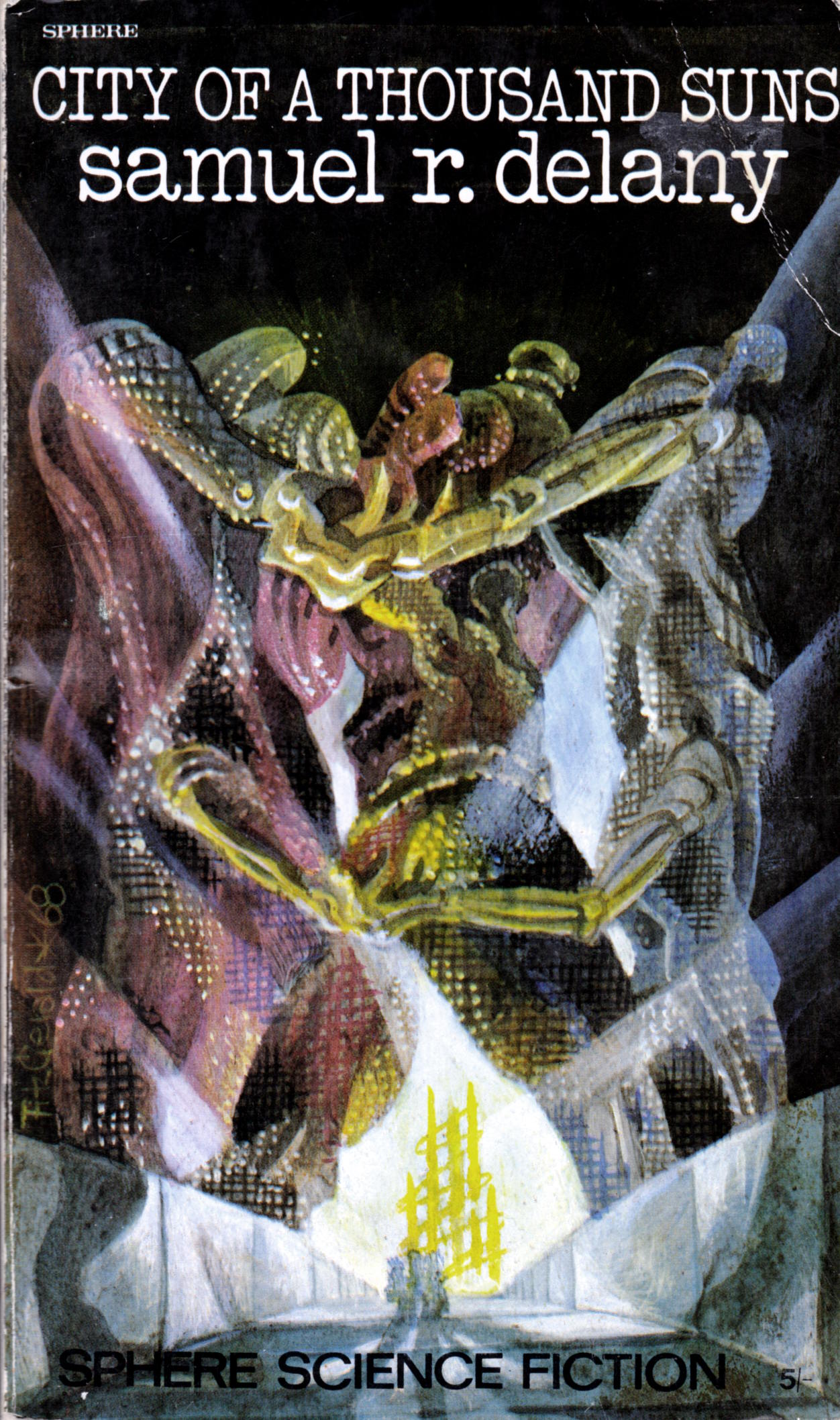
In contrast, in the UK in the late 1960s, the “Fall of the Towers” trilogy was published by Sphere with relatively adventurous cover art by Russell FitzGerald, although I must say, the artist’s ambition here seems to me to have been tightly hobbled by his weak draftsmanship and indifferent painting technique:
FitzGerald’s work was later featured in and on the cover of the inaugural issue of the SF paperback quarterly Quark (1970), which was edited by Delany and Marilyn Hacker. I know I have a copy of Quark #1 somewhere around here, but damned if I know where it is at the moment… not that it matters, because the cover of Quark #1 is terrible…
Keywords:The Fall of the Towers, Out of the Dead City, The Towers of Toron, City of a Thousand Suns.
Isn’t it interesting that the art director at Ace put the blurb on The Falling Astronauts cover directly over Meltzer’s signature. No art credit inside the book, either. But Meltzer was probably paid a lot for his work, right? Yeah, right…
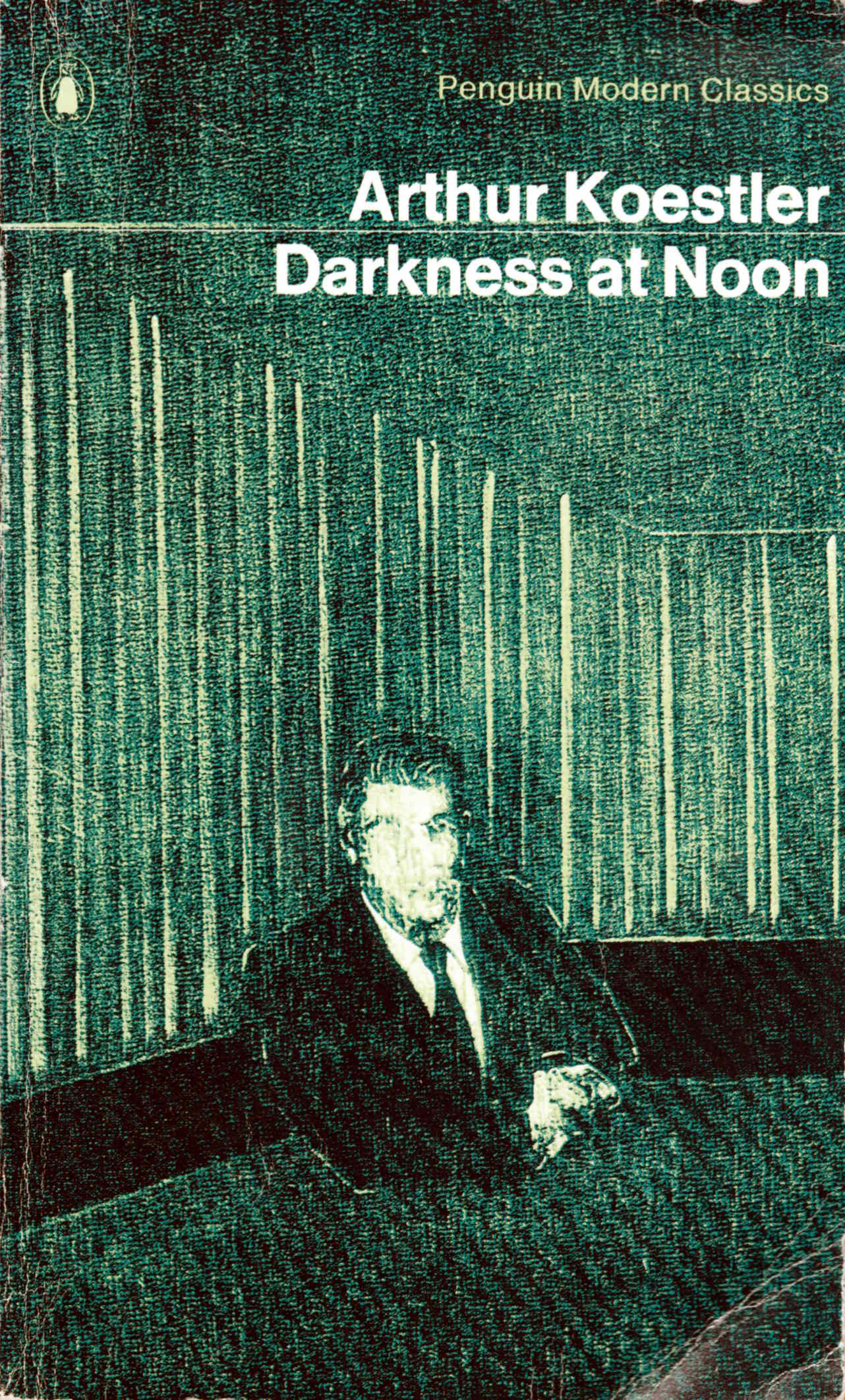
How many times has a painting by Francis Bacon appeared on the cover of a book that is not about the life and/or art of Francis Bacon? I’m no expert, but I can only think of one instance — you are welcome to post a comment if you know of more! — and here it is, scanned from my personal library, along with a small, low-quality JPEG of Bacon’s original painting, Man in Blue V:
Now, although Bacon’s painting itself is simply composed and nearly monochromatic in colour, the contrasty, cropped, colour-reduced version on display on the cover of Darkness at Noon reads to me as little more than a shadow of The Man.
Francis Bacon was born 28 October 1909 and died on this day, 28 April, back in 1992. In other words, today is the twenty-first anniversary of the death of Francis Bacon.
BONUS IMAGE:
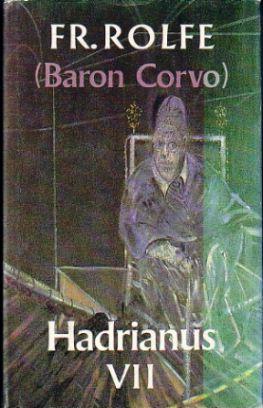
A reader delurked today to bring to my attention another book cover with art by Bacon: Hadrianus VII by Fr. Rolfe (Baron Corvo), with the Fr. being short for “Frederick”. Here’s what it looks like:
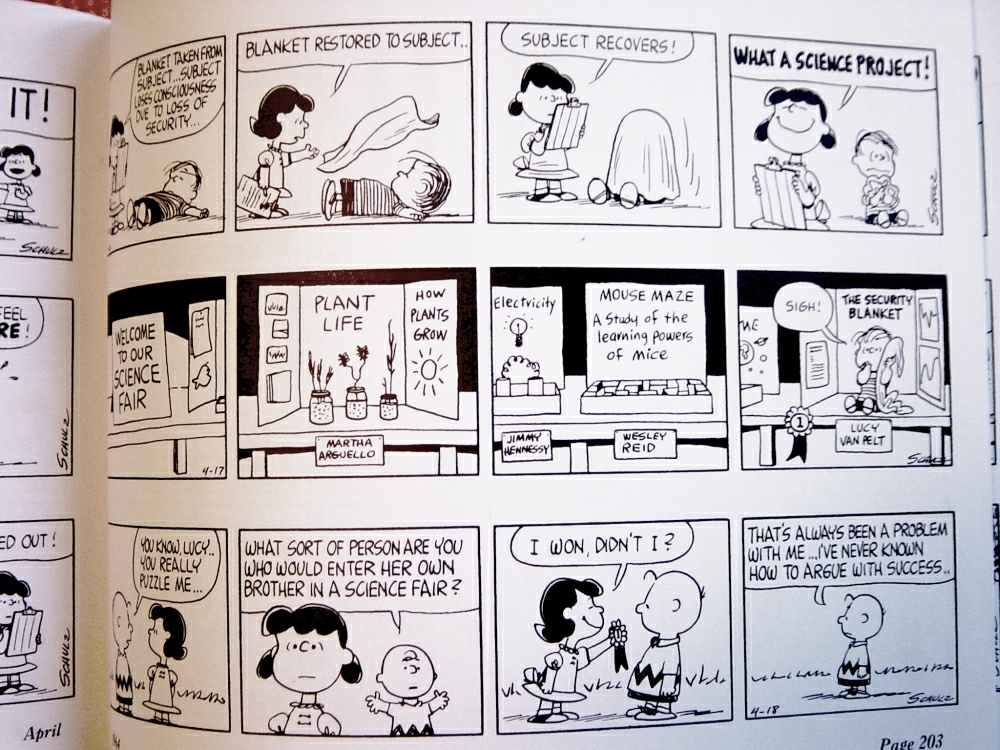
Fans of the comic strip Peanuts will undoubtedly remember the startling sequence of strips from 1964 in which Lucy enters Linus and his blanket as her project in the school science fair:
[CLICK IMAGE TO ENLARGE]
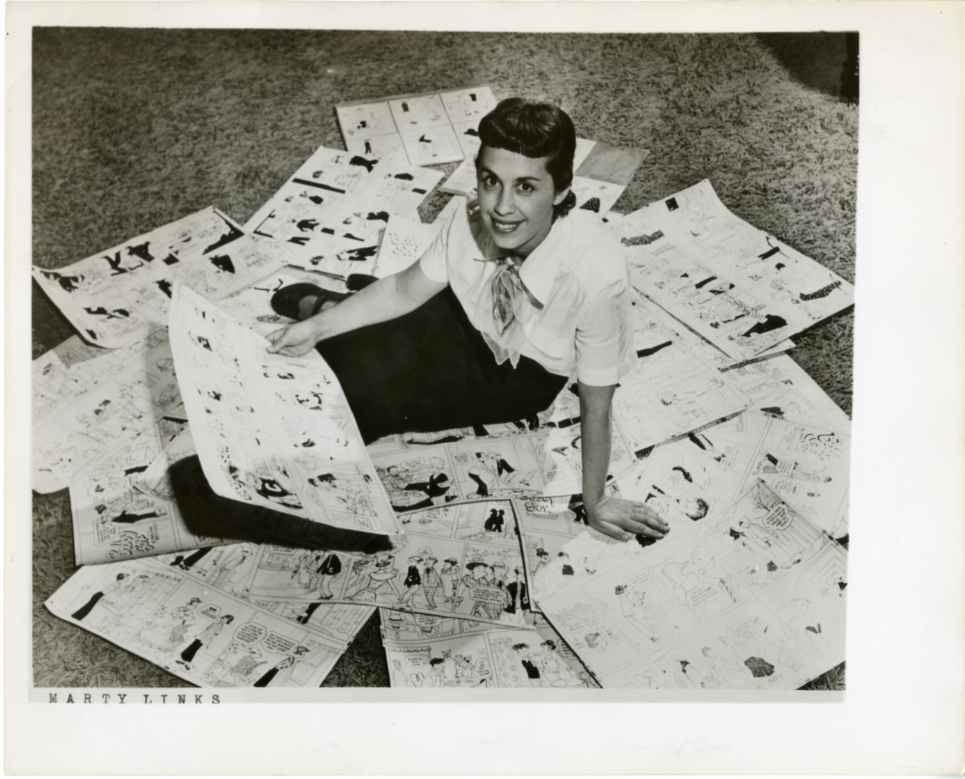
And if you are a superfan of Peanuts, you probably know that Schulz used the name “Martha Arguello” for one of the contestants in the science fair (see strip 4-17-64, The Complete Peanuts 1963-1964 [Vol. 7, Fantagraphics Books], p. 203) as a tribute to his fellow cartoonist and friend, Marty Links, the creator of the comic strip Bobby Sox, which was later renamed, and is perhaps better known as, Emmy Lou:
Marty was short for Martha, obviously, and Arguello was the storied surname of Martha’s high-school sweetheart, Alexander Arguello, whom Martha Links married in 1941.
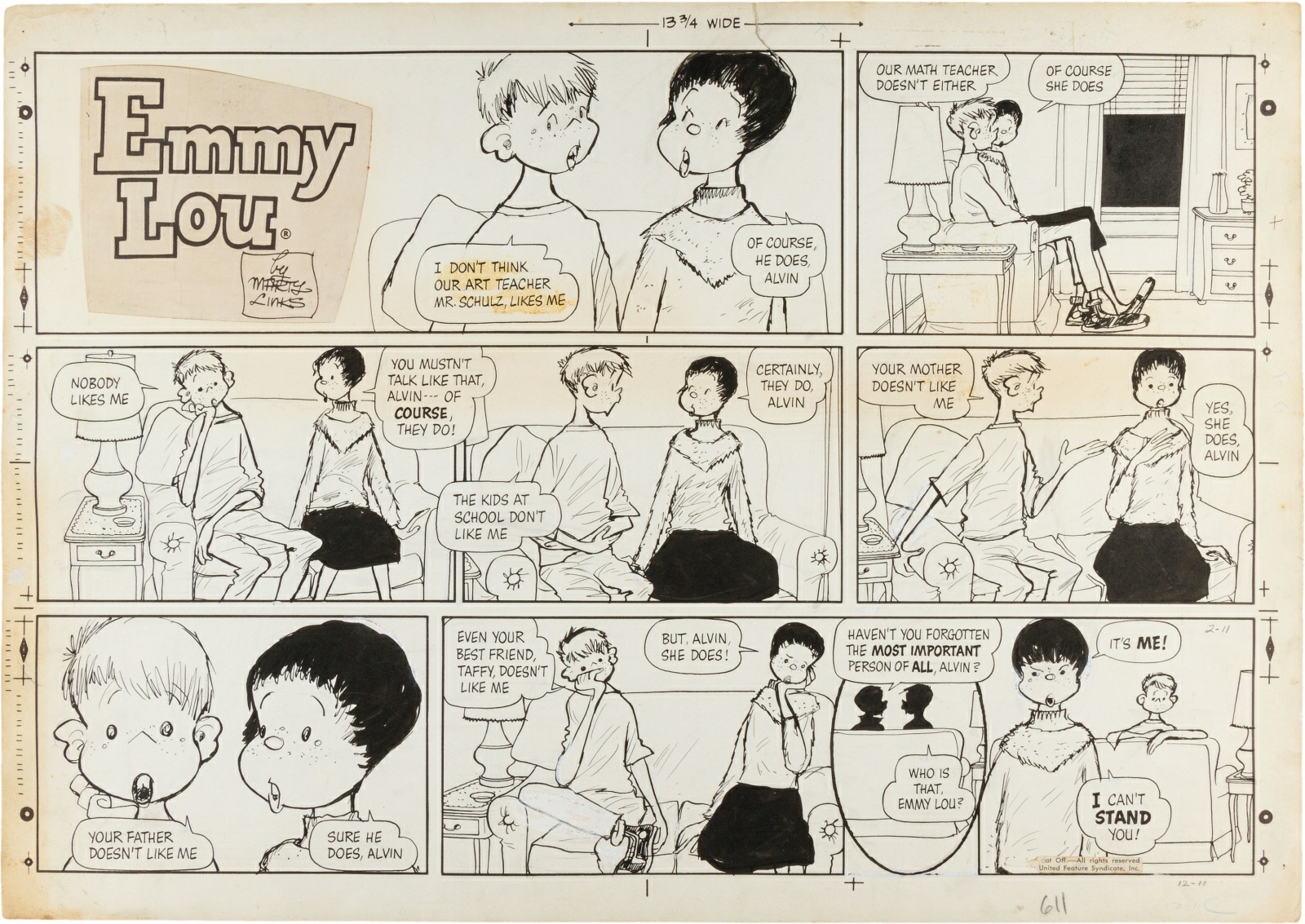
What even superfans of Charles Schulz may not know, however, is that Marty Links actually included a nod to Schulz in Emmy Lou! How do I know this? Because I recently purchased the Emmy Lou strip in which it happened from Heritage Auctions. Here’s the strip:
As you can see, in the first panel, Emmy Lou’s sad-sack boyfriend, Alvin, says, “I don’t think our art teacher Mr. Schulz, likes me.” Now, I doubt that any cartoonist would use the name Schulz in a comic strip by accident; it’s almost certainly a name check. But were Schulz and Links also friends? And were they close enough that Schulz might have dared to diss Alvin, or that Links might have dared to kid Schulz in her strip? From a TV interview with Marty Links posted below, here is a short excerpt in which Links mentions her friendship with Schulz and expresses her admiration for his work:
JAMES DAY: Do cartoonists get together at all?
MARTY LINKS: Well, yes, I know Sparky Schulz very well; he’s a very good friend of mine.[…] When I’m with Sparky, and I see his work,[…] I’m so lost in admiration, I guess of his genius, that I just stand there and not even think of cartooning; in reference to myself, I’m just admiring the works.
So who knows? The real Mr. Schulz might actually have told his friend Marty Links that he didn’t like Alvin; he certainly didn’t hesitate to comment to his cartoonist-friend Lynn Johnston about developments in her strip For Better or For Worse.
Not that it matters. Because even if Schulz didn’t say a word to Links about Alvin, Links’s/Alvin’s reference to “our art teacher Mr. Schulz” remains a nod to the genius cartoonist Mr. Schulz, I think.
Of course, the irony is that, after having spent the entire evening reassuring Alvin that everyone, including Mr. Schulz, really does like him, Emmy Lou herself finally loses patience with Alvin’s relentless self-pity:
EMMY LOU: Haven’t you forgotten the most important person of all, Alvin?
ALVIN: Who is that, Emmy Lou?
EMMY LOU: It’s me! I can stand you!”
Unfortunately, the copyright information that was glued to the art that I now own is partially missing, so I don’t know if Marty Links’s tribute to Schulz occurred before or after Schulz’s tribute to Links/Arguello.
BONUS VIDEO:
Here’s a charming interview with Marty Links that was taped on 05/08/75 for the public-television series Day at Night:
BONUS LINKS:
Hairy Green Eyeball 2 > Emmy Lou and Sweetie Pie – includes twenty-five one-panel strips scanned from the collection More Bobby Sox: The Life and Times of Emmy Lou.
Hairy Green Eyeball 2 > Bobby Sox by Marty Links – twenty-six more one-panel strips scanned from the collection More Bobby Sox: The Life and Times of Emmy Lou.
John K. Stuff > Bobby Sox By Marty Links – eleven one-panel strips scanned from the collection More Bobby Sox: The Life and Times of Emmy Lou.
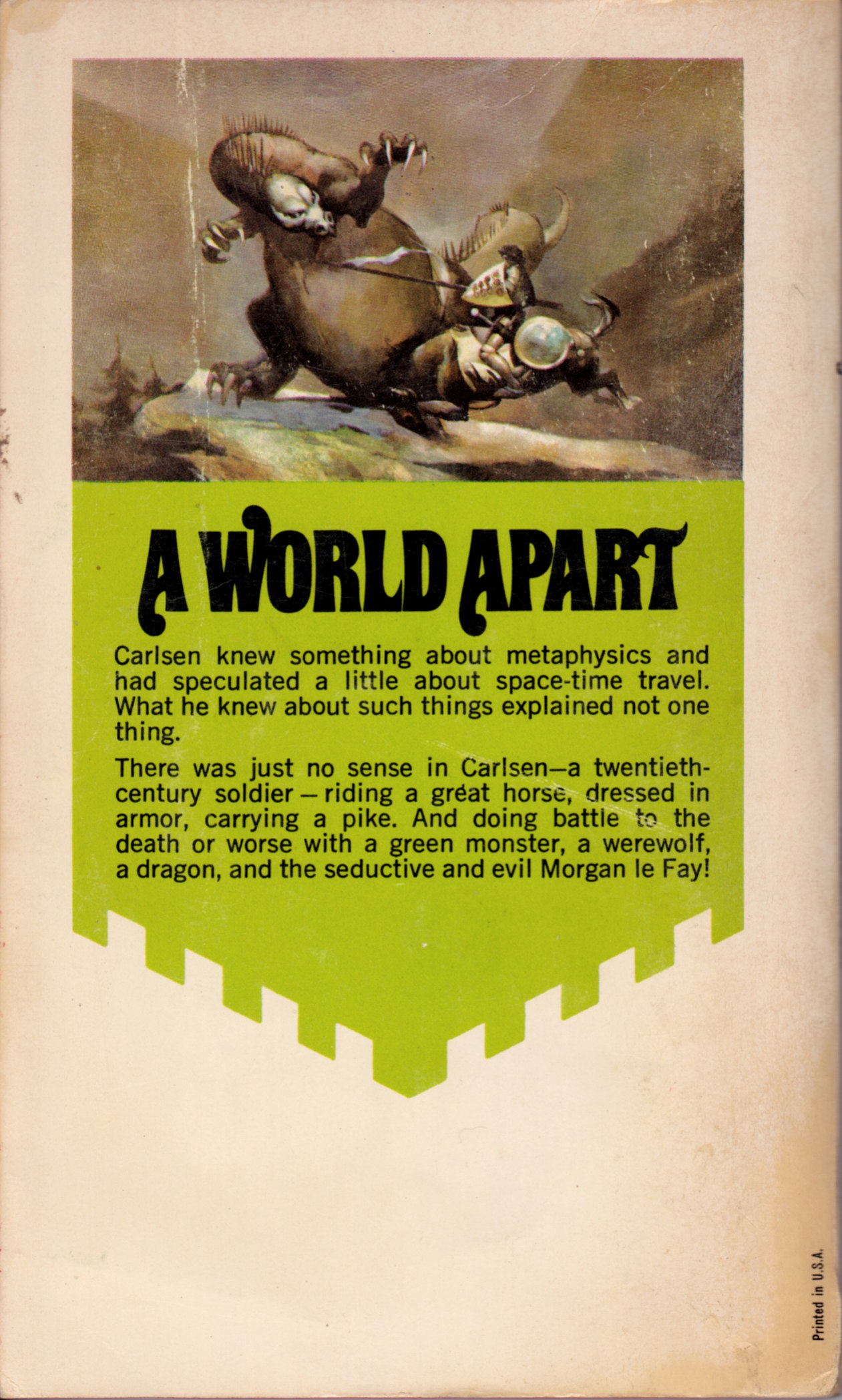
Well, folks, I’m almost to the end of my collection of paperbacks with cover art by Jeffrey Jones. Of course, I’m always on the lookout for books that I don’t have, but since I can’t afford to pay what many online booksellers want for old paperbacks, I generally have to hope that I will stumble upon what I want for cheap at a thrift store, rummage sale, small-town bookstore, or what have you…











 Ragged Claws Network