Drawings and Sketches (Jones) · Edgar Rice Burroughs · Frank Frazetta · Illustration Art · Jeffrey "Jeff" Catherine Jones

Connections: Frank Frazetta (1963) and Jeffrey Catherine Jones (1970)

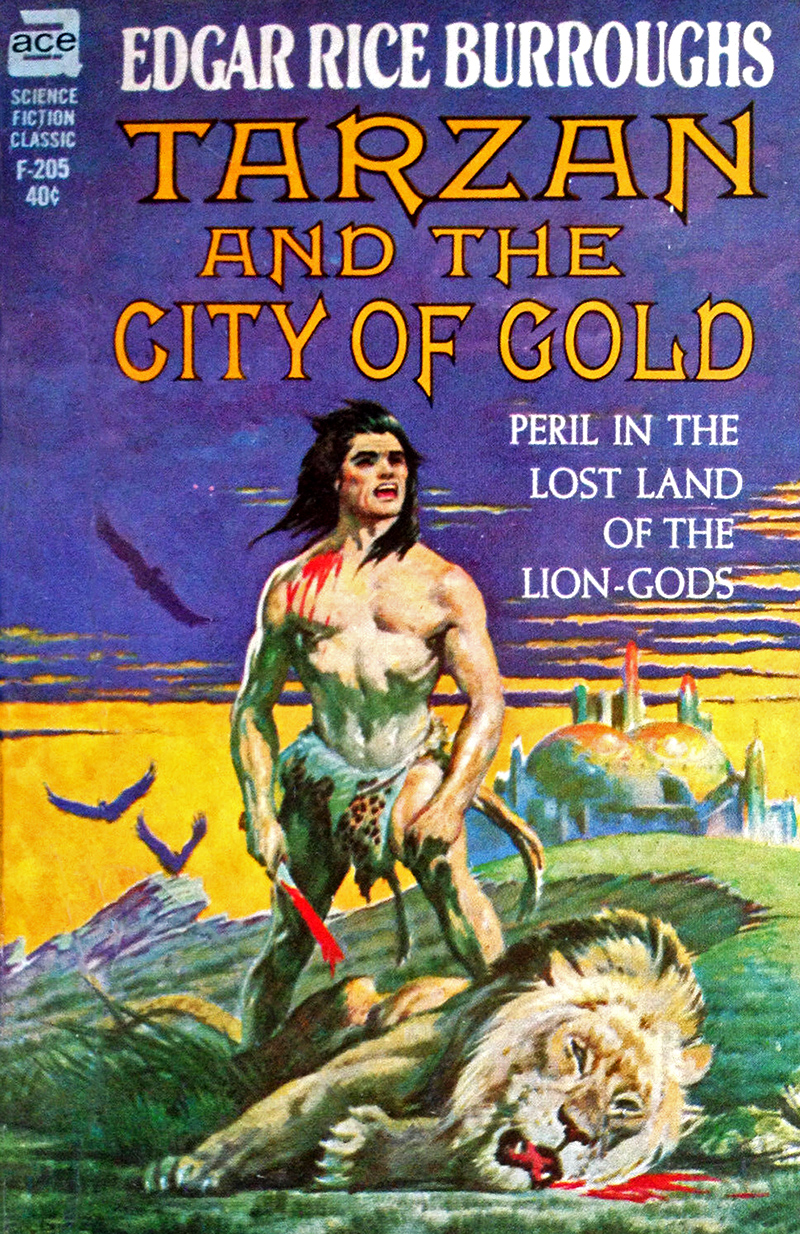
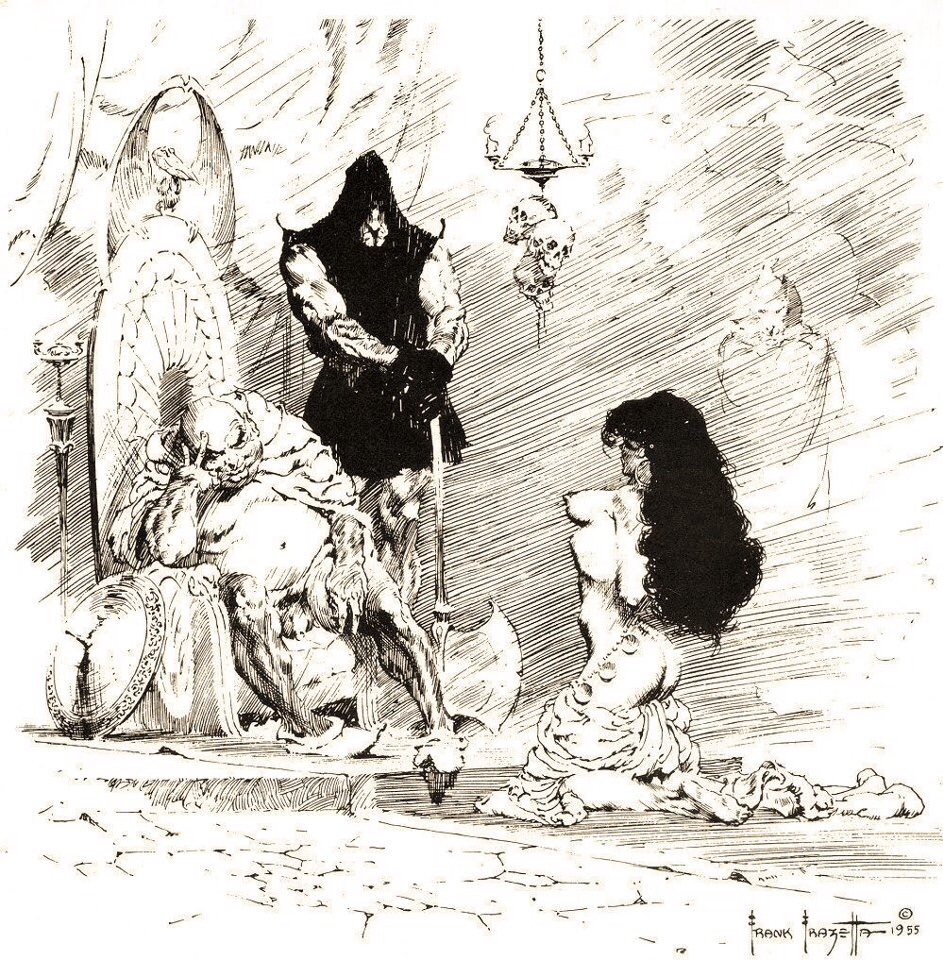
ABOVE: Title page of Edgar Rice Burroughs, Tarzan and the City of Gold (Ace, 1963; F-205), with spot illustration by Frank Frazetta.
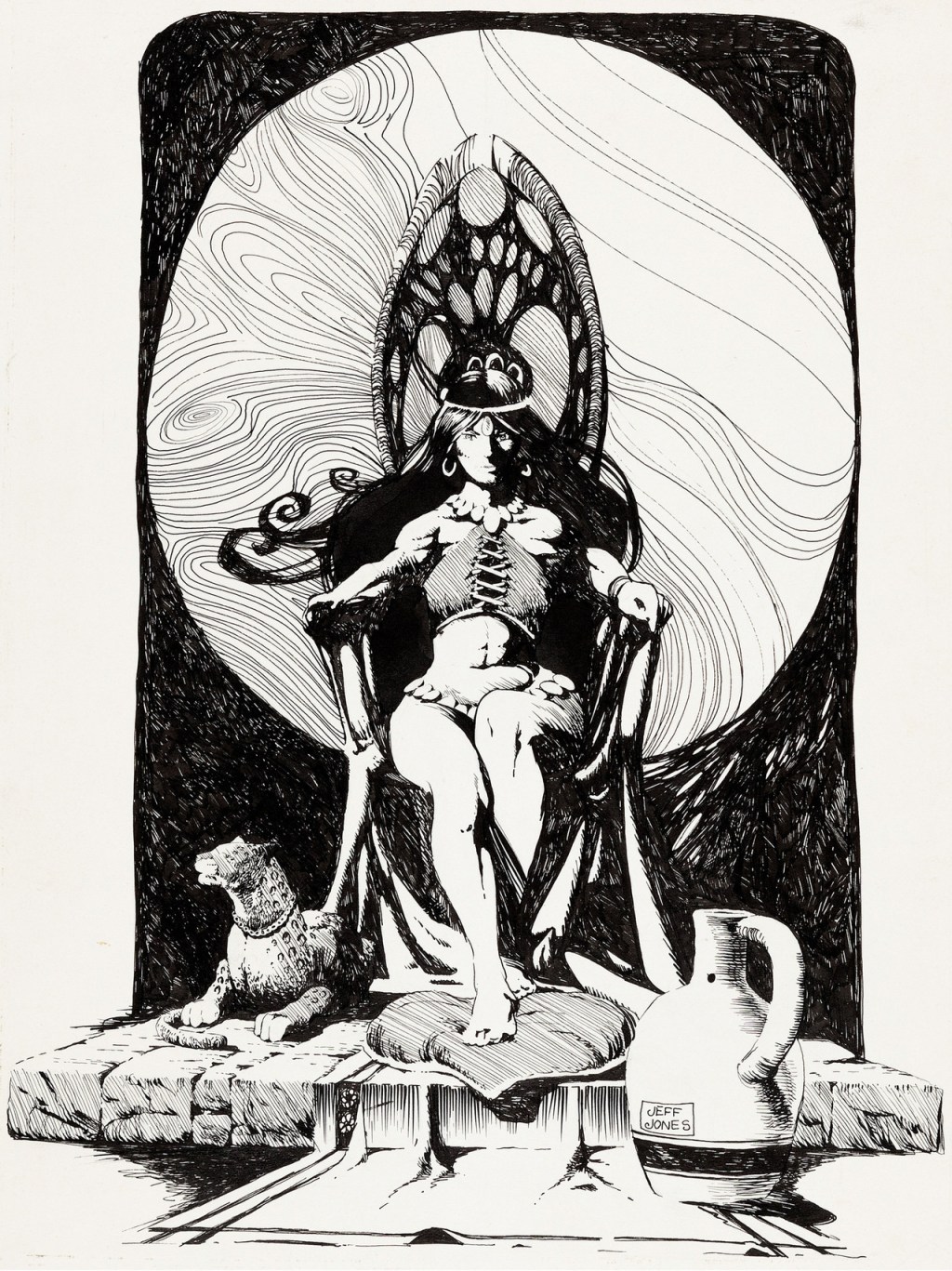
ABOVE: Jeffrey Catherine Jones, illustration published on the back cover of Bill Thailing’s Catalog #212, 1970.

Whether or not you think that a big Frazetta and Burroughs fan like a young Jeffrey Catherine Jones might have been “inspired” by Frazetta’s title-page illustration for Burroughs’ Tarzan and the City of Gold, you surely must agree that Jones’s fan art is all kinds of wonky. Particularly egregious from a pure drawing standpoint is Jones’s botched handling of the perspective of the woman’s arms and the failure of construction that is her shrivelled right hand. Frazetta handles the same pose/angle/elements simply and with aplomb, and he is able to do so partly because he has made the throne large enough, or the woman small enough, to give himself room to operate. In particular, notice that the cylindrical forms of both of the woman’s arms are reinforced by the curves of the wrist and upper arm bands — Jones does this on one wrist, and it’s effective — and the spaces between the large, swooping arms of the throne and the outstretched arms of Frazetta’s woman effectively, along with the subtle dimensional edges of the throne and a bit of tone, push the back of the throne back in space, so that the pose is believable. In fact, as an overall strategy here, Frazetta maintains a strict contrast between the open, unrendered figure and the very simply shaded/rendered elements that surround her. Jones, on the other hand, fills the spaces between the woman’s arms and her body with black ink, and makes the woman too large for the throne, so that the arms have no space to extend toward the viewer and rest on the arms of the throne in a natural way. What Jones does not seem to realize at this point is that no amount of deep shadow and scratchy rendering can solve bad figure construction.

There are other problems with Jones’s illustration, of course, but I’m just gonna leave it there.

Anyone who has delved into the archive of this site will know that I am a huge admirer of Jones’s work, but what this illustration shows is that everyone has to start somewhere, and that that somewhere is often far distant from where one ends up. In other words, and in short, there’s hope for us all, if only we will do the work.

BONUS IMAGES:
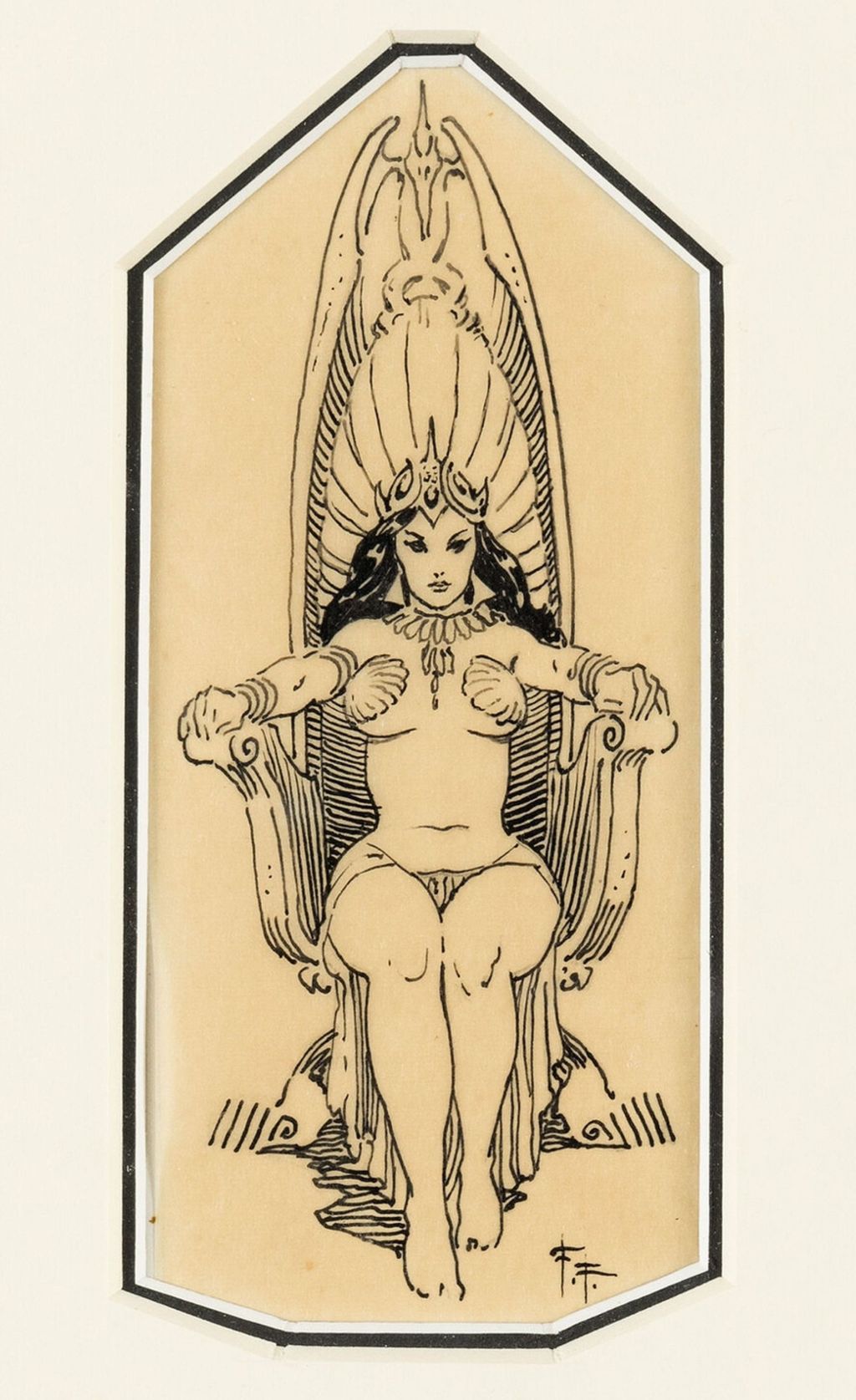
ABOVE: Frank Frazetta, original art for the title page (see above) of Edgar Rice Burroughs, Tarzan and the City of Gold (Ace 1963; F-205). Frazetta’s illustration of the woman on her throne looks good in print, but the gorgeous original art shows how much the delicate subtlety of the line work was blunted by the pulp-novel reproduction.
ABOVE: Edgar Rice Burroughs, Tarzan and the City of Gold (Ace, 1963; F-205), with cover illustration by Frank Frazetta.
ABOVE: Frank Frazetta, The Executioner (1955). Here, Frazetta has made the same “mistake” as Jones did in the illustration I highlighted above. The baddie on the throne is fat, yes, but the throne itself, which shares some decorative elements with Frazetta’s later design, is pathetically, laughably, squat and tiny, so not only does the fat man not fit in it at all but nobody else in the scene would sit comfortably in it either, although… maybe in this case, that’s the point, i.e., to make the bad guy look buffoonish. As we have seen, however, when Frazetta took at second run at that design in 1963, he made improvements that showed he knew how to do it “right.”

Book/Magazine Covers (All) · Connections · Dan Panosian · Frank Frazetta · Illustration Art

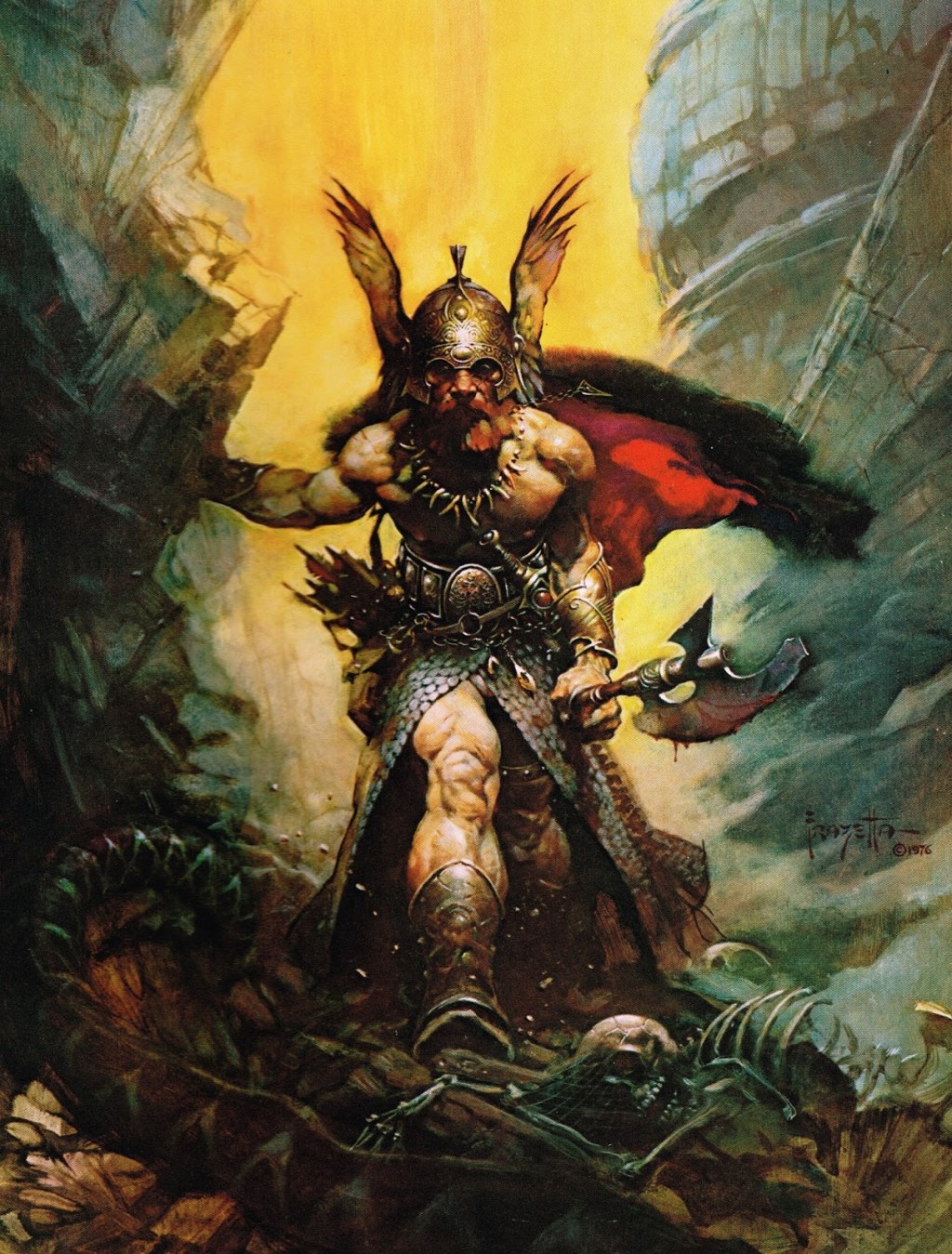
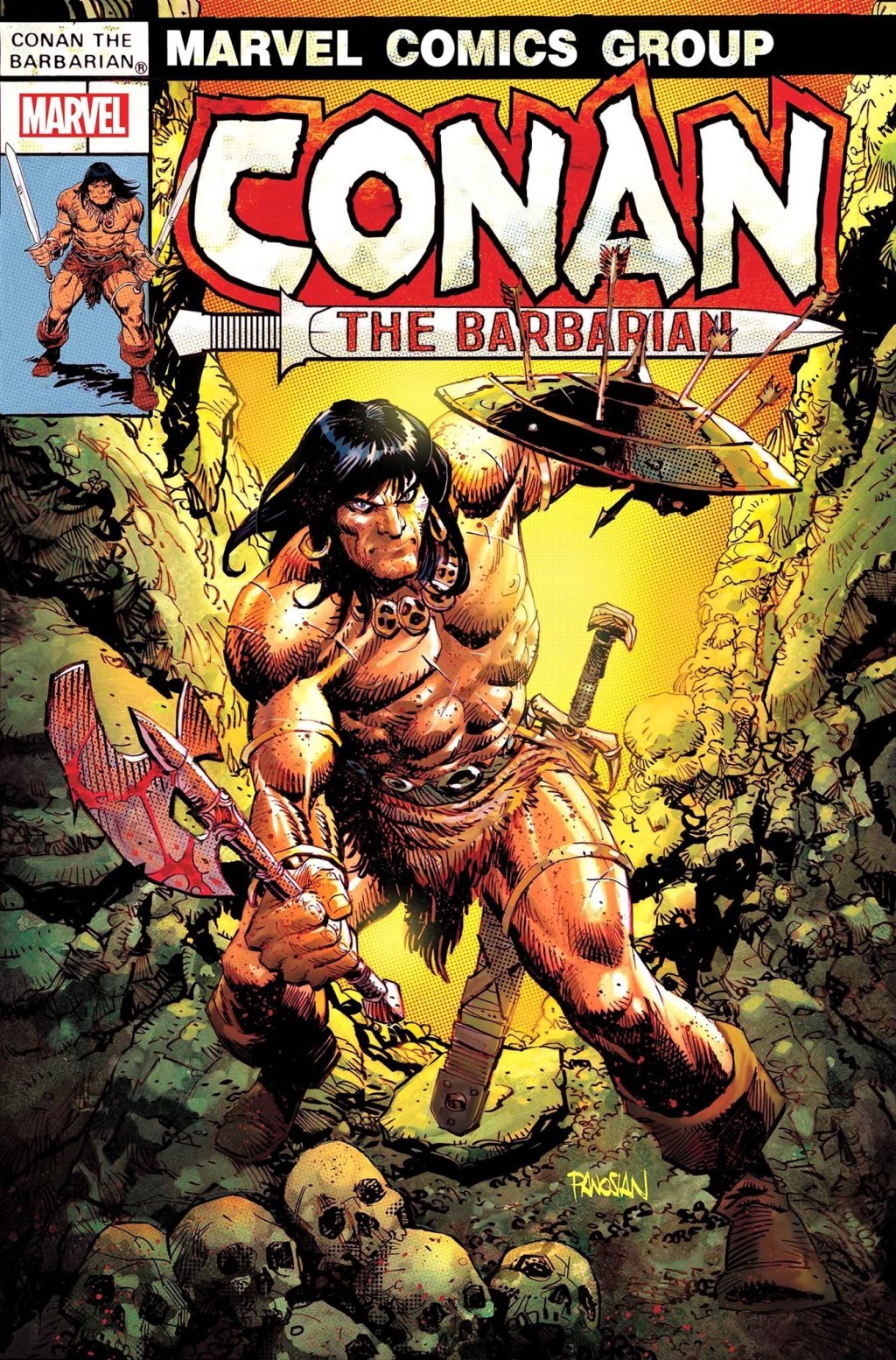
Connections: Frank Frazetta (1976) and Dan Panosian (2021)

ABOVE: Frank Frazetta, Dark Kingdom (1976).
ABOVE: Conan the Barbarian, vol. 2, no. 20 (2021), with variant cover art by Dan Panosian.

BONUS IMAGE:

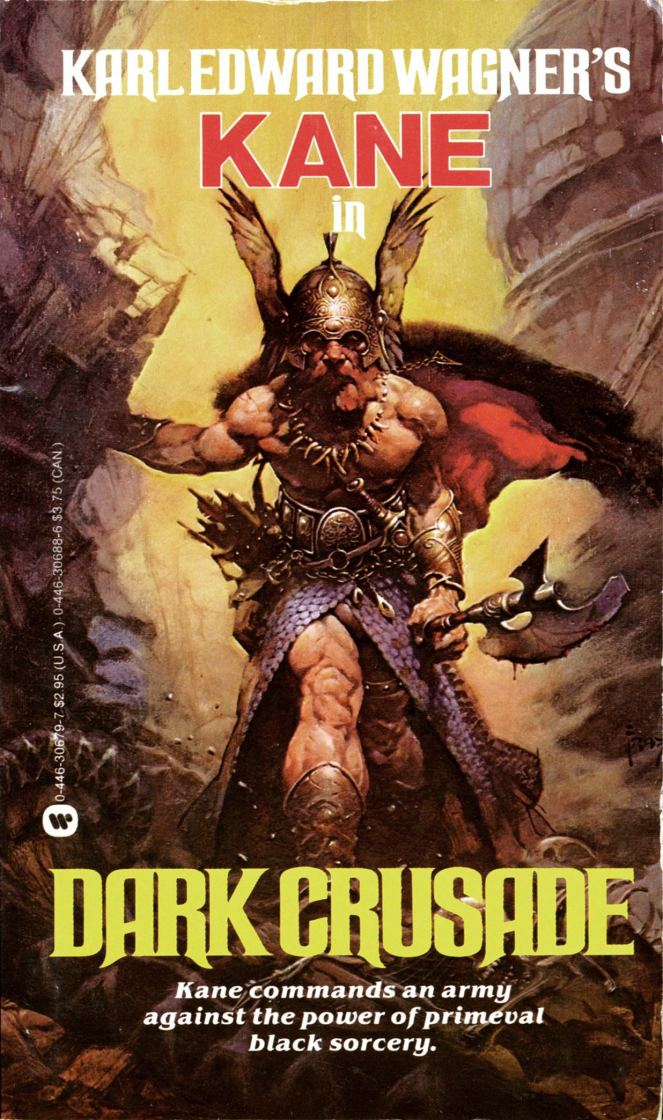
ABOVE: Karl Edward Wagner, Dark Crusade (NY: Warner Books, 1983), with cover art by Frank Frazetta.

LATE BREAKING ADDITION (courtesy of an intrepid reader; see the comments section of this post):

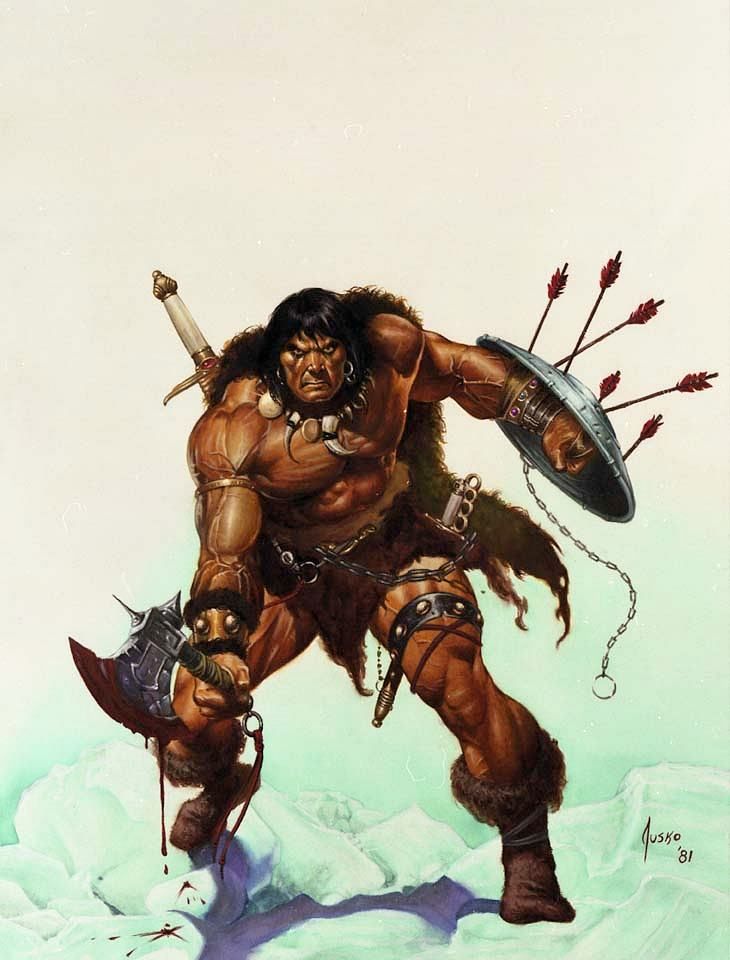
ABOVE: Conan (1981) by Joe Jusko.

Filter Frazetta and Jusko through Panosian’s style, and voilà: a variant Conan cover!

Book/Magazine Covers (All) · Connections · Frank Frazetta · Illustration Art

Connections: Frazetta and Maren

[CLICK IMAGE TO ENLARGE]

Dig the fancy bladework of the attacker in Maren’s painting!


BONUS IMAGES:

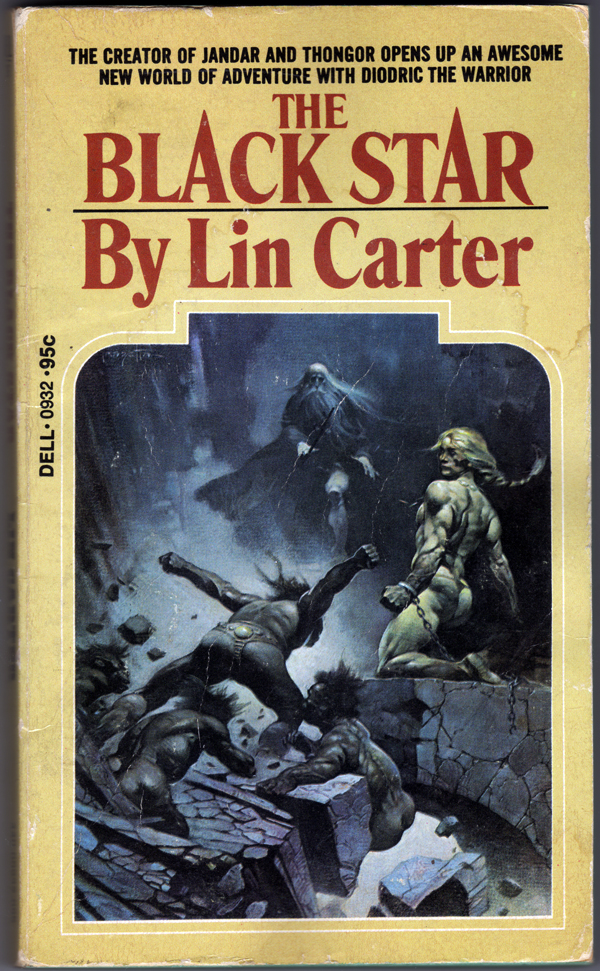
Keywords: The Black Star by Lin Carter, Frank Frazetta, Conan, Maren, Mariano Pérez Clemente.

Book/Magazine Covers (All) · Frank Frazetta · Illustration Art · Look Here

Look Here: LOST ON VENUS and two others with cover art by Frazetta

More cover scans today, all of paperbacks in my personal library:

[CLICK IMAGE TO ENLARGE]

Keywords: Lost on Venus, Beyond the Farthest Star, The Outlaw of Torn by Edgar Rice Burroughs; Frank Frazetta.

Book/Magazine Covers (All) · Book/Magazine Covers (Jones) · Heads Up! · I'm Age · Idyl · Illustration Art · Jeffrey "Jeff" Catherine Jones

Heads Up: IDYL – I’M AGE by Jeffrey Jones

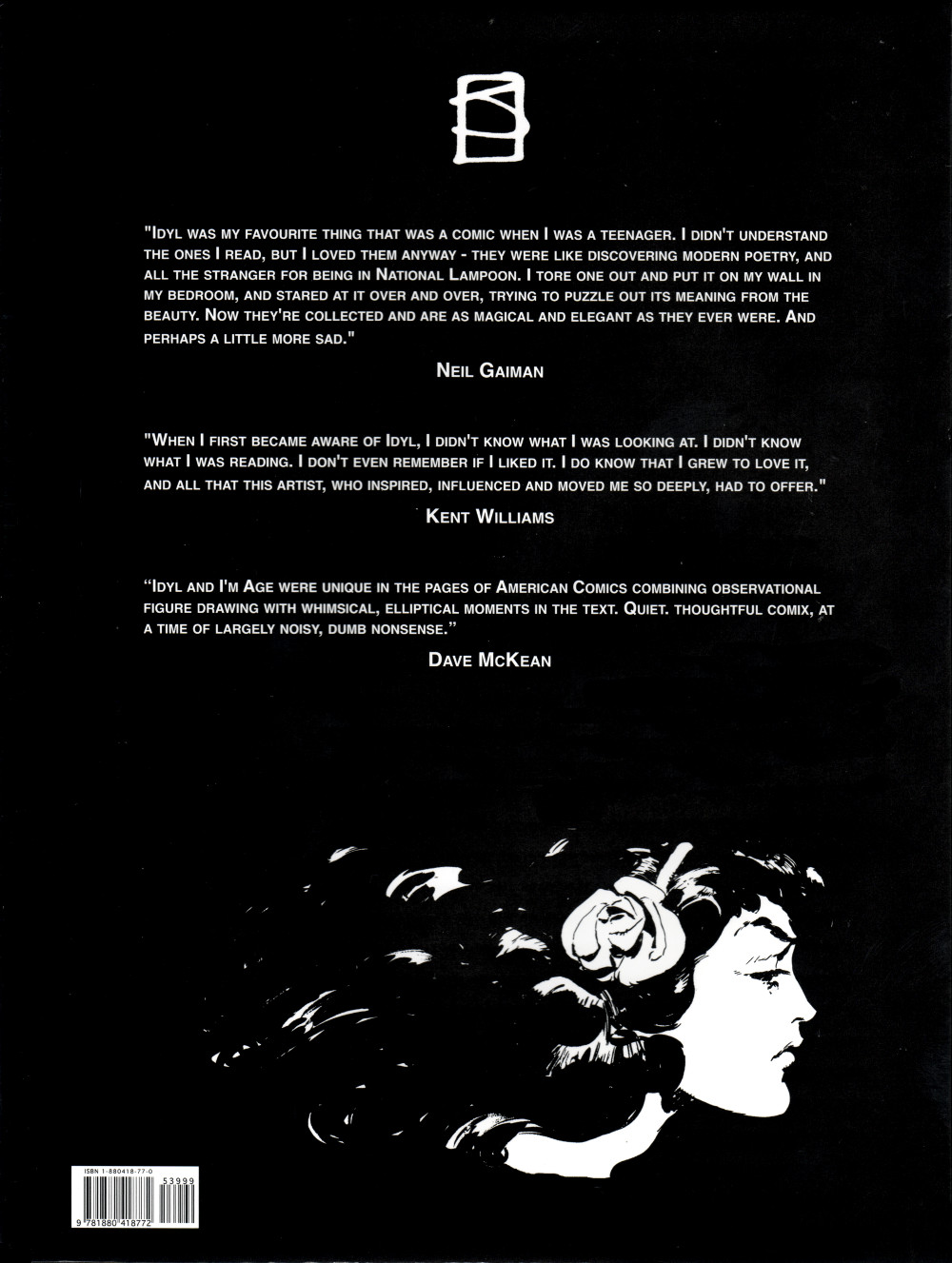
Late to the party again… but life (and laziness!) gets in the way… anyway… last year, near the end of the summer, Donald M. Grant published the first-ever all-in-one collection of two comic strips by Jeffrey Jones: Idyl, which originally ran in National Lampoon in the 1970s, and I’m Age, which ran in Heavy Metal in the early 1980s.

I received my two hardcover copies of the collection in the autumn of 2015 — I ordered from Amazon.com as neither the hardcover nor the softcover edition was unavailable through Amazon.ca, although I suppose I could have ordered directly from the publisher, which would have netted me a complimentary copy of Jones’s cartoon book, It’s Garbage Coming — and now I’m here to let you know that I have one complaint and one concern about the book.

My complaint is that Grant has failed to include one of the I’m Age strips in the new collection and instead of going back to press to correct the error has been encouraging buyers to download a JPEG of the strip via a link on the order page, print it off at home, and slip it into the book, which I’ve done, of course, though I’m not happy about it. The overall number of strips is small. Was it really such a difficult task to create a complete, master list of strips and proofread the collection accordingly? Mistakes happen, sure. And yes, yes, going back to press to correct a publisher’s error (vs. a printer’s error) would have been prohibitively expensive. But COME ON!!!

My concern is that the introductory and other text in the collection completely ignores Jones’s struggle, in later years, to claim a more authentic identity for herself as a woman. No mention, even, of the name change from Jeffrey Jones to Jeffrey Catherine Jones. Now, Jeffrey Catherine Jones was, by all accounts, perfectly content to let her old friends continue to refer to her as Jeffrey, and of course, the major collection of her art published during her lifetime, with her participation, after she began her transition, bore the title, Jeffrey Jones: A Life in Art. Still, it seems wrong to me for Jones’s “friends” to act, now (or then), as though Jeffrey *Catherine* Jones never existed! The omission is especially egregious in George Pratt’s “Afterword,” which recounts an outing that was filmed, in part, by Maria Paz Cabardo for her documentary, Better Things: The Life and Choices of Jeffrey Catherine Jones. If you’ve seen the footage, you know very well what I’m talking about!

In fact, I think a strong case could be made that, far from being irrelevant to the strips, Jones’s ongoing gender-identity struggle was central to them. Pity that neither Jones’s publisher nor her friends were ready, willing, or able to imagine the possibility!

Anyway, I do love the work. And I do recommend the book, because the sad fact is, it’s the only game in town if you want to have two of Jones’s three major comic strips available in your non-virtual library in a convenient format at a reasonable cost.

Bill Sienkiewicz · Book/Magazine Covers (All) · Connections · Illustration Art · J. C. Leyendecker · Look Here

Connections: Leyendecker and Sienkiewicz

Old news, I know… but anyway… it’s the style that’s important here:

[CLICK IMAGE TO ENLARGE]

An homage done the right way by Sienkiewicz!

(If you know of a closer match, please feel free to post a link in the comments. I don’t have time to search… )

Book/Magazine Covers (All) · Connections · Illustration Art · J. C. Leyendecker · Maxfield Parrish

Connections: Leyendecker (1918) and Pound (1980)

[CLICK IMAGE TO ENLARGE]


BONUS IMAGE (added 21 January 2016):

Book/Magazine Covers (All) · Illustration Art · Look Here · Steele Savage

Look Here: Two editions of Heinlein’s RED PLANET

Here’s a cover scan of a paperback picked at random from the piles in the room that serves as my study/studio. The artist here is Steele Savage, known to longtime readers here at RCN for his illustrations for Catharine F. Sellew’s Adventures with the Giants:

[CLICK IMAGE TO ENLARGE]

The Ace paperback edition of Heinlein’s Red Planet, 71140, does not include a publication date, but according to ISFDB, the book was published in 1971. Now, according to Wikipedia, Steele Savage was born in 1898 and died in 1970. So on the face of it, it would seem that that Heinlein cover was among the last illustration assignments that Savage ever worked on. Nice, clean, precise work for a 70-something year old artist!

And a nice touch that the design of the “outdoor costumes” of the colonists in Savage’s illustration is more or less faithful to Clifford Geary’s cover and illustrations for the 1949 first-edition hardcover of Red Planet. Here, for the sake of comparison, is a scan of the front cover of my copy, which I rescued from a library discard sale a number of years ago:

Red Planet was one of the first two science-fiction novels I ever read (the other was Heinlein’s Rocket Ship Galileo, which I didn’t like anywhere near as much), and I read it in the exact hardcover edition that you see above. But it’s not that I am so ancient. It’s that our rural school library at the time — a tiny room lined with shelves with a table in the middle, and no librarian — was very badly out of date. As I recall, it was shortly after I read those two Heinlein novels that our school miraculously received boxes of new paperbacks in a variety of genres that were shelved at the back of the various classrooms. That was a big deal!