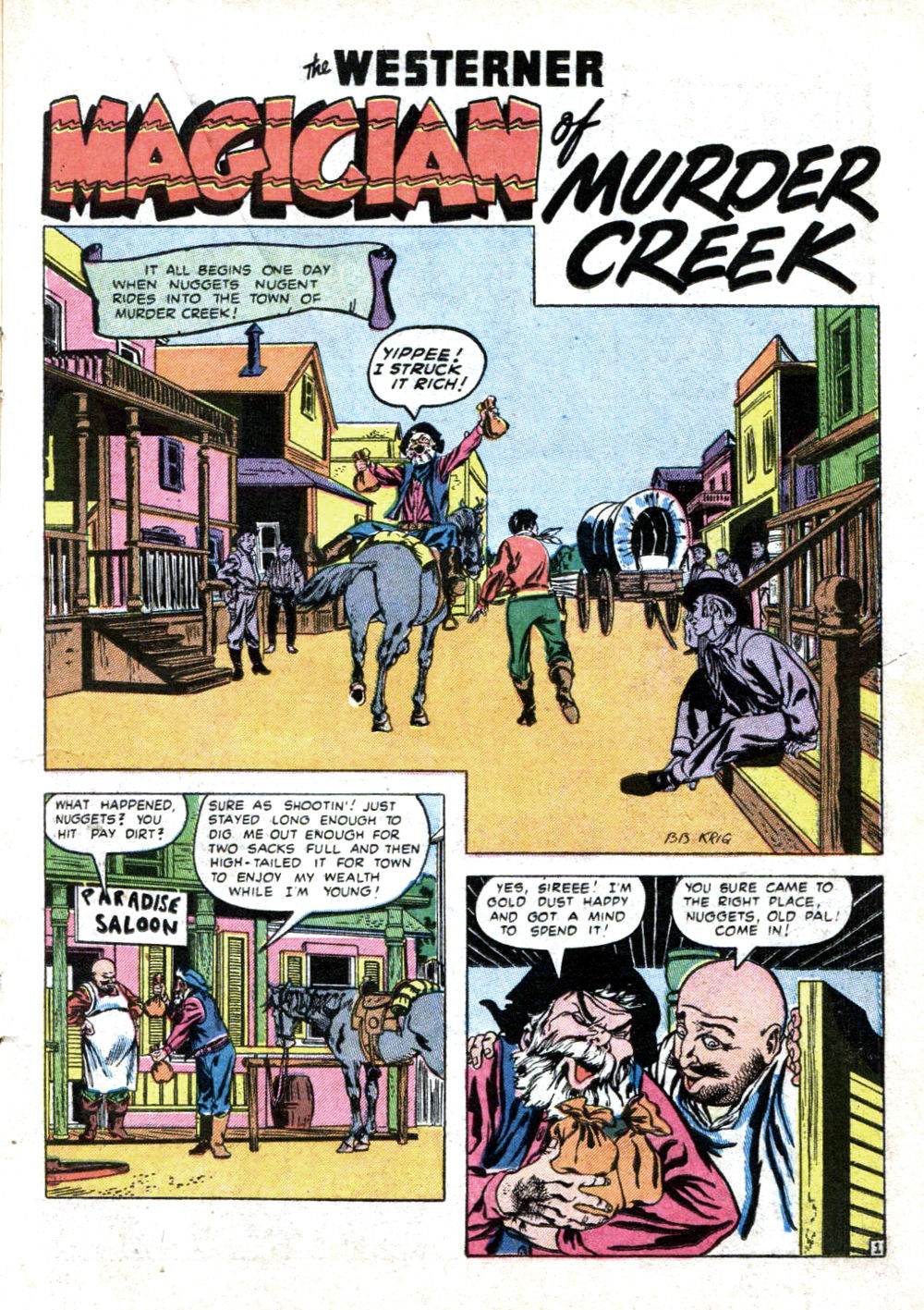
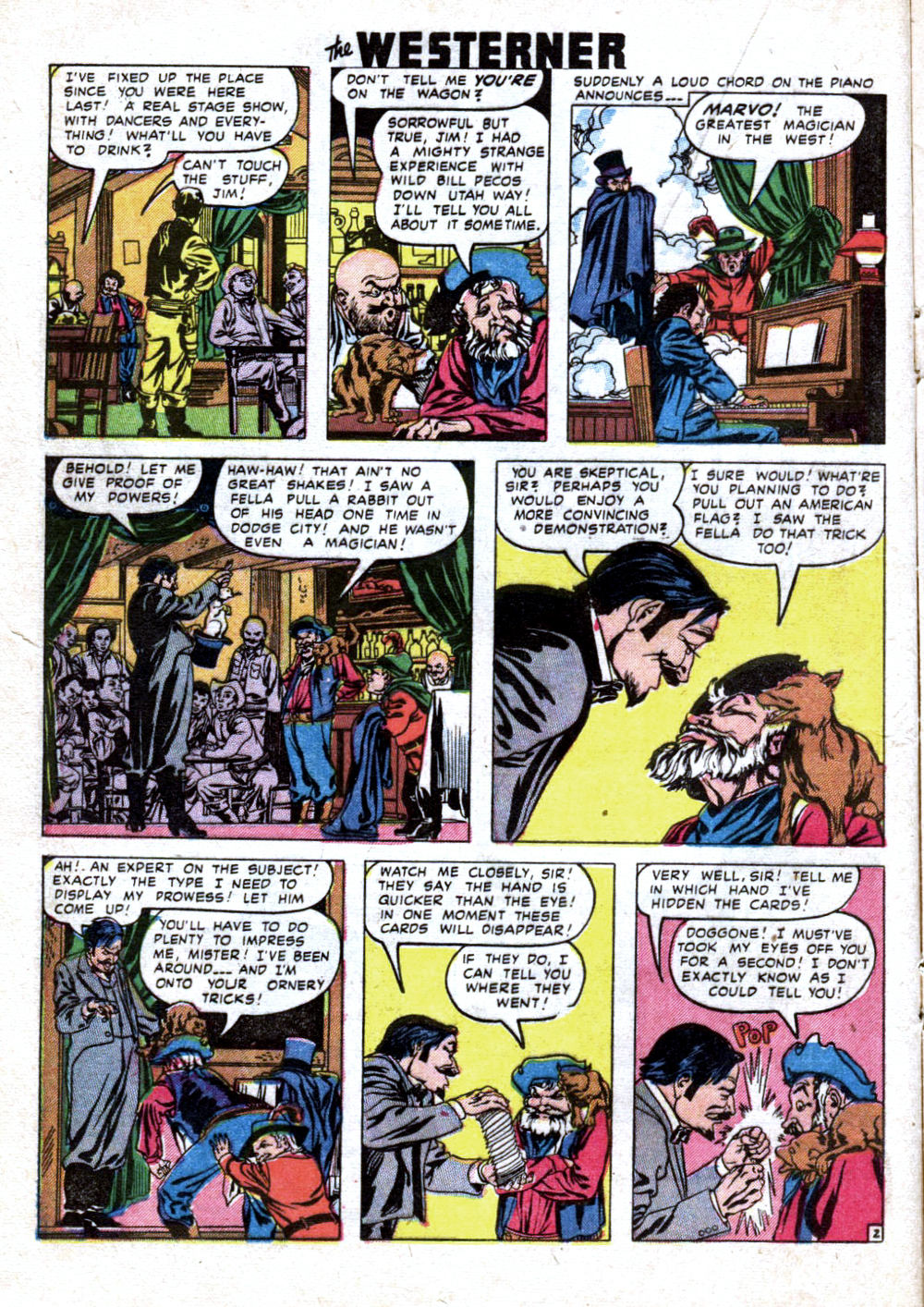
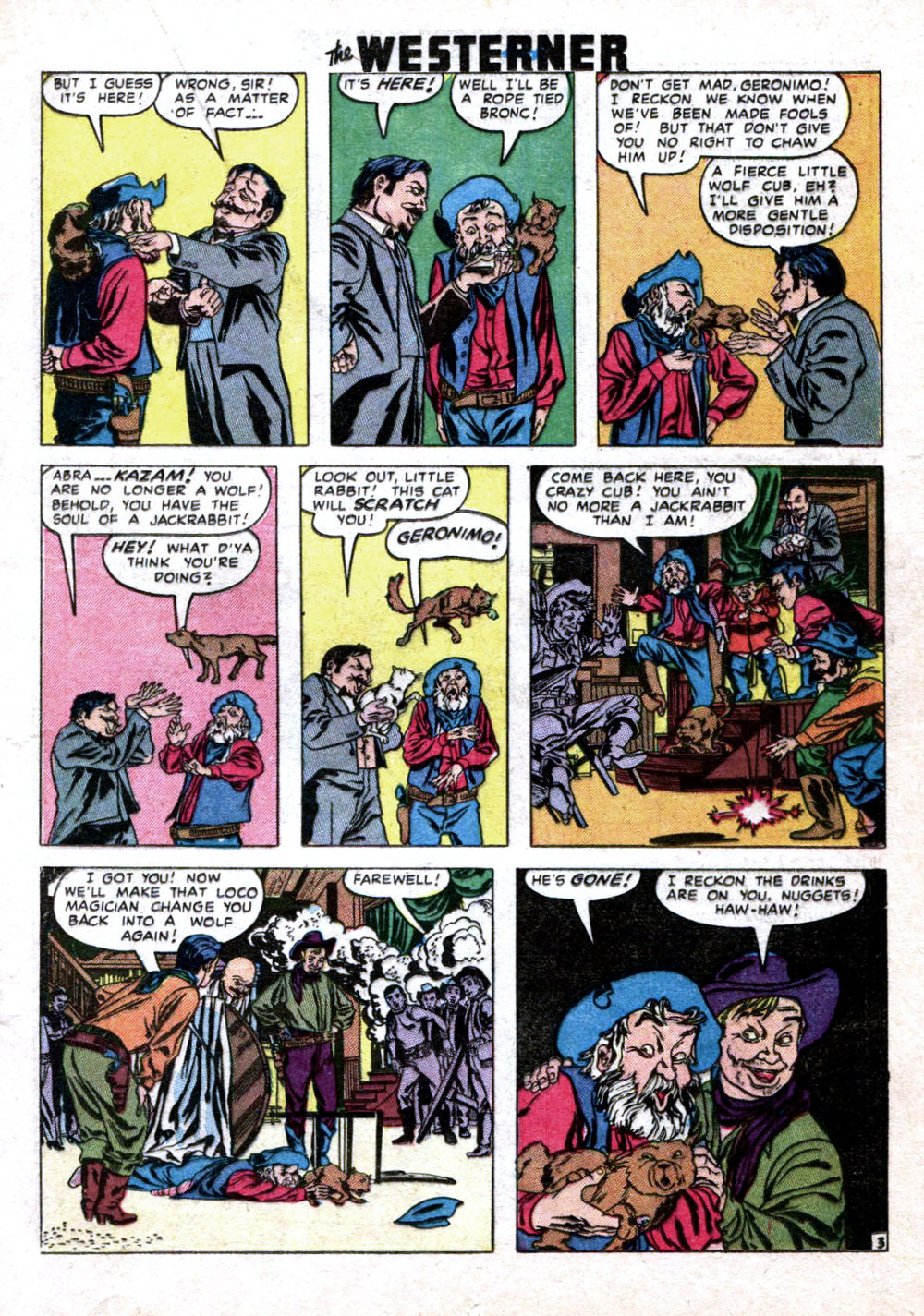
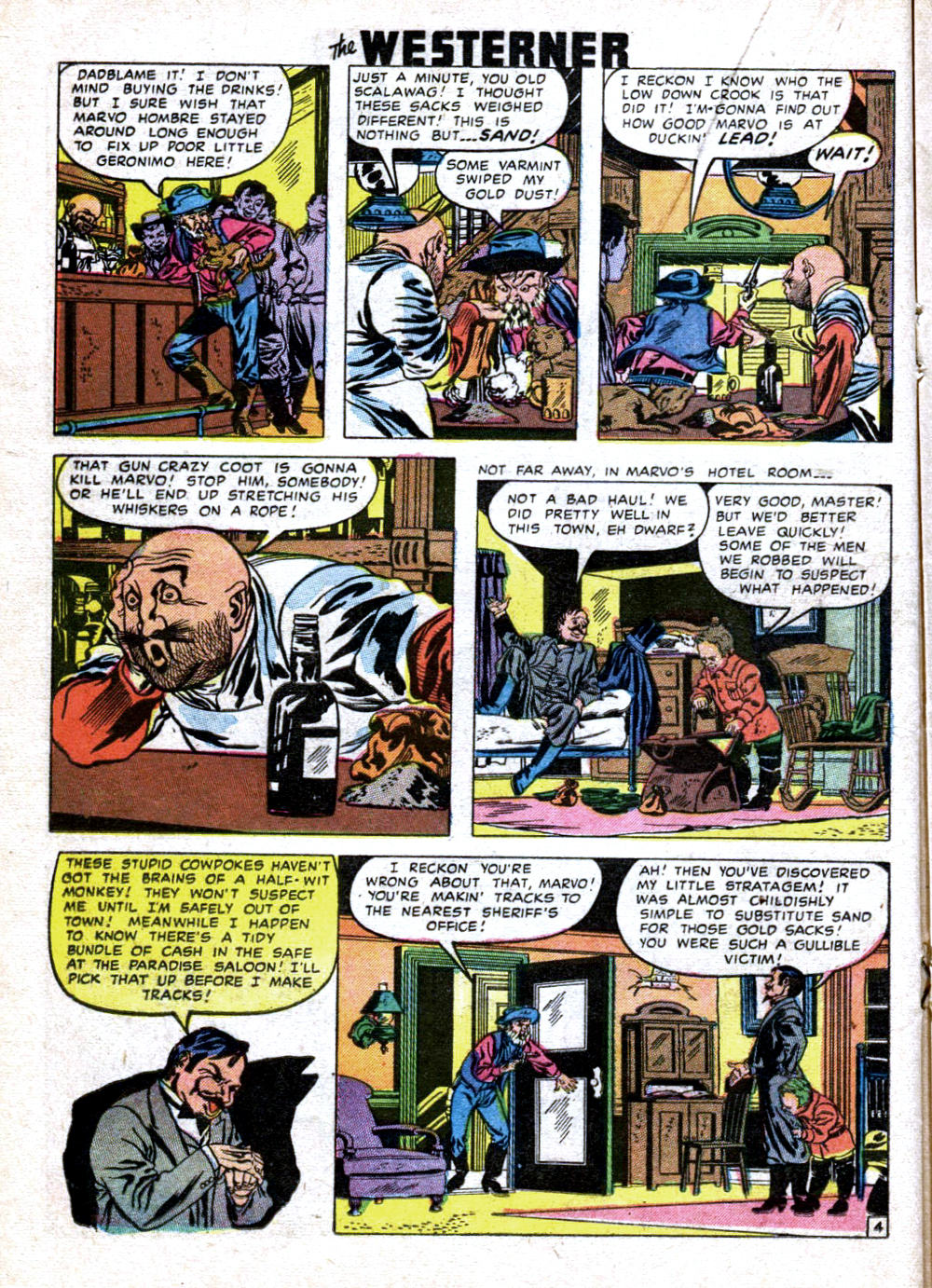
From The Westerner Comics #23 (October 1949), here’s “Magician of Murder Creek,” with art by the great Bernie Krigstein:
[CLICK IMAGES TO ENLARGE]
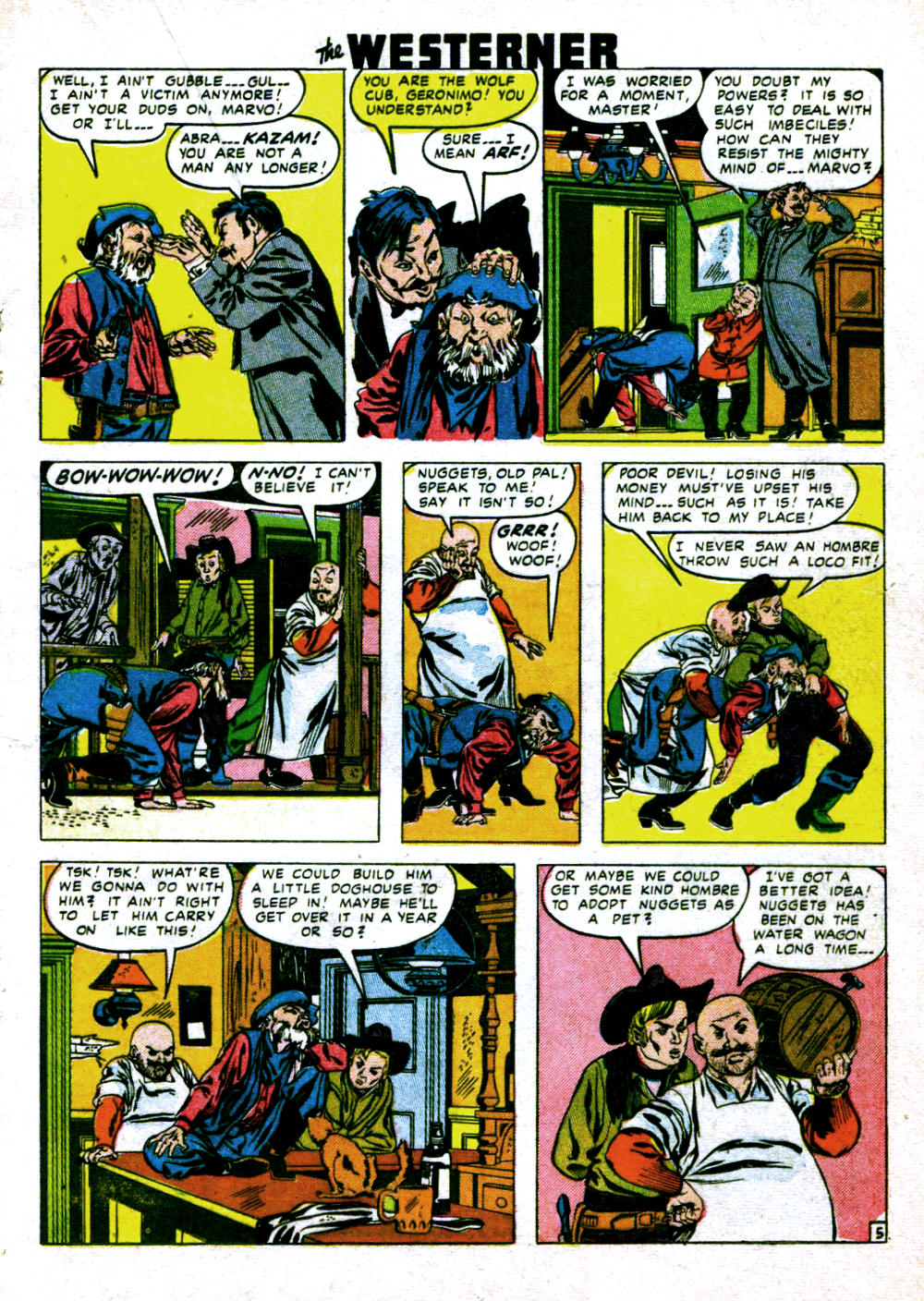
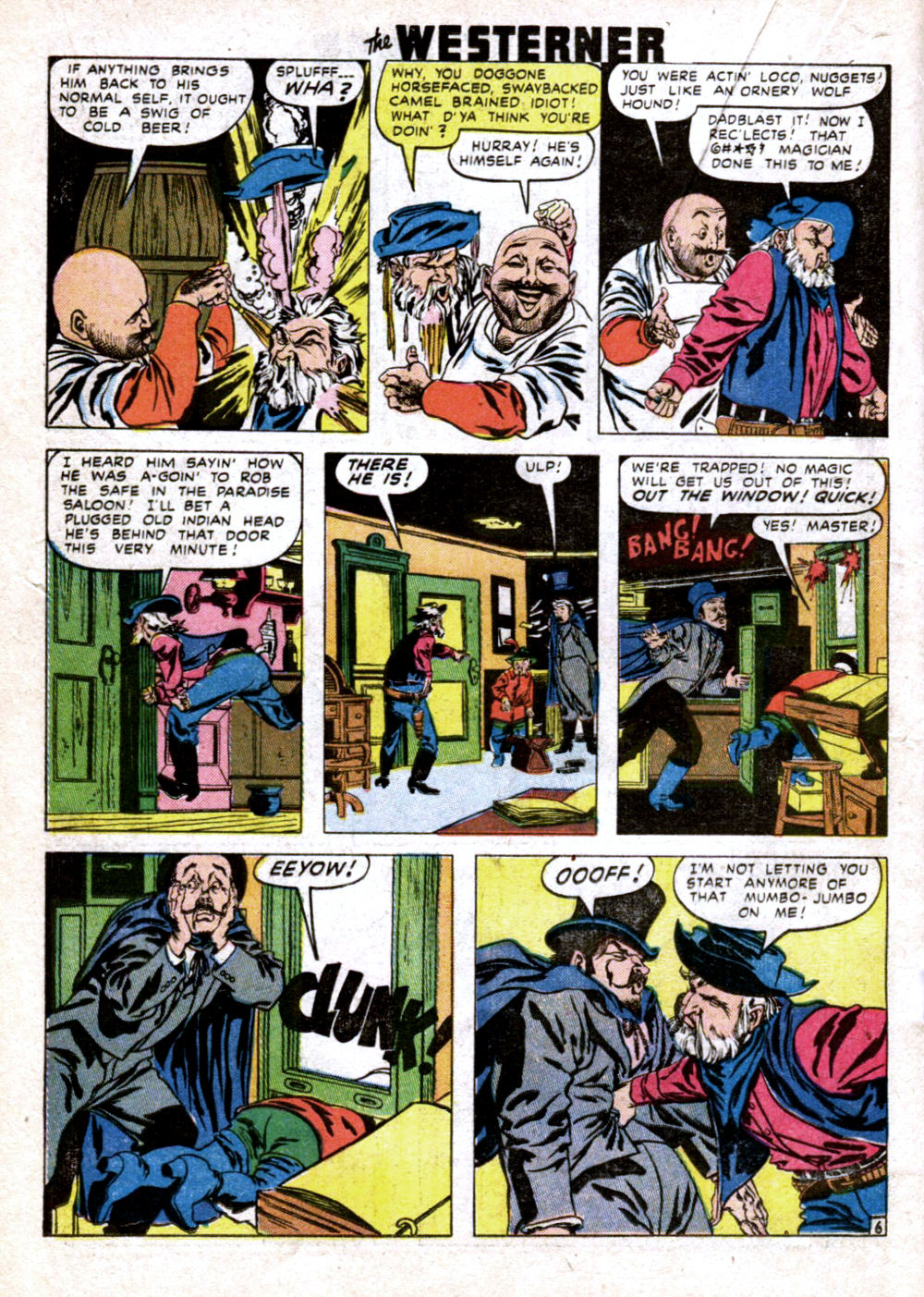
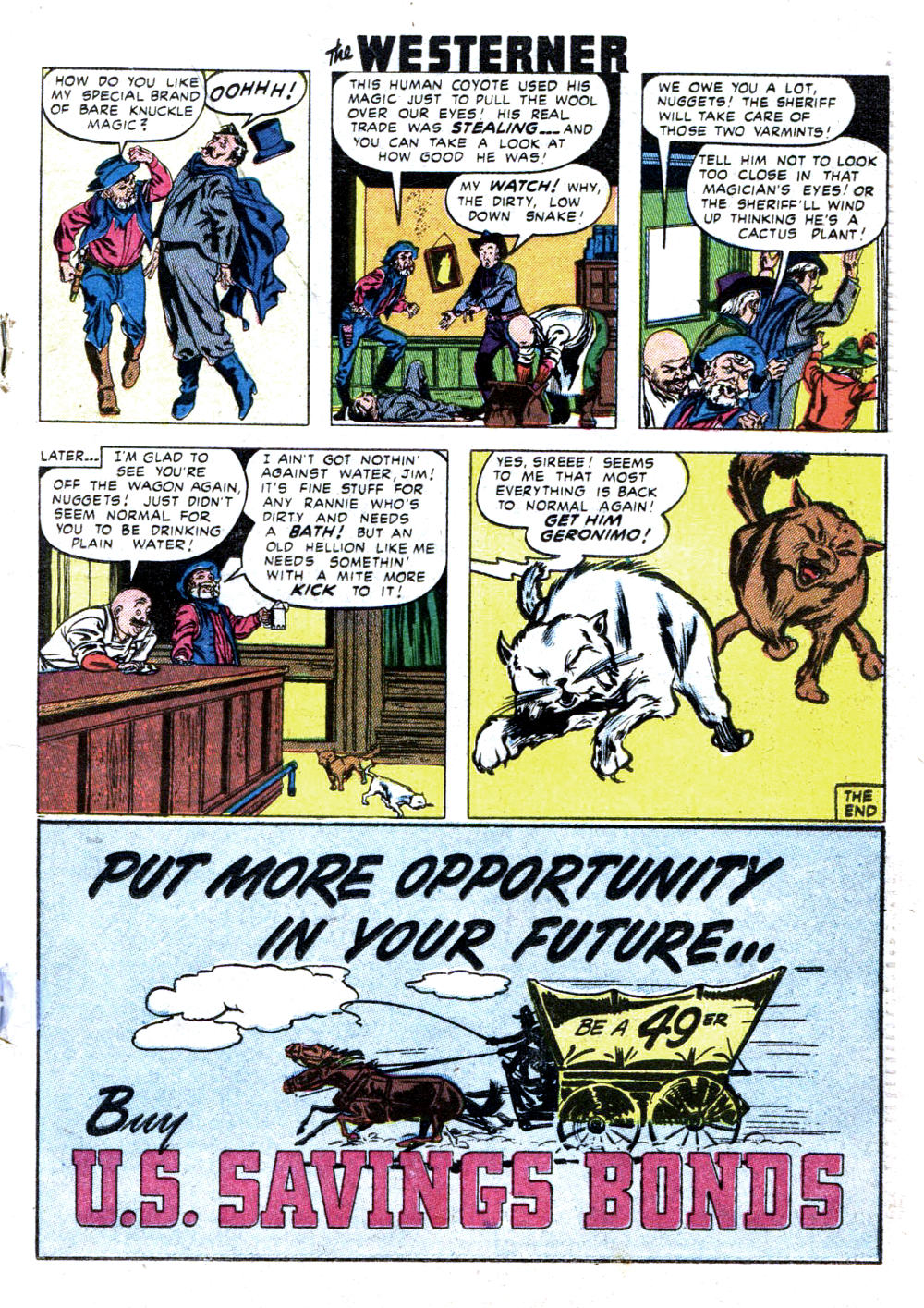
— VIA —
"This day's experience, set in order, none of it left ragged or lying about, all of it gathered in like treasure and finished with, set aside." –Alice Munro, "What is Remembered"
From The Westerner Comics #23 (October 1949), here’s “Magician of Murder Creek,” with art by the great Bernie Krigstein:
[CLICK IMAGES TO ENLARGE]
— VIA —
Fans of the comic strip Peanuts will undoubtedly remember the startling sequence of strips from 1964 in which Lucy enters Linus and his blanket as her project in the school science fair:
[CLICK IMAGE TO ENLARGE]
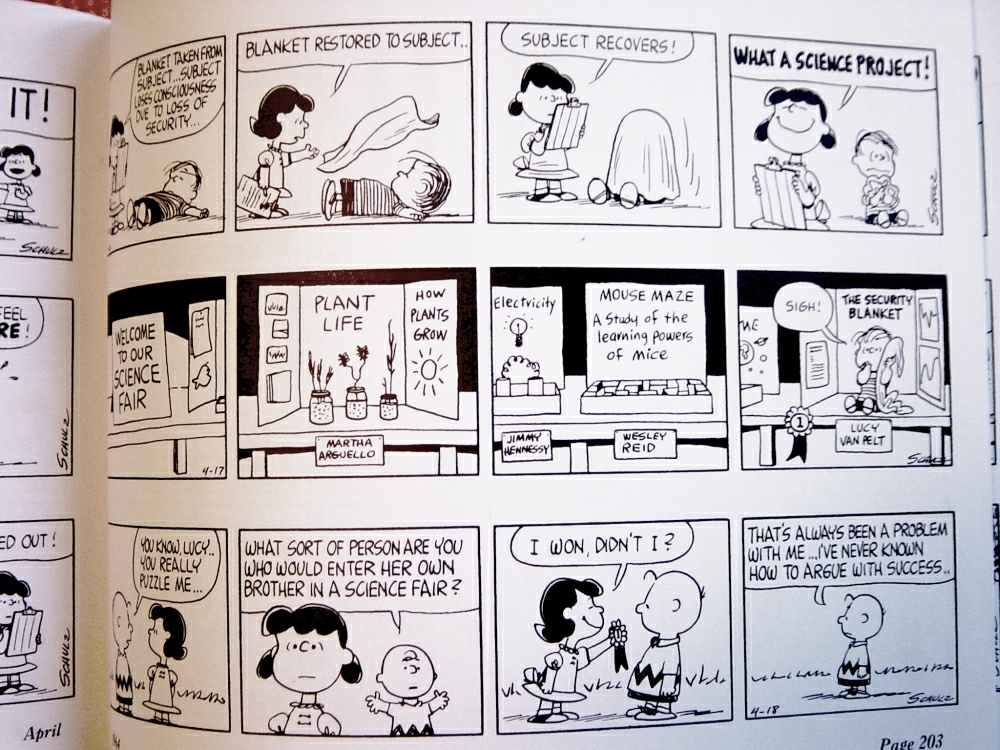
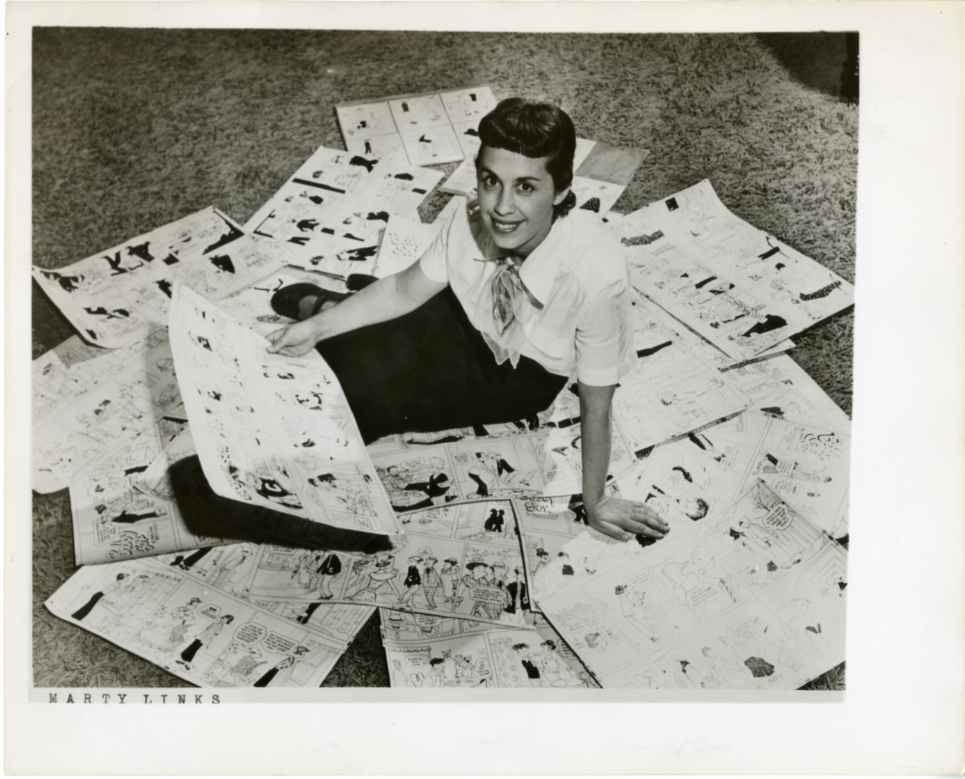
And if you are a superfan of Peanuts, you probably know that Schulz used the name “Martha Arguello” for one of the contestants in the science fair (see strip 4-17-64, The Complete Peanuts 1963-1964 [Vol. 7, Fantagraphics Books], p. 203) as a tribute to his fellow cartoonist and friend, Marty Links, the creator of the comic strip Bobby Sox, which was later renamed, and is perhaps better known as, Emmy Lou:

Marty was short for Martha, obviously, and Arguello was the storied surname of Martha’s high-school sweetheart, Alexander Arguello, whom Martha Links married in 1941.
(As far as I know, Marty Links always signed her maiden name to her comic strip. When she died in 2008, however, the headline of her obituary in the San Francisco Chronicle read as follows: “Martha Arguello – Bobby Sox, Emmy Lou cartoonist dies in San Rafael.”)
What even superfans of Charles Schulz may not know, however, is that Marty Links actually included a nod to Schulz in Emmy Lou! How do I know this? Because I recently purchased the Emmy Lou strip in which it happened from Heritage Auctions. Here’s the strip:
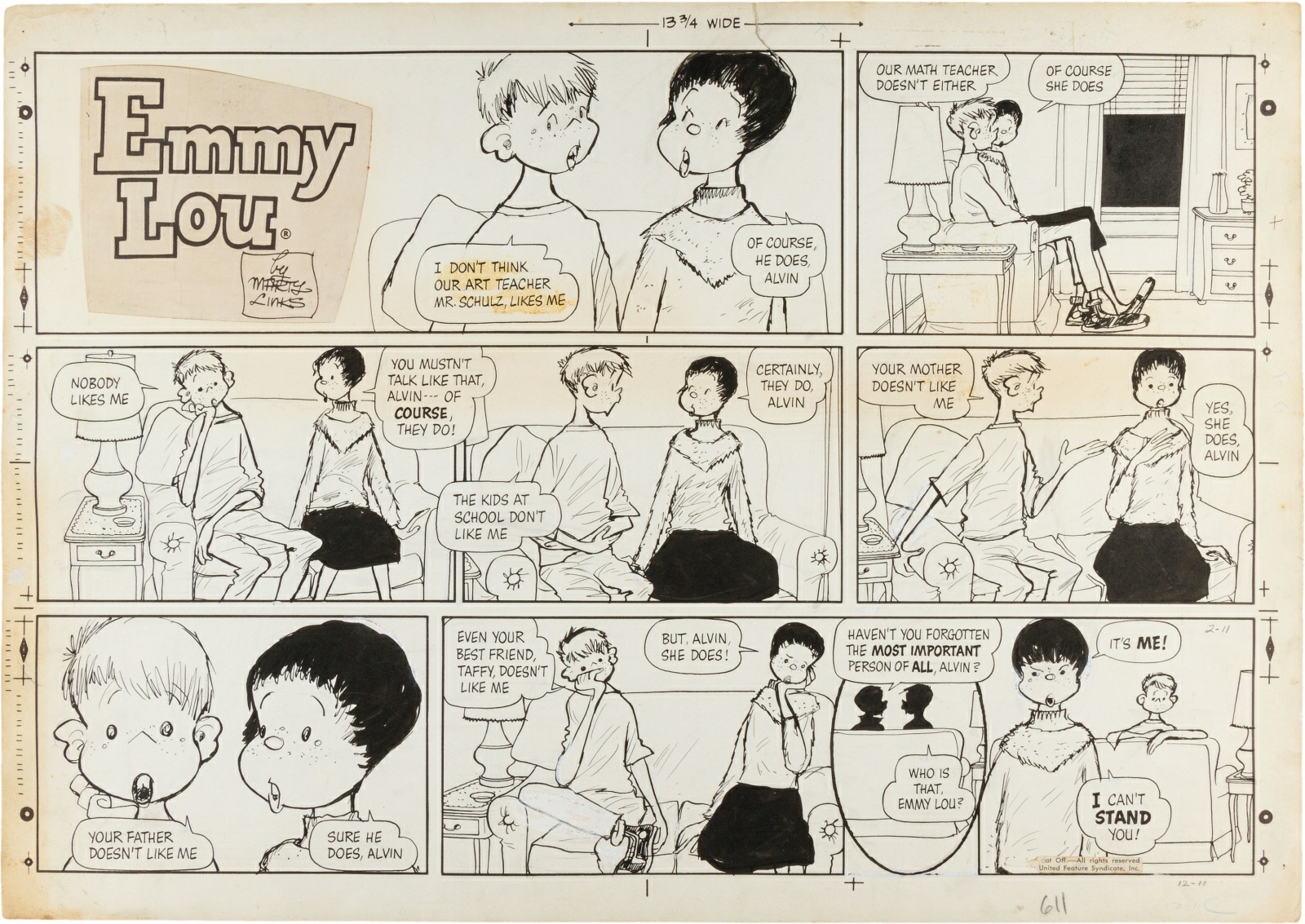
As you can see, in the first panel, Emmy Lou’s sad-sack boyfriend, Alvin, says, “I don’t think our art teacher Mr. Schulz, likes me.” Now, I doubt that any cartoonist would use the name Schulz in a comic strip by accident; it’s almost certainly a name check. But were Schulz and Links also friends? And were they close enough that Schulz might have dared to diss Alvin, or that Links might have dared to kid Schulz in her strip? From a TV interview with Marty Links posted below, here is a short excerpt in which Links mentions her friendship with Schulz and expresses her admiration for his work:
JAMES DAY: Do cartoonists get together at all?
MARTY LINKS: Well, yes, I know Sparky Schulz very well; he’s a very good friend of mine.[…] When I’m with Sparky, and I see his work,[…] I’m so lost in admiration, I guess of his genius, that I just stand there and not even think of cartooning; in reference to myself, I’m just admiring the works.
So who knows? The real Mr. Schulz might actually have told his friend Marty Links that he didn’t like Alvin; he certainly didn’t hesitate to comment to his cartoonist-friend Lynn Johnston about developments in her strip For Better or For Worse.
Not that it matters. Because even if Schulz didn’t say a word to Links about Alvin, Links’s/Alvin’s reference to “our art teacher Mr. Schulz” remains a nod to the genius cartoonist Mr. Schulz, I think.
Of course, the irony is that, after having spent the entire evening reassuring Alvin that everyone, including Mr. Schulz, really does like him, Emmy Lou herself finally loses patience with Alvin’s relentless self-pity:
EMMY LOU: Haven’t you forgotten the most important person of all, Alvin?
ALVIN: Who is that, Emmy Lou?
EMMY LOU: It’s me! I can stand you!”
Unfortunately, the copyright information that was glued to the art that I now own is partially missing, so I don’t know if Marty Links’s tribute to Schulz occurred before or after Schulz’s tribute to Links/Arguello.
BONUS VIDEO:
Here’s a charming interview with Marty Links that was taped on 05/08/75 for the public-television series Day at Night:
BONUS LINKS:
A few months ago, I picked up a couple of “bales” of National Lampoon Magazine — thirty-two issues, in all — from a local bookseller for cheap. It was only when I got home with my bales and cut the strings that I found out that all but one of the issues were from the 1980s and 1990s, which was okay because, at the very least, it gave me quite a few terrific comic strips by M. K. Brown, R. Crumb, Shary Flenniken, Rick Geary, Buddy Hickerson, Mark Marek, Rodrigues, Gahan Wilson, et al., to read. The lone exception, however, was an issue from November 1975, which — o lucky me! — includes the second-last Idyl strip by Jeffrey Jones that ever appeared in the magazine.
Now, if all you’ve seen are reprints of Idyl, you might be interested to know that the strip first appeared in a newsprint section of the Lampoon called “Funny Pages” and that, in the November 1975 issue, all of the strips in the “Funny Pages,” including Idyl, were overprinted in light blue with only the word balloons left uncoloured. To give you an idea of the sombre, twilight mood that the blue colour lends to Jones’s strip — which begins with the words, “It’ll be dark soon” — I present to you the following scan:
[CLICK IMAGE TO ENLARGE]
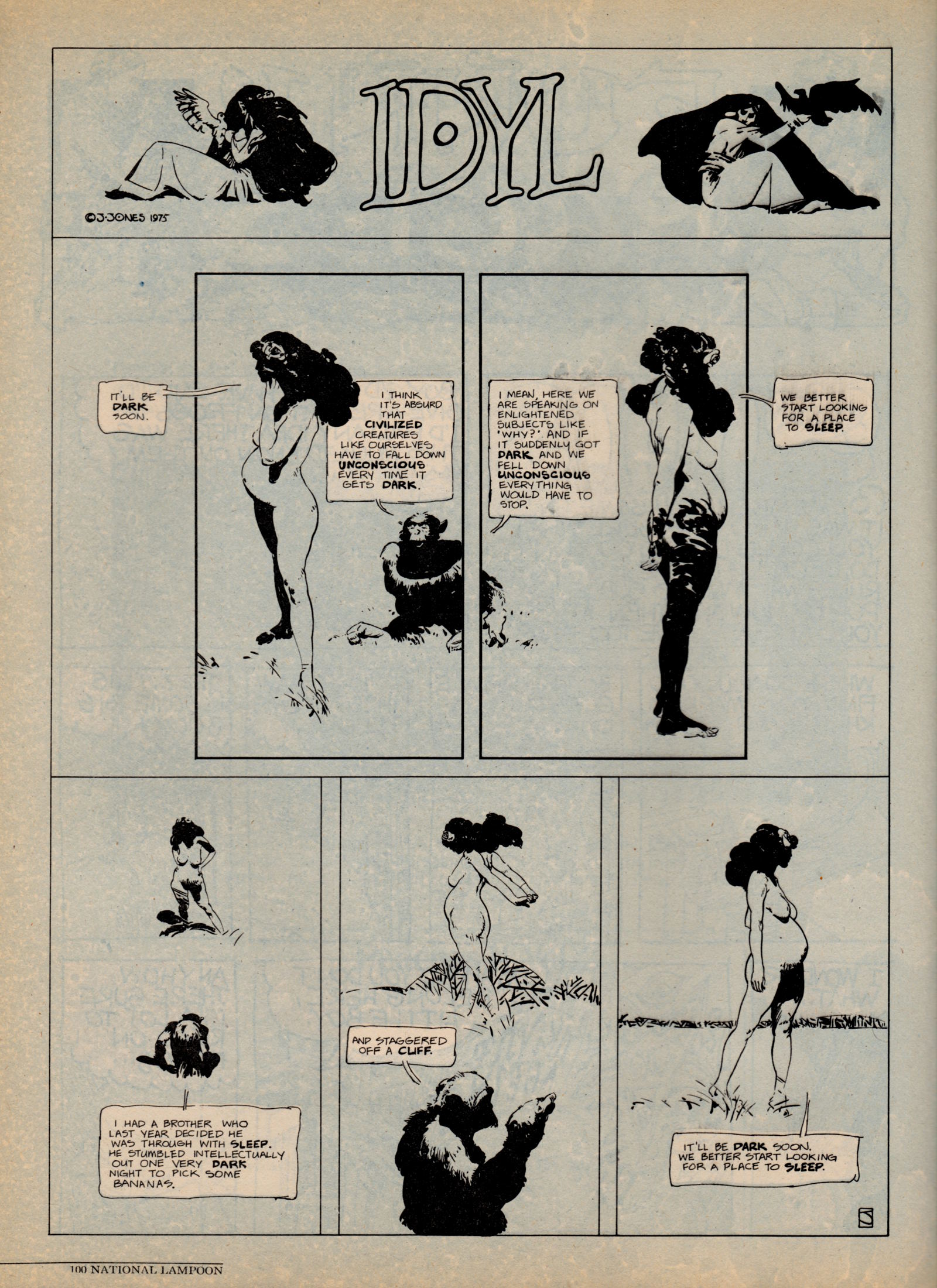
The effect is so appropriate to the theme of the strip that one can’t help but wonder if the art director didn’t choose the colour specifically to complement Jones’s work…
“Idyl was intended as satire and whimsy. One art director and one editor, who met me each month with puzzled faces, continued to remind me that National Lampoon was a humor magazine, ‘As long as YOU laugh,’ they finally said. So each month I would go in laughing. I also must admit that I love to draw nude women.”
— Jeffrey Jones, interview, 2001
RELATED LINKS:
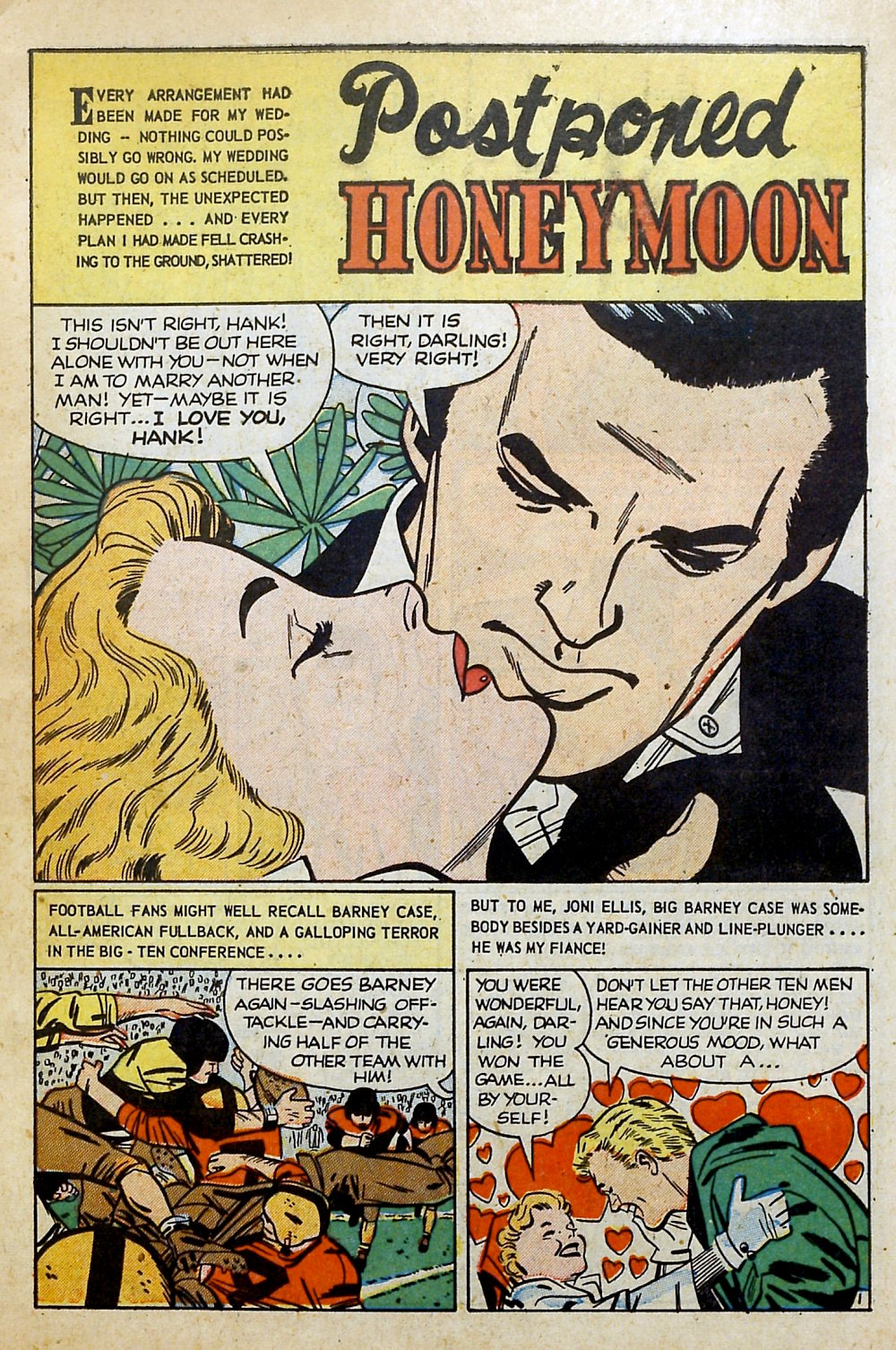
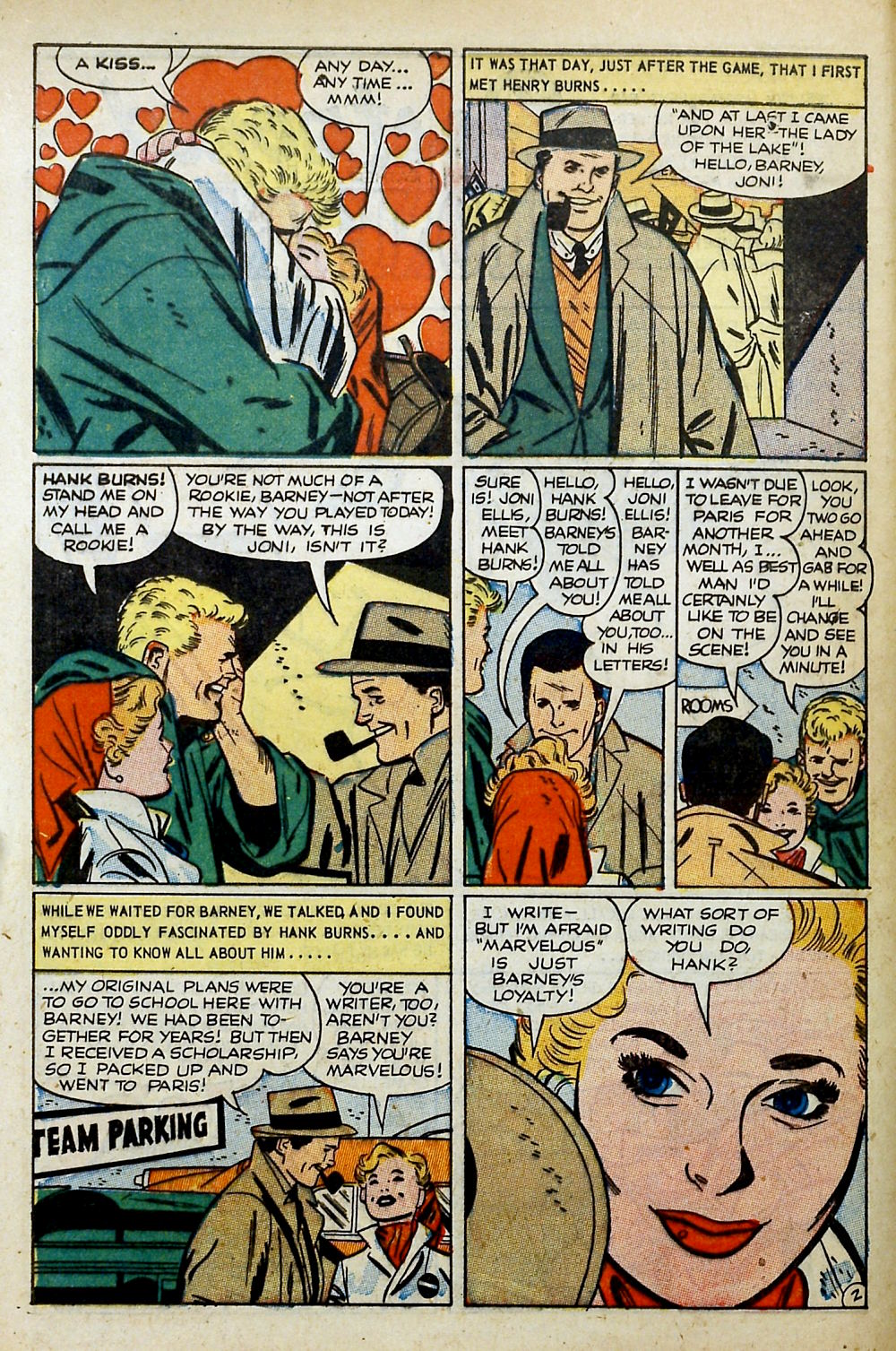
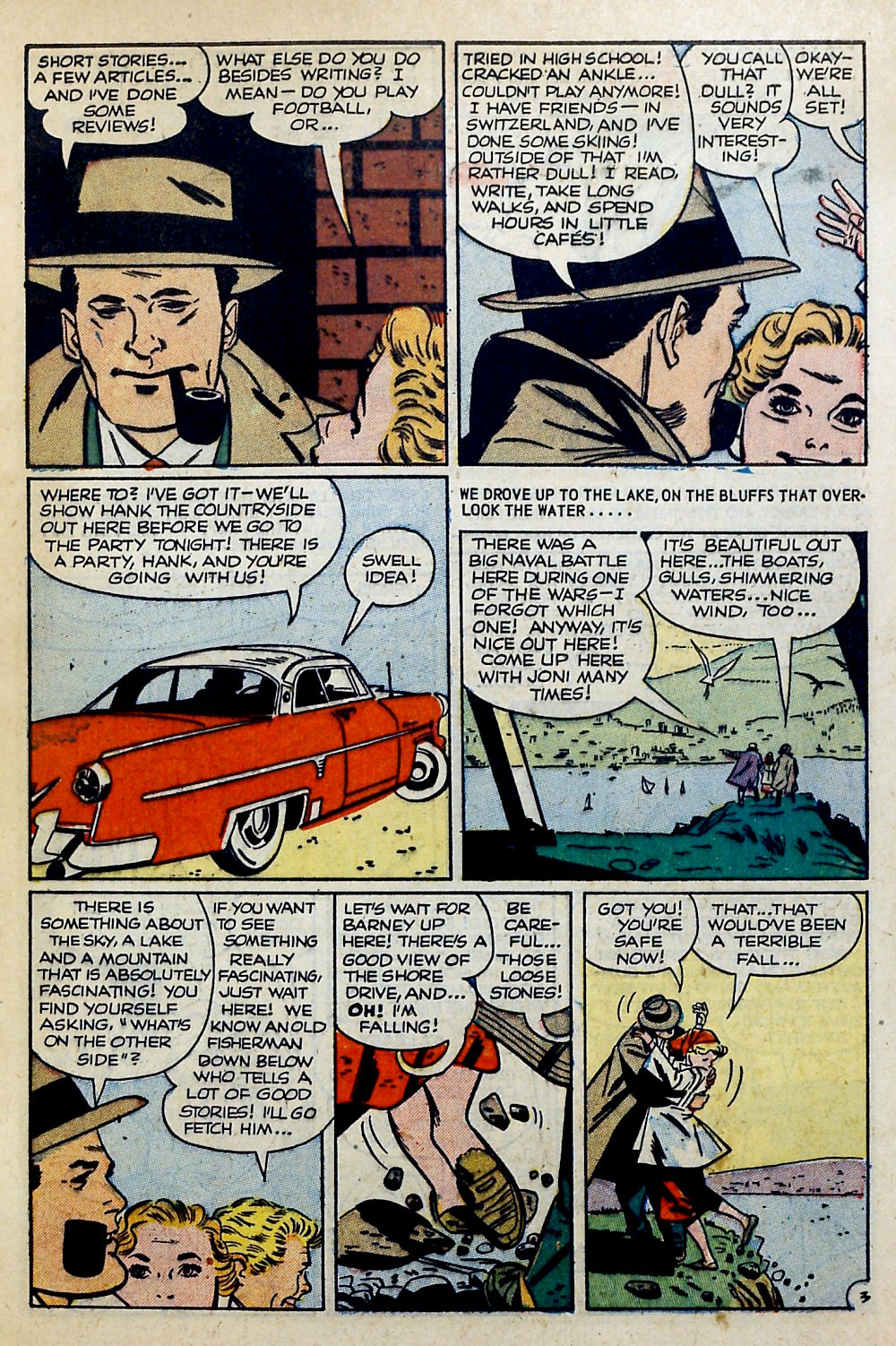
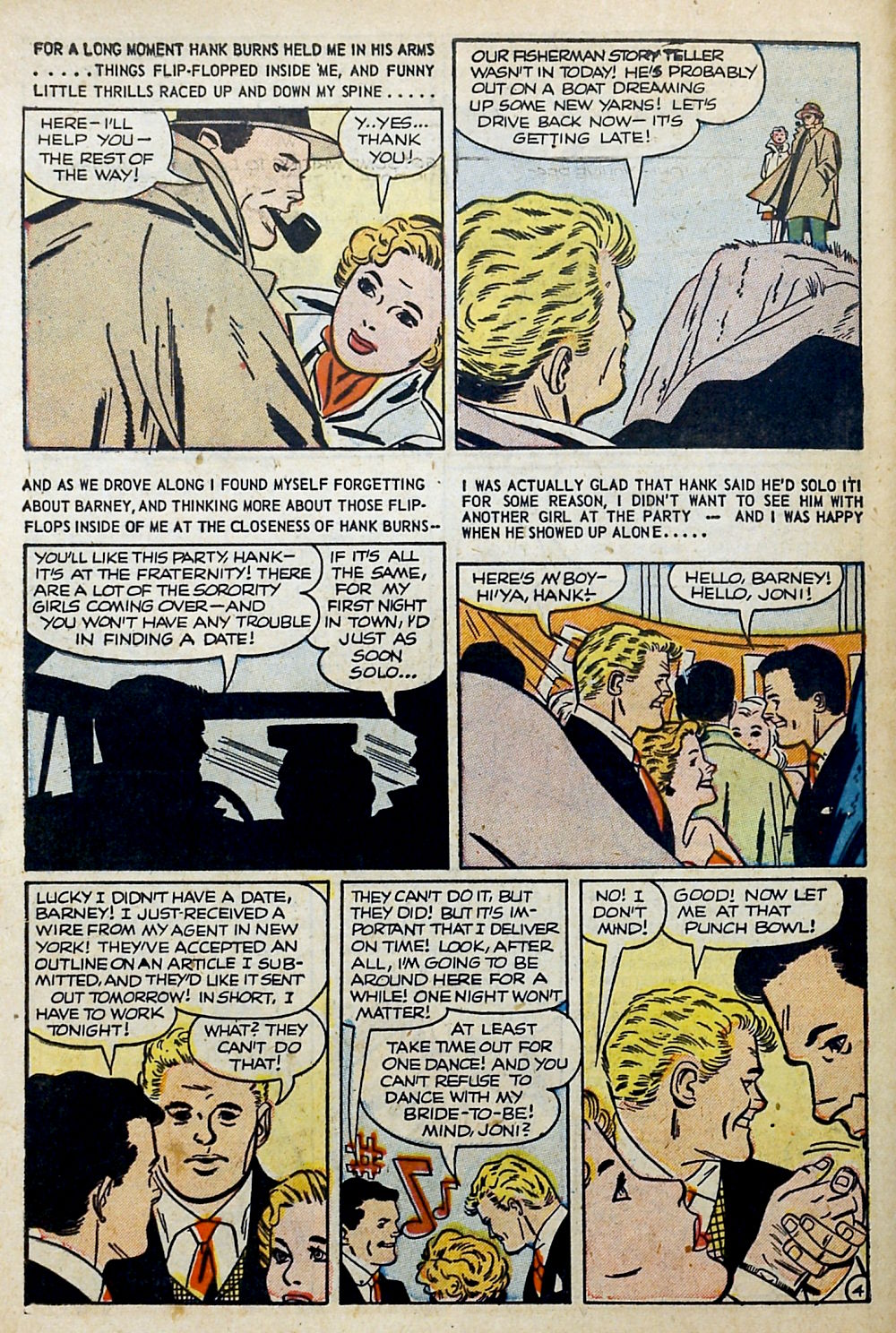
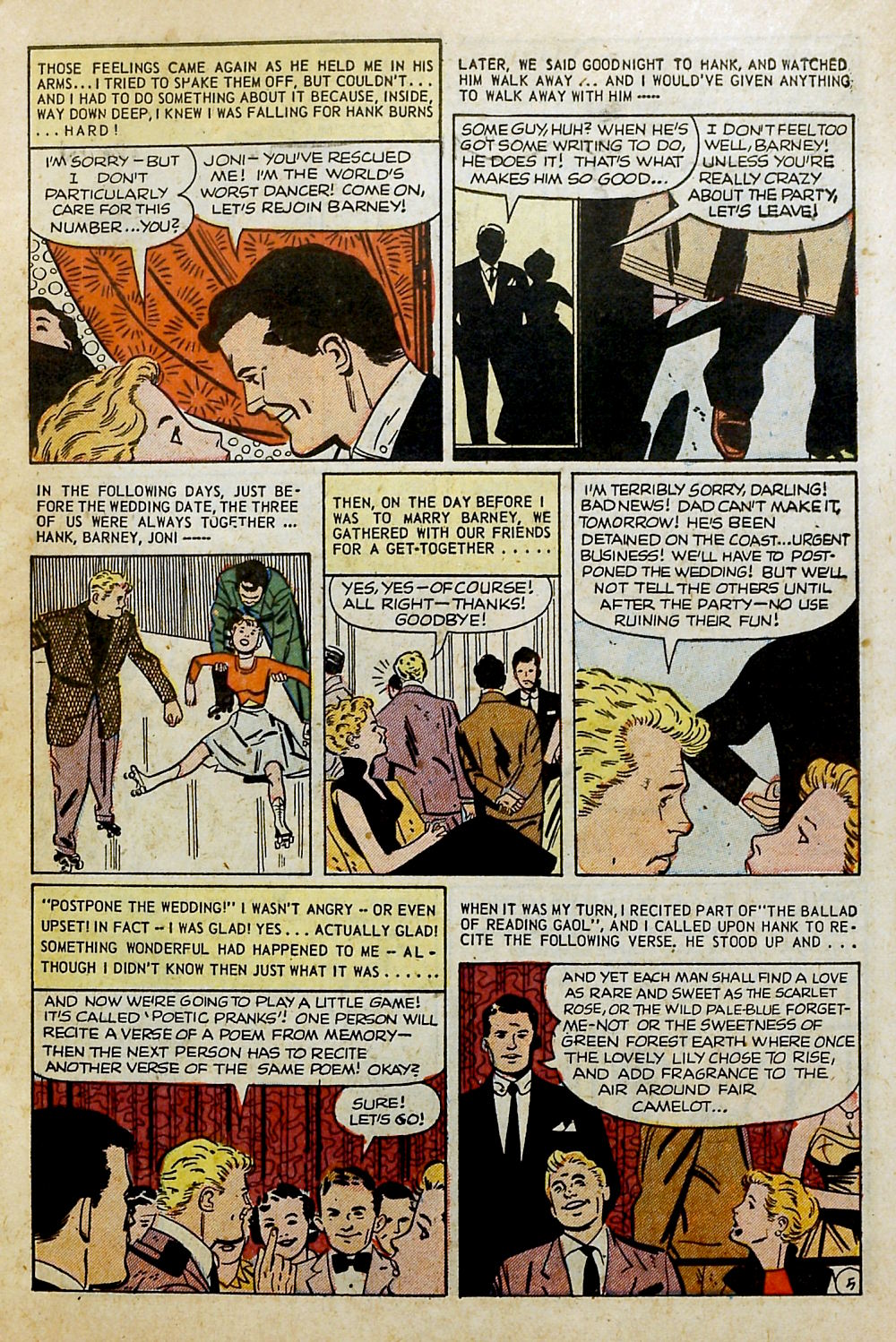
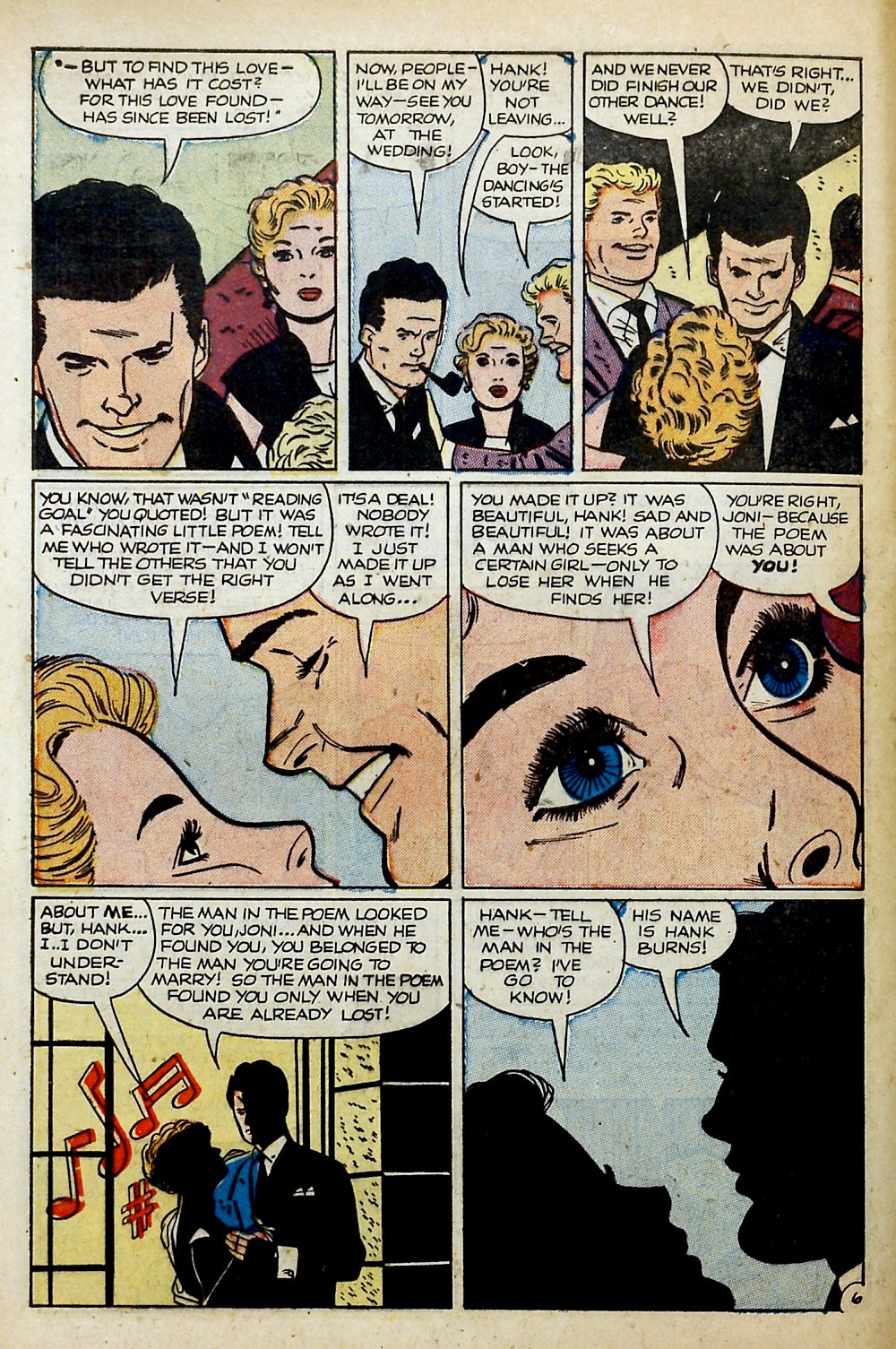
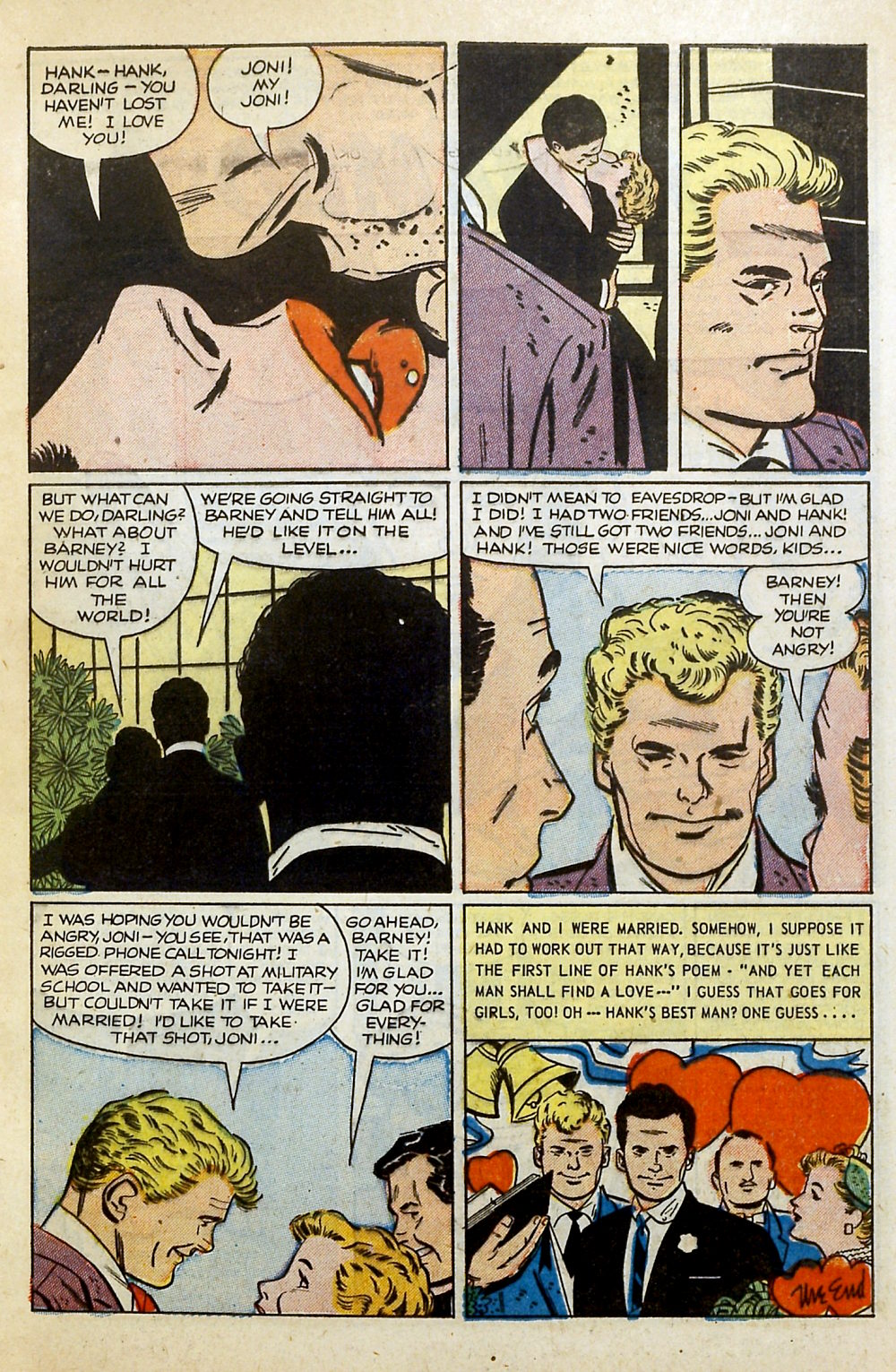
From Boy Loves Girl #47 (June 1954), here’s “Postponed Honeymoon,” with art by Alex Toth:
[CLICK IMAGES TO ENLARGE]
— VIA —
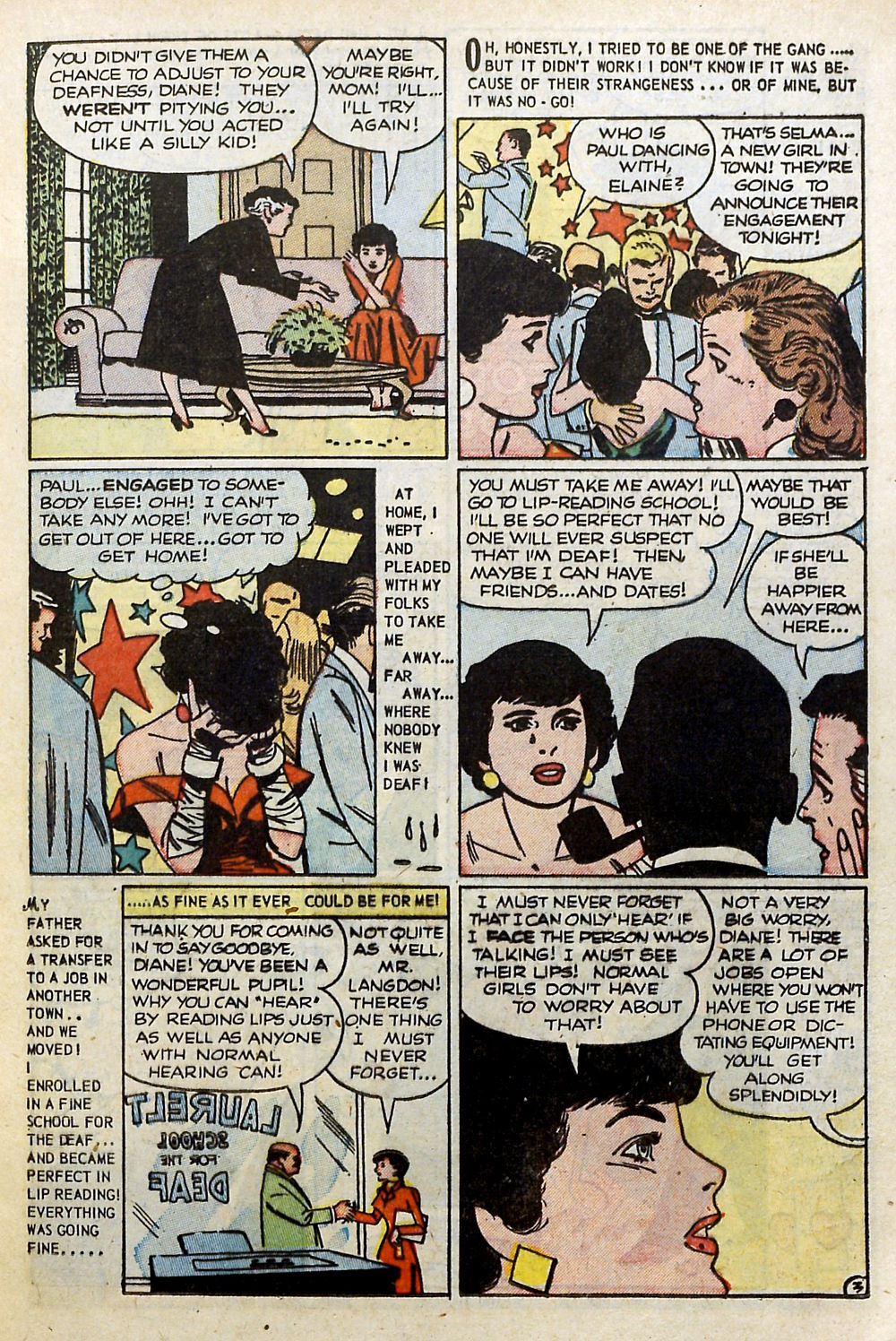
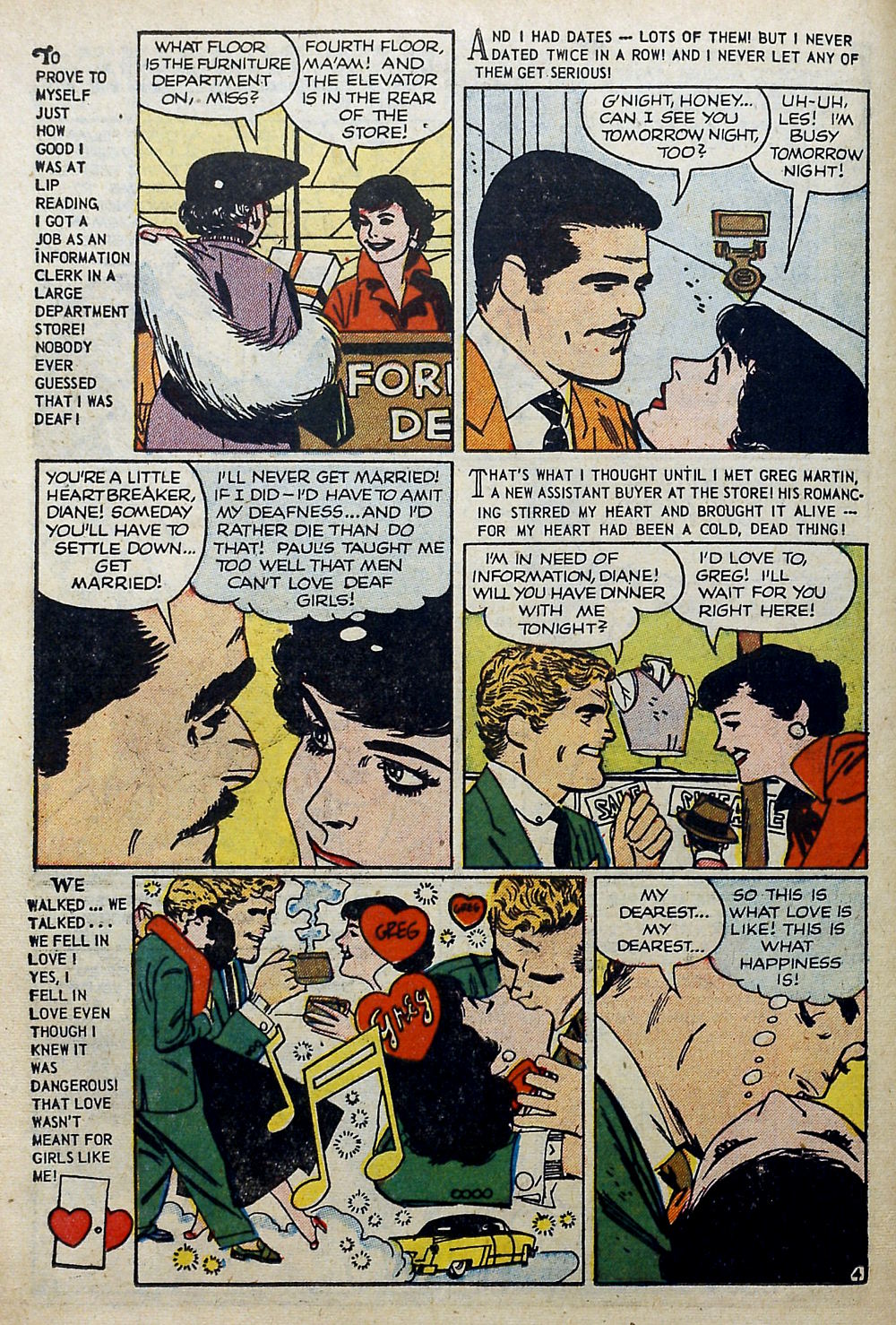
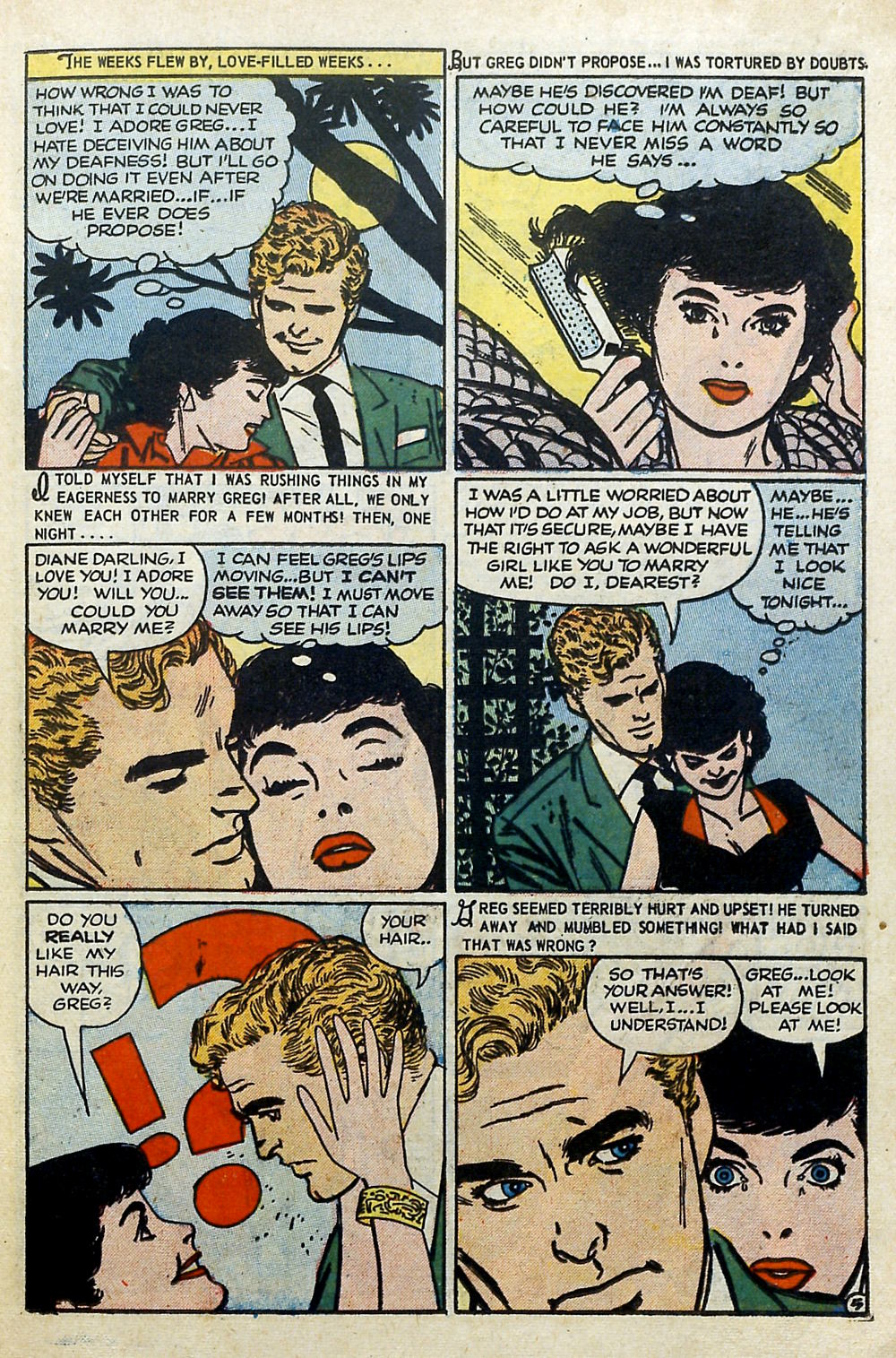
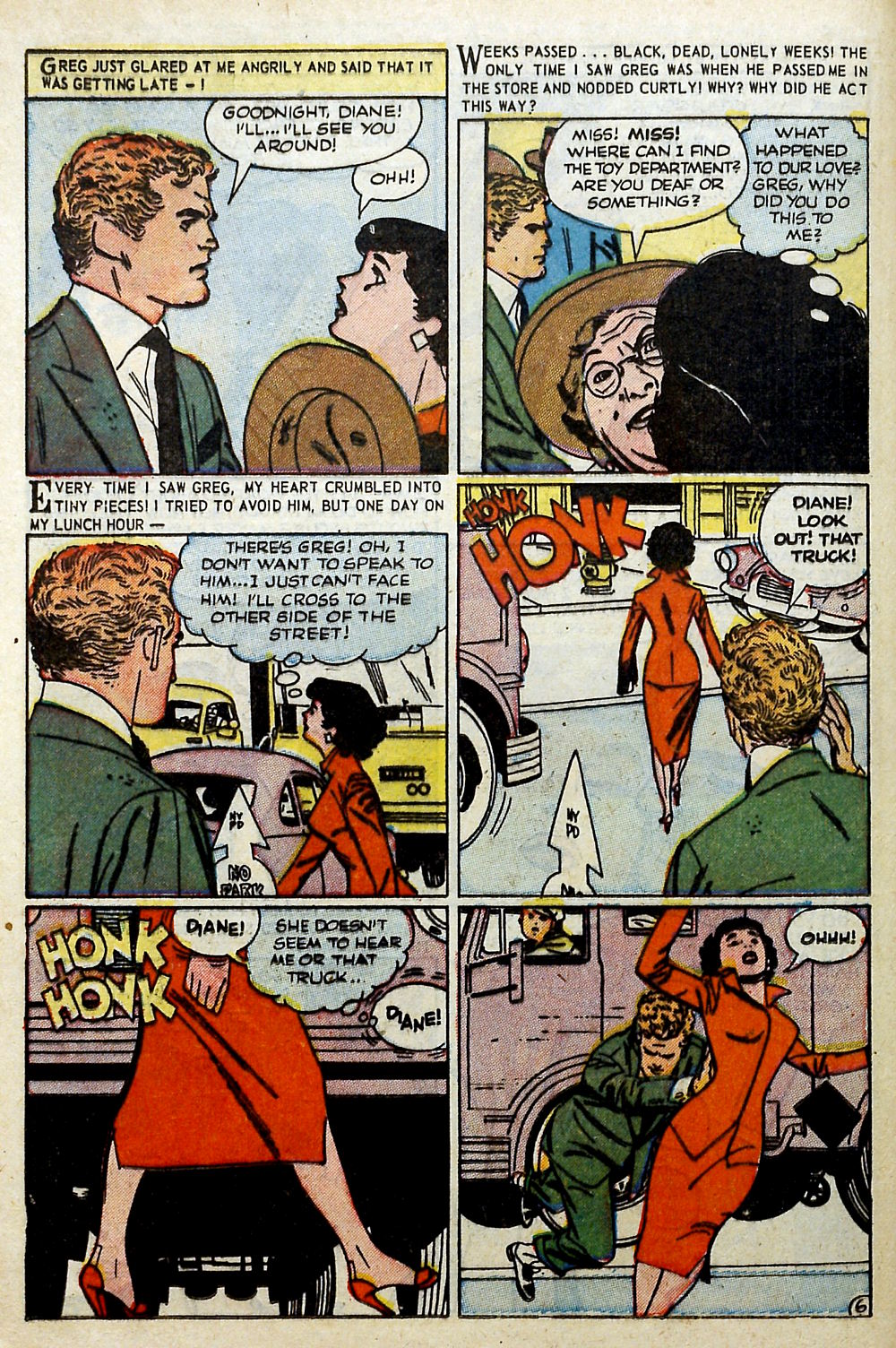
Notice how, in panel after panel, Toth chooses to draw Joni looking at Hank rather than at her fiance Barney. The last panel of page two, the fifth panel on page three, and the fifth panel on page six are especially revealing in this regard; it’s the direction and intensity of Joni’s gaze that reveals her heart’s desire.
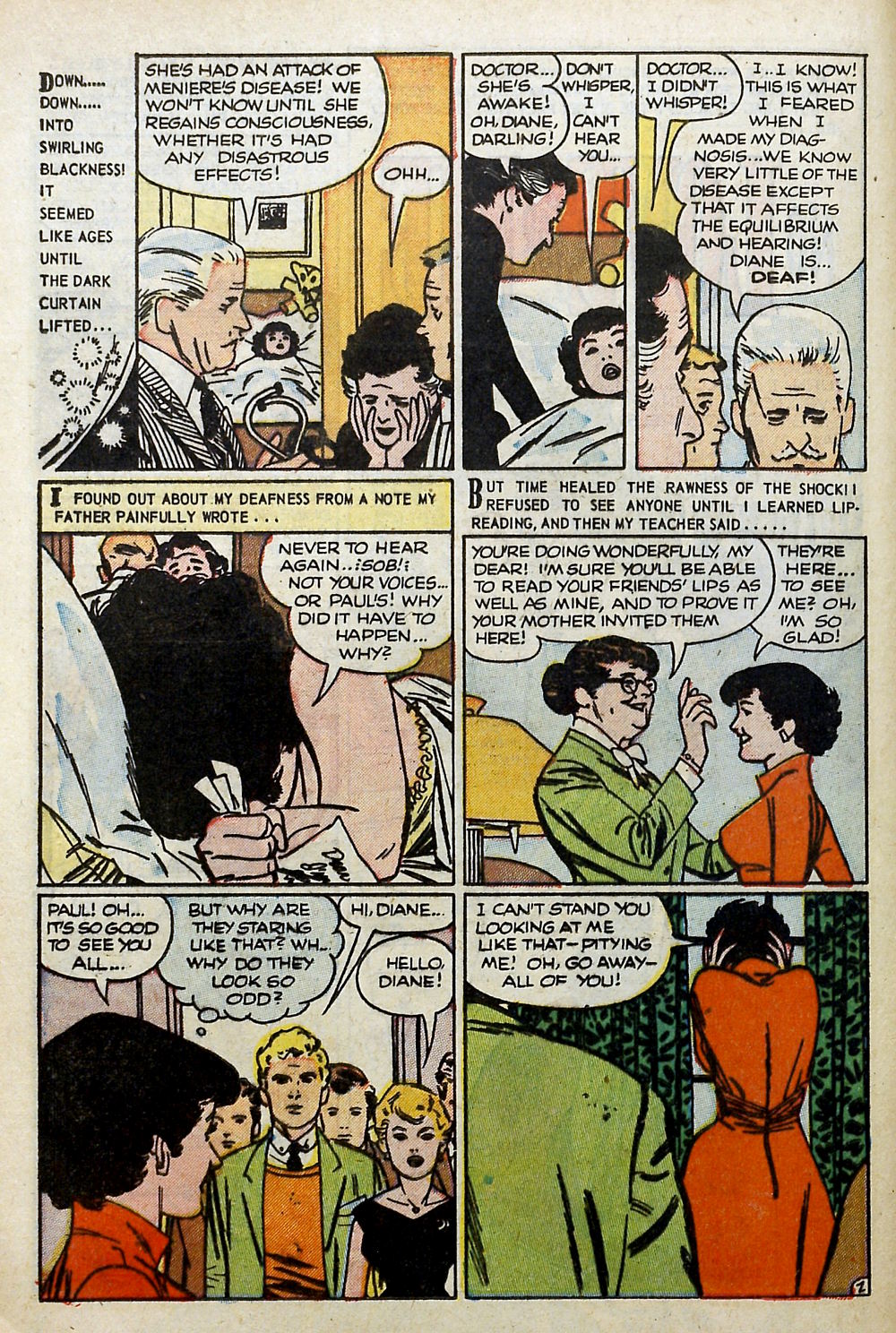
From Boy Loves Girl #46 (May 1954), here’s “No Love for Me,” with art signed “Alexander Toth” and dated 1953:
[CLICK IMAGES TO ENLARGE]

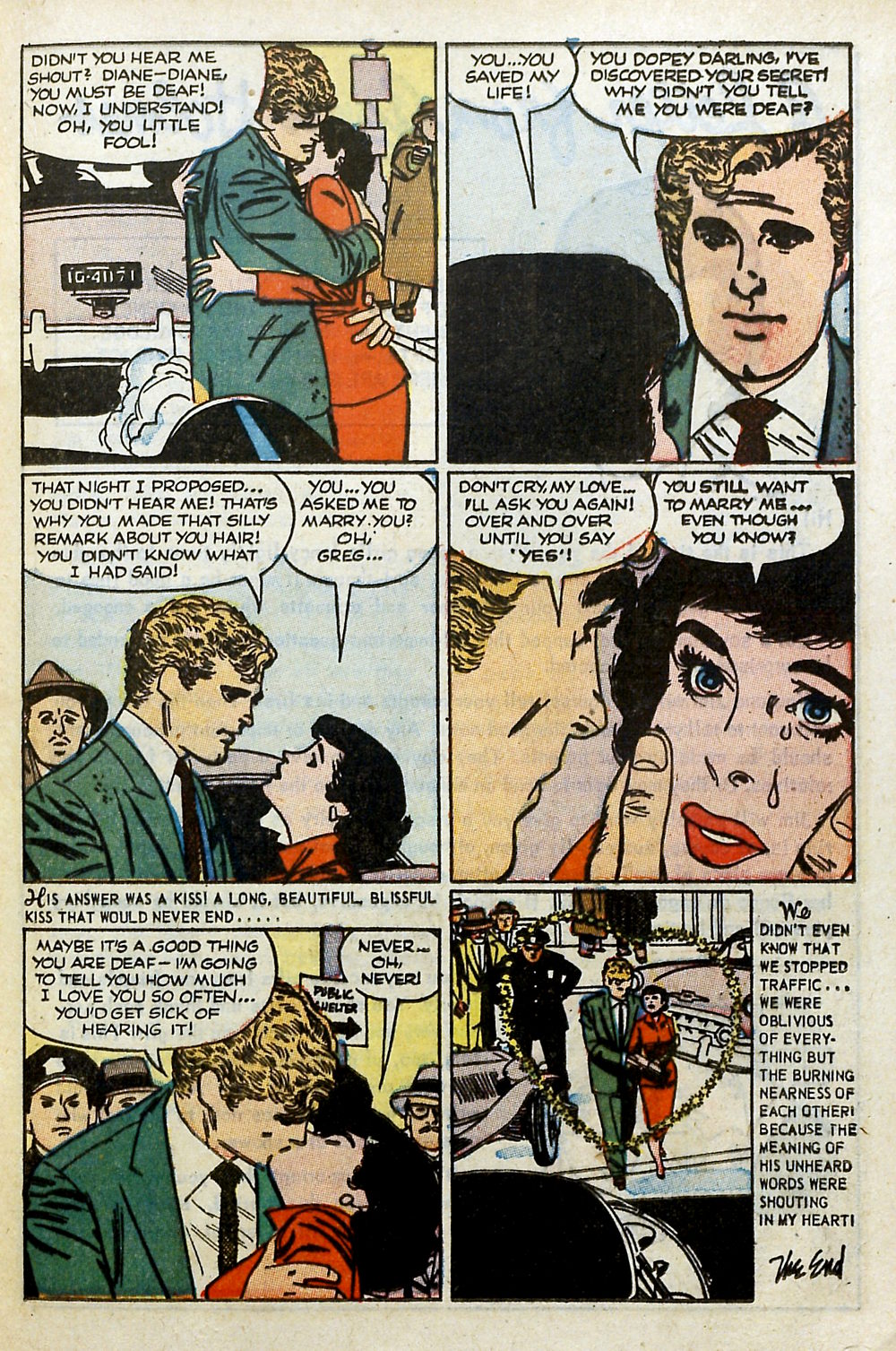
— VIA —
From Boy Loves Girl #43 (February 1954), here’s “I Played with Fire!” with pencils by Alex Toth and inks by Mike Peppe:
[CLICK IMAGES TO ENLARGE]
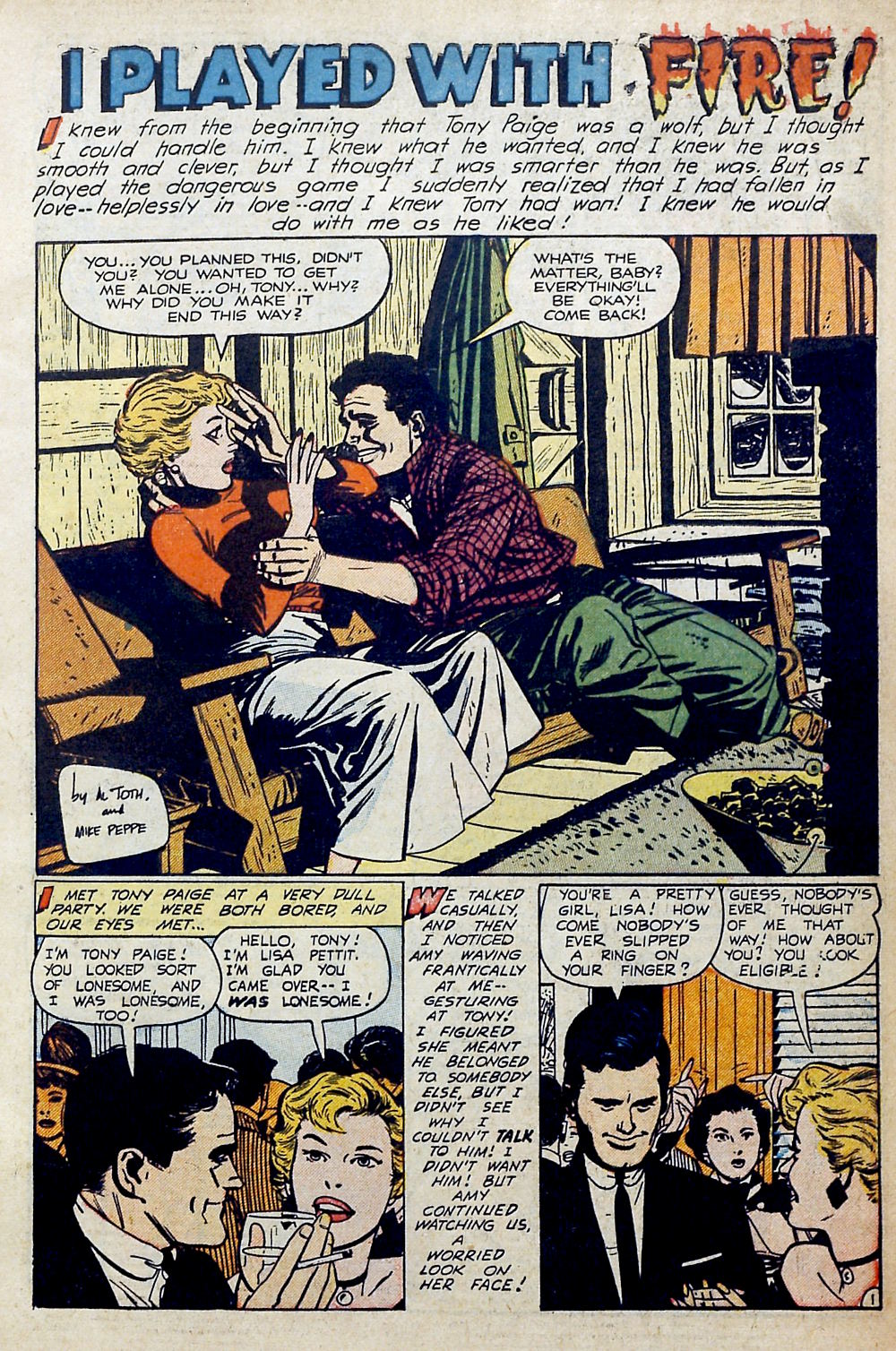
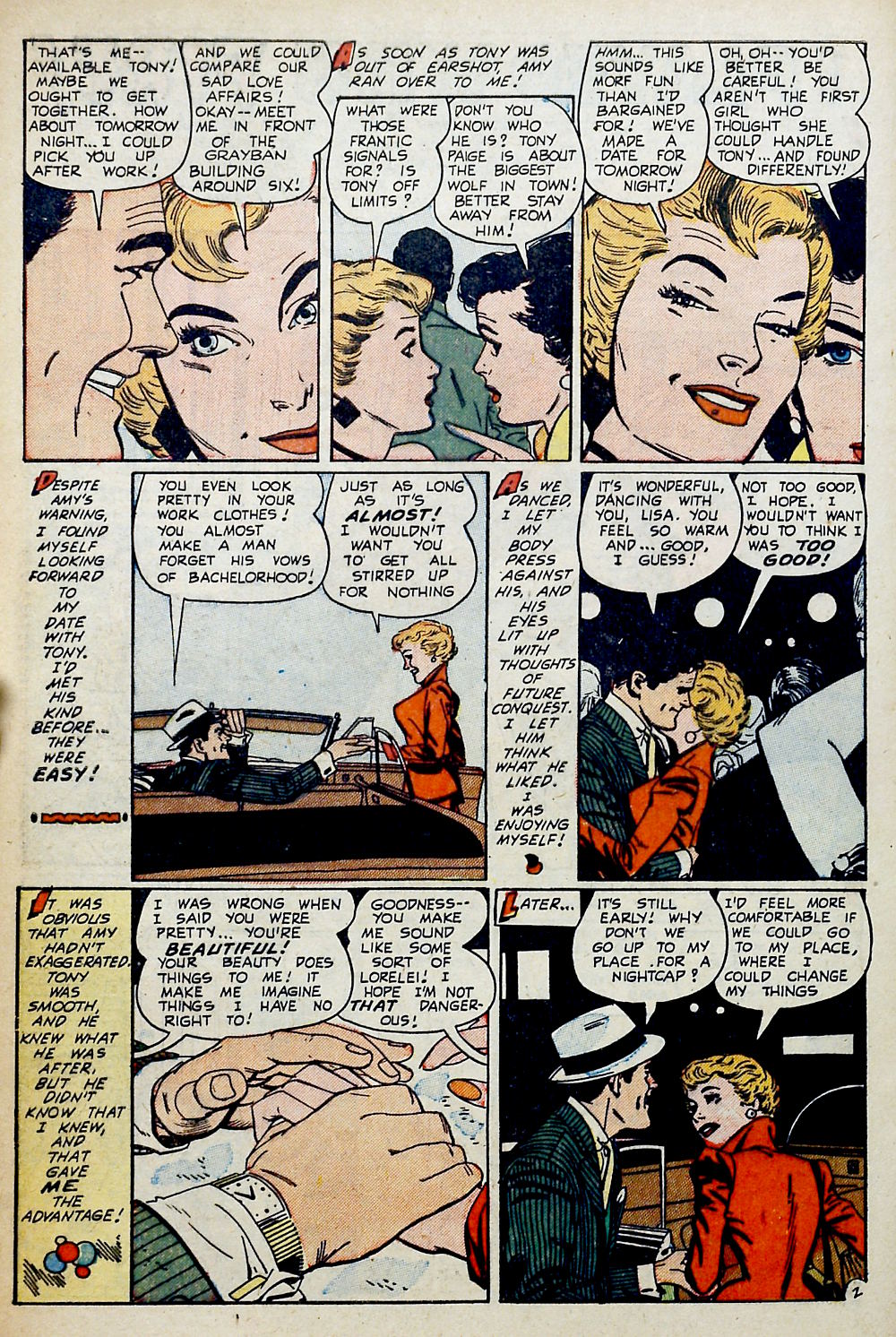
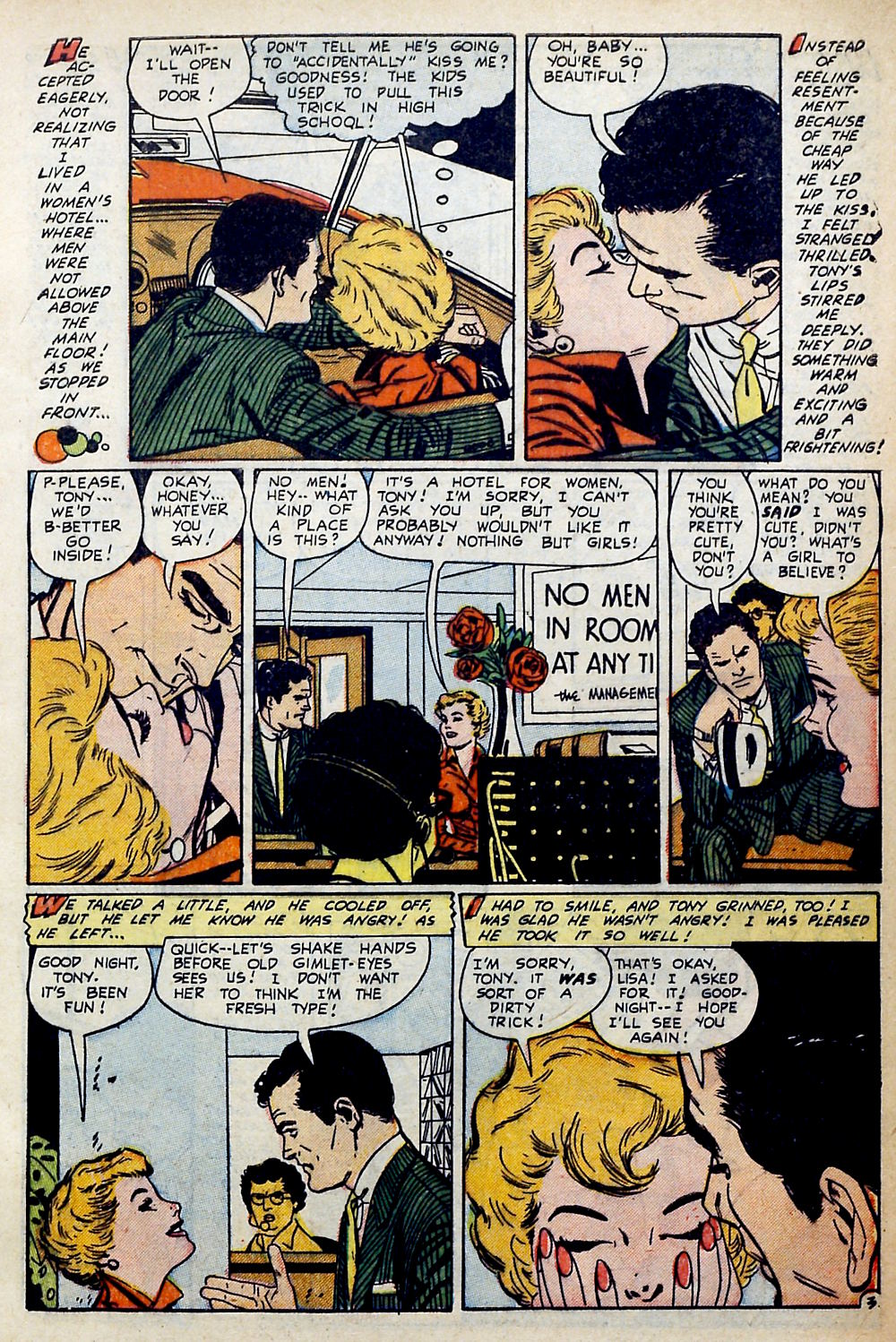
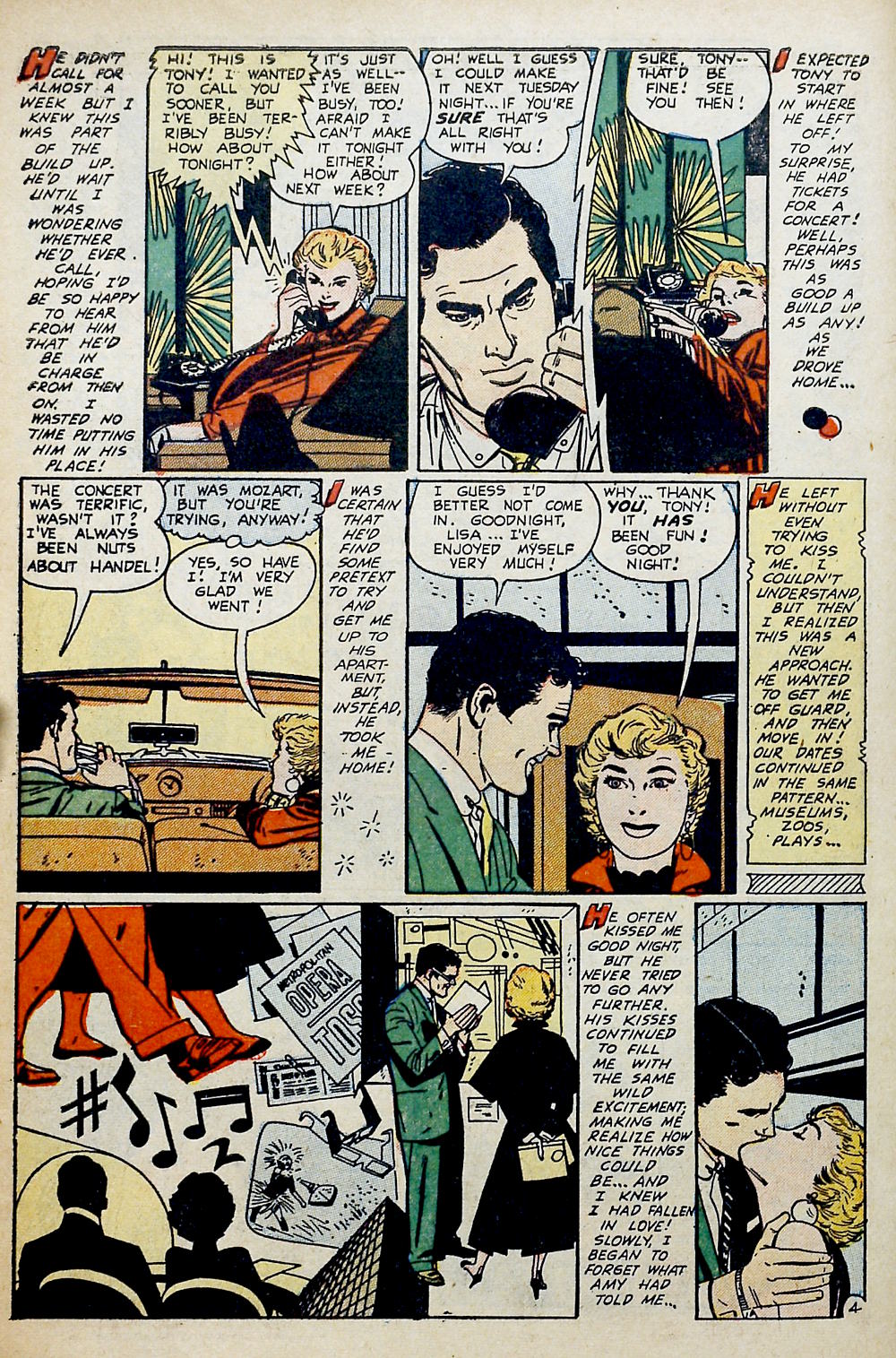
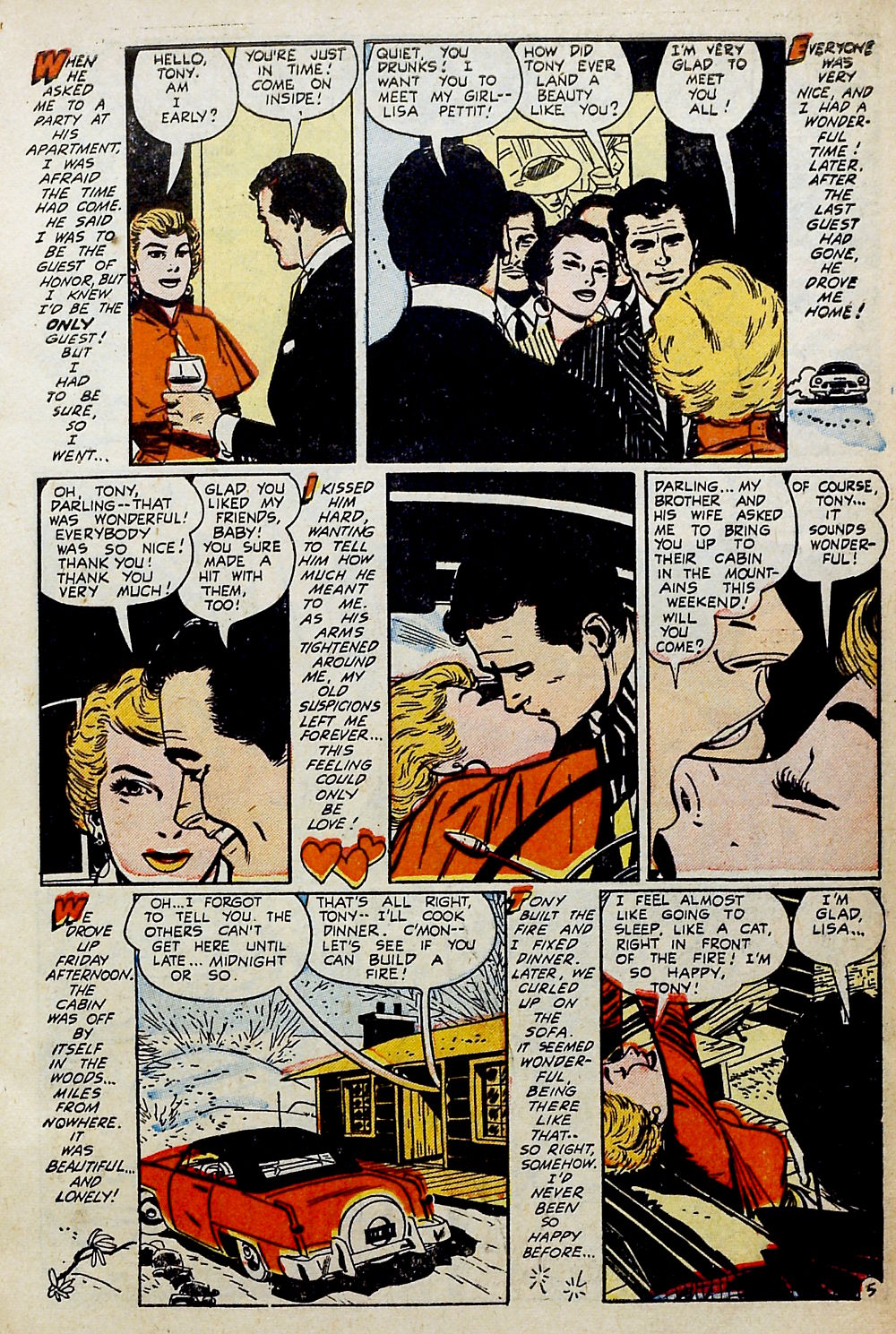
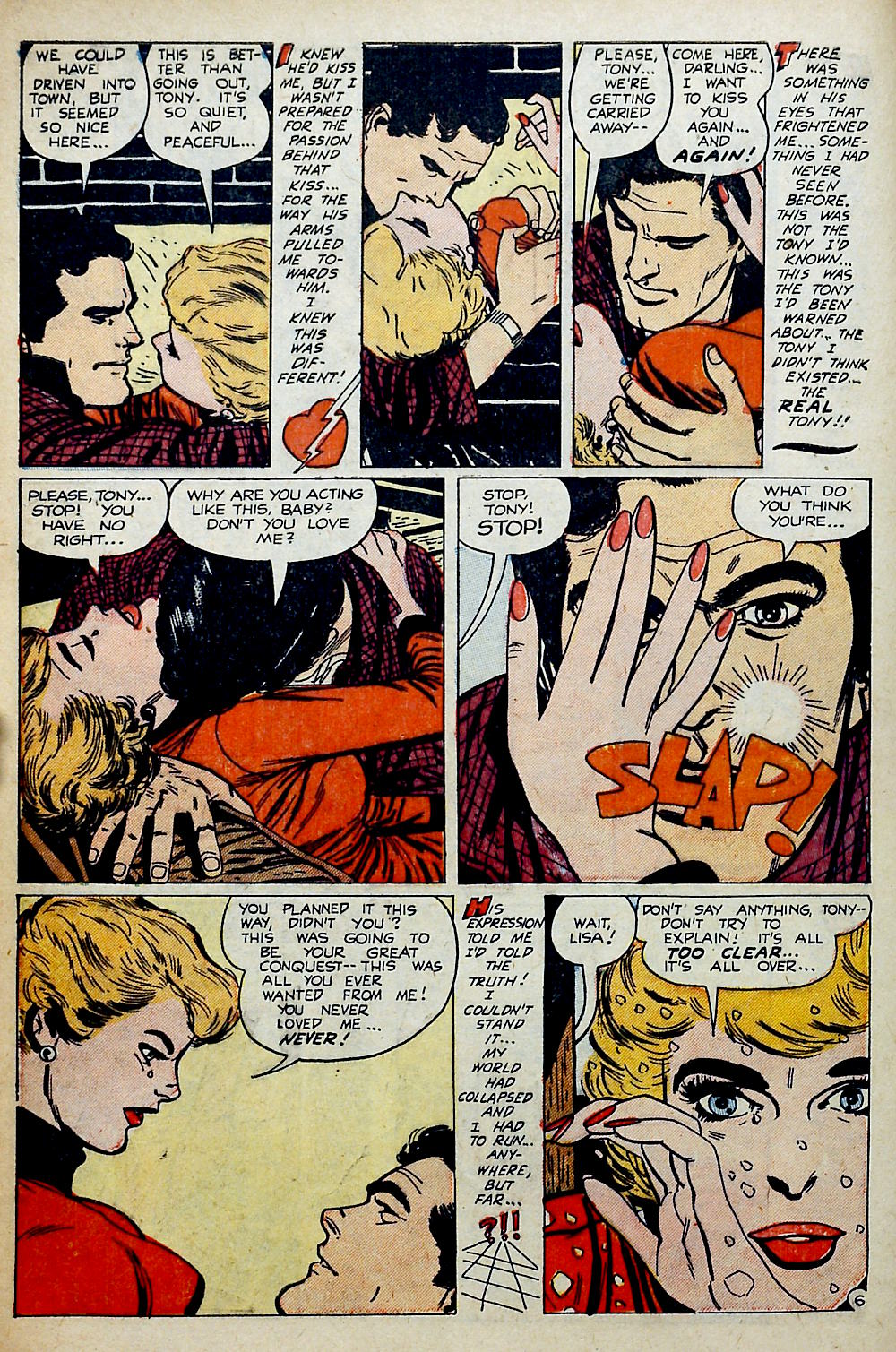
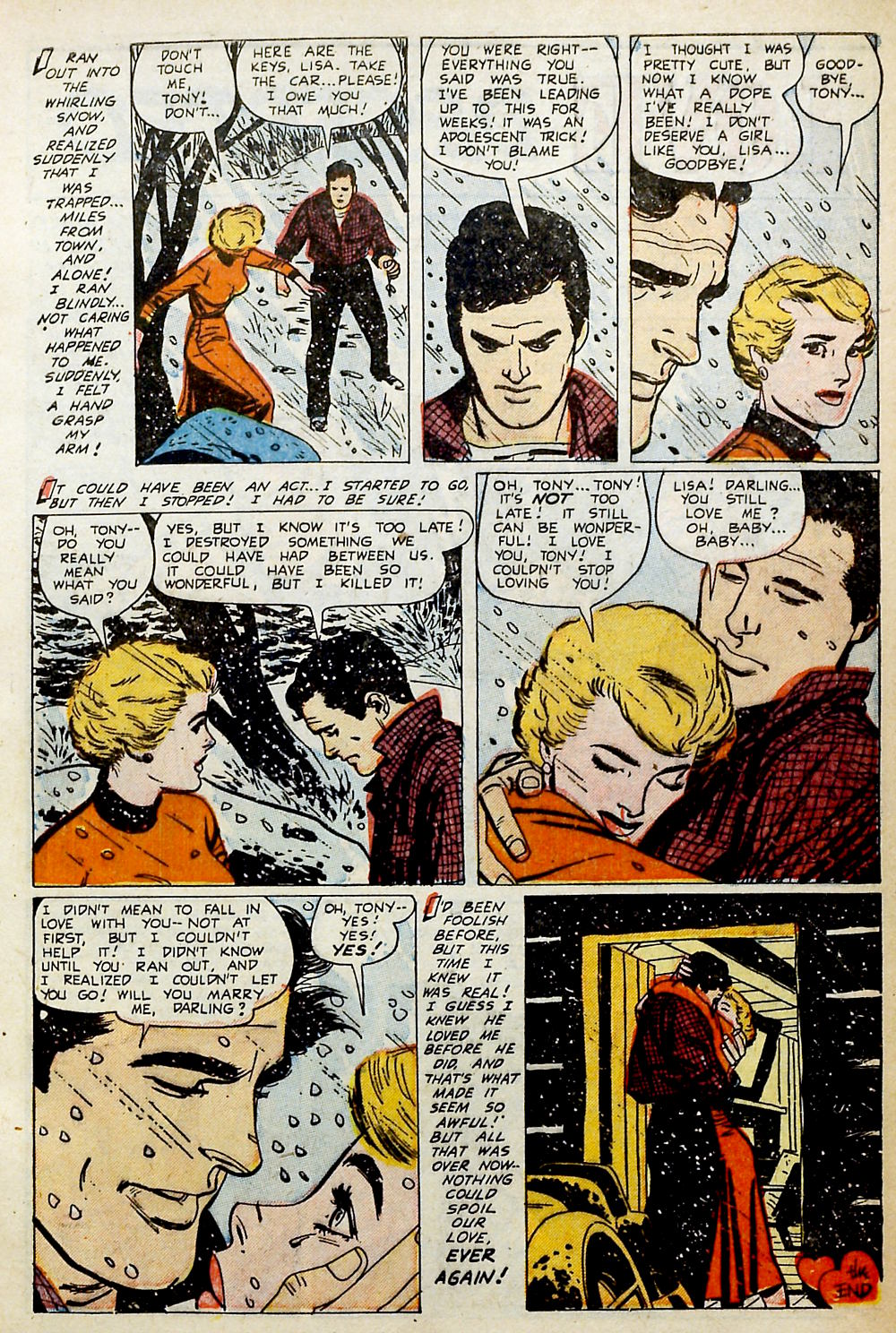
— VIA —
At the end of January, I posted a “Heads Up” to alert collectors of comic art to the grand opening of the well-stocked Etsy shop of Atlanta-based artist Jess (née Jeff) Jonsin (née Johnson). At that time, I had already purchased page six of a story, “Gruesome Charlie in ‘No Erect Penises,'” that originally appeared in Zero Zero #4 (Fantagraphics, August 1995). In the days that followed, however, I found myself returning several times to Jess’s Etsy shop to examine the other five pages in the story. Each time, I half-expected that one or the other of the pages would be sold, but also sort of hoped they would all still be available for purchase, until finally I talked myself into making an offer on the lot of them. Jess graciously accepted my offer, so now I’m back to share, with Jess’s permission, the complete story scanned from the original art:
[CLICK IMAGES TO ENLARGE]


Regarding the title of the story, Jess volunteered the following explanation during a conversation we’ve been having on Etsy:
And I wanted to tell you some things: The story you’ve bought was originally conceived for Blab! Monte [Beauchamp] didn’t think it suited, and I’m sure he was right; I reconfigured it later for Zero Zero. Kim [Thompson] only stipulated that there be “No Erect Penises” which kept me from calling it something appropriate like “Dancing Frogs.” The “Gruesome Charlie” character, or at least the name, has a hypnagogic origin, as does “Voluptuous Dog.” That’s all that comes to mind about that story right now. I do think it’s one of my more relatable efforts, almost in a Peter Bagge storytelling vein.
In addition to his new Etsy shop, Jess also has put together a new 198-page collection of comics that he originally published under the name Jeff Johnson. Here’s Jess’s description of the collection, which bears the anagrammatic title, Sad Brat, Bad Star:
This is a collection of comics originally printed as zines in 1990-91: Filth, Symbiosis, Reality, Communion and The Moon in the Man. Two unfinished works are included; Felicity part one, written by the author’s deceased ex, and seventeen pages of the titular 1995 graphic novel that, had it not been abandoned, intended to deal with the germinal time and place from which the rest of these 200 pages originated. An idiosyncratic design sense stitches the lot together with a loosely cohesive hand, and a smattering of brief notes and introductory essays wander moodily along like an emotionally-unstable tour guide, offering an oddly endearing blend of impertinent trivia, crankish pettifoggery and raw catharsis wrapped in convoluted verbiage. This intensity is what keeps this shattered planet of uncouth continents spinning. You should visit this planet before it dies.
[CLICK IMAGE TO ENLARGE]

Sad Brat, Bad Star: Comics 1988-1992 by Jeff Johnson is available via Amazon.com (and is eligible for free shipping if you live in the good ol’ U.S. of A.) as well as via the Amazon service site for self-publishers, CreateSpace.
Although I don’t own a copy of the collection just yet, I do intend to place an order soon… on March 10th, to be exact.
JESS JONSIN LINK ROUNDUP:
Apeiron — an illuminated zine, a video channel, and a library of booklets
The Door — Etsy shop
Jess Jonsin — website
jess jonsin (glutenmob) on Twitter
jessjonsin’s photostream
Sad Brat, Bad Star by Jeff Johnson at Amazon.com & CreateSpace
spambots + ziggurats – blog
Coming in mid to late 2013 from Fantagraphics:
[CLICK IMAGES TO ENLARGE]
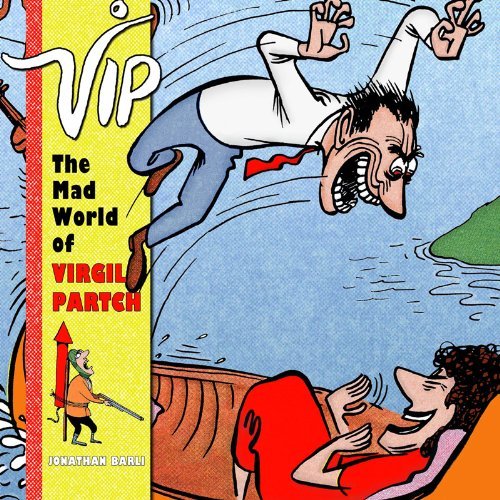
Here’s the publisher’s description of the book:
Only a few months after the devastating attack on Pearl Harbor and the same year that Albert Camus offered the world his bleak vision of man’s existence by introducing his philosophical dictum of The Absurd, Virgil Partch burst onto the scene with his own twist on the phrase. Partch was a cartoonist who offered comic counterpoint to the grim headlines and a unique perspective on human nature in the pages of the nation’s most popular magazines.
Known to millions by his jazzy signature, VIP, this comic genius ushered in a new era of the gag cartoon — zany, sometimes surreal, always hilarious — that inspired a generation of fellow cartoonists starting in the 1940s and ’50s. His madcap style of humor was reflected in the cutting-edge comedic sensibilities of Burns & Allen, Jack Benny, Ernie Kovacs, Bob & Ray, Stan Freberg, and Jean Shepherd, and would position Partch as one of the most prolific “gag-men” of his day. VIP contributed to an astonishing array of magazines, wrote gags for other cartoonists, illustrated books, album covers, and advertisements, and adorned merchandise including, appropriately, cocktail glasses.
VIP: The Mad World of Virgil Partch [hardcover, 240 pages] is the first time Partch’s life and career has been treated in full, collecting amazing artwork from the entire range of his inspired career — reprinted from original art, primary-source publications, and collectors’ and family archives — and featuring his own writings. VIP’s place in the world of cartooning and humor can finally be fully appreciated in this beautiful coffee-table volume.
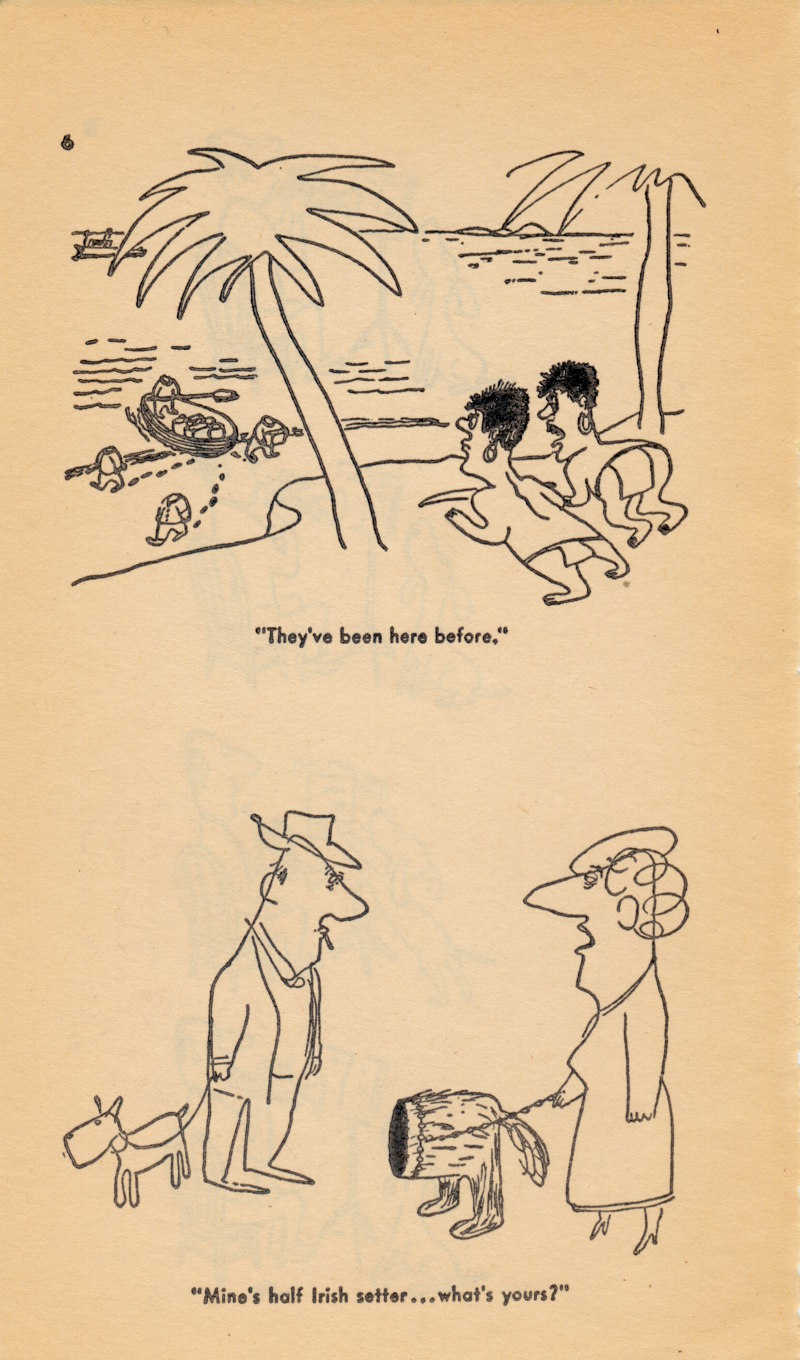
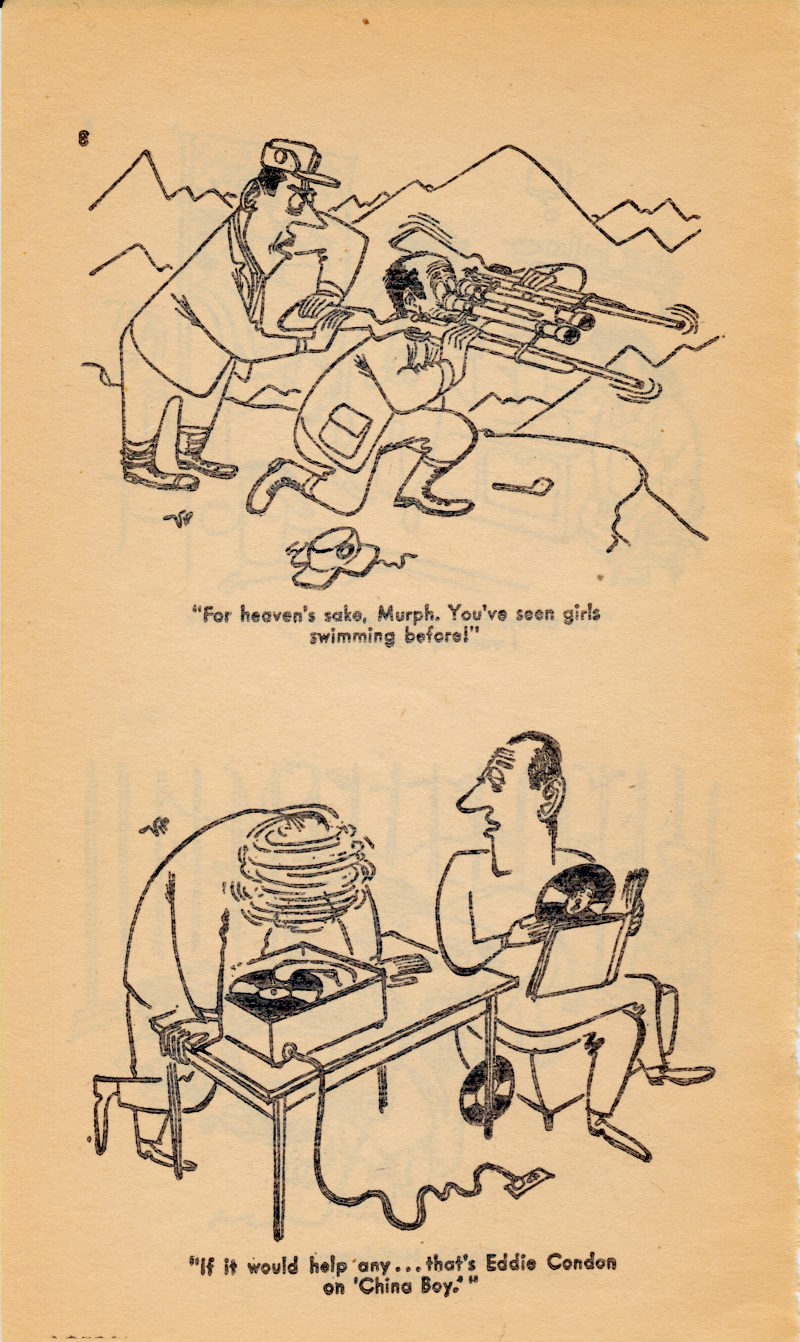
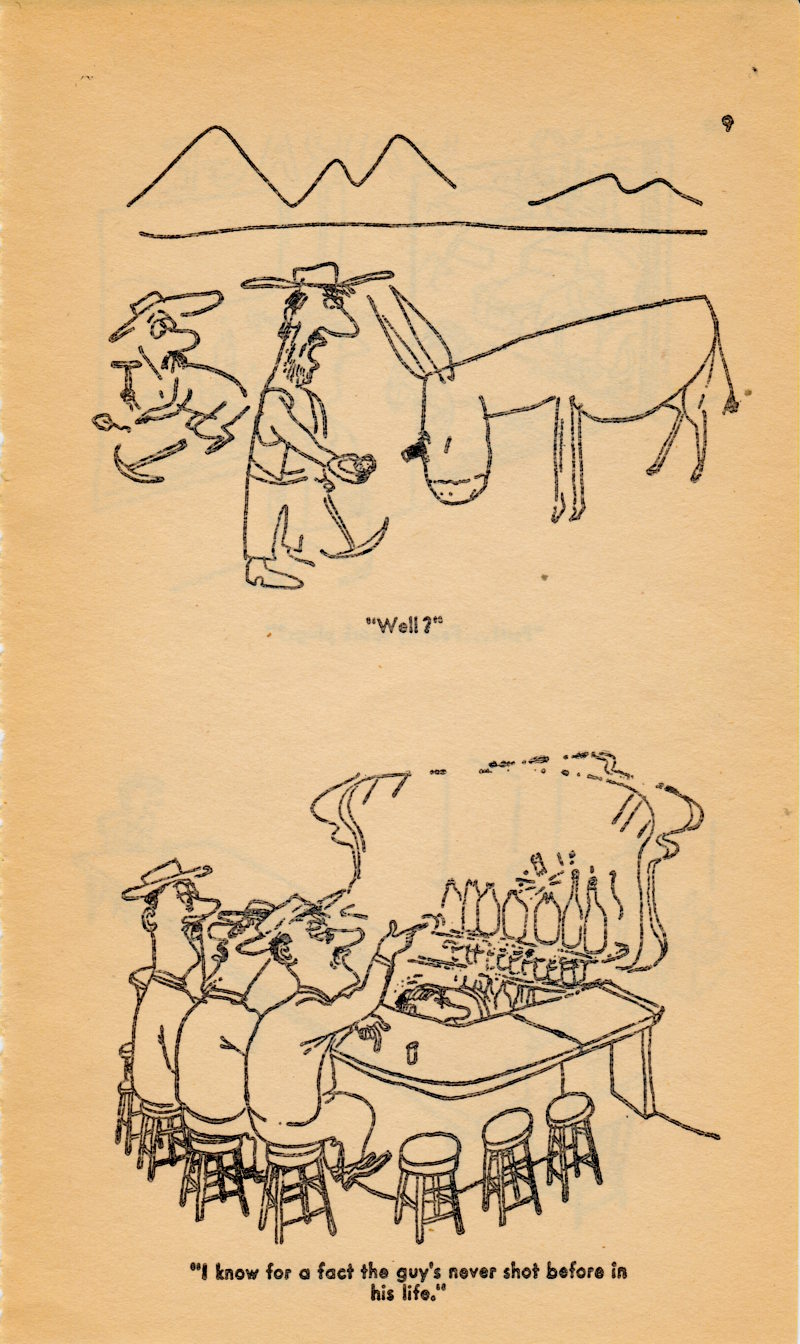
It’s easy to find work by Virgil Partch on the web; he seems to be every nerd and geek’s favourite gag cartoonist (along with Gahan Wilson). But to save you a few clicks — especially those of you who have been living under a rock and have never seen Partch’s work before — I’ve decided to scan and post the cover and the first six pages from the 1955 collection, Funny Cartoons by VIP (Greenwich, Conn.: Fawcett,1955); you’ll find the JPEGs below, along with a shockingly conventional colour gag cartoon by Partch that was published in 1967:
[CLICK IMAGES TO ENLARGE]





Ah, who am I kidding? Now that I’ve whet your appetite, you’re definitely going to want to search Google images for more Partch gold.
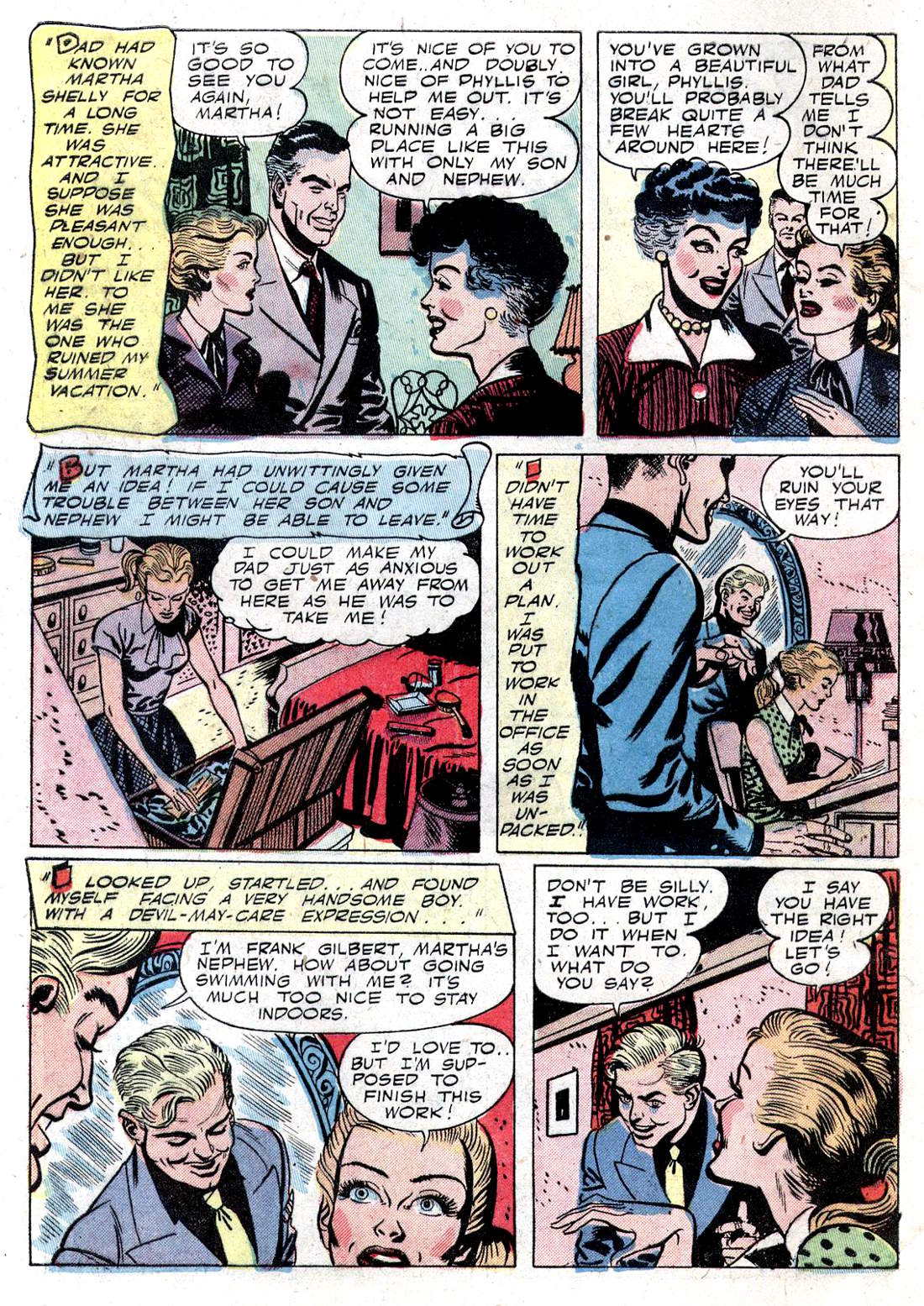
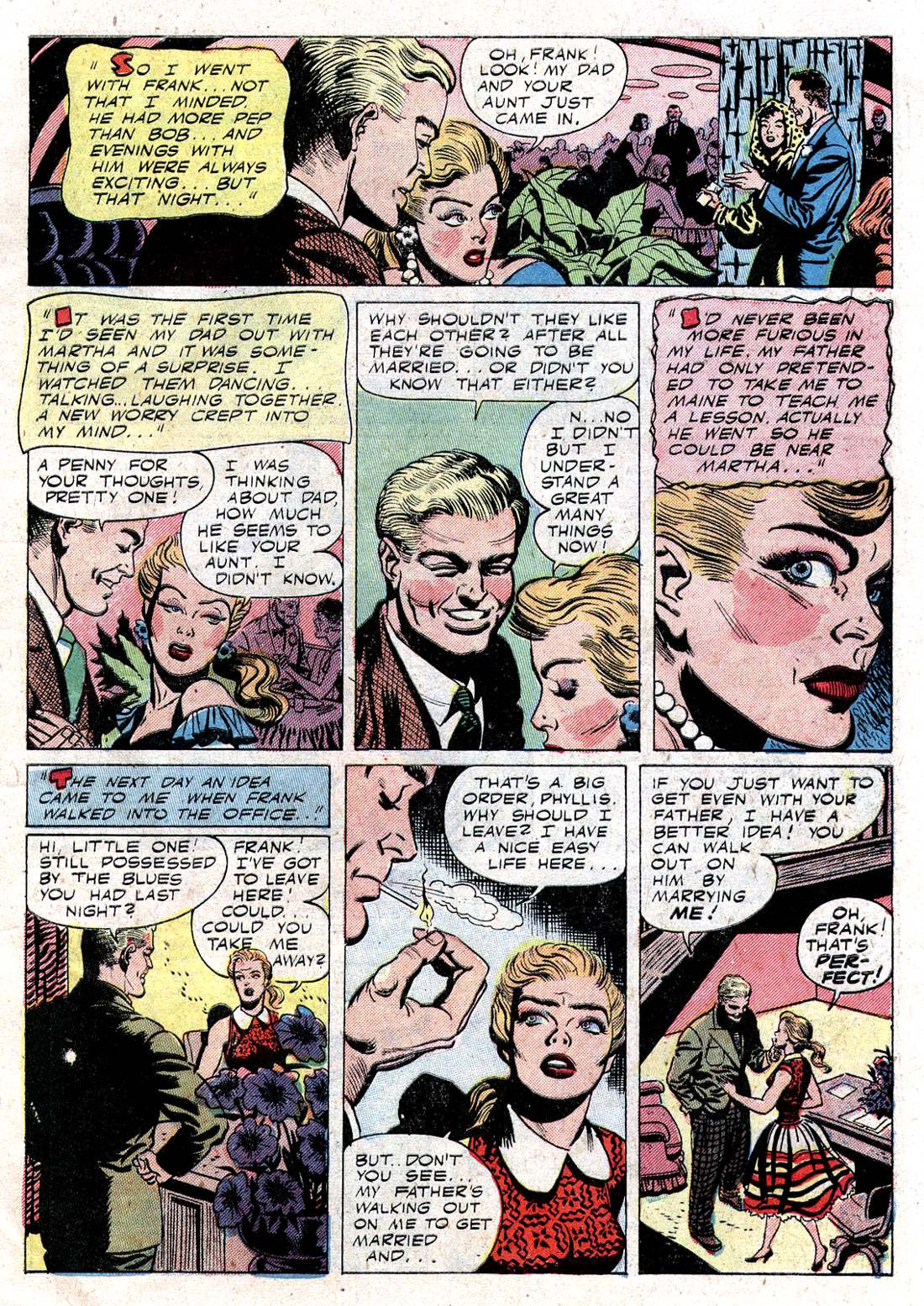
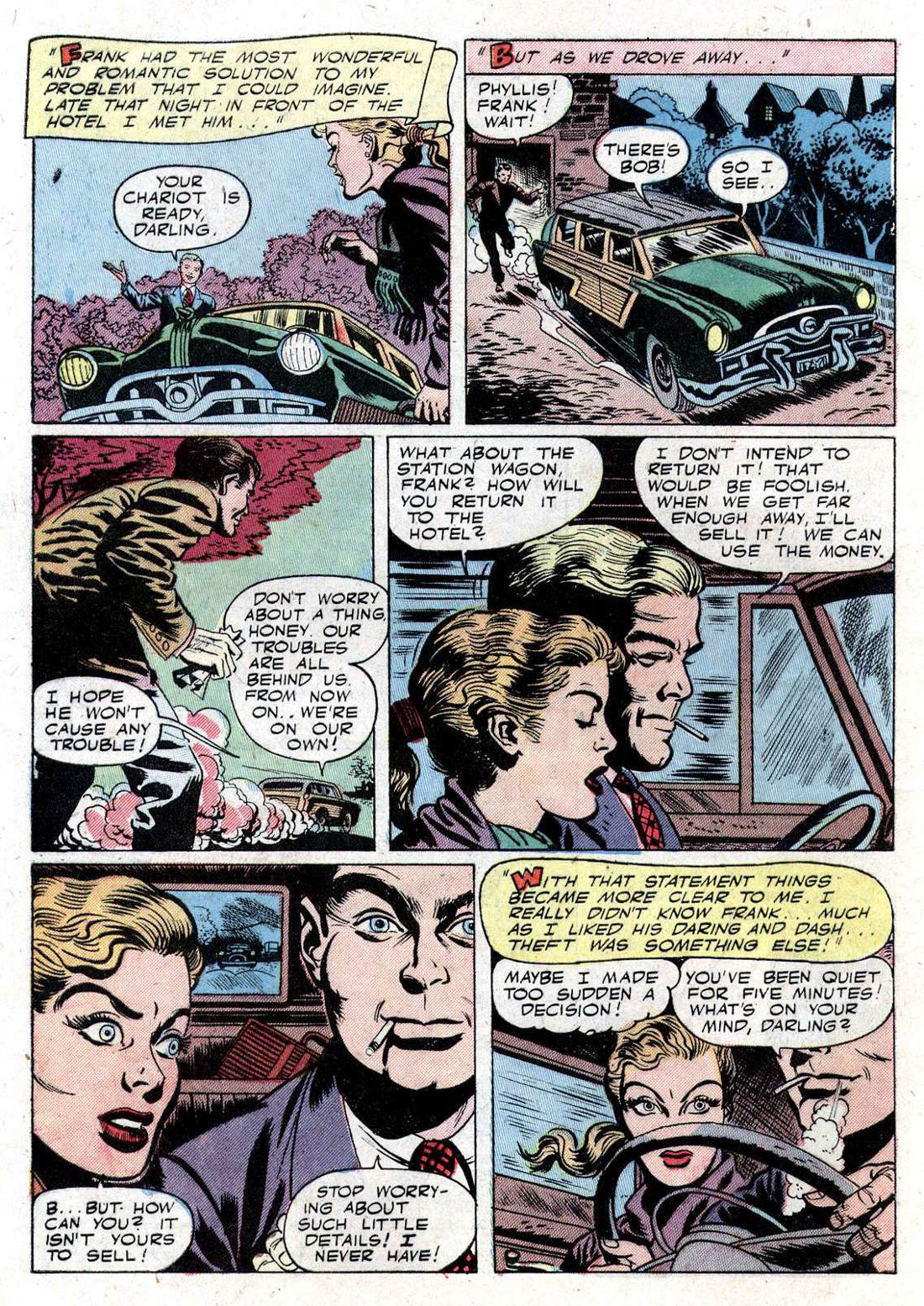
From Teen-Age Romances #28 (December 1952), here’s “Temptress and Trouble-maker,” with pencils and inks both by Cuban-American cartoonist Ric Estrada (26 February 1928 – 01 May 2009); the earliest “signed” pencilling credit for Estrada at the Grand Comics Database is from 1952, so his work on “Temptress and Trouble-maker” is obviously from very early in his career, and yet, Estrada already displays a bold, confident style that is fully formed and extremely attractive:
[CLICK IMAGES TO ENLARGE]





— VIA —
Estrada was only 24 years old when “Temptress and Trouble-maker” was published.
From Big Apple Comix (September 1975), here’s “New York City: The Future,” a prescient one-page story by Paul Kirchner, whose excellent surrealist comic strip, “The Bus,” was a regular feature in Heavy Metal, back in the day:
[CLICK IMAGE TO ENLARGE]
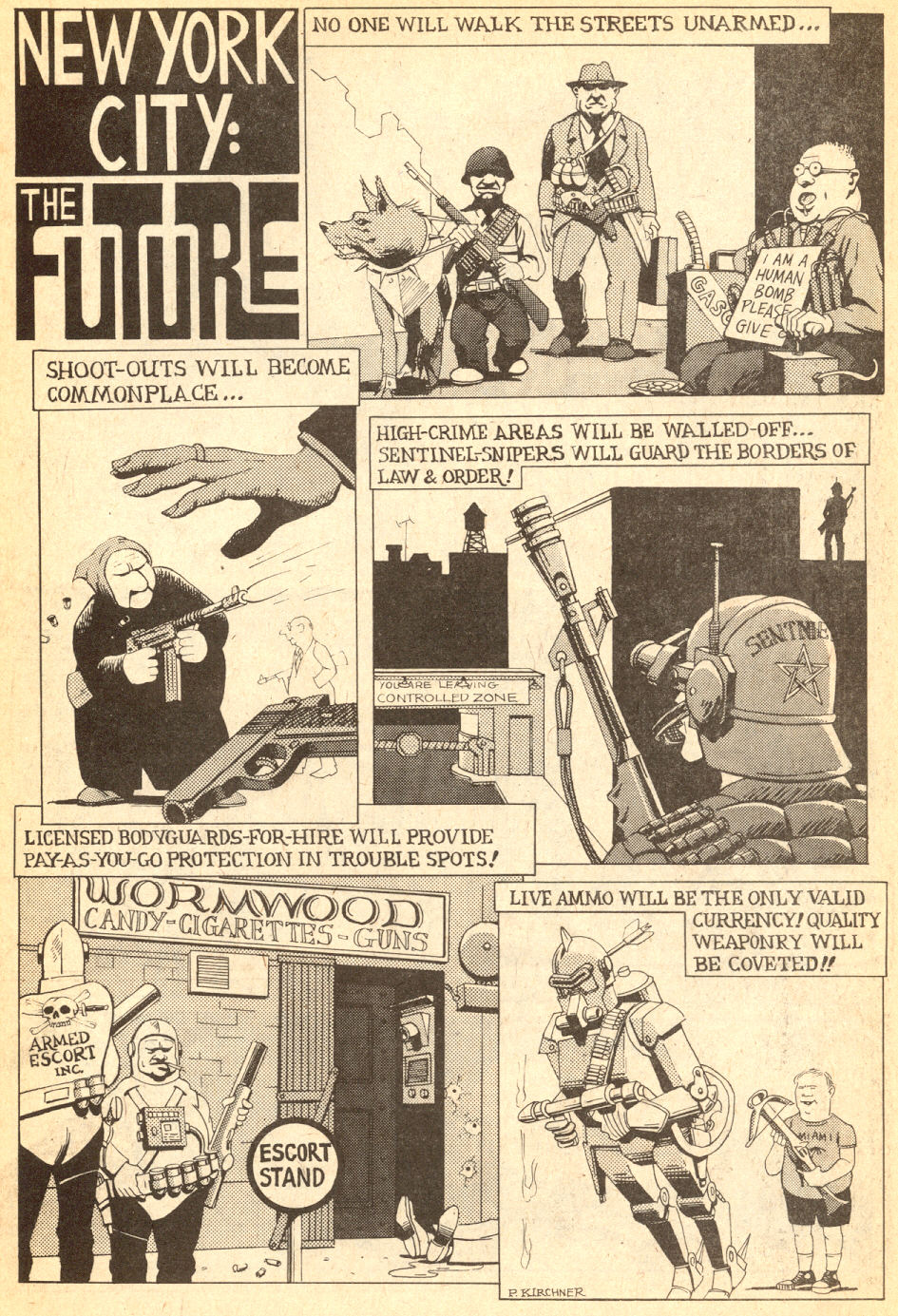
I bought a hardcover collection of “The Bus” from PictureBox back in March 2012, and it appears that there are still copies available for sale. If you’re at all interested, be sure to order while you can! Apparently, only 150 copies of the collection were printed in English.
The Bus collection is widely available in French, however. For a slide show in French, click here.
 Ragged Claws Network