Art Collection · Comics · Ebay Win · Look Here · Mell Lazarus

Look Here: Original “Miss Peach” art by Mell

In the past month or so, my wife and I have become the proud owners of two pieces of original art from the second year of the amazing 45-year run, 1957 to 2002, of the comic strip, Miss Peach, by Mell Lazarus. Although I feel that Lazarus did his best work in his Sunday strips, where he was able more fully to indulge his tremendous gift for comic dialogue, I was thrilled to be able to purchase two fine dailies, dated 09-09-58 and 09-24-58, in two separate auctions, for a mere US$55.50 each, shipping from the USA to Canada included. Here are the strips, which, btw, are not only huge — the paper is 18.5 inches wide by 6.06 inches high — but also in excellent condition, especially considering that they’re more than 50 years old:

Now, I am fully aware that many academically trained artists hate Mell Lazarus’s style of cartooning in Miss Peach, dismissing it as “childish” or worse, but as for me, well, I’ve always had a soft spot for the big-headed, big-nosed, sharp-tongued kids of the Kelly School. Modelled to a large extent on Charles Schulz’s beloved Peanuts, Lazarus’s Miss Peach combined economical but expressive and amusing drawings with witty and incisive social observation and punch lines that could make you laugh and squirm at the same time. The effectiveness of Lazarus’s visual shorthand is especially evident in his characters’ facial expressions, which in my experience always deliver more relevant and touching emotion than Lazarus’s (and Schulz’s) critics would have you believe possible.

In the first decade and a half of his career, Lazarus, who was never short on ambition, steadily worked his way up in the newspaper comics world, going from fledgling freelancer/comic-strip artist — his first, moderately successful strips were “Wee Women” and “Li’l One” — to an assistant position with Al Capp and Elliot A. Caplin’s Toby Press, to art director/comics editor at Toby Press, to nationally syndicated cartoonist. Following the success of Miss Peach, Lazarus, restless as ever, went on to create a short-lived humour-adventure strip, Pauline McPeril, with artist Jack Rickard, in 1966 — it was cancelled after three years — and then bounced back with a second comic-strip hit with Momma, in 1970. And for the next 30 years, Lazarus wrote and drew two syndicated strips, Miss Peach and Momma, until health issues caused him to reduce his work load by dropping Miss Peach in 2002. Momma, however, is still going strong!

But Mell Lazarus hasn’t only had success with readers; he’s also enjoyed the respect and approbation of his peers, winning the Best in Humour Strip Award from the National Cartoonists Society (NCS) in 1973 and 1979, the Reuben from the NCS for Outstanding Cartoonist of the Year in 1982 for his work on Miss Peach, and the Silver T-Square from the NCS “for outstanding dedication or service to the NCS or the profession” in 2000. And as if that wasn’t enough, Lazarus’s fellow cartoonists also elected him President of the National Cartoonists Society for two terms, 1989 to 1991 and 1991 to 1993.

Finally, in addition to cartooning, Mell Lazarus has found time to write television scripts, plays, two novels — The Boss is Crazy, Too and The Neighborhood Watch — and, well, you get the picture. He’s always been a busy guy. But not too busy to answer his own front door:
Comics · Connections · Frank Frazetta

Connections: Frank Frazetta vs. Esteban Maroto

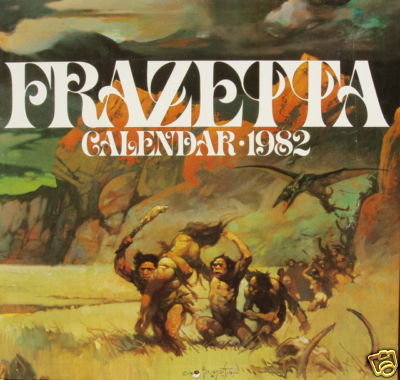
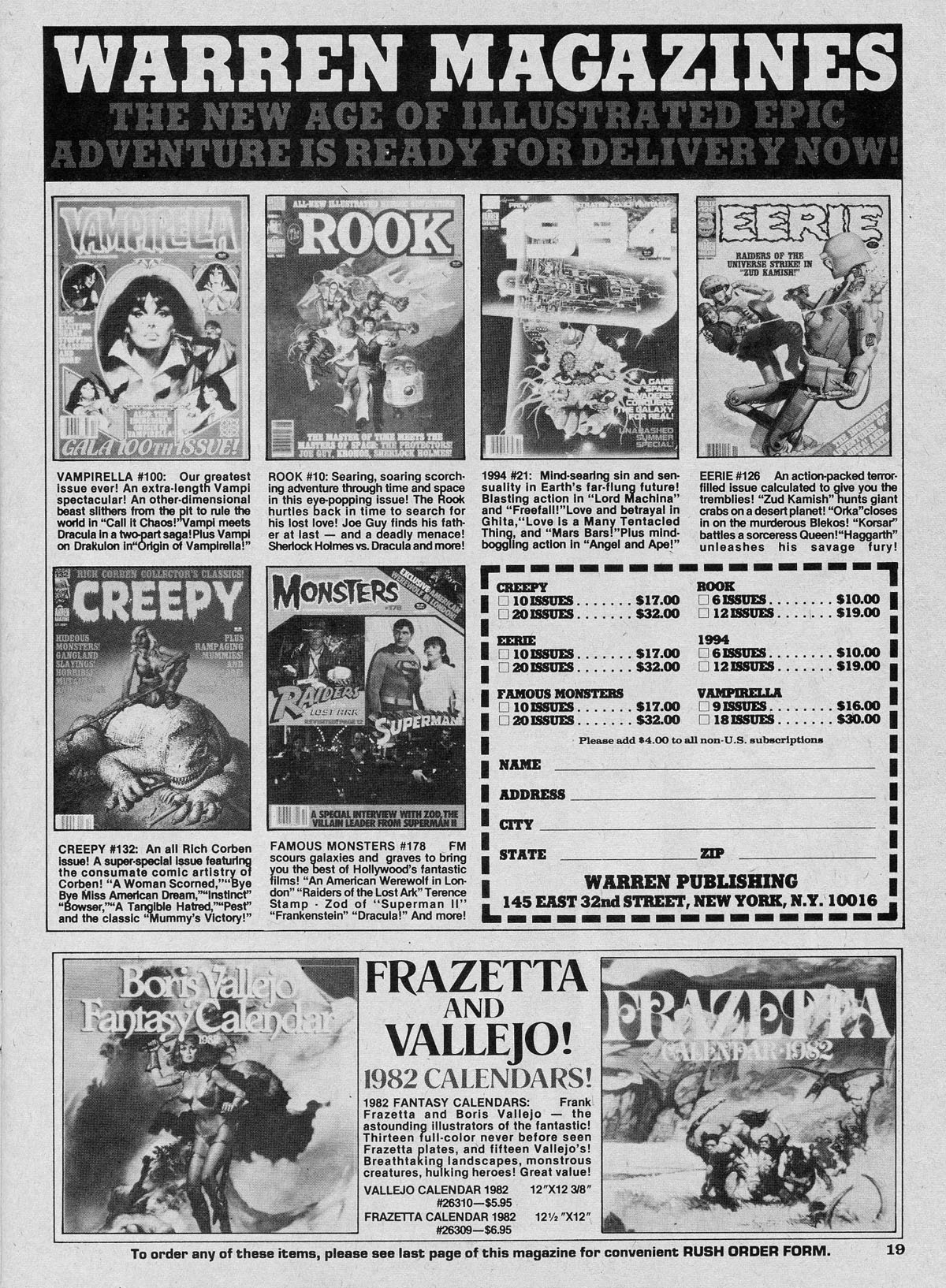
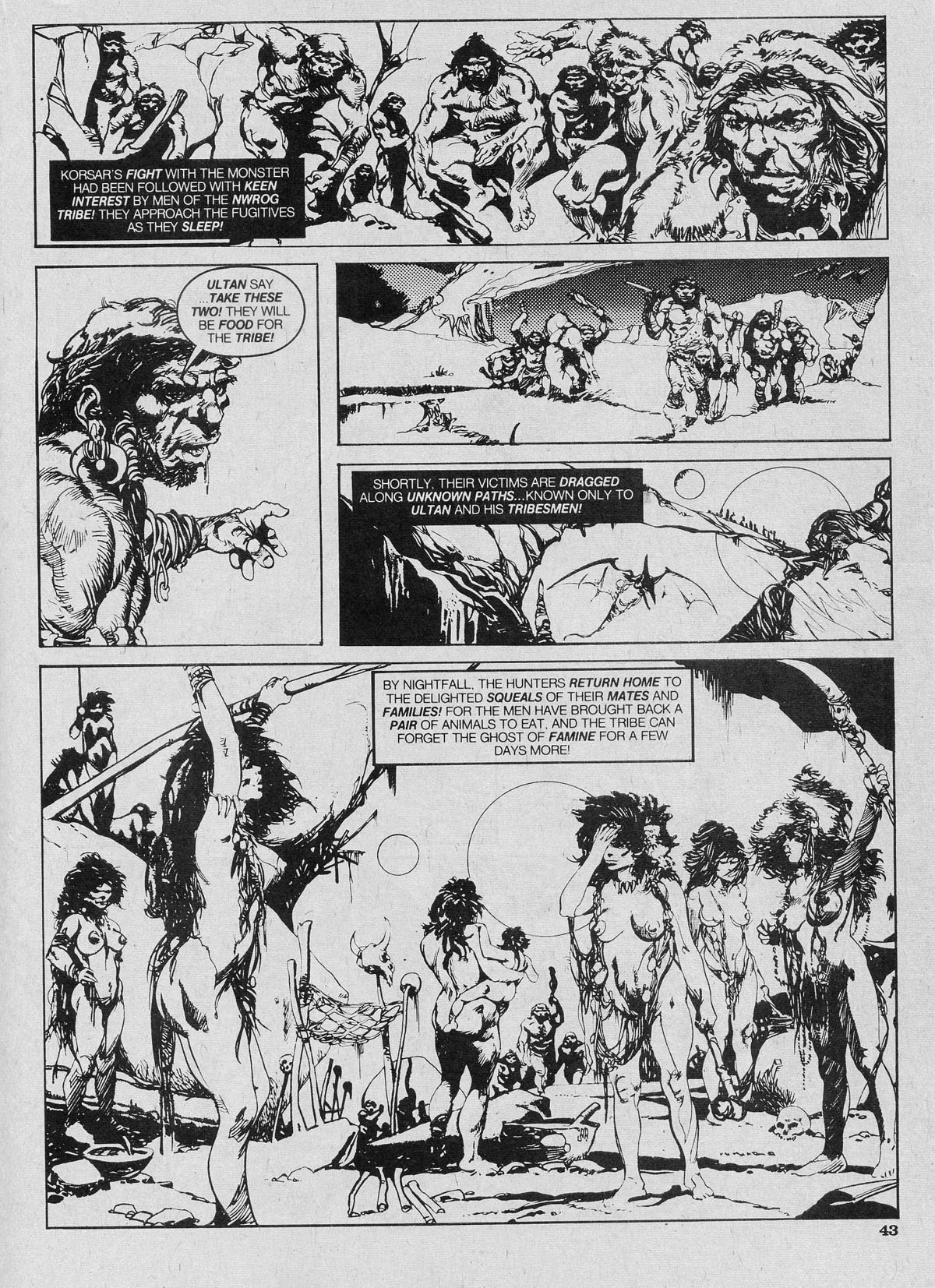
Here’s an old-fashioned swipe that’s rather funny — mainly due to the timing! In Eerie #126 (November 1981), on page 19, in the bottom right-hand corner, you’ll find an advertisement for the 1982 Frazetta Calendar. And, IN THE VERY SAME ISSUE, you’ll find a 12-page story called “Korsar,” with art by Esteban Maroto, which runs from page 35 to page 46. Now, take a look at page 9, panel 3 of the Maroto-illustrated story (Eerie page 43), paying special attention to the composition, the landscape, and the group of figures led by the fellow carrying the woman on his shoulder, on the left-hand side of the panel.

For your convenience, I’ve included both pages below, along with a slightly larger, colour version of the cover of the 1982 Frazetta Calendar:
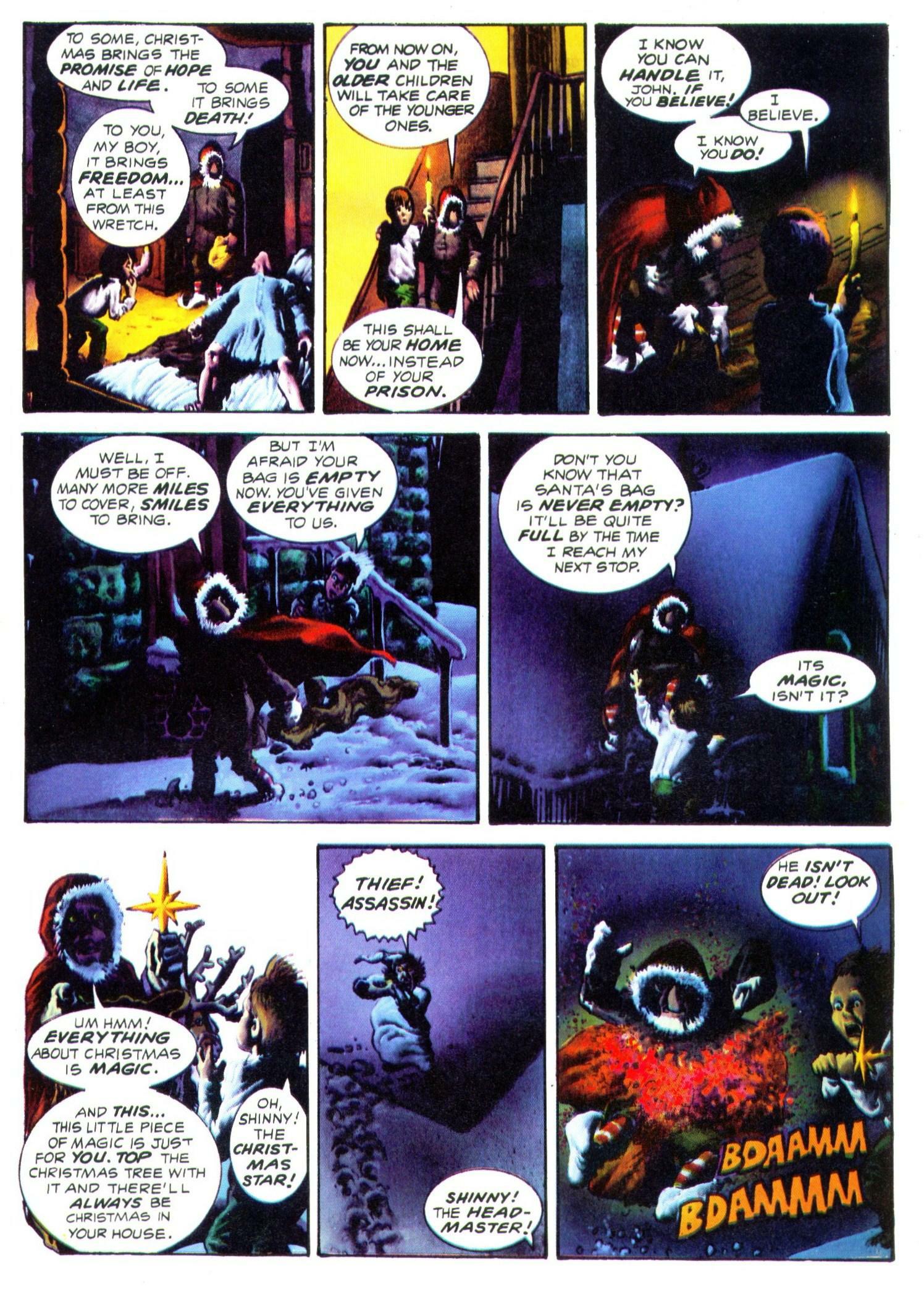
See it?

Comics · Comics (Jones) · Connections · Idyl · Jeffrey "Jeff" Catherine Jones

Connections: Jeffrey Jones vs. Esteban Maroto, again
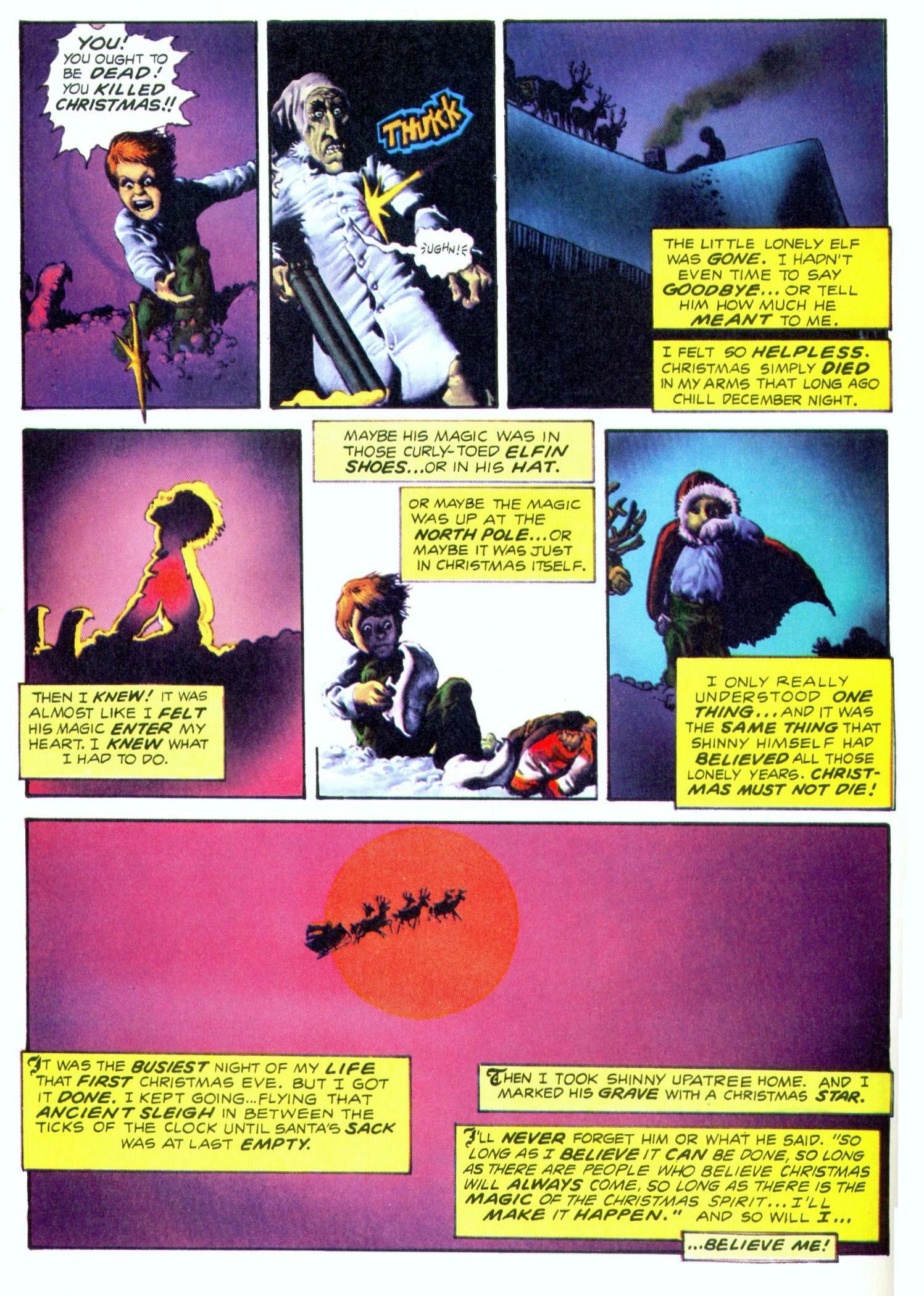
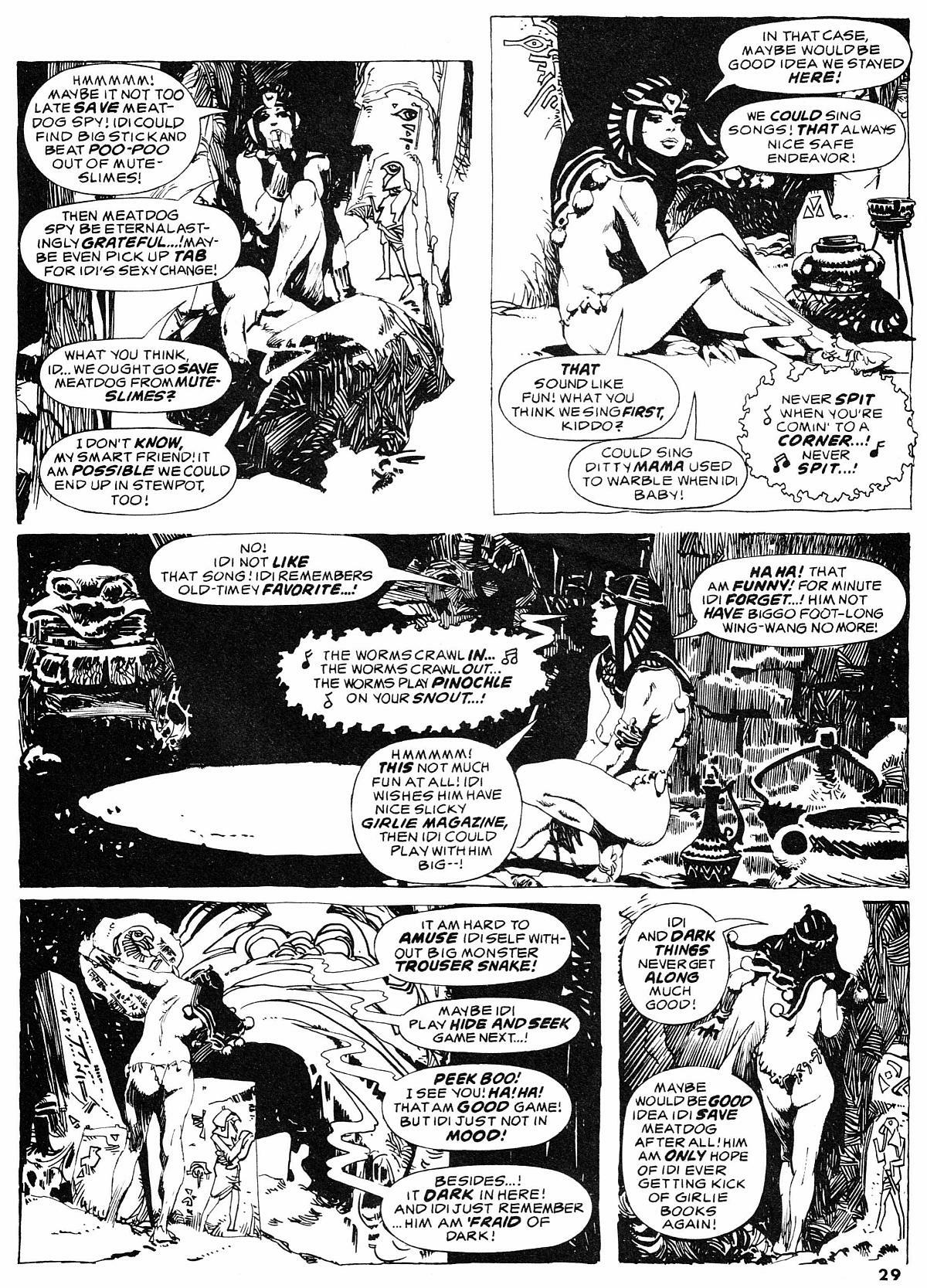
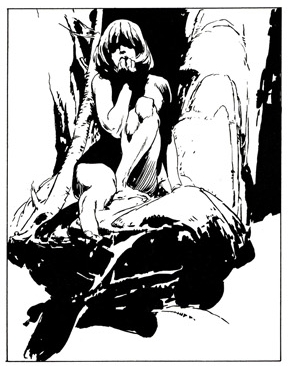
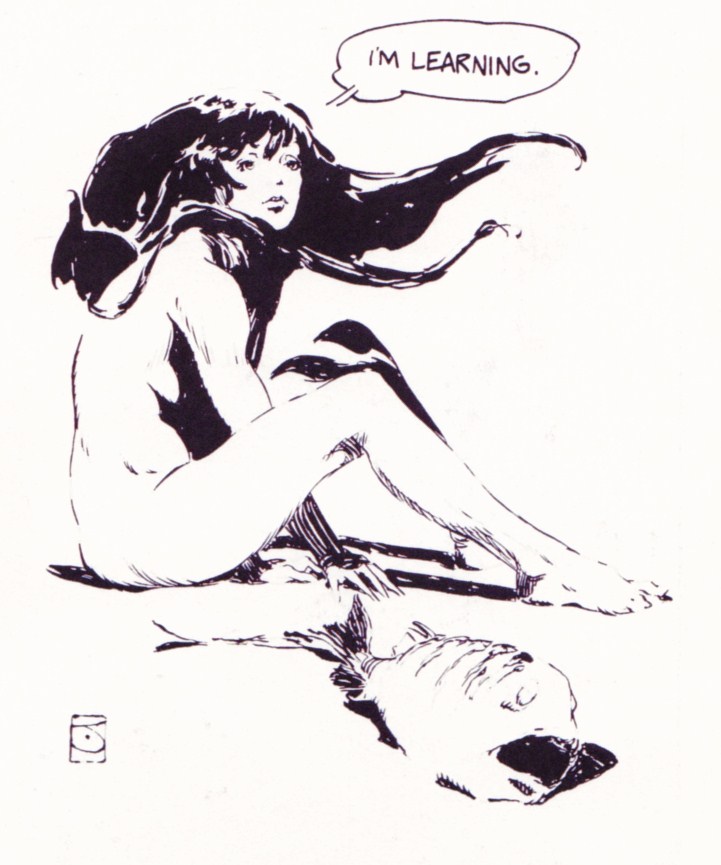
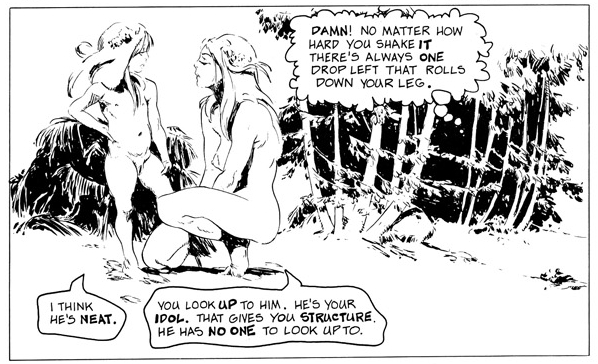
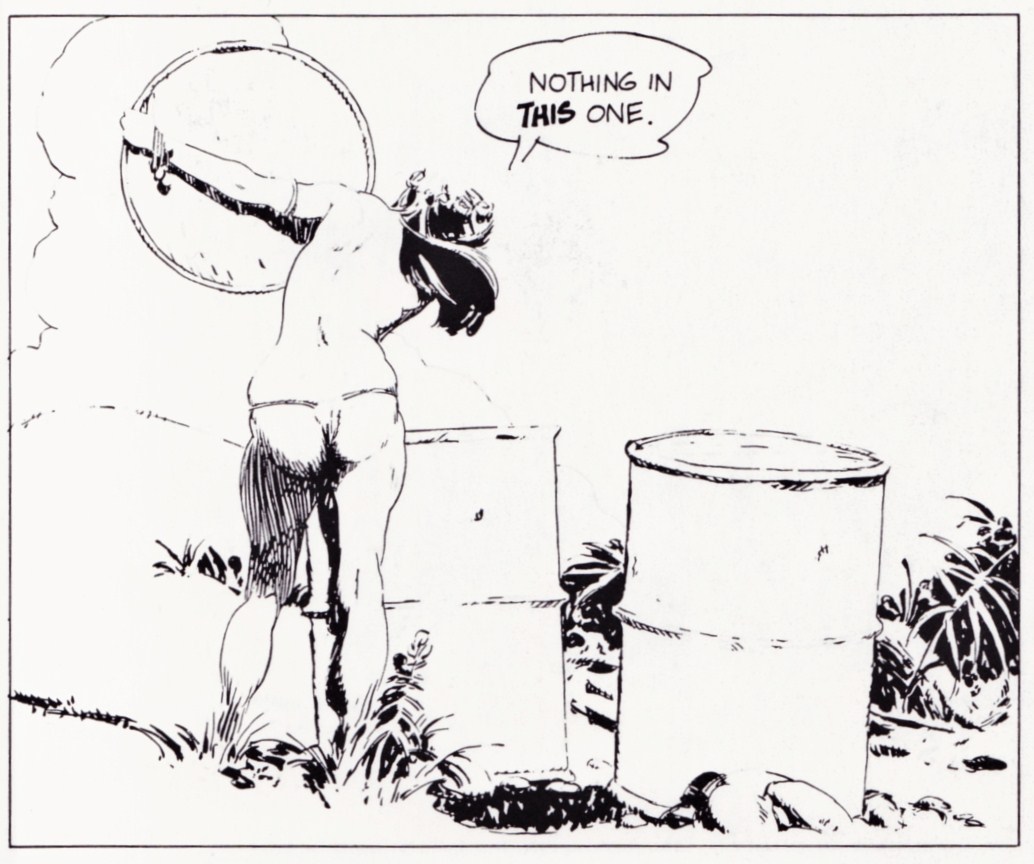
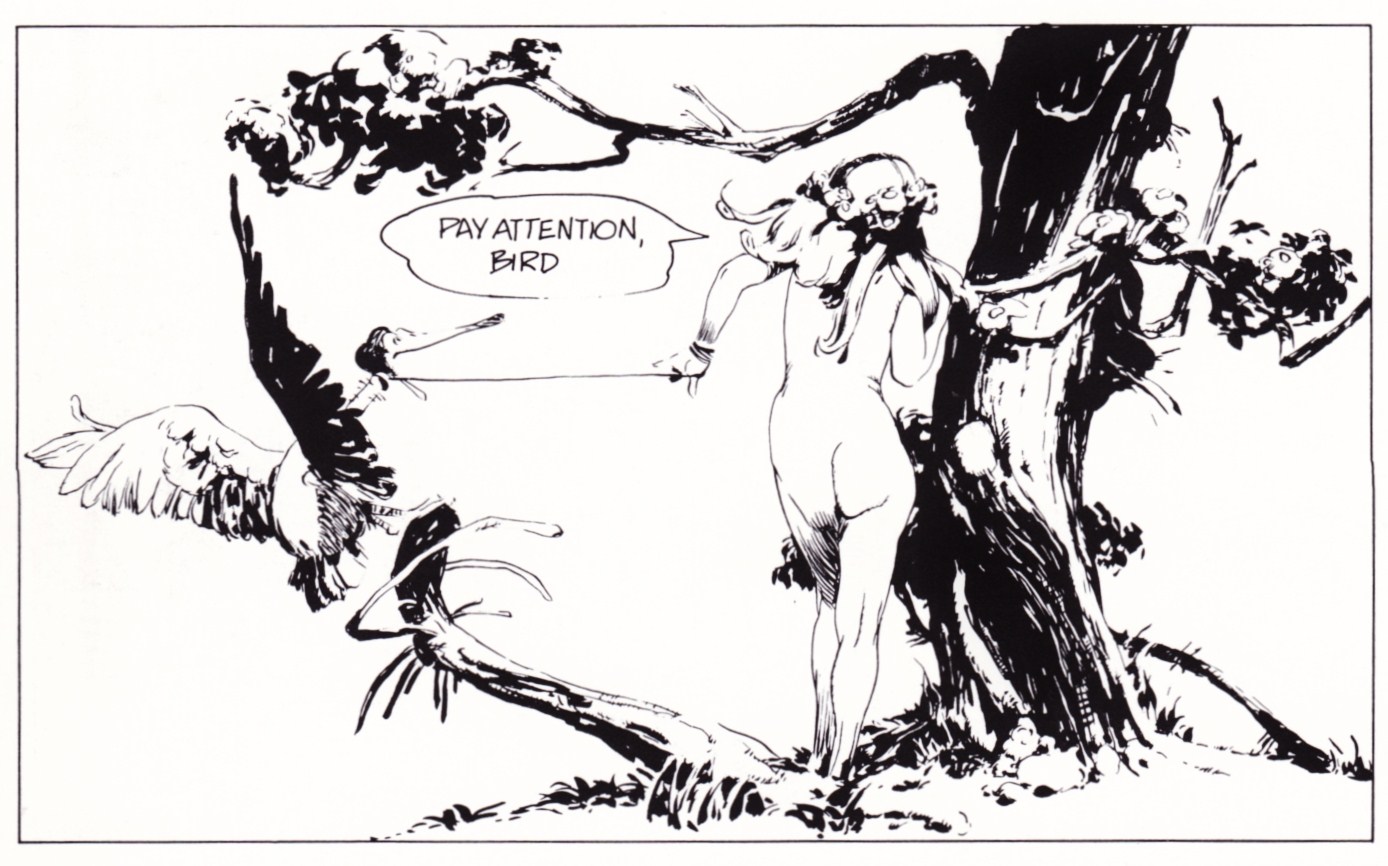
The first page here is by Esteban Maroto. It is from a story called “Idi and Me,” written by Bill DuBay, that first appeared in issue #4 of the Warren magazine, 1984, way back in 1978. And though the script is junk, it’s an attractive page. Only problem is, all of the female figures are very clearly swiped from Jeffrey Jones’s celebrated comic strip, Idyl, which ran in National Lampoon from 1972 to 1975. See below for the ocular proof:

For those who haven’t read 1984 #4, which would be almost everyone, the woman in the DuBay-penned “Idi and Me” is the brutal dictator, Idi Amin, whose chromosomes have been jumbled, just for laughs, by the American “Department of Dirty Tricks” (DDT), thereby turning “the former gorilla-faced leader of Uganda into this heavenly image of white Anglo-Saxon femininity,” Idi, who nonetheless retains a male psychology and sex drive and is thus seeking an operation to change back into a man. (And the final line/moral of the story? “I guess no matter what form you’re in… the world just isn’t ready for Idi Amin!”) All of which seems very odd, given Jeffrey Catherine Jones’s own difficult journey; however, the story did appear way back in 1978, as I noted above, which is about 20 years, more or less, before Jones decided to take definite steps become a woman. So what’s going on here? Seems most likely to me that it’s just a coincidence — though if it isn’t, if DuBay is taking a shot at Jones’s sexuality based on industry rumours, private confidences, or whatever, it’s an incredibly crude commentary! I mean, why would DuBay have done it, and why on earth would Maroto have participated? It doesn’t make sense to me, though, of course, even if the sex-change theme is a coincidence, it doesn’t mean that the story of Idi wasn’t intended, in part, as a parody of Jones’s Idyl. That would certainly explain the blatant swipes, except that Maroto has swiped from Jones (and others) before. So maybe the simple answer is that Jones’s work on Idyl was so skillful, so sensitive, so gorgeous, and — perhaps it seemed to Maroto — so obscure, that it was ripe for the swiping… or not… because the fact is, I’m not sure what to think…

Anyone have any ideas?

Art Collection · Comics · Ebay Win · Look Here · Rod Ruth

Look Here: “The Toodles” (7-23-57), with art by Rod Ruth

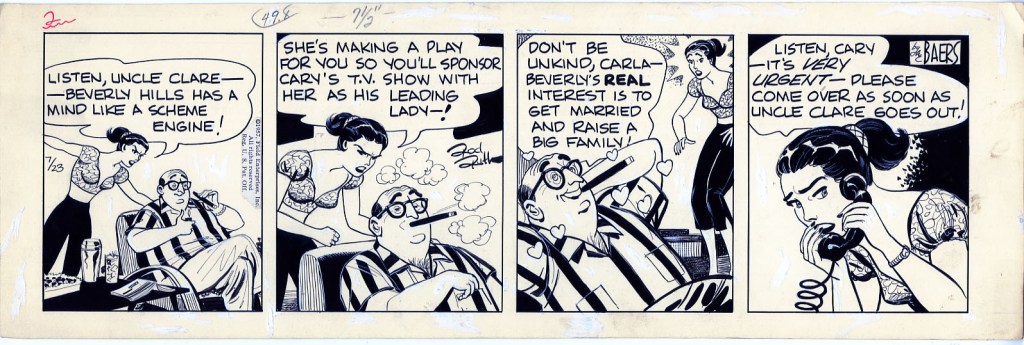
Here’s a piece of original art, a daily dated 7-23-57, by Rod Ruth, from the comic strip The Toodle Family, a.k.a. The Toodles. The strip was written by Stanley and Betsy Baer and was drawn by Ruth from 1941 to 1958. It was then drawn by Pete Winter from 1958 to 1965. Apparently, besides The Toodles, Ruth was an illustrator for Amazing Stories and other Ziff-Davis pulps. Truth be told, I had never heard of either The Toodles or Rod Ruth before I noticed a series of ebay auctions for Ruth’s artwork, but I was happy to pay US$44.00 total (shipping included) US$38.00 total (shipping included; the next day, the seller gave me a partial refund on the shipping charge, presumably to bring it more into line with the actual cost) to add this lively and charming work from 53 years ago (!) to our collection.

I also recently won an ebay auction for a “Miss Peach” daily by Mell Lazarus, and let me tell you, that thing is HUGE! I love it, and I intend post a picture soon.

BONUS LINK:

News of Yore: Profile of the Baers

Art Collection · Comics · Ebay Win · Look Here · Samm Schwartz

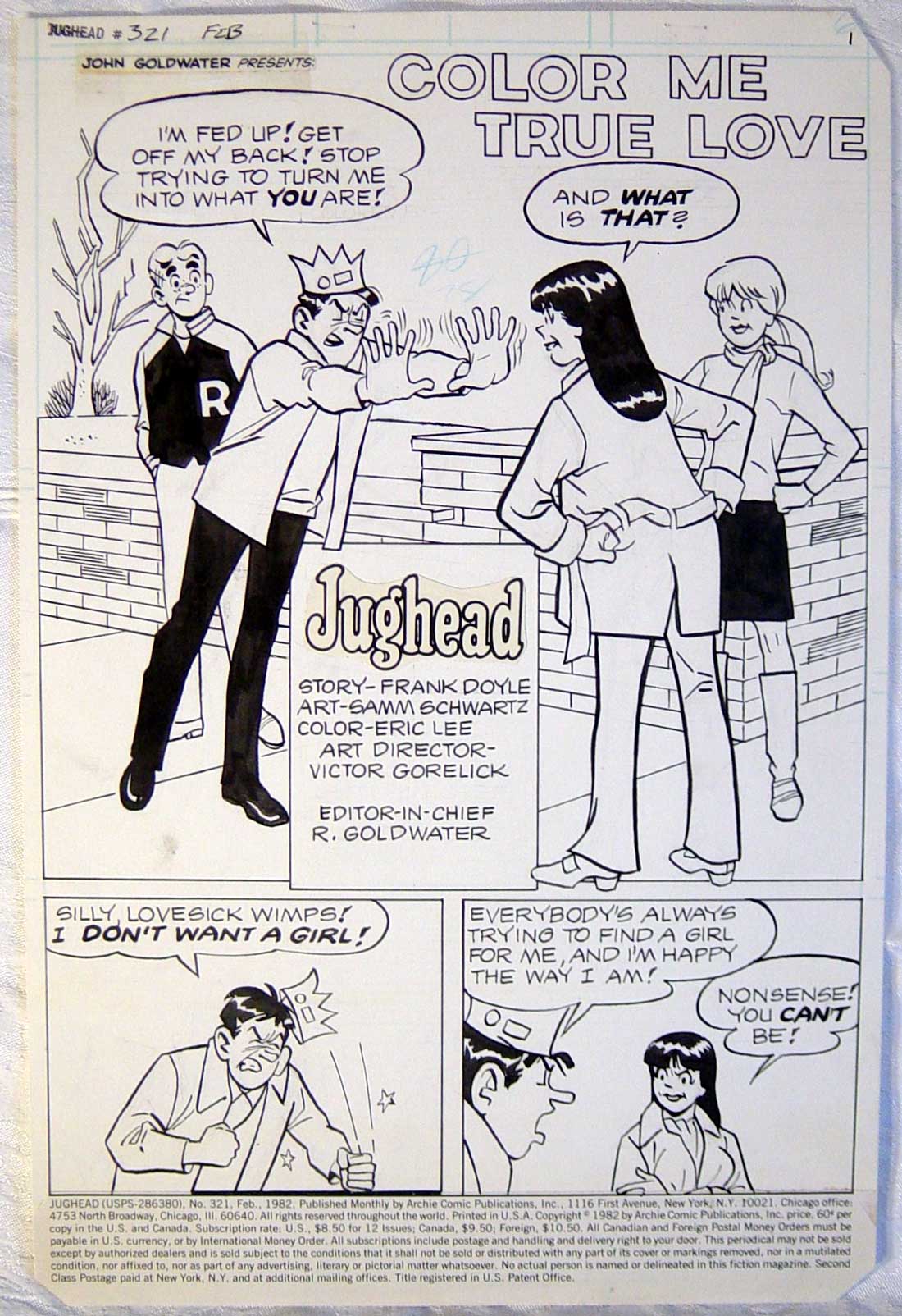
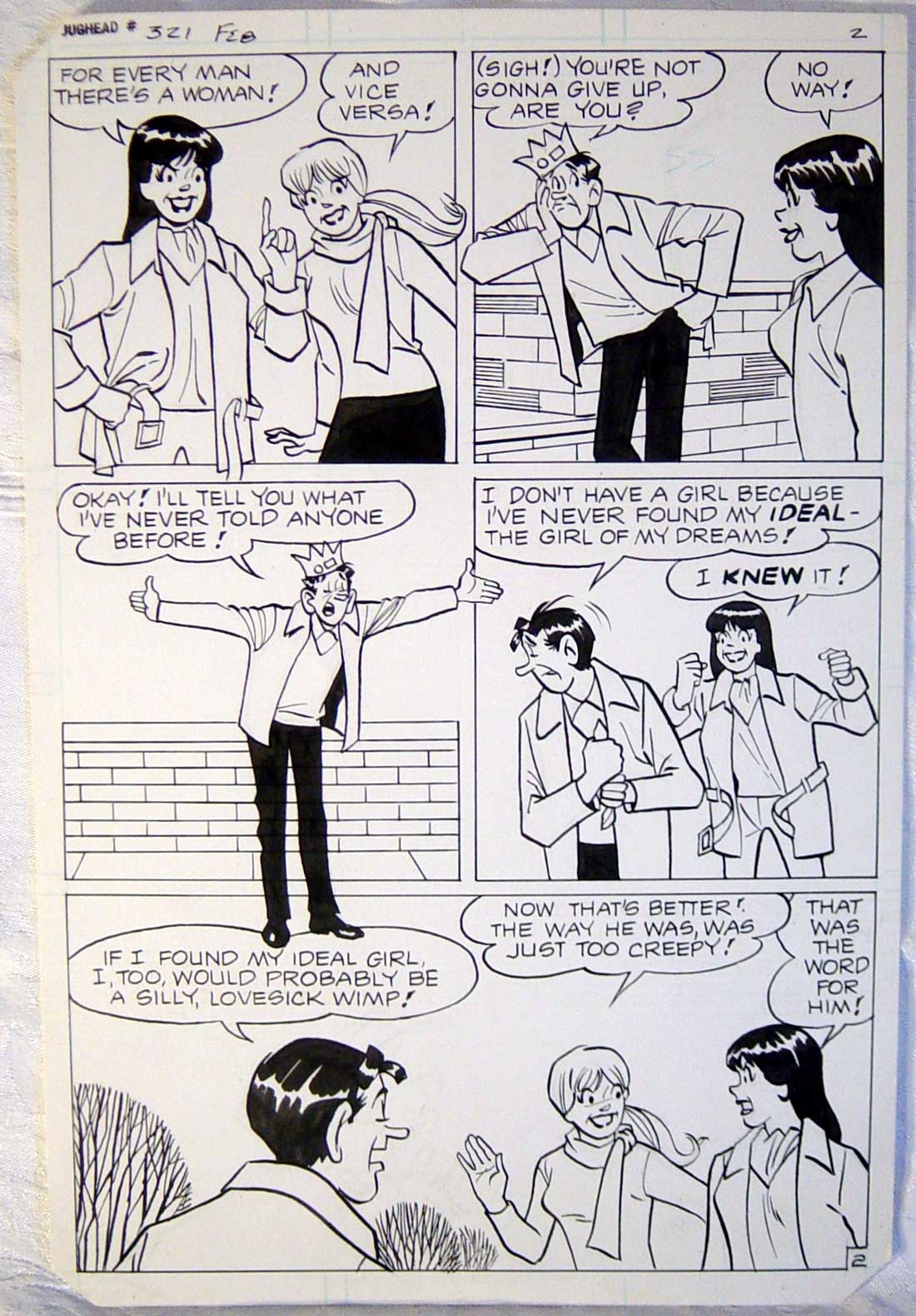
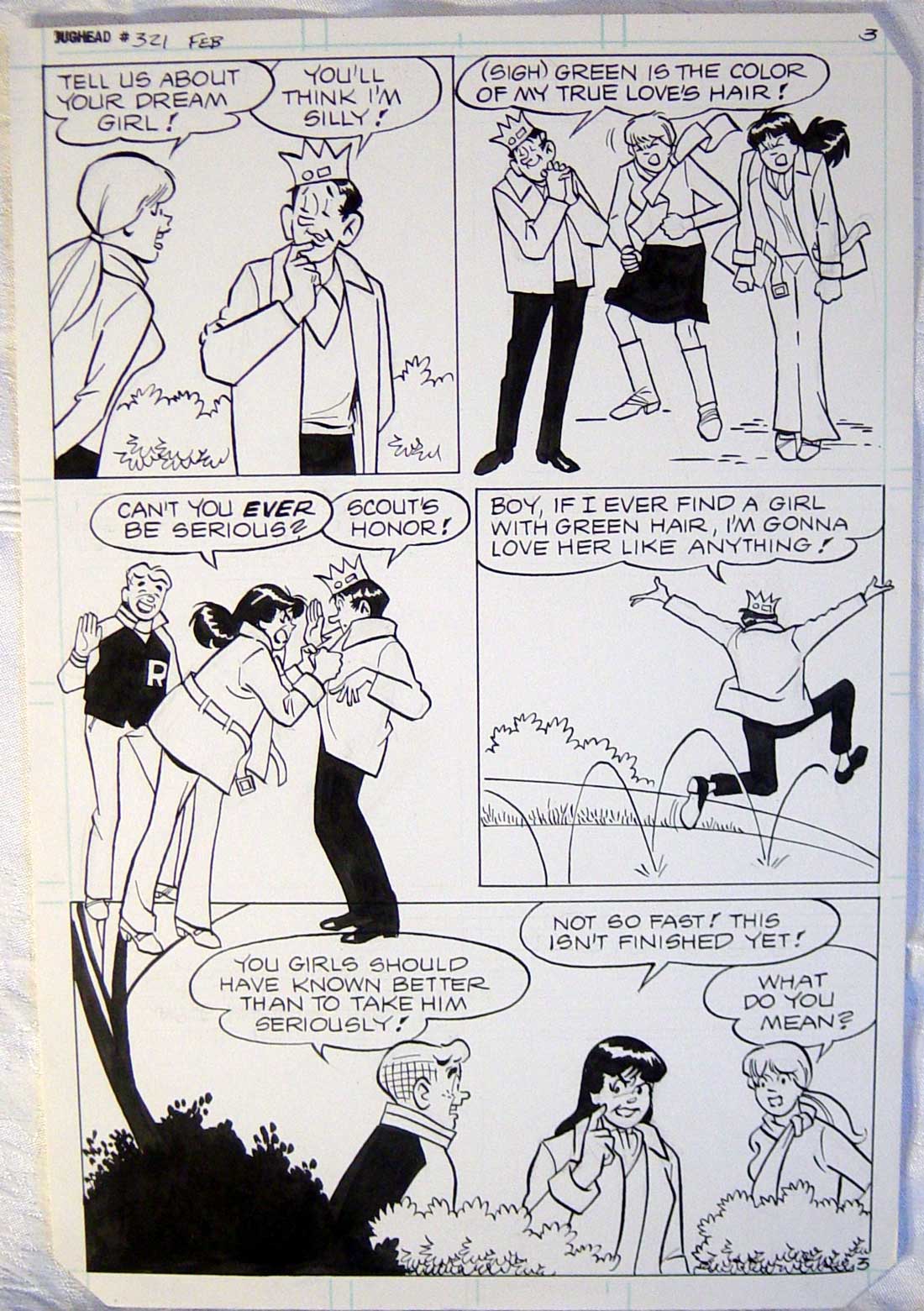
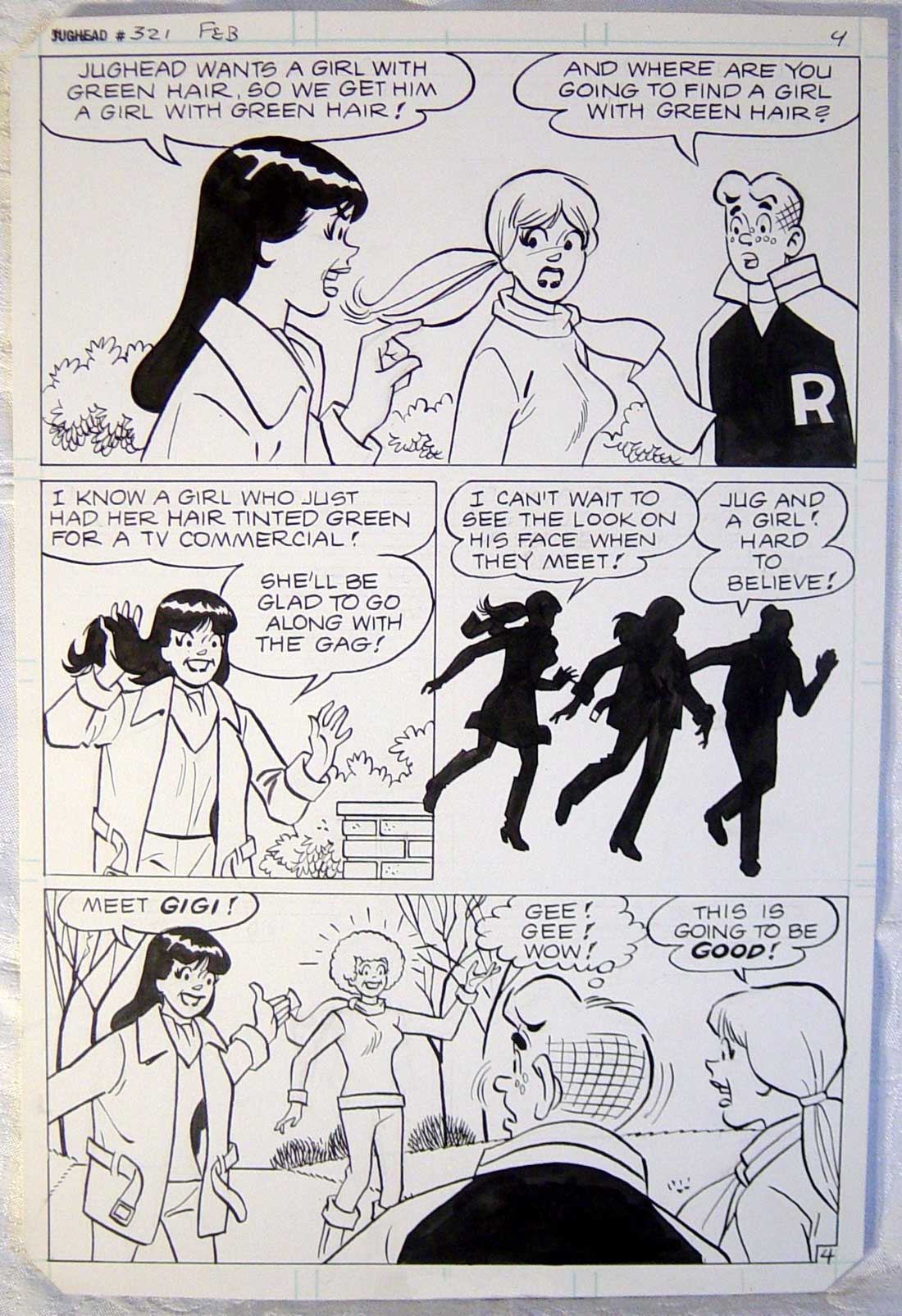
Look Here: “Color Me True Love,” with art by Samm Schwartz

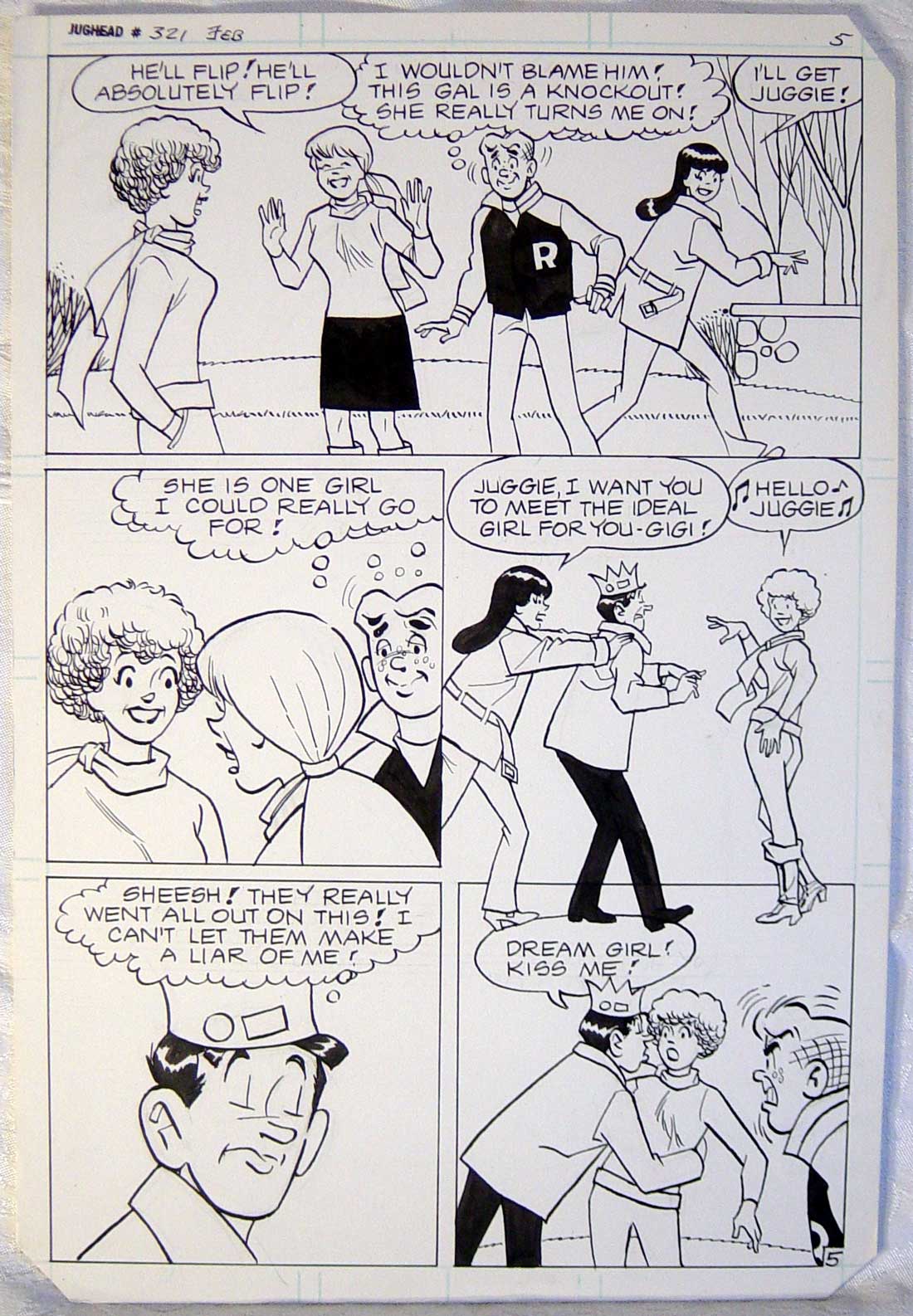
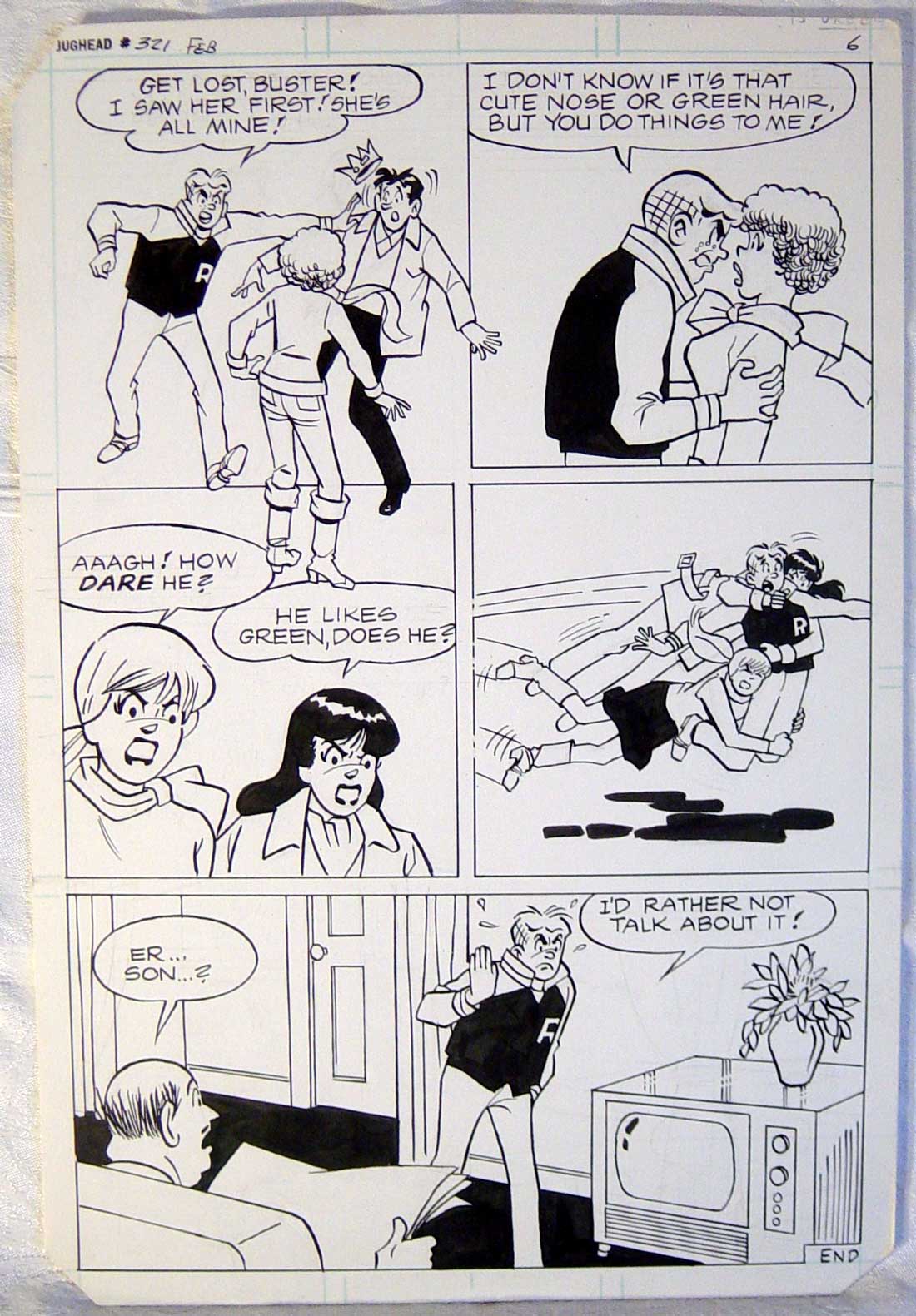
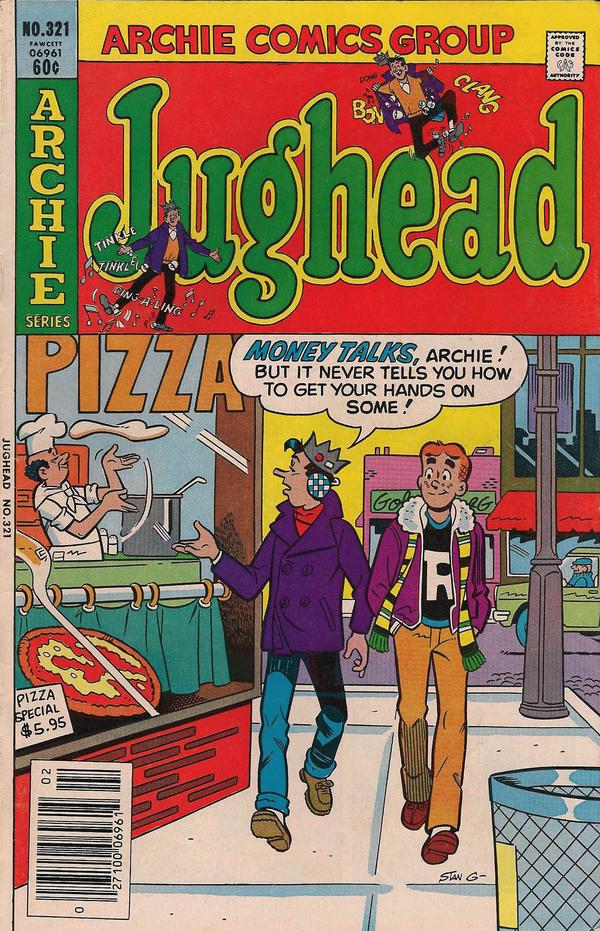
Here’s another selection from our stash of original comic art. It’s a complete short story from Jughead #321, with art by Samm Schwartz. My apologies in advance for the quality of the images; they were shot with an older digital camera under conditions that I ought to have controlled more carefully than I did.

(Click the images to enlarge them, as usual. I don’t own the cover artwork, but I’ve included a JPEG of the original comic, with cover by Stan Goldberg, for fun — and contrast!)

I bought the story on ebay a long time ago. It was in a lot with a complete Betty and Veronica story by Stan Goldberg. As I recall, the cost of the two stories together was less than US$100, shipping included. Maybe I’ll post the Goldberg another time… though I must admit, I’m not really a Goldberg fan…

When I was a youngster, my favourite “Archie” artists — even before I knew their names — were Samm Schwartz and Harry Lucey. In a corner of the comics world dominated by lacklustre DeCarlo clones, Schwartz and Lucey each took the seemingly inflexible “Archie” house style and made it his own. Schwartz’s work was cool, crisp, refined; Lucey’s, affable, energetic, theatrical. Jughead was never so self-assured, so unflappable, as when Schwartz brought him to life; Archie and the gang, never so determined, or so frazzled, as when Lucey fed them through the wringer. With Dan DeCarlo already in the Eisner Hall of Fame, and Bob Montana, the co-creator of Archie who drew the Riverdale gang for more than 30 years, named to the Hall of Fame for 2010, can Samm Schwartz and Harry Lucey be far behind? In my humble opinion, whether it happens sooner or later, it’s inevitable.

BONUS LINKS:

“It’s the Chicago South Side Choir Society! It’s their annual uplift cruise for Meditation Week!” — includes scans of “The Bad Old Days” and “In Search of Sanity,” both drawn by Samm Schwartz.

A Closer Look at Samm Schwartz — includes a scan of the story “Crowning Glory,” with art by you-know-who.

Samm Schwartz Addenda — further thoughts by Jaime J. Weinman, the author of “A Closer Look at Samm Schwartz.”

A Few Words about Samm Schwartz, My Father

Samm Schwartz Photo Album

A Loan and Blue — from 1963, with unusually hyper-kinetic art by Samm Schwartz; in later years, Schwartz’s Jughead never got out of control like this! It’s like watching Bugs Bunny melt down.

Little Archie by Samm Schwartz — wow!

Tippy Teen: “Sure Cure Go-Go” — with art by Samm Schwartz.

Comics · Comics (Jones) · Here, Read · Jeffrey "Jeff" Catherine Jones · Look Here · Look There

Look There, and Here: “Harry” by Jeffrey Jones

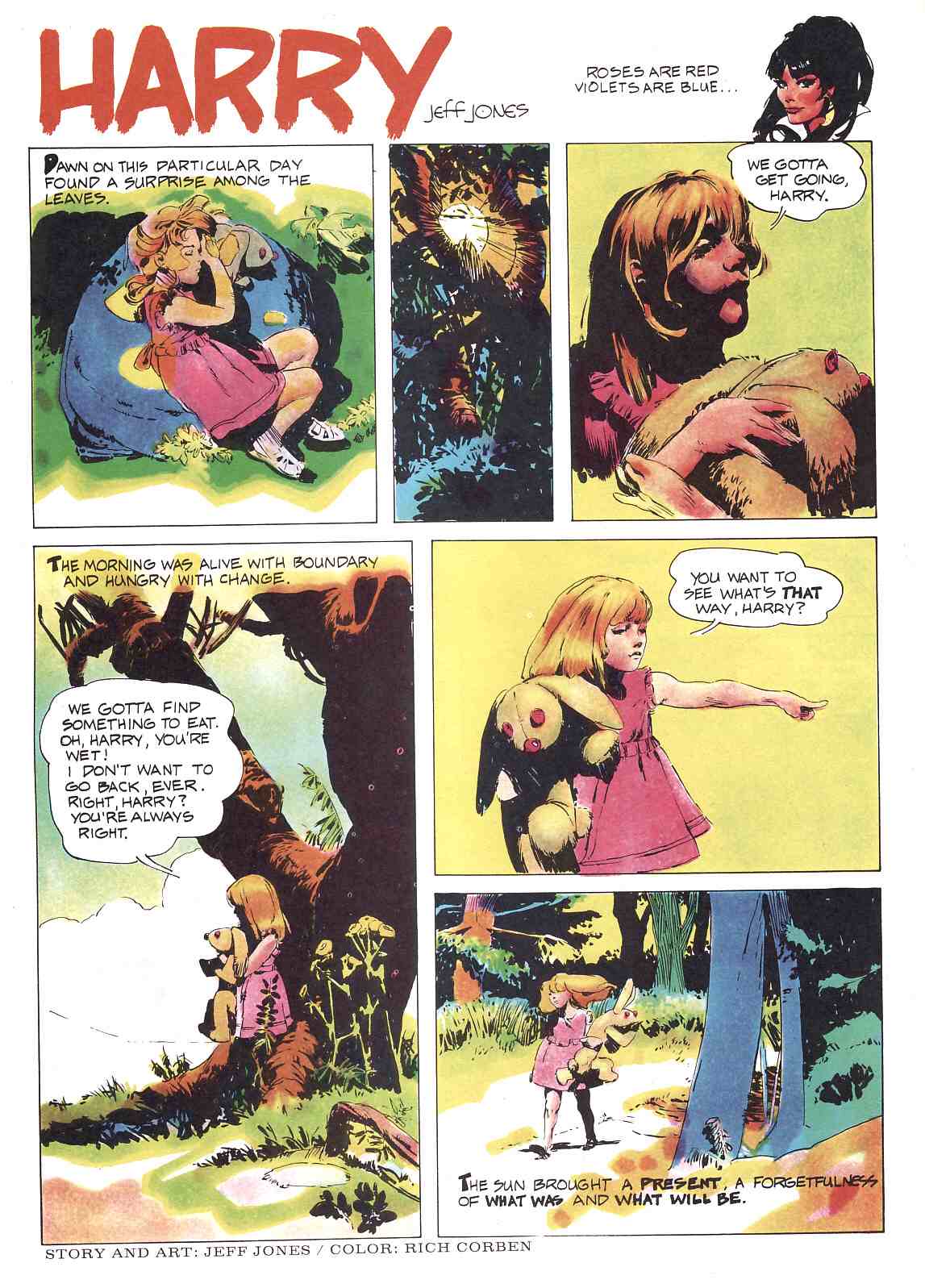
Over at Atomic Surgery, blogger Staq Mavlen has posted scans of Jeffrey Jones’s short story, “Harry,” from Vampirella #85, in crisp black and white. What Mavlen doesn’t mention is that “Harry” was originally published in Vampirella #32, with day-glo colours by none other than Richard Corben! To compare the two versions, simply click here to read the black-and-white reprint and scroll down on this page to read the original colour publication:

Anyone prefer the colour version?

Comics · Heads Up! · Richard Corben

Coming Soon: “Odds and Ends” by Richard Corben

As advertised on the Corben Studios Web site, Odds and Ends is to be a 32-page, black-and-white collection of unfinished, cancelled, and abandoned projects as well as works in progress, including the second chapter of From the Pit, book and CD covers, and more. No specific release date has been announced, but if this little project does eventually come to fruition, it will be the first publication from Corben’s own Fantagor Press that we’ve seen in a long time.