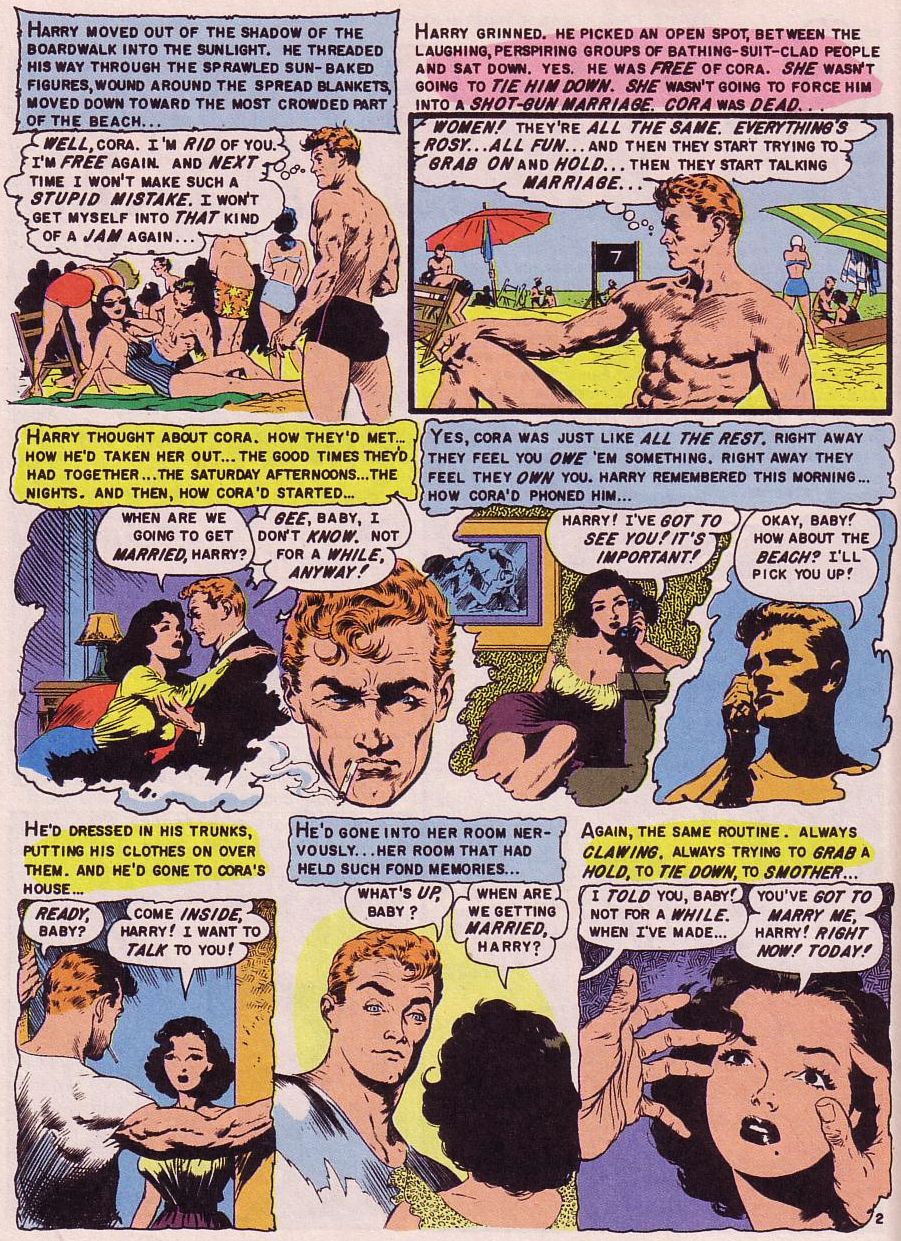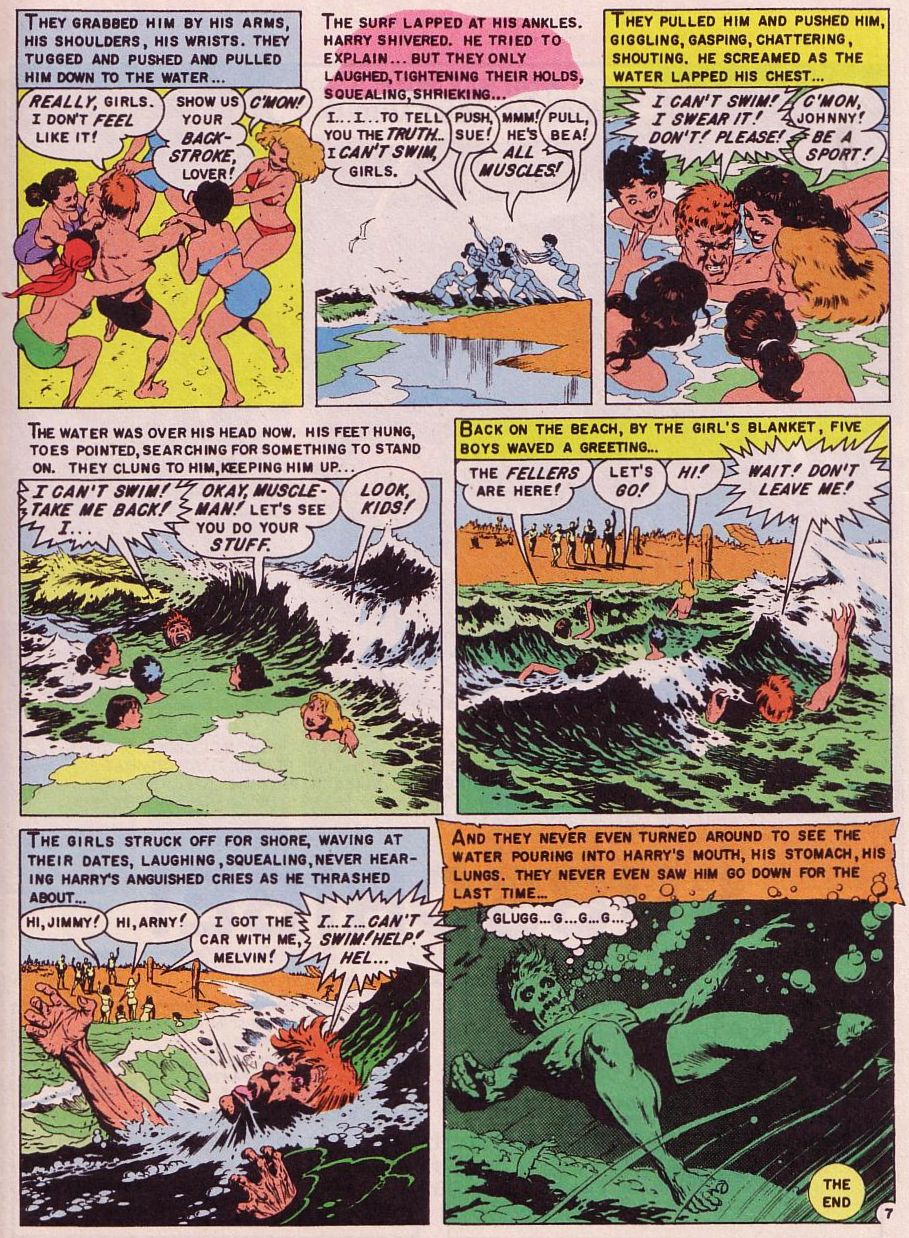
Frank Frazetta · Heads Up!

Heads Up: FRAZETTA – FUNNY STUFF, edited and designed by Craig Yoe

Coming in March 2012 from IDW:
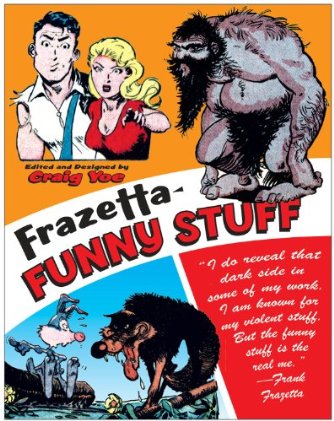
Here’s the publisher’s description of the book, as it appears in the Amazon catalogue:

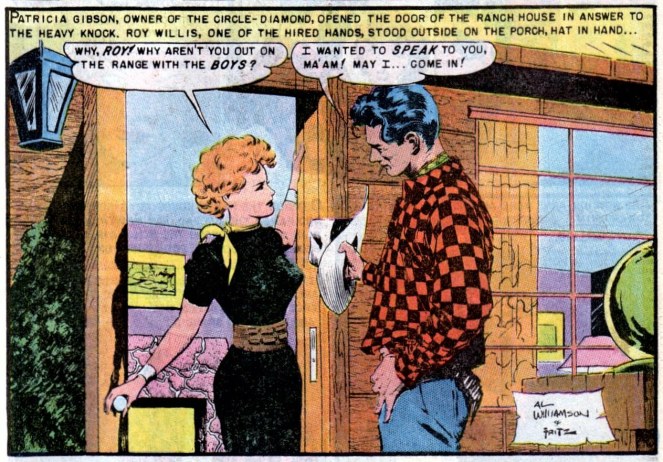
Frank Frazetta! He’s been rightfully called “The Grand Master of Fantasy Art”! But, it’s little known that Frazetta also conquered other worlds in the Golden Age of Comics, as shown in his Donald Duck-ish funny animal and hilarious hillbilly comic book stories. Even those aware of this wonderful Frazetta art don’t know the extent – this book is a whopping 256, large-format pages! Did we mention ferocious, terrifying wolves and swampland creatures in the plethora of animal stories illustrations as only Frazetta could draw them? There’s also lions and tigers and bears – oh my! – before Frazetta’s famous paintings captured the same subjects. But wait, there’s more! You’ll see the roots of the Frazetta Girl in the sexy Kathy teenage girl adventures and the hot Daisy Mae-look-alike, Clarabelle, in the hillbilly hi-jinks stories of her beau, Looey Lazybones (Holy Li’l Abner!). The introduction is by famed cartoon director Ralph Bakshi, who closely worked with Frazetta when they co-produced the animated feature film, Fire and Ice. Bakshi shares rare insights, anecdotes, photos, and Frazetta drawings, and created a special painting of Frazetta and himself as funny animals for this beautiful hardcover, full-color coffee table book! Frazetta – Funny Stuff is edited and designed by Eisner award-winner Craig Yoe.

The last substantial collection of Frazetta’s “funny animal” work was published by Kitchen Sink two decades ago under the title Small Wonders: The Funny Animal Art of Frank Frazetta, with an introduction by William Stout. You can view selections from Small Wonders courtesy of Clarke Snyder’s Inspiration Grab-Bag, in a post titled Frank Frazetta (Fritz) Funny Animal Comics-1940’s. However, since Small Wonders is only 80 pages in length — apparently it was book one of a two volume set, the second volume of which was never published — while Frazetta – Funny Stuff is, according to the publisher, “a whopping 256, large-format pages,” I think I can say with some certainty that even Frazetta fans who already own Small Wonders are going to want to add Frazetta – Funny Stuff to their collections.

Small Wonders, btw, had a terrific, art-centric cover that I like much better than the cover of the new collection, which is okay but which I would characterize as more design-centric; need I add that, where comics reprints and art books are concerned, I prefer art-centric covers:
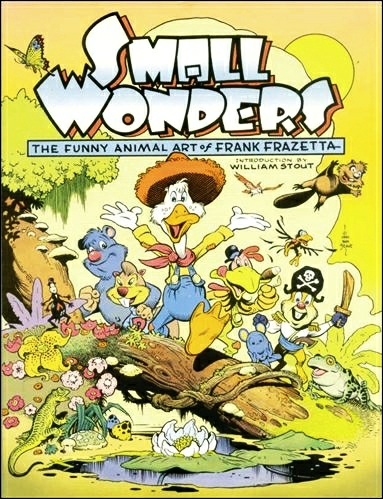
The only down side of that cover is that the artwork is not by Frazetta but rather is a tribute to Frazetta’s funny animal comics by William Stout.


“I’m just a straight, ordinary guy. I truly wish the world was full of sweetness, flowers and happiness. But it’s not, and I do reveal that dark side in some of my work. I am known for my violent stuff. But the funny stuff is the real me.” —Frank Frazetta


BONUS LINKS:

Cartoon SNAP > More Frank Frazetta Funny Animal Comics – Bruno the Bear 1949, Frank Frazetta Funny Animals: Daffy and Dilly in “All At Sea” – Sept 1949, Frazetta Funny Animal Comic Book Scans from 1948: Dodger the Squirrel – Coo Coo Comics – all in colour.

ComiCrazys > Barney Rooster > Frank Frazetta – in black and white.

Shane Glines’ Cartoon Retro > Frank Frazetta: Barney Rooster, Frank Frazetta: Bruno, Frank Frazetta: Dodger, Frank Frazetta: Hucky Duck – all in colour.


TOTALLY OFF-TOPIC BONUS LINK:

Shane Glines’ Cartoon Retro > Frazetta as Model – now that is a great find!

Comics · Connections · Frank Frazetta · Here, Read · Look Here · Michael Wm. Kaluta

Heads Up: MICHAEL Wm. KALUTA: SKETCHBOOK SERIES VOLUME 1

[CLICK IMAGE TO ENLARGE]

Scheduled for release in February 2012 (according to Amazon), Michael Wm. Kaluta: Sketchbook Series Volume 1 is described by the publisher, IDW, as “the first in a series that will provide a glimpse into the inner workings of this great artist, from the very earliest creative spark to more finished concepts and nearly completed works. Each image has been scanned from Kaluta’s personal sketchbooks and archives, and is accompanied by commentary from the artist.”

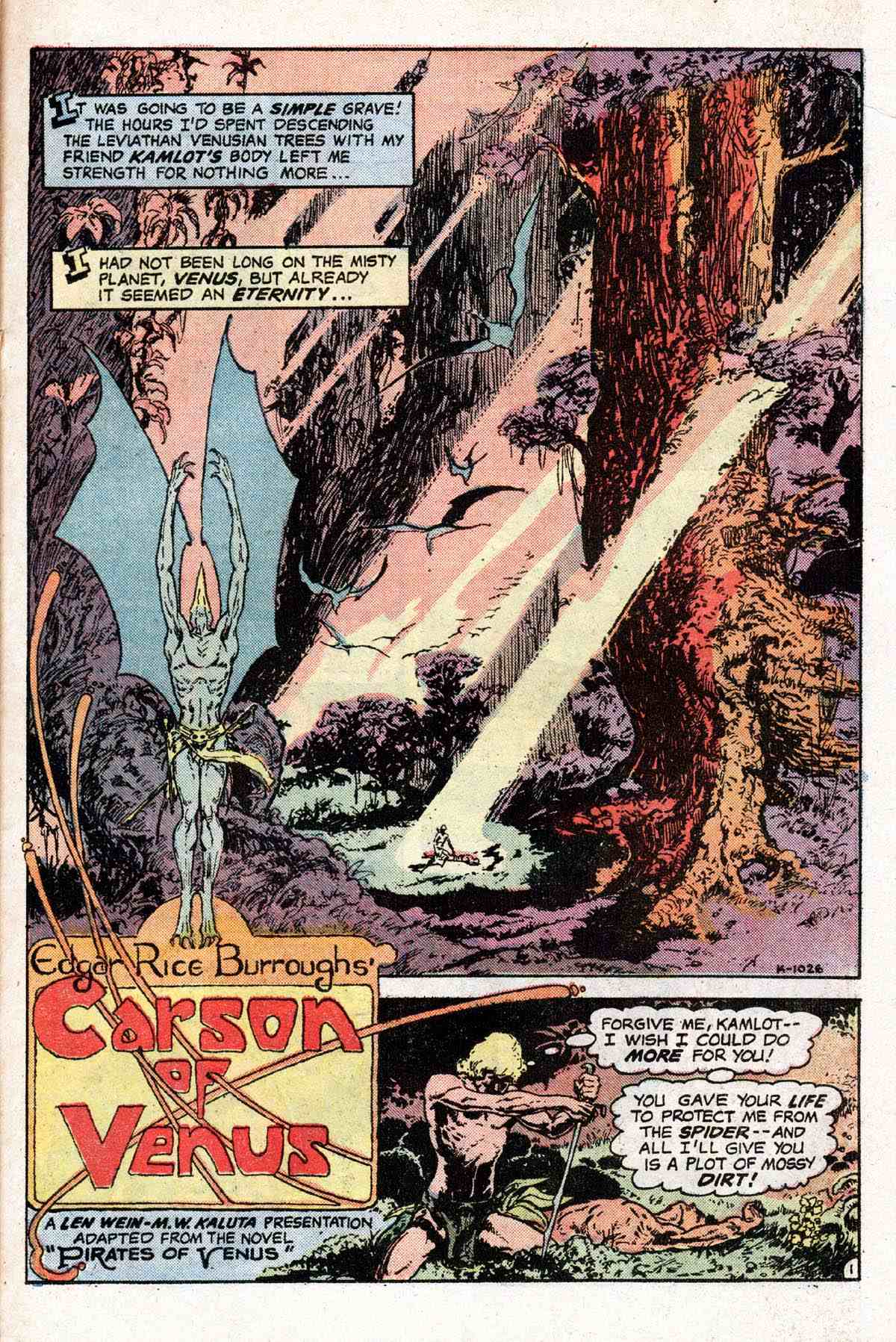
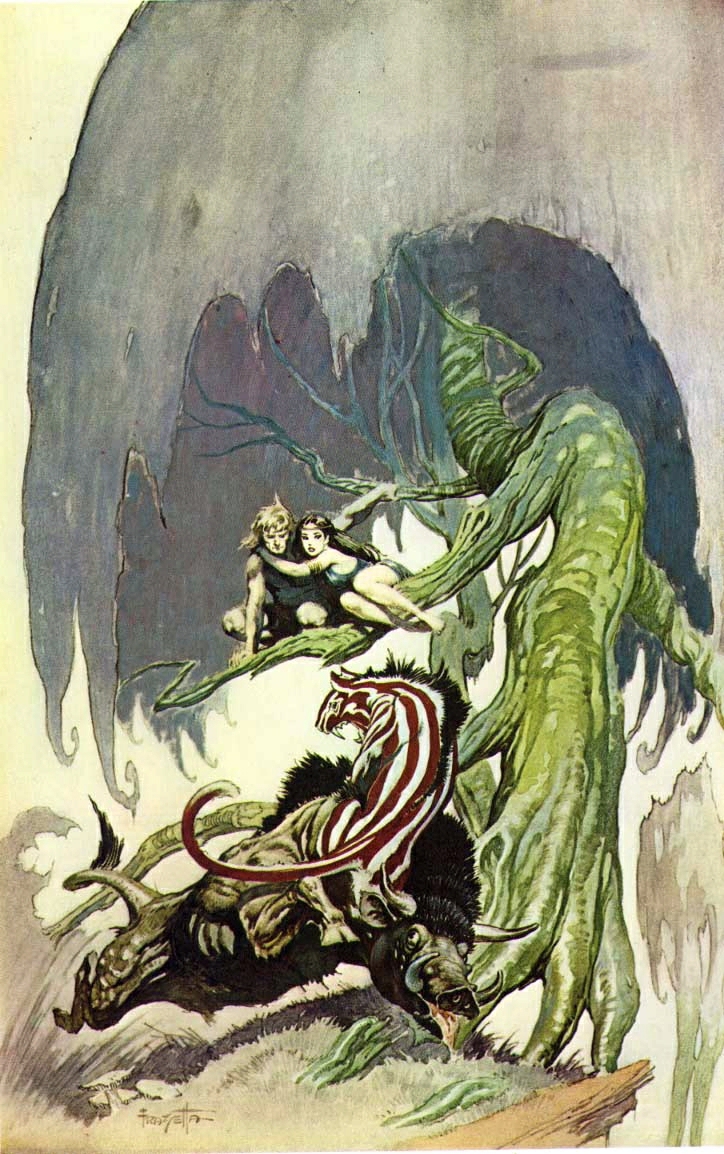
To whet your appetite for Kaluta’s new book, here’s the fifth (?) instalment in writer Len Wein and artist Mike Kaluta’s adaptation of Edgar Rice Burroughs’ 1934 novel, Pirates of Venus. Wein and Kaluta’s adaptation was part of an ongoing series of “Edgar Rice Burroughs’ Carson of Venus” stories that had a short but memorable run as back-up feature in the series, Korak, Son of Tarzan. If you’re familiar with Frazetta’s cover paintings for Edgar Rice Burroughs’ “Carson of Venus” novels, you will notice on the third page of the story that Kaluta gives an artistic tip of the hat to Frazetta’s painting for the 1963 Ace edition of Lost on Venus; for those who aren’t familiar with Frazetta’s painting, I’ve included an image of it below for the sake of comparison:

[CLICK IMAGES TO ENLARGE]

It was obvious right from the start that Kaluta and Burroughs were a match made in heaven! And if work like that doesn’t make you want to see Kaluta’s sketchbook, and read what he has to say about his process, then nothing will…
Frank Frazetta · Illustration Art · Look Here

Connections: Frazetta vs. Neely


BONUS LINKS:

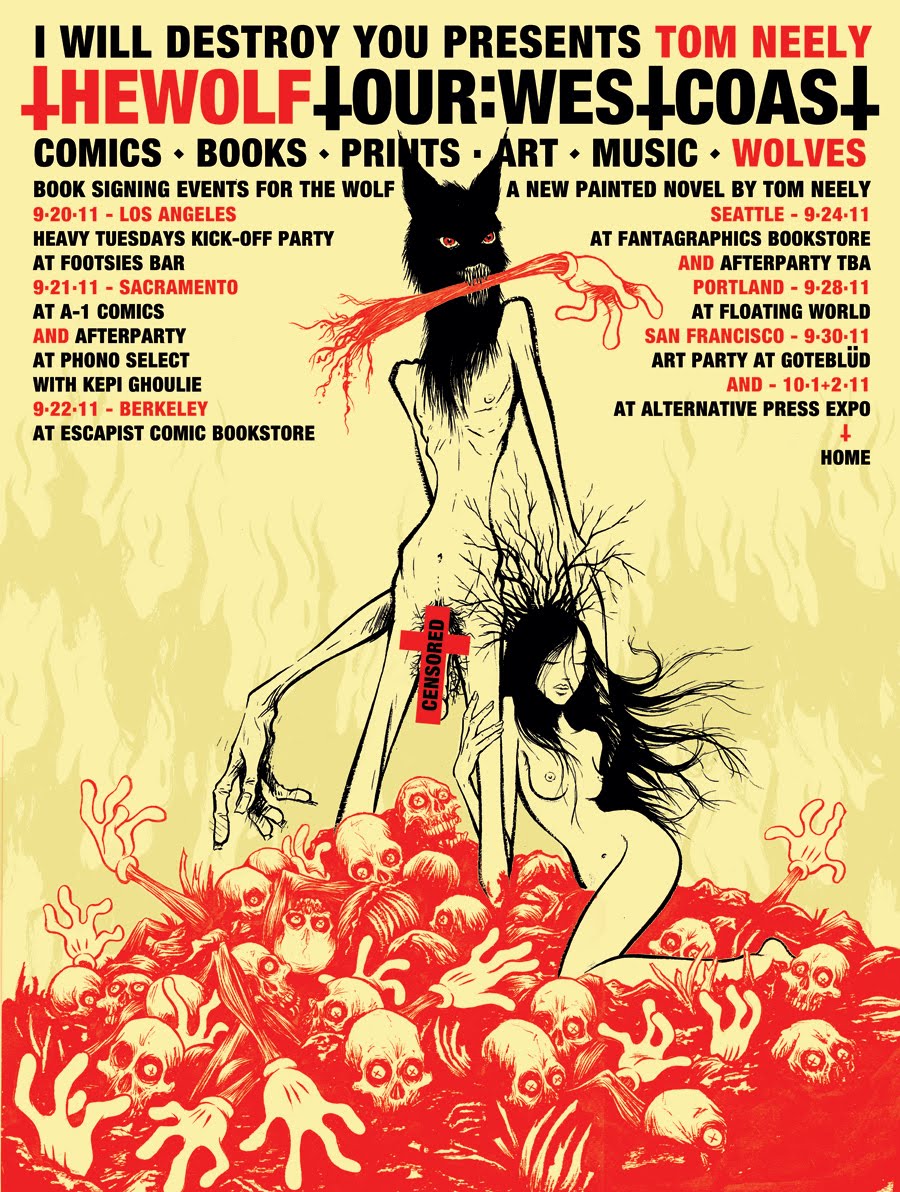
Attentiondeficitdisorderly > Comics Time: The Wolf — a review by Sean T. Collins.

Robot 6 > Tom Neely unleashes The Wolf: a preview and interview

Tom Neely’s “i will destroy you” Store — buy The Wolf, The Blot, silkscreen prints, and more, directly from the artist, Tom Neely.

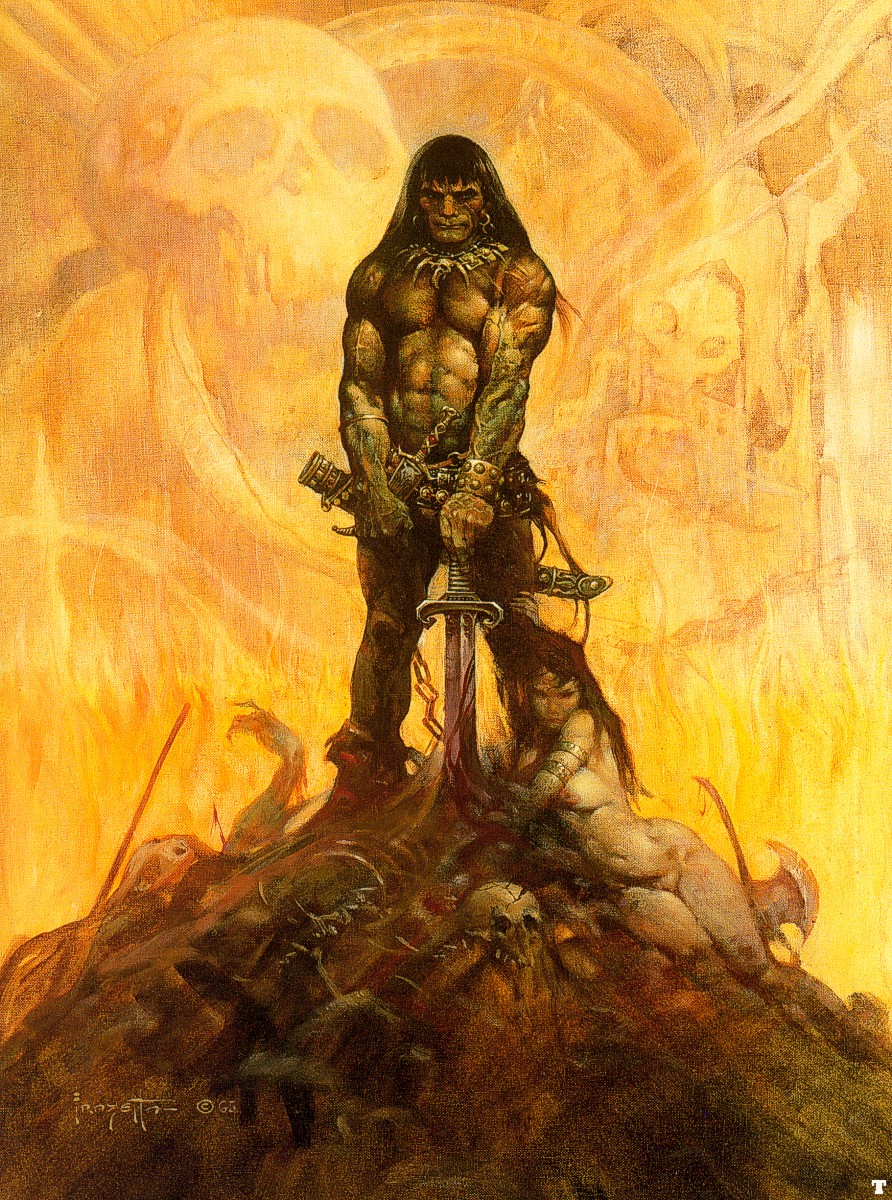
Keywords: Frank Frazetta, Conan the Barbarian, Tom Neely, Wolf, lycanthropy

Connections · Frank Frazetta · Howard Chaykin · Look Here

Connections: Frank Frazetta (1972) vs. Howard Chaykin (1979)

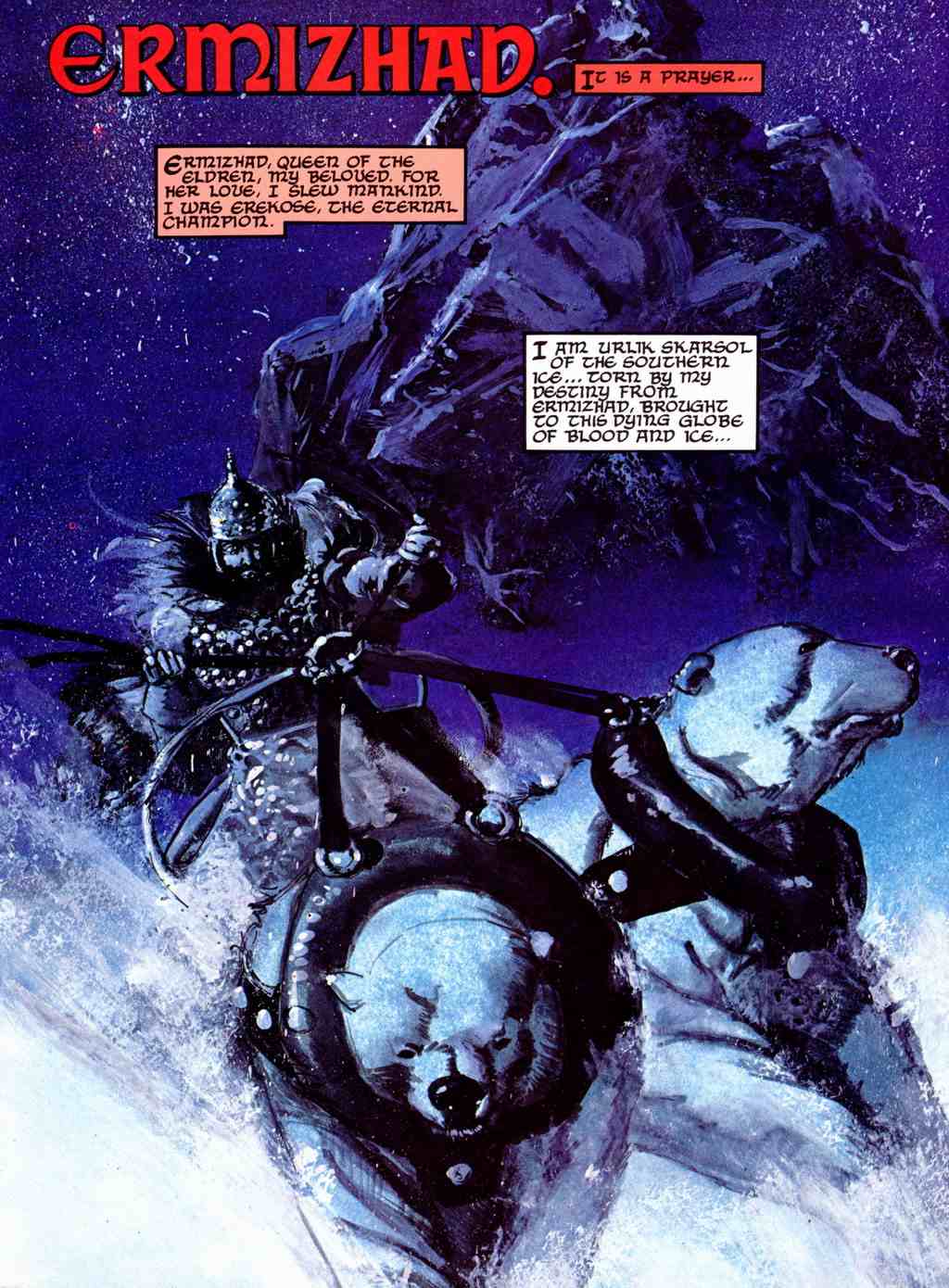
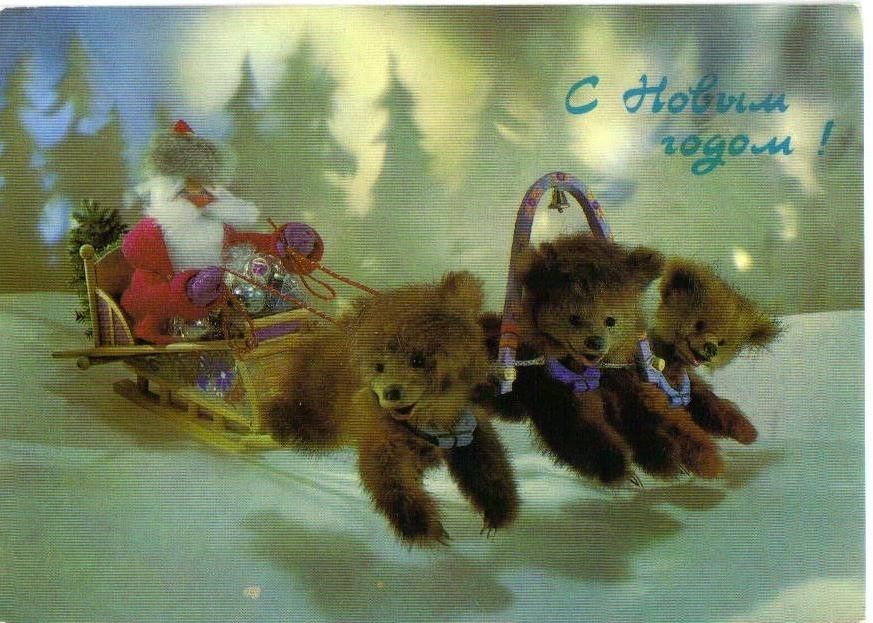
Notice how Frazetta hasn’t bothered to construct any kind of a harness for the Silver Warrior’s polar bear sleigh team and how Chaykin’s attempt to supply Urlik Skarsol’s polar bear team with a semi-plausible harness — with collars that look as though they might be made out of big, black inner tubes recycled from old truck tires — actually diminishes rather than enhances Frazetta’s gloriously silly original concept by drawing undue attention to the mundane question of how, exactly, the fantasy hero’s cool mode of transportation could be made to work in the real world and whether Chaykin’s design is, in fact, a viable solution.


BONUS IMAGE (Added 27 December 2013):

Bernie Wrightson · Connections · Frank Frazetta · Illustration Art · Look Here

Connections: Frazetta and Wrightson

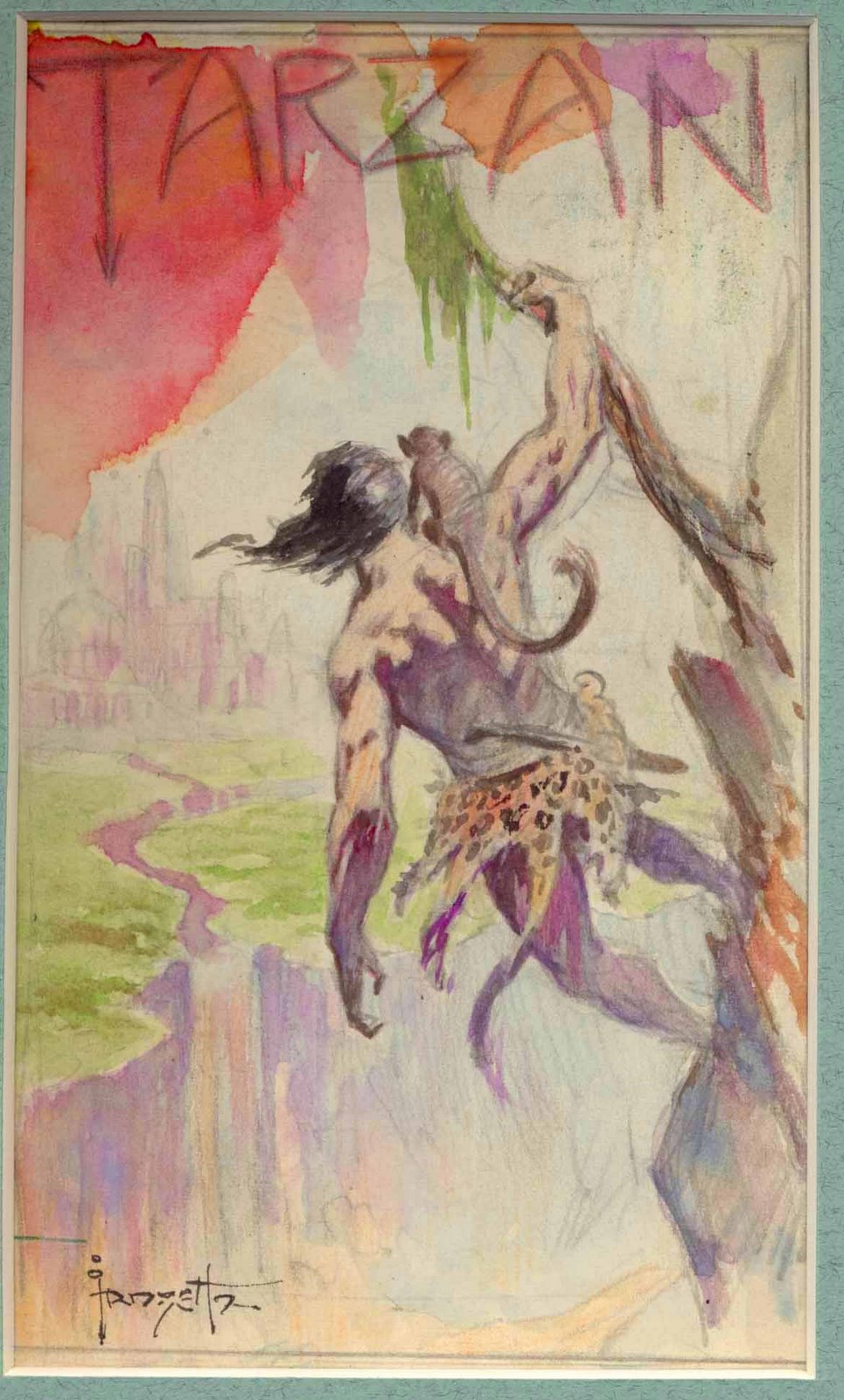
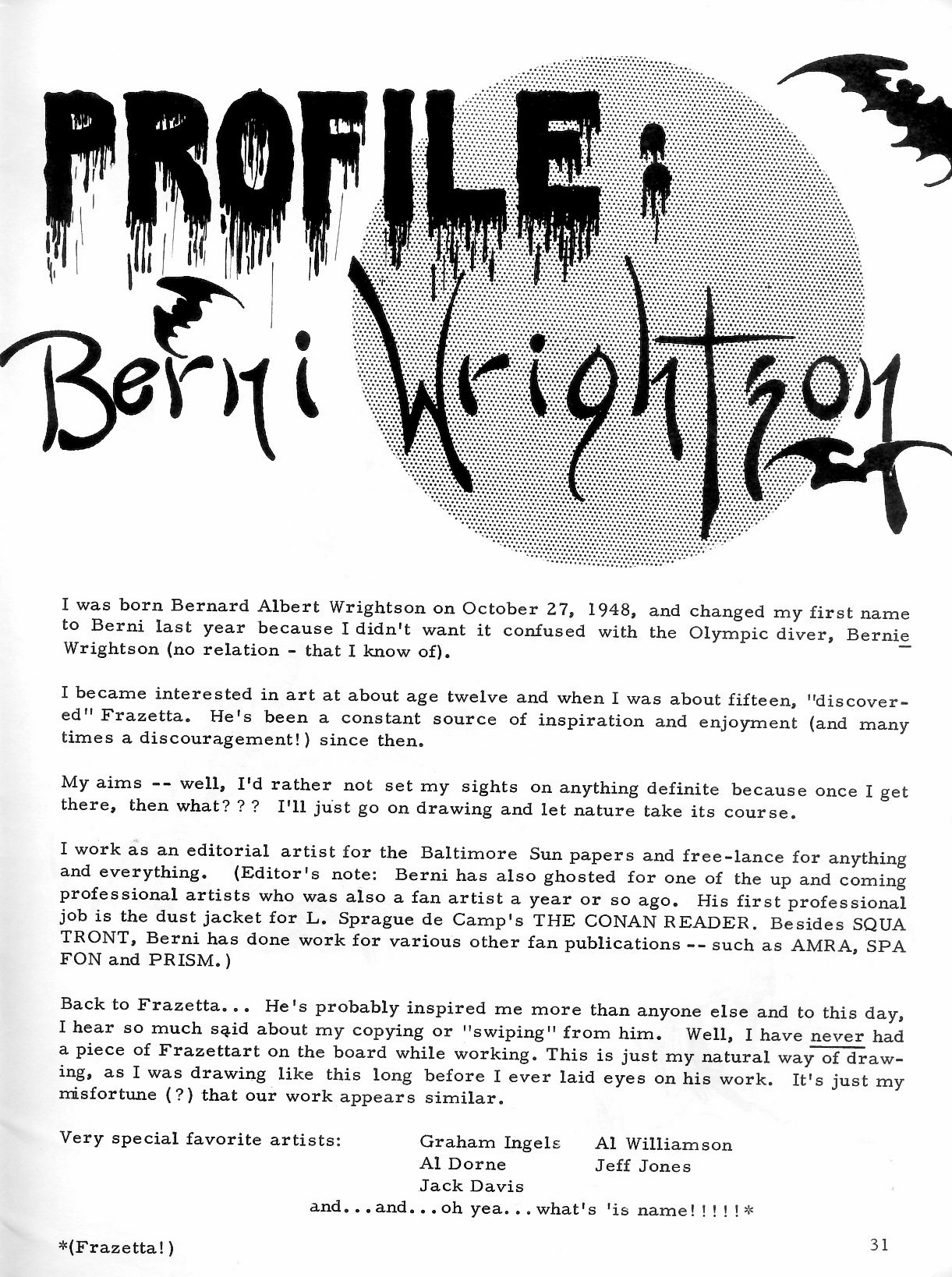
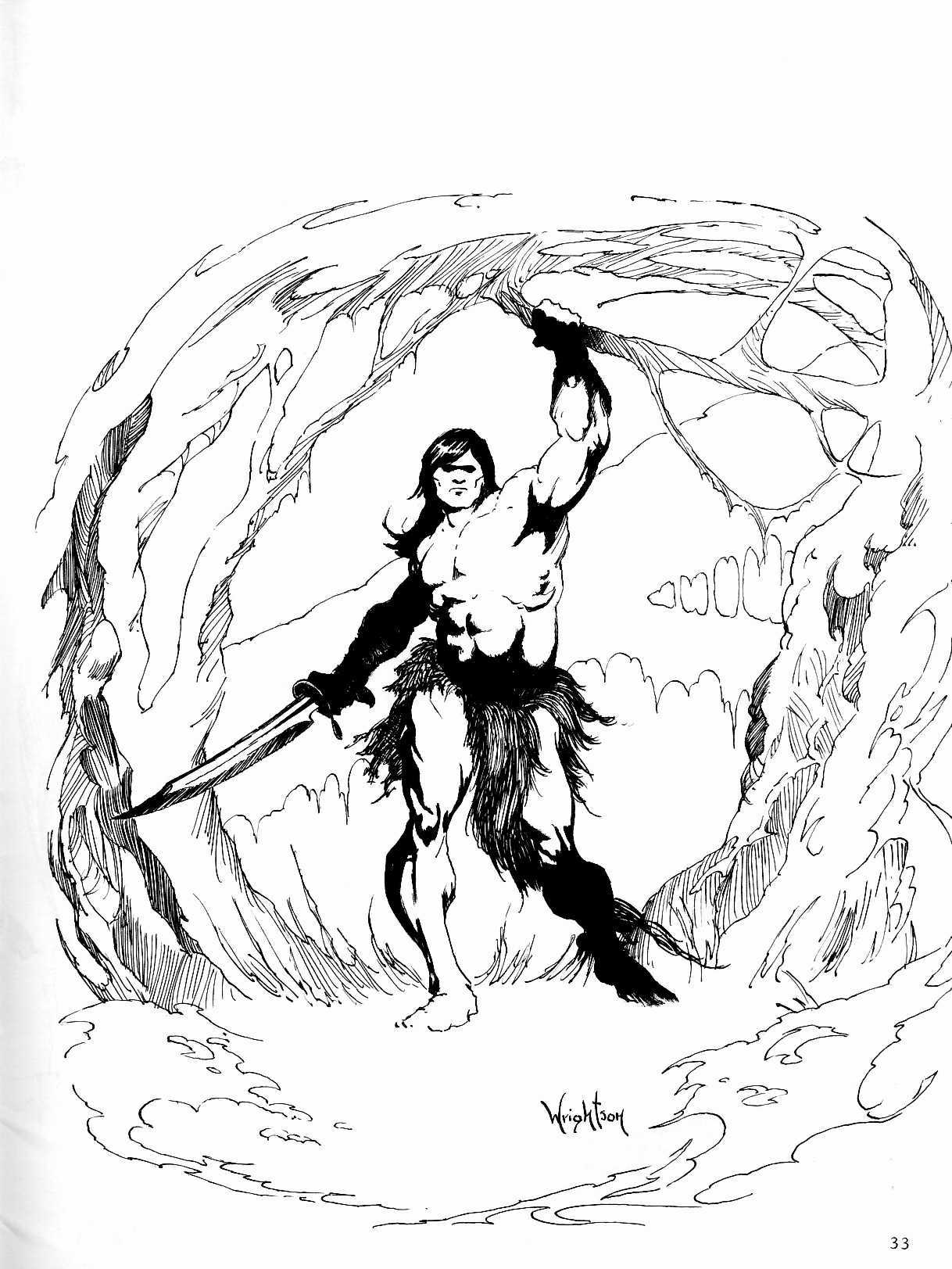
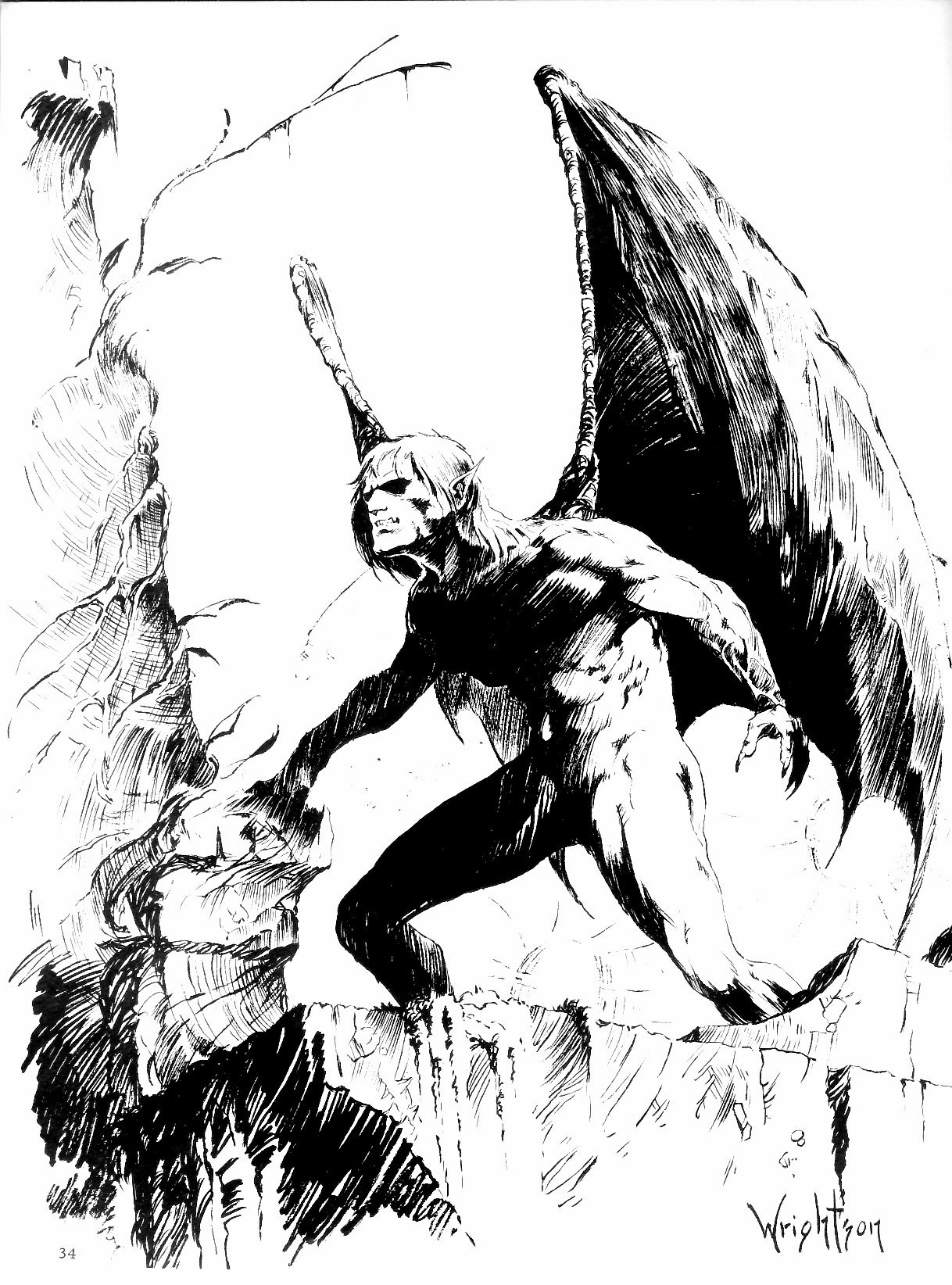
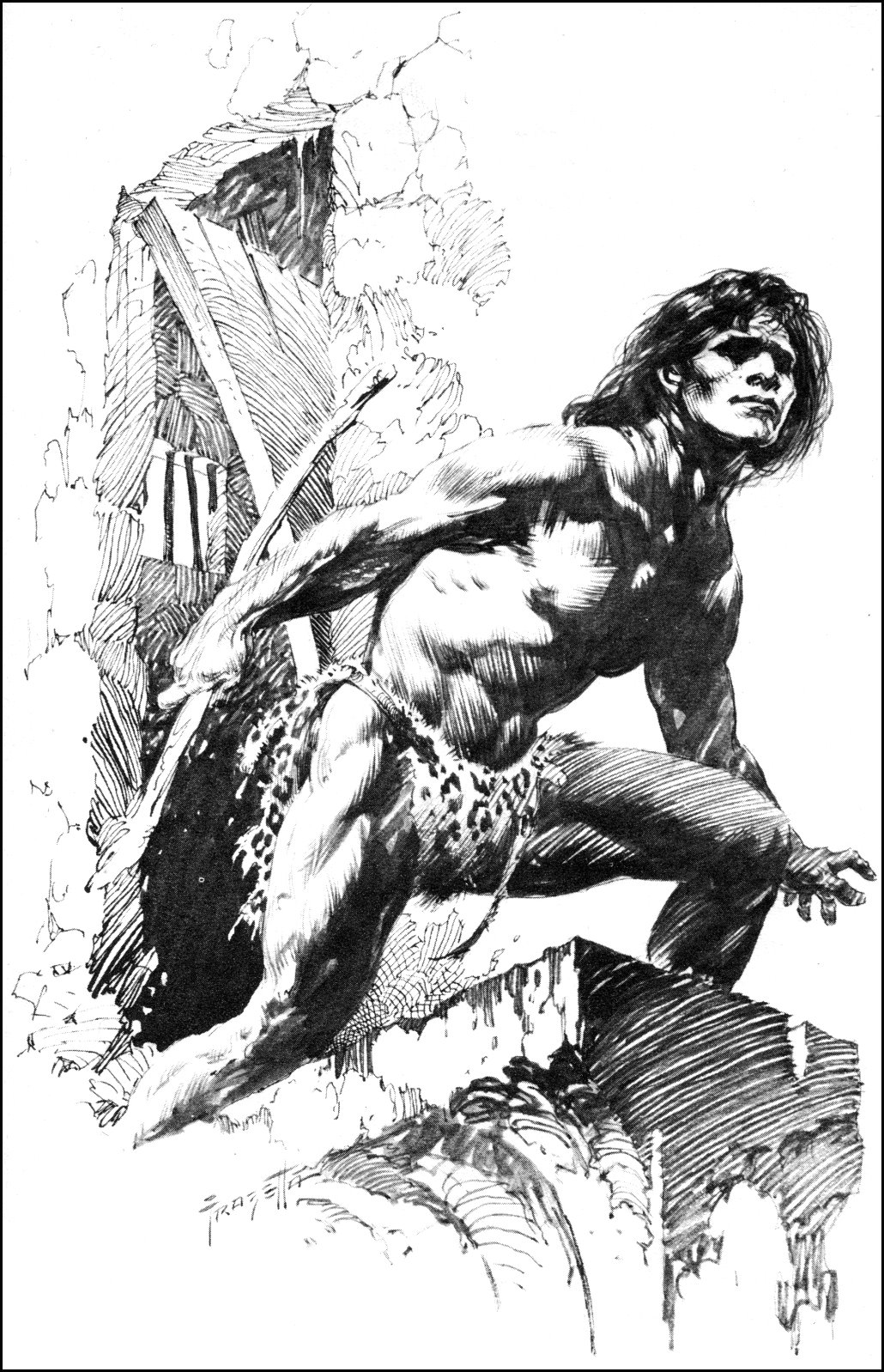
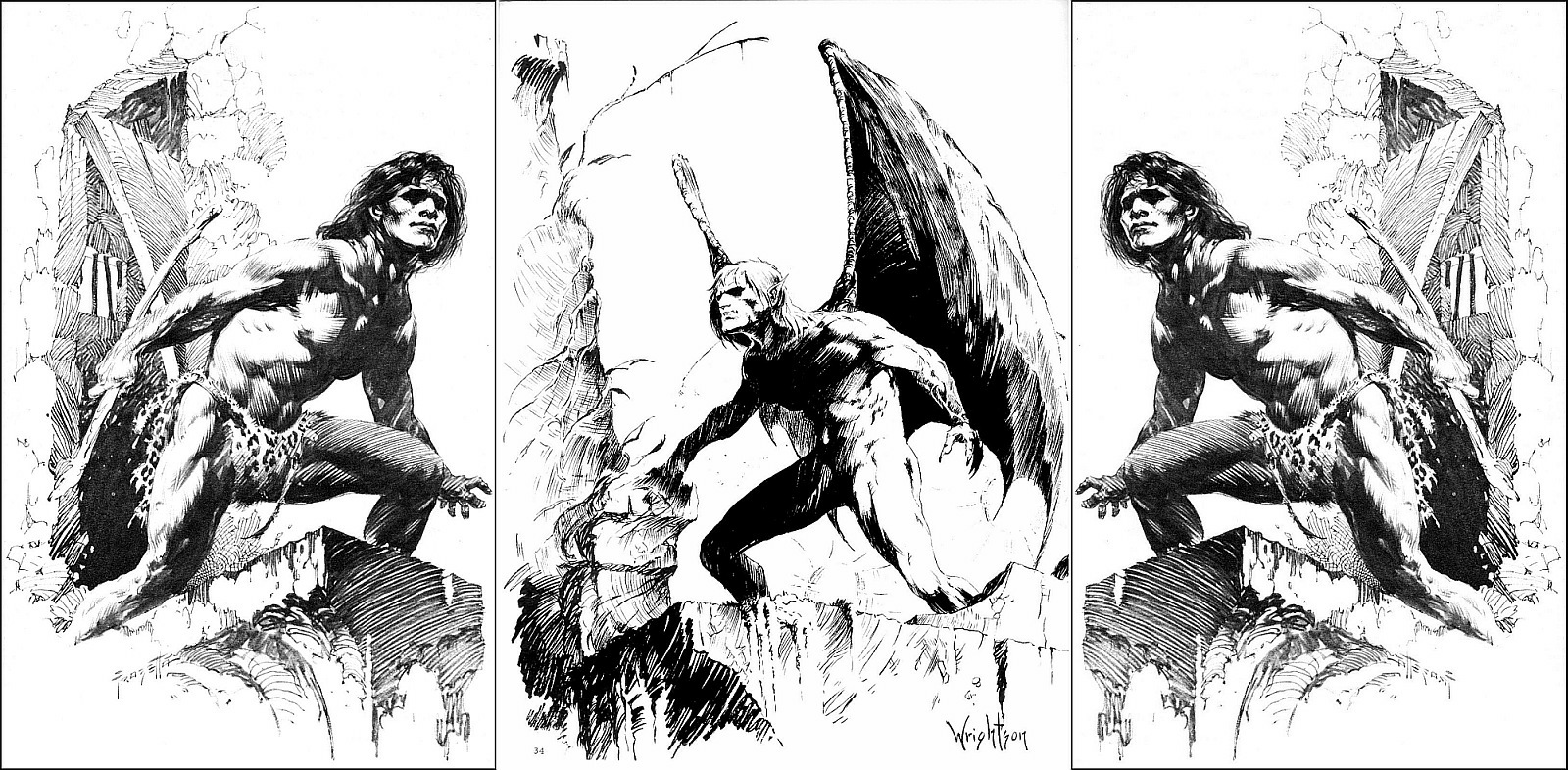
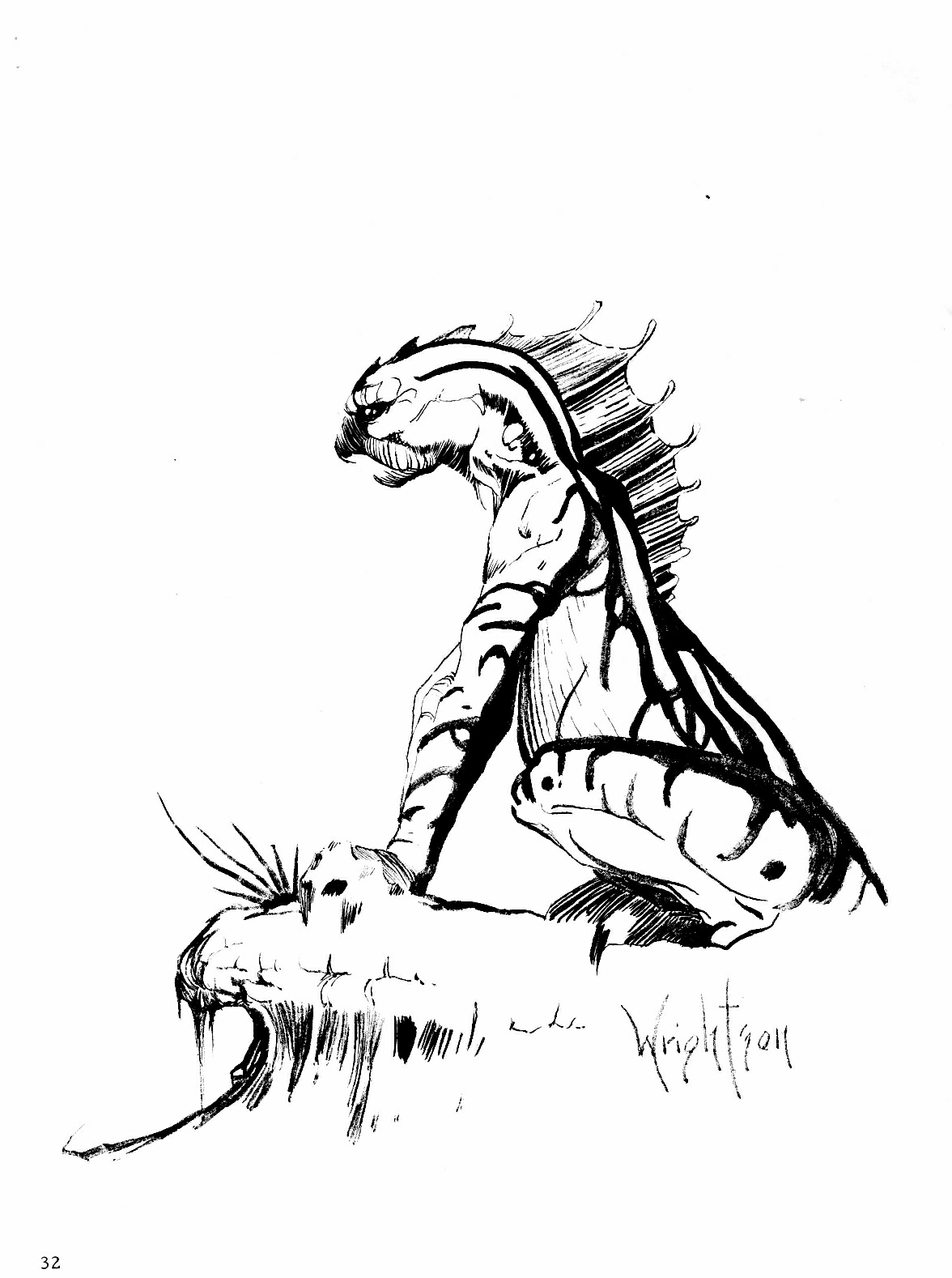
Flipping through the second issue of the E.C. fanzine, Squa Tront, I came across a profile of Bernie Wrightson that made me chuckle. Published in September 1968 — the same year that, according to his official Web site, Wrightson “turned pro” — the profile includes a short biographical and artistic statement as well as three full-page reproductions of Wrightson’s work. In the statement, the man formerly known as “Bernard Albert Wrightson” explains why he has decided to go by the name “Berni” instead of “Bernie” (a decision he later reversed); he forthrightly acknowledges his longstanding fascination with and admiration for the work of Frank Frazetta; and he vigorously defends himself from the charge that his own work is overly indebted to that same artist: “He’s [Frazetta has] probably inspired me more than anyone else and to this day, I hear so much about my copying or ‘swiping’ from him. Well, I have never had a piece of Frazettart [sic] on the board while working. This is just my natural way of drawing, as I was drawing like this long before I ever laid eyes on his work. It’s just my misfortune (?) that our work appears similar.” Trouble is, Wrightson, who was only about 20 years old at the time, says right in his statement that he “became interested in art at about age twelve and when I was fifteen, ‘discovered Frazetta.'” Now, I don’t know what kind of prodigy Wrightson was, but if he was drawing like Frazetta long before he ever laid eyes on Frazetta’s work, then clearly he would have had to have been doing so between the ages of 12 and 15… which, to my mind, definitely does not pass the… uhm… uh… anyway, from Squa Tront #2 (September 1968), here’s “Profile: Bernie Wrightson,” along with an illustration by Frazetta, originally published in the Canaveral Press edition of E.R.B.’s Tarzan and the Castaways (1965), that did NOT appear in Squa Tront but, in light of Wrightson’s statement, holds a certain interest, I think.

Do you see now why “Profile: Berni Wrightson” made me chuckle? Ah, the impetuousness of youth!

Of course, Wrightson would eventually synthesize his influences to produce some of the best horror comics and illustrations of the 1970s and beyond. But he clearly hadn’t done so in 1968. And from all the work I’ve seen, I’d argue that he didn’t do so for a few more years after that. Which, btw, is a perfectly normal path of development for an artist, right down to the denials…