From The Hand of Fate #11 (June 1952), here’s “Roots of the Evil Tree,” with art by Louis Zansky:
[CLICK IMAGES TO ENLARGE]
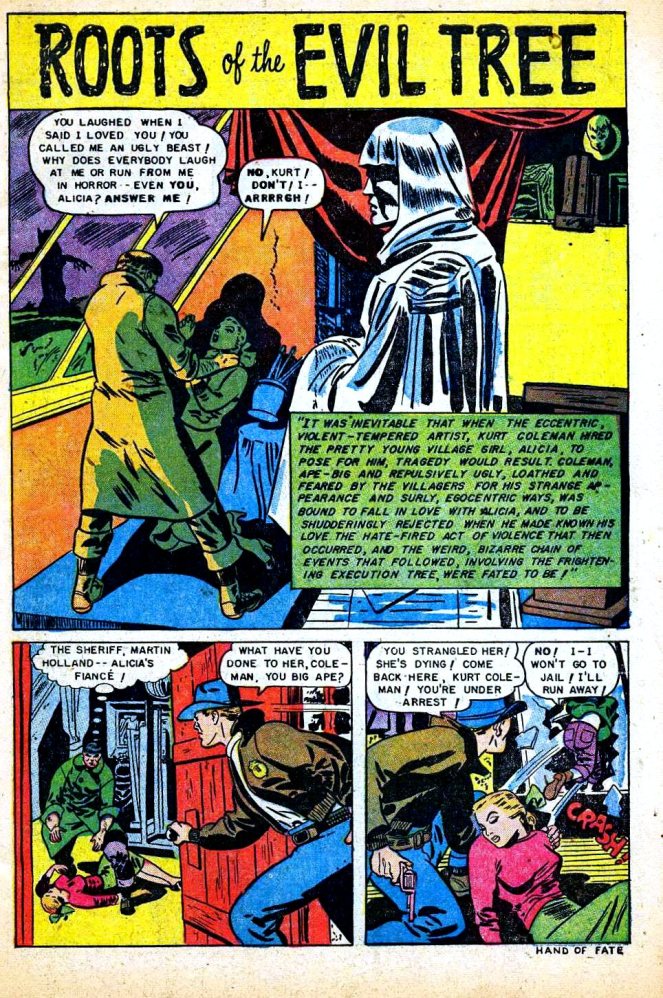
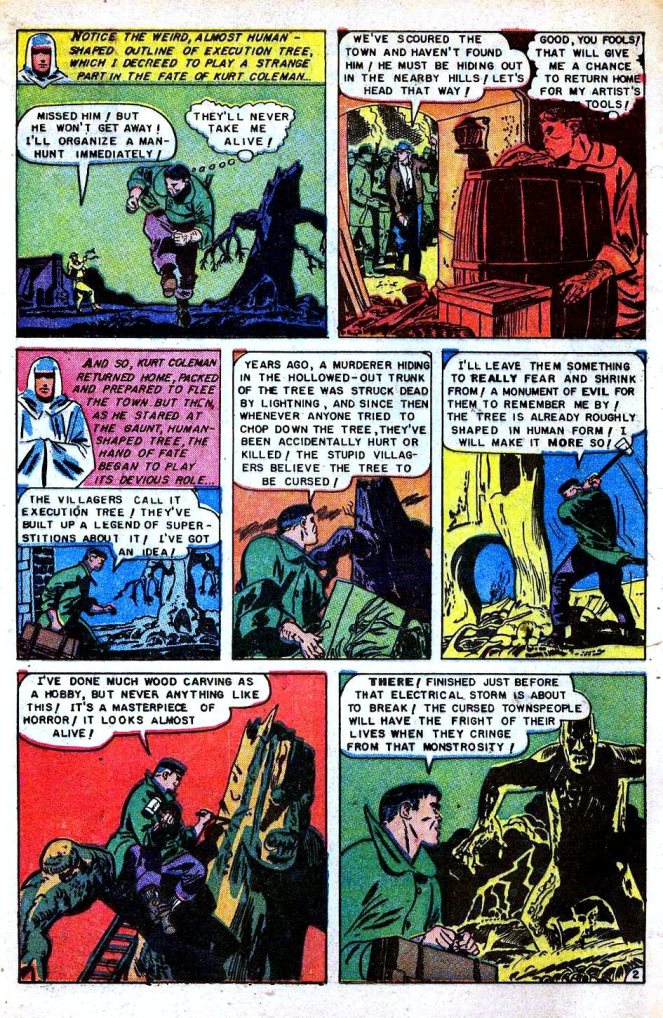
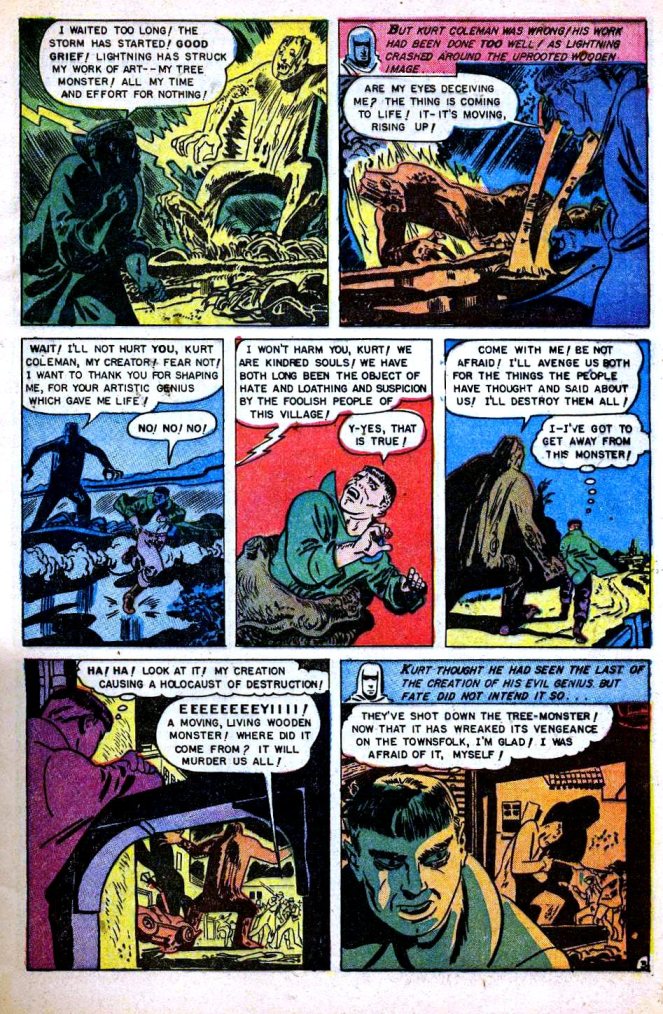


To read all of the comics with art by Louis Zansky that I’ve posted so far, click here.
"This day's experience, set in order, none of it left ragged or lying about, all of it gathered in like treasure and finished with, set aside." –Alice Munro, "What is Remembered"
From The Hand of Fate #11 (June 1952), here’s “Roots of the Evil Tree,” with art by Louis Zansky:
[CLICK IMAGES TO ENLARGE]
To read all of the comics with art by Louis Zansky that I’ve posted so far, click here.
Yesterday on the FLOG! Blog, Mike Baehr announced that Fantagraphics has pulled the first printing of Jack Davis: Drawing American Pop Culture — A Career Retrospective from (almost!) distribution and has gone back to press to correct a problem with the covers, which apparently were prone to warping. At the same time, the publisher has decided to replace the original cover in sepia (?) and orange with a less design-centric confection that gives pride of place to a cropped, colour version of Davis’s illustration from the first printing:
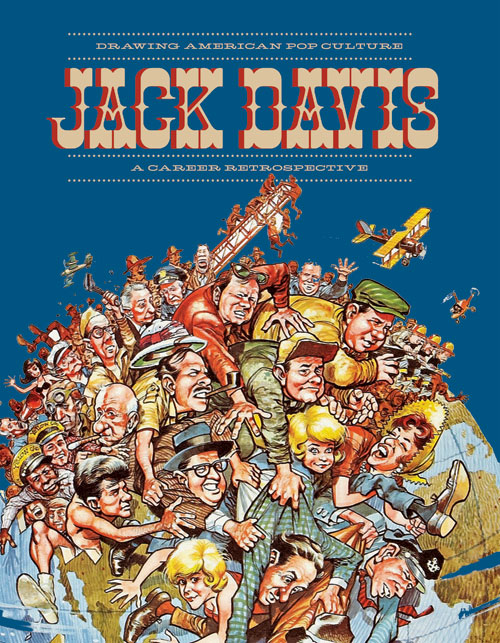
If you purchased a copy of the first printing of the book, you have several options: you can be happy with what you’ve got, you can exchange what you’ve got for a copy of the new printing, or you can keep what you’ve got and buy a copy of the new printing at a discount. Check out this post on the FLOG! Blog for the official details.
Jack Davis: Drawing American Pop Culture — A Career Retrospective was originally the subject of a “Heads Up” post here at RCN back on 08 November 2010. The cover image included with that post, however, was not the final cover of the first printing. This was:

It’s an interesting design, I guess, although I don’t think all of the elements are as readable as they should be. In an effort to diagnose the problem, I converted the cover to greyscale, and the result is instructive, I think:
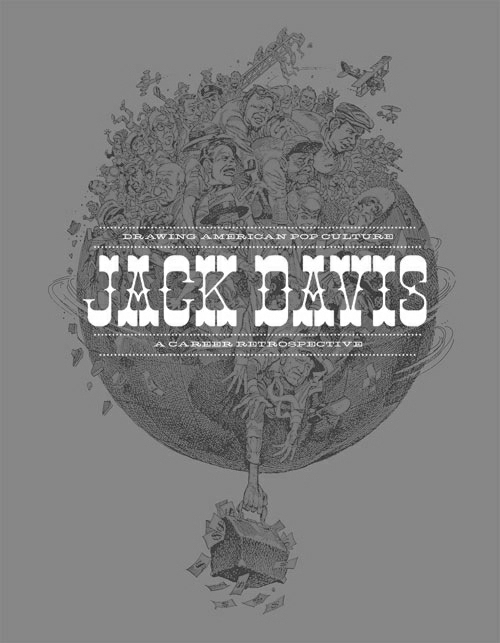
Notice how the greenish colour on the lighted side of the forms in Davis’s illustration is pretty much the same value as the orange background. It’s that similarity of value, combined with a lack of any truly dark darks, that I think makes the details of the illustration so difficult to discern. Sure, the narrow range of values in the illustration makes the busy letter forms of the superimposed title more readable than they otherwise would be. Just look what happens, for instance, when I bump up the contrast on that greyscale image:
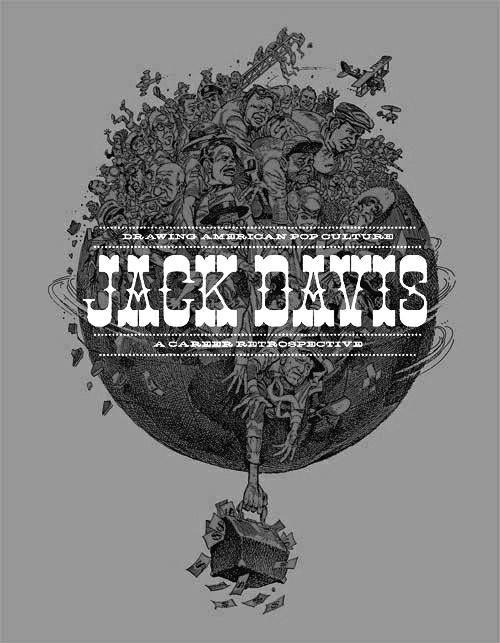
Setting aside the issue of the annoying visual artifacts that have emerged from my amateurish processing of the low-resolution colour JPEG of the original cover, I think it’s obvious that while the title in the above version of the cover has become more difficult to read, the illustration itself is now more easily decipherable and has a lot more pop!
But why mess around with the contrast at all when it would have been so much easier simply not to put really busy lettering over a really busy illustration?
I suppose the fundamental question for me is, what ought to be the main attraction on the cover a coffee-table book devoted to the art of Jack Davis: some old-timey title lettering or Jack Davis’s art? I think it should be the art. The designer, obviously, had a different idea. Until now, that is.
BONUS IMAGE:
Here’s a really busy cover in which expert designer and all-round comics genius Harvey Kurtzman uses visual hierarchy and contrast to enable the viewer to take in the various elements, all of which are easily readable, in an orderly fashion, without any confusion as to what is most important, what is next most important, and so on, and so forth:
[CLICK IMAGE TO ENLARGE]
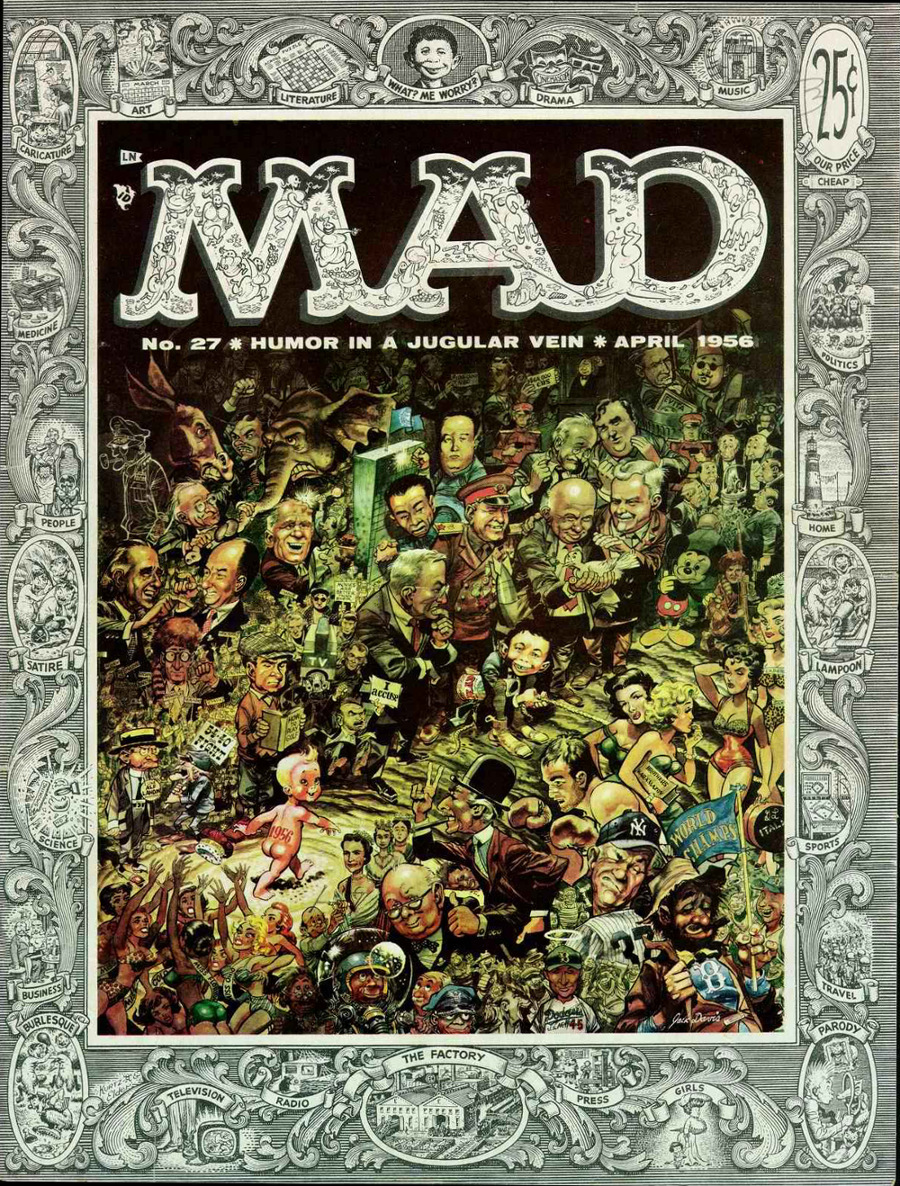
To me, Kurtzman and Davis’s cover stands head and shoulders above any of the designs I’ve seen for Jack Davis: Drawing American Pop Culture. But don’t be angry at me for pointing this out, Fantagraphics: I still do plan to buy the book.
P.S. If you work for Fantagraphics and you’re reading this, you ought to mention to the designer of Jack Davis: Drawing American Pop Culture that the blue background that represents the sky on the new cover ought to be visible through the structure of the telescopic fire-truck ladder at the top-centre of Davis’s illustration as well as through the spaces between the upper and lower wings of the biplane, etc. In the image currently featured on the FLOG! Blog, those spaces are white, which suggests to me that the background of the original illustration was also white, though I don’t know that for sure…
BELATED DOUBLE BONUS IMAGE (added 09 February 2013):
Here’s what the cover of the new improved version of Jack Davis: Drawing American Pop Culture actually looked like, when all was said and done:
[CLICK IMAGES TO ENLARGE]
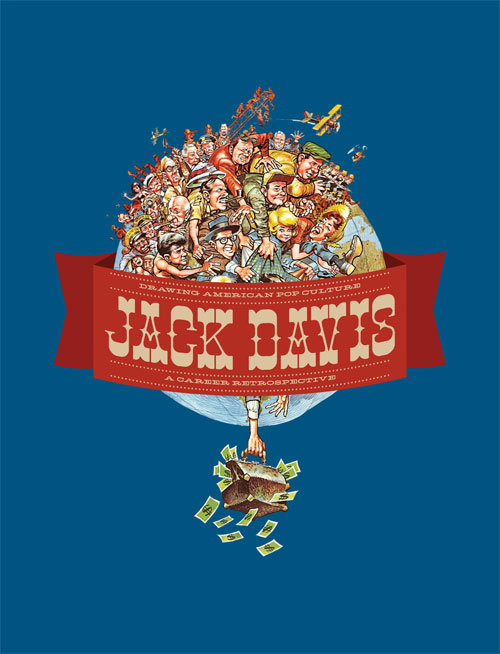
Problems solved!
Yesterday over at Golden Age Comic Book Stories, the intrepid Mr. Door Tree posted a beautiful collection of Tarzan dailies by Hal Foster. As I browsed through the images, one panel in particular leaped out at me…
[CLICK IMAGES TO ENLARGE]


Compare those Tarzan dailies with Idyl, and I think you’ll be amazed at how much Jeffrey Jones in the 1970s styled his work in pen/brush and ink after the early comic-strip work of Hal Foster.
See also: Connections: Frazetta vs. Ferri
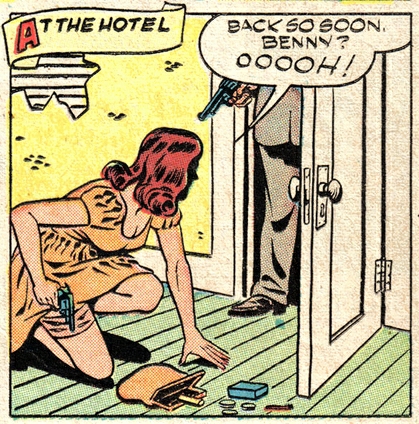
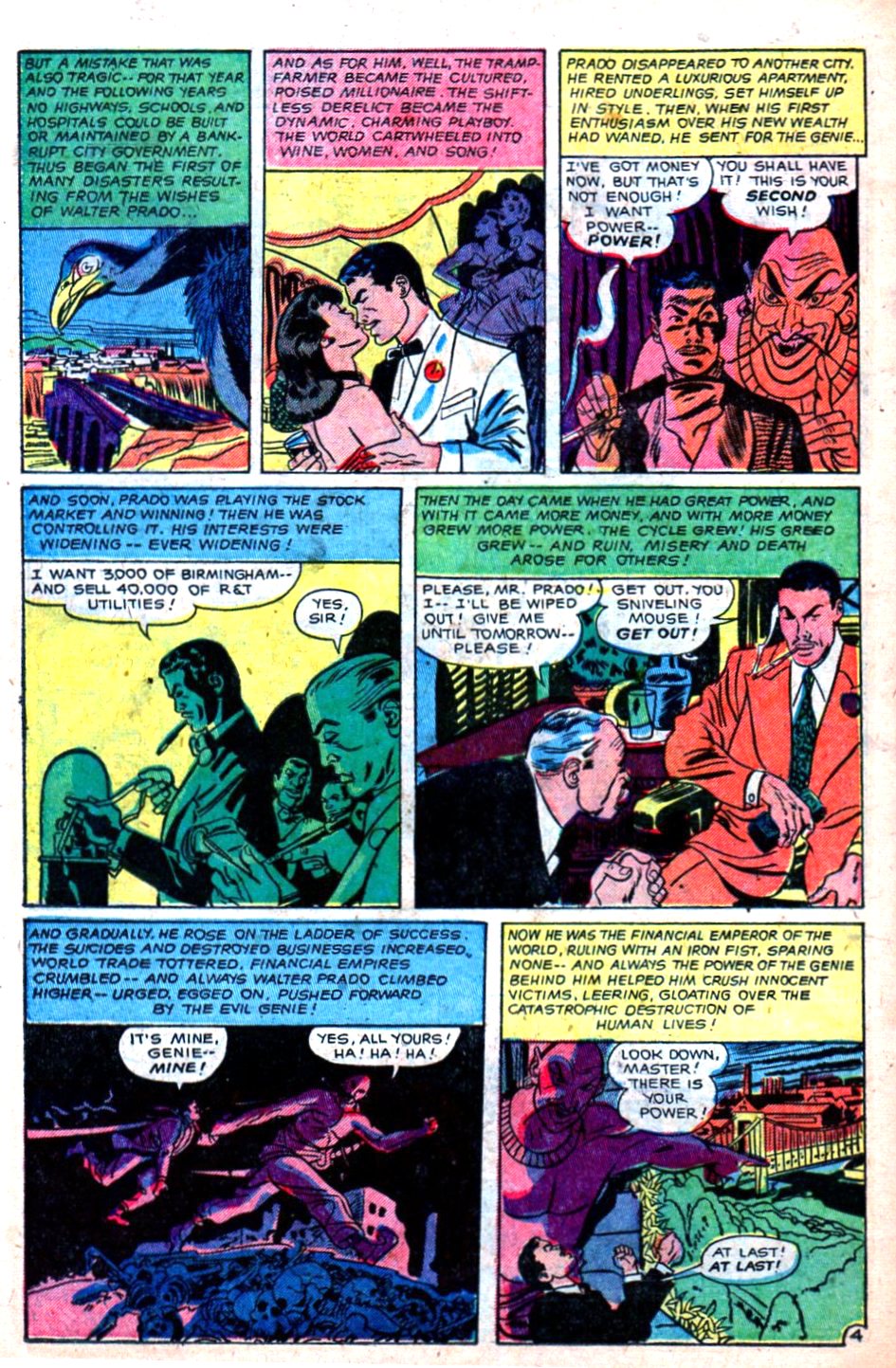
From Web of Mystery #8 (April 1952), here’s “Genie of the Jewel,” with art by Louis Zansky:
[CLICK IMAGES TO ENLARGE]

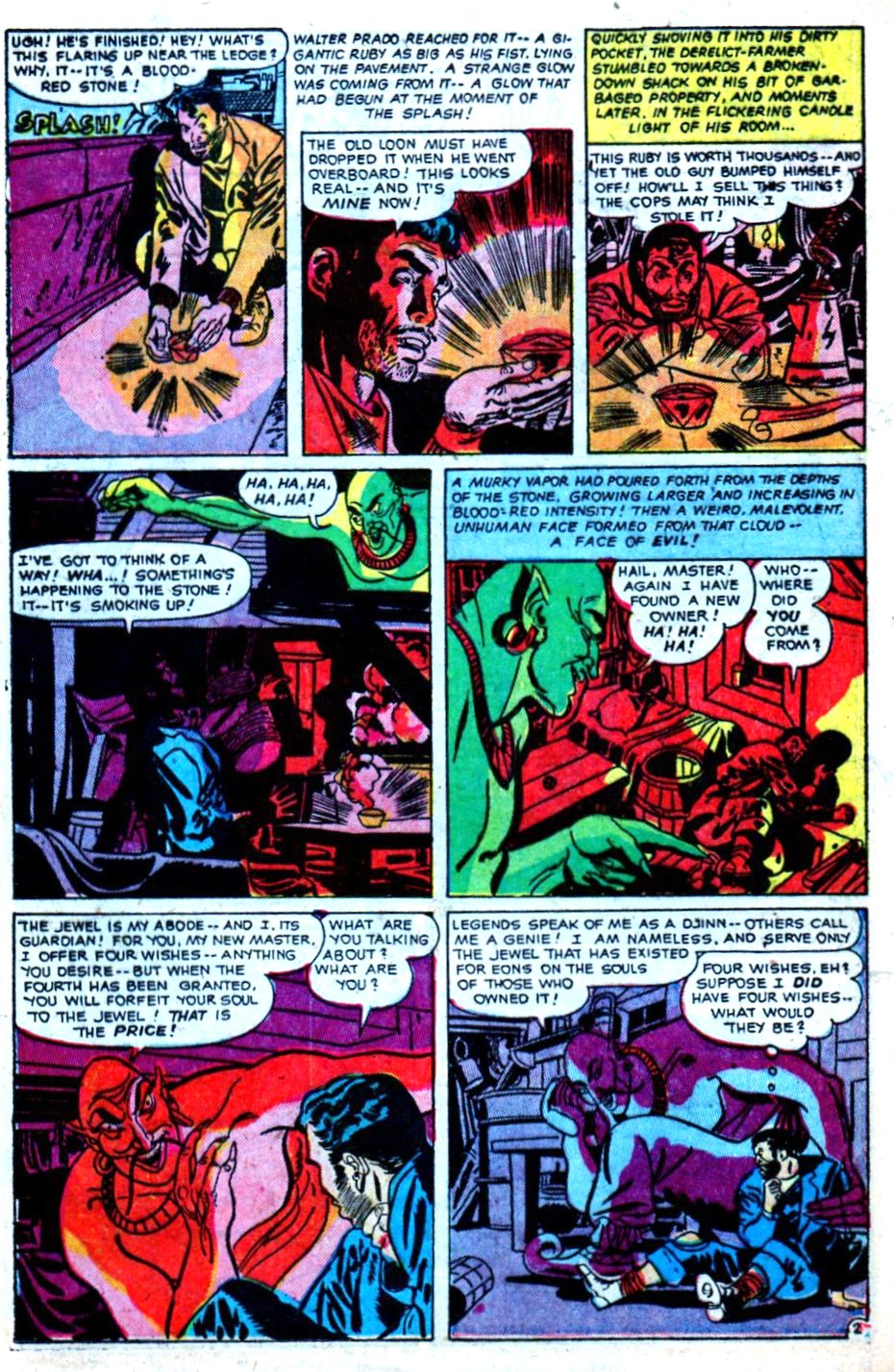

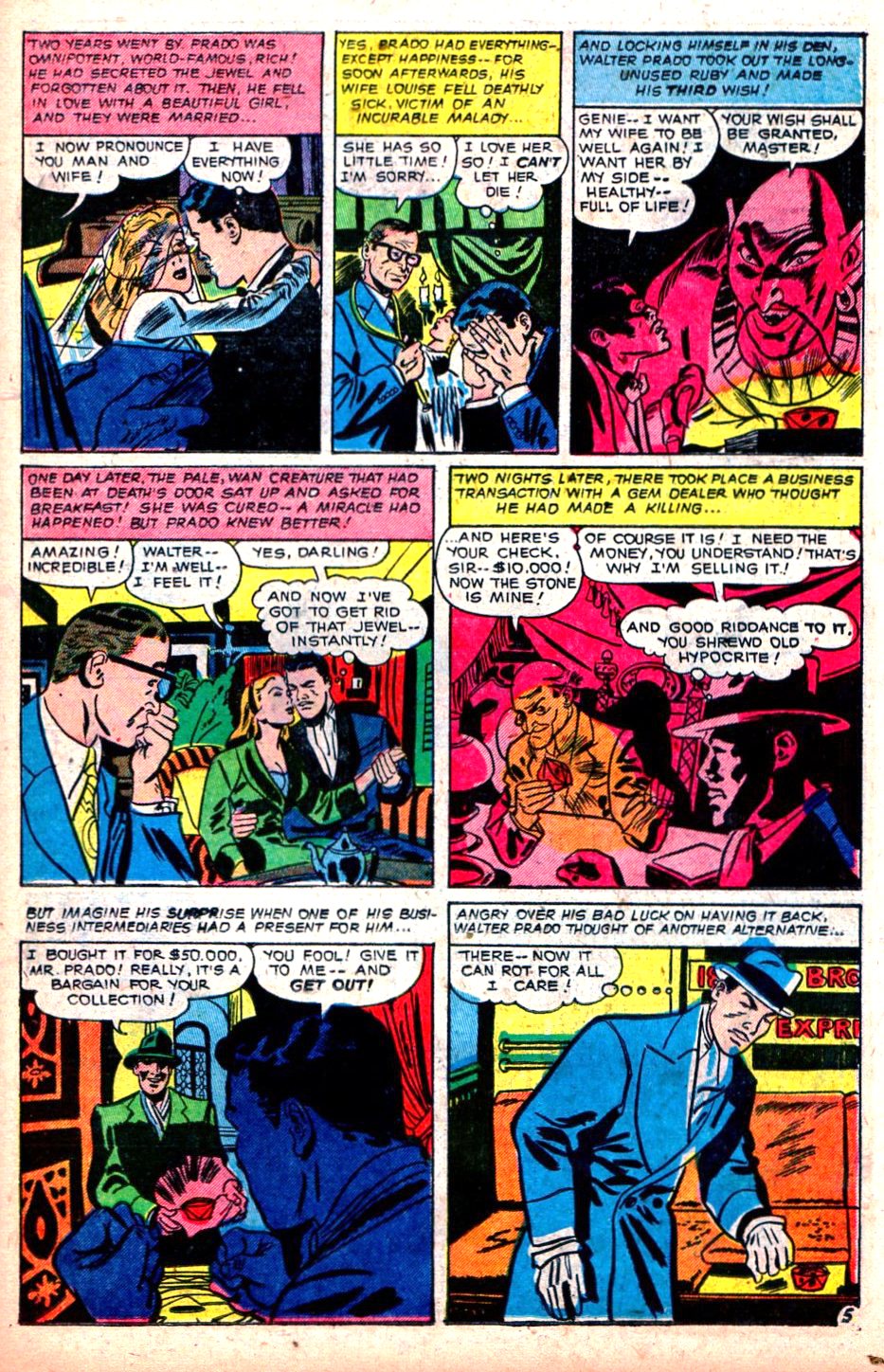


To view all of the stories (in the public domain) with art by Louis Zansky that I’ve posted so far, click here.


Coming in July 2012 from IDW:
[CLICK IMAGE TO ENLARGE]
“The Best of Harry Lucey,” writes the publisher, “is all scanned from original art and then re-colored using the original comics as guides to match the original published comics as much as possible – except with far batter production values!” Pre-order now from Amazon.ca, and it’ll set you back a mere CDN$16.62 for an oversized 152-page hardcover collection of beautifully drawn, crisply reproduced, classic comics by a newly minted member (Class of 2012!) of the Eisner Hall of Fame — and that’s a bargain any way you slice it, kids!
 Ragged Claws Network