Alex Toth · Comics · Link Roundup · Look There

Look There: More Comics Stories with Art by Alex Toth

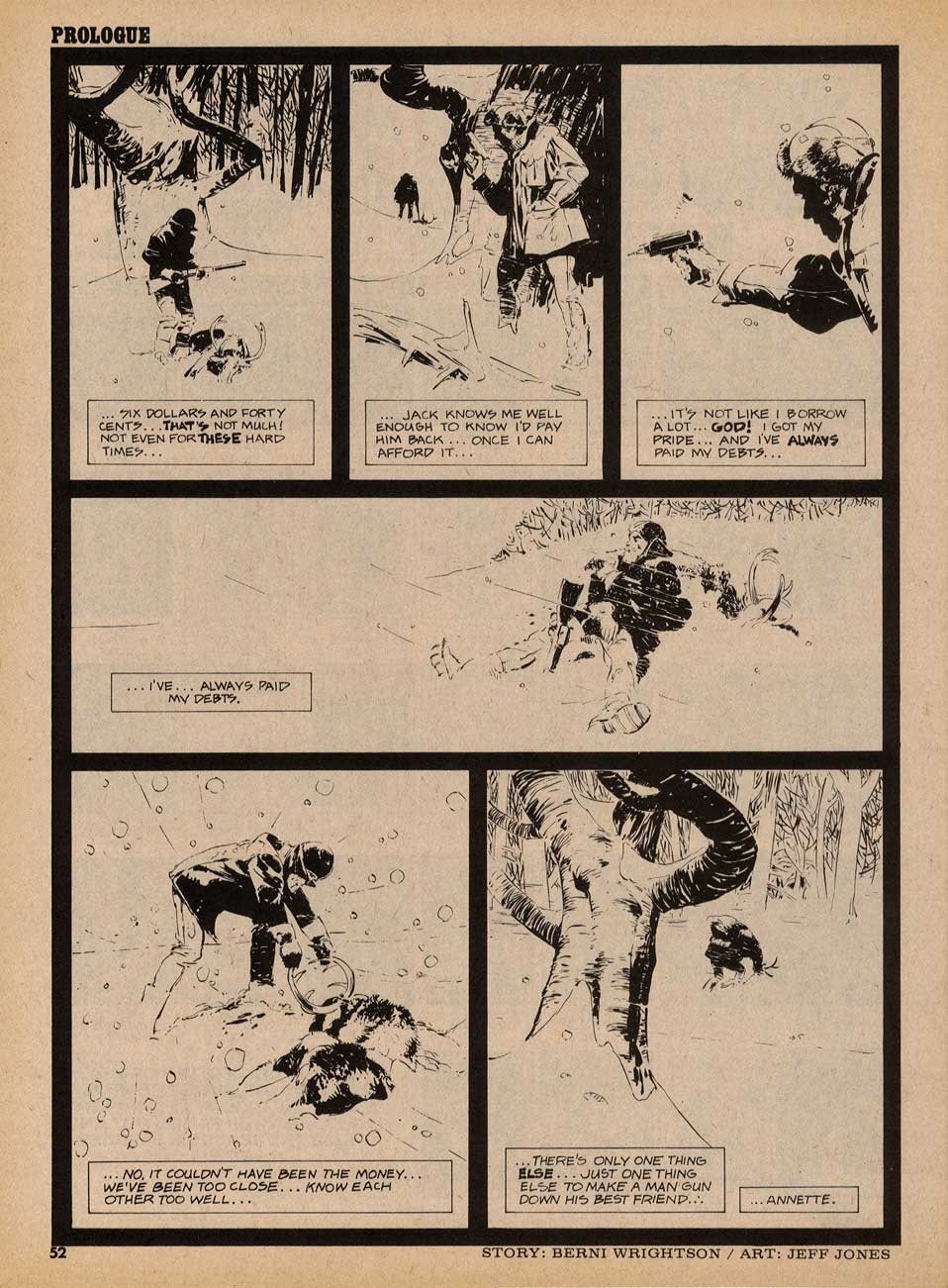
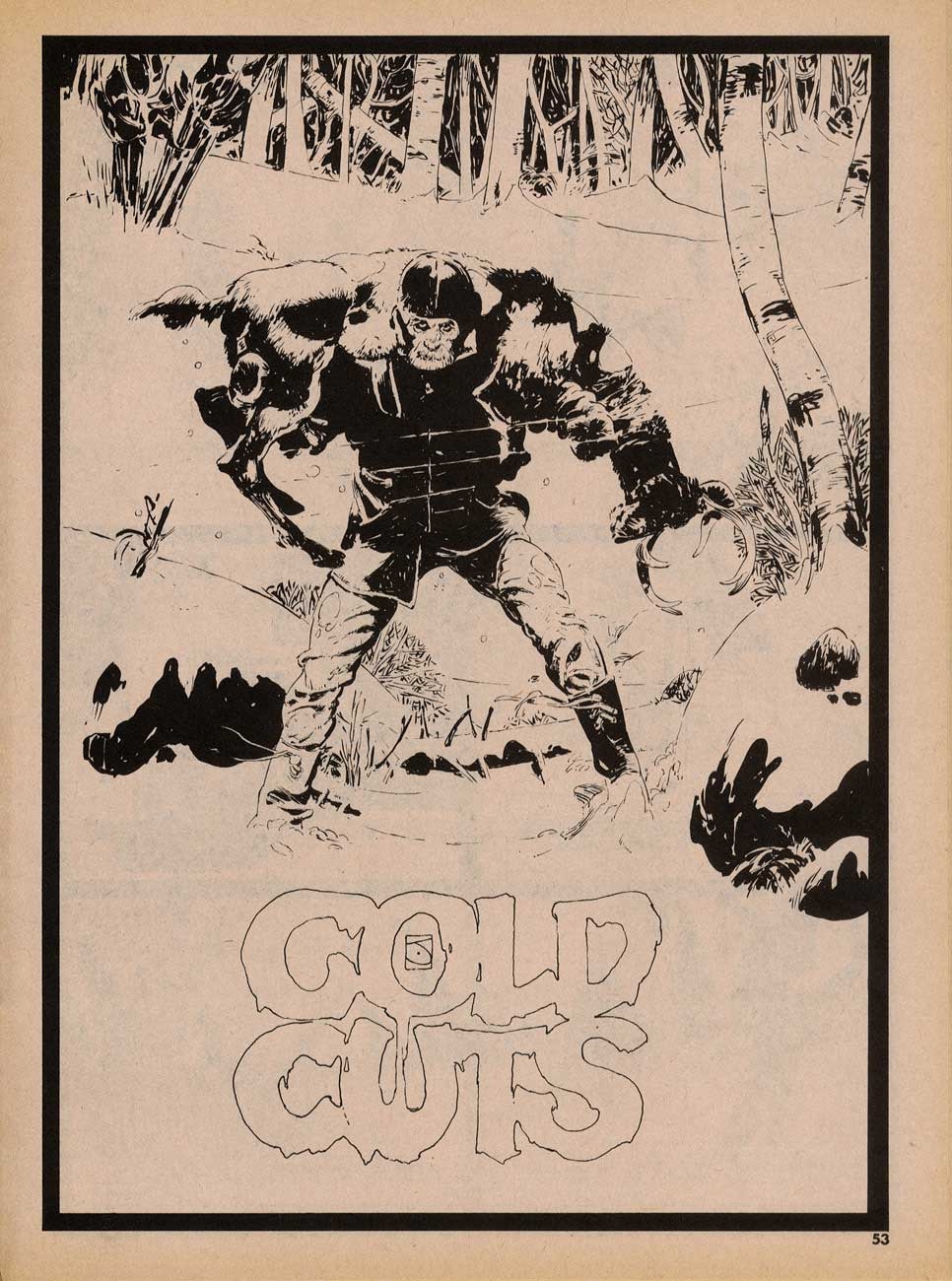
Here are the links, listed in order of first publication of the stories themselves:

Toreador from Texas,” Danger Trail #2 (DC, September-October 1950).

Too Many Suspects,” Green Lantern vol. 1, # 37 (National Comics Publications: March-April 1949), as reprinted in Detective Comics #440 (DC, April-May 1974).

The Bandidos,” Zorro #9 (Dell, March-May 1960).

Dangerous Competition,” The Frogmen #5 (Dell, May-July 1963).

Vision of Evil,” Eerie #2 (Warren, March 1966).

Eternal Hour,” The Witching Hour #1 (DC, February-March 1969).

ComputERR,” The Witching Hour #8 (DC, May 1970).

Mask of the Red Fox,” House of Mystery #187 (DC, July-August 1970).

The Mark of the Witch,” The Witching Hour #11 (DC, October-November 1970).

Bride of the Falcon,” The Sinister House of Secret Love # 3 (National Periodical Publications, March 1972).

Black Canary,” Adventure Comics #418 (DC: April 1972) & #419 (DC, May 1972).

Death Flies the Haunted Sky,” Detective Comics #442 (DC, August-September 1974).

Daddy and the Pie,” Eerie #64 (Warren, March 1975), as reprinted in UFO and Alien Comix (Warren, January 1978). And if you don’t like that scan, try this one.

Chennault Must Die!Savage Combat Tales #2 (Atlas, April 1975).

The Question,” The Charlton Bullseye #5 (CPL/Gang Publications, March-April 1976).

39/74,” Witzend #10 (Bill Pearson, 1976).

—–

Click here for another short list of links to “Comics Stories with Art by Alex Toth” available on the Web.
Comics · Here, Read · Jon Jay Muth · Look Here

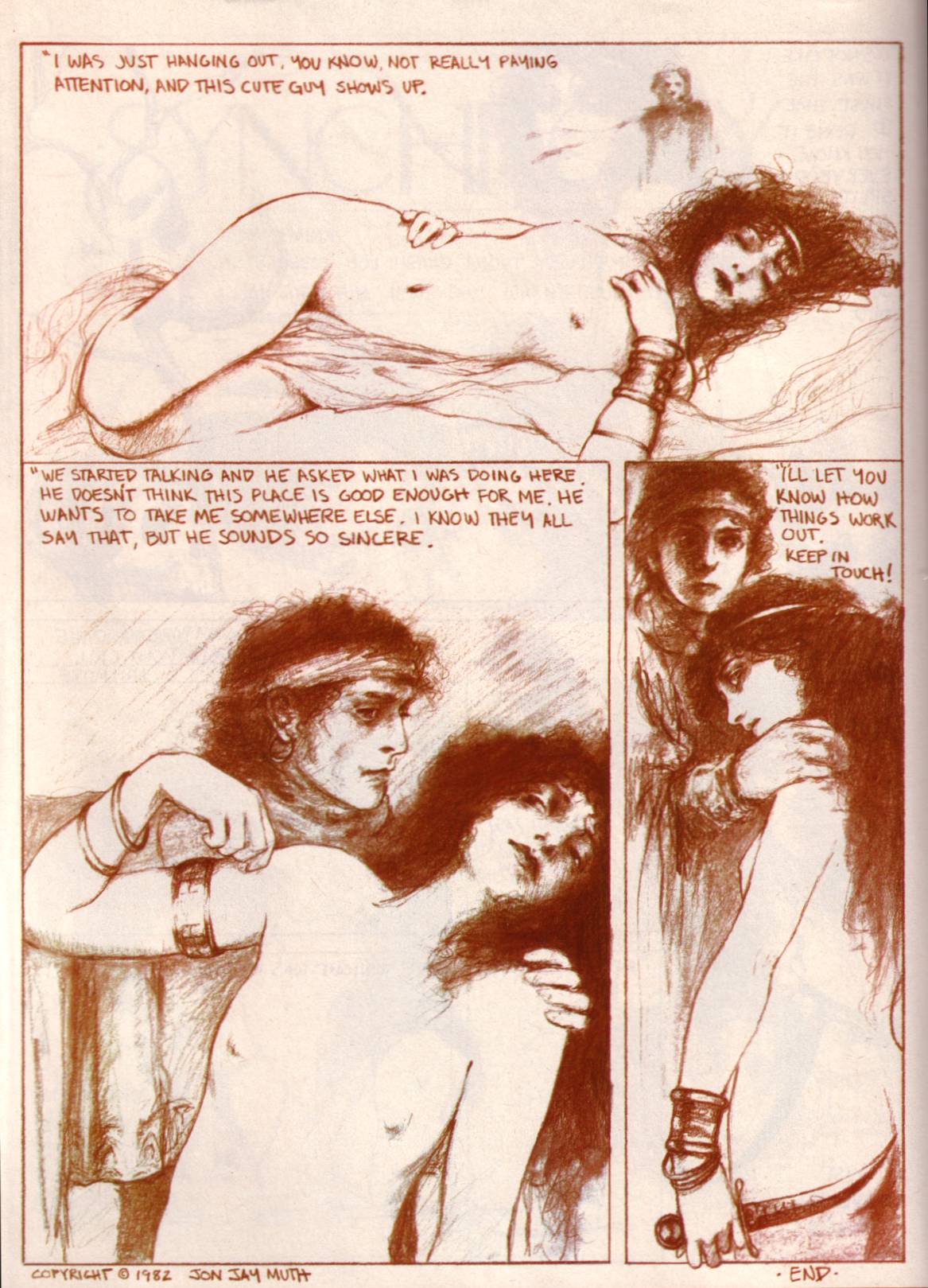
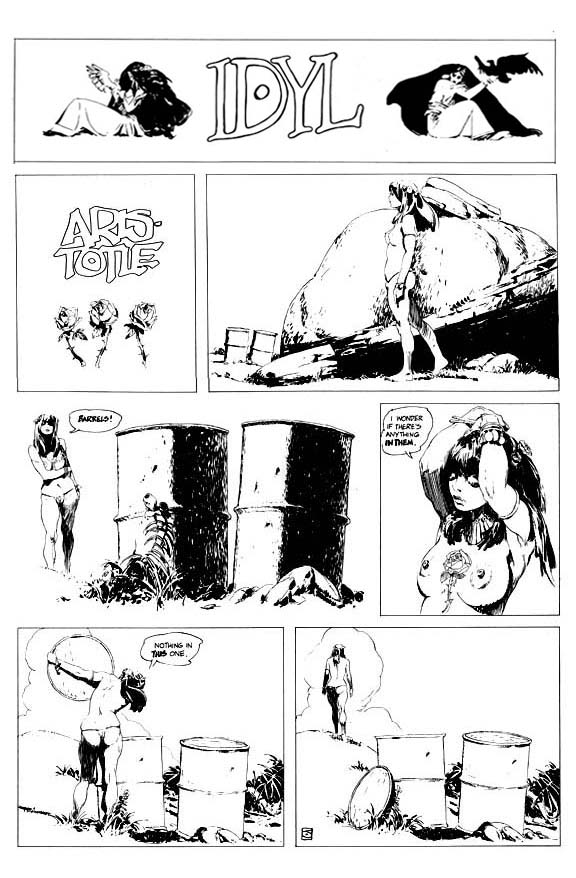
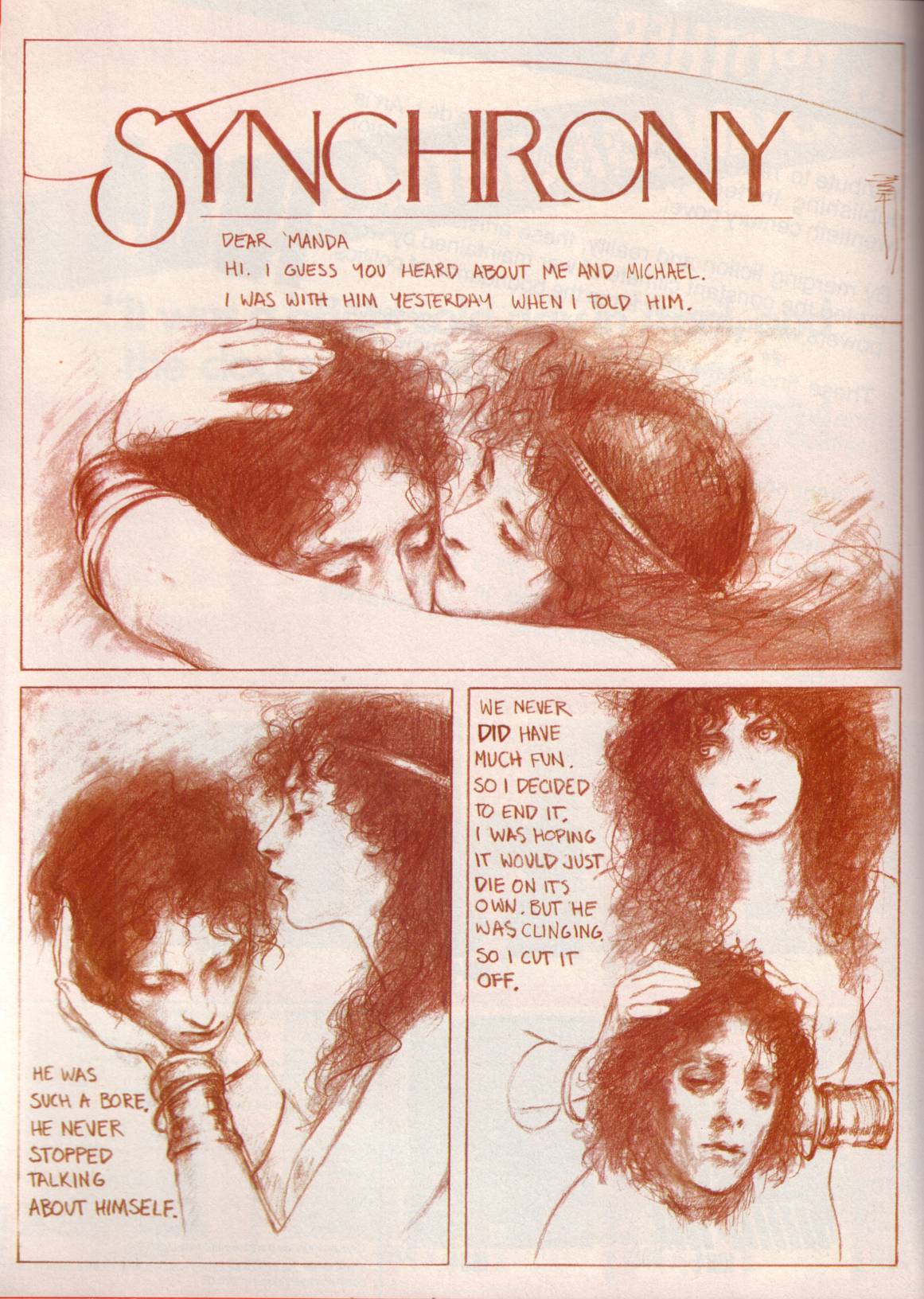
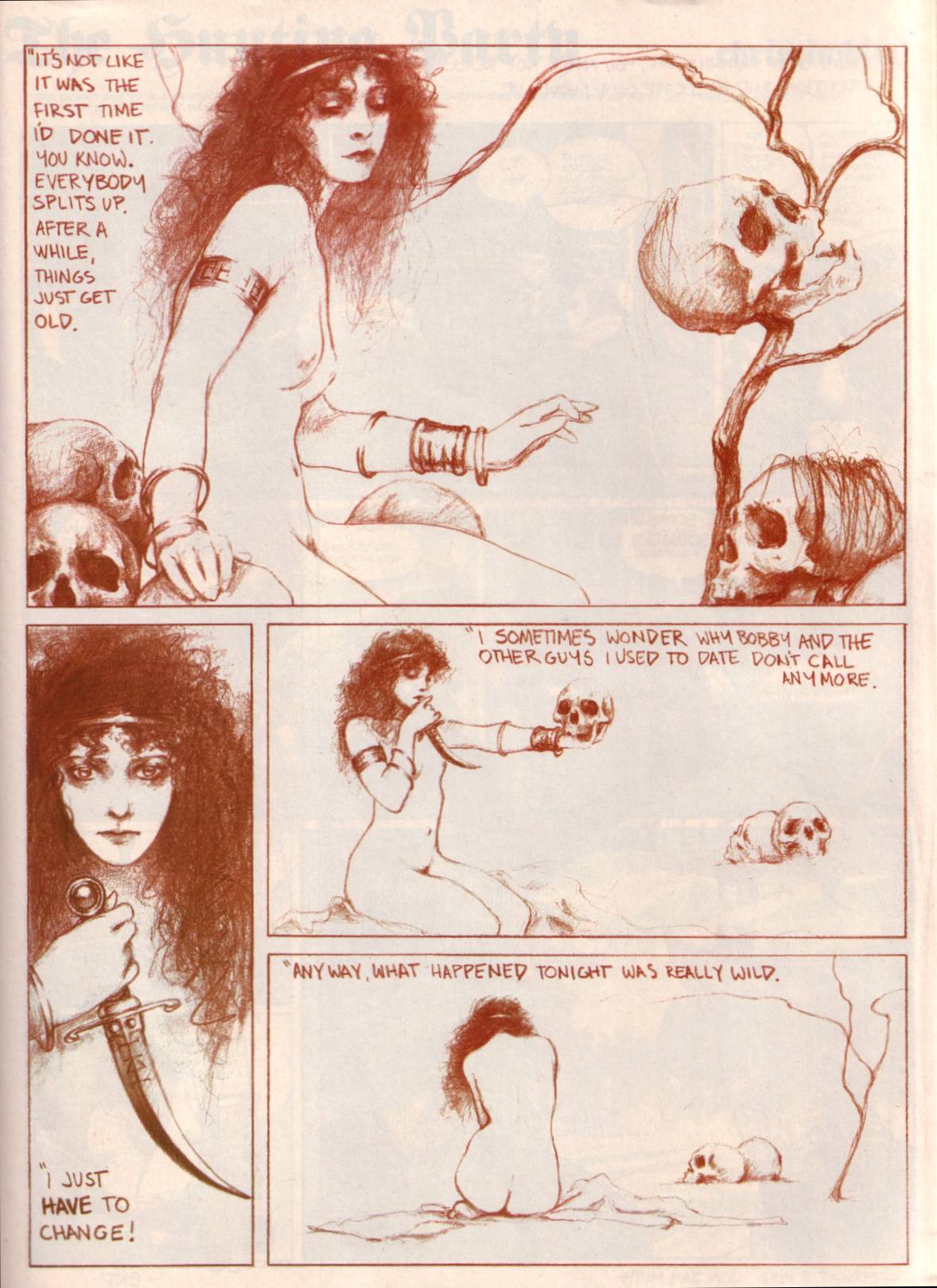
Look Here, Read: “Synchrony” by Jon Jay Muth

Here’s another early, heavily Jones-influenced* story by Jon Jay Muth:

What is it about death at the hands of “La belle Dame sans merci” that the young Romantic finds so alluring? Depends on what you mean by “death,” I suppose. But the Romantic goes further, conflating “la petit morte d’Holophernes” with “Le Morte d’Holophernes,” even though common sense says the two are drastically different things. Is common sense the enemy of art? At the very least, it would appear to be the enemy of Romanticism, new as well as old.
—–

* If I had to guess, I would say that comic artist and illustrator, Barry Windsor-Smith, who has drawn and painted numerous pictures over the years of historical and mythological women holding, fondling, and kissing the severed heads of young men, and who was himself a prominent member of the “New Romantic Brotherhood” of the late 1970s and early 1980s, was also a proximate influence on “Synchrony.”

Frank Frazetta · Here, Read · Jeffrey "Jeff" Catherine Jones

Here, Read: “A Recollecting Remembrance” by Jeffrey Jones

On offer this time round at RCN is a touching concatenation of fragile biographical reminiscences rescued from Jeffrey Jones’s former Web site; the header of the HTML source lists a “publicationdate” of “122197” (December 21, 1997) and a “version” date of “12.20.2003” (December 20, 2003). Since the piece is a bit too long to display comfortably, in its entirety, in-line with my other blog entries, please click here to jump to a separate blog page that includes the full text of “A Recollecting Remembrance” by Jeffrey Jones.

Comics · Here, Read · Jon Jay Muth · Look Here

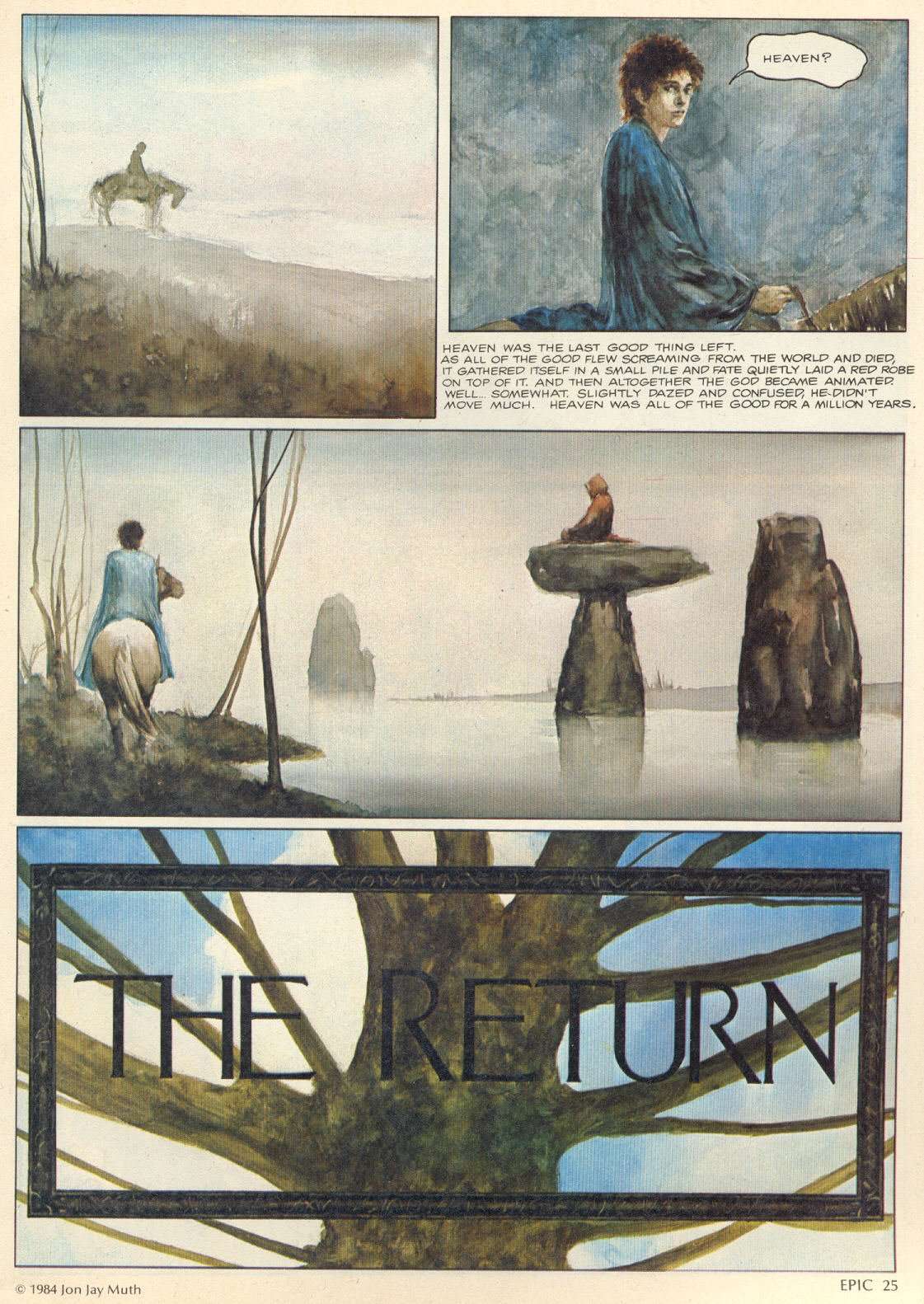
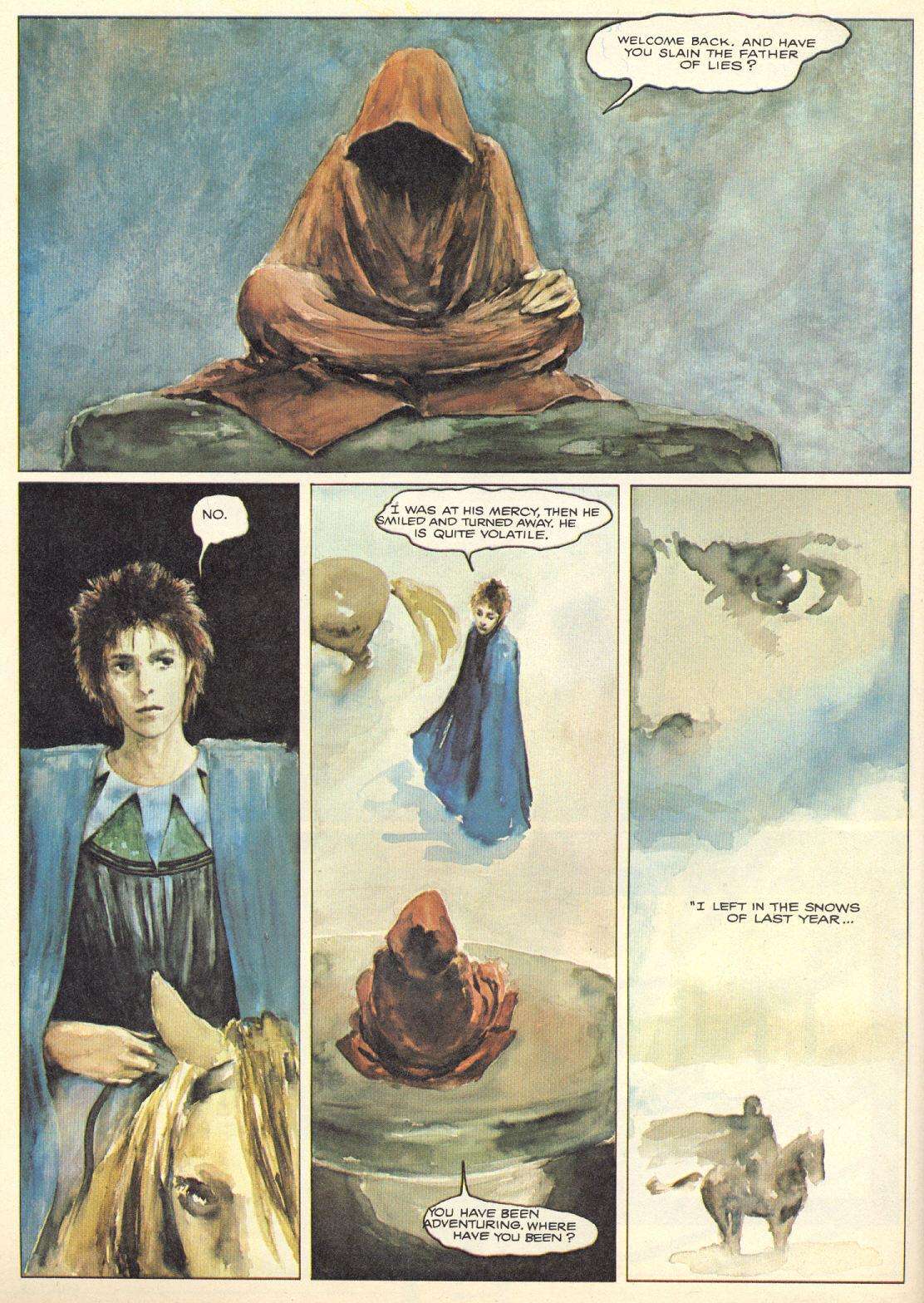
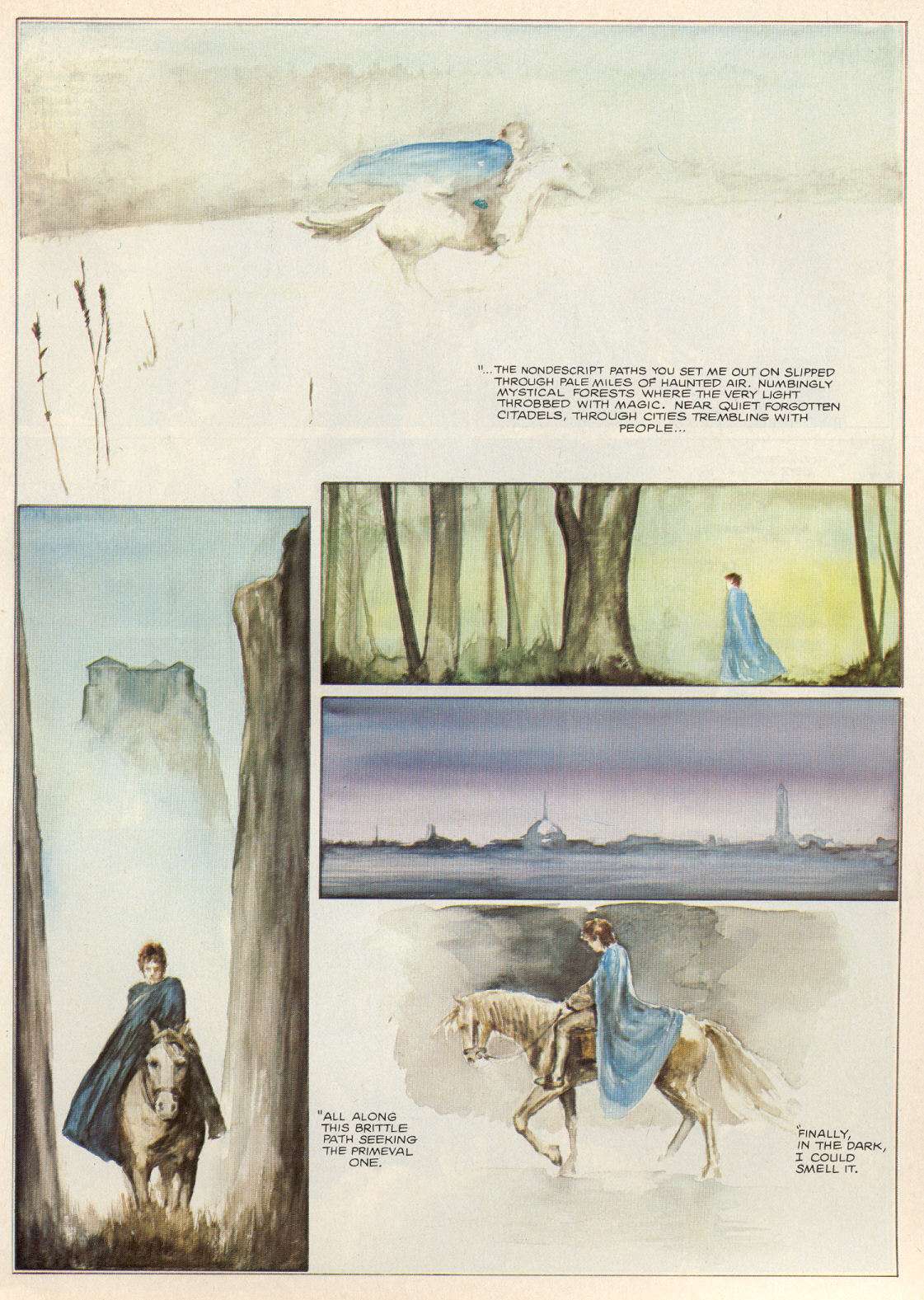
Look Here, Read: “The Return” by Jon Jay Muth

From Epic Illustrated #24 (June 1984), here’s “The Return,” by Jon Jay Muth:

Has Muth’s early work in comics ever been reprinted? Not that I know of, and it’s a damn shame, too!

Comics · Here, Read · Jon Jay Muth · Look Here

Look Here, Read: Two short stories by Jon Jay Muth

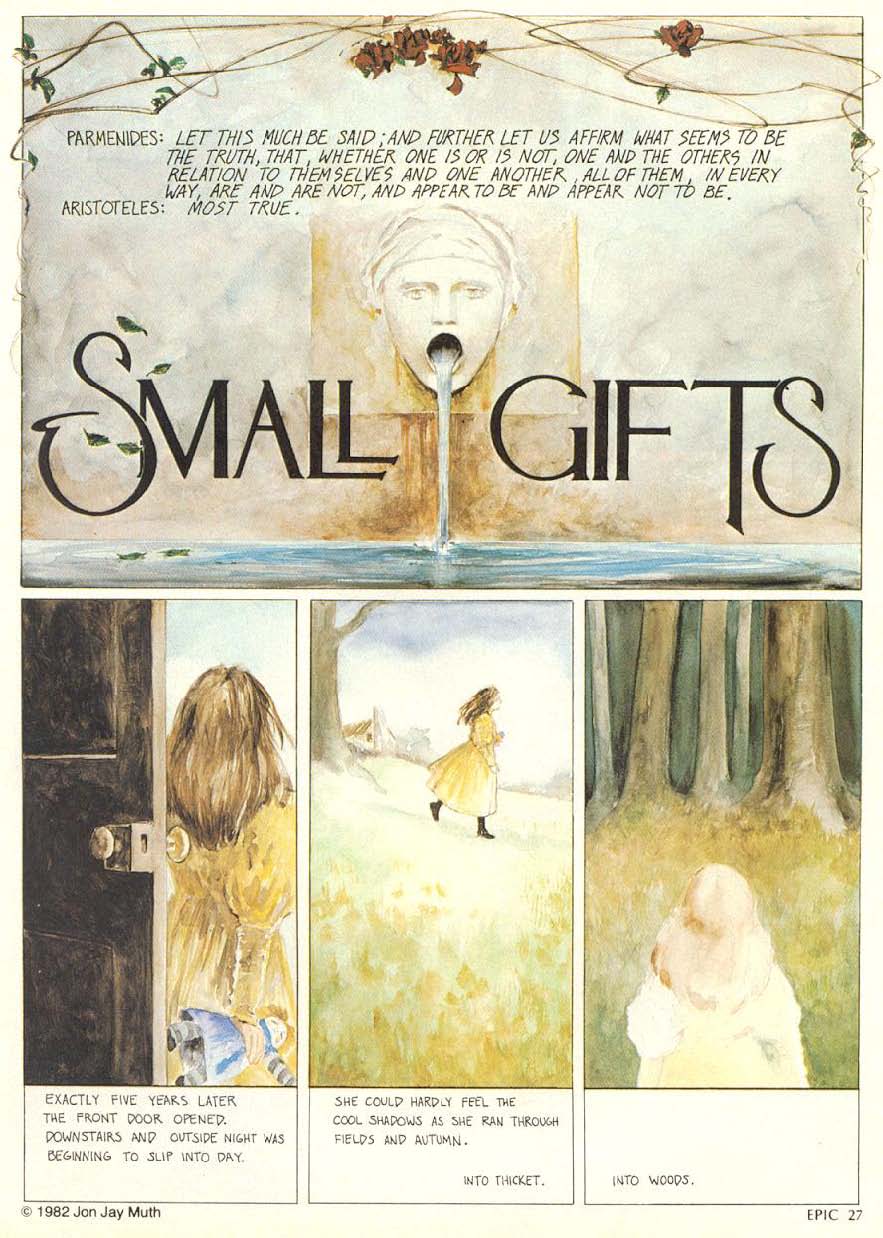
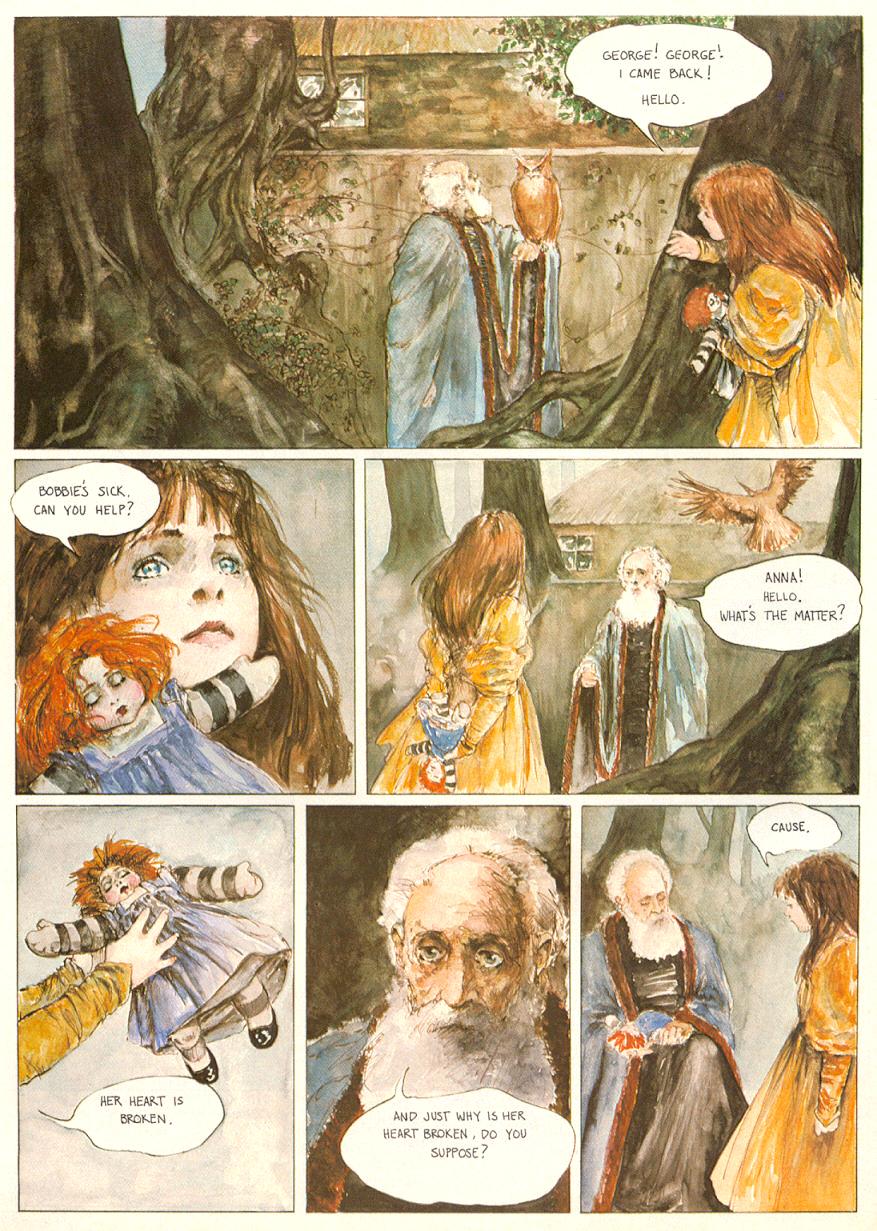
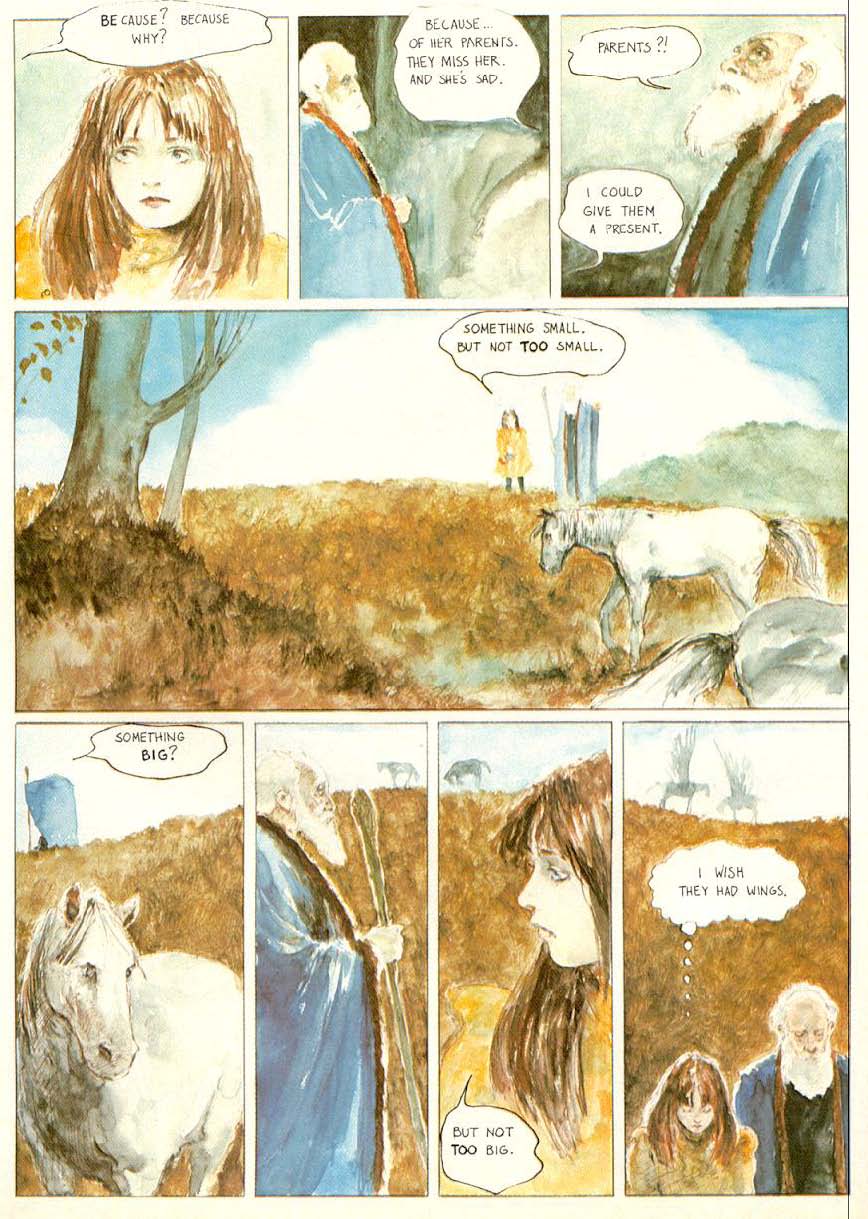
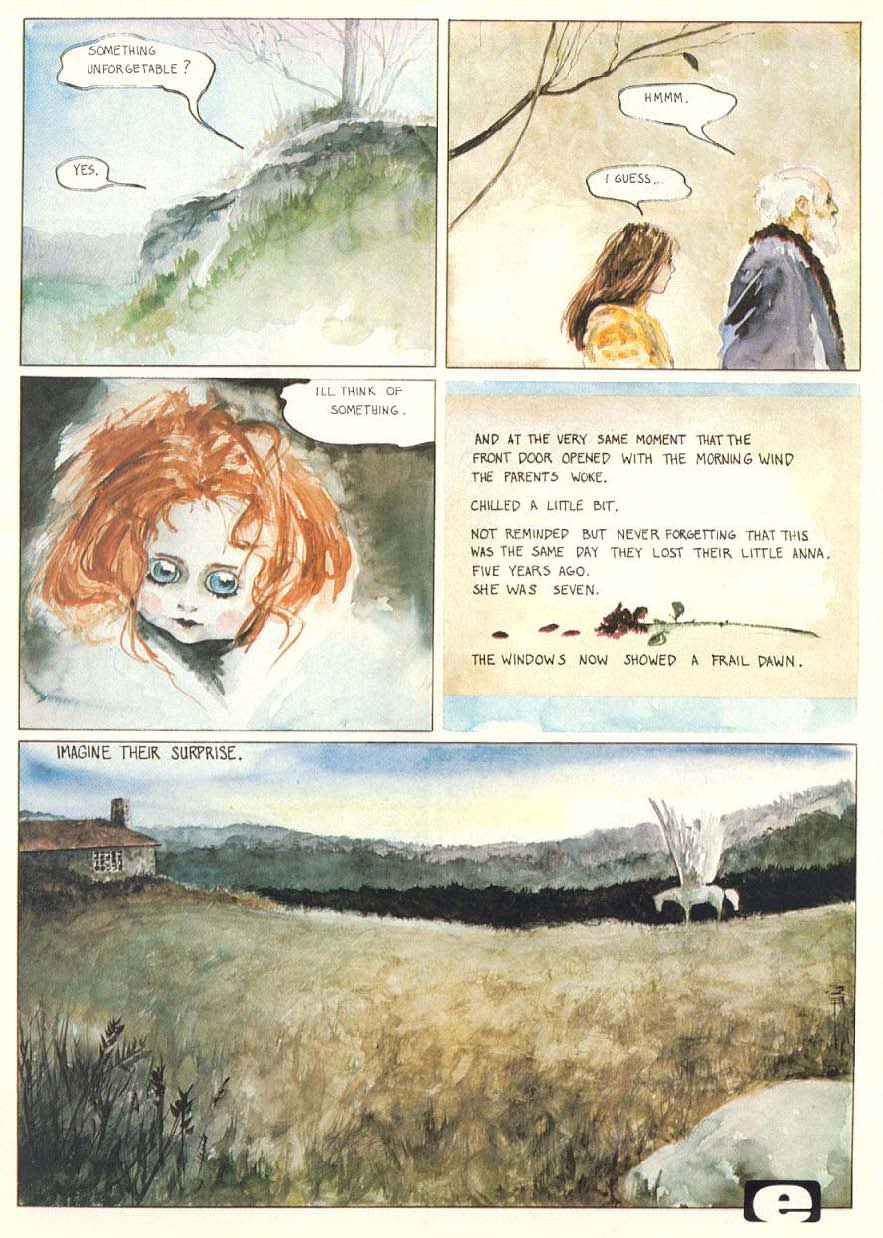
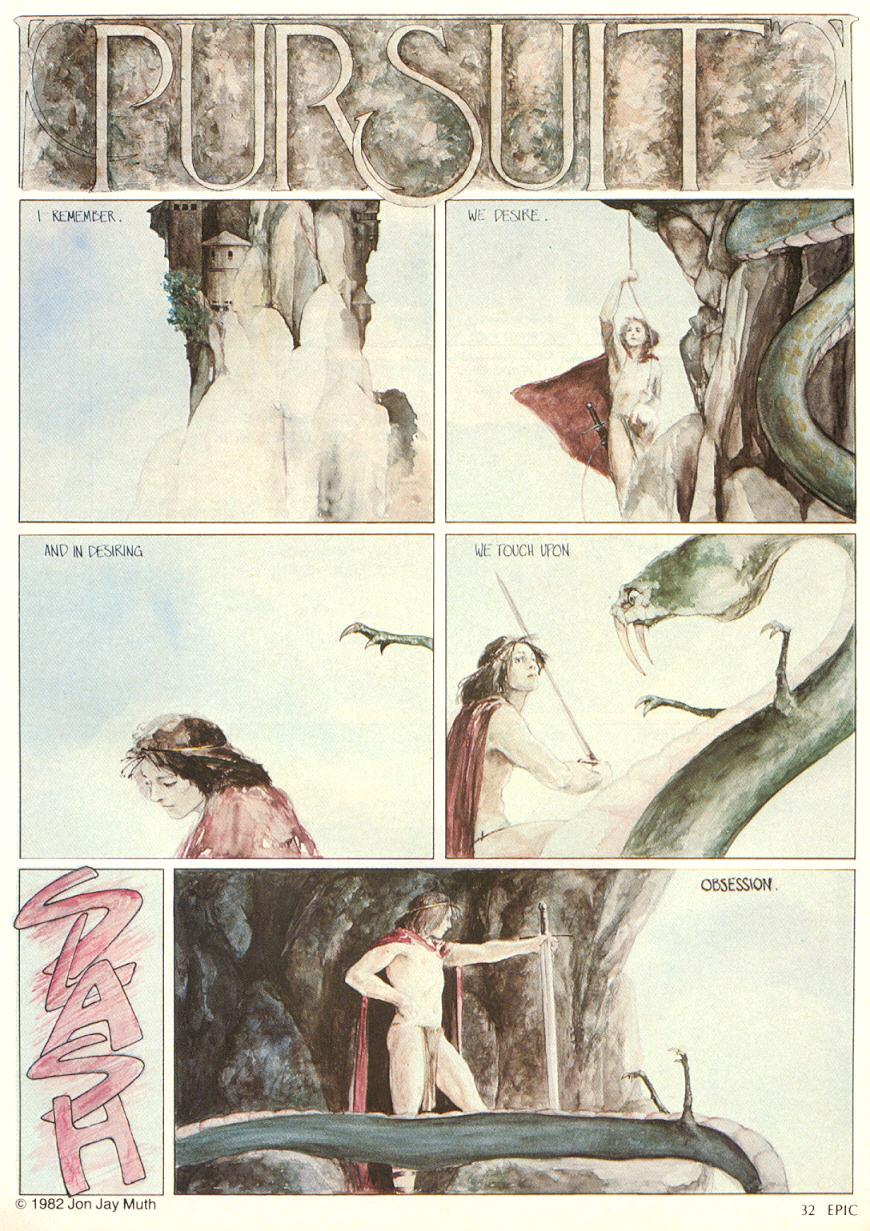
From Epic Illustrated #12 (June 1982), here are “Small Gifts” and “Pursuit” by Jon Jay Muth:

Rightly or wrongly, I have long thought of Muth’s style at the beginning his career, when he drew the above stories, as “School of Jeffrey Jones.” There are, however, definite similarities between Muth’s painting style and palette and Alan Lee’s watercolour illustrations of the late 1970s* and beyond; so much so that it wouldn’t surprise me if Lee’s work was also, as much as Jeffrey Jones’s, an influence on the “look” of “Small Gifts” and, especially, “Pursuit.”

* The first edition of Faeries by Lee, Froud, et al., appeared in 1978.

Comics · Leopoldo Duranona · Look Here

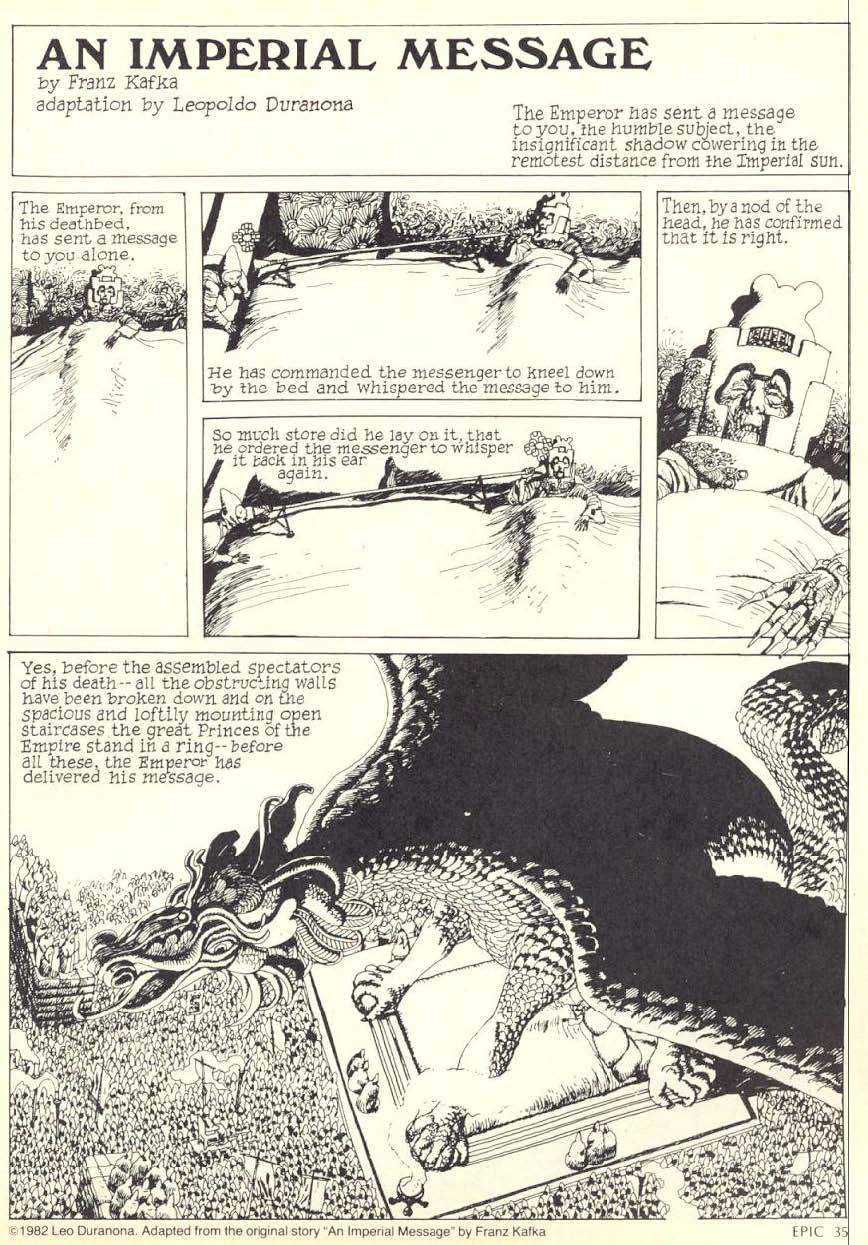
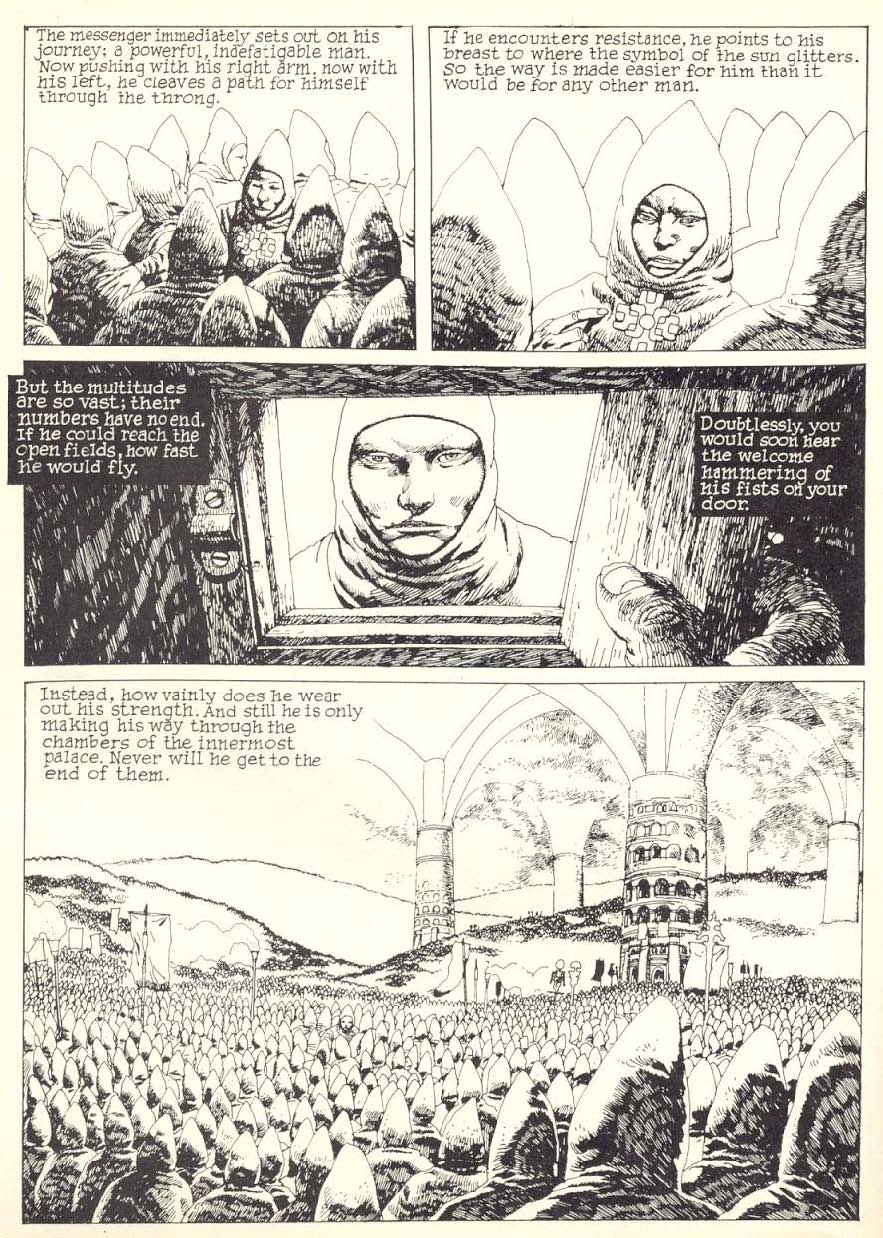
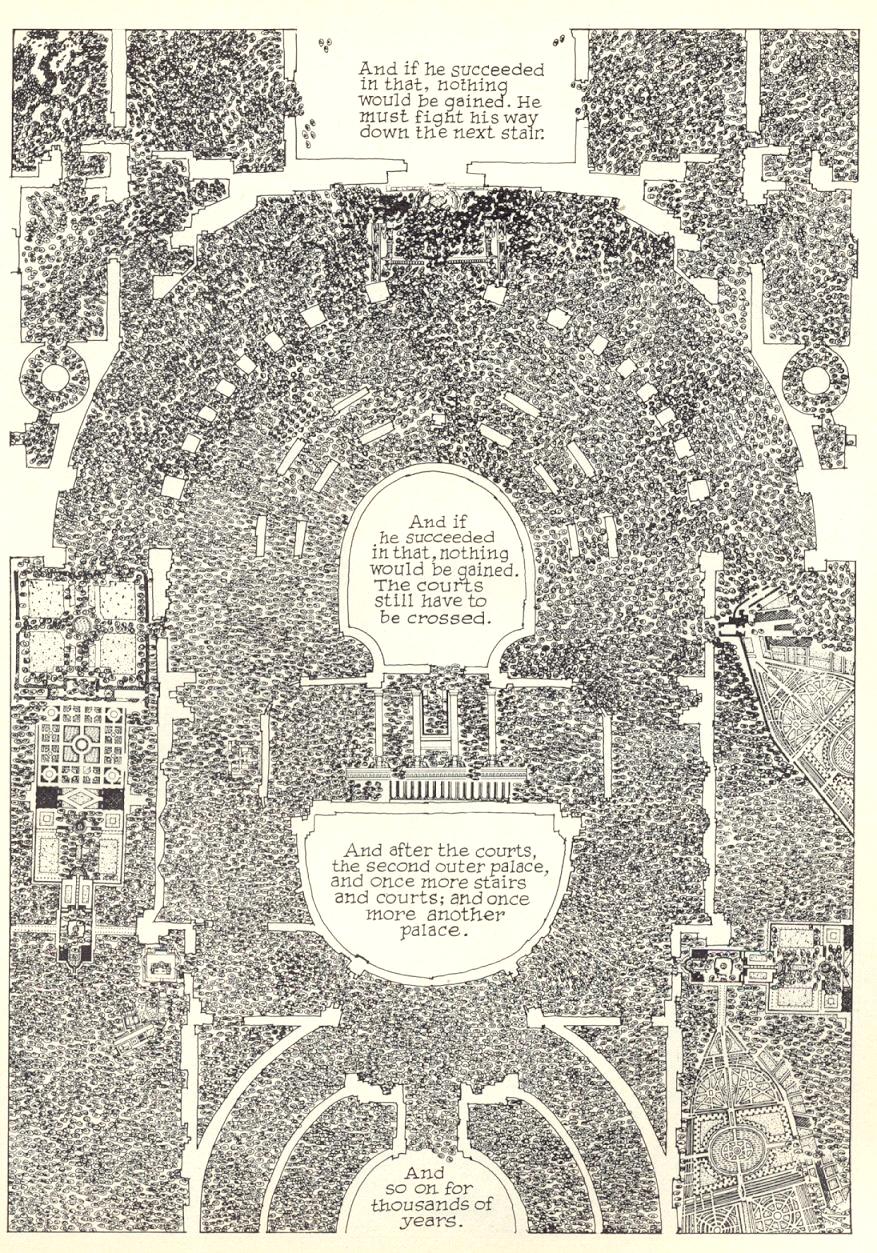
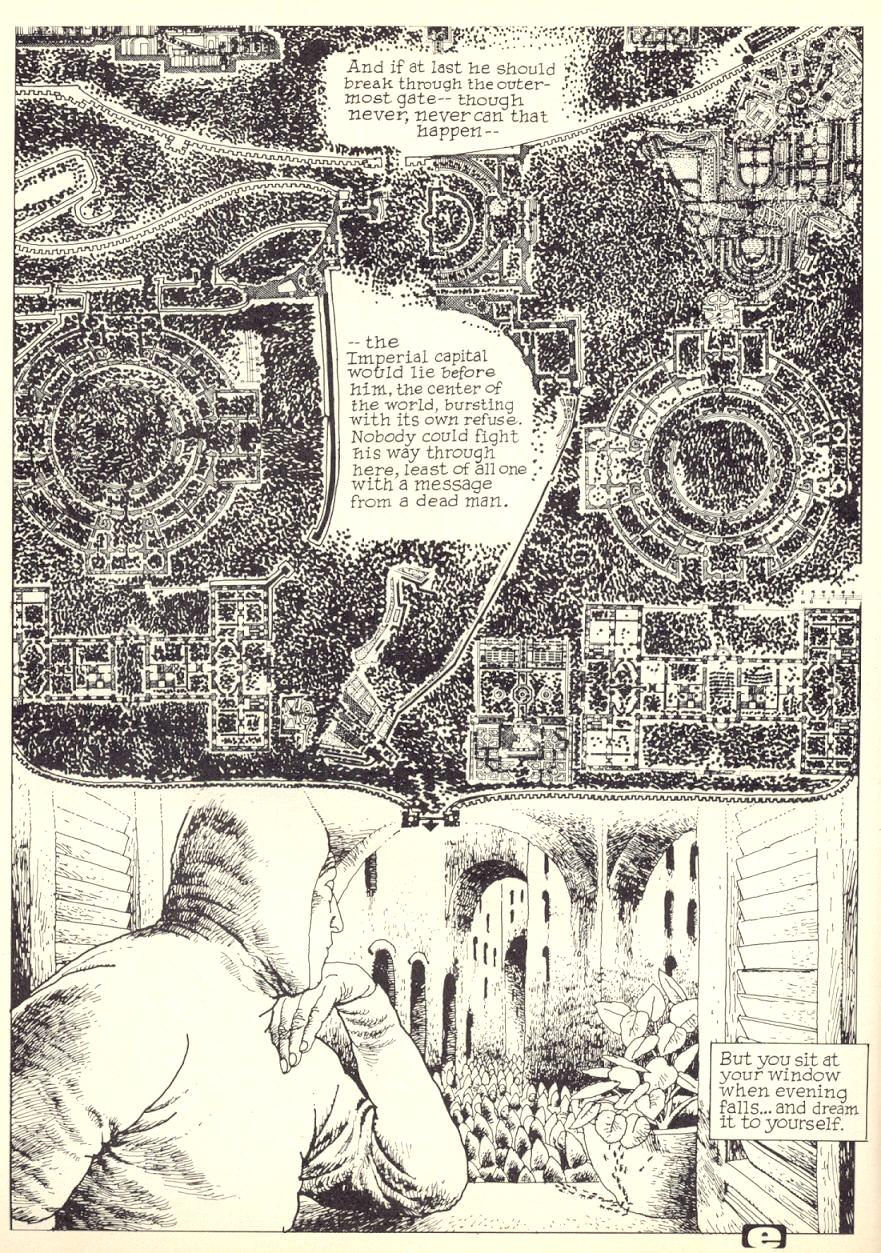
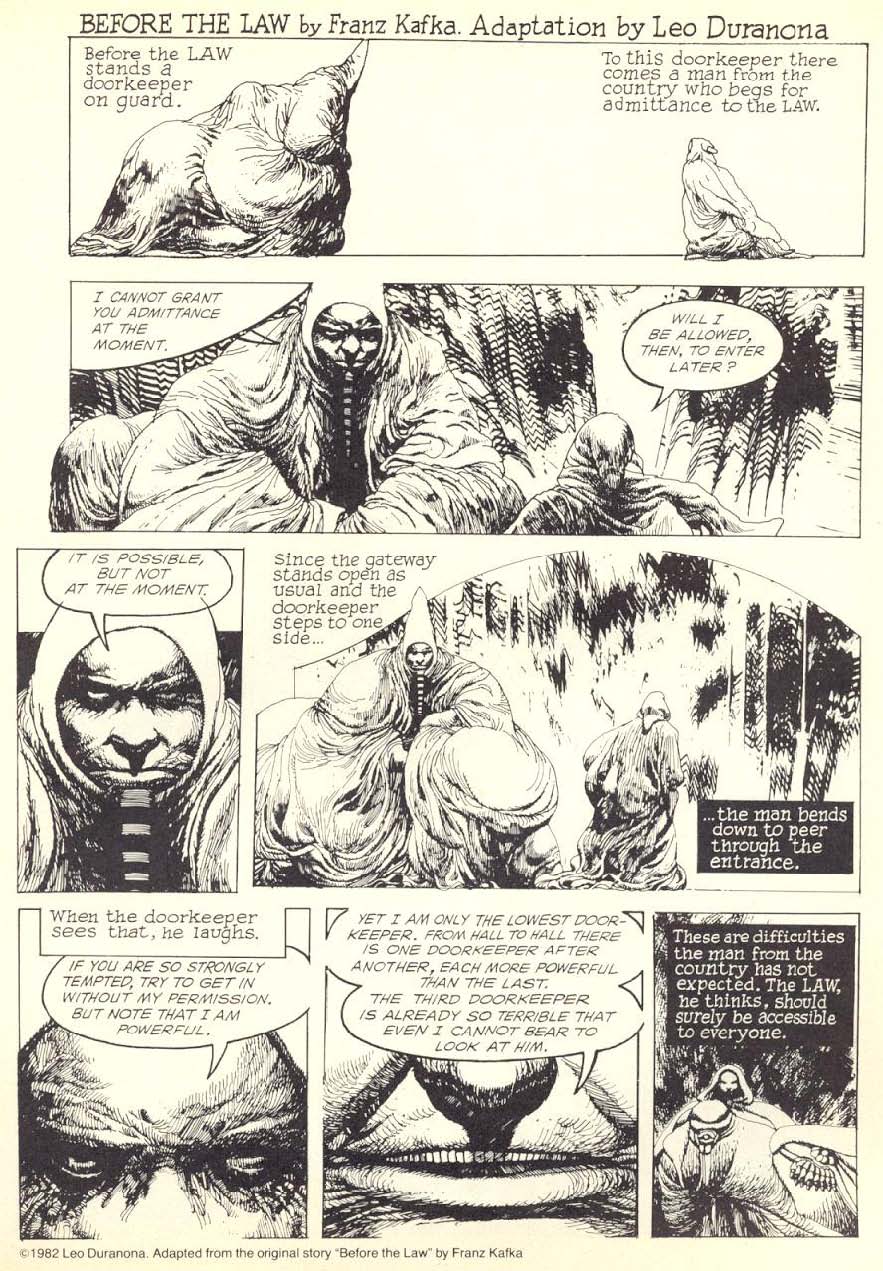
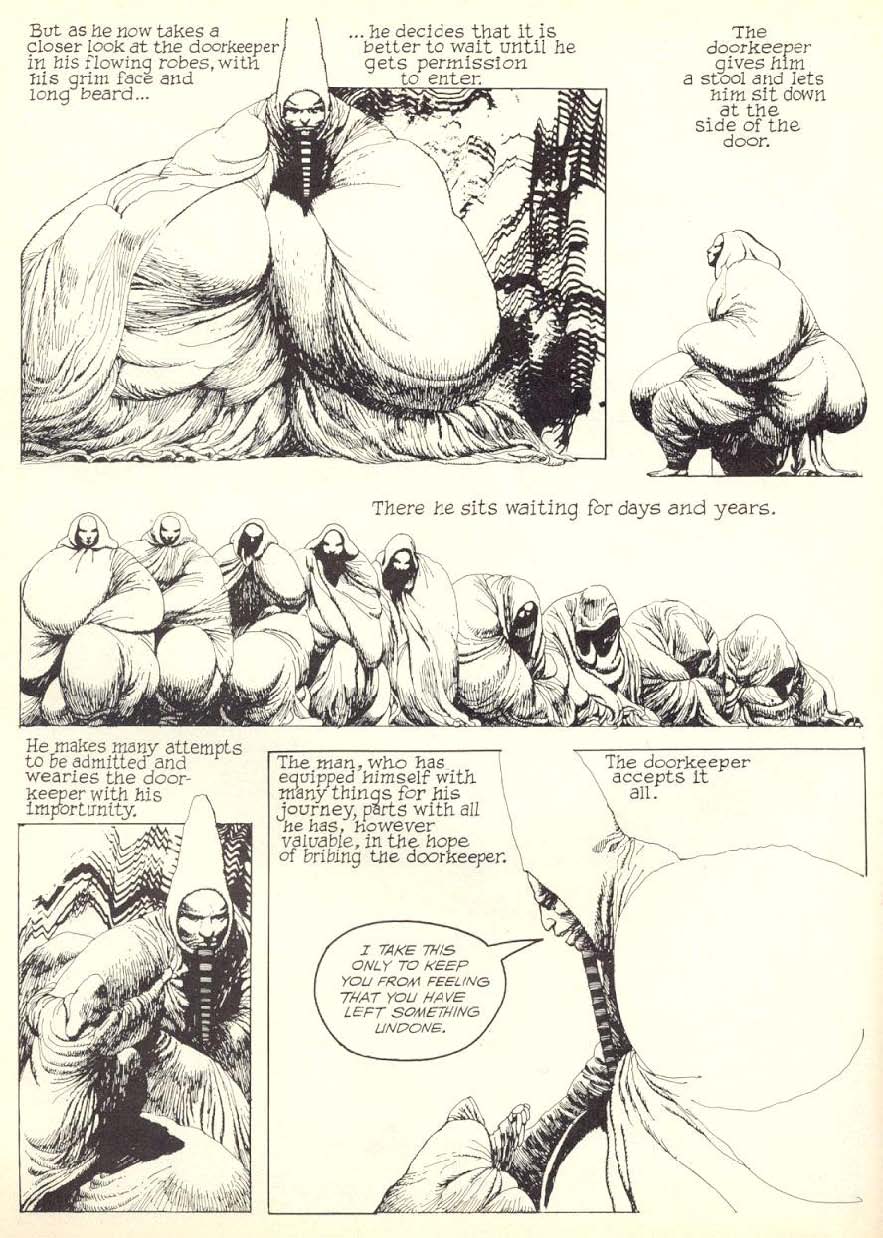
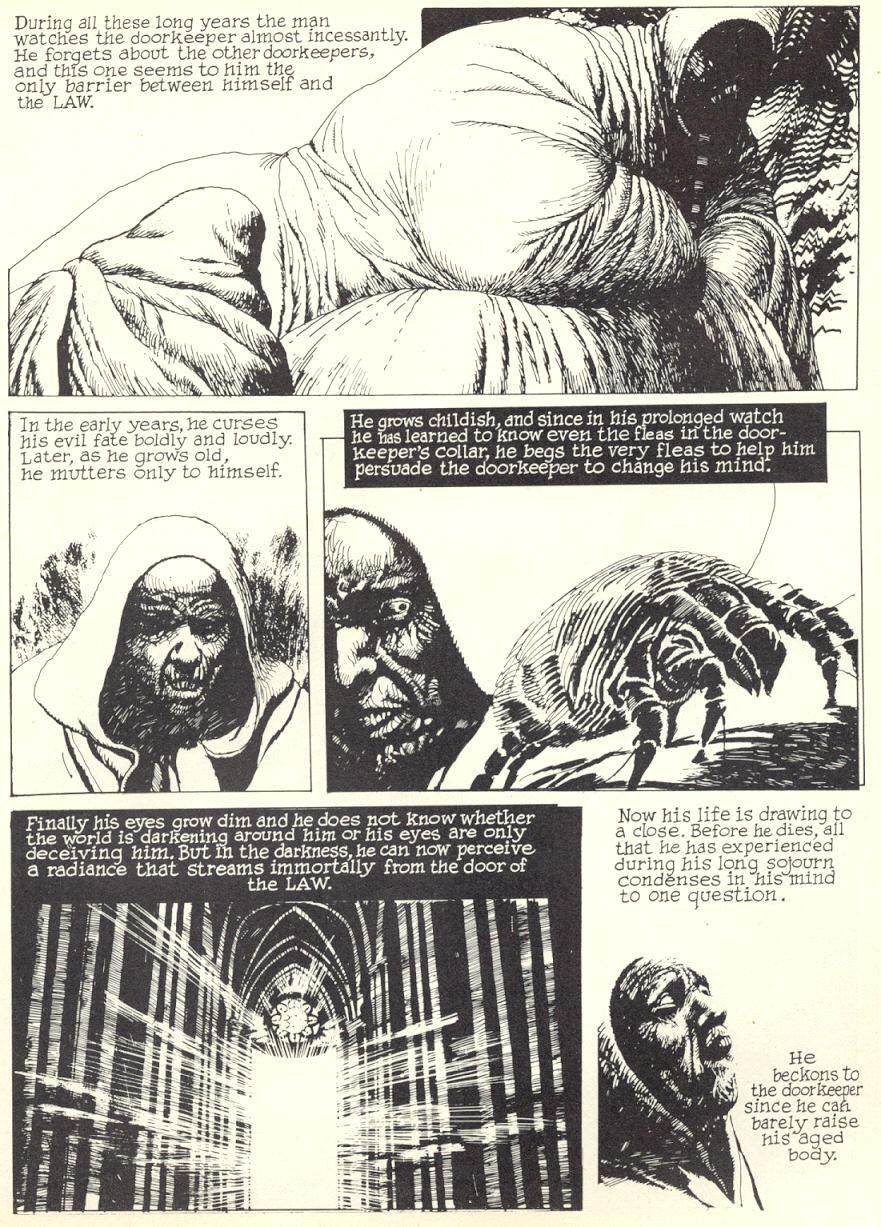
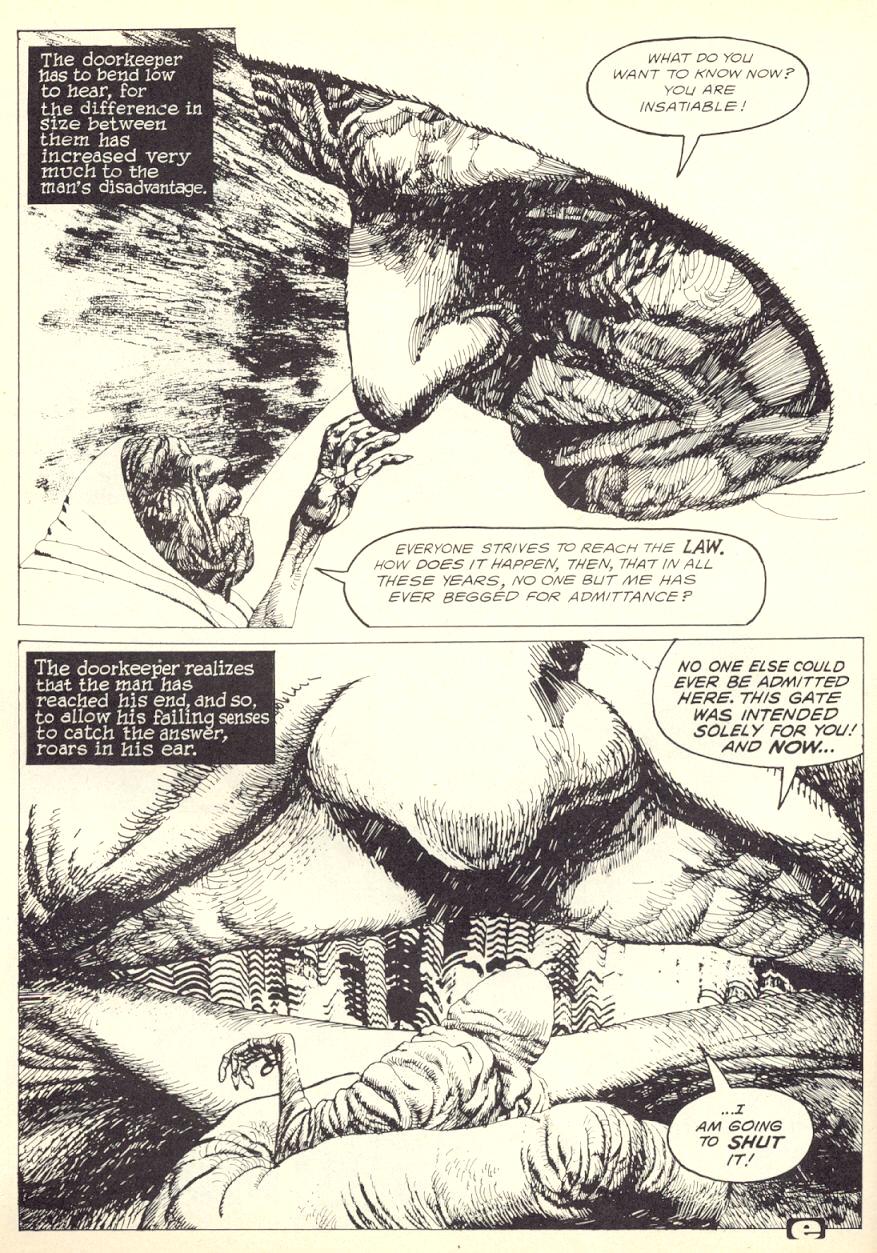
Look Here: Two Stories by Franz Kafka, Adapted by Leopoldo Duranona

From Epic Illustrated #11, pages 26 to 33:

Keywords: “An Imperial Message,” “Before the Law.”

Commonplace Book

Scott Atran on “The Tragedy of Cognition”

via &#151

“Existential anxieties are by-products of evolved emotions, such as fear and the will to stay alive, and of evolved cognitive capacities, such as episodic memory and ability to track the self and others over time. For example, once you can track even the seasons — and anticipate that leaves will fall off the tree in autumn and that squirrels will bury nuts — you cannot avoid overwhelming inductive evidence favoring your own death and that of those you are emotionally bonded to. Emotions compel such inductions and make them salient, and terrifying. This is ‘the Tragedy of Cognition.’ Dying is by nature not a telic event because once the process of dying starts (from birth on) it cannot be stopped to avoid the inevitable end state. By introducing a supernatural agent, religion resolves the Tragedy of Cognition. Dying is converted into a telic event whose goal state is an extended afterlife. The result is, in part, an allaying of an otherwise recurring and interminable existential anxiety…”

— Scott Atran, In Gods We Trust: The Evolutionary Landscape of Religion (Oxford UP, 2002), p. 66.

Bonus Link:

Born Believers: How Your Brain Creates God