"This day's experience, set in order, none of it left ragged or lying about, all of it gathered in like treasure and finished with, set aside." –Alice Munro, "What is Remembered"
From the pages of Strange Stories of Suspense #12 (December 1956), here’s a four-page story with a banal script that is partially redeemed by the vivacious Frazetta-influenced art of Angelo Torres:
The lowest point in the story has to be when Lee says to Dora, “Besides, you’re much too lovely a girl to be so brilliant and absorbed in your work!” That’s casual sexism offered up as a compliment, Holmes. Apparently, whether they’re from the past, the present, or the future, men will be men will be men, all mentally mired in the 1950s.
But wait! Did Lee just say future human civilization has “scanners, to look back into time and send men like me, trouble-shooters of the future, back to the past to take care of things like this”? Hm… now that’s interesting… I wonder who was the first to use the term scanners in SF in connection with time travel and surveillance… and I also wonder if Philip K. Dick ever read this story… LOL!
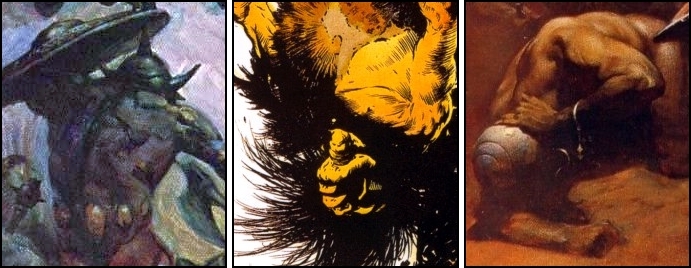
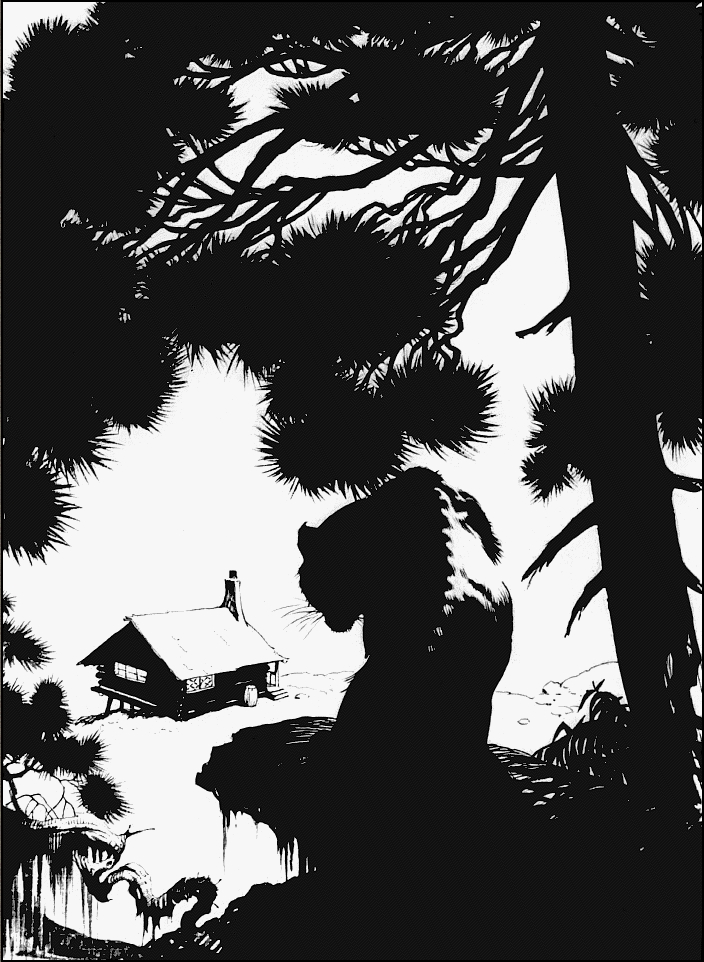
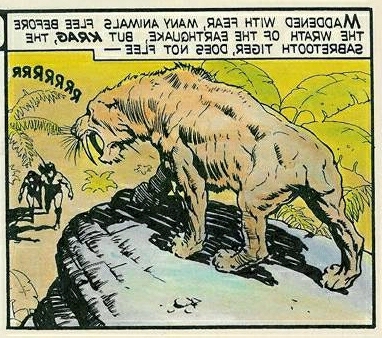
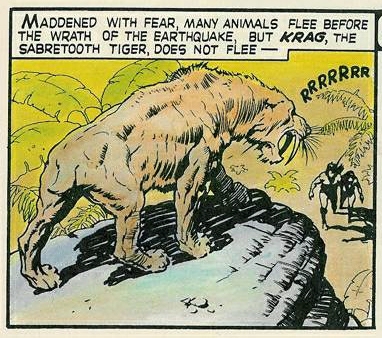
Lioness Watching Cabin is included in Frank Frazetta: Book Three (New York: Bantam Books, 1979), but no date is given. Ditko’s story “The Teddy Bear” was published in Amazing Adventures, vol. 1, no. 3, in August 1961. The panel by Frazetta that features “Krag, the sabretooth tiger” is from the second page of the story “When the Earth Shook,” which appeared in Thun’da #1 in 1952.
UPDATE:
With the help of a reader, Clayton, I now have a rough date for “Lioness Watching Cabin,” which, it turns out, is one of the few completed illustrations from a re-do of a Wally Wood illustrated story, “Came the Dawn,” written by Al Feldstein, that Frazetta worked on, but didn’t finish, for the unpublished Shock Illustrated #4, which, had it been published, would have appeared in 1956. Frazetta’s artwork was featured early last year on Mr. Door Tree’s Golden Age Comic Book Stories blog, which I regularly visit and highly recommend to anyone who might be reading this message. Here’s the link to Mr. Door Tree’s post that includes Wally Wood’s original illumination of Feldstein’s script along with Frazetta’s abandoned re-vision.
All of which means we can now say with some certainty that Frazetta’s “Lioness Watching Cabin” illustration was produced before the mountain lion watching tent comic panel by Ditko.
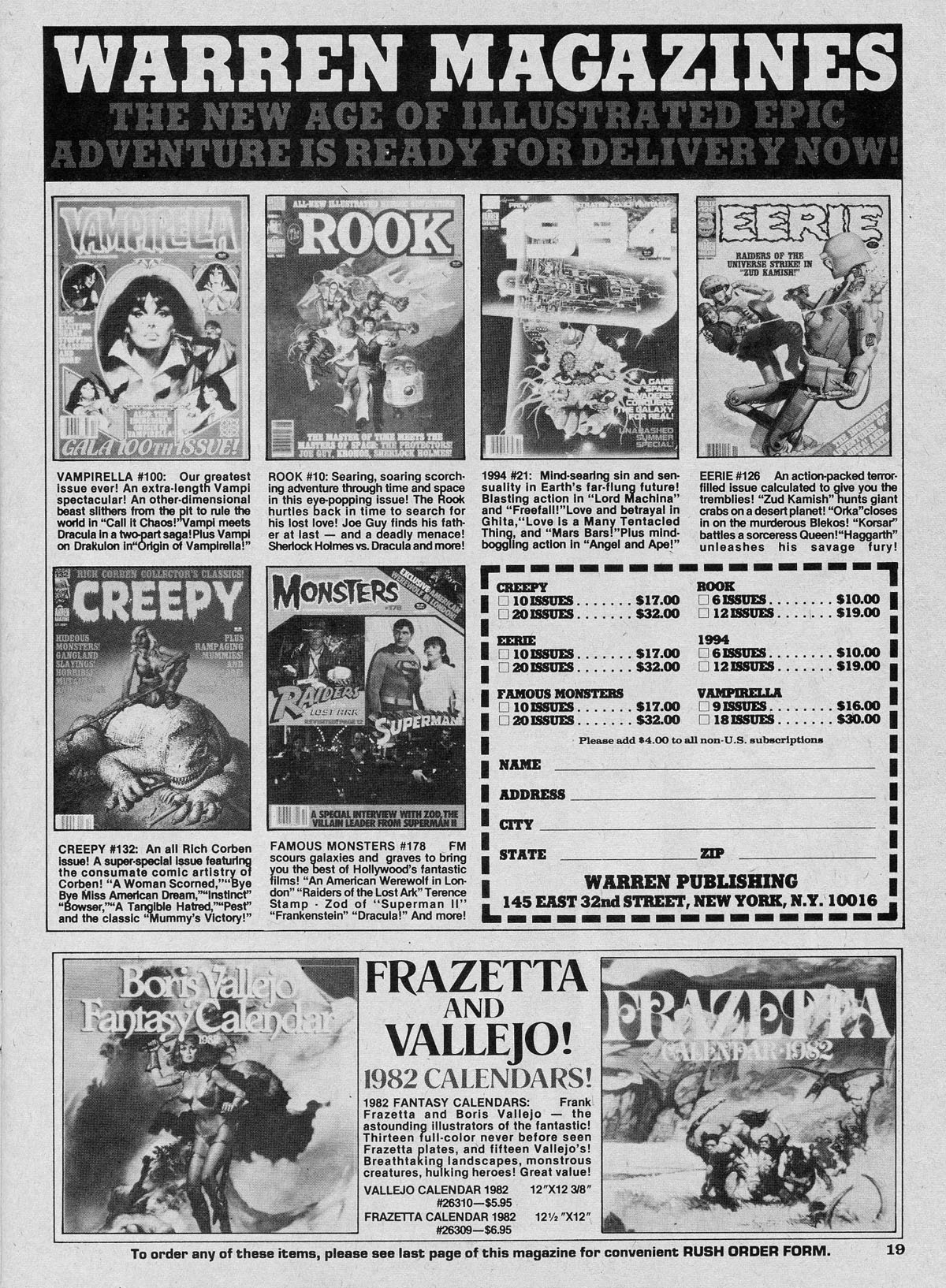
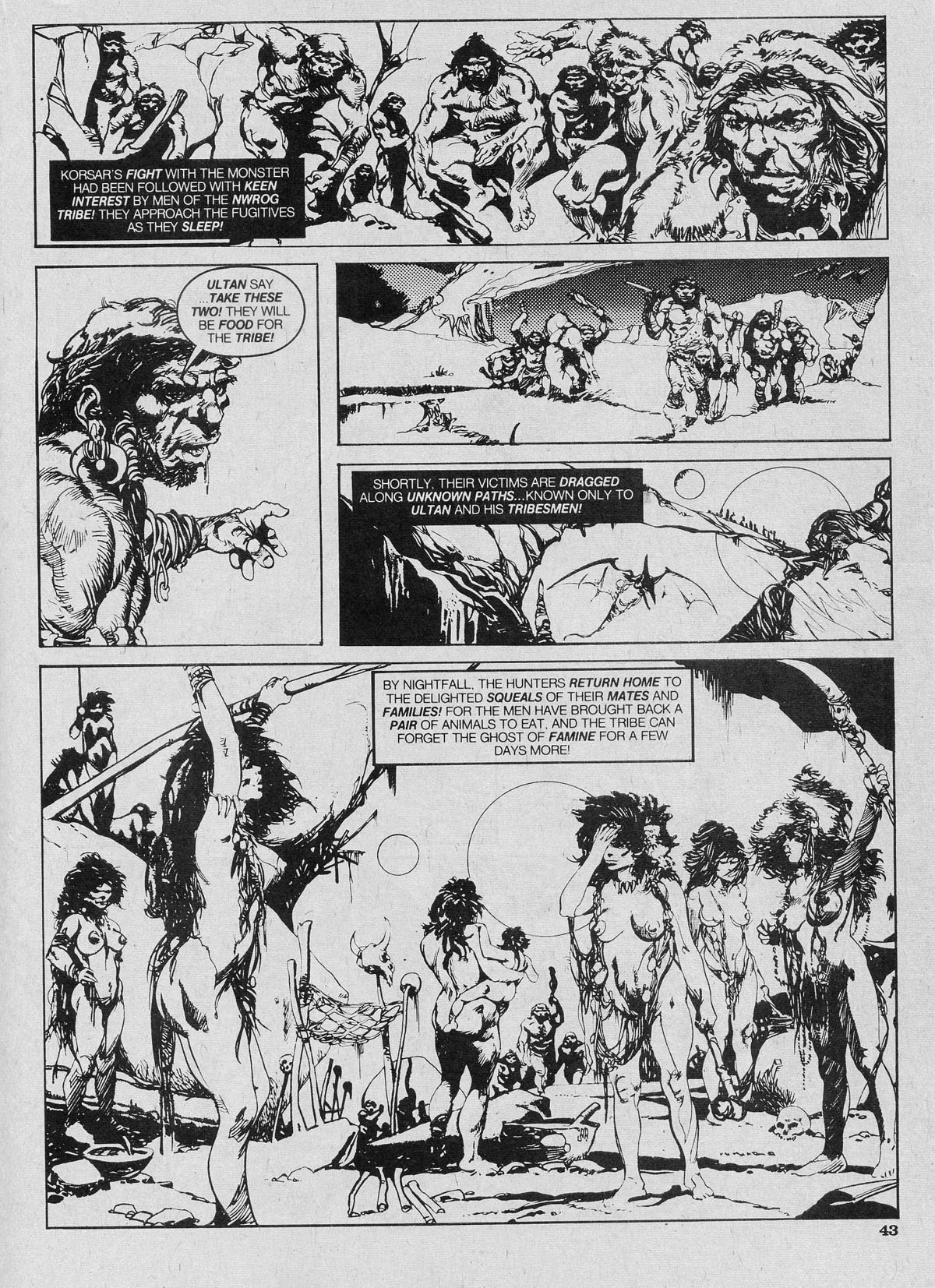
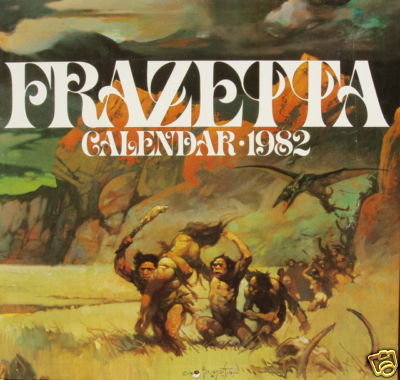
Here’s an old-fashioned swipe that’s rather funny — mainly due to the timing! In Eerie #126 (November 1981), on page 19, in the bottom right-hand corner, you’ll find an advertisement for the 1982 Frazetta Calendar. And, IN THE VERY SAME ISSUE, you’ll find a 12-page story called “Korsar,” with art by Esteban Maroto, which runs from page 35 to page 46. Now, take a look at page 9, panel 3 of the Maroto-illustrated story (Eerie page 43), paying special attention to the composition, the landscape, and the group of figures led by the fellow carrying the woman on his shoulder, on the left-hand side of the panel.
For your convenience, I’ve included both pages below, along with a slightly larger, colour version of the cover of the 1982 Frazetta Calendar:
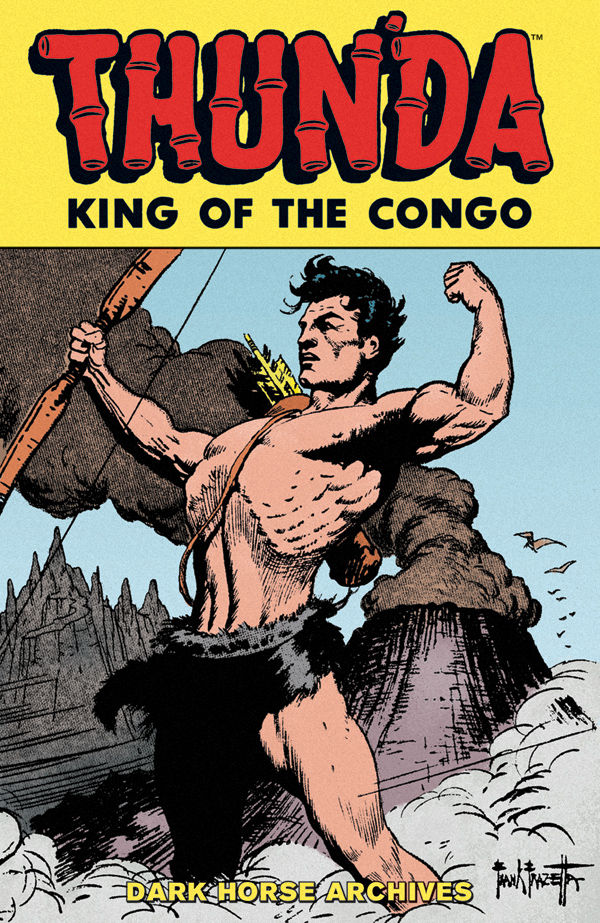
Available from Dark Horse in July 2010, Thun’da, King of the Congo will bring together, in one 232-page hardcover volume, all six issues of Thun’da, King of the Congo, as well as the Thun’da backup stories that appeared in Cave Girl and Africa: Thrilling Land of Mystery, featuring work by Golden Age greats Frank Frazetta, Gardner Fox, and Bob Powell.
Here’s the publisher’s description of the book:
Frank Frazetta is widely renowned as one of the greatest fantasy illustrators of all time. But he didn’t hone his skills in study at the fabled galleries of Paris or Milan; his legendary talents flourished as he worked for hire during the Golden Age of comics!
In the early 1950s, Frazetta set up shop at bustling comics publisher Magazine Enterprises, contributing beautiful cover illustrations and comics pages. There, he also created his first mighty adventurer: the lost-world-jungle hero Thun’da! Though Frazetta left Magazine Enterprises shortly after the first issue of Thun’da was released, and the series was ultimately short lived despite the talented care of collaborators Gardner Fox and Bob Powell, to this day the Thun’da, King of the Congo comics series is held in high regard both as an exciting adventure title and as the only comics series ever to include a cover-to-cover, all-Frazetta issue!
Here’s a short notice, distributed through the Associated Press, that so far has appeared, under slightly different headlines, in both the Chicago Tribune (“Manager: Fantasy artist Frank Frazetta dies in Fla. hospital at 82 after suffering stroke”) and the Los Angeles Times (“Frank Frazetta, renowned for sci-fi and fantasy art, dies at 82”):
(AP) — Pioneering fantasy artist Frank Frazetta has died in a Fort Myers, Fla., hospital. He was 82.
Manager Rob Pistella says Frazetta died Monday morning, a day after suffering a stroke. He says Frazetta had been out to dinner with his daughters Sunday before falling ill.
Frazetta is renowned for his sci-fi and fantasy art. He created covers and illustrations for more than 150 books and comic books, including Conan the Barbarian and Tarzan.
Son Frank Frazetta was charged in December with using a backhoe to break into the artist’s museum in the Poconos and trying to remove dozens of paintings.
The Comics Journal: Frank Frazetta Interview — posted by Gary Groth on May 10th, 2010 at 5:57 PM, this lengthy 1994 interview was originally conducted for The Comics Journal #174 and was later reprinted in The Comics Journal Library: Classic Comics Illustrators.
The Return to Innocence: Goodbye, Frank Frazetta by rosefox8, who writes, “Confession time. It was the work of Frank Frazetta that made me realize that gaining healthy weight after anorexia was a beautiful and strong thing.”
Despite the numerous myths surrounding Frazetta (some perpetuated by zealous fans, some that were created by Frank and Ellie as marketing conceits), Frank was not a god. Everything did not come easily. Everything wasn’t a success. Not everything he said was Gospel and anyone who believed otherwise… didn’t know Frank.
He struggled. He had self-doubts. He had more than his share of disappointments in his life and every decision he made wasn’t the right one (and a few blew up in his face). By his own admission he was lazy and played more than he painted: contrast his body of work with that of his peers and his contention would seem to be true. Frazetta’s virtues were contrasted by his failings, his generosity sometimes blunted by his callousness. He masked his sensitivity with macho bravado, but when he hurt, the pain cut deep. As he said once, “When I’m down, Jesus, it’s hell.”
Frank was a scrapper who grew up on the mean streets of Brooklyn. His talent revealed itself at an early age. Frank was like an artistic sponge with a photographic memory. Fortunately, he had Roy Krenkel and Al Williamson as friends in his formative teens and early 20’s. They gave Frank an incredible art education, using their vast collections to expose him to the finest art and illustration of the 19th and 20th centuries. Frazetta soaked up everything he was shown. Somehow he managed to absorb and filter all of this great art and have it subsequently come out through Frank’s brushes as pure Frazetta. I know it was hard work, but Frank made it look so damn natural and easy.
The Art History Archive: Frank Frazetta, Fantasy Legend by Charles Moffat — includes links to a large number of images stored on the Art History Archiver server.
Booksteve’s Library: Frazetta PSAs — 1950’s — “Boy Scouts of America National Jamboree 1955” and “We Can Stop the Enemies of Youth,” posted by Steven “Booksteve” Thompson
Vanguard Productions has just announced that, in August of this year, the company will release The Complete Johnny Comet by Frank Frazetta, the first volume in their “Vanguard Frazetta Classics Series.” According the news release, The Complete Johnny Comet “will feature Frazetta’s newspaper strip shot from the artist’s personal proofs, ensuring the best reproduction ever for this material. The 224-page, 8.5” x 11” glossy b/w hardcover will retail for US$39.95.”
Back in May, when the new publishing deal with Frazetta was first announced, Vanguard founder J. David Spurlock gave Frazetta fans a tantalizing glimpse of what they could expect see in the coming years. “We are very excited about launching a line of Frazetta books under the new Vanguard Frazetta Classics brand.” said Spurlock. “The line will include a series of volumes collecting Frazetta’s comics work in top quality book format,” said Spurlock, “Other Vanguard Frazetta Classics will include a new edition of the 1998 hit, Frazetta – The Definitive Reference, a richly illustrated index of every Frazetta work ever published; a Frank Frazetta Sketchbook; and more–all in library-quality collections fully authorized by Frank Frazetta.”
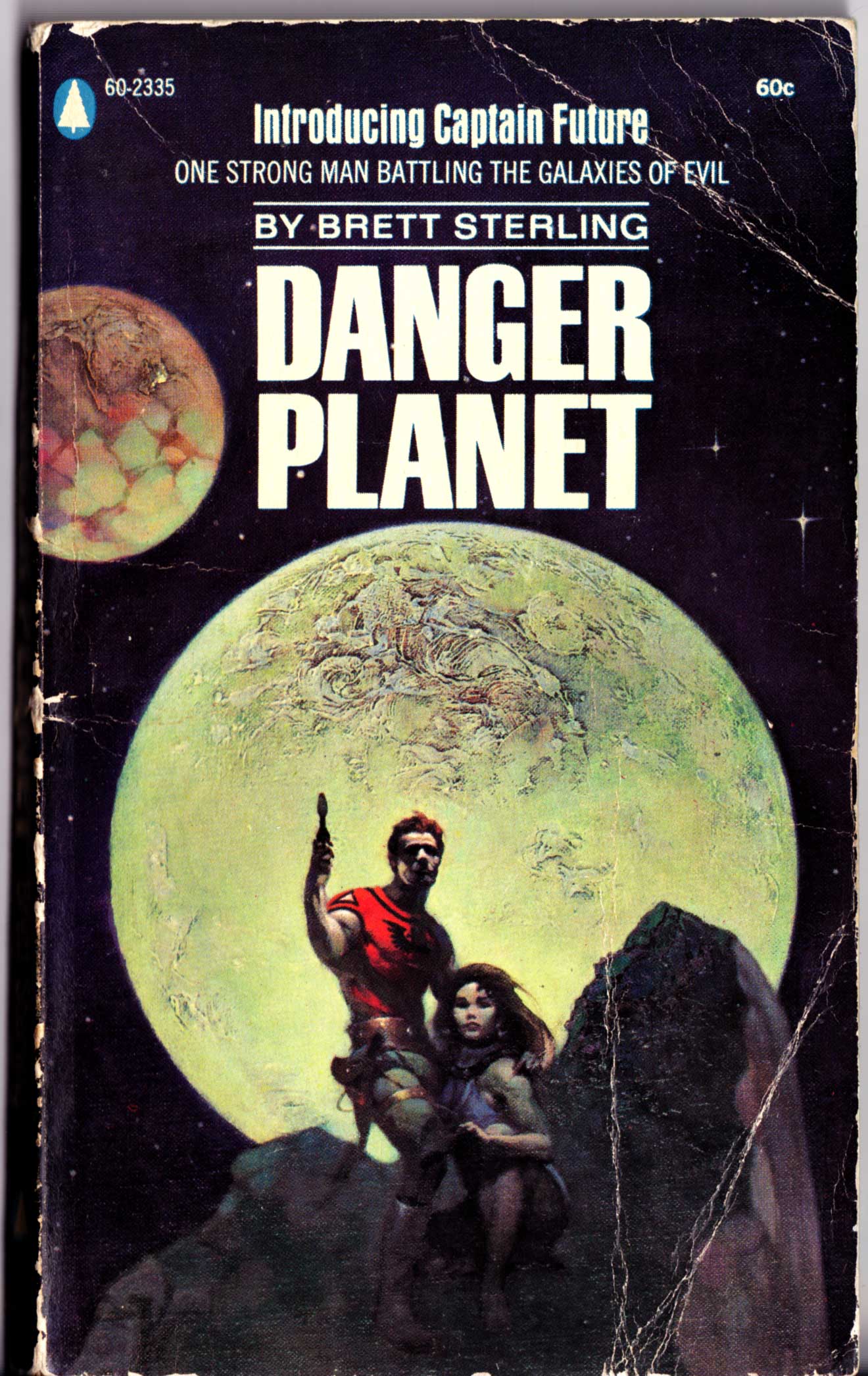
The paperback indicia doesn’t include a publication date, but according to a couple of Web sites, the Paperback Library reprint edition of Danger Planet, which featured “Captain Future, inter-galactic agent of justice, whose identity is top secret, whose strength is ultimate,” was published in 1969, some 24 years after the original!
ABOVE: Brett Sterling, Danger Planet (New York: Popular Library, 1969), with cover by Frank Frazetta.
As you can see from the above image of the actual painting (which was painted on an 18.75 x 12.5 inch canvasboard panel!), the section with Frazetta’s signature, and much else, was cropped for the cover. Frazetta didn’t get an interior cover credit either. Because everybody knows it’s timeless action heroes like “Captain Future” that sell books, not cover artists…
Vanguard Productions (22-23 April 2010): BIG FRAZETTA NEWS!!! — the official announcement that all of the litigation surrounding Frazetta’s family and his art have been resolved.
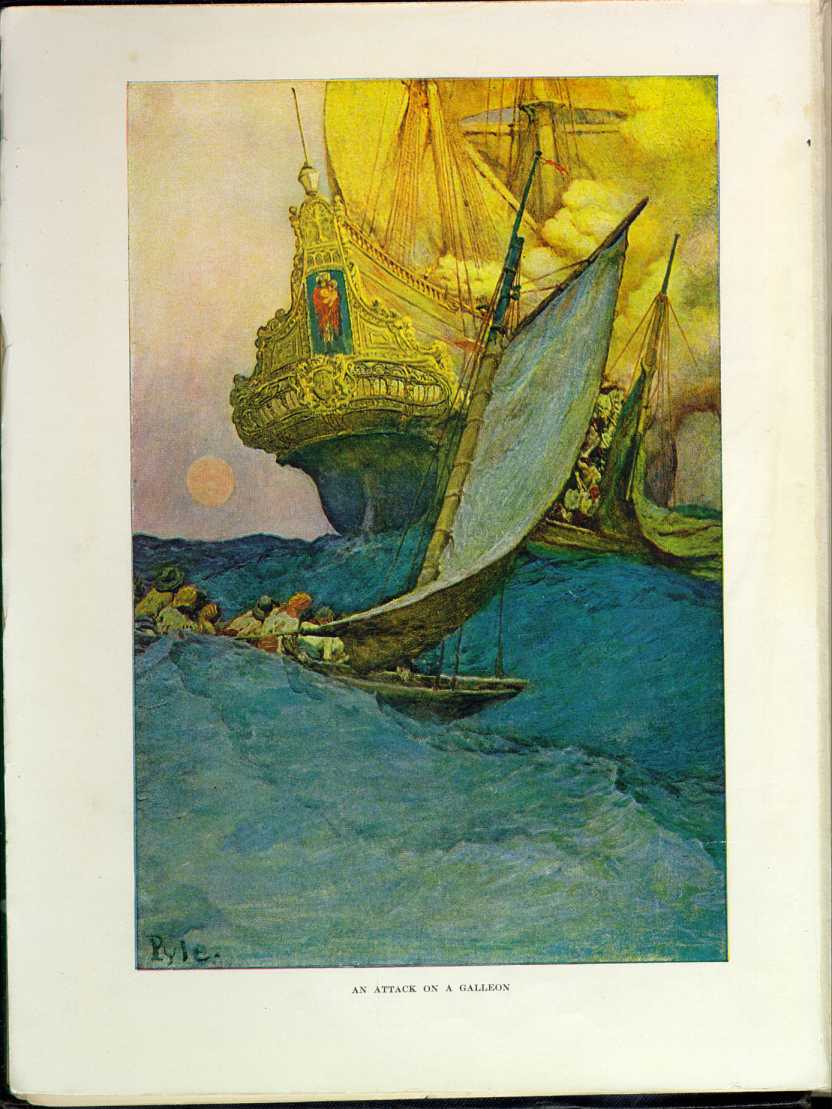
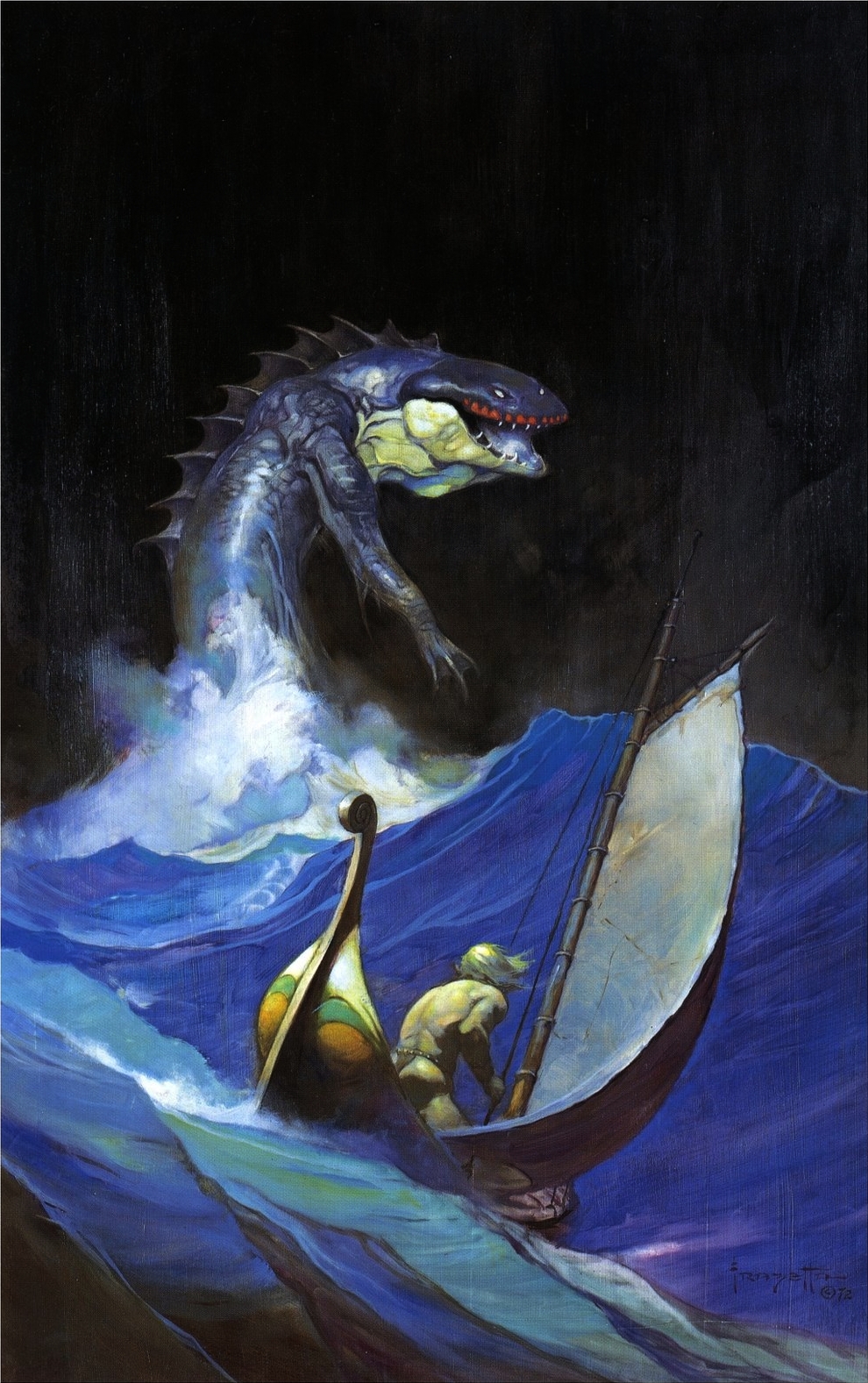
ABOVE: Frank Frazetta, Sea Serpent (1972), oil on canvas. Here’s a bonus: another painting by Frazetta inspired by An Attack on a Galleon by Howard Pyle.
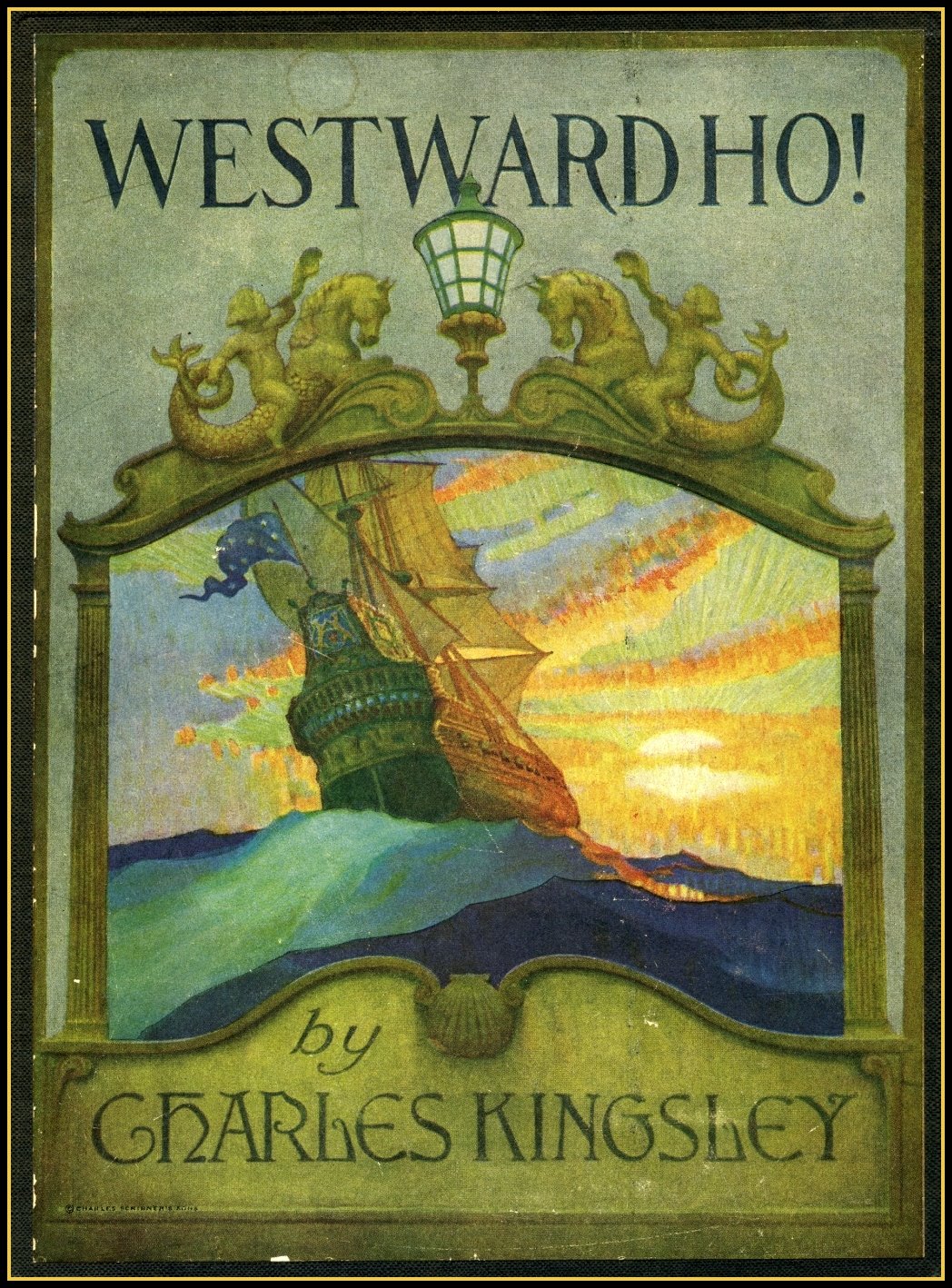
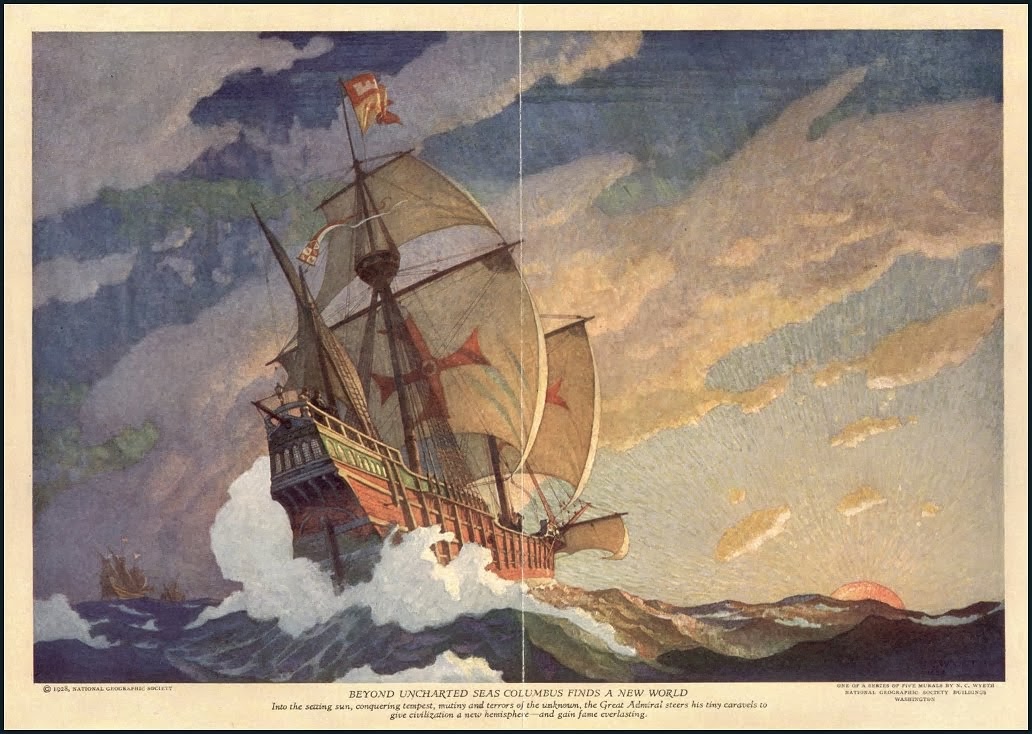
Frazetta’s obvious borrowing from Pyle has been pointed out many times in the past; however, I’ve never seen anyone add Wyeth’s painting to the mix (although surely someone has, the line of influence being so clear). Now, of the three galleon paintings, it seems obvious to me that Pyle’s original effort is not only the first but also the best of the three. It’s the best composed; it’s the most expressively painted; it’s the most dramatic. No wonder Wyeth and Frazetta (who seems to me to have borrowed as much from Wyeth’s galleon as from Pyle’s) were enthralled by Pyle’s Attack on a Galleon. It’s a masterpiece. And which of the remaining two galleon paintings is the weakest, Wyeth’s picturesque, chocolate-box cliché or Frazetta’s virtuosic but underdeveloped pastiche? You decide…
July 17, 2009, East Stroudsburg PA: Eleanor “Ellie” Frazetta, the wife of celebrated artist Frank Frazetta, passed away today to be with the Lord after a courageous one-year battle with cancer.
Eleanor Kelly was born in Massachusetts and moved to New York where she married Frank in November, 1956. She acted as his business partner as well as his lifelong companion. Known for her feisty personality as well as her intuitive business acumen, she was instrumental in successfully establishing record prices for Frank’s work throughout her life.
She is survived by her husband Frank, her four children, Frank Jr., Billy, Holly and Heidi, numerous grandchildren, and many friends.
A public memorial is planned and details will be announced shortly. In the meantime, the family requests privacy.
Sincere condolences to all who knew and loved her.






 Ragged Claws Network