[CLICK IMAGES TO ENLARGE]


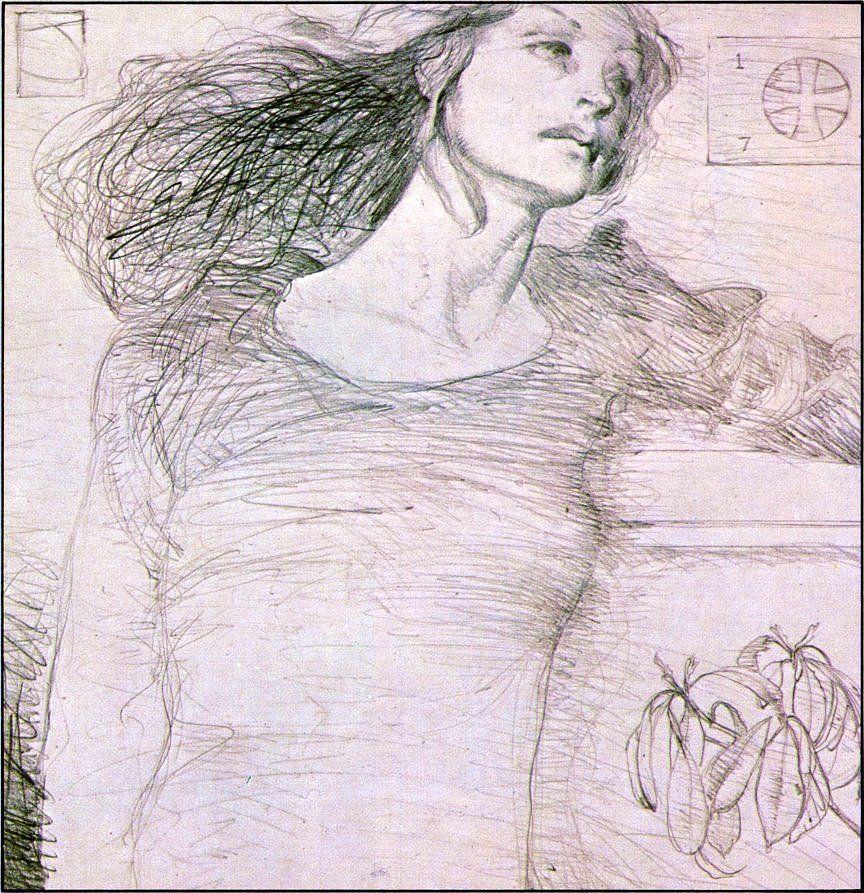
"This day's experience, set in order, none of it left ragged or lying about, all of it gathered in like treasure and finished with, set aside." –Alice Munro, "What is Remembered"
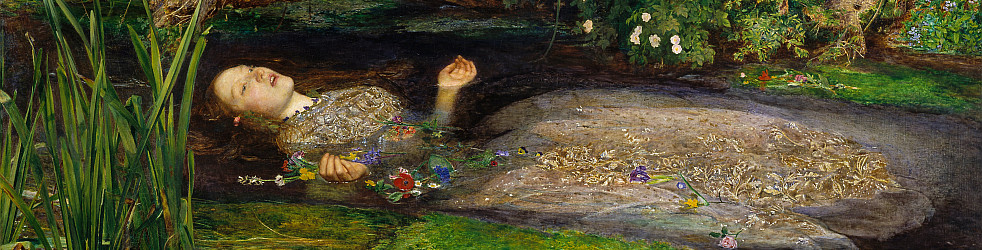
[CLICK IMAGES TO ENLARGE]
You are definitely going to want to “Click Image to Enlarge” this one:
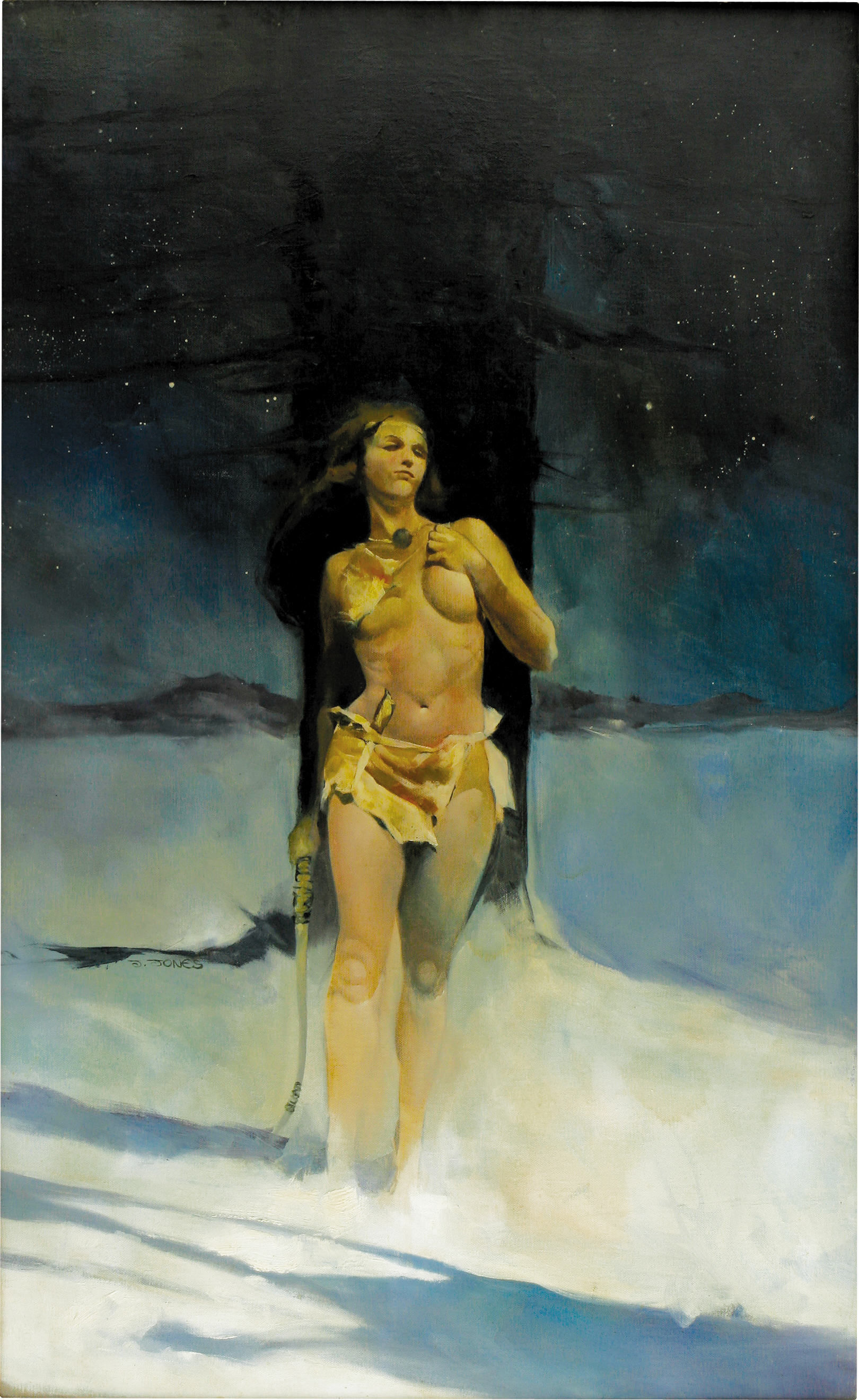
On 02 August 2007, the above painting sold at auction for US$17,327.50.
Another landscape painting created en plein air by you-know-who:
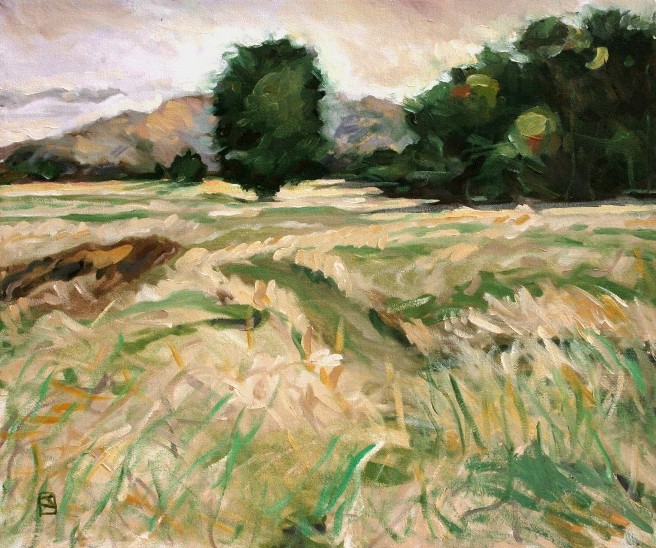
Click here to view more landscapes by the same artist.
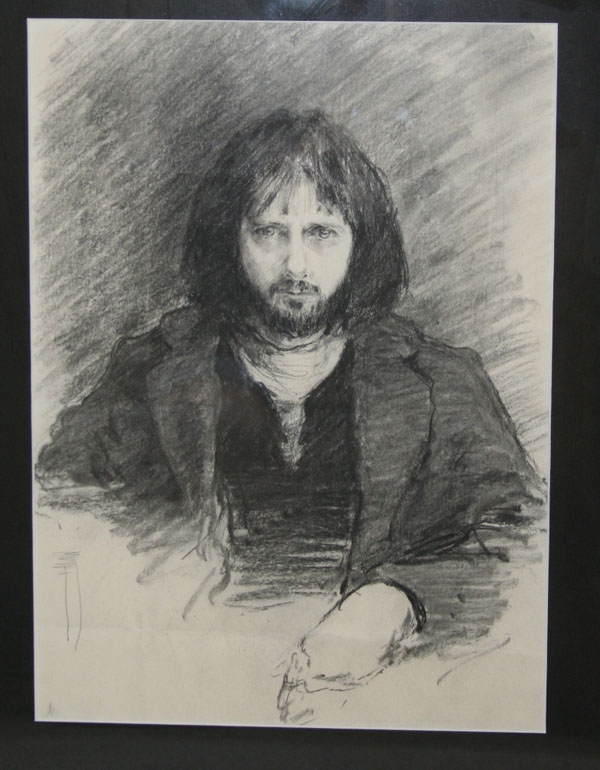
Like it? Enough to buy it? If your answers are yes, and yes, you’re in luck, because the current owner has it listed for sale at US$600. Contact information is available on this Comic Art Fans page.
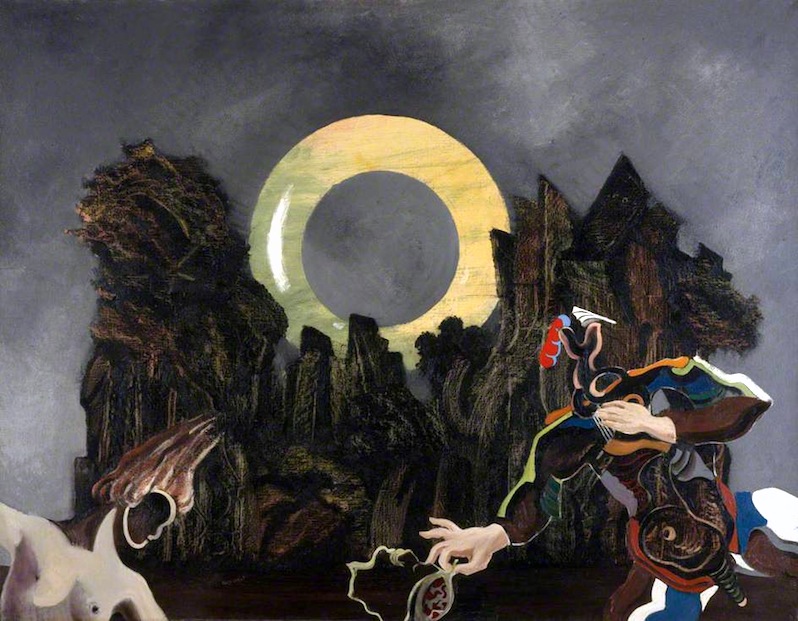
Whenever I see SF paperback covers by Paul Lehr like the nine I posted yesterday, and the many others he created in a similar vein, I immediately think of Arnold Böcklin’s “Isle of the Dead” paintings and, to a lesser extent, “The Sacred Wood”:


I was tempted to file the comparison between Böcklin and Lehr under “Connections,” but I guess I am just not quite convinced myself that there’s any direct influence from one to the other — although the impossibly jagged cliffs in Lehr’s cover for Zelazny’s Isle of the Dead (strange coincidence!) are tantalizingly similar, visually, to the trees in Böcklin’s “Isle of the Dead” variations. Or maybe I’m just seeing things!
BONUS IMAGE (added 29 July 2013):
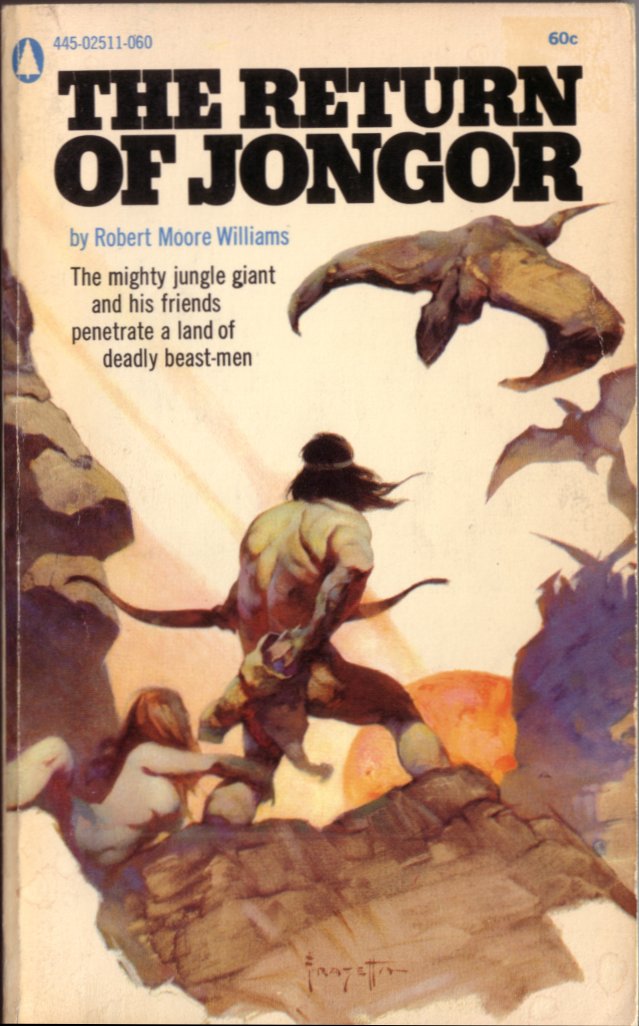
It’s a stock scenario in pulp-fantasy illustration: the man is the hero, the woman is the prize beyond price; the hero is armed, or at least, poised, for battle, the woman is under threat but too delicate to defend herself; the hero stands ready to sacrifice himself for the woman’s protection, the woman cowers, preferably sprawled right at the hero’s feet, preferably with as few clothes on as possible; the hero… well, you get the picture, and it’s not exactly “progressive.” So imagine my surprise when I saw the following painting by the great British realist painter, Lucian Freud:
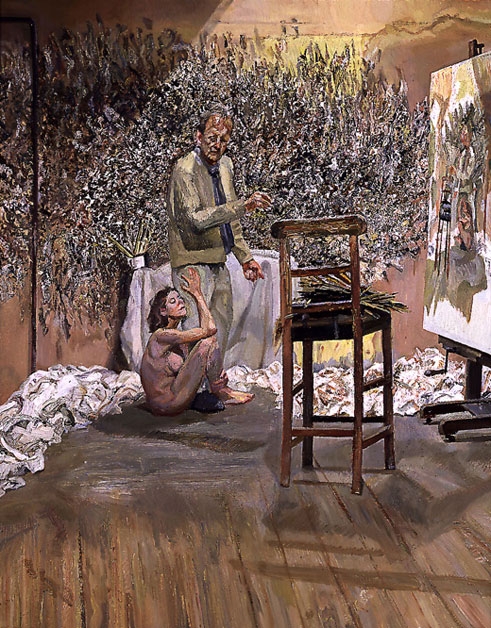
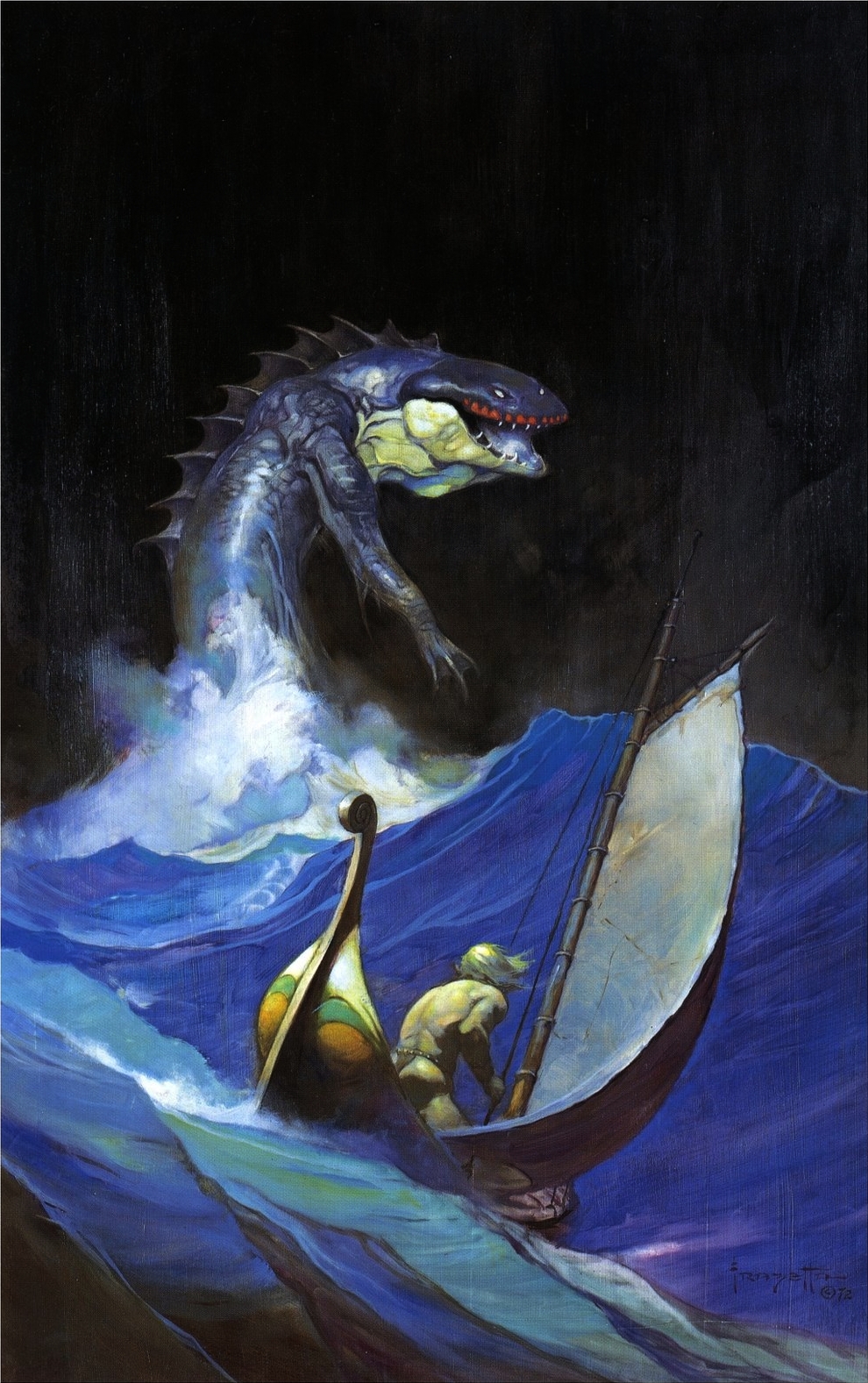
(Compare the above with any of the Frazetta covers in my previous two posts; note, however, that among the images I have posted here, the subject appears in its most iconic form, with the naked heroine on the ground with her arm around the hero’s leg, the enemy in attack mode, and the hero poised to take on all comers, in The Return of Jongor. See also Jeffrey Jones’s cover for Sons of the Bear-God, by Norvell W. Page.)
Freud’s The Painter Surprised by a Naked Admirer is the sort of painting in which the artist wants to have cake and eat it: on the one hand, as a rich and famous heterosexual artist, he clearly loves the idea of naked women at his feet, and the truth is — we know it, and Freud definitely knows it — that many beautiful and famous women would leap (and have lept) at the chance to model for him, but on the other hand, Freud also wants us to know that he is aware of the absurdity of the situation, that he (unlike the model herself, apparently) is a paragon of self-control, that he is a dedicated observer and recorder, before all else. When the artist is at work, he is all focus and intensity, and neither rain, nor snow, nor sleet, nor a naked woman fondling his leg, shall keep him from his appointed task.
Is Freud himself aware of the visual and thematic connection between The Painter Surprised by a Naked Admirer and pulp-fantasy art? I have no idea. But it would be hilarious if he isn’t!
BONUS LINK:
Daily Express: Lucian Freud the Lothario (Friday, May 16, 2008), by Simon Edge — “He’s the irascible, reclusive creator of the world’s most expensive painting by a living artist, has a legendary appetite for much younger women and has as many as 40 children.”
UPDATE (22 July 2011):
Ragged Claws Network > Rest in Peace: Lucian Freud (1922 – 2011)
Here’s a somewhat juicier image of a landscape painting by Jeffrey Jones that I posted a few days ago:

Notice the new information about the title, date, and size. That’s always great to have.

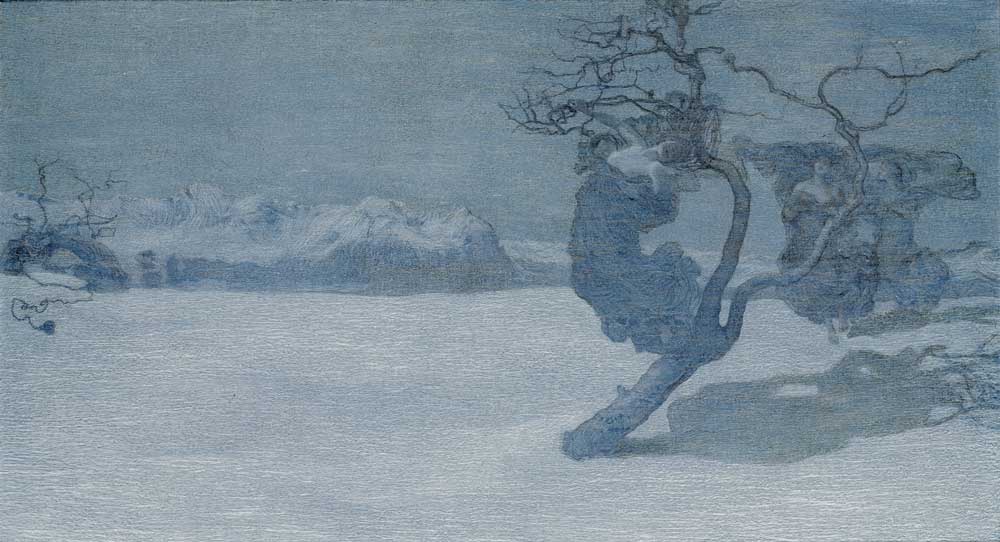
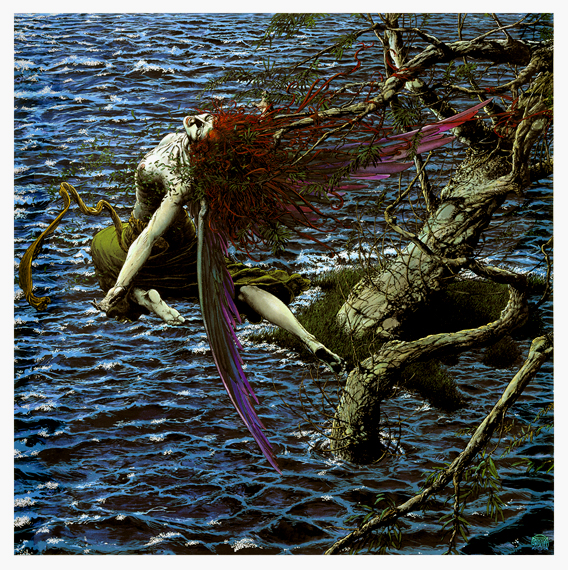

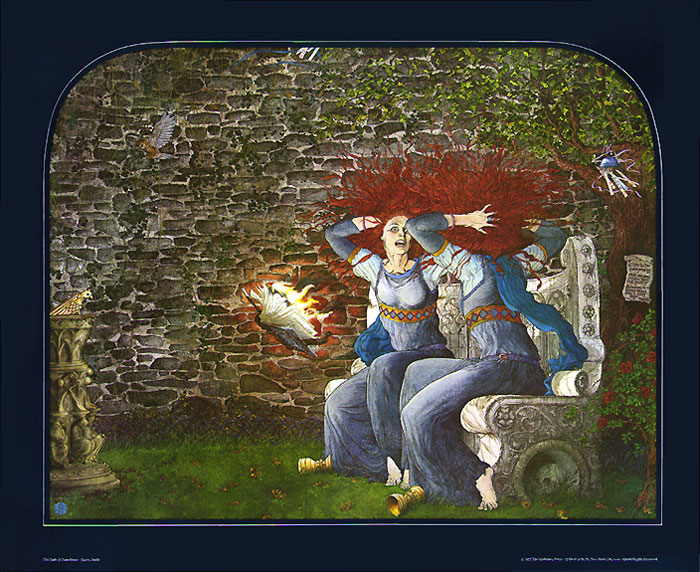
Whether they know it or not, plenty of people, especially fans of imaginative fiction of the late 1960s and early to mid 1970s, have seen book-cover paintings by Jeffrey Jones. Only a select few, however, even among Jones’s most ardent admirers, have had an opportunity to view examples from the artist’s growing body of work in plein air landscape painting in oil. The main reason for this gap in our knowledge of Jones’s work is that the landscape paintings have not been featured in any significant way in any of the books that have been published about Jeffrey Jones’s art. And, of course, the main reason for the inattention to Jones’s landscape paintings, in print, is the nature of commercial publishing, i.e., when readers know an artist as an illustrator, most publishers who step forward to publish books on that artist tend to want their books to focus on what the artist is already known for, rather than on whatever unpublished, personal work the artist would like people to see — and even more so when the unpublished, personal work in question consists of pure landscape paintings! (No offence intended, landscape painters!) Fortunately for you, however, this blog is not governed by any commercial considerations whatsoever. And so, without further ado, here is a selection of small image files of landscape paintings by Jeffrey Jones that were posted on the artist’s old Web site:
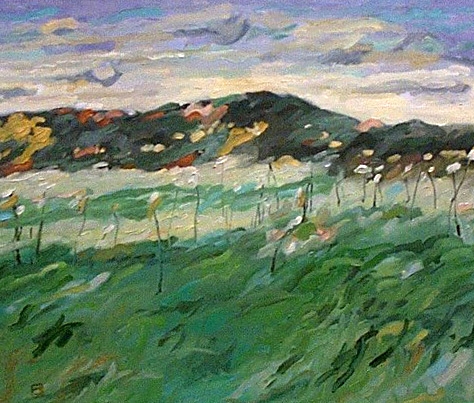

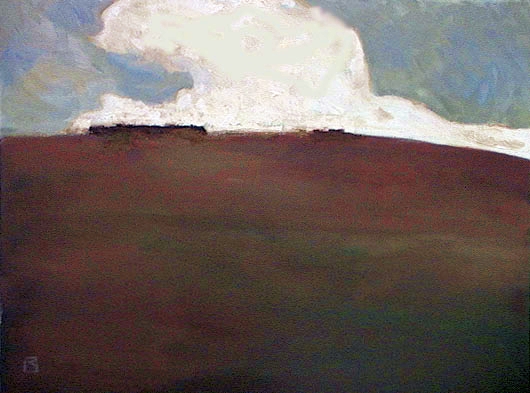

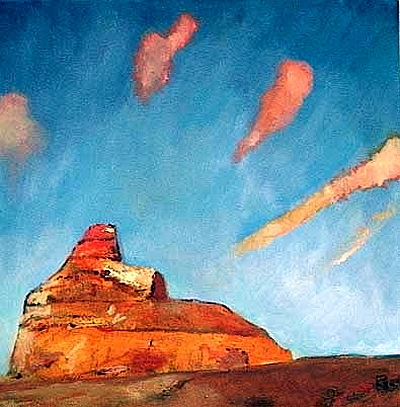
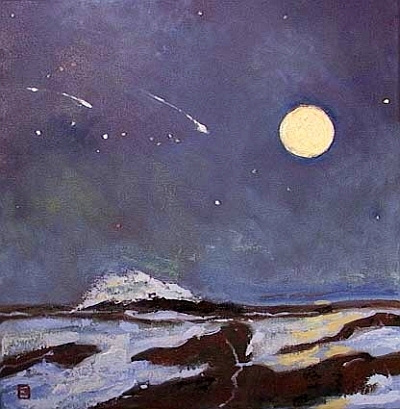
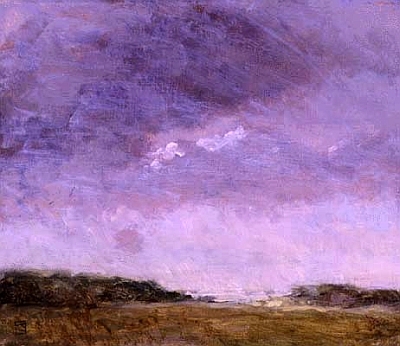

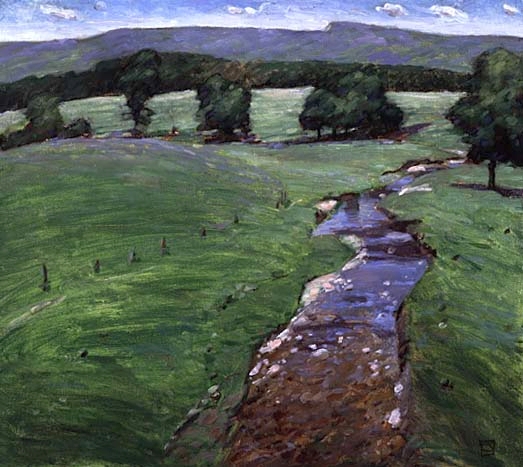


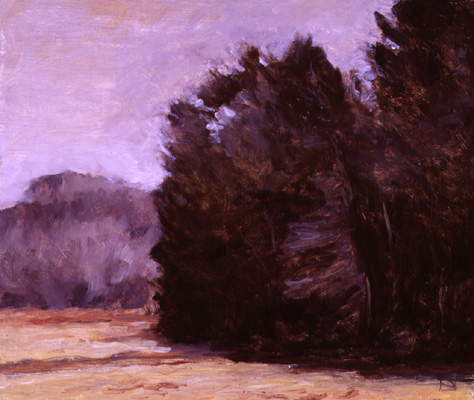


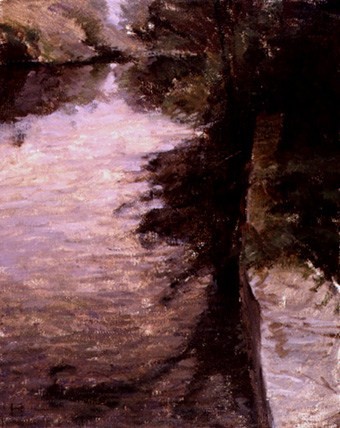
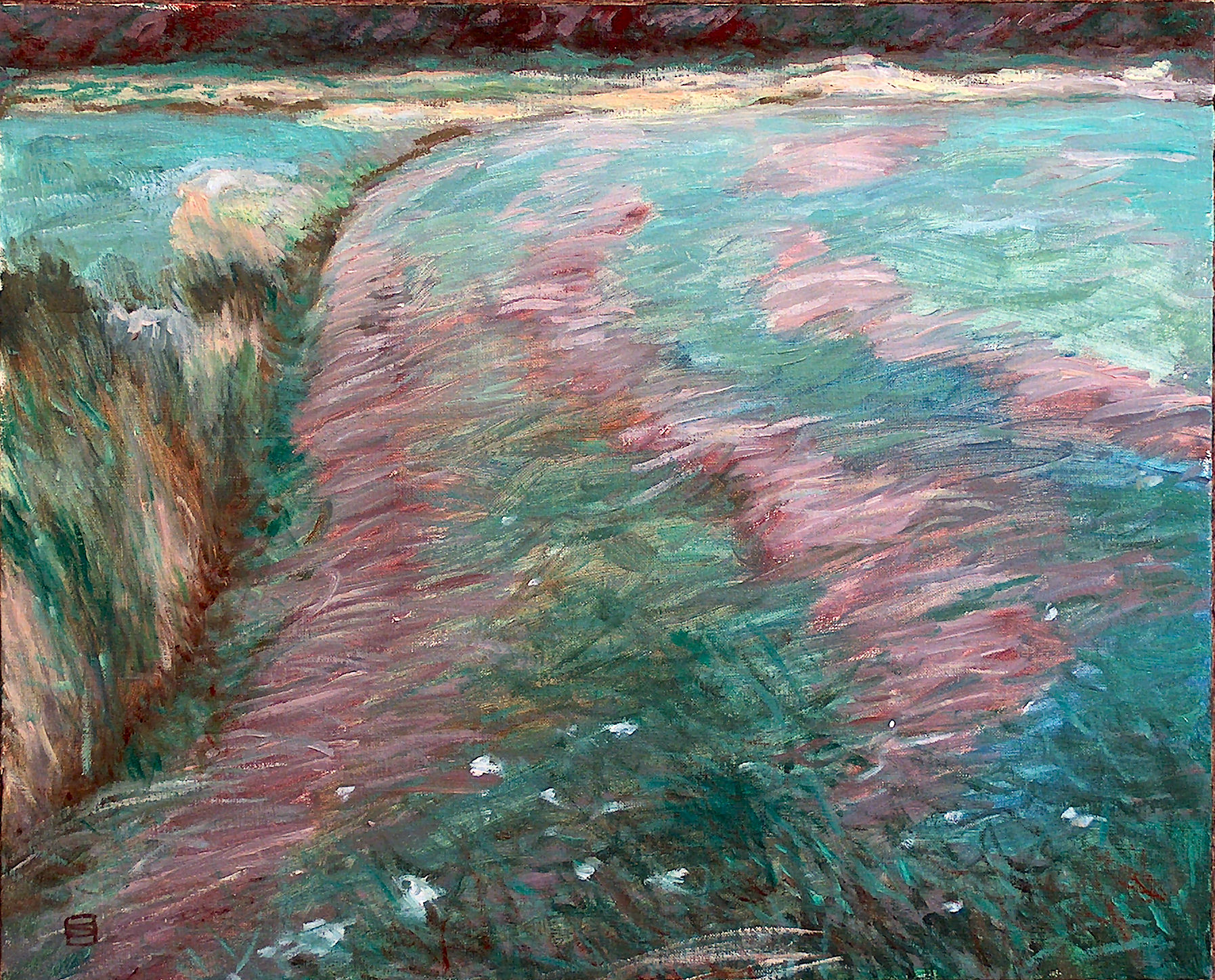
Sorry the images are all (with the exception of the last one!) so small, but beggars can’t be choosers!
Having checked my book collection this afternoon, 10 March 2009, I can now confirm that there are no paintings of landscapes sans figures by Jeffrey Jones in The Studio (Holland: Dragon’s Dream, 1979), or in Yesterday’s Lily (Holland: Dragon’s Dream, 1980), or in Age of Innocence: The Romantic Art of Jeffrey Jones (Grass Valley, CA: Underwood Books, 1994), or in Jeffrey Jones Sketchbook (Lebanon, NJ: Vanguard Publishing, 2000). Finally, in the largest collection of Jones’s work published to date, The Art of Jeffrey Jones (Nevada City, CA: Underwood Books, 2002), you will find only two small reproductions of Jones’s landscape paintings, one of which is incorporated into a text page as an illustration, which I think tells you all you need to know about the publisher’s interest in that particular body of work.
But what about Jones’s interest in landscape painting? Does landscape painting really matter to the artist, or am I just making stuff up?
Here’s George Pratt on painting landscapes en plein air with Jeffrey Jones:
I have known Jeff Jones for 20 years and have been a fan of his work for about as long as I can remember. I count myself lucky to be able to call him a friend.
I was in my first year of art school when I met Jeff at a New York comic convention, and after showing him some of my work he graciously invited me and Kent Williams to join him for landscape painting in upstate New York. For us this was tantamount to painting with Rembrandt and we lost no time in hustling up there.
What a time we had. At the crack of dawn Kent, J Muth, Bernie Wrightson, Dan Green, Allen Spiegel, Jeff and I would pile into various cars bristling with easels and drive to a location Jeff had picked out a week or so before. Mist shrouded the roads that wound up the Catskill mountains and we’d tell ghost stories as we drove along, scaring each other pretty well. Scarier still was watching Jeff work.
He opened my eyes to the true joy of painting. He never taught, but over the years dropped nuggets of information, crystallizing everything I had been struggling for; miniature bombshells that had me convulsing in artistic fits for weeks afterwards. He took the time to look at the work and respond to it in a positive way, which meant the world to me, and I grew. What I walked away with was the idea that art is a spiritual journey of the heart. [Jeffrey Jones Sketchbook, p.3]
And here’s Jones:
This is one of the reasons I love to paint landscapes. It takes problem-solving out of the work. In the studio there’s a lot of problem-solving that goes on because so much of it has to come out of my head. I have to make it work, because it doesn’t exist and you can’t go out and look at it. When I’m out there landscape painting all I need is right in front of me, and there’s nothing that needs to be in my head. It’s like a vacation from my studio. It’s rejuvenating in the same way a vacation is. [Jeffrey Jones Sketchbook, p. 54]
I had to get used to it, because it wasn’t familiar, the wind and the bugs. I’d put a paint rag on the end and it would blow off, all those kinds of things. I finally realized they were only excuses not to be landscape painting; they weren’t really reasons at all. I didn’t want to come here in the first place, so look at all the excuses I can make up not to be here. What would happen if I came out because I wanted to? Funny thing… I didn’t find any excuses! [Jeffrey Jones Sketchbook, p. 56]
Nobody has to see it and you know it. If you like it, you like it; if you don’t, you don’t. That’s the end of it. There’s no deadline, no patron, no nothing. I wish everything could be as fun as a landscape, but everything is not. The more fun I’m having, the more I want to paint and draw. [Jeffrey Jones: Sketchbook, p. 57]
 Ragged Claws Network