From the comic, Sexy Stories from the World Religions #1 (1990), here’s “Ecclesiasticus 9, 1-9,” by the French comics artist Placid:
[CLICK IMAGES TO ENLARGE]
"This day's experience, set in order, none of it left ragged or lying about, all of it gathered in like treasure and finished with, set aside." –Alice Munro, "What is Remembered"
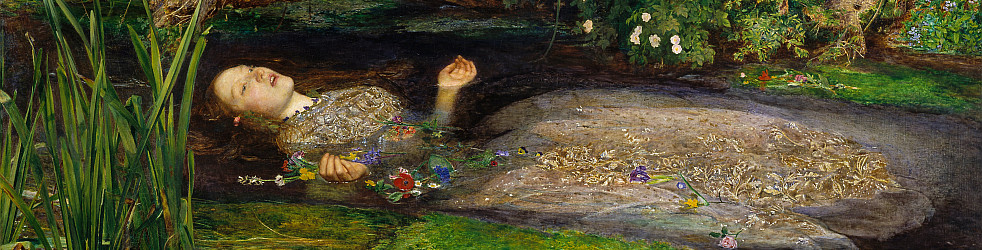
From the comic, Sexy Stories from the World Religions #1 (1990), here’s “Ecclesiasticus 9, 1-9,” by the French comics artist Placid:
[CLICK IMAGES TO ENLARGE]
This morning RCN is pleased to present, for your viewing enjoyment and art-historical education, the posters for the movies Phantom of the Paradise, Heavy Metal, and Spookies, with art by Richard Corben:
[CLICK IMAGES TO ENLARGE]

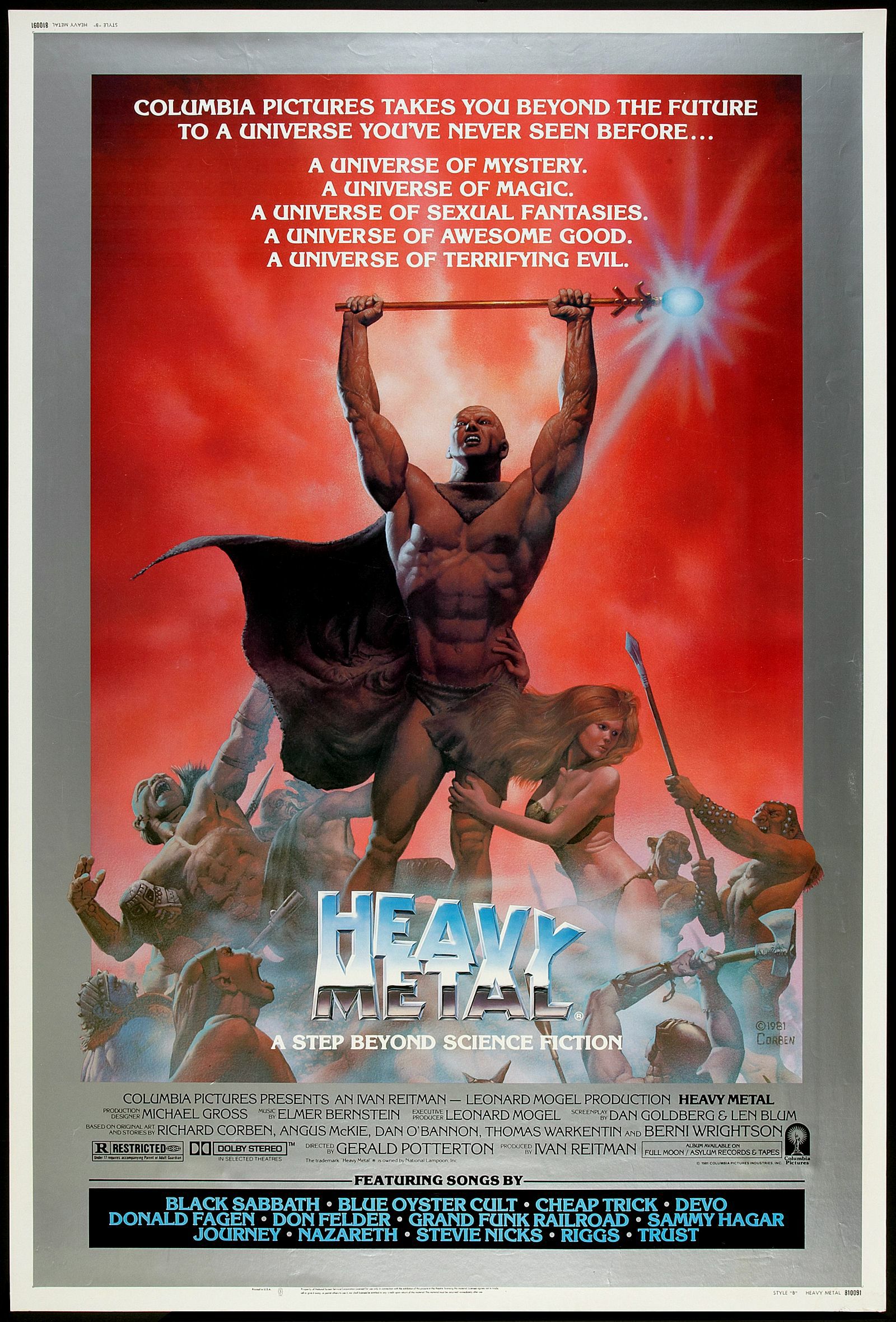

Anyone know if Corben produced the art for any movie posters other than the three featured above?
I don’t recall any others myself, but I’m no expert…
BONUS SCANS:
See the comments section for an explanation of why I’ve added these two images:
[CLICK IMAGES TO ENLARGE]


Just one other thing: please don’t try to order from that old advertisement.

— IN CONTEXT —
From Heavy Metal vol. IV, no. 5, here’s “The Moebius Interview” by Diana K. Bletter; in her opening comment to Moebius, Bletter claims this is the artist’s first interview for an American publication, but I have no idea whether or not that’s true:
[CLICK IMAGES TO ENLARGE]
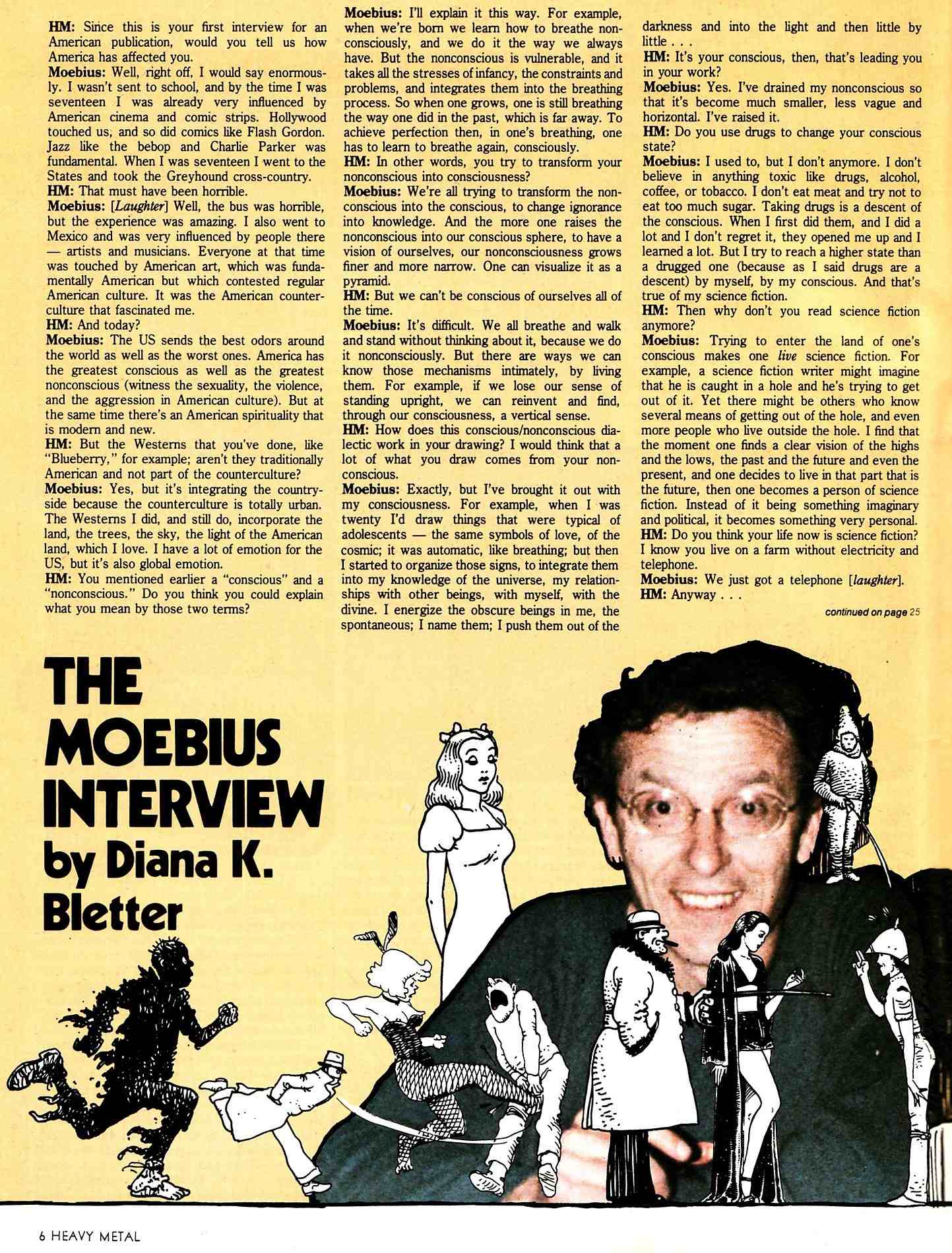
“Trying to enter the land of one’s conscious makes one live science fiction. For example, a science fiction writer might imagine that he is caught in a hole and he’s trying to get out of it. Yet there might be others who know several means of getting out of the hole, and even more people who live outside the hole. I find that the moment one finds a clear vision of the highs and the lows, the past and the future and even the present, and one decides to live in that part that is the future, then one becomes a person of science fiction. Instead of it being something imaginary and political, it becomes something very personal.”
— Moebius, in conversation with Diana K. Bletter (1980)
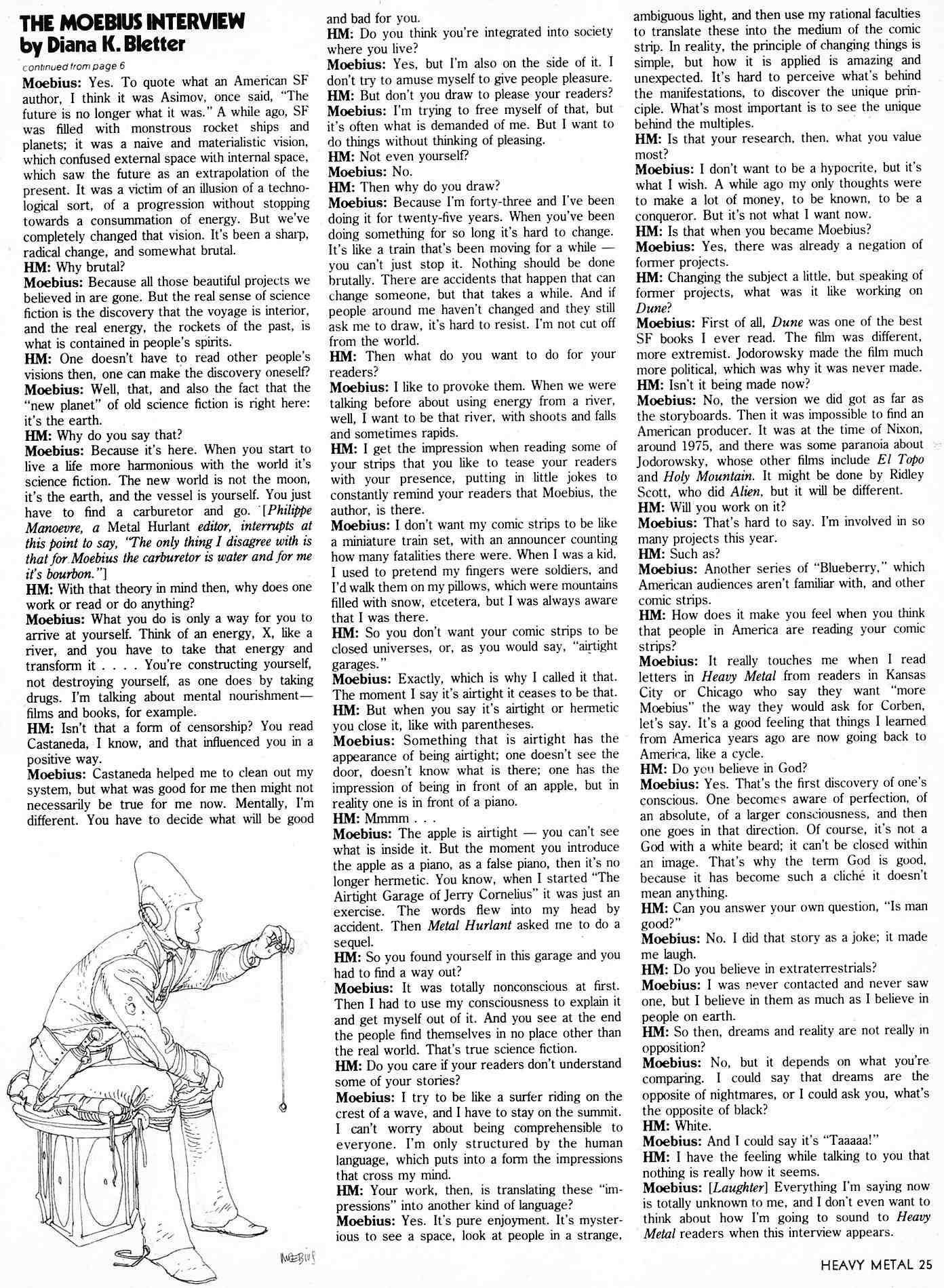
“I try to be like a surfer riding on the crest of a wave, and I have to stay on the summit. I can’t worry about being comprehensible to everyone.”
— Moebius, in conversation with Diana K. Bletter (1980)
SEE ALSO:
Ragged Claws Network > Rest in Peace: Jean “Moebius” Giraud (8 May 1938 – 10 March 2012) and more!
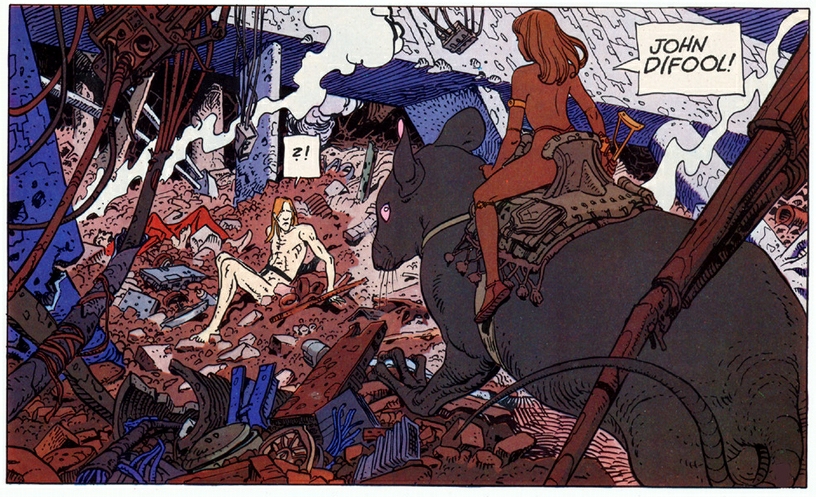
[CLICK IMAGE TO ENLARGE]

If (like most people) you were unable to get hold of a copy of the first printing of Wally Wood’s EC Stories Artist’s Edition, Scott Dunbier of IDW has some good news: the publisher is sending the book back to press for a second printing! If you’re interested in purchasing the book, and you want to guarantee that you get a copy this time around, you would be well advised to PRE-ORDER directly from the publisher. Here’s the link.
Please note, however, that Wally Wood’s EC Stories Artist’s Edition will not ship until it becomes available in late May to early June 2012.
BONUS LINK:
Wings Studio > Wally Wood’s EC Stories Artist’s Edition – The Friday Book Review by Christopher “Wing” King
When Frank O’Neal created “Short Ribs” in 1958, his idea was to write and draw a comic strip without a set cast of characters or a single historical or geographical setting. Once he settled into the routine of actually producing the strip, however, O’Neal quickly found he could not resist returning to certain stock situations and periods — the old West, for instance, or Medieval Europe — bringing back certain characters, and indulging in short bursts of continuity. When he retired from the strip in 1973 to concentrate on advertising work, O’Neal generously handed “Short Ribs” over to his assistant, Frank Hill, who managed to wring another nine years out of the concept. Truth be told, I’m not really a big fan of “Short Ribs,” but when the following pair of amusing and attractive strips from 1980 came up for sale recently at a low, low price, I couldn’t resist:
[CLICK IMAGES TO ENLARGE]


Frank Hill’s final “Short Ribs” strip appeared Sunday 02 May 1982. Did anyone notice when the strip ended? You might think not, but my experience reading and arguing about comics on the Web tells me that every comic strip, “Short Ribs” included, is (or was) somebody’s favourite.


— via —
[KIM] THOMPSON: You attended art school, right?
[JEAN] GIRAUD: Yes. I began as a self-taught artist, copying other artists; then, luckily, I entered an art school, which freed up my hand and opened my eyes to a degree. It’s very dangerous to work only second-hand — referring only to other artists, that is. My teachers were of the old school: they insisted that in order to transcribe reality with any degree of freshness or personality, the eye had to be confronted with the three-dimensional image. Of course, I didn’t do it enough, and when I met [Belgian artist Joseph] Gillain, that’s what he told me. He said that one could work from photographs in a pinch, but the work wouldn’t have the same intrinsic quality. It’s true: you can be very adept at drawing from photographs, and yet completely lose the scope, the dimension of the original…
THOMPSON: It has a tendency to flatten out…
GIRAUD: Yes, you lose the perspective; there are so many details to transcribe that you get lost within the billions of pieces of information. Working from nature teaches you to synthesize.
THOMPSON: Have you ever worked from photos?
GIRAUD: Oh, yes, when I began working with Joseph Gillain, he taught me how to draw from photos. It’s a very special kind of skill; if you’re too loyal to the photo, it swallows you up. If, for instance, in the middle of a whole page of “personal” drawings, there is suddenly a drawing that is too…
[JEAN-MARC] LOFFICIER: Overworked?
GIRAUD: Not overworked, but too dependent on a photographic vision, it’s as if there’s a sudden hole in the page. You have to take the elements from the photo that you need, and retranscribe them through your personal computer, in order to get a personal vision. The same rule applies to drawing from nature. It’s very difficult, but it’s what enables the artist to bring his vision to a work. Otherwise he’s nothing but a parrot, or an ape. [pp. 86-87]
SOURCE: Jean Giraud, “The Other Side of Moebius,” interview by Kim Thompson, The Comics Journal #118 (December 1987), pp. 85-105.

BONUS LINKS:
Brandon Graham > That elephant rumble — a loose, baggy monster of a blog post that includes two pages from National Geographic displayed alongside two pages by Moebius (see also below).
kiCswiLA? > Un, Dos, … — a side-by-side comparison of a publicity still from the move Hondo and the Apaches starring Ralph Taeger and Moebius’s cover painting for the Lieutenant Blueberry album, The Trail of the Sioux.
quenched consciousness > Comics artist Leland Purvis sent me this photo… — a side-by-side comparison of a famous photograph by Horst P. Horst and one of Moebius’s Angel Claw drawings.
quenched consciousness > Approaching Centauri Page 3 w/photo reference
BONUS IMAGES (added 30 June 2013):
The following two swipes from National Geographic were noticed by Brandon Graham and posted on his blog:
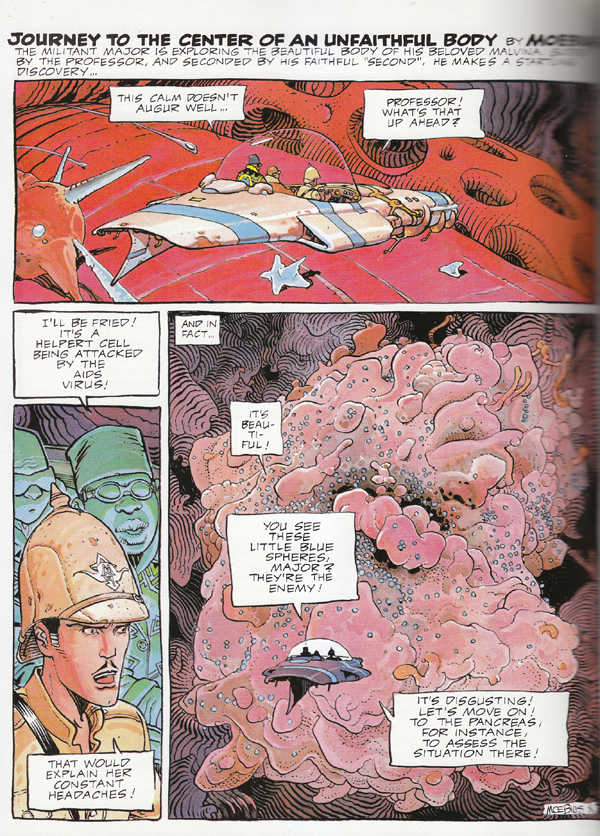
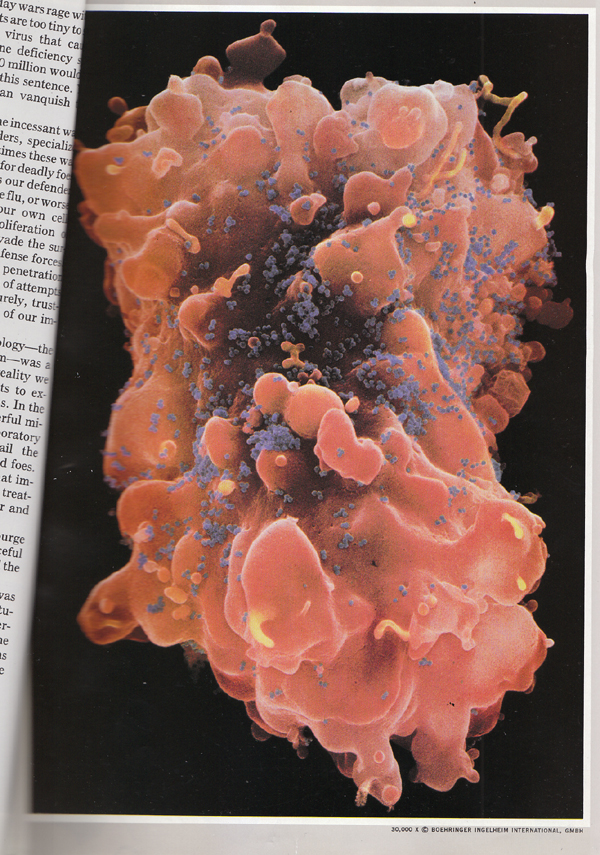
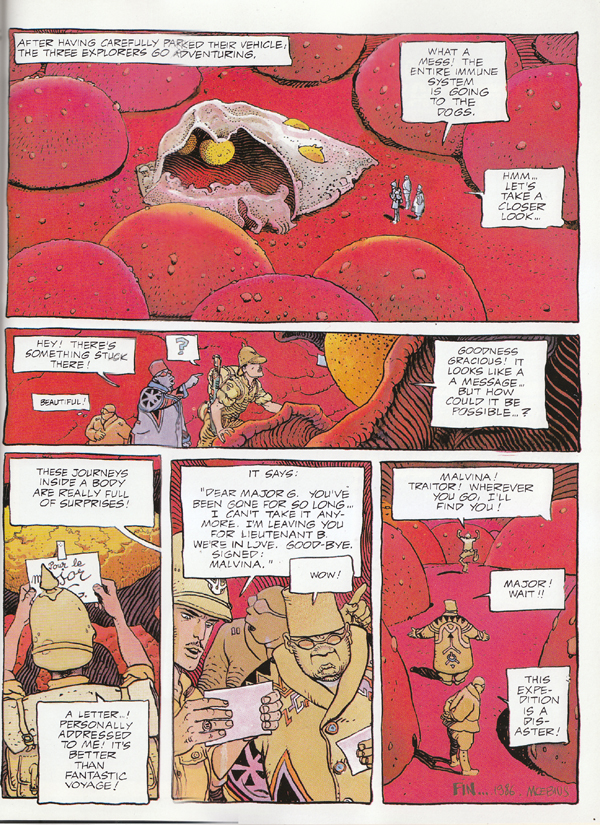
A link to Graham’s post is included in the bonus links above as well as right here.
 Ragged Claws Network