Comics · Here, Read · Hilda Terry · Look Here

Look Here, Read: Ten more “Teena” Sundays by Hilda Terry

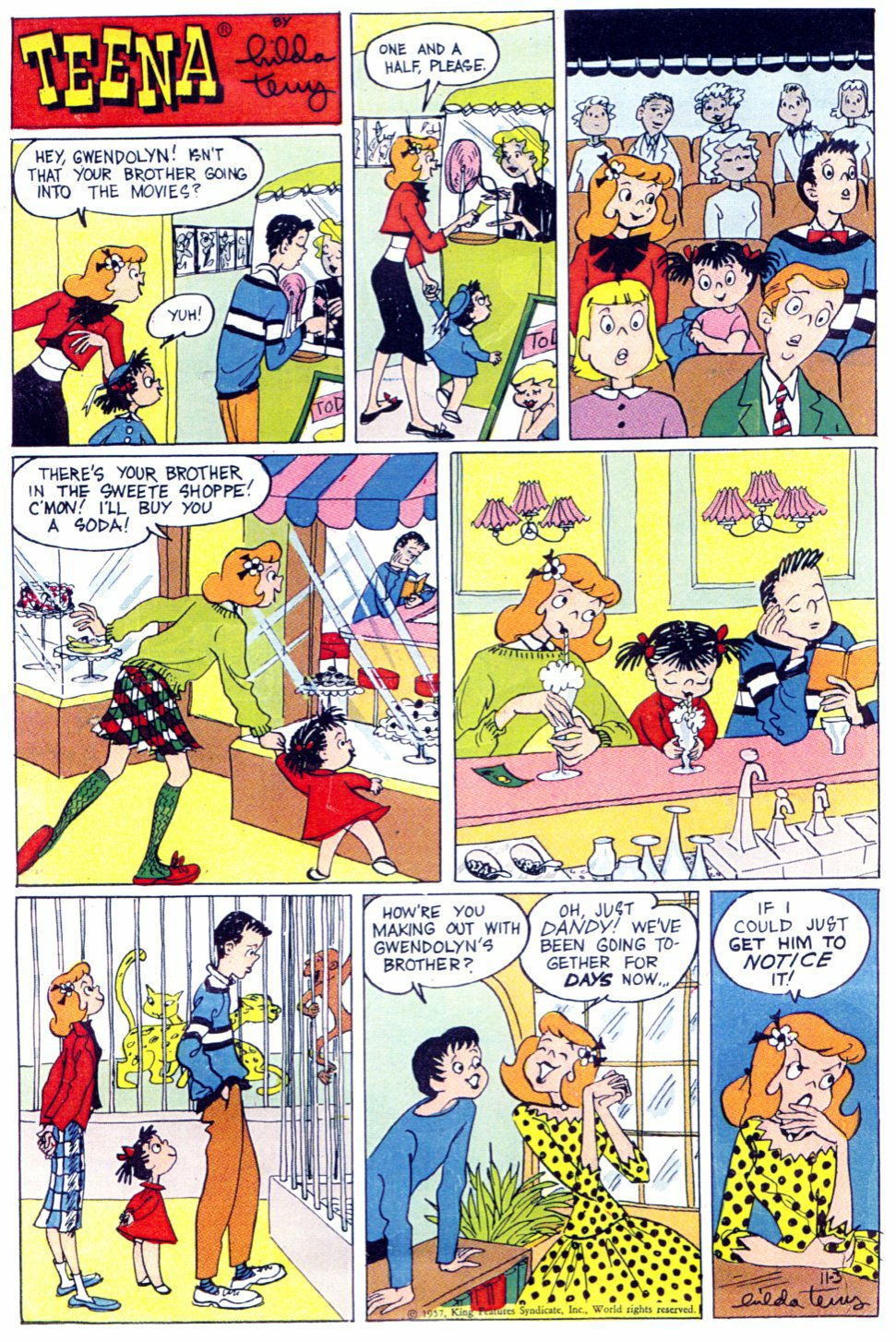
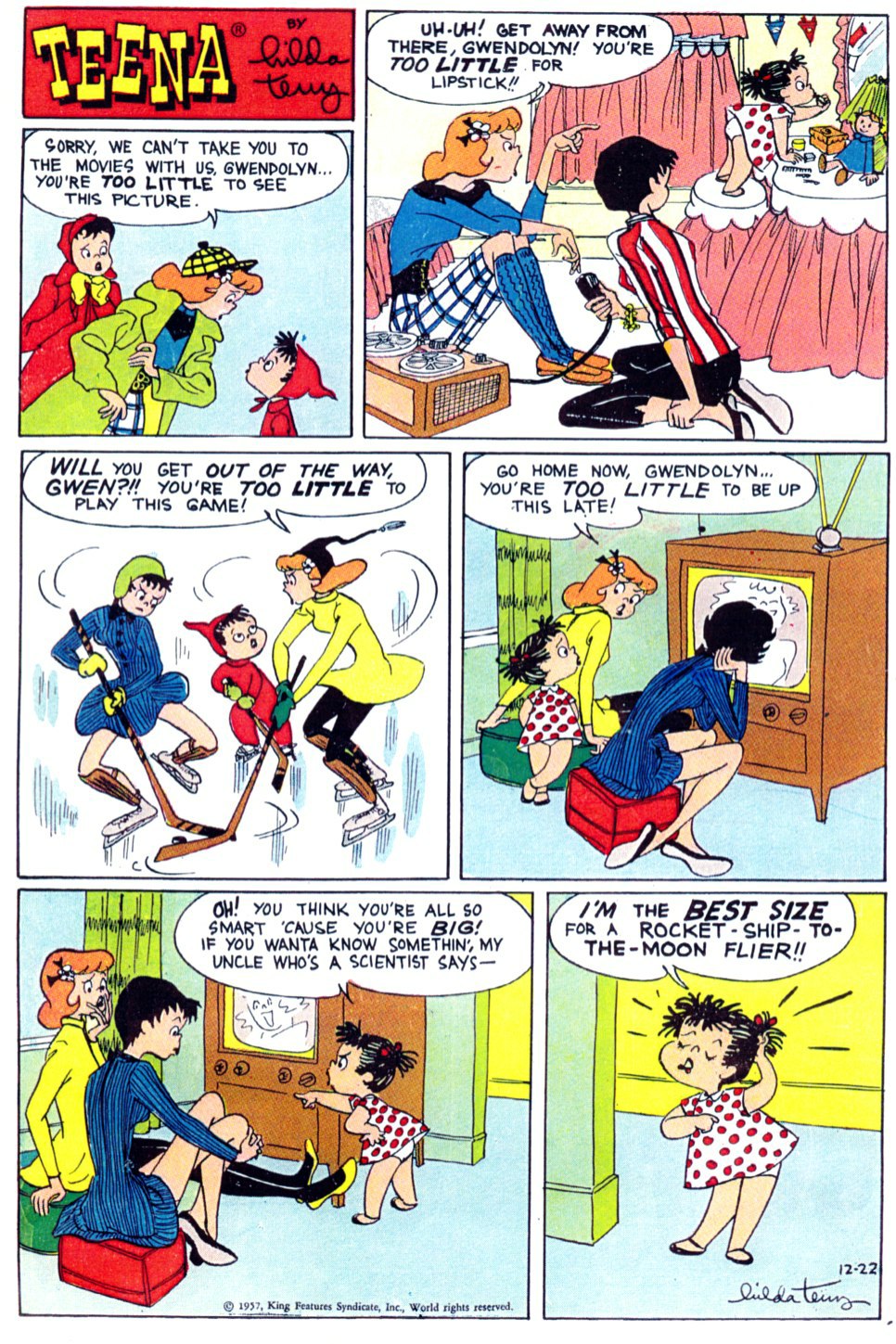
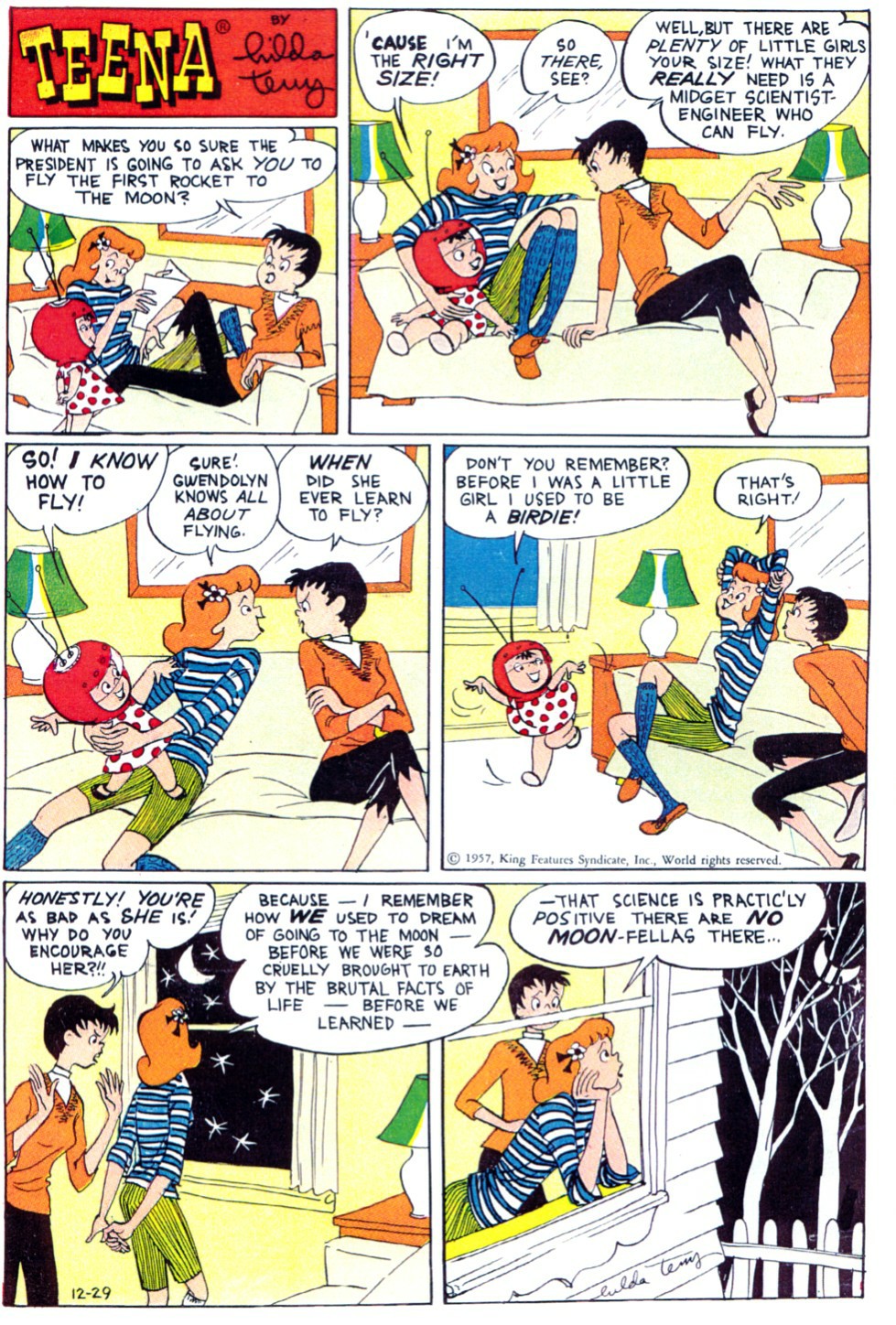
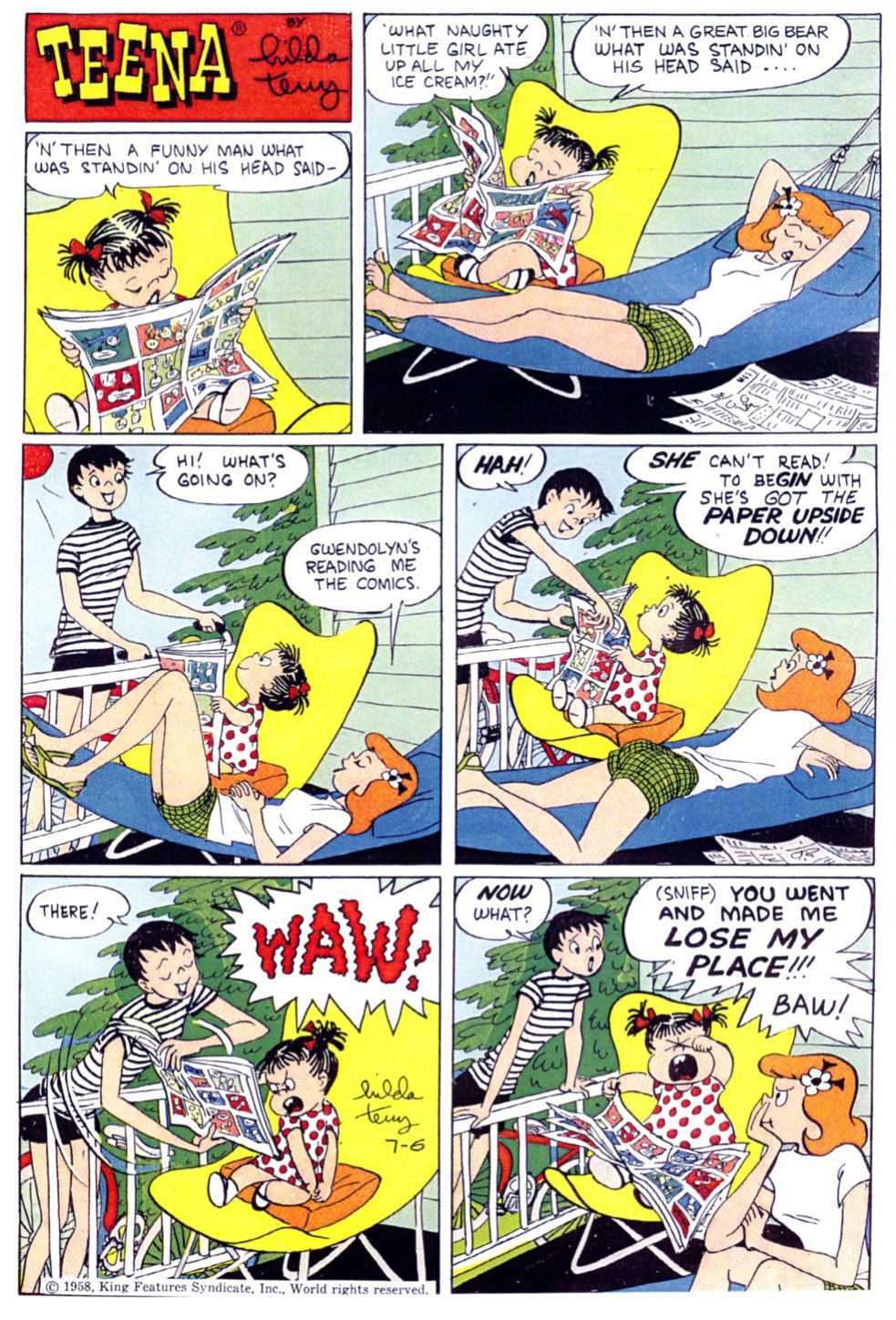
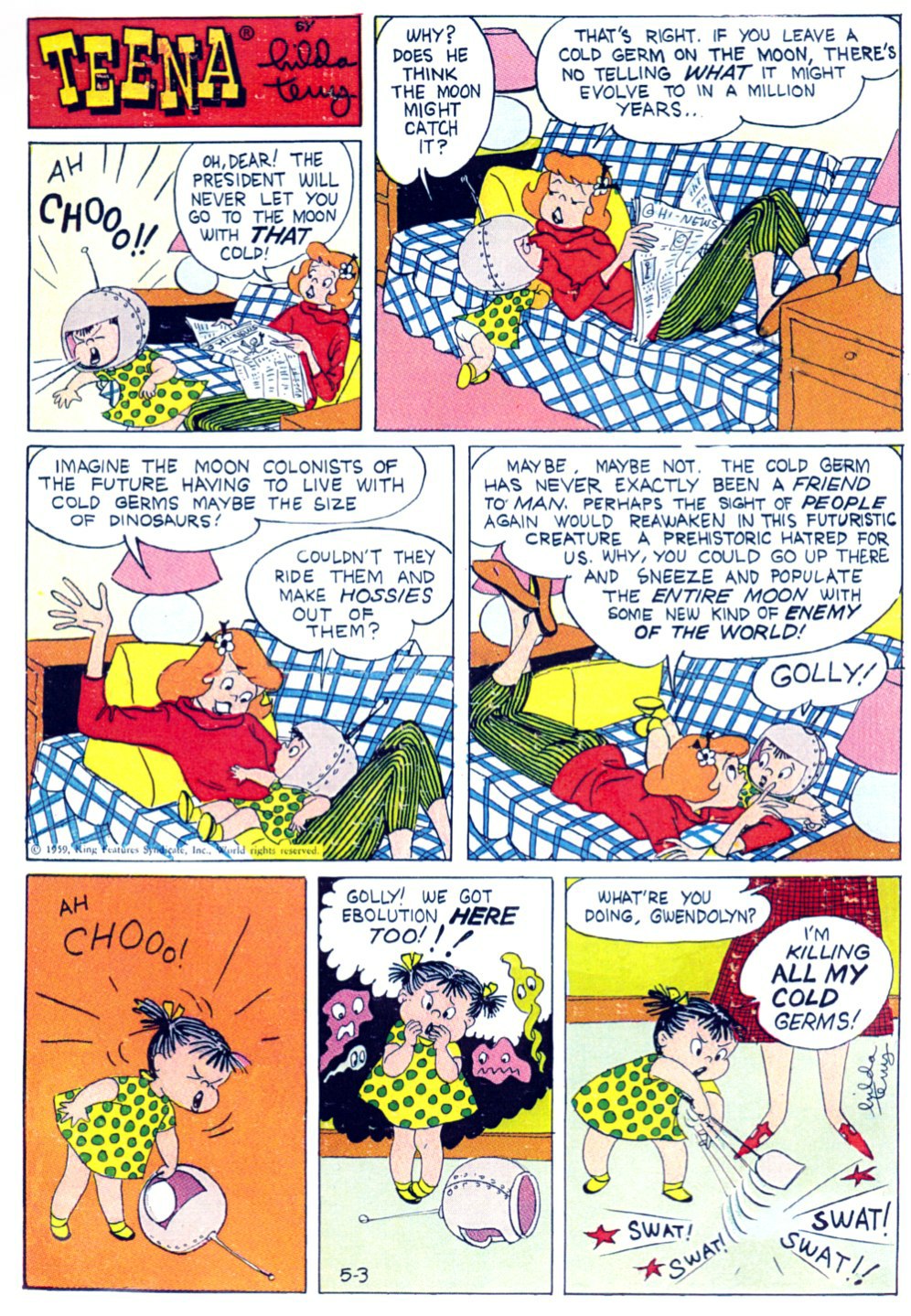
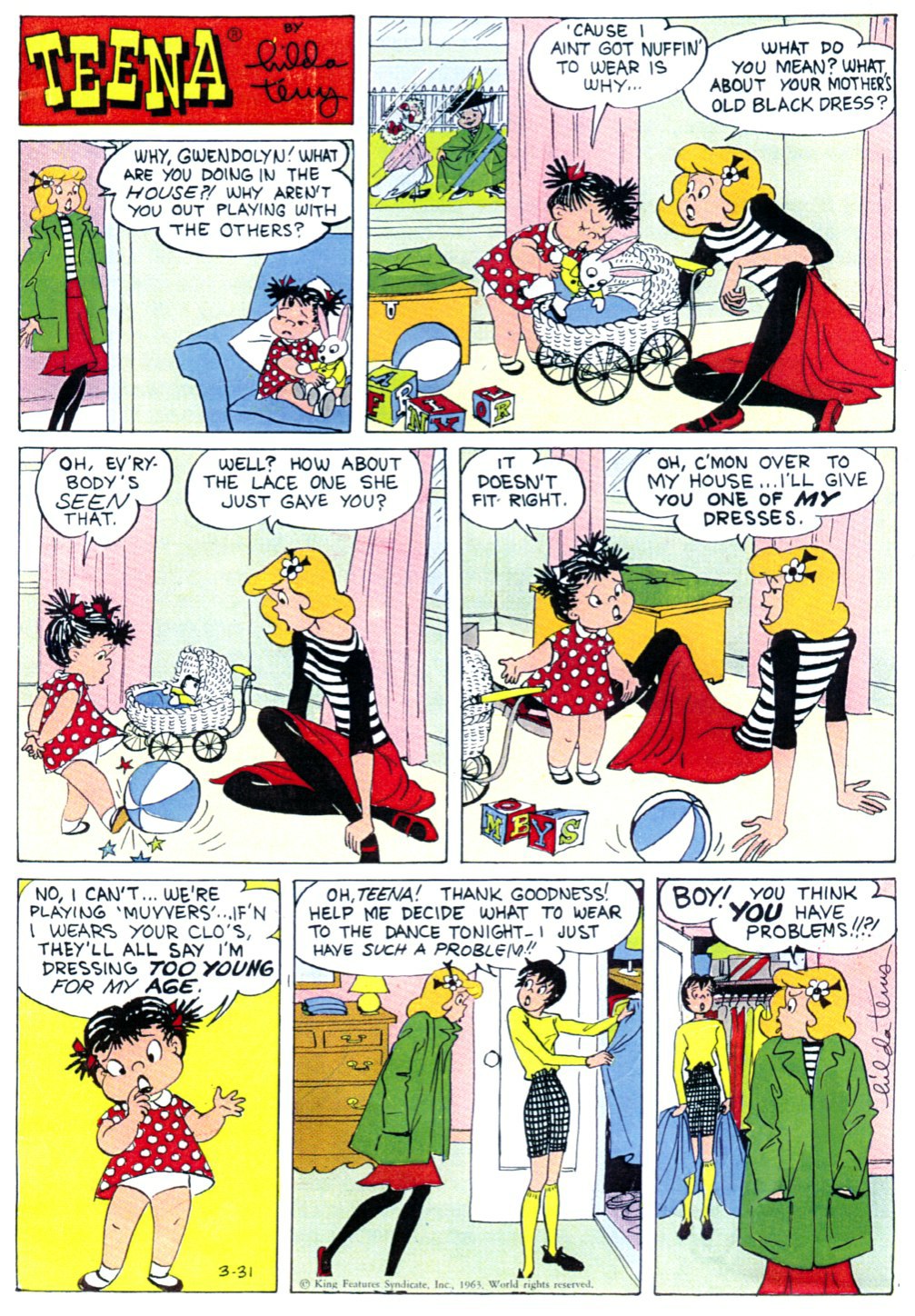
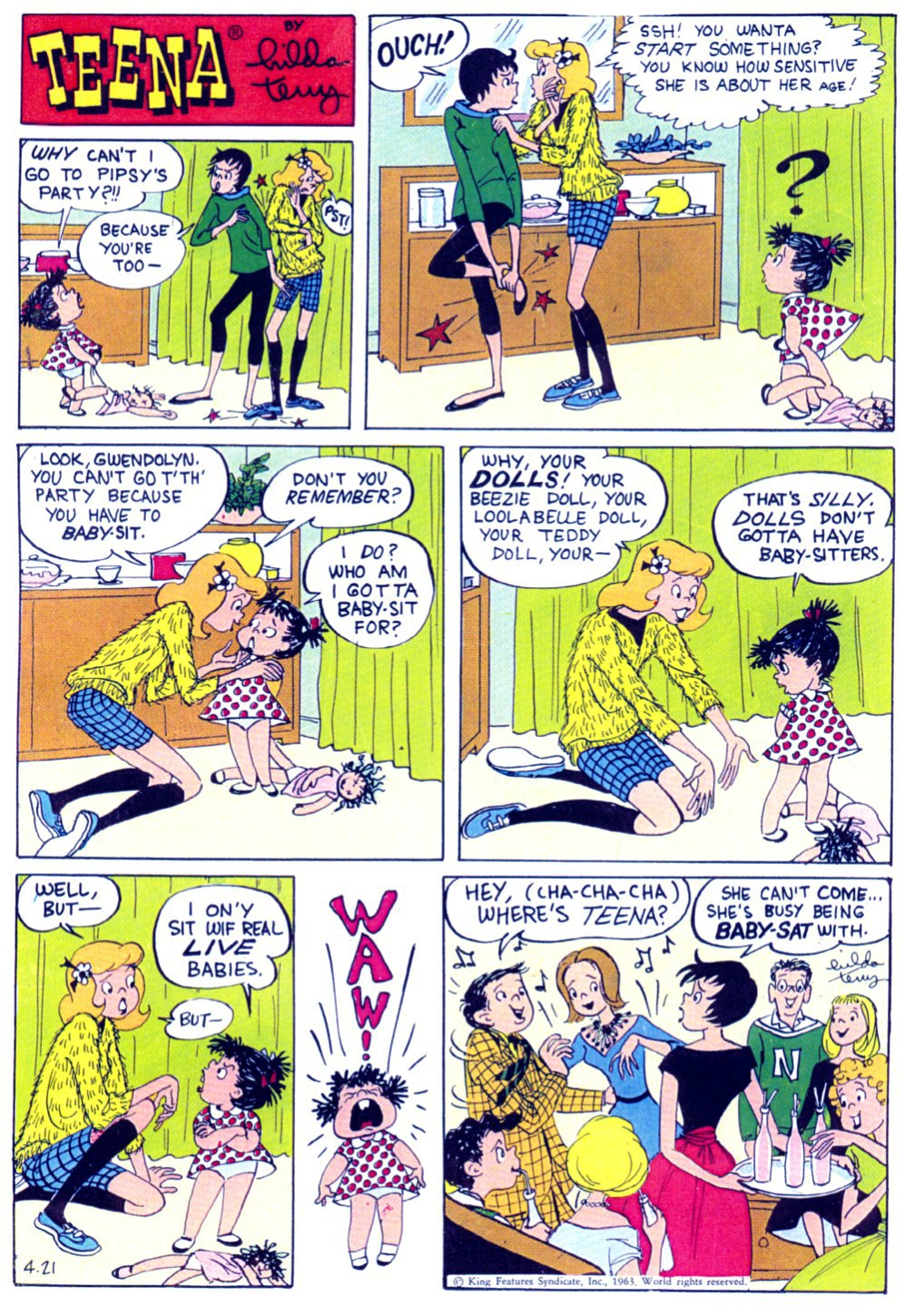
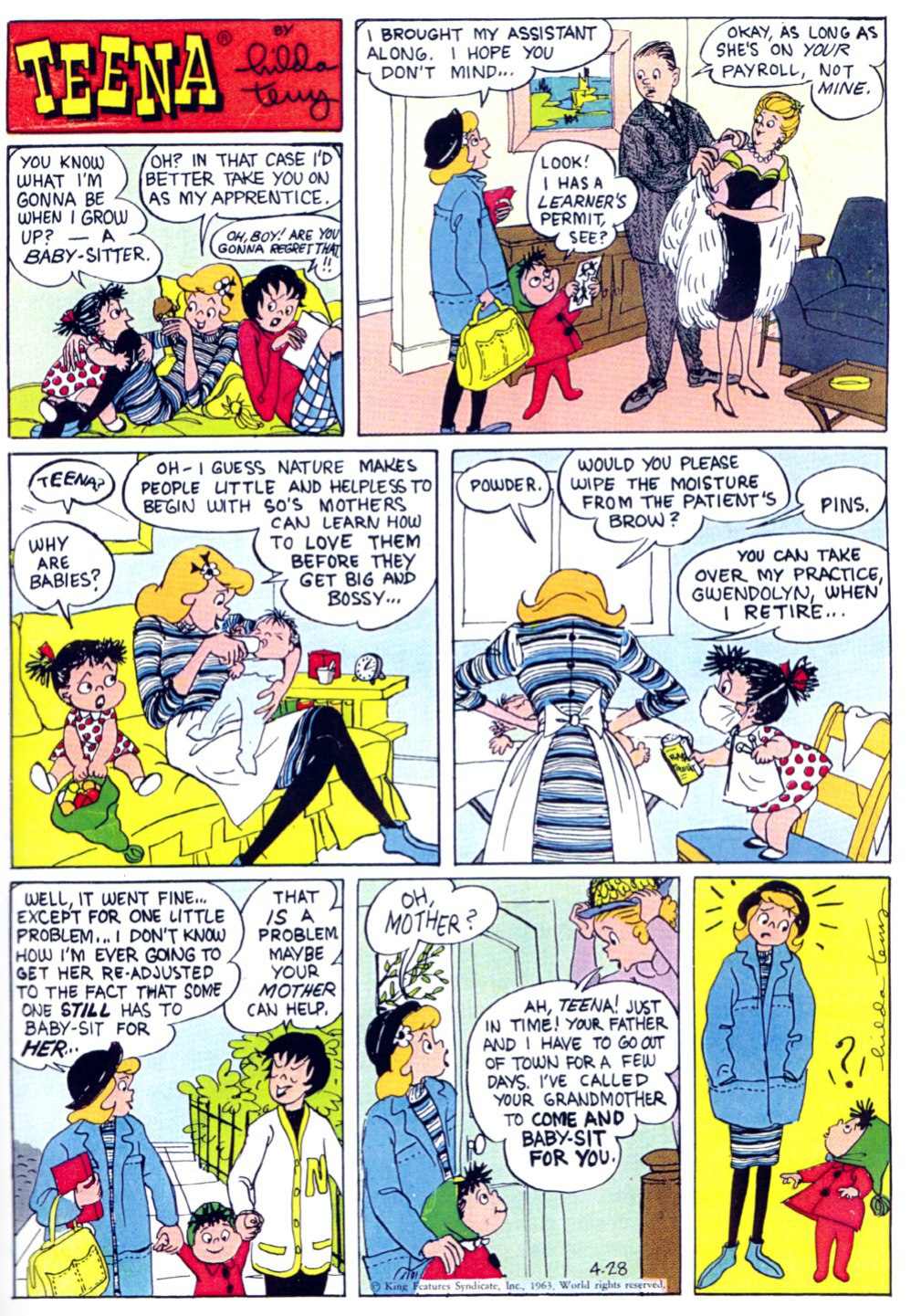
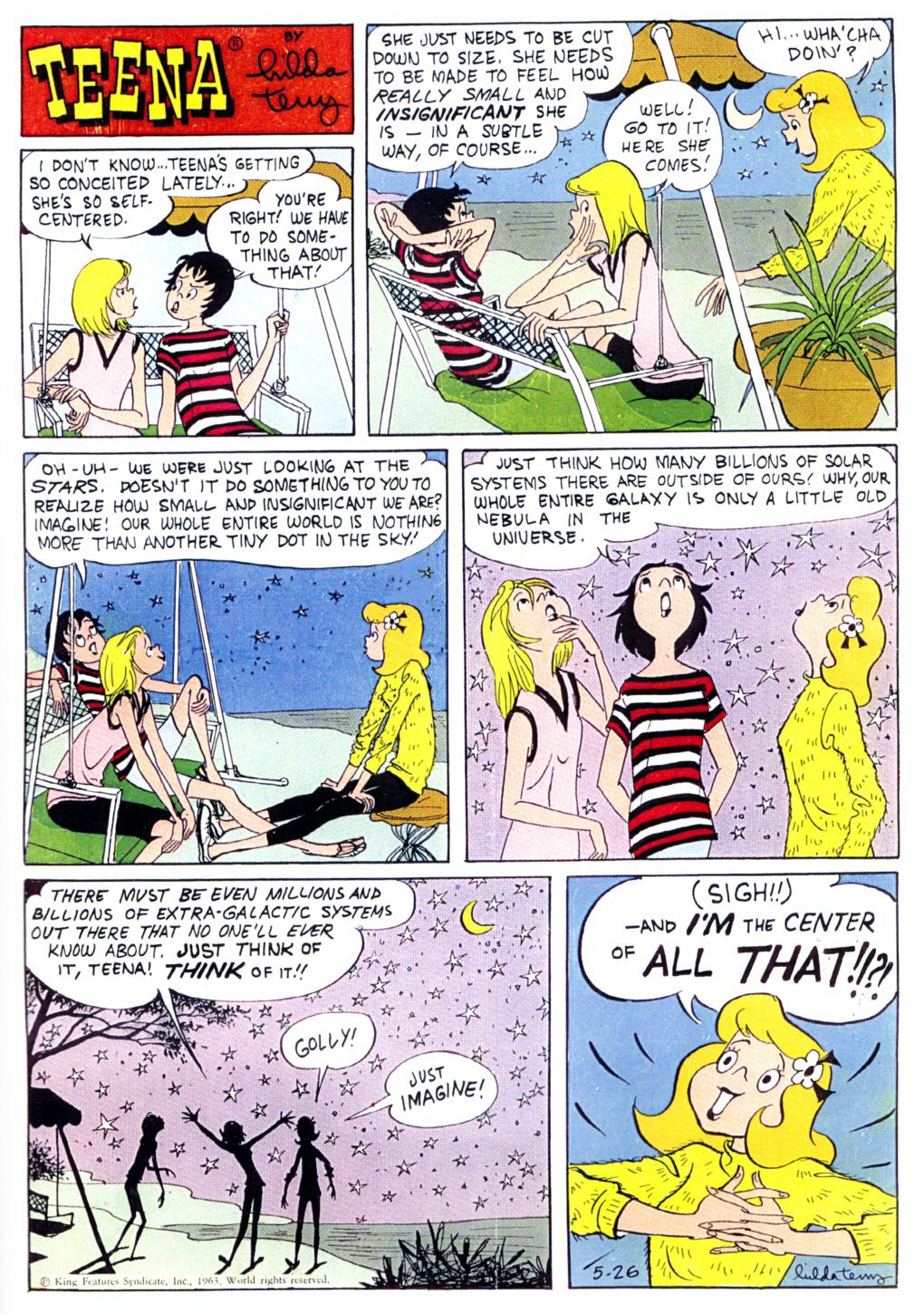
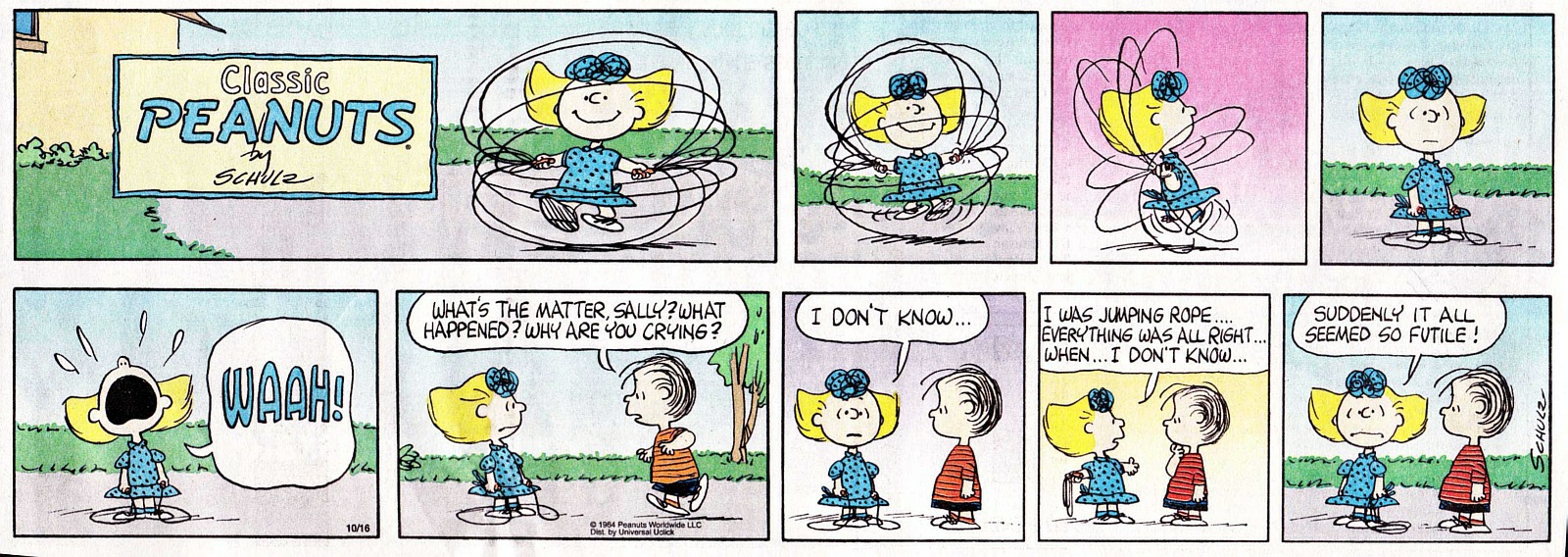
A reader by the name of Tim recently posted to say that he would love to see more of Hilda Terry’s “Teena” here at RCN. Well, Tim, today is your lucky day! Because just this morning I scanned ten more “Teena” Sunday strips for your (and my, and everyone else’s) reading pleasure. And here they are (with more to come at a later date, if reader response is good — 😉 ):

[CLICK IMAGES TO ENLARGE]
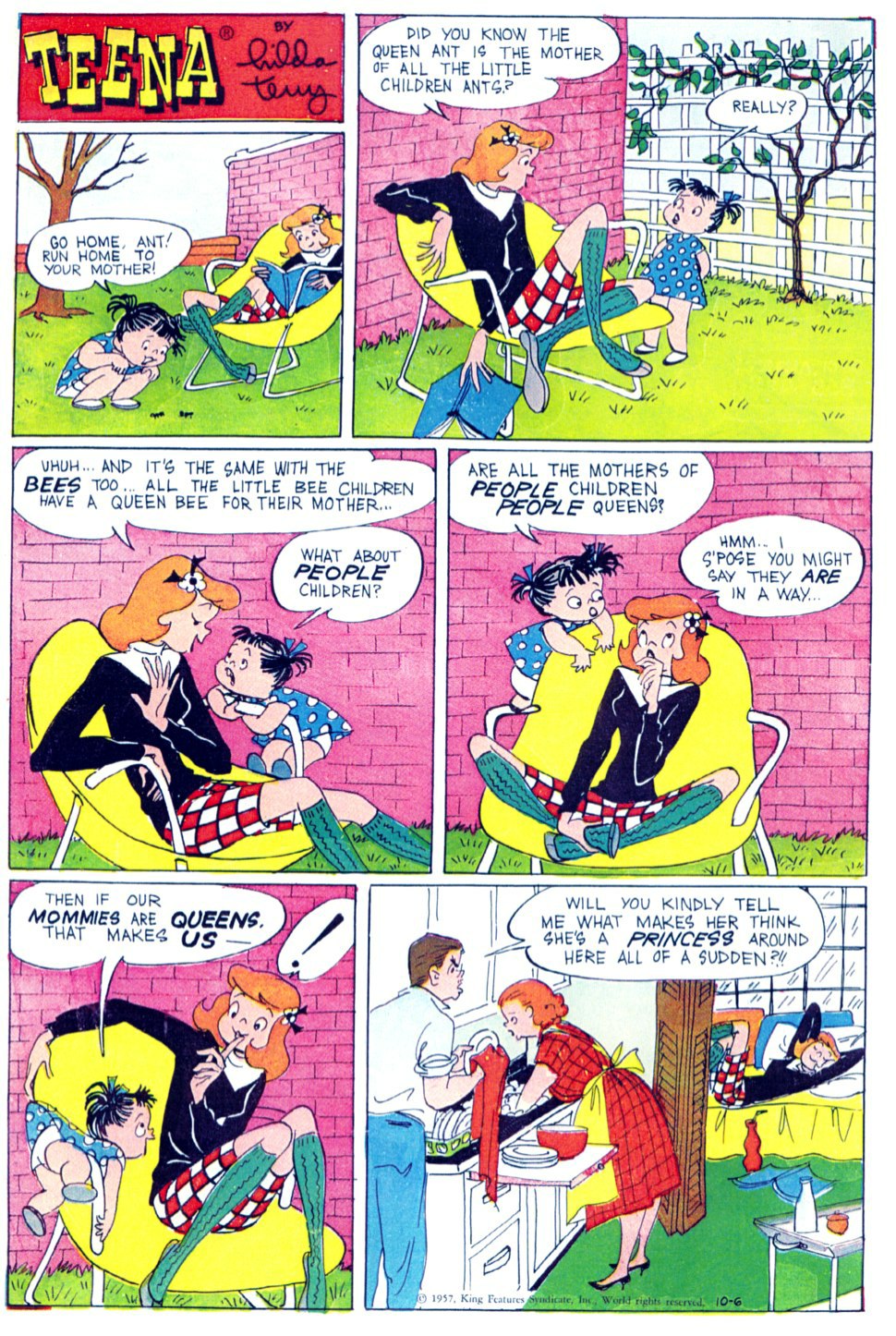
Now I’m no expert in publishing, but I have long thought that the good folks at Drawn & Quarterly ought to make a concerted effort to acquire the rights to reprint “Teena,” from start to finish, in a series of archive collections. Because it seems to me that Hilda Terry would fit in perfectly on D&Q’s current author list alongside John Stanley, Kate Beaton, Tove Jansson, Doug Wright, and Lynda Barry. And I’m almost certain that cartoonist and comics historian Trina Robbins would jump at the chance to assist with (or edit!) such a project. So hop to it Chris Oliveros! Make it happen!


SEE ALSO:

Ragged Claws Network > Look Here, Read: Four “Teena” Sunday strips by Hilda Terry

Ragged Claws Network > Look Here, Read: Four more “Teena” Sunday strips by Hilda Terry

Comics · Connections · Frank Frazetta · Here, Read · Look Here · Michael Wm. Kaluta

Heads Up: MICHAEL Wm. KALUTA: SKETCHBOOK SERIES VOLUME 1

[CLICK IMAGE TO ENLARGE]

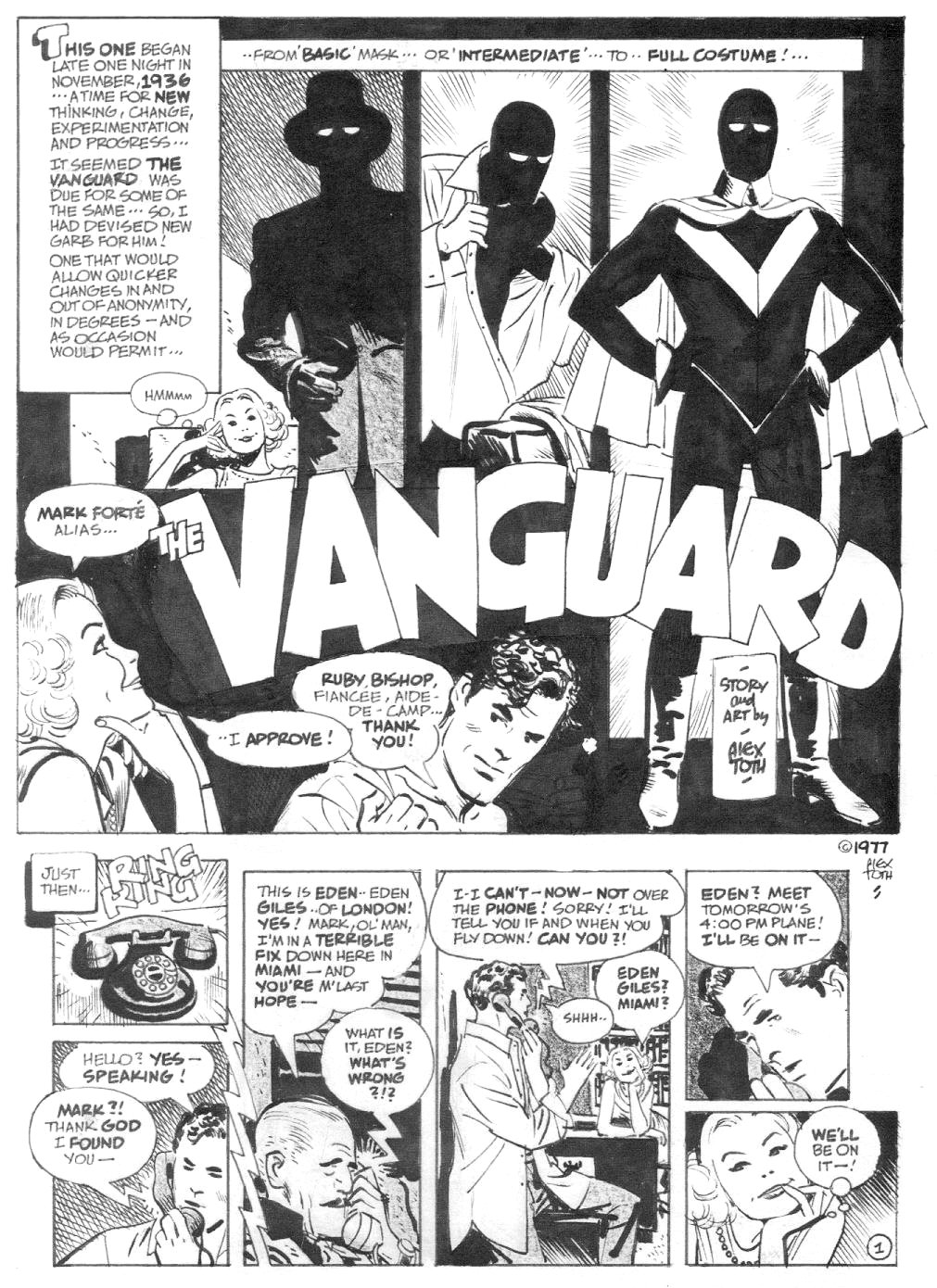
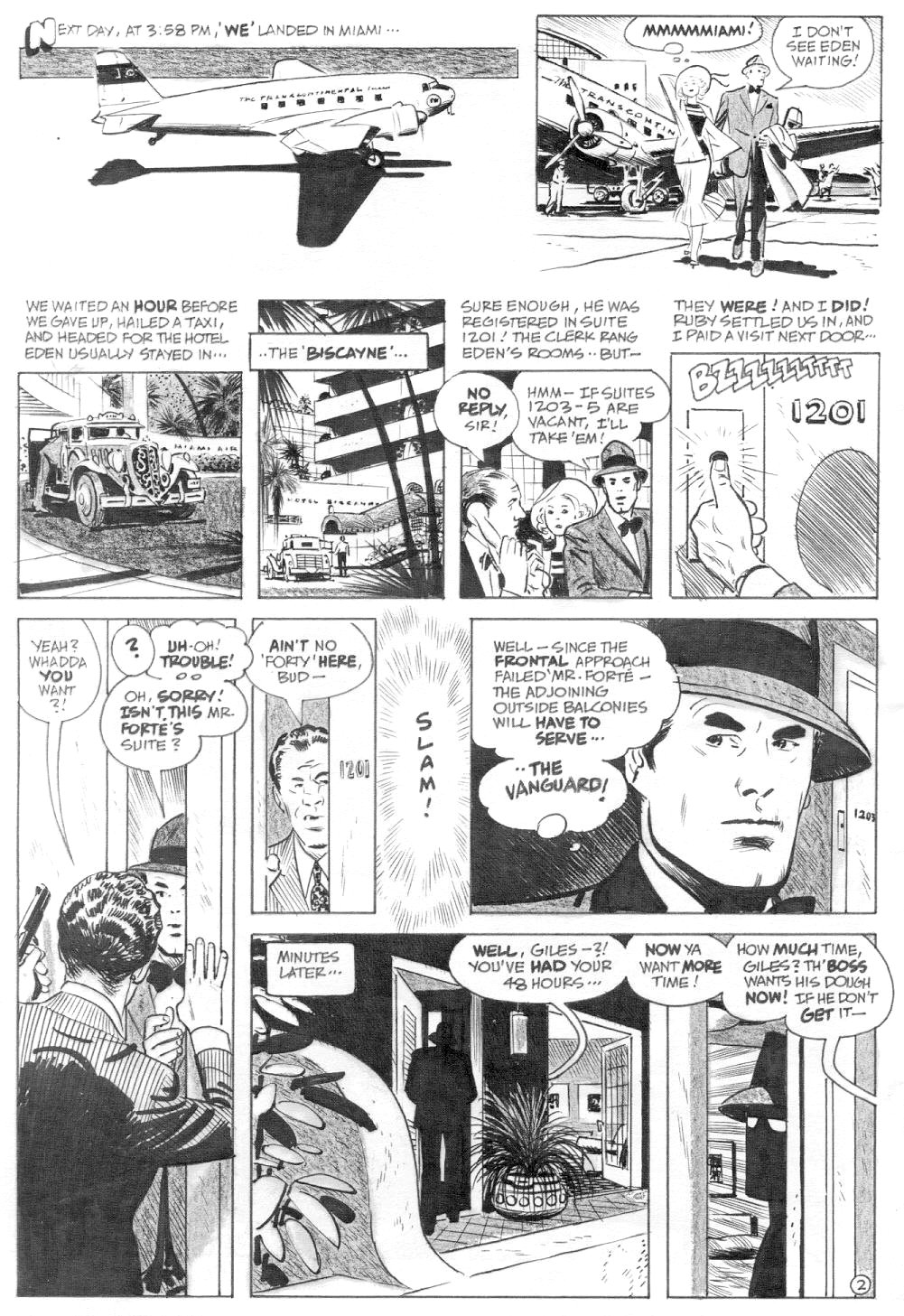
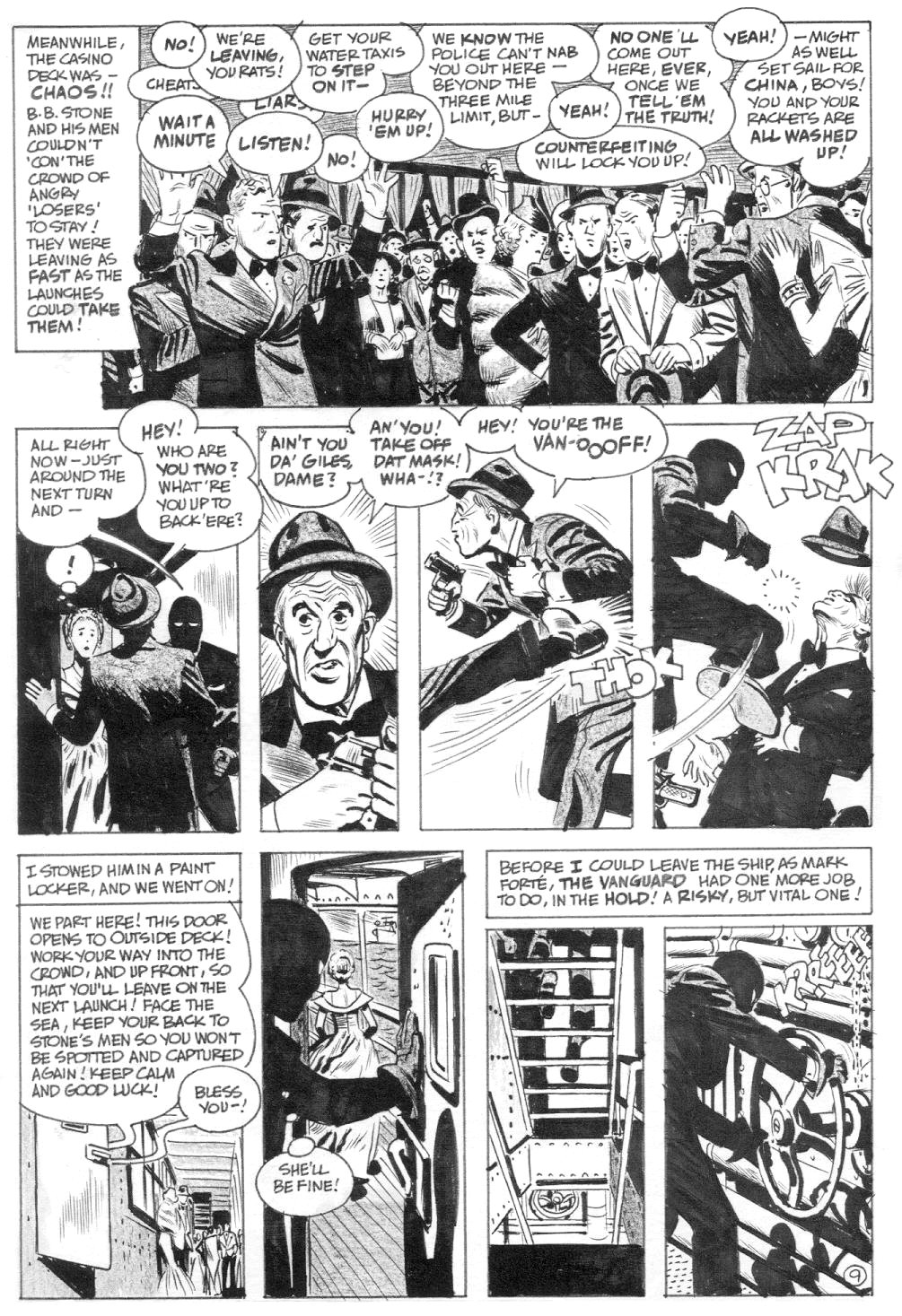
Scheduled for release in February 2012 (according to Amazon), Michael Wm. Kaluta: Sketchbook Series Volume 1 is described by the publisher, IDW, as “the first in a series that will provide a glimpse into the inner workings of this great artist, from the very earliest creative spark to more finished concepts and nearly completed works. Each image has been scanned from Kaluta’s personal sketchbooks and archives, and is accompanied by commentary from the artist.”
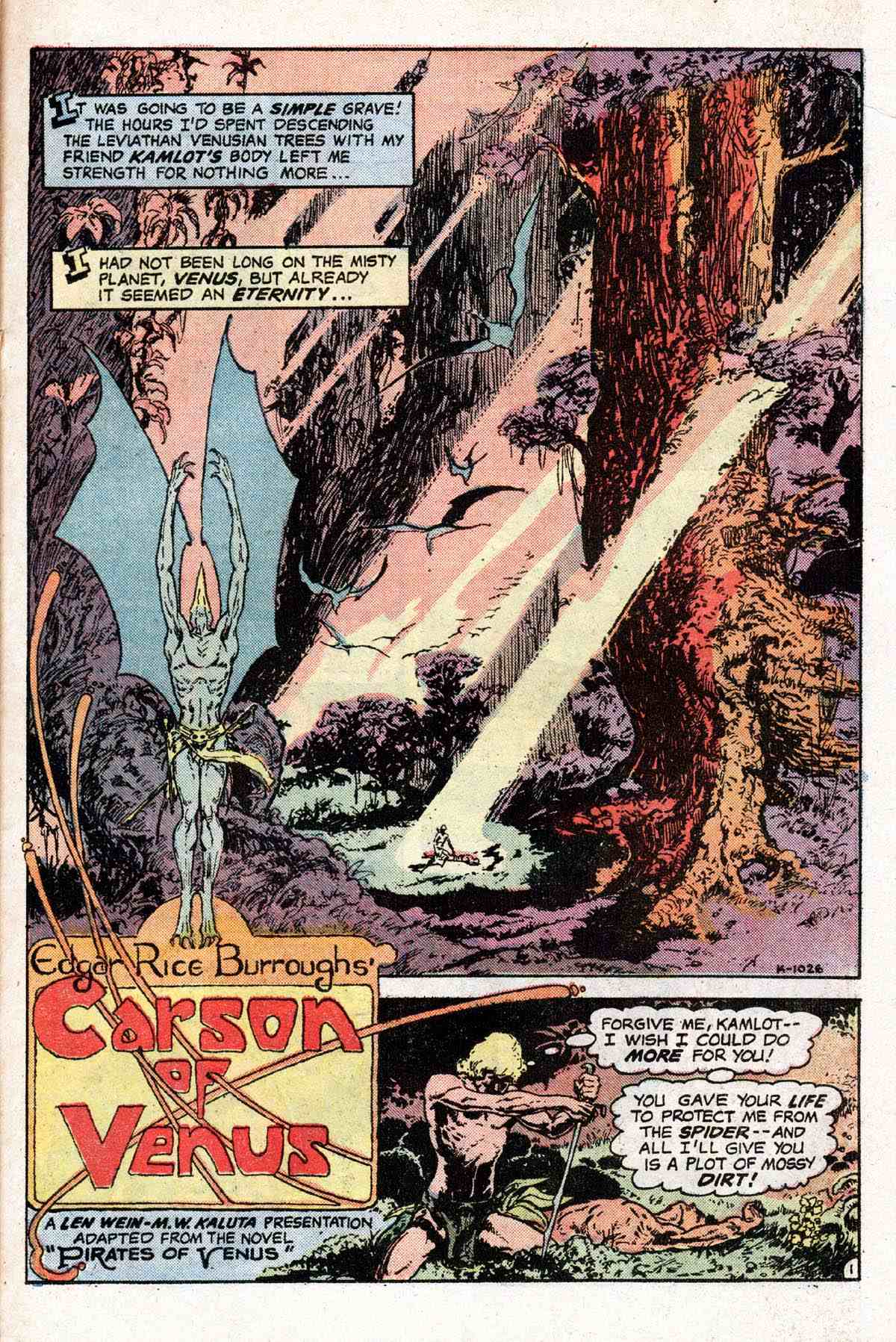
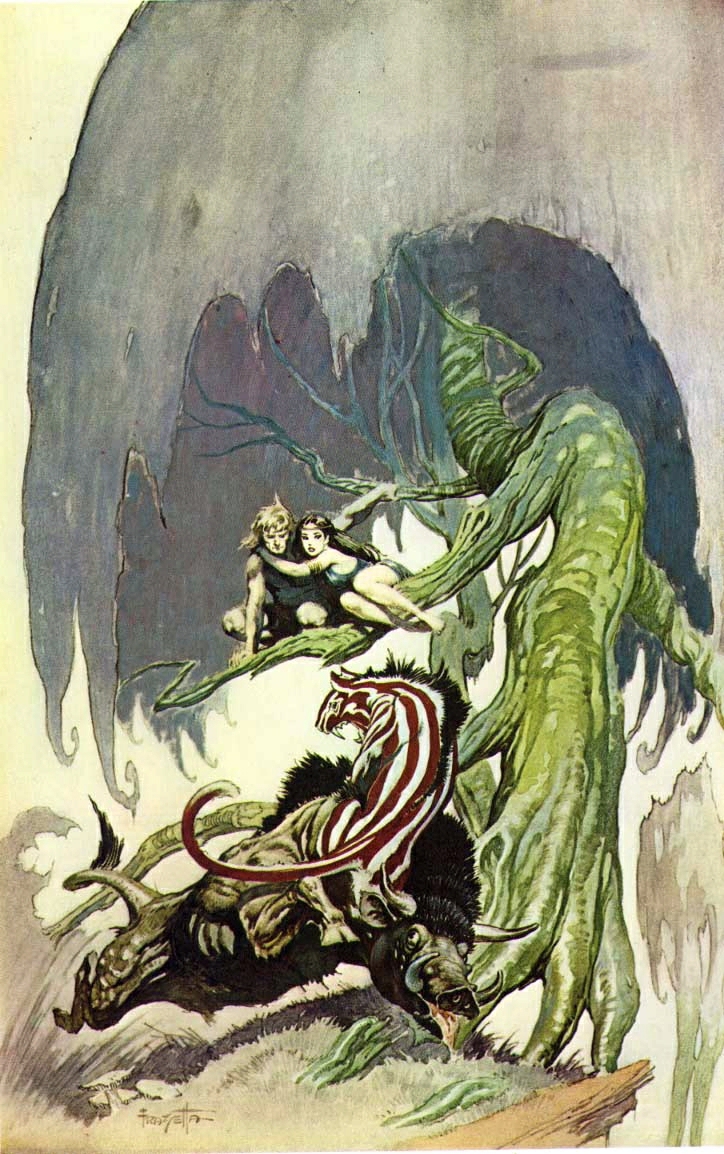
To whet your appetite for Kaluta’s new book, here’s the fifth (?) instalment in writer Len Wein and artist Mike Kaluta’s adaptation of Edgar Rice Burroughs’ 1934 novel, Pirates of Venus. Wein and Kaluta’s adaptation was part of an ongoing series of “Edgar Rice Burroughs’ Carson of Venus” stories that had a short but memorable run as back-up feature in the series, Korak, Son of Tarzan. If you’re familiar with Frazetta’s cover paintings for Edgar Rice Burroughs’ “Carson of Venus” novels, you will notice on the third page of the story that Kaluta gives an artistic tip of the hat to Frazetta’s painting for the 1963 Ace edition of Lost on Venus; for those who aren’t familiar with Frazetta’s painting, I’ve included an image of it below for the sake of comparison:

[CLICK IMAGES TO ENLARGE]

It was obvious right from the start that Kaluta and Burroughs were a match made in heaven! And if work like that doesn’t make you want to see Kaluta’s sketchbook, and read what he has to say about his process, then nothing will…

Charles Schulz · Commonplace Book · Here, Read

Charles Schulz on the process of drawing with one’s eyes…

“While I am carrying on a conversation with someone, I find that I am drawing with my eyes. I find myself observing how his shirt collar comes around from behind his neck and perhaps casts a slight shadow on one side. I observe how the wrinkles in his sleeve form and how his arm may be resting on the edge of the chair. I observe how the features on his face move back and forth in perspective as he rotates his head. It actually is a form of sketching and I believe that it is the next best thing to drawing itself. I sometimes feel it is obsessive, but at least it accomplishes something for me.”

— Charles Schulz

Commonplace Book · Here, Read

Jonathan Lethem on the universal triumph of “Canadian” lobsters…

“I lived for a time in Canada, and found myself fascinated by the slavish pride of a culture basking in a self-recriminating joke. ‘A lobsterman turned his back on three catches in an uncovered bucket. A bystander worried the lobsters would escape, but the lobsterman waved him off, saying, “No problem, these are Canadian lobsters. If one reaches the top the others will pull him back in.”‘ Yet who, lately, seeing how transparent the Internet-comments culture has made our vast leveling rage, our chortling conformism and anti-intellectualism, our scapegoat-readiness, could keep from thinking: ‘We’re all Canadian lobsters on this bus.'”

—Jonathan Lethem, “Advertisements for Norman Mailer: Salvage from an Infatuation,” Los Angeles Review of Books

Comics · Here, Read · Look Here · Mort Drucker

Look Here, Read: “The Three Frogmen,” with art by Mort Drucker

From Four-Star Battle Tales #5 (Nov.-Dec. 1973), here is “The Three Frogmen,” with art by Mort Drucker; in case you’re wondering about Drucker’s (John Severin influenced?) style in this one, please note that “The Three Frogmen” originally appeared in G.I. Combat #72 way back in May 1959:

[CLICK IMAGES TO ENLARGE]

Hope you enjoyed “The Three Frogmen,” because I don’t plan to post any more stories with art by Mort Drucker here on RCN. The trilogy is complete… or something like that…

Comics · Here, Read · Look Here · Mort Drucker

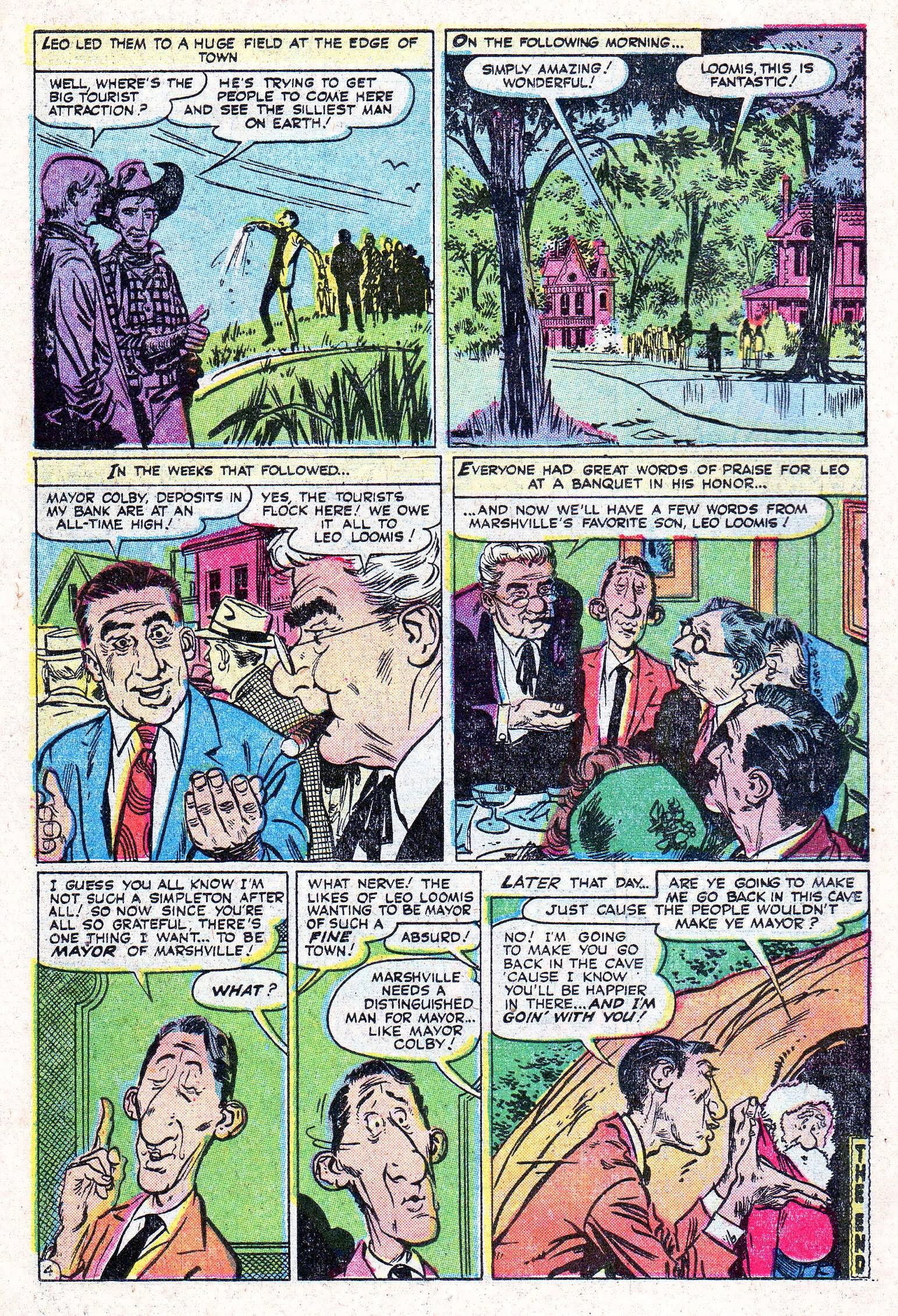
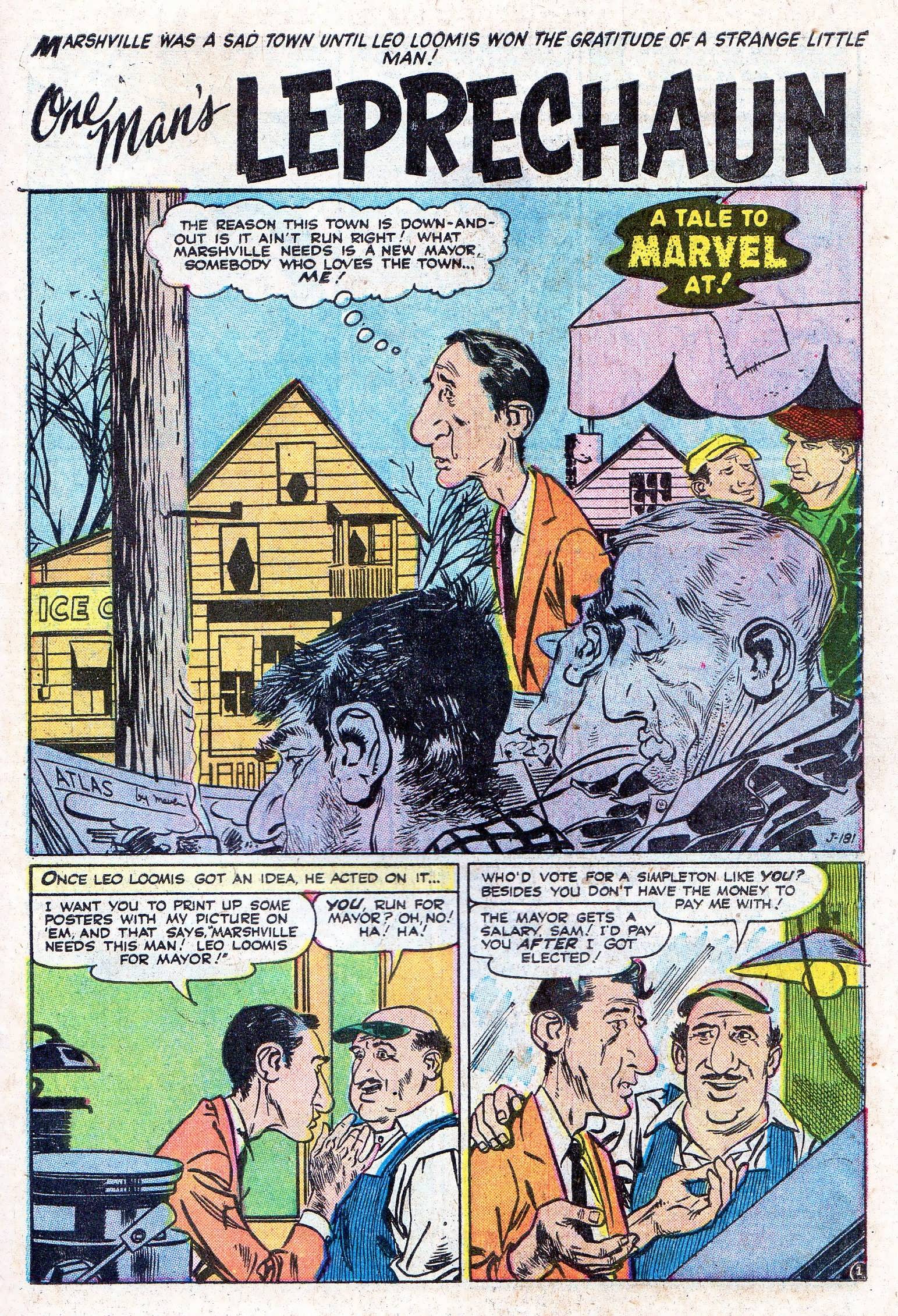
Look Here, Read: “One Man’s Leprechaun,” with art by Mort Drucker

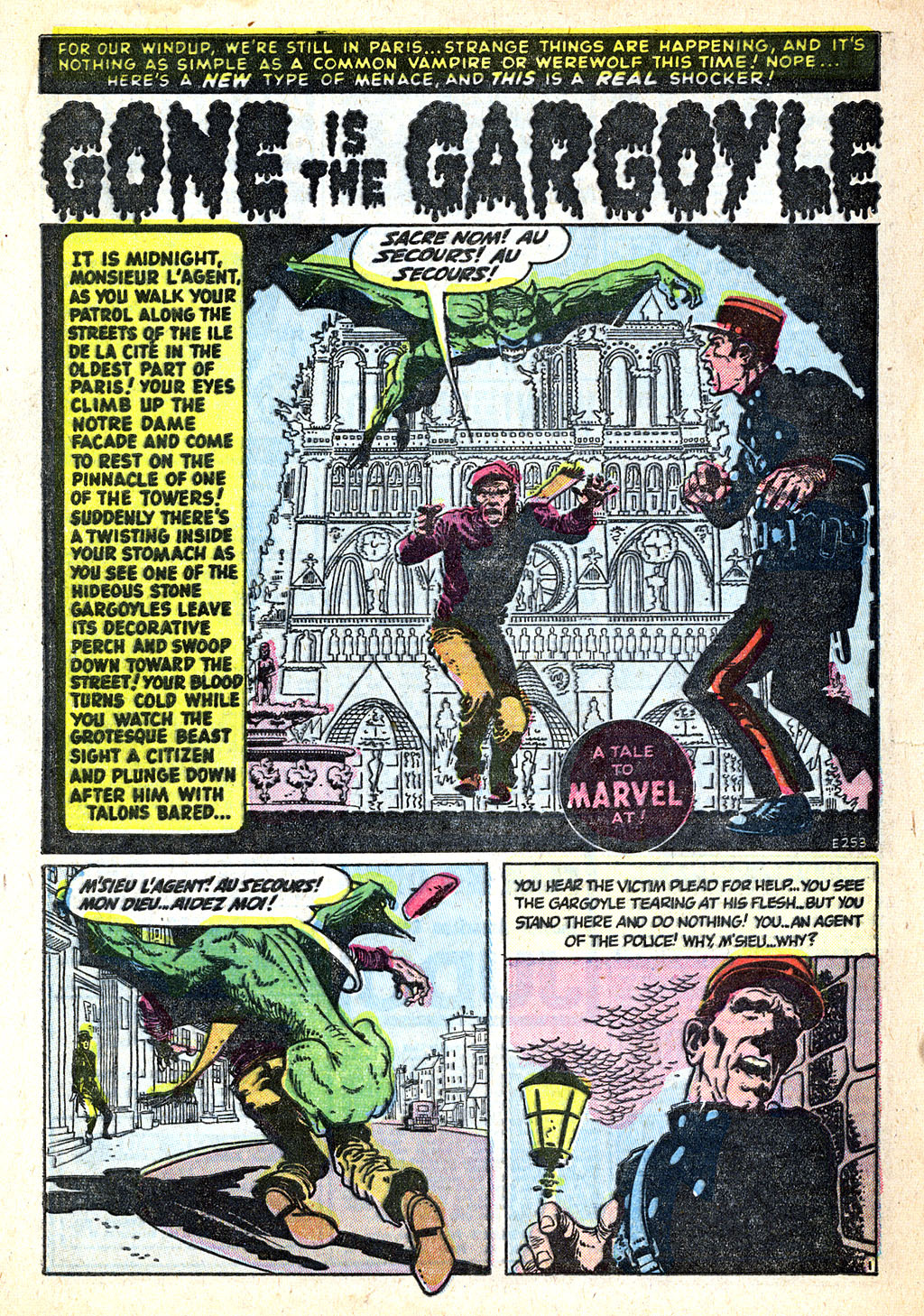
Yesterday, I posted a story called “Gone Is the Gargoyle,” from the October 1954 issue of Marvel Tales, which featured early art by Mort Drucker (b. 22 March 1929), whose mature work set the standard for caricature on Mad Magazine’s covers and in their movie parodies for several generations. True, the art in “Gone Is the Gargoyle,” though it is clearly signed “Mort Drucker,” does not look especially Drucker-like; however, less than two years later, the same comic series, Marvel Tales, featured a story with uncredited, unsigned art by Drucker that I think definitely points in the direction of the artist’s celebrated Mad Magazine style. But you don’t have to take my word for it, because from Marvel Tales, volume 1, number 146, here is “One Man’s Leprechaun,” with art by Mort Drucker; the issue is dated May 1956, and in the fall of that same year, Drucker joined Mad:

Given a choice to save the original artwork from either “Gone Is the Gargoyle” or “One Man’s Leprechaun” from a fire, I would definitely tuck “Gone Is the Gargoyle” under my arm and make for the exit, though I suspect many true Drucker fans will view my admission as a sign I’m not really one of them.

Comics · Here, Read · Look Here · Mort Drucker · YouTube Finds

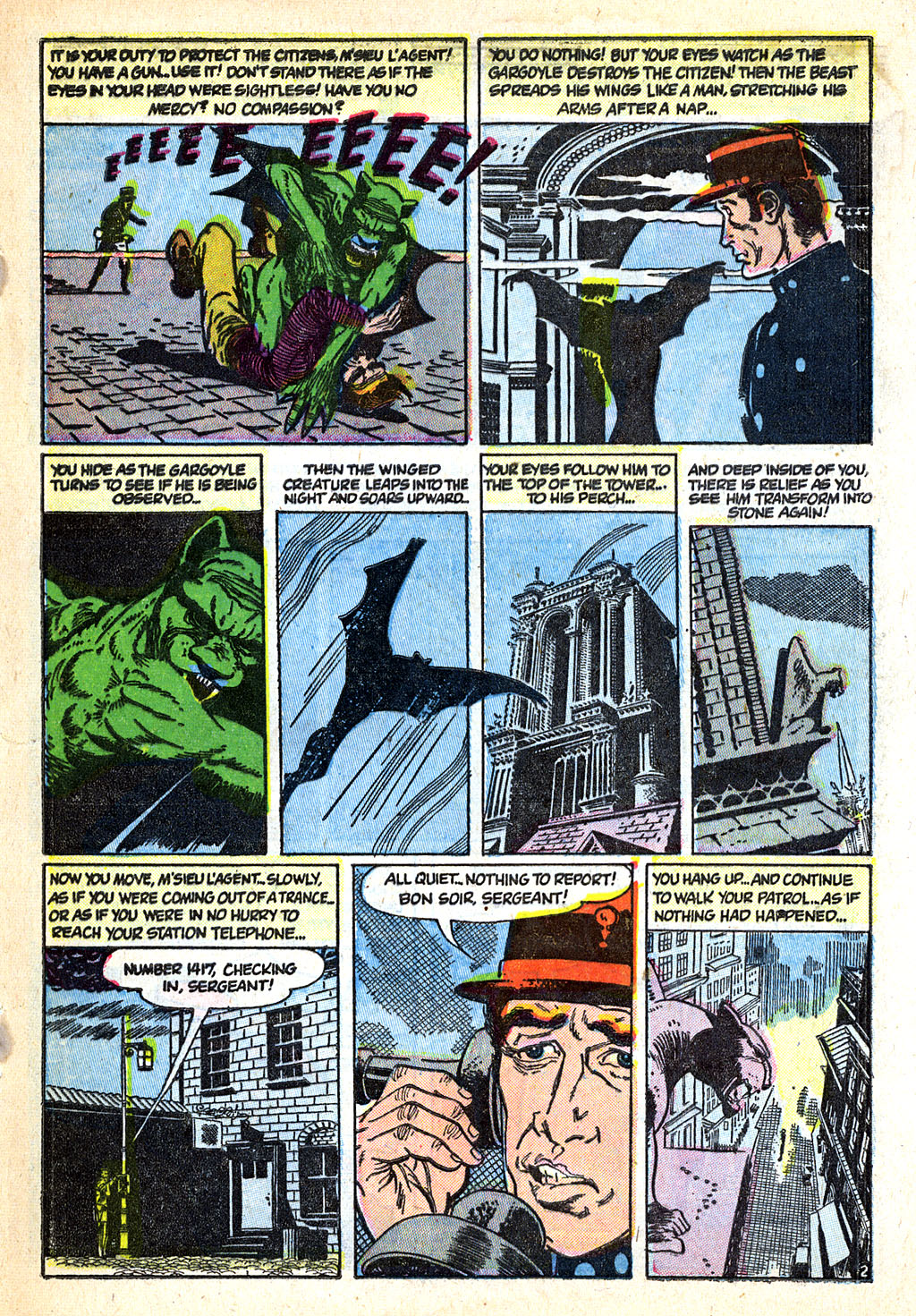
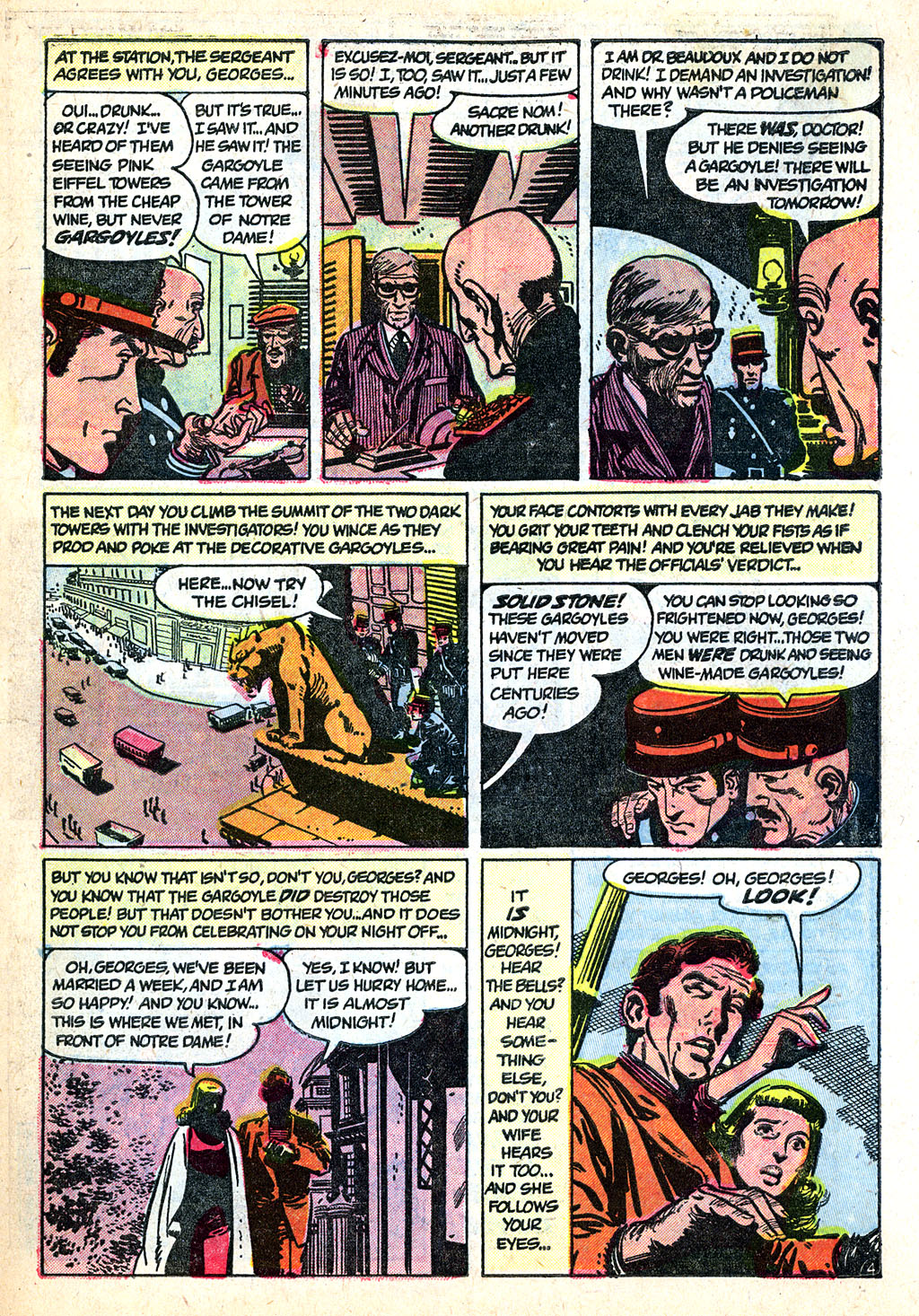
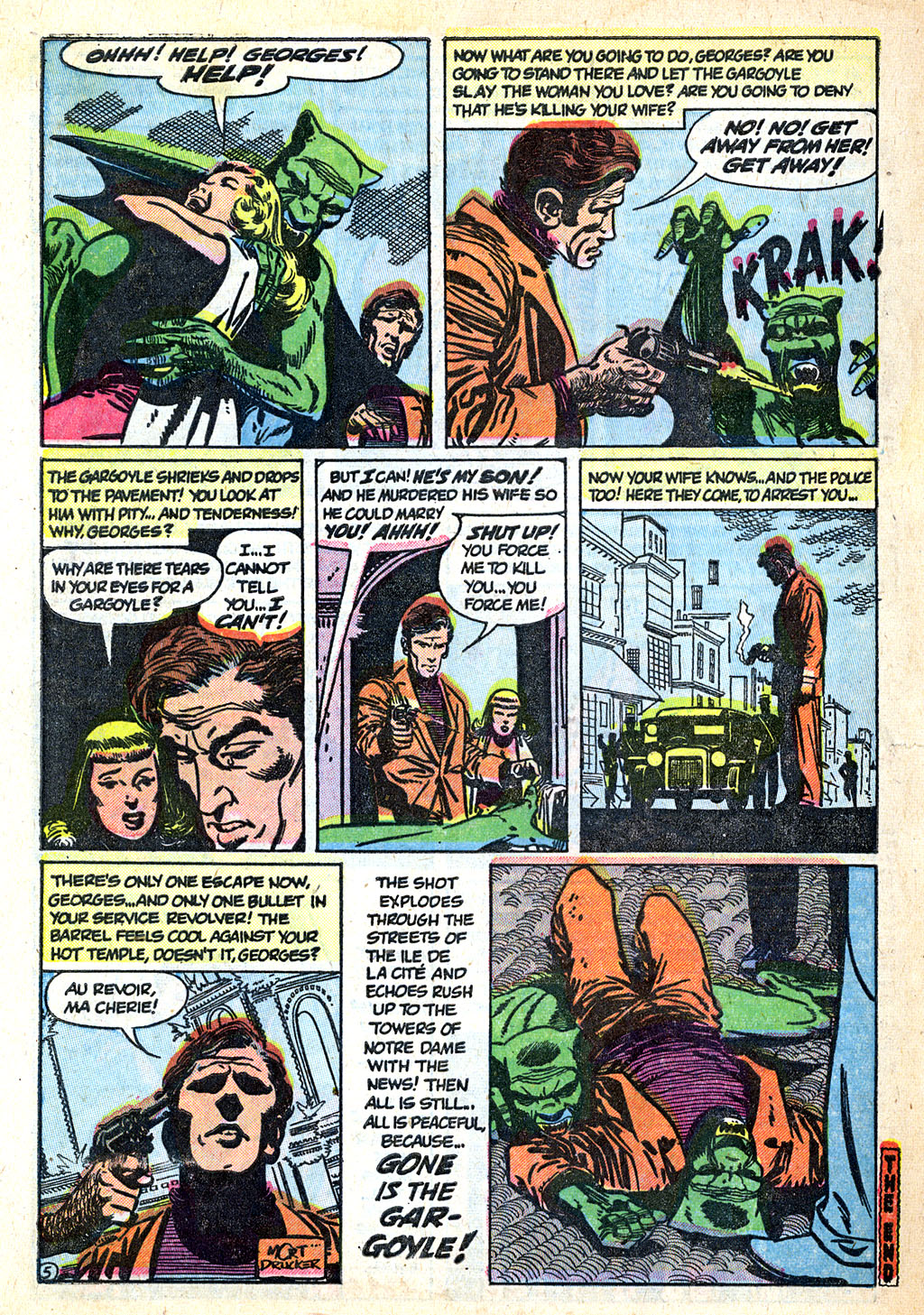
Look Here, Read: “Gone Is the Gargoyle,” with art by Mort Drucker

From Marvel Tales, volume 1, number 127, here’s “Gone Is the Gargoyle,” a story with no formal credit for either the scriptwriter or the artist; however, as often happened “back in the day,” the artist got around this by signing his name, unobtrusively, on the art itself — in this case, on the bottom left of the last page:

[CLICK IMAGES TO ENLARGE]


BONUS VIDEO:

Keywords: Mort Drucker


UPDATE:

See also: Ragged Claws Network > Look Here, Read: “One Man’s Leprechaun,” with art by Mort Drucker, posted 05 October 2011 at 8:03 pm.