Art Collection · Comics · Ebay Win · Here, Read · Mell Lazarus

Look Here: More original art by Mell Lazarus

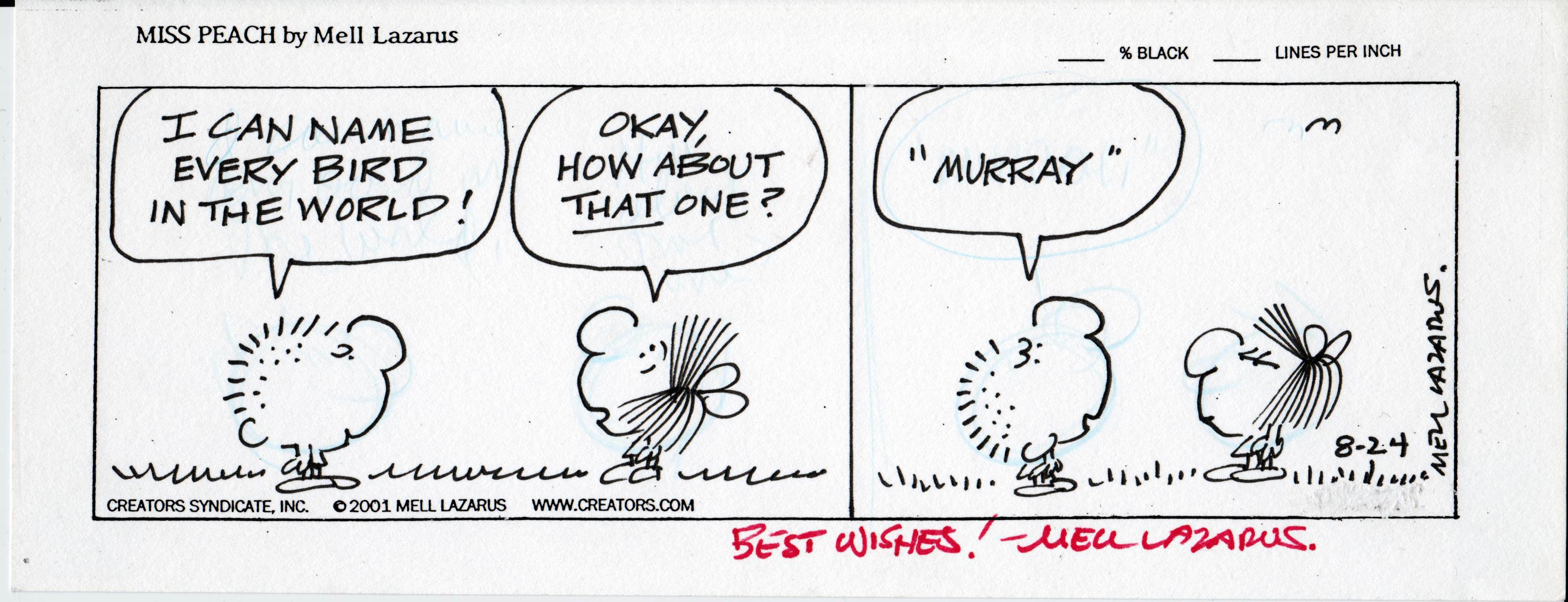
From our curious collection of comic art, old and new, here are a pair of scans of the original art for two comic strips by Mell Lazarus, “Miss Peach” and “Momma”; both strips are dated 8-24-2001, and both have been personalized by the artist with a greeting and signature in red marking pen:

[CLICK IMAGES TO ENLARGE]

If you are a fan of Mell Lazarus’s work, but have never seen his originals in person, you might be interested to know that the strips from 2001 are drawn on lightweight sheets of paper trimmed to a mere 11 inches wide by 4.25 inches high while the strips from 1958 and 1961 are on much heavier sheets that are a whopping 18.5 by 6.06 inches!

If you take a close look at the scans of original “Miss Peach” art from 1958 that I posted previously, you’ll see that Mell used pre-printed templates for his strips right from the beginning of his career as a syndicated cartoonist — and that he was frugal enough not to throw out old template sheets if they could be edited with a bit of tape and a few small paste-ups to reflect ongoing changes in the layout of the title, author credit, and so on.

Likewise, if you click to enlarge the scans posted above, you’ll find that both strips — which Mell drew some forty-four years after “Miss Peach” debuted in 1957 — are drawn on pre-printed templates that include the name of the strip and the author’s name, the syndicate name and Web address, the author’s copyright notice, an empty box in proportion to the size of the finished art, and underlined spaces — unused — for the specification of “% BLACK” and “LINES PER INCH.”

My guess is that Mell moved to the smaller size and lighter weight paper in part because he appreciated the convenience of being able to create custom templates for his strips that he could edit at any time and output on a standard home printer and in part because, at some point, as the Internet revolution took hold, he needed to be able to scan his artwork himself — “in house,” as it were — for electronic submission to his syndicate.

At some point, Mell also ditched his dip pen and bottles of ink and began drawing with a fine-point, fiber-tipped pen or “fineliner,” e.g., a Pilot, a Micron, or some such. The 2001 originals were drawn with a fiber-tipped pen, and though I like them well enough, I have to say, if you want to add a daily or two by Mell Lazarus to your comic-art collection, you definitely will want to get hold of one of the large “Miss Peach” originals from back in the day. The drawings are confident, amusing, and expressive — fiber-tipped “archival” fineliners may be convenient and easy to control, but paired with the right kind of paper, dip-pen nibs make beautiful lines — and the gags are often laugh-out-loud funny. And if by chance you find yourself the proud owner of a “Miss Peach” Sunday strip from the 1960s (see below), you definitely will be the envy of at least one other comic-art collector: me!

As you can see here and here, Mell initially drew his daily strips — “Miss Peach” started out this way — as wide single-panel cartoons, and he clearly understood how to parcel out the characters and the dialogue to make that format work. But he was not rigidly committed to the single-panel ideal. Rather, he never hesitated to make changes to his template to allow for more precise control of the timing of his gags. In the “Miss Peach” strip posted above, for instance, Mell has divided the large pre-printed panel in two with a single inked line, thereby establishing a strong pause between the wordy setup and the one-word punchline. And in the “Momma” strip, he has gone much farther, briskly brushing whiteout over sections of the pre-printed lines to open up the second panel right the way along the bottom and at the corners of the word balloon along the top and taking a moment to establish a gutter/pause between the third and fourth panels with two hand-drawn lines and a couple of touches of whiteout. Because even though his cartoon style is simple, and has been the subject of ridicule by some, Mell has always taken seriously the craft of writing dialogue and staging interactions that make people laugh.

Mell Lazarus retired his “Miss Peach” strip in 2002, but he has continued to draw “Momma” right up to the present day. He will celebrate his 85th birthday on 03 May 2012.


BONUS SCANS:

Just for fun, here are the first five pages of “Miss Peach” strips reprinted in the paperback collection, Miss Peach of the Kelly School (New York: Tempo Books, 1972):
Art Collection · Drawing · John Buscema · Look Here

Look Here: Five more sketches by John Buscema

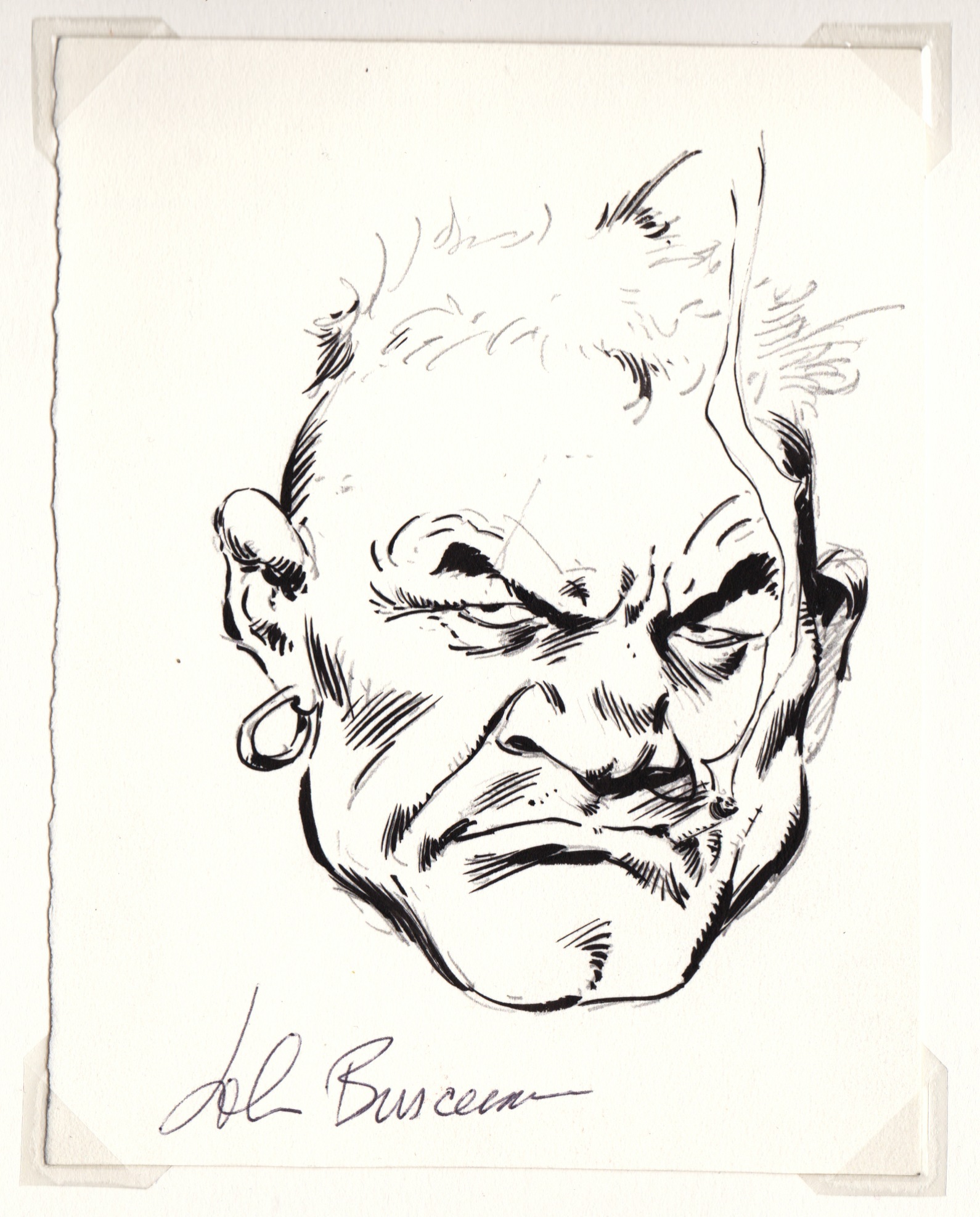
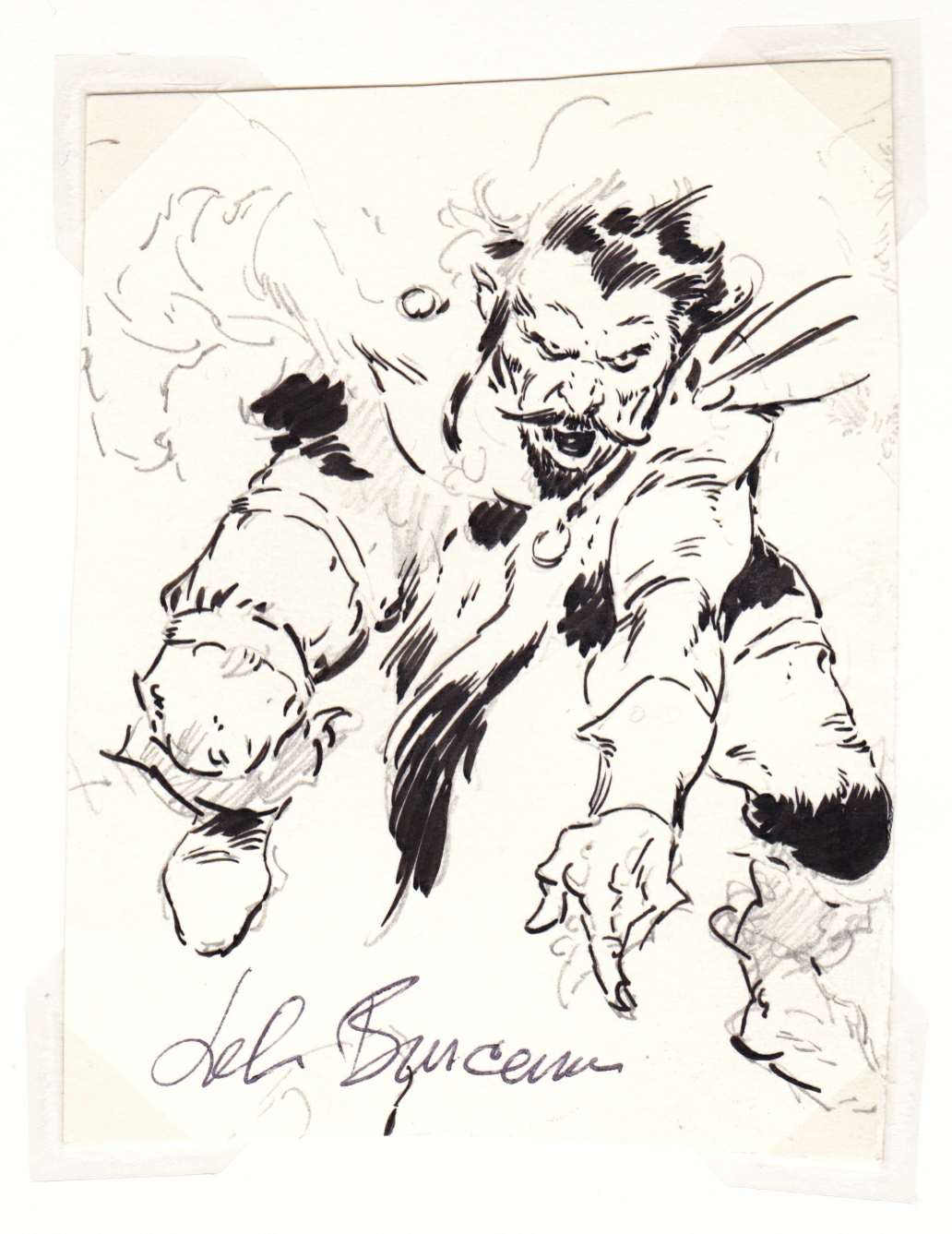
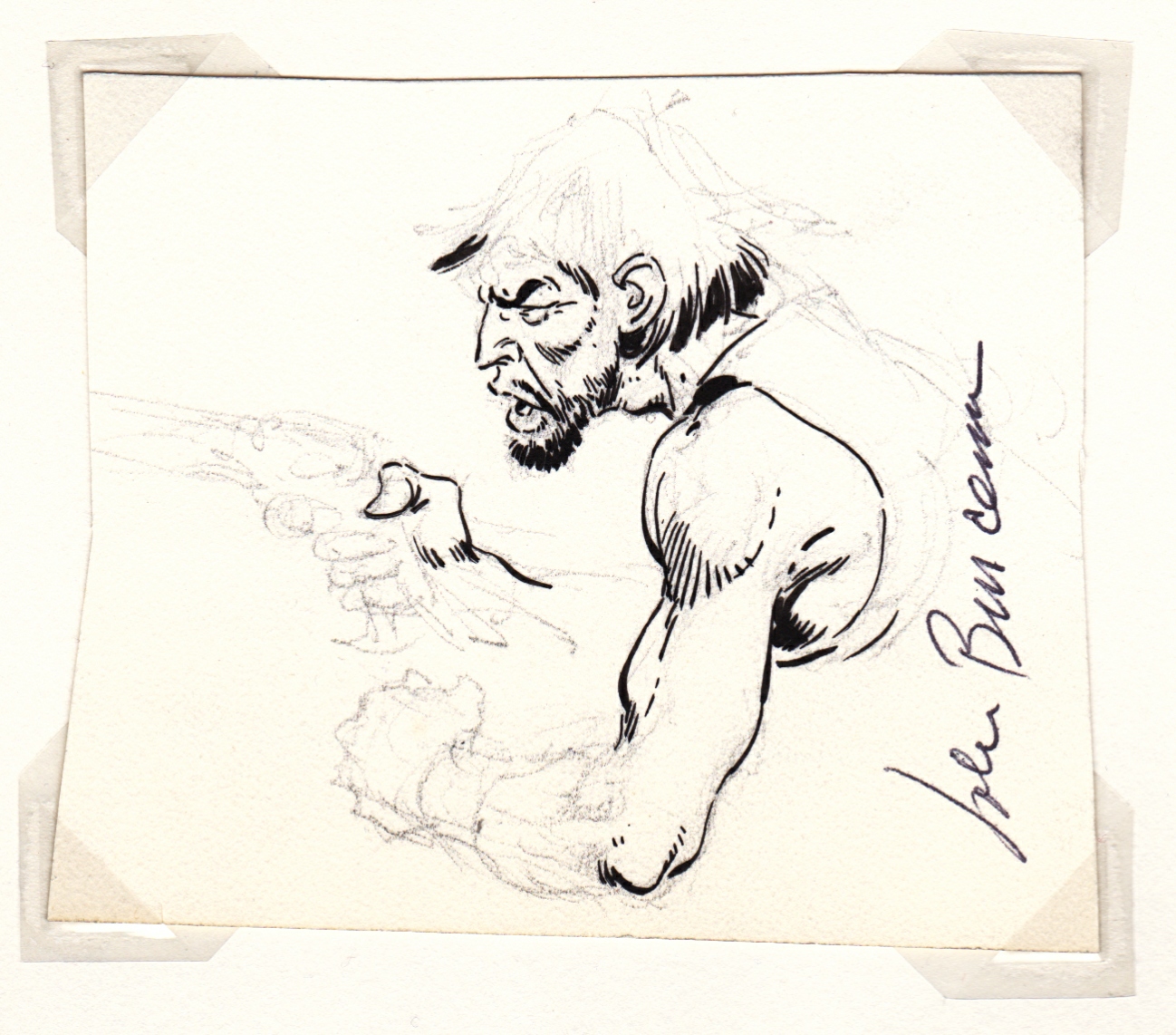
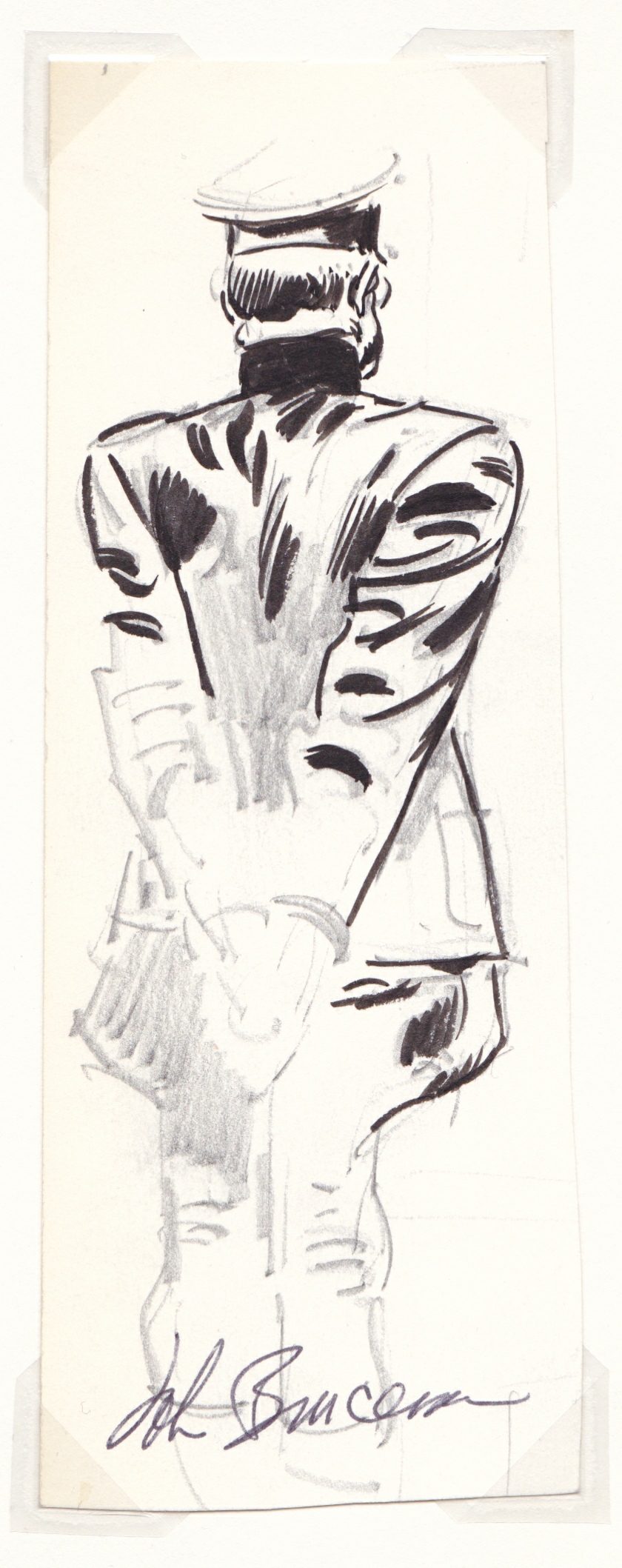
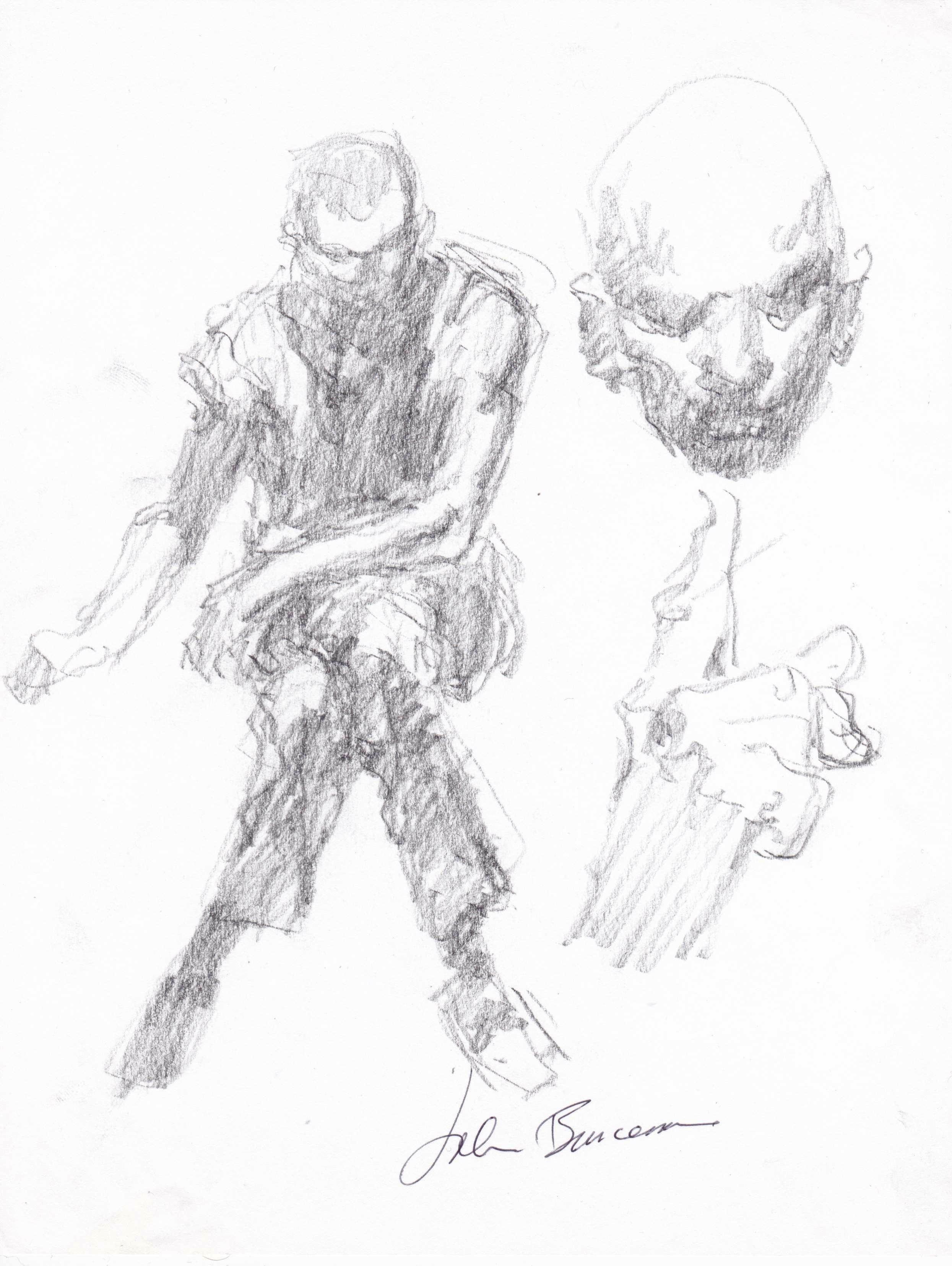
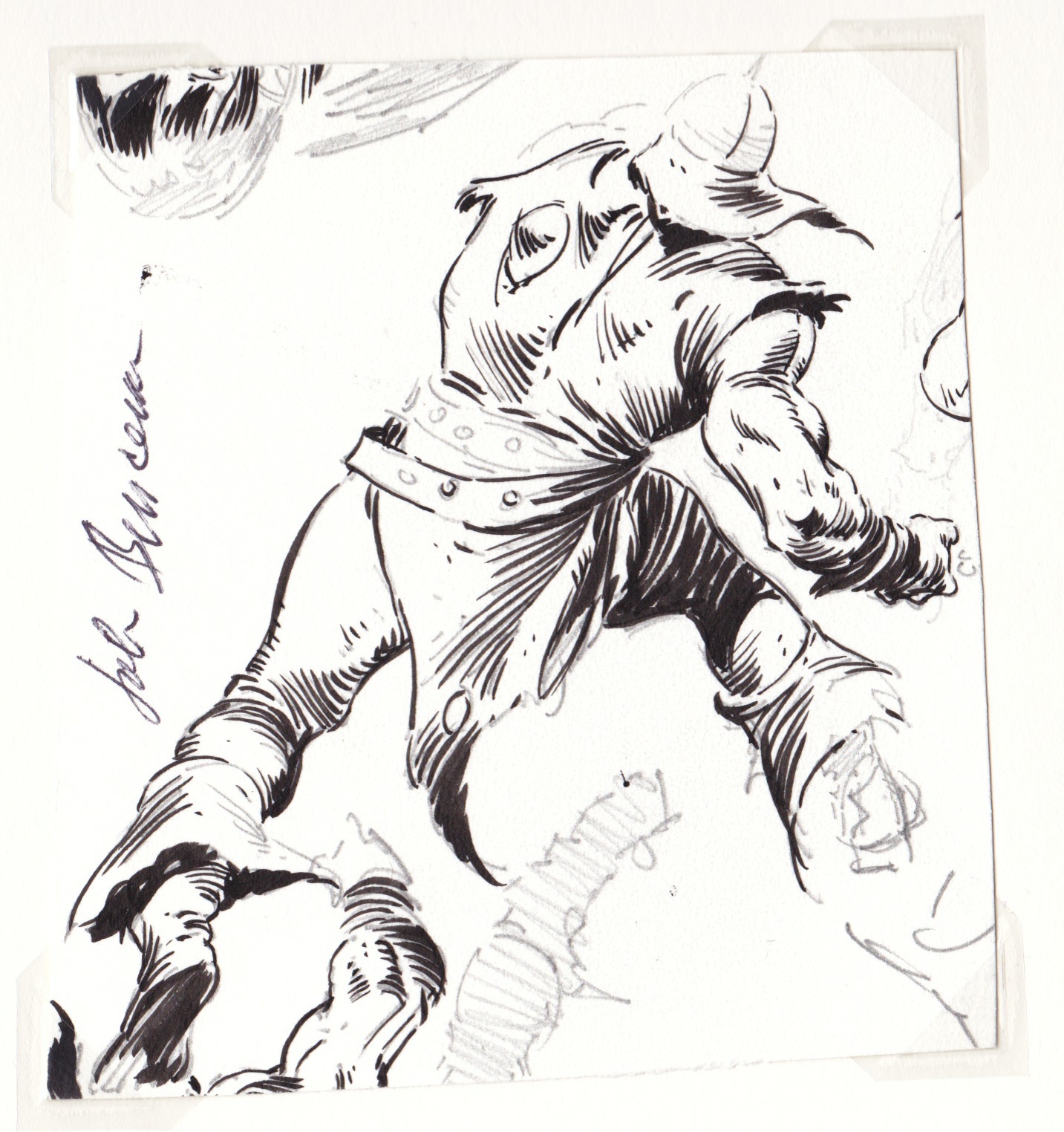
This afternoon, for your viewing pleasure (as promised!), I’ve got scans of the second group of five sketches by John Buscema that currently reside in our collection of original art:

[CLICK IMAGES TO ENLARGE]

I think my favourite out of the above group is the sketch of the swordfight; the little flicks of the pencil that define the contours of the forms are so confidently placed — amazing!

In case you missed it, the first group of five is right here.

Art Collection · Drawing · John Buscema · Look Here

Look Here: Five sketches by John Buscema

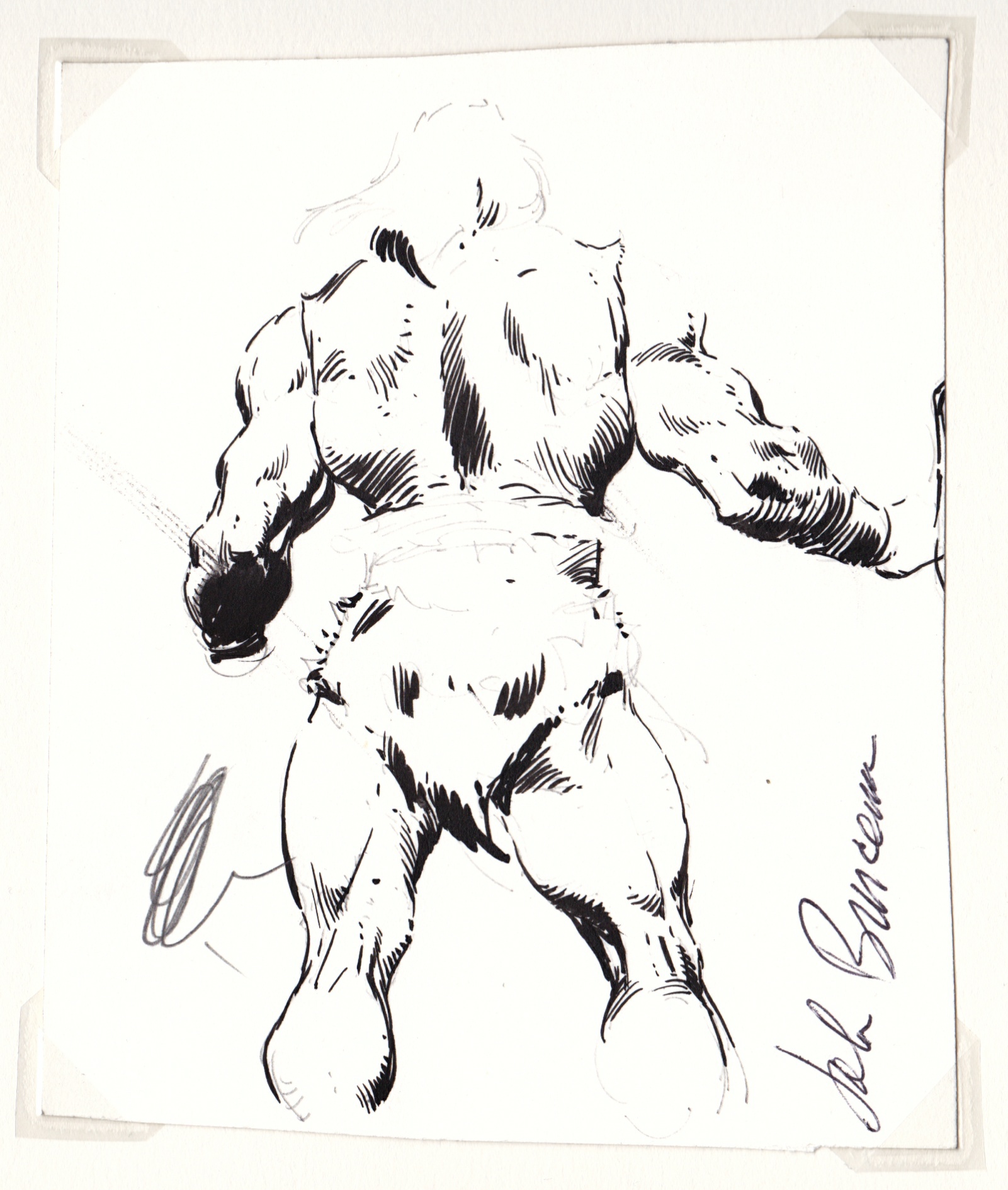
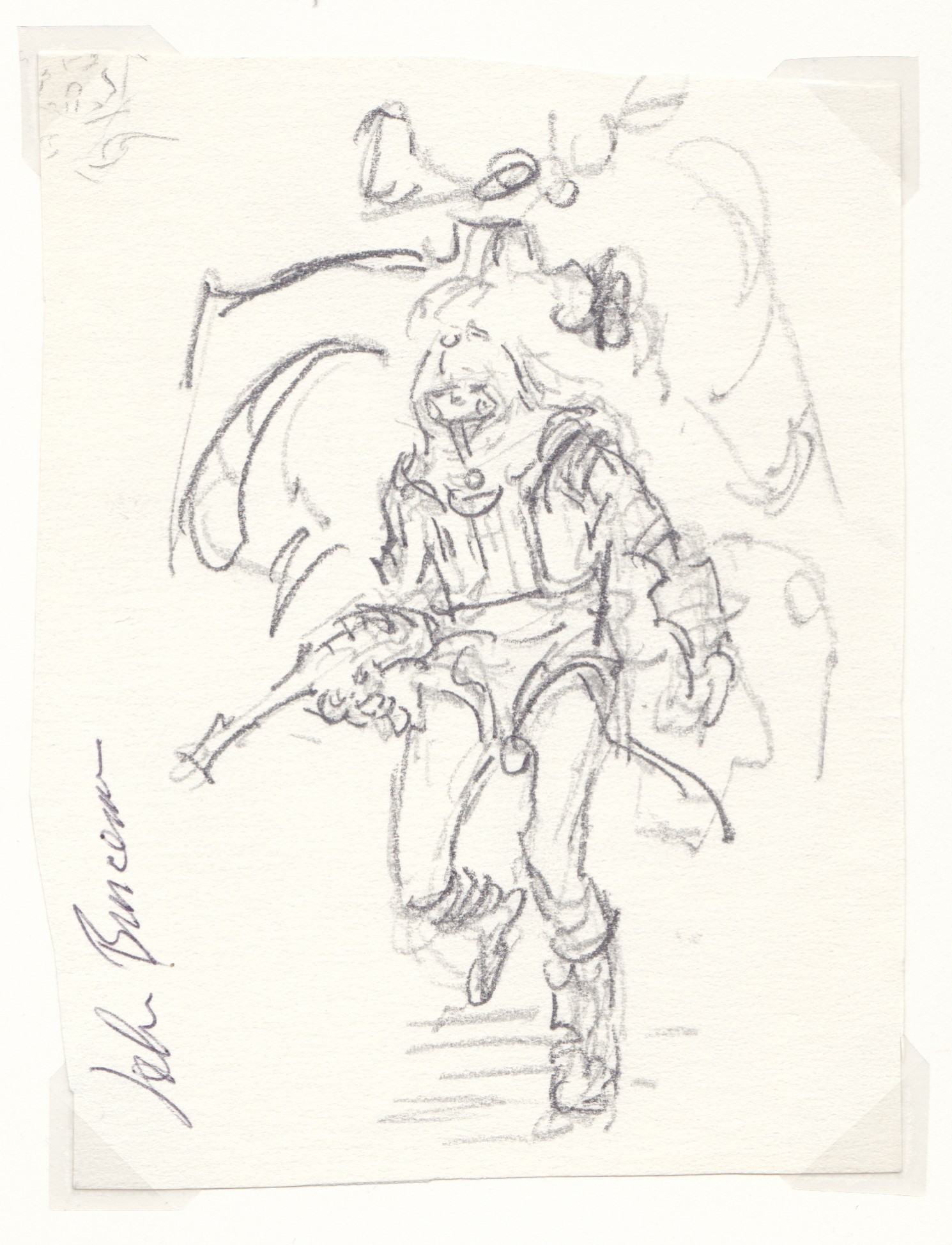
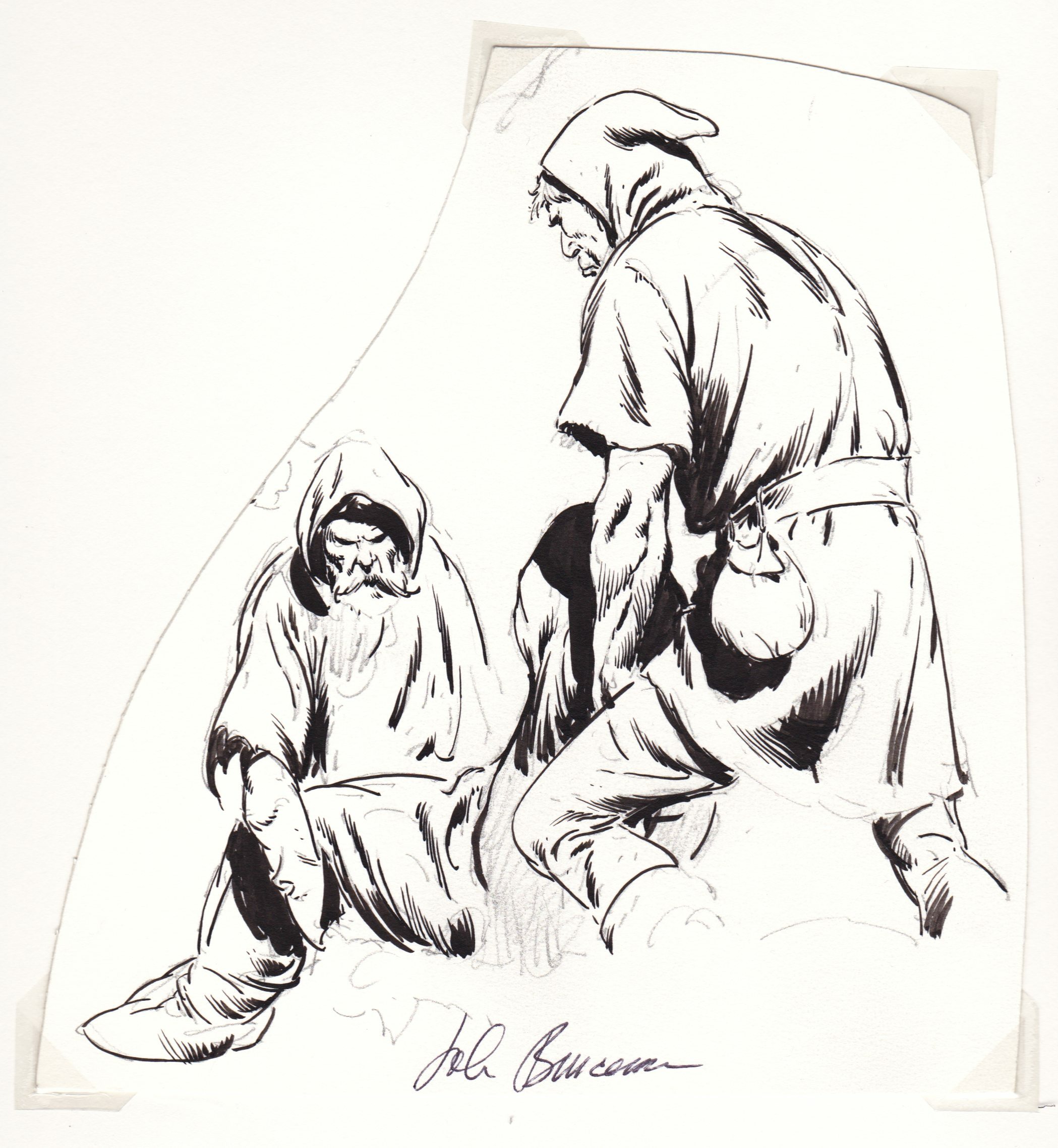
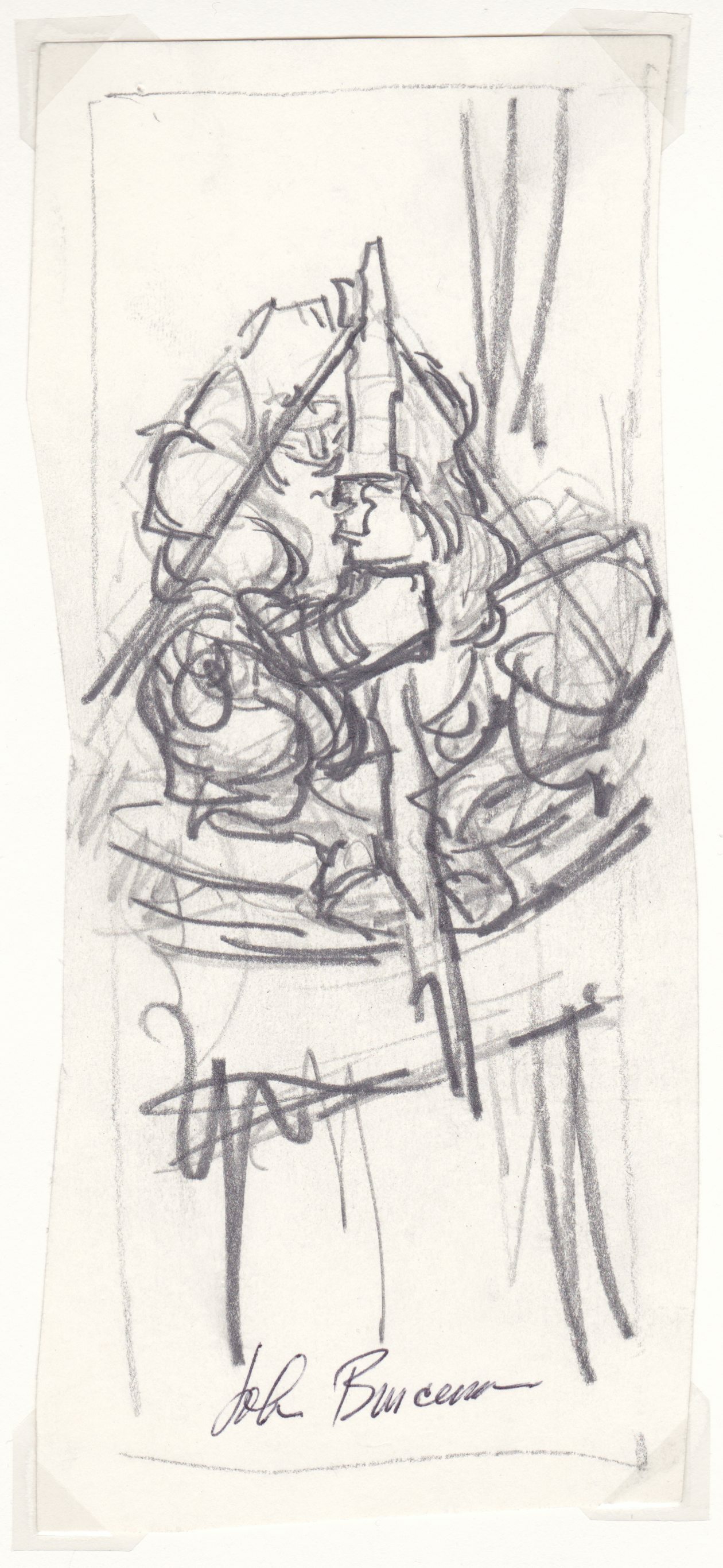
From our modest collection of original art by various hands, here are five small sketches by John Buscema for you to peruse; if you click the images displayed below so as to enlarge them, you will find that the uploaded images are actually large enough to repay close study:

[CLICK IMAGES TO ENLARGE]

All five of the above sketches currently reside in a 12 x 12 inch, 3-ring scrapbook album in our living room. In case you’re wondering how they’re displayed, each sketch is attached to the centre of one side of an acid free sheet with acid free photo corners. Works for me.

Enjoy!

But please remember: don’t just take; link. (Yes, I’m talking to you, PNN.)


UPDATE (01 April 2012):

I just posted a second batch of five sketches by John Buscema. I hope you enjoy seeing them!

Art Collection · Comics · Ebay Win · Frank Hill · Here, Read · Look Here

Look Here, Read: Two “Short Ribs” dailies by Frank Hill

When Frank O’Neal created “Short Ribs” in 1958, his idea was to write and draw a comic strip without a set cast of characters or a single historical or geographical setting. Once he settled into the routine of actually producing the strip, however, O’Neal quickly found he could not resist returning to certain stock situations and periods — the old West, for instance, or Medieval Europe — bringing back certain characters, and indulging in short bursts of continuity. When he retired from the strip in 1973 to concentrate on advertising work, O’Neal generously handed “Short Ribs” over to his assistant, Frank Hill, who managed to wring another nine years out of the concept. Truth be told, I’m not really a big fan of “Short Ribs,” but when the following pair of amusing and attractive strips from 1980 came up for sale recently at a low, low price, I couldn’t resist:

[CLICK IMAGES TO ENLARGE]

Frank Hill’s final “Short Ribs” strip appeared Sunday 02 May 1982. Did anyone notice when the strip ended? You might think not, but my experience reading and arguing about comics on the Web tells me that every comic strip, “Short Ribs” included, is (or was) somebody’s favourite.

Art Collection · Drawing · Gene Colan · Illustration Art · Look Here · Original art vs. printed page

Look Here: A page of original art by Gene Colan and Tom Palmer

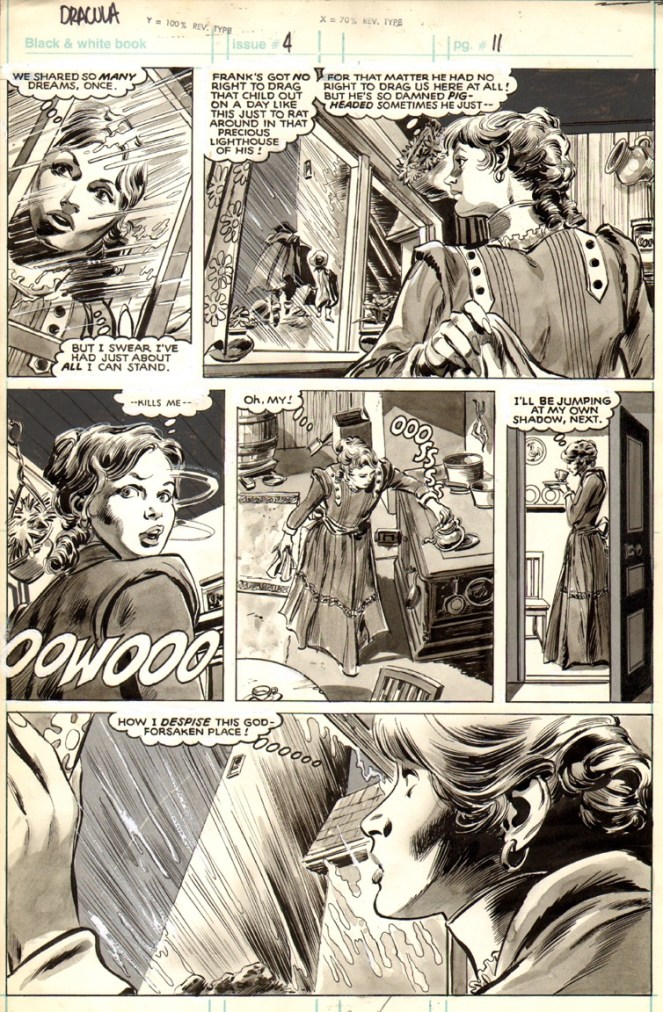
My two favourite Christmas gifts for 2011 were 1) an eight-panel, single-page comic strip on 11 x 17 inch Strathmore bristol, pencilled, inked, and coloured by our 17-year-old son, just for the occasion, and 2) a page of original art from “Angelica,” a story that was published in The Tomb of Dracula #4 (April 1980), with art pencilled by Gene Colan and inked by Tom Palmer. Our son would prefer that I not post his piece, but if you pay a visit to our house in a month or so, I am fairly confident that you’ll be able to view it, framed, on the wall in our living room — if I let you in the door, that is. As for the Colan page, here it is, first as it was printed in black and white in The Tomb of Dracula, and second, as it appears “in living colour,” as it were:

Oddly enough, that beautiful page — which I first saw when I bought The Tomb of Dracula #4 new, off the newsstand, when I was in high school — has a very strong personal resonance for me. You see, once upon a time my father quit his job in the big city to chase a dream, dragging his family to a “godforsaken place” that my mother “despised” from the moment she set eyes upon it. The mute object of my mother’s contempt was a shabby, drafty, uninsulated log house with no plumbing or adequate heating located on a discontinuous, serpentine tract of marginal farmland that some anonymous homesteader had laboriously carved out of the bush in east-central Saskatchewan. I won’t burden you with the depressing details of my father’s fourteen-year experiment in pigheaded determination and wishful thinking. Suffice to say that by the time the man finally admitted defeat, he and my mother had already spent more than a year shuttling back and forth between the farm and various low-skilled jobs the meagre pay from which might have slowed but certainly did not stop their burden of farm debt from growing more burdensome every month — which led them, at long last, to conclude that the only way forward was to file for bankruptcy and retreat, with my brothers and sister in tow, back to the city… well, not quite back to the city, but that’s a whole other story…

Art Collection · Bob Montana · Comics · Ebay Win · Here, Read · Illustration Art · Look Here

Look Here: Our art collection expands…

I don’t usually like to buy stuff for myself this close to Christmas, but when Lewis Wayne Gallery announced a series of auctions with starting bids of a penny each, I had to take a look, and among the various offerings of art and photographs, I found two items I thought I’d like to own, if the price was right. And much to my surprise, earlier today, I won them both, and now I’m here to share them with you.

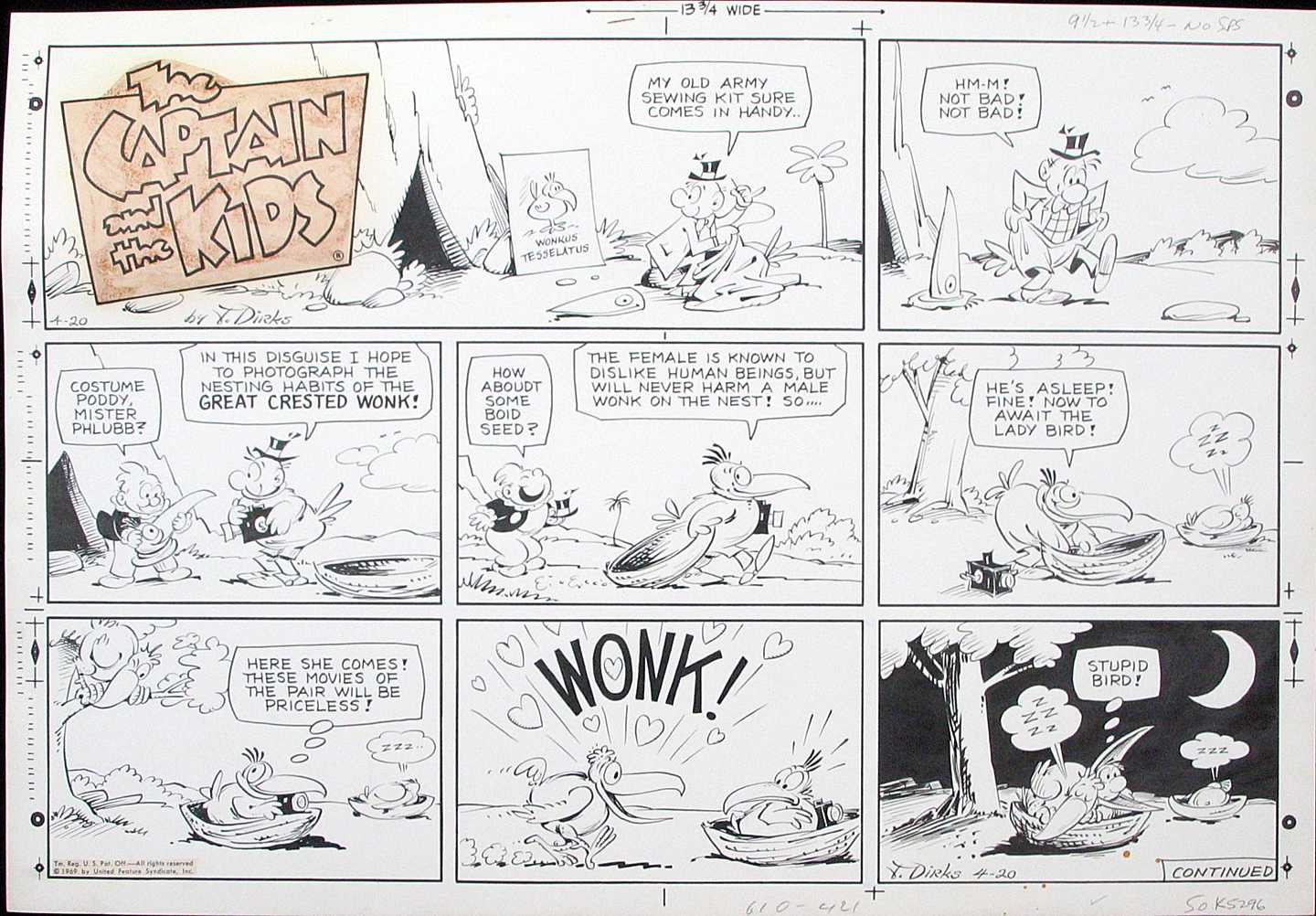
First up is a newspaper strip by John Dirks, the son of Rudolph Dirks, creator of the famous strip, The Katzenjammer Kids, which according to Wikipedia “debuted December 12, 1897 in the American Humorist, the Sunday supplement of William Randolph Hearst’s New York Journal.” The strip we now own isn’t a Katzenjammer Kids strip but rather is a Sunday instalment, dated 20 April 1969, of The Captain and the Kids, a strip that Rudolph Dirks created for the rival Pulizer newspapers after he had a falling out with the Hearst newspaper syndicate in 1914 over his desire to take some time off; the legal settlement allowed Dirks to continue to use the characters he created in the Katzenjammer Kids, but since it also allowed the Katzenjammer Kids to continue at Hearst without him, Dirks was forced to come up with a new name for his version of the strip. At first, he settled on the title Hans und Fritz, in deference to the ethnicity of the main characters, but when the United States entered World War I, the German moniker was quickly replaced with an English one, The Captain and the Kids. The final auction price for the artwork was US$27.00 plus shipping, and here it is:

[CLICK IMAGE TO ENLARGE]

Currently, the cheapest “Captain and the Kids” strips available from Lewis Wayne Gallery outside of the recently concluded penny-start auctions can be had for the “Buy It Now!” price US$89.95 plus shipping; meanwhile, the most expensive are US$295.00 plus shipping. So, I definitely feel like we got a deal.

The second newspaper strip that we have just added to our collection is a terrific Archie daily by Bob Montana from 29 July 1969:

[CLICK IMAGE TO ENLARGE]

I love Bob Montana’s artwork here; I love the contrast between Jughead’s old-fashioned suit and tie and slicked-down hair and the trendy ’60s clothing and hairstyles of the other characters (although Archie is stuck with his usual do); and I love the gag! The final auction price for the strip was a mere US$58.57 plus shipping. And I love that, too! Because out of the pair of strips I had decided to bid on, the “Archie” strip was the one I wanted the most to win, and if the price had soared too high — my final bid was significantly higher than what I actually ended up paying — I would’ve had to allow the “Captain and the Kids” strip to slip through my fingers. How fortunate for me, then, that the auction for the “Archie” strip ended first!

Art Collection · James Stokoe · Look Here · Original art vs. printed page

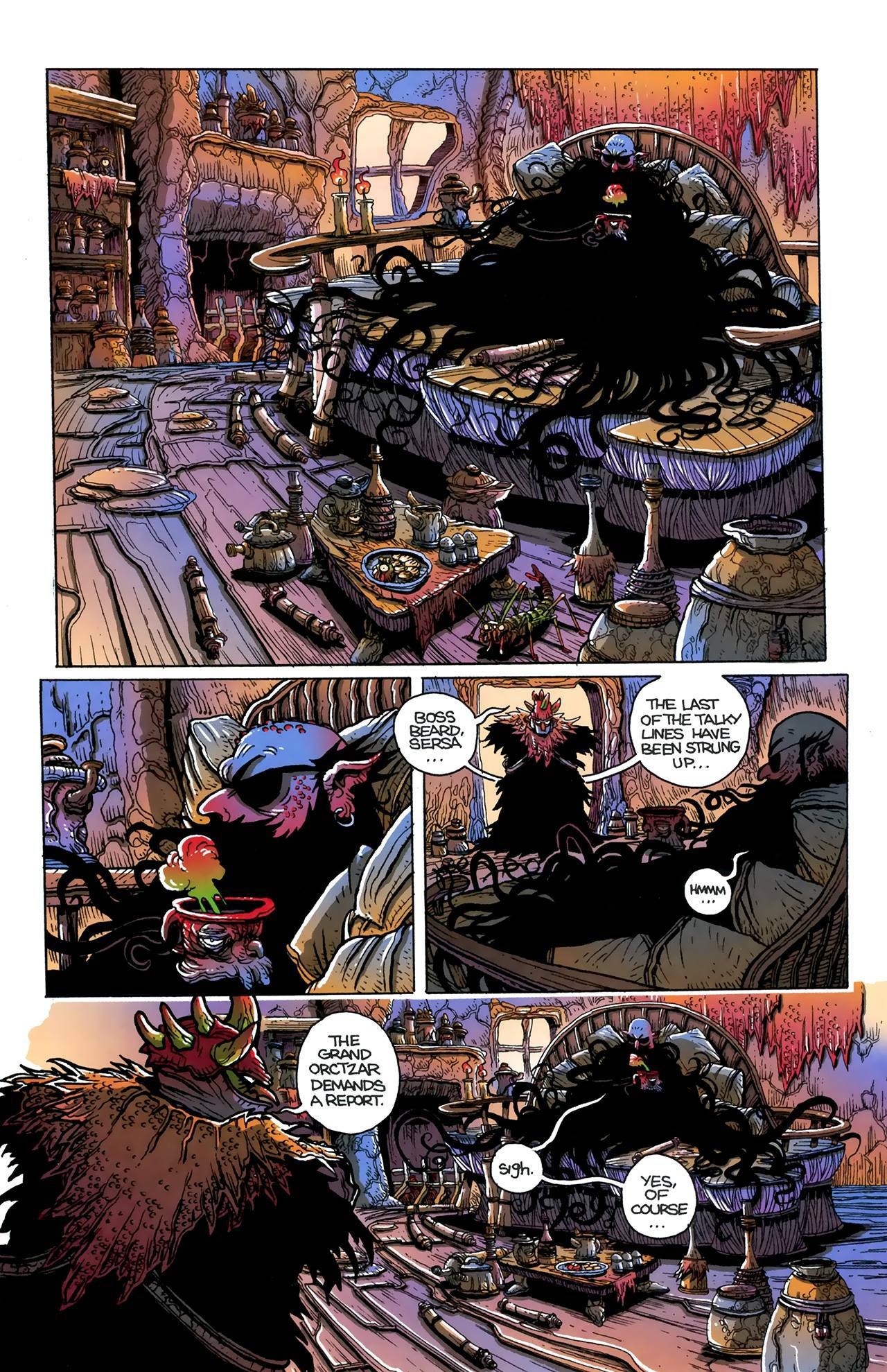
Look Here: An ORC STAIN original by James Stokoe

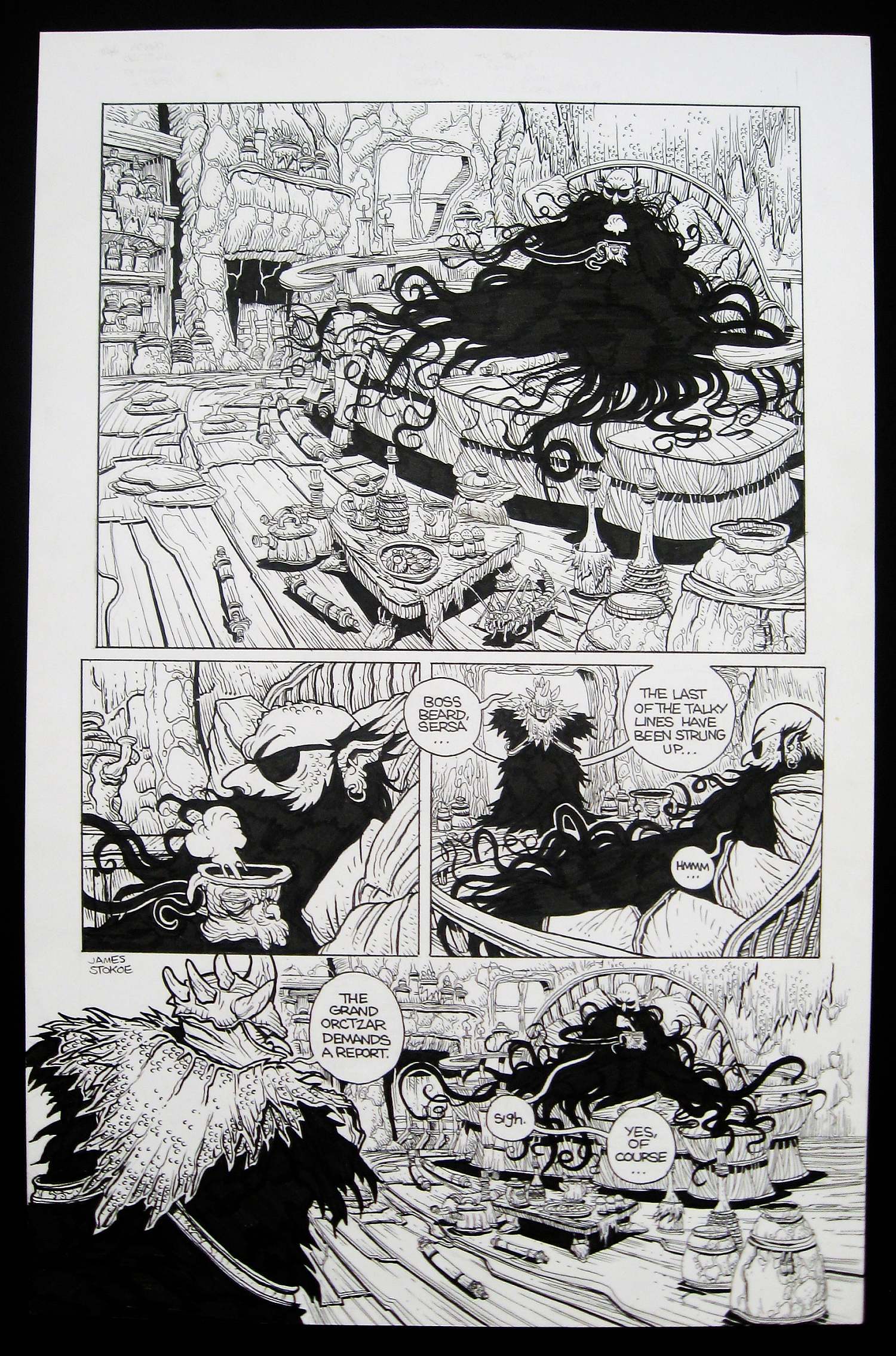
Here’s yet another recent addition to our art collection; it’s a signed original page from the fourth issue of James Stokoe’s Orc Stain (July 2010). I’ve included a scan of the full-colour published version of the page for comparison. Sorry the bottom corner of my photo of the original art is a bit out of focus. I’ll try to do better next time.

Pages from James Stokoe’s Orc Stain can be purchased online from McConnell Art.

Art Collection · Illustration Art · Look Here · Simon Gane

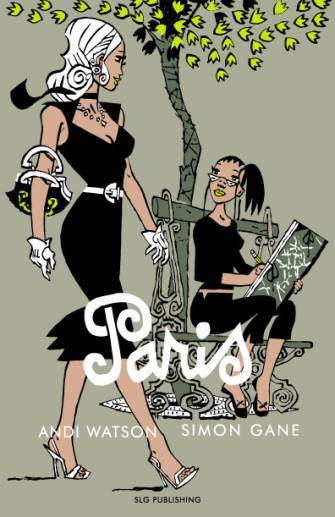
Look Here: PARIS, page 73, art by Simon Gane

In May of this year, my wife and I purchased the following page from the graphic novel, Paris, by writer Andi Watson and artist Simon Gane (SLG Publishing, 2007), at a very reasonable price, via Simon Gane’s online art store:


BONUS LINK:

The Comics Reporter > CR Holiday Interview #3: Simon Gane — posted 17 December 2007 by interviewer Tom Spurgeon.

Art Collection · Comics · Ebay Win · Look Here · Mell Lazarus

Look Here: Another “Miss Peach” original by Mell

My wife and I already own two “Miss Peach” daily strips by Mell Lazarus. And now we own a third, courtesy of ebay:

Funny thing is, even though we bought the above strip from a different seller than the other two, and we had to outbid another person to get it — it wasn’t a “Buy It Now” listing — the final price, shipping included, came to US$55.00 even, almost exactly what we paid for each of the other two strips.

Not sure we’ll buy many more “Miss Peach” dailies after this, but I’d sure love to own a Sunday strip or two.


BONUS CONTENT:

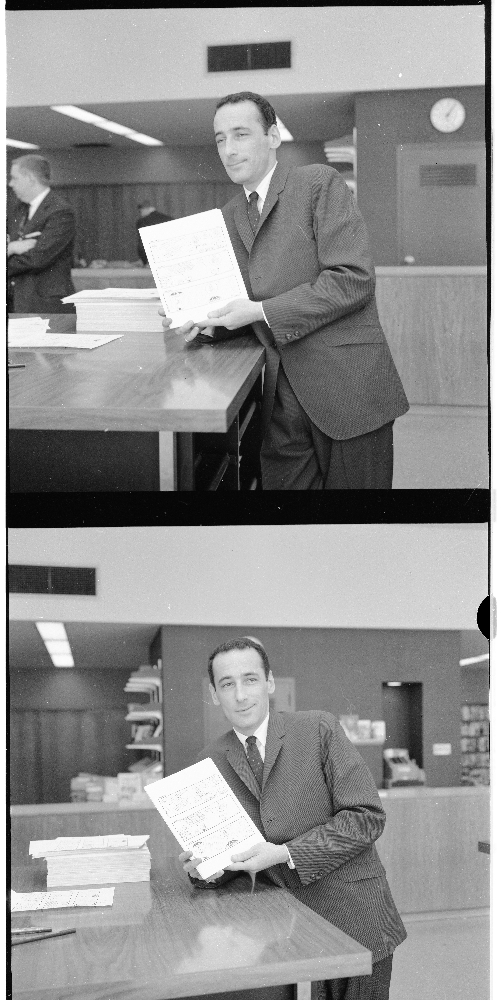
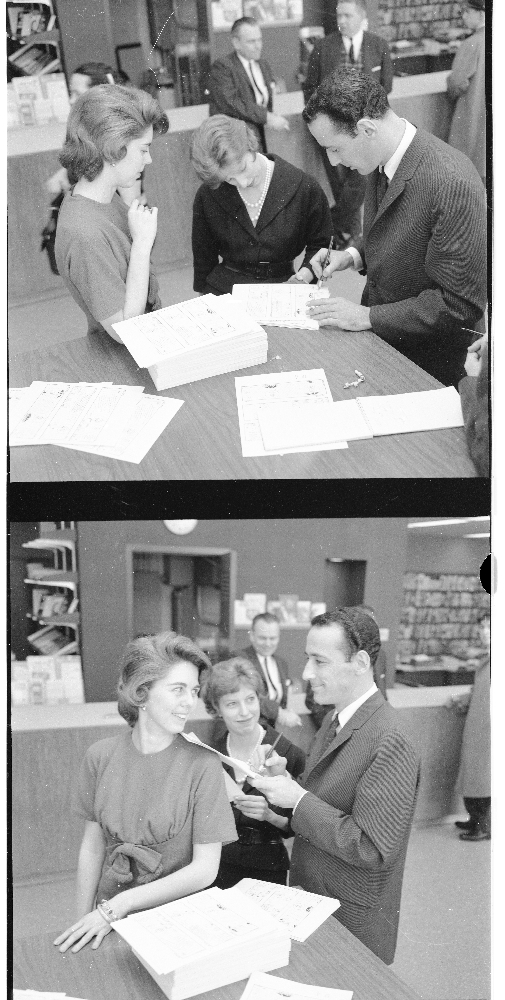
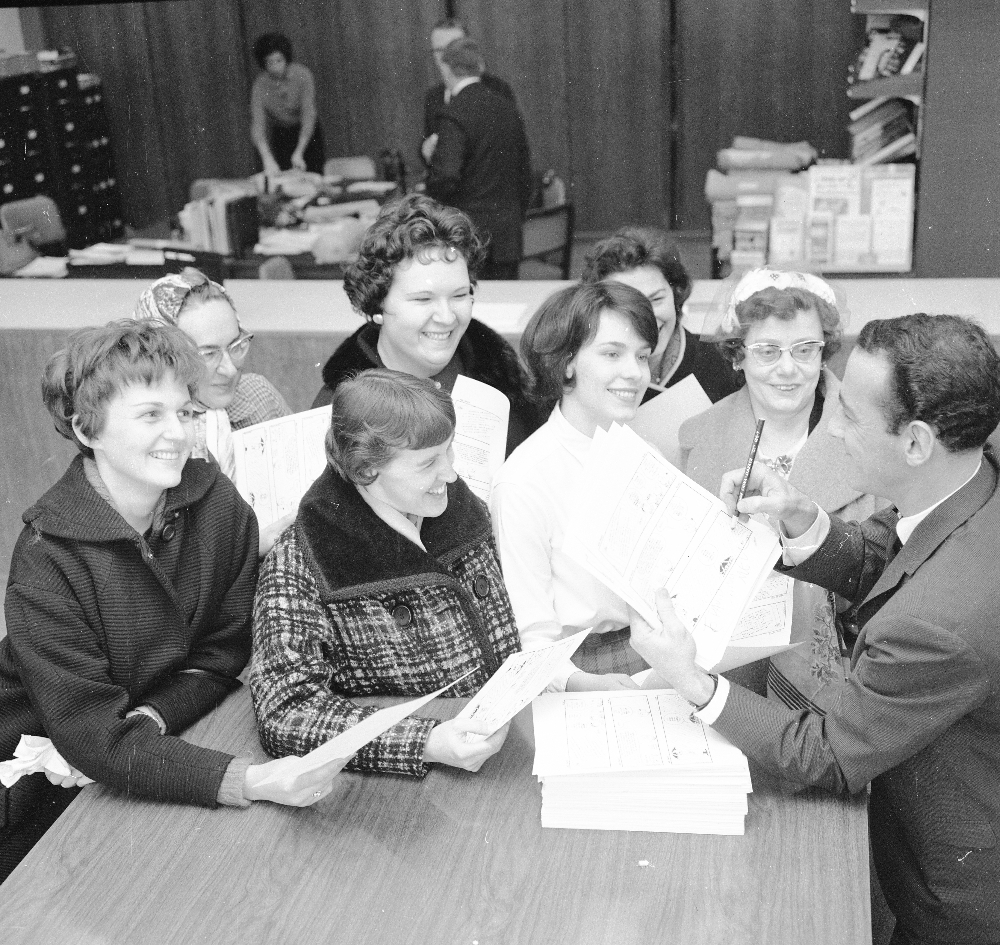
Mell “The Ladies’ Man” Lazarus visits the Sun-Times public service lounge on 09 April 1962: